BANGKOK, 26 September 2025: The Thailand Convention and Exhibition Bureau reaffirms Thailand’s readiness to host the 2026 edition of Gastech from 15 to 18 September 2026 at the Bangkok International Trade & Exhibition Centre (BITEC) venue.
As the successful bidder for Gastech 2026, TCEB, with the Ministry of Energy and DMG Events, a Dubai-headquartered event organiser, attended the official opening of Gastech 2025 in Milan, Italy, for the host destination handover ceremony.
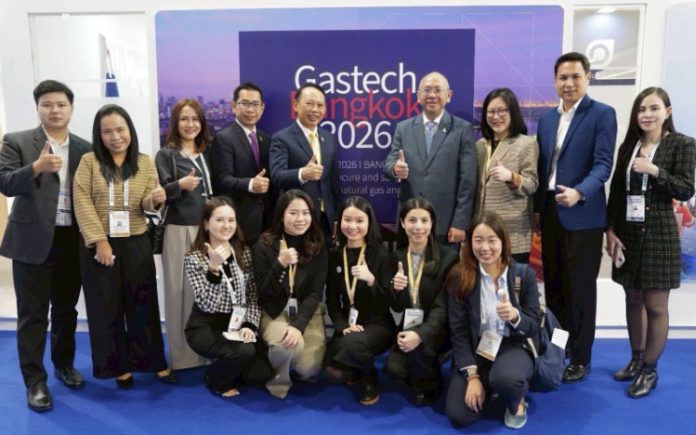
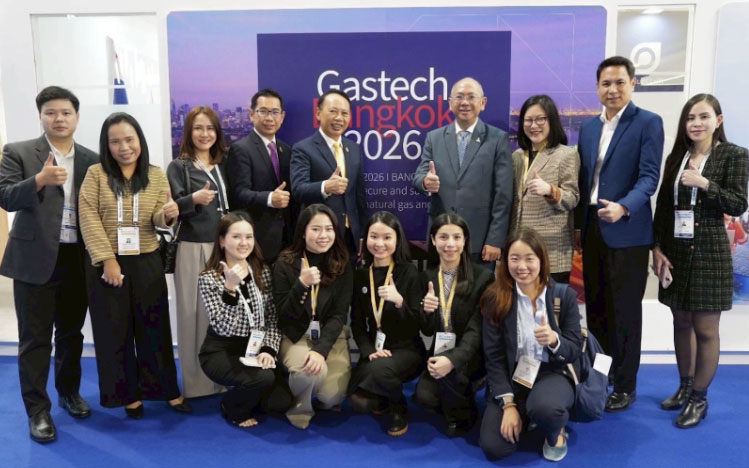
TCEB team work delivers Gastech 2026 to Bangkok’s BITEC.
TCEB President Supawan Teerarat commented that the successful bid to host Gastech 2026 showcased the country’s public-private collaboration in driving world-class events to Thailand’s shores.
“This partnership has been a key factor in Thailand earning the trust to take over from Italy as the host of Gastech 2026, underscoring the country’s readiness as a premier international event destination in Asia.”
It represents a significant opportunity for TCEB to propel the national economy by leveraging events to promote trade and investment, foster business opportunities, and advance industrial development toward sustainability, particularly within the strategic energy sector.
“Thailand’s winning bid to host Gastech 2026 highlights the country’s role in the global energy industry and reinforces its position as a leader in Asia’s energy sector and an international exhibition hub in the Southeast Asian region, or ASEAN. The event also offers wide-ranging benefits, supporting economic growth and industrial development.”
Gastech 2026 is expected to attract over 50,000 attendees from 150 countries, featuring more than 1,000 exhibiting companies and over 1,000 energy experts. The event is projected to generate an economic impact of EUR385 million, including EUR198 million in revenue for Thailand and EUR26.9 million in tax receipts. Thailand’s
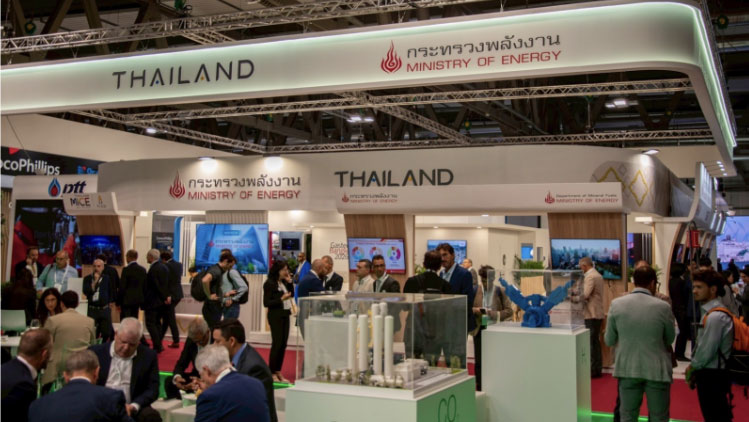
Thailand’s Ministry of Energy pavilion at Gastech 2025 in Milan, Italy.
BANGKOK, 25 September 2025: Could the future of healthcare involve a boarding pass as well as a prescription pad? Across the world, a quiet revolution is brewing as doctors, insurers, and tourism authorities begin to see outdoor tourism not only as leisure but as medicine.
The notion is simple yet profound: travel, particularly wellness-oriented travel, can support mental health, lower blood pressure, and improve longevity.
A quiet revolution is brewing….
From City Clinic to Nature’s Healing Countryside
The medical fraternity is increasingly aware of the therapeutic benefits of outdoor activity. Studies show that time spent in nature reduces stress, elevates mood, and encourages physical activity.
The face of modern hospital care?
Something as basic as increasing one’s daily step count by exploring new destinations can strengthen the heart and reduce the risk of chronic disease. For patients struggling with mental health, anxiety, or hypertension, travel is proving to be more than a holiday indulgence. It is a tool of prevention and recovery.
Countries such as the UK and New Zealand are leading the way. The UK’s National Health Service has piloted “green prescriptions” that encourage patients to walk in parks or participate in guided outdoor activities. New Zealand has taken it a step further, actively integrating nature prescriptions into its national healthcare strategy, with doctors issuing formal recommendations for activities such as hiking, cycling, and coastal walks.
The Economics of Prescribing Travel
At first glance, paying for a patient to go on holiday might seem extravagant. Yet insurers are beginning to ask whether such approaches could, in the long term, save money. The rationale is clear. If doctors can prevent costly hospitalisations for stress-related illnesses or cardiovascular conditions by encouraging active holidays, then the economics turn in favour of travel as medicine.
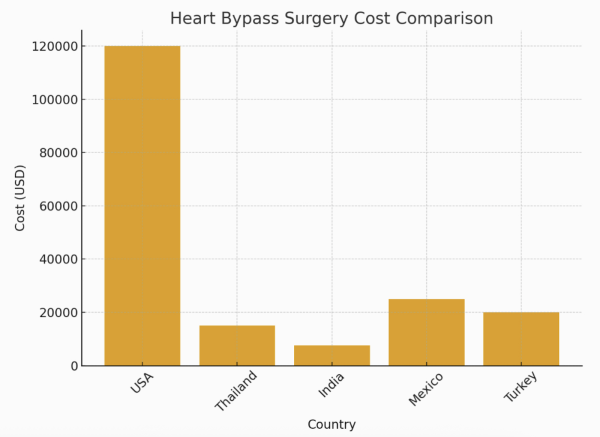
Cost comparisons are startling.
Health insurers traditionally focus on reducing claims and costs. Supporting wellness tourism fits neatly into that mission. For forward-thinking companies, covering part of the cost of a medically-advised trip could be less expensive than long-term pharmaceutical prescriptions or recurring hospital visits. Spending less money while improving outcomes is the holy grail of healthcare finance.
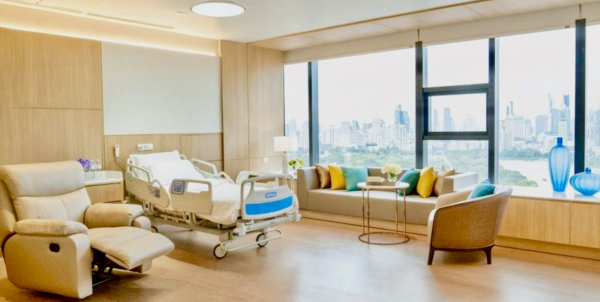
Hospital accommodations in Thailand are increasingly comparable to those of five-star hotels.
Why Your Doctor Might Send You to Thailand Instead of the Pharmacy
Thailand is increasingly positioned as the world’s favourite medical tourism hub, not only for hospital procedures but also for wellness journeys that improve daily health. Doctors may recommend active travel as an alternative to medication because time spent in Thailand’s tropical climate, with spa treatments, yoga retreats, and daily exercise, can lower blood pressure and ease stress more naturally than taking a pill.
Instead of refilling prescriptions, patients could be encouraged to spend two weeks at a wellness retreat in Hua Hin, a meditation centre in Chiang Mai, or on a beach walk in Phuket. For many conditions — particularly hypertension, anxiety, and mild depression — such programmes can achieve measurable health benefits. What was once seen as indulgence is now being recognised by medics as a legitimate and cost-effective form of therapy.
Insurance and Medical Tourism: Following the Money
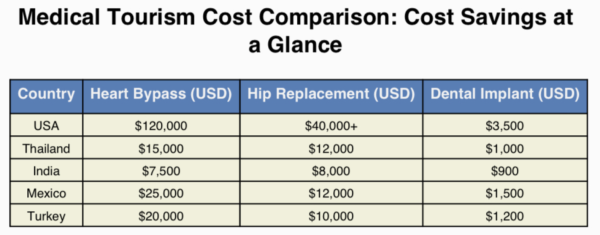
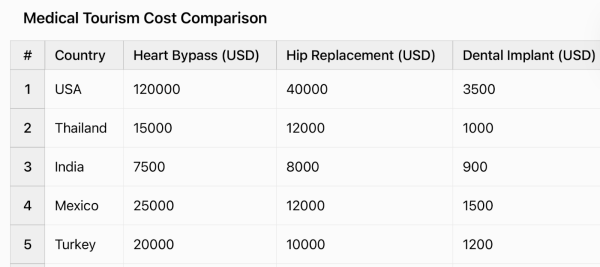
Insurance companies are also beginning to authorise treatment abroad, especially when major procedures can be done at a fraction of the cost in Asia. The United States remains the most expensive country for healthcare. By comparison:
Such stark differences explain why US and European insurers are increasingly willing to cover patients who opt for accredited hospitals overseas. Thailand, India, and Mexico have all reported growth in partnerships with foreign insurers, who recognise that authorising a USD15,000 heart bypass in Bangkok is more cost-effective than paying over USD100,000 in Boston.
Top Countries for Medical and Wellness Tourism
According to recent surveys, the top five destinations for medical tourism are Thailand, India, Mexico, Turkey, and Singapore. Thailand stands out as a favoured destination. Renowned for its excellent hospitals, English-speaking doctors, and lower costs, Thailand attracts more than 3 million medical tourists annually. Beyond procedures, the country’s wellness resorts in Hua Hin, Phuket, and Chiang Mai combine spa treatments, fitness programmes, and traditional Thai therapies with sun-drenched beaches and cultural immersion.
Medical tourism authorities, especially in Thailand, are now aligning their marketing campaigns with wellness and longevity. The Tourism Authority of Thailand has emphasised medical and wellness travel as a core pillar of its 2026 “Value Over Volume” strategy, positioning the country as the ultimate destination for healing body and mind.
The Future: Travel as Prescription
The evidence is mounting. Wellness and longevity are trending, supported by medical research that shows improved recovery times, reduced stress markers, and healthier lifestyles following immersive travel. Tourism authorities are beginning to promote these benefits alongside their beaches and temples. And for doctors, the idea of prescribing travel is shifting from radical to reasonable.
If insurers see the same potential for long-term savings, tomorrow’s prescription may read: “Two weeks in Thailand, daily meditation, and at least 10,000 steps a day.”
About the author
Andrew J. Wood is a Bangkok-based travel writer, hotelier, and tourism lecturer with over four decades of experience in Southeast Asia’s hospitality sector. Born in Yorkshire, he is a former Director of Skål International and President of Skål International Asia, Skål International Thailand, and twice President of Skål Bangkok. A regular contributor to the region’s travel and tourism publications, Andrew is recognised as a respected voice in tourism, hospitality, and investment circles. He has lived in Thailand since 1991.
SYDNEY, 25 September 2025: Booking.com’s ‘Taste of Home Asia Pacific’ research reveals that food is playing a central role in shaping the holiday home experience in 2025.
Travellers across the region are increasingly selecting holiday homes that offer accessibility and freedom to dine, host and/or cook in unique, authentic spaces and destinations.
Hungry for Travel: How Food is Shaping Holiday Home Stays in the Asia Pacific. (Photo credit: Booking.com.)
The study indicated that 82% of Australians surveyed chose destinations based on their culinary preferences. Holiday homes are a preferred accommodation type for this kind of trip, with 97% of Australians saying they adjust their cooking and eating habits while travelling. They frequently visit local markets (85%), cook local dishes (34%), try out new appliances (33%), and experiment with new recipes (34%).
As travellers seek more meaningful and personalised stays, the research identified four ‘taste trends’ shaping the culinary holiday home travel experience.
New head chef in the holiday home
The “chef” role in holiday homes is shifting. Only 13% of Australian travellers reported mum as the holiday cook. Younger generations are now confidently taking the lead, blending family recipes with new ideas; Gen Z (38%) cooks family recipes most often.
Holiday kitchen personas
Four distinct holiday kitchen personalities emerged in the research for travellers booking holiday homes and foodie stays: The comfort-driven traditionalist, the bold experimenter, the laid-back minimalist and the ever-entertaining socialite.
Trolley tourism
Across the Asia Pacific, holiday homes are driving a surge in “trolley tourism,” where visits to local food markets, seasonal foodie festivals, and trendy supermarkets are becoming an integral part of the travel experience. (88% of Australian travellers enjoy visiting local food markets on holiday, a figure that rises to 96% among frequent holiday-home bookers.)
Portable pantry
Travellers are bringing their favourite kitchen items with them when booking homes. This makes holiday kitchens familiar while allowing for destination exploration; 80% of Australians pack food or cooking utensils in their luggage. They include: Tea/coffee (38%); wine (25%); sauces (24%); coffee machines (13%), and BBQ tools (13%).
RAJA AMPAT, Indonesia, 25 September 2025: Indonesia’s Ministry of Tourism, in collaboration with the maritime industry, hosted an Introductory Familiarisation Trip for diving tour companies in Europe and Canada earlier this month.
Indonesia’s Ministry of Tourism Deputy for Marketing, Ni Made Ayu Marthini, explained that a familiarisation trip for diving tourism businesses in the European and Canadian outbound tourism markets was held in Raja Ampat, Southwest Papua, from 6 to 17 September 2025 to strengthen Indonesia’s marine tourism sector in international markets.
Photo credit: Ministry of Tourism Indonesia. Liveaboard on a modern ‘Phinisi’ boat.
Four dive travel agents participated in the event: Faces of the Sea from Canada, Dive Worldwide from the UK, Tropical Seas Tauch und Fernreisen from Austria, and The Wild Blue from Italy.
“Raja Ampat is a priority tourism destination with world-class underwater beauty. In line with the Ministry of Tourism’s efforts to promote marine tourism as a leading special interest tourism segment, this introductory tour is expected to provide international dive travel agents with comprehensive education and experience about the destination,” said the marketing deputy.
Ministry of Tourism, Assistant Deputy for International Tourism Marketing III Wisnu Sindhutrisno said: “The dive tourism segment attracts special-interest tourists who tend to stay longer. Furthermore, Indonesia boasts unique diving spots spread across the archipelago, worthy of being sought after by divers worldwide, particularly those in the European and American markets”.
Wisnu explained that the Raja Ampat famtrip offered two diving experiences: a liveaboard on a modern ‘Phinisi’ boat, in collaboration with La Galigo Liveaboard, and a stay at a dive resort, in partnership with Katembe Private Island.
Surveying various accommodation options, dive travel agents gained first-hand knowledge to assist them in creating tour packages that cater to the markets they serve.
In Raja Ampat, participants checked out several popular dive sites, including Blue Magic, Citrus Ridge, Melissa’s Garden, Manta Sandy, and Arborek Jetty.
Various coral species and marine life are endemic to Raja Ampat, including pygmy seahorses and numerous nudibranchs. Participants also joined night dives to encounter other unique endemic species, such as the Kalabia shark, also known as the walking shark due to its ability to use its fins to walk, and the frilled Wobbegong carpet shark, which inhabits the seabed.
In addition to diving, the famtrip participants were also invited to visit inhabited villages in the Raja Ampat Islands, namely Sauwandarek and Arborek. They also trekked in the Piaynemo area to view the karst or limestone formations, one of Raja Ampat’s iconic sights and explored Warsambin Village and the Kalibiru River, famed for its clear, blue-green water.
DOHA, Qatar, 25 September 2025: Hamad International Airport (DOH) has signed a Sister Airport Memorandum of Understanding (MoU) with Beijing Daxing International Airport (PKX).
The partnership advances Qatar–China cooperation and expands global air connectivity via Doha.
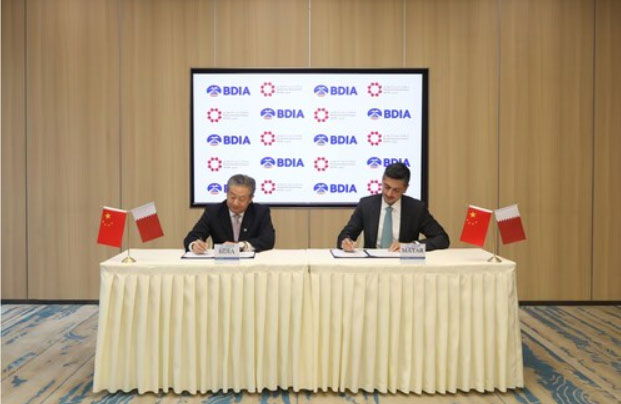
Hamad Al Khater, COO of Hamad International Airport, and Zhang Lin, CEO of Beijing Daxing International Airport, sign a Sister Airport partnership in Beijing.
Hamad International Airport COO Hamad Al Khater and Beijing Daxing International Airport CEO Zhang Lin signed a Sister Airport partnership at Beijing Daxing’s terminal, complementing Qatar Airways’ partnership with China Southern Airlines and the MoU between the Qatar Civil Aviation Authority (QCAA) and the Civil Aviation Administration of China (CAAC).
Together, these moves underscore aviation’s pivotal role in driving economic growth, fostering cultural exchange, and rising travel demand.
Under the MoU, MATAR, the Qatar Company for Airports Management and Operation, and Beijing Capital International Airport Group Co Ltd, operator of Beijing Daxing, will pursue joint projects to enhance passenger and cargo flows. Collaboration will focus on operations, technology, service design, and innovation, positioning both airports as leaders in hub excellence.
Hamad International Airport connects to nine Chinese cities — Beijing, Shanghai, Guangzhou, Shenzhen, Chongqing, Hangzhou, Xiamen, Chengdu, and Hong Kong. These cities link to more than 120 global destinations through Doha, reinforcing Qatar’s airport as the preferred Middle East hub for Chinese travellers.
The Sister Airport agreement builds upon successful initiatives between Qatar and China. Qatar Airways recently announced the expansion of its codeshare with China Southern.
Starting 16 October 2025, Qatar Airways will codeshare on China Southern’s three weekly direct flights between Beijing Daxing and Doha. Similarly, China Southern will expand its “CZ” code on Qatar Airways-operated flights beyond Doha to 15 destinations across Africa, Europe, and the Middle East.
Beijing Daxing is the second Chinese gateway served by China Southern Airlines’ non-stop flights. Beijing also connects with Doha through Qatar Airways’ and Xiamen Airlines’ daily flights. With this frequency increase and codeshare expansion, Qatar Airways and its partners will now offer 64 weekly flights across eight gateways in Greater China.
MUMBAI, 25 September 2025: SOTC Travel, a leading omnichannel travel and tourism company in India, has inaugurated a franchise outlet in Kozhikode, Kerala, expanding its network to its 4th strategically located outlet.
This expansion underscores SOTC’s strong commitment to South India, highlighting Kerala’s position as a key growth market and the company’s focus on catering to the evolving needs of travellers from the region.
Located at Centrio on Ram Mohan Road, Kozhikode, the new SOTC outlet serves both leisure and business travellers, strengthening the company’s presence in North Kerala’s key urban hub. The outlet offers a comprehensive range of travel solutions, including domestic and international holidays such as Group Tours, Personalised Holidays and Cruises, along with value-added services like travel insurance, ensuring convenient, end-to-end experiences for today’s diverse travellers.
Kerala Travel Trends
Top destinations
Domestic & Indian Subcontinent: Kashmir, Himachal Pradesh, Rajasthan, Andaman, Bhutan & Sri Lanka.
International: Europe, Australia, New Zealand, Singapore, Malaysia, Vietnam, Thailand, Bali, Japan, South Africa, Egypt.
Unique preferences: High demand for experiential travel such as luxury cruises, Northern Lights in Scandinavia, self-drive holidays, island stays (Maldives, Mauritius), and adventure travel to Ladakh and the North-East.
Top customer segments: Multi-generational families, honeymooners, working professionals, millennials and Gen Z travellers.
Average holiday duration: Four to six days for domestic/short haul; 10 to 12 days for long haul.
“Kerala is an important source market for us, with travellers seeking diverse and evolving experiences,” said SOTC Travel Limited, Senior Vice President & Head – Holidays, Rakesh Bawa. “The launch of our Kozhikode outlet enables us to strategically deepen our presence in North Kerala, catering to both business and leisure segments while delivering both group and customised holiday solutions. This expansion reflects our commitment to leveraging high-potential markets in South India for sustainable growth and enhanced traveller satisfaction.”
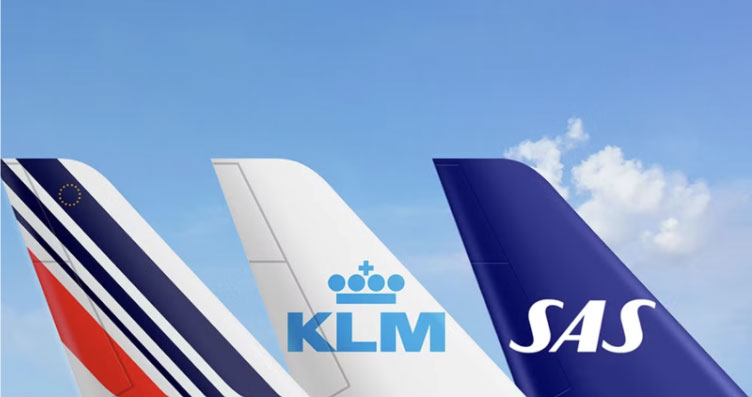
SINGAPORE, 25 September 2025: Air France-KLM and SAS expand their commercial collaboration to strengthen the connection between Scandinavia and the US.
Air France-KLM and SAS (Scandinavian Airlines) announced a significant expansion of their existing commercial collaboration on Tuesday, with the aim of further improving the connections and travel experience for passengers travelling between Scandinavia and the US.
“Here in Scandinavia, we are delighted to strengthen our collaboration with SAS. Our partnership already offers travellers around 500 additional weekly SAS flights, easily connecting with Air France and KLM, to destinations all over the world – a great success so far”, said Air France–KLM, North Europe & CIS General Manager Tom Verbugt. “Now we are further increasing the offer with around 60 direct flights per week with SAS to the USA. We are significantly improving our joint offer from Scandinavia. This expansion creates endless possibilities to combine times and routes on one ticket, while still earning Flying Blue Miles and XP (Experience Points) throughout the journey.”
With this latest move, the Air France code will be added to SAS-operated direct transatlantic flights. This new codeshare agreement will provide customers with seamless and broad access to a wide range of destinations in the US via the main Scandinavian hubs.
The new codeshare routes include:
From Copenhagen International Airport (CPH) to: Atlanta (ATL), Boston (BOS), Chicago (ORD), Los Angeles (LAX), Miami (MIA), New York-Newark (EWR), New York JFK (JFK), San Francisco (SFO), Seattle (SEA) and Washington (IAD)
From Stockholm Arlanda Airport (ARN) to: New York-Newark (EWR) and Miami (MIA).
From Oslo Airport (OSL) to: New York-Newark (EWR), New York (JFK).
Reservations can now be made on airfrance.com, klm.com and via all distribution channels for flights departing from today.
This expansion builds on the successful commercial collaboration between Air France-KLM and SAS, which began in 2024 when SAS joined the SkyTeam alliance, of which Air France-KLM is a founding member.
This move follows the implementation earlier this year, where SAS’s code was added on several long-haul routes operated by Air France and KLM from their hubs in Paris-Charles de Gaulle and Amsterdam Schiphol, as well as the reciprocal codeshare agreements on the European route network launched last year.
SHENZHEN, 25 September 2025: Dida Holdings’ founder, Rikin Wu, has appointed Daryl Lee as its new Group Chief Executive Officer, effective 5 October 2025.
Lee was previously the global CEO at WebBeds and, before that, led GTA across the Middle East & Asia Pacific. He began his career in aviation and hospitality with Singapore Airlines.
Daryl Lee, Dida’s new Group Chief Executive Officer.
He joins Dida at a decisive moment that reflects its ambition to strengthen its position as a premier gateway between China and the global travel ecosystem, enabling hotels, airlines, OTAs, wholesalers, and travel agencies worldwide to access both the world’s largest outbound market and the most advanced AI-driven technologies.
Founded in 2012 in Shenzhen by entrepreneur Rikin Wu, Dida began as a travel distribution startup with the vision of modernising China’s connection to the world. In just over a decade, the company has grown to become one of China’s leading B2B travel distribution platforms.
Dida Group’s incoming CEO, Daryl Lee, commented on his appointment: “I am honoured to join Dida at such a transformative time for the company and the industry. What excites me most is Dida’s unique ability to act as a gateway for travel innovation — combining scale, speed, and AI-first technology with a global outlook.
Working alongside Rikin and Dida’s experienced leadership team, I am committed to building on Dida’s remarkable success to date. Together, we will strengthen our global distribution network, expand the reach of our AI-driven solutions, and help shape the future of travel technology.”
Effective 5 October, Rikin Wu, Dida’s founder, will hand over the reins to Daryl Lee as the group CEO, marking the beginning of Rikin’s transition to the position of Chairman.
Dida’s diverse travel portfolio today spans the entire traveller journey, powered by seamless technology and global partnerships. Dida Hotels connects partners to over a million properties worldwide, including a curated portfolio of direct contracts featuring unique conditions. Meanwhile, the Dida Flights division delivers dynamic access to global air content through a cutting-edge API.
GURUGRAM, 24 September 2025: Air India group announced on Tuesday its plans to commence commercial flights from Navi Mumbai International Airport (NMIA, IATA code: NMI) on 30 September, when the airport’s first phase opens.
Adani Airport Holdings Ltd will operate NWIA’s first phase of operations and collaborate with Air India Group to boost domestic and international connectivity as well as propel India’s growth in becoming the world’s third-largest air passenger market by 2030.
Photo credit Air India Group. Navi Mumbai International Airport.
In the initial phase of the new airport’s operations, Air India Group’s low-cost carrier, Air India Express, will operate 20 daily departures or 40 Air Traffic Movements (ATMs) from and to NMIA, connecting 15 Indian cities.
The Air India group plans to increase its daily departures to 55 (110 ATMs) by mid-2026, including up to five daily international flights from NMIA.
By winter 2026, the Air India group aims to further expand its operations to 60 daily departures (120 ATMs) from NMI, seamlessly connecting passengers to key domestic and international destinations.
Air India Chief Executive Officer & Managing Director, Campbell Wilson, said: “We look forward to commencing operations at Navi Mumbai International Airport, as Mumbai joins the league of world cities with more than one airport. We are happy to work with Adani Airports to build NMIA not only as a point that connects to the rest of India, but also as one of the country’s key global transit hubs for both passengers and cargo, given its strategic geographical location.”
Air India Express’ planned operations at NMIA will significantly enhance connectivity to and from the Mumbai Metropolitan Region (MMR) to destinations within and outside India, while facilitating seamless international transits through NMIA.
Navi Mumbai International Airport is being built in five phases, with the launch phase expected to accommodate 20 million passengers per annum (MPPA) and handle 0.5 million metric tons (MMT) of cargo. Upon full completion, NMIA will have the capacity to serve 90 MPPA and handle 3.2 MMT of freight annually.
BANGKOK, 24 September 2025: Travelling is one of life’s greatest pleasures, and thankfully, it is now once again widely available and reasonably affordable.
Staying safe and secure should always be a priority, whether you are going across the world or simply a few hours from home. In this article, I aim to share some practical advice and common-sense steps that will help you avoid unnecessary risks and give you peace of mind.
Travel is easy and convenient, but stay vigilant.
Stay connected with your embassy
One of the most overlooked safety measures is keeping your embassy informed about your travels. Many embassies offer traveller registration systems. Signing up allows them to contact you in case of natural disasters, political unrest, or emergencies. Embassies also publish travel advisories and alerts that can prove invaluable when deciding whether to visit certain regions. A simple step like this can make all the difference if situations change quickly while you’re abroad.
Be constantly aware of your surroundings
Awareness is your best defence. In areas with limited visible police presence, always keep an eye on what’s happening around you. Notice who is in front of you, who is behind you, and what’s going on nearby. Criminals often look for travellers who appear distracted. Staying alert — even in busy tourist areas — can help you avoid pickpockets, scams, and uncomfortable situations.
I learned this lesson the hard way in Barcelona, many years ago. I had been warned that Las Ramblas was rife with pickpockets, but I chose to walk down there anyway on my way to the bank to cash traveller’s cheques – a reminder of just how long ago this was. Despite keeping my hand in my pocket to guard my wallet and passport, I was distracted by someone waving a newspaper in front of me. As I lifted my hand to protect myself, an accomplice behind me slipped my wallet out of my pocket. It was done so quickly and smoothly. I didn’t even notice until later. Even when you think you are careful, distractions can catch you off guard.
Carry an emergency first aid kit
Accidents happen when you least expect them. A small, simple first aid kit can make a big difference. You can easily put one together yourself or purchase a ready-made commercial kit. At home, I keep one in my car, and when travelling, I always transfer it to my suitcase. Think of it as your “go-to” emergency kit, ready to help with cuts, sprains, or minor ailments until proper medical care is available.
Keep an emergency cash reserve
Never rely solely on your wallet or main bag for money; these are the first things a thief will target. Instead, keep an emergency supply of cash in a separate, secure location, such as a money belt, a hidden pocket, the lining of your luggage, or, even better, in your hotel safe.
Jewellery may be comforting, but it also attracts attention. Leave your most valuable pieces at home and travel with a simple set that will not break your heart if it is stolen or misplaced. You can also purchase new, inexpensive pieces upon arrival at your destination.
Carrying a spare credit card, stored separately from your main wallet, is another wise precaution. If your wallet is lost or stolen, that extra card can be invaluable. Remember to cancel any stolen cards immediately.
Finally, be especially vigilant with your passport and valuables at airports. These are busy, crowded environments, the perfect setting for pickpockets and opportunists.
Keep family and friends informed
It is always wise to let people know your travel plans. Share your itinerary with trusted family or friends and stay in contact with them. This becomes even more important when travelling to remote areas. If something unexpected happens, having someone who knows where you are meant to be can speed up help and assistance.
Many people lose belongings at airports – thieves love them.
Safety needs constant vigilance. I was once caught out in Warsaw while attending a travel show. After dinner at a restaurant near my hotel, I chose to take a shortcut back to my hotel through a wooded area. Unbeknownst to me, it was a hotspot for criminals targeting tourists. A group of men approached me demanding money. Fortunately, I managed to run away and later made a report at the police station.
The officers told me that this area had seen many similar incidents. I wished I had known that beforehand — it reminded me that checking local news and advisories can help you avoid danger zones. I also informed the restaurant and the hotel manager of my plight so they could advise other patrons.
Low-cost airlines make travel more accessible to everyone.
Monitor local and embassy advisories
Staying informed is key. Before and during your trip, keep an eye on embassy travel warnings as well as local news reports. Political demonstrations, natural disasters, or sudden flashpoints can develop quickly. Knowing what’s happening locally helps you avoid unsafe areas and adjust your plans if necessary.
Protect your passport
Your passport is your most important travel document — your lifeline abroad. Always keep it safe and secure. Personally, I travel with a colour photocopy of the passport photo and information page, which I carry separately from the original. If there’s a safe in my hotel room, I store the real passport there and keep only the copy with me. This reduces the chance of losing or damaging it while still ensuring I have the details handy if needed.
Travelling safely doesn’t require paranoia, just a little extra thought and preparation. With awareness, planning, and a few simple precautions, you can enjoy your adventures with greater confidence and peace of mind.
About the Author Andrew J Wood is a former hotelier, travel writer, and long-time resident of Thailand. A Past President of Skål International Asia, Skål International Thailand, and Skål International Bangkok, he is a regular contributor to the region’s travel and tourism publications, writing frequently about safe, enjoyable, and responsible travel.