

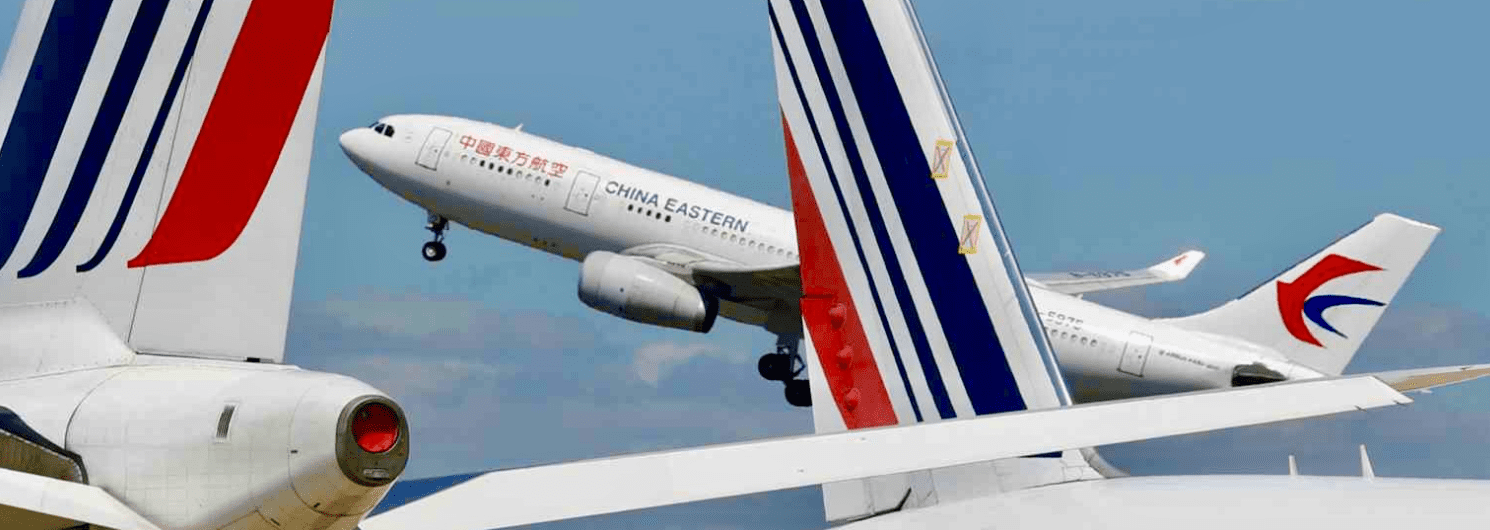
BANGKOK, 16 April 2026: A striking shift is unfolding in global aviation. While conflict in the Middle East has forced many airlines to scale back operations, Chinese carriers are moving in the opposite direction, massively adding thousands of seats on routes between China and Europe.
At first glance, the move appears counterintuitive. In reality, it reflects a calculated response to a rapidly changing geopolitical and commercial landscape.
The Iran war has disrupted one of the world’s most important aviation corridors linking Asia and Europe. Airspace closures and heightened safety concerns have forced airlines to reroute flights or suspend services altogether.
Gulf hubs such as Dubai, Doha and Abu Dhabi, long dominant as transit points between continents, have seen significant operational disruption. This has created a sudden and substantial capacity gap. Chinese airlines have been quick to seize the opportunity.
A key advantage lies in geography and access. Unlike many Western carriers, Chinese airlines continue to operate over Russian airspace. This allows them to maintain shorter, more direct routes to Europe, avoiding the costly detours that other airlines must take. In an industry where fuel is the single largest operating cost, this routing advantage is decisive. Shorter flight times translate into lower fuel burn, improved aircraft utilisation and more competitive pricing.
Fuel prices have become a critical factor. The conflict has driven a sharp rise in global jet fuel costs, placing intense pressure on airline margins. Many carriers have responded by cutting less profitable routes and reducing frequency. Chinese airlines, however, have adopted a different strategy. Rather than retreat, they are focusing on efficiency. Measures include reducing onboard weight, optimising flight planning and concentrating capacity on routes where demand remains strong. Europe fits that profile.
At the same time, passenger behaviour is shifting. Travellers who would normally connect through the Middle East are increasingly avoiding the region due to uncertainty. This has accelerated the emergence of alternative hubs. Beijing and Shanghai are now seeing growing volumes of transit passengers linking Europe with Asia. Chinese airlines are effectively repositioning their home airports as viable alternatives to traditional Gulf hubs.
There is also a structural element within China itself. The domestic aviation market has become highly competitive, with excess capacity and pressure on yields. Expanding internationally offers a way to redeploy aircraft more profitably. With constrained capacity from other carriers, Europe presents an attractive opportunity. By increasing frequencies and opening additional routes, Chinese airlines are not only capturing displaced demand but also strengthening their long-term presence in key European markets.
In this context, the headline that Chinese airlines are “shrugging off” the Iran war requires careful interpretation. They are not immune to rising costs or operational risks. Rather, they are better positioned than many of their competitors to navigate the disruption. Access to northern flight paths, fewer geopolitical restrictions on airspace and a willingness to move quickly have combined to create a relative advantage.
The implications extend beyond short-term capacity shifts. Aviation has always been closely tied to geopolitics, and periods of disruption often accelerate structural change. What is emerging now is a subtle but important rebalancing of global air traffic flows. Chinese carriers are strengthening their role as connectors between Europe and Asia amid strain on traditional routes.
For the wider tourism industry, this shift carries both opportunities and risks. Greater connectivity between China and Europe may support inbound and outbound travel flows over time. However, destinations that rely heavily on Middle Eastern transit hubs may face reduced accessibility in the near term. For Southeast Asia, including Thailand, the impact will depend on how effectively regional airlines and airports adapt to the new routing dynamics.
What is clear is that the aviation map is being redrawn in real time. In a period marked by uncertainty and volatility, Chinese airlines have chosen to expand rather than contract. It is a strategic decision that may well outlast the current crisis, reshaping competitive positions in global aviation long after the conflict subsides.

Andrew J Wood is a British-born travel writer and former hotelier who has lived in Thailand since 1991. With over four decades of international hospitality experience, he has held senior leadership roles with leading hotel groups including Thistle Hotels, Shangri-La Hotels and Resorts, Minor Hotels, Chaophya Park Hotel & Resorts and the Royal Cliff Hotels Group.
A long-standing member of Skål International, he has served as a Director on the global Skål International board. He is a former President of Skål Asia and National President of Skål Thailand, and has twice served as Club President of Skål International Bangkok. In recognition of his contribution to global tourism, he has received Skål’s Order of Merit and the President’s Award, and in 2019 was honoured with the organisation’s highest distinction, Membre d’Honneur.