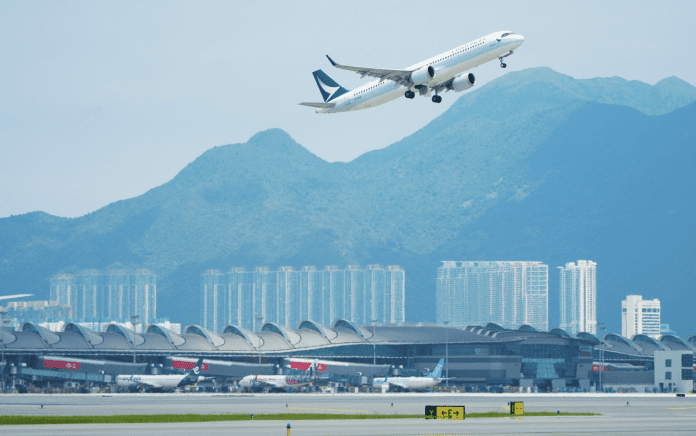
HONG KONG, 19 March 2026: February’s busy Chinese New Year celebration saw daily passenger volume at Hong Kong International Airport (HKIA) surpass 210,000 trips on the peak day of 22 February 2026.
In total, HKIA handled 5.42 million passenger trips and 32,100 flight movements in February, representing year-on-year increases of 20.1% and 10.5% respectively.
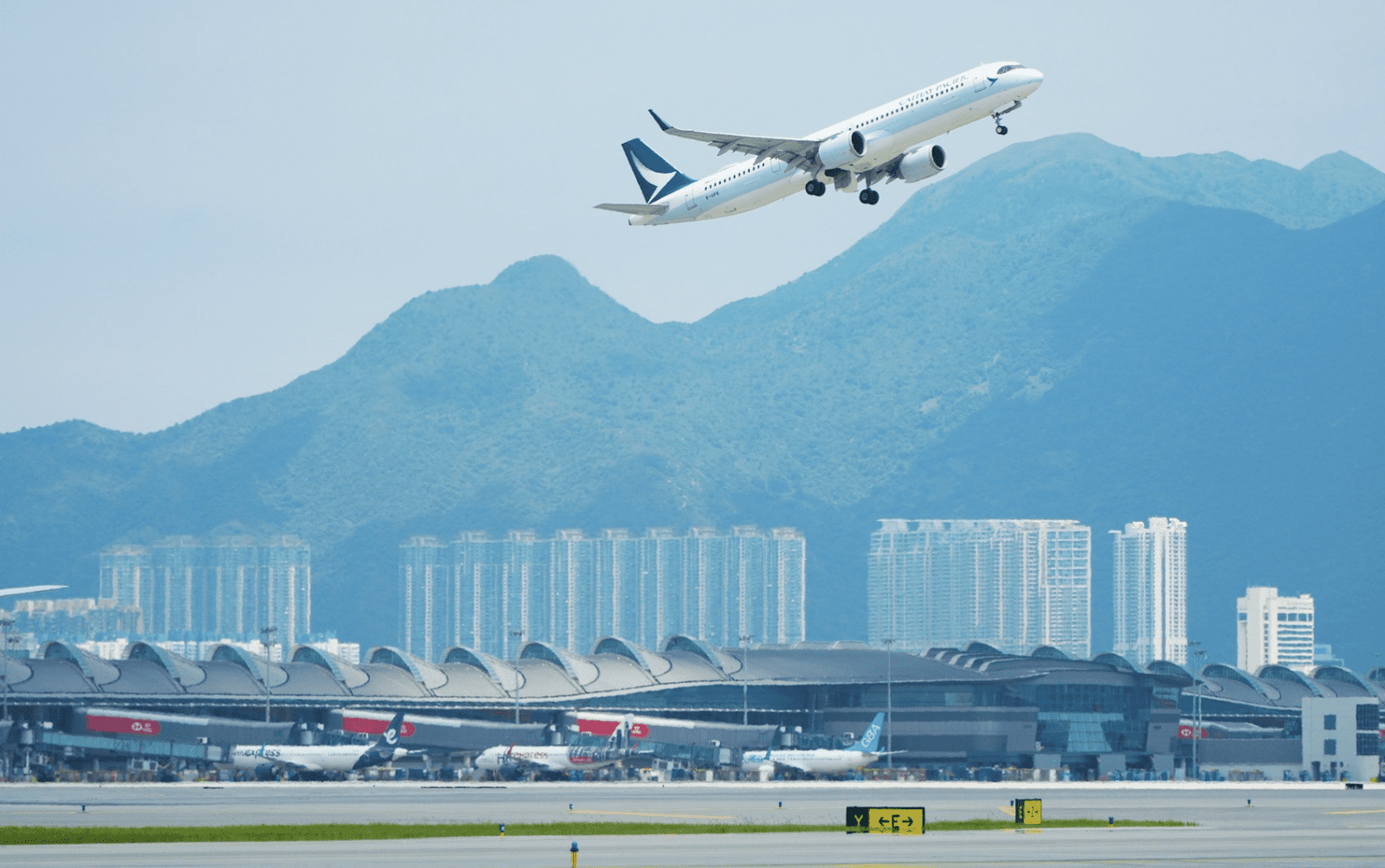
Photo credit: HKIA.
Cargo throughput continued to gain momentum, with cargo volume growing 11.6% year-on-year to 361,000 tonnes during the month.
Over the first two months of 2026, HKIA handled 10.93 million passenger trips and 66,545 flight movements, representing year-on-year growth of 11.7% and 6.2% respectively.
The combined growth in passenger volume in January and February was driven mainly by a 30% year-on-year increase in transfer/transit passenger traffic. During the period, traffic to and from the Chinese Mainland and Southeast Asia contributed the most to the growth in passenger traffic.
The cargo throughput of the first two months of 2026 rose by 8.2% year-on-year, to 776,000 tonnes. The overall growth of cargo throughput for the first two months was mainly attributed to a 17% year-on-year increase in transhipments. Exports also recorded a 7% growth. Among the key trading regions, cargo throughput to and from Europe, Southeast Asia, and the Middle East showed the largest increases.
On a 12-month rolling basis, passenger volume rose by 14.0% year-on-year to 62.12 million, while flight movements increased by 7.9% to 398,565. Cargo throughput grew by 3.6% to 5.13 million tonnes.
The airport recently welcomed two new airlines: Chongqing Airlines, which connects to Chongqing, and Eastar Jet, which connects to Seoul.
Air Busan, Chongqing Airlines, Greater Bay Airlines and T’Way Air also launched new routes to Seoul, Chongqing, Fukuoka, Pakse, Phuket and Busan, respectively, further expanding HKIA’s air traffic network.
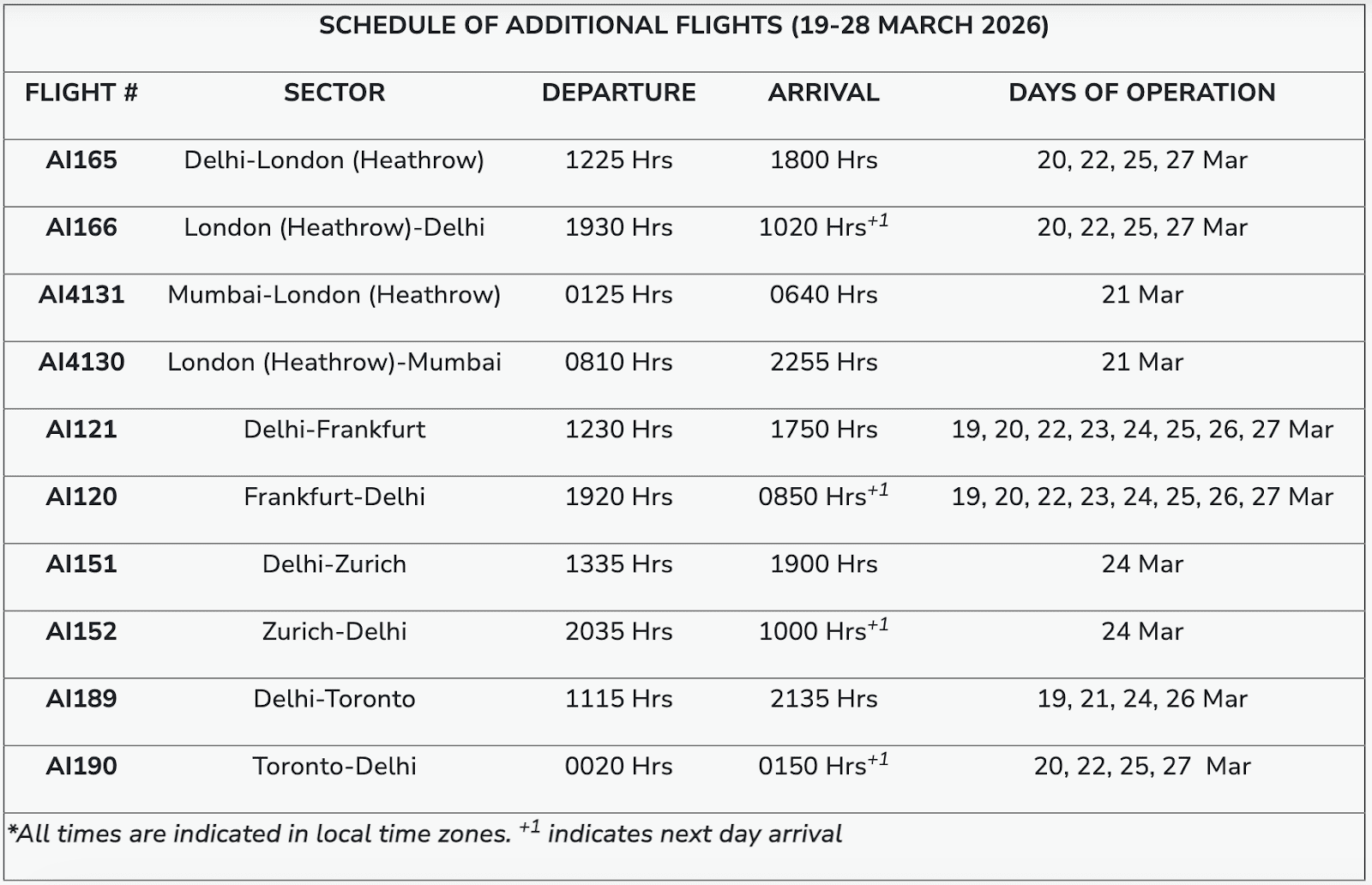
NEW DELHI, 19 March 2026: Due to high demand for international travel due to the ongoing hostilities in the Persian Gulf, Air India will continue to operate additional flights to key destinations in Europe and North America through 28 March 2026.
Photo credit: Air India. Additional flights across five global routes to meet travel demand from 19 to 28 March.
Between 19 and 28 March 2026, Air India will operate 36 extra flights on the following routes:
Delhi-London (Heathrow)
Mumbai-London (Heathrow)
Delhi-Frankfurt
Delhi-Zurich
Delhi-Toronto
Together, these flights will add 10,012 seats across the five routes, further boosting capacity and providing more choice for travellers as travel options remain limited.
These services follow Air India’s recently announced capacity augmentation between 10 and 18 March with 78 additional flights on nine routes.
The additional flights are being progressively opened for bookings through all channels, including Air India’s official website, its mobile app, and through travel agents.
SINGAPORE, 19 March 2026: Digital travel platform Agoda and South Korea’s Gangwon State have launched a partnership aimed at transforming Gangwon into a leading international travel destination.
The two-year Memorandum of Understanding (MOU) took effect on Tuesday during a meeting between Gangwon Governor Kim Jin-tae and Agoda Chief Commercial Officer Damien Pfirsch in Wonju.
Photo credit: Agoda. Gangwon Governor Kim Jin-tae and Agoda CCO Damien Pfirsch (centre) celebrate the partnership with representatives of Gangwon and Agoda.
Leveraging Agoda’s global tourism insights and marketing expertise, the company will support the region’s destination marketing initiatives and explore data-driven promotional opportunities to strengthen the local tourism industry.
Gangwon State is a year-round destination for nature lovers and culture seekers. In winter, ski resorts and snow festivals draw visitors. In summer, cool mountain retreats and riverside activities provide relief from the heat. With fresh seafood, mountain herbs, artisanal markets and cultural sites that reflect Korea’s rural heritage, plus convenient links to Seoul and a growing range of boutique hotels, Gangwon is an accessible and authentic choice for active holidays and relaxed getaways.
Gangwon Governor Kim Jin-tae commented: “By connecting the private sector’s global capabilities with Gangwon’s tourism assets, I expect this partnership with Agoda to strengthen Gangwon’s tourism competitiveness further. We will continue to support public–private cooperation projects to advance the region’s tourism industry.”
Agoda Chief Commercial Officer, Damien Pfirsch said: “Gangwon State offers tourists from around the globe a remarkable variety across all seasons — from world-class ski resorts in Pyeongchang to national parks and beaches — and there is a great deal of potential to unlock. Through our work together, Agoda will showcase Gangwon’s year-round appeal to international travellers.”
South Korea is one of Agoda’s key markets and remains important to the company as it continues to invest and innovate to the benefit of travellers and partners in the country. This is evident in deeply localised offerings such as 24/7 Korean-language customer care, an extensive motel selection, integration with Naver Maps, local payment methods like Kakao Pay, and Agoda commercials tailored to Korean travellers.
BANGKOK 19 March 2026: The debate surrounding Donald Trump, his rhetoric, his style, even his age, continues to dominate headlines. Yet beneath the noise lies a far more consequential story.
A profound shift in how global power is exercised, alliances are managed, and conflicts unfold.
US-Israel Diplomacy: Netanyahu won Trump, but the US President loses support back home.
The real story is not personality. It is structure.
This is no longer a world defined by stable rules and predictable diplomacy. It is becoming one shaped by speed, disruption and hard national interest.
Under Trump, the US has accelerated a move away from traditional multilateralism towards a more transactional model of leadership. Allies are no longer automatically consulted, and decisions, particularly in times of crisis, are taken quickly and often unilaterally.
The current conflict involving Iran and Israel illustrates this shift with unusual clarity. Military action has been decisive and immediate, but it has also exposed widening differences within the Western alliance itself.
Nowhere is this more evident than in Europe
French President Emmanuel Macron has made clear that France will not be drawn automatically into the conflict. His position reflects a broader European instinct. Support stability, avoid escalation, and retain diplomatic flexibility. What appears online as rebellion is, in reality, recalibration. Europe is not breaking with America, but quietly redefining its distance from it.
Starmer and Macron say “Non”
The UK, under Keir Starmer, has taken a more traditional path. Britain remains closely aligned with the US and supportive of Israel’s security position. Yet there is caution. The UK has avoided leading offensive action, instead focusing on defence, intelligence cooperation and calls for restraint. Britain stands where it often has, shoulder to shoulder with Washington, but quietly mindful of the cost when America moves too far, too fast.
Between these positions sits an increasingly important group — the middle powers.
Canada, under Mark Carney, offers perhaps the clearest example of this emerging influence.
Ottawa has supported Western security concerns while firmly declining to engage in direct military involvement. At the same time, it has emphasised diplomacy, de-escalation and the need to restore a functioning international order.
This is middle power diplomacy at its most effective. Measured, credible and independent. Countries such as Canada, alongside others in Europe and Asia, are seeking not to dominate events but to stabilise them. Their influence lies not in force, but in legitimacy and balance.
This is no longer a world defined by superpower control, but by superpower disruption, where middle powers may not decide wars, but increasingly shape how they end.
Yet their limitations are equally clear. They can shape outcomes, but rarely determine them.
The war itself reflects a deeper strategic paradox.
Israel has achieved significant tactical success. Its operations have degraded Iranian capabilities and removed key figures within its adversary’s leadership structure. From a military standpoint, these are substantial gains.
But wars are not decided by tactics alone.
Despite heavy losses, Iran has demonstrated resilience. It continues to exert pressure through missile and drone activity, and its ability to disrupt global energy flows, particularly through the Strait of Hormuz, has reminded the world of its strategic reach. This is not the behaviour of a state on the verge of capitulation.
Indeed, Iran’s position appears to be one of endurance. It is absorbing damage while maintaining enough capability to impose costs on its adversaries. Domestically, the conflict may even strengthen resolve, as external pressure often consolidates internal control in such systems.
This creates a complex reality. Israel may be winning militarily, but Iran is not losing strategically.
The debate around Trump’s health may dominate headlines, but it is his disruption of the global order, not his cognition, that will define his historical legacy.
If this is the new global reality, its consequences will be felt far beyond the battlefield, nowhere more so than in Asia’s travel and tourism economies.
About the author Andrew J Wood is a Bangkok-based travel writer and former hotel executive specialising in Asian tourism.
SINGAPORE, 19 March 2026: British Airways will schedule a significant expansion to its network during the winter timetable 2026, with the addition of two new destinations: Melbourne in Australia and Colombo in Sri Lanka.
In addition, the airline will schedule more flights to Cape Town (South Africa), Haneda (Tokyo), Bridgetown (Barbados), Kingston (Jamaica) and San José (Costa Rica).
Photo credit: BA. View of Melbourne city skyline at twilight in Australia.
The new schedule reflects a 9%* growth in British Airways’ long-haul route network.
These planned new routes and frequency growth for winter 2026 are in addition to short-term capacity increases to destinations resulting from the Gulf crisis.
British Airways added seven extra return services to Bangkok and Singapore last week and will continue to review its schedule and add additional flights to destinations as needed.
Demand for travel remains strong, and as customers look for alternative holiday destinations in the immediate term, British Airways Holidays has seen a rise in searches for popular destinations like Antigua and Gran Canaria, which have increased by 63% and 50%, respectively.
British Airways’ Chief Planning and Strategy Officer Neil Chernoff said: “We’re delighted to announce sizeable growth to our flying schedule for winter 2026, including two notable new destinations that I’m confident will prove popular with our customers. We’re also increasing services across several high-demand routes around the world. Together, these changes represent a significant investment in our long-haul leisure network, adding even more options and choice for our customers.
“Elsewhere, we know there is short-term demand as a result of the situation in the Middle East. To support customers with alternative routes from popular destinations, we have already launched additional flights, and we will continue to monitor customer demand and add flights to our schedule if we’re able to do so.”
New services during winter 2026-2027
Melbourne, Australia: British Airways will commence flights to Melbourne in Australia from 9 January 2027, launching in time for the Australian Open and the Melbourne Grand Prix. Daily flights will operate year-round from London Heathrow, via Kuala Lumpur.
Melbourne is the capital of the state of Victoria, and is known as the country’s cultural hub and is world-renowned for its coffee scene. It’s also the gateway to southern Australia and its array of attractions, including Grampians National Park, the Great Ocean Road, and the High Country, with its breathtaking landscapes and famed vineyards.
Customers have a choice of four cabins – World Traveller (economy), World Traveller Plus (premium economy), Club World (business class) and First. Return fares start from UKP1,130 (including taxes and carrier fees). Sales opened on 17 March.
Colombo, Sri Lanka: Launching on 23 October 2026, British Airways will fly three times per week from London Gatwick to Colombo, the gateway city to Sri Lanka.
The route will operate only during the winter season, taking customers directly to the Indian Ocean island, home to picturesque beaches, scenic wildlife, culture, and rich cuisine.
Return fares start from UKP620 (including taxes and carrier fees). Sales opened on 17 March.
More flights
In a significant planned expansion to the winter 2026 schedule, the airline is increasing frequencies across several of its popular routes.
A third daily flight from London Heathrow to Cape Town, South Africa, will start in December.
London Heathrow to Haneda in Tokyo, Japan, increases to double-daily from the end of March and continues throughout the winter schedule.
A daily Barbados flight from London Gatwick will commence on 25 October, a new route that will complement the existing London Heathrow service to the Caribbean island. It will have onward tags to Grenada, Guyana and Tobago.
There is more dedicated capacity to St Lucia in the Caribbean, as daily flights become a standalone service from 25 October.
San José in Costa Rica increases to five per week, and moves to London Heathrow.
Kingston in Jamaica and Punta Cana in the Dominican Republic, both served from London Gatwick, will go up to four per week.
To the US, New Orleans flights increase to four per week, Baltimore becomes daily, and Houston moves to 12 per week.
Delhi continues with three daily flights, as the frequency growth introduced at the start of the summer season remains in place.
London Heathrow to Abu Dhabi will return for its planned winter schedule, operating daily from 25 October.
Flights reduced to the Middle East
British Airways has extended the temporary reduction in flights to the region, with flights to Amman, Bahrain, Dubai and Tel Aviv cancelled up to and including 31 May, and flights to Doha cancelled until 30 April.
Most searched destinations
British Airways Holidays has seen a boost in interest for holidays to the Caribbean, with Barbados searches on ba.com up 46% and Antigua searches up 63% versus last year. Searches for Indian Ocean holidays have also increased, with the Maldives up 32% and Mauritius up 42% versus last year. Closer to home, holiday searches to the Canary Islands are on the rise, with Tenerife up 38% and Gran Canaria up 50% versus last year.
The airline has also seen similar trends in flight searches, with the Maldives up 74%, Barbados up 18%, and St Lucia up 26% compared to February 2026. Overall, searches for flights from the UK to the Caribbean, South West Pacific and South Asia have increased by 40%, and for short-lead travel in the next two weeks, figures are up 155%.
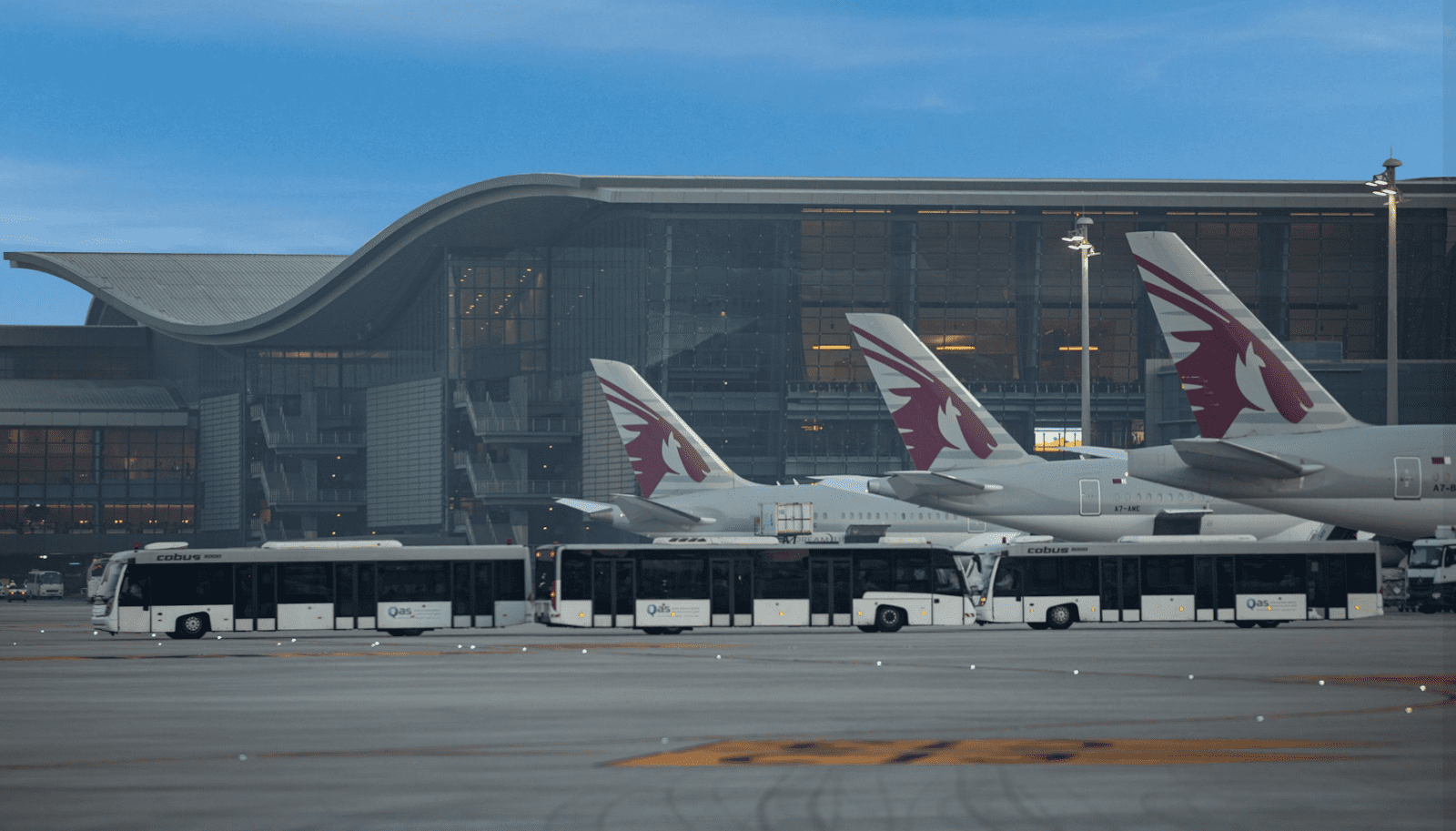
DOHA, 19 March 2026: In response to the military conflict in the Persian Gulf, Hamad International Airport confirms that it is withdrawing participation from all external exhibitions, conferences, industry events, and awards programmes.
That also includes the Skytrax World Airport Awards 2026 and the Passenger Terminal Expo 2026, London.
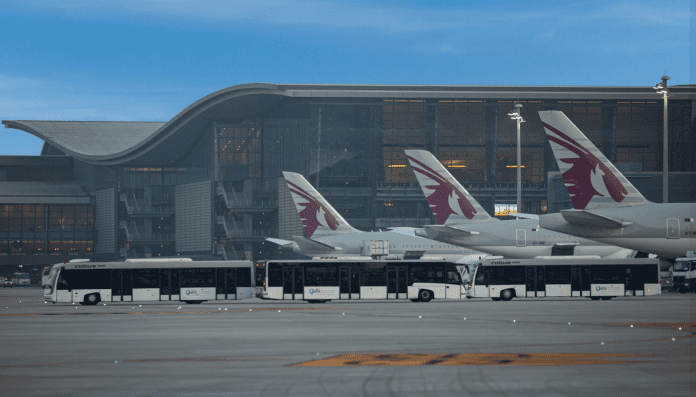
Photo credit: Hamad International Airport.
Commenting on the ongoing hostilities, the airport authorities say the “safety and well-being of passengers, staff, and their families is, and remains, its absolute priority.”
Arabian Travel Market moves dates
Exhibitions have also fallen victim to the war and indiscriminate missile and drone attacks on the Gulf countries. On Wednesday, the exhibition organiser RX confirmed that the 2026 edition of Arabian Travel Market (ATM), originally scheduled to take place from 4 to 7 May 2026 at Dubai World Trade Centre, Dubai, will now be held from 17 to 20 August 2026, with the venue remaining unchanged.
The decision to reschedule the event has been made to prioritise the safety and well-being of customers, partners and colleagues, and to give the global travel and tourism community greater confidence and flexibility to attend.
Meanwhile, in Doha, Qatar Airways reports that Qatar Civil Aviation Authority has approved operating corridors for a limited number of flights, and Qatar Airways will operate a revised limited schedule through 28 March to global hubs (for example: London, Paris, Bangkok) via the approved corridors.
The operational status of airports in the Gulf remains highly volatile and subject to sudden changes due to the ongoing regional conflict. As of 18 March 2026, most major hubs are in a “partial recovery” phase, operating with significantly reduced capacity and frequent temporary closures.
Qatar
Hamad International (DOH): Qatari airspace remains officially closed to standard commercial traffic.
Operational Status: Only a limited “authorised corridor” is currently open for specific repatriation and emergency flights.
United Arab Emirates (UAE)
Dubai International (DXB) & Al Maktoum (DWC): Both are open but operating at roughly 40-60% capacity.
Recent Incident: A drone strike on a fuel tank near DXB on 16 March caused a temporary suspension of all flights. Operations have since resumed, but schedules are fluid.
Travel Rule: Access to terminals is restricted to passengers with confirmed tickets only. Passengers should not head for the airport unless the airline has confirmed their flight.
Zayed International (AUH), Abu Dhabi: Partially open under a reduced schedule.
Status: Etihad has resumed service to approximately 70 destinations, though total airport movements remain below one-third of pre-conflict levels. Airspace was briefly closed on 17 March as a precaution.
Saudi Arabia
King Khalid International (RUH), Riyadh: Remains fully open and operational 24/7, though it is facing significant disruptions.
Regional suspensions: Saudia has suspended most routes to other Gulf destinations like Kuwait, Dubai, Abu Dhabi, and Doha.
Security advisory: EASA has issued warnings regarding Saudi airspace due to high drone and missile interception activity in the region.
King Abdulaziz International (JED), Jeddah: Open and functioning, often serving as a primary alternative hub for traffic diverted from more active conflict zones.
Other regional hubs
Muscat, Oman (MCT): Currently, the most stable hub in the region. It remains fully operational and is acting as the primary relief airport for diverted flights and passenger transfers.
Kuwait and Bahrain: Both are in a “partial recovery” phase. Most international arrivals are still facing heavy cancellations or long diversions to avoid active military zones.
Current status of Gulf airports (18 March 2026)
Airport
Status
Key Constraint
Dubai (DXB)
Partial / High Alert
Operating at ~50% capacity; strictly confirmed tickets only.
Abu Dhabi (AUH)
Partial / Open
Operating at ~30% capacity; focus on point-to-point travel.
Doha (DOH)
Heavily Restricted
Limited to “Authorised Corridors” only; most commercial flights suspended.
Riyadh (RUH)
Open
Fully operational, but regional Gulf routes are suspended.
Muscat (MCT)
Fully Operational
Acting as the primary regional relief and diversion hub.
(Source: Hamad International Airport plus additional reporting)
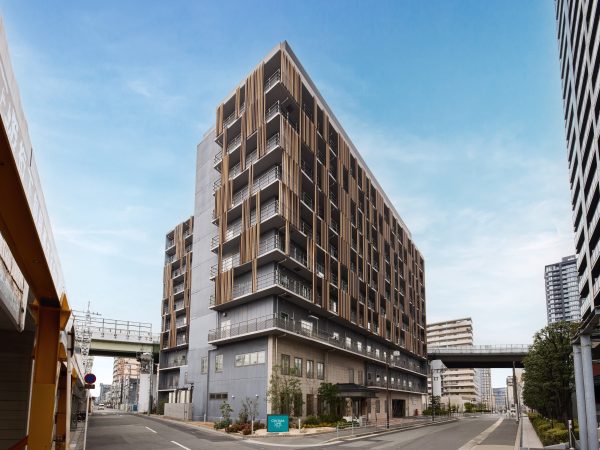
BANGKOK 18 March 2026: Centara Hotels & Resorts, Thailand’s leading hotel operator, is unveiling an exclusive first look at its second property in Japan, Centara Life Namba Hotel Osaka, ahead of its highly anticipated debut in April 2026, when it will welcome its first guests.
Revealed for the first time, the hotel’s completed interiors and guest spaces showcase a contemporary lifestyle concept designed for today’s urban explorers. Located in Osaka’s vibrant Namba district, the 300‑room hotel blends modern design with the city’s energetic spirit, featuring warm tones, inviting textures, and Osaka-inspired artwork. Open, versatile common areas throughout the property offer comfortable places to work, relax, or socialise after a day discovering the city.
Spacious public areas and dining spaces are designed to welcome travellers for every purpose.
Guest rooms are crafted with modern simplicity and practical comfort in mind. Standard, Superior, Deluxe, and Family room types cater to every kind of traveller — whether solo adventurers, couples, or families. Larger Family rooms offer playful bunk beds that younger guests will adore. All rooms are non‑smoking and equipped with essential contemporary amenities, including high-speed Wi-Fi, a work desk, and a flat-screen TV. Wheelchair accessible rooms are also available.
A variety of family room options stands out as one of the hotel’s key highlights.
Local flavour and social experiences are central to the hotel’s offering. DINING, the hotel’s main restaurant, serves a breakfast featuring both international favourites and much‑loved Japanese specialities. By evening, SORA Bar, the rooftop lounge, transforms into a destination in its own right—inviting guests to unwind with panoramic views of Osaka’s skyline, including iconic landmarks such as Tsutenkaku Tower and Abeno Harukas.
Perfectly positioned just steps from Nankai Shin-Imamiya and Namba Stations, Centara Life Namba Hotel Osaka places travellers at the heart of one of the city’s most dynamic neighbourhoods. Guests can easily explore the bright lights of Dotonbori, the culinary delights of inner‑Namba’s hidden alleys, the fresh flavours of Kizu Wholesale Market, and the many shopping malls of Namba and Shinsaibashi, with convenient access to major attractions including the historic icon Osaka Castle.
Ideally located just a few minutes’ walk from many of Osaka’s most iconic attractions.
To celebrate its opening, the hotel is offering an exclusive promotion for CentaraThe1 members. Bookings made from now until 31 May 2026 for stays between 6 April and 31 August 2026 will receive a 25% member discount on eligible rates, plus triple CentaraThe1 points.
BANGKOK, 18 March 2026: As travellers strive to escape the crowds and enjoy authentic local experiences, 2026 is the “Year of the Detour — when journeys uncover less-crowded destinations and hidden gems with a deeply rooted sense of place.
While travellers continue to venture to globally popular destinations, many are now adding stops to lesser-known locales. Recent data shows that 63% of travellers will likely explore a “Detour Destination” on their next getaway.
Whether it’s an inspiring upcountry retreat away from Bali’s beaches or an urban escape to Bangkok’s lively neighbourhoods, BWH Hotels, the global hospitality enterprise comprising WorldHotels, Best Western Hotels & Resorts and SureStayHotels, offers more than just a place to sleep; it offers fresh perspectives and opportunities for discovery.
With 18 distinct brands that cater to every type of traveller, BWH Hotels invites travellers to explore its world-class resorts and hotels in six “Detour Destinations” across the Asia Pacific.
Kuala Lumpur is an exciting city with an iconic skyline, crowned by the famous Petronas Towers and Merdeka 118 skyscraper. For those who want to discover a different side of Malaysia’s capital region, however, Putrajaya – the country’s administrative capital – is an ideal place to visit. This city is a hidden gem with lakes, gardens, and exquisite architecture, including the pink Putra Mosque.
Departure Detour: Many rooms offer views of Kuala Lumpur International Airport’s runways, which make them great for plane-spotting, while also being fully soundproofed for complete relaxation.
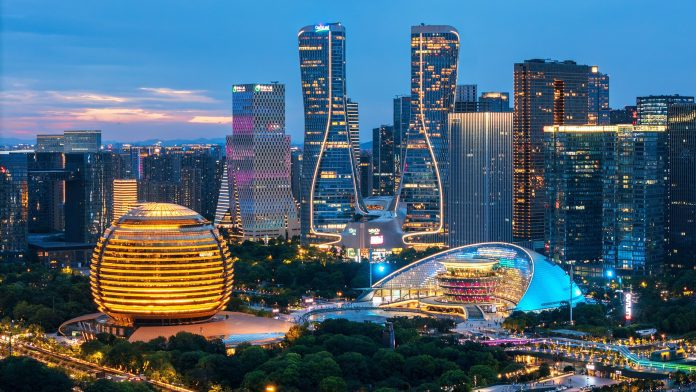
China’s Yangtze Delta is one of the most populous regions on Earth, home to approximately 250 million people, most notably in Shanghai. Just a short high-speed train ride away, Hangzhou blends China’s modern dynamism with a rich cultural heritage. West Lake, the picturesque UNESCO World Heritage-listed landscape, has attracted China’s poets and artists for centuries.
Idyllic Detour: Hangzhou Goethe Hotel is perfectly positioned on West Lake Avenue, just a five-minute drive from the serene shores and shady paths of West Lake.
One of Sydney’s most historic areas, Darling Harbour has been transformed from a railway goods yard and industrial port into a buzzing waterfront lifestyle district. The area’s rich history can still be discovered in revamped warehouses, brickwork lanes, and heritage buildings. The Australian National Maritime Museum lets visitors of all ages explore the city’s seafaring past in fun, interactive ways.
Downtown Detour: Aiden Darling Harbour is a stylish urban retreat offering guests easy access to the city’s heart, surrounded by lively markets and local attractions.
Temple in ubud sacred monkey forest sanctuary. Balinese traditional architecture, hindu temple in ubud city.
Nestled in the jungle‑clad hills of Bali, Indonesia’s “Island of the Gods,” the artistic town of Ubud connects guests with the spiritual heart of this idyllic destination. Visitors can escape the crowds of Bali’s southern beaches and reconnect with nature through exhilarating experiences, including a visit to the Sacred Monkey Forest Sanctuary, white‑water rafting on the Ayung River, jungle treks, and photography tours of the lush rice terraces.
Dawn Detour: Wake up early and enjoy a moment of mindfulness with an outdoor yoga session on the rice field as the sun rises above the forest canopy and the dawn chorus fills the air.
Bangkok is an inspiring city that bursts with life and colour, and visitors who make a detour from the popular downtown districts will be rewarded with authentic experiences. Easily accessible via the city’s BTS skytrain network, the youthful Ari district stimulates the senses with its trendy cafés and streetside eateries. Chatuchak Weekend Market, which features 15,000 stalls, is just a short distance away.
Red Dip Detour: After an immersive day of discovery in Bangkok, take a revitalising dip in the hotel’s bright, cherry red outdoor swimming pool!
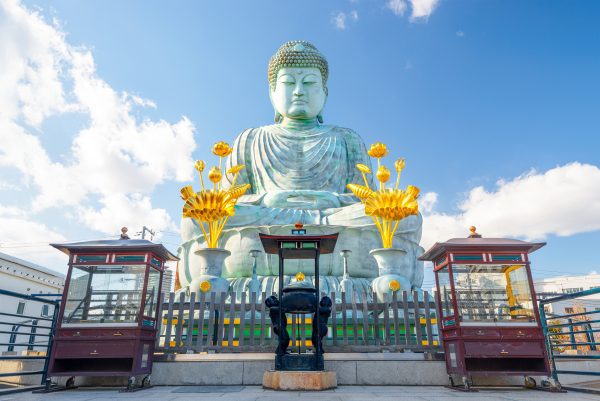
Japan’s Kansai region attracts millions of travellers every year, mostly to the charming heritage city of Kyoto or the vast metropolis of Osaka. But Kansai’s third major city, Kobe, is well worth a detour. Its lively waterfront district offers a wide range of attractions, from art museums to animal sanctuaries, and the Great Hanshin-Awaji Earthquake Memorial serves as an emotional reminder of the quake that devastated Kobe in 1995.
Diverse Dining Detour: Keen foodies can discover 12 restaurants and bars at Portopia Hotel, including specialist teppanyaki, kushiage and sushi venues.
PHUKET, 18 March 2026: Thailand is moving closer to revising its laws governing chartered yachts and easing visa rules for crew members.
Championing the call for change is the Thai Yachting Business Association (TYBA), which is working to secure passage to a more user-friendly crew visa following the Ministry of Transport’s recent changes to the Thai Charter License for yachts regarding ‘length overall’.
Photo credit: Asia Pacific Superyachts
The ministry has issued an announcement concerning Superyacht Commercial Operation in Thai Water (BE 2568/2025), granting permission for yachts of 24 meters and larger, carrying no more than 12 passengers, to apply for the Thai Charter License to conduct commercial charter in Thailand. Previously, the rule applied to yachts 30 metres or more in length from bow to stern. (Length Overall — LOA).
The Association believes adopting a lower LOA could double the number of foreign-flagged yacht visits to Thailand for superyacht charters.
Charters on vessels over 24 metres have been a small part of that market, as few boats of this size register in Thailand due to the high VAT on a yacht worth millions of dollars. Now, foreign-flagged superyachts can apply for a license to operate commercially in Thai waters without paying the 7% VAT on the yacht’s book value.
The license is available for yachts 24 metres and above and is valid for one year. During this time, the yacht will be free to cruise and charter in Thai waters.
There will be a tax of 7% VAT and another 5% Corporate Income Tax or CIT to be paid on the charter fee only and not on the yacht’s value. To obtain the license applications, the Ministry of Transport must be filed through an appointed TYBA member agent.
The TYBA is now working to align crew visa durations (currently 30 days) with the vessel’s permitted stay to support foreign operators better. That requires discussions with the Immigration authorities and the Ministry of Interior Affairs.
“Few yachts were chartering here as legalities meant you had to have a Thai flag, and this wasn’t really viable for most international superyacht owners”, explains Asia Pacific Superyachts co-founder & director Gordon Fernandes. “Now more and more locally owned yachts are obtaining a charter license, and this will fuel the growth in the charter market and the country’s extended seasonal window will support recurring annual basing and strengthen marina occupancy and associated services.”
MANILA, 18 March 2026: The Philippines Department of Transport has ordered a reduction in Passenger Service Charges (PSC) and airport navigation charges to reduce the operating costs for airlines amid rising fuel prices
The move will ease the burden on airline passengers amid rising jet fuel costs worldwide due to the war in the Middle East.
In a news release reported by the Philippine News Agency, Acting Transportation Secretary Giovanni Lopez said he had given the order to the Civil Aviation Authority of the Philippines (CAAP), which will apply to all CAAP-operated airports in the country.
According to the Department of Transportation’s latest data, jet fuel costs have risen from USD90.87 per barrel on 19 February to USD188.2 per barrel on 9 March, PNA reported.
Since then, global jet fuel prices have surged to between USD190 and USD200 per barrel due to the escalating crisis in the Gulf (specifically involving Iran and its blockade of the Strait of Hormuz).
In the Philippines, fuel surcharges are regulated by the Civil Aeronautics Board (CAB).
The following airlines and regulatory bodies are currently addressing fuel surcharge adjustments in the Philippines.
Major Philippine carriers
While no airline can unilaterally raise surcharges without CAB approval, the “Big Three” have confirmed they are reviewing their pricing:
Cebu Pacific: Recently stated it is “closely reviewing pricing and network strategies.” The airline has already suspended flights to Riyadh due to safety concerns and warned that the doubling of jet fuel prices will inevitably pressure operations.
AirAsia Philippines: Has acknowledged the crisis’s potential impact and is monitoring market conditions. Its regional parent company has already begun adjusting surcharges in other Asian markets.
Philippine Airlines (PAL): While more resilient due to its long-haul hedging, PAL is subject to the same CAB-mandated surcharge levels as other domestic carriers and is expected to follow the industry-wide upward trend.
International airlines serving the Philippines
Several regional airlines with heavy traffic to and from Manila have already announced or implemented increases:
Firefly: Implementing a “Phase 2” surcharge adjustment specifically for the Philippines starting 25 March 2026.
Hong Kong Airlines: Raised surcharges on 12 March 12, 2026, for several regions, including the Philippines.
Air India / Air India Express: Introduced a phased increase on 12 March, affecting routes to Southeast Asia, including the Philippines.
Cathay Pacific: Confirmed surcharges will rise soon. Current fees range from HKD142 to HKD569 and are under review.