


BANGKOK, 6 May 2026: Before we go too far down the road of new tourism taxes, it is worth pausing to ask a simple question.
Are we really talking about something new, or are we revisiting an old idea that has already been tried, tested and, in many cases, quietly abandoned?
Having spent more than four decades in travel and tourism, I have seen this cycle more than once. A government identifies tourism as a major revenue generator, proposes a modest fee or levy, and presents it as a painless contribution from travellers. On paper, it always looks straightforward.
In reality, it rarely is.
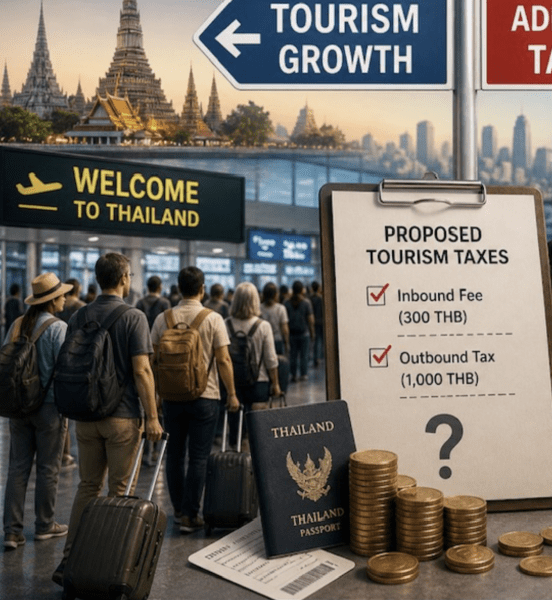
Thailand today finds itself at that familiar crossroads. A THB300 inbound visitor charge has been discussed for years, but has not been implemented. More recently, the idea of a THB1,000 outbound tax on Thai nationals travelling overseas has surfaced, raising fresh questions across the industry.
Let us be clear. These are taxes, whatever name is used. Calling them a fee, a levy or a contribution does not change the traveller’s experience. It is an added cost, and travellers notice.
The issue, however, is not simply the tax itself. It is how and when it is introduced.
From experience, the biggest obstacle is not policy, it is logistics. If a charge is built seamlessly into the airline ticket, collection is efficient and largely invisible. That is how most successful systems operate. But if travellers are required to pay separately, queue at counters, or navigate online systems on arrival, the process quickly becomes burdensome.
Multiply even a small delay by millions of passengers, and the scale of the problem becomes obvious. Airports slow down, costs rise, and the visitor experience deteriorates before the journey has properly begun.
This is where many well-intentioned proposals falter.
Timing is equally critical. The global travel industry is operating in an unstable environment. Airfares remain elevated, operating costs are high, and geopolitical uncertainty continues to influence traveller confidence. In such conditions, even a modest additional charge can send an unintended signal.
Tourism is built on confidence and ease. Anything that complicates travel, however slightly, risks pushing demand elsewhere.
There are examples of tourism levies that work. Bali’s visitor charge is simple, clearly communicated and linked to environmental and cultural preservation. Travellers understand what they are paying for, and the system is relatively straightforward. That clarity is essential.
By contrast, China, often cited in broad discussions, does not operate a dedicated tourism tax of this nature. It relies instead on standard visa fees and ticketed charges. This is important because it highlights that not every major destination needs a separate tourism levy.
The lesson is not that tourism should never be taxed. Governments require revenue, and tourism is a powerful economic engine. But this sector is also uniquely sensitive. It responds quickly to changes in cost, convenience and perception.
In my experience, poorly designed or poorly timed measures do not strengthen tourism; they risk undermining it. If Thailand chooses to move forward with any form of tourism tax, it must be done with precision. The purpose must be clear, the method of collection seamless, and the timing carefully judged. Otherwise, we risk repeating a familiar pattern in which a well-intentioned idea struggles in practice and quietly fades away.
Tourism has long been one of Thailand’s greatest strengths. It deserves policies that support its growth, not complicate it.
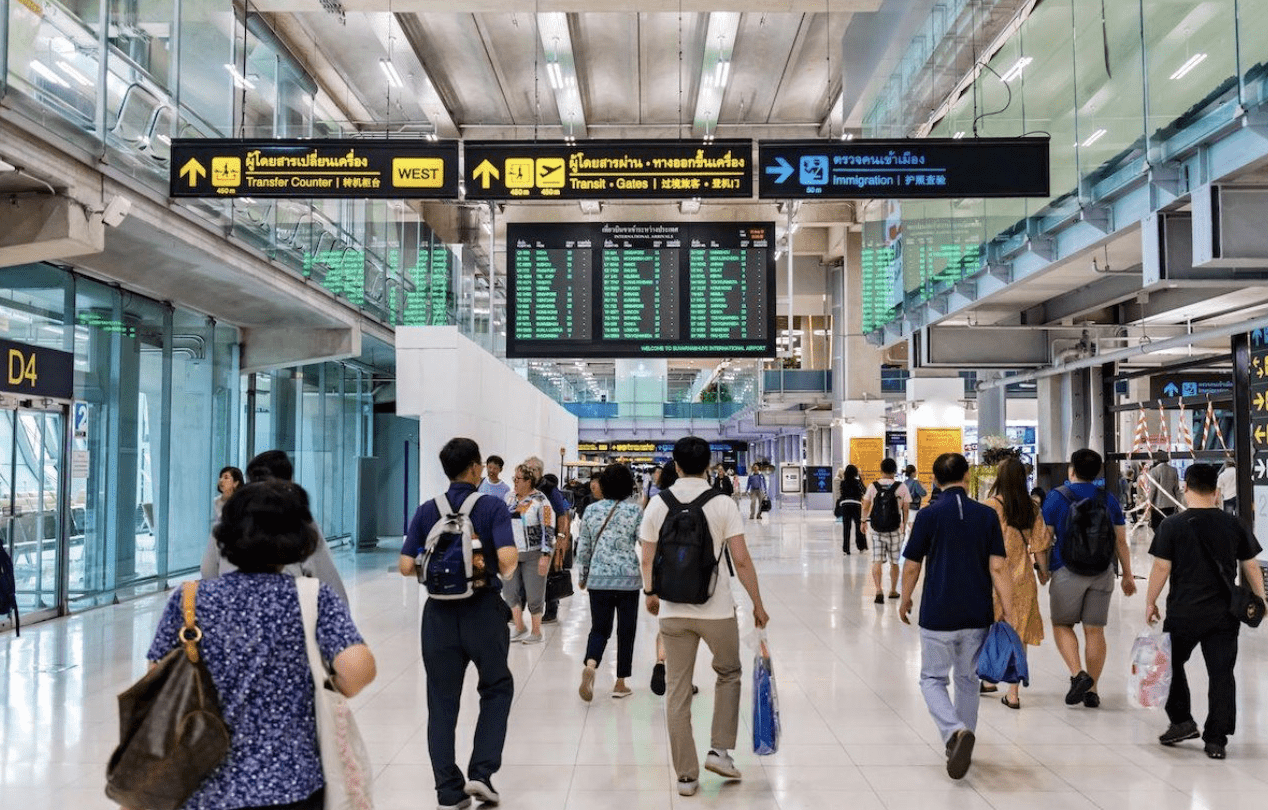
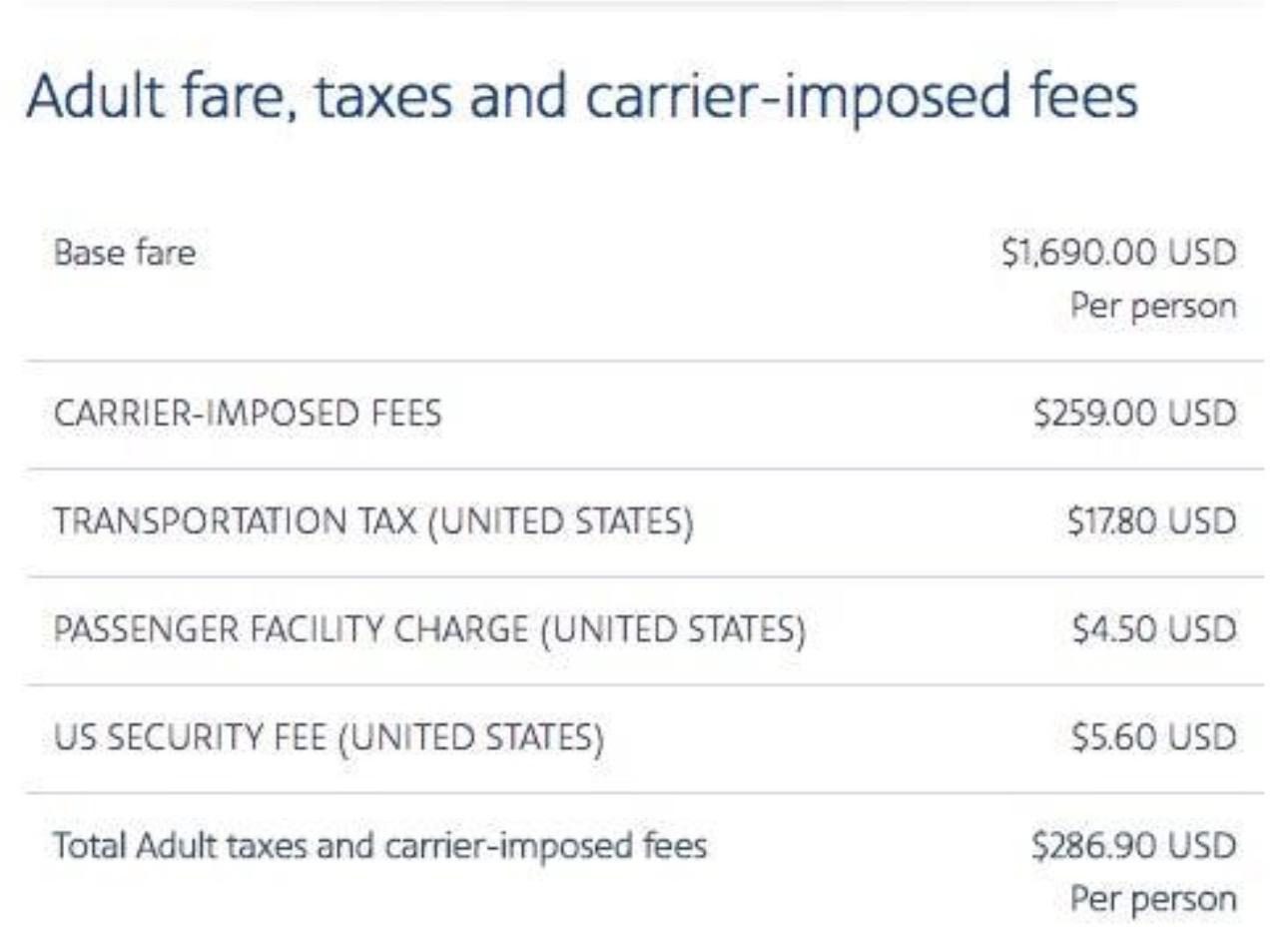
Taxes and more clutter your typical international fare

About the Author
Andrew J Wood is a Bangkok-based travel writer and well-respected tourism expert. A former hotelier, he has lived in Thailand since 1991. A past President of Skål Asia and long-time tourism industry leader, he writes widely on hospitality, travel and tourism trends across Asia.
Editorial postscript
As of May 2026, several Asia Pacific countries have introduced or adjusted tourism-related taxes to manage infrastructure and overtourism. The following table summarises the primary tourism taxes currently levied or proposed for 2026 across the region. (Sources: Trip.com, Economic Times, Travel Tourister).
Tourism taxes in the Asia Pacific (2026)
| Country | Tax Type | Current Rate (Local Currency) | Approx. USD | Key Details |
| Thailand | Tourism Entry Fee | Proposed THB300 (Air) / THB150 (Land/Sea) | $8.20 / $4.10 | To be implemented mid-2026; funds for travel insurance & infrastructure. |
| Japan | Departure Tax | ¥3,000 | $19.50 | Increased from ¥1,000 effective July 2026. Included in ticket price. |
| Japan (Kyoto) | Lodging Tax | ¥200 to ¥10,000 per night | $1.30 – $65 | Tiered based on room price; luxury stays pay the highest rate. |
| Indonesia (Bali) | Entry Levy | IDR 150,000 | $9.40 | One-time fee per entry for foreign tourists since 2024. |
| New Zealand | IVL (Entry Tax) | NZ$100 | $60.00 | Includes conservation and tourism levy. Australians are generally exempt. |
| Bhutan | SDF (Sustainable Development Fee) | $100 per adult / per night | $100.00 | Reduced from $200 in late 2023; applies to most international visitors. |
| Malaysia | Tourism Tax | MYR 10 per room / per night | $2.10 | Fixed rate for foreign tourists staying in registered hotels. |
| Vietnam | Departure Tax | ~$2 – $25 (Variable) | $2 – $25 | Typically embedded in airfare as “Passenger Service Charge.” |



It is indeed a complex and delicate issue. However, many countries are now increasingly implementing this type of tax, partly due to a decline in domestic tax revenues. Japan, for instance, has introduced a similar tax since 1978, if I recall correctly. Compared to many other nations, Thailand’s proposed rate is relatively low.
Regarding backpackers, I completely understand the sentiment. Nevertheless, in recent years, a significant number of backpackers have caused disruptions, particularly in popular tourist provinces, leading many locals to support this measure. Realistically, these are two separate issues; we should strictly enforce the law against unruly tourists rather than relying solely on taxation. That being said, 300 Baht is roughly equivalent to just a few cans of beer, so personally, I don’t anticipate it being a major deterrent—at least, I hope not.
As for the outbound travel tax, the rationale is actually quite straightforward. The government simply wishes to welcome foreign visitors while encouraging Thai citizens to travel domestically rather than spending abroad.
Lastly, regarding the allocation of these funds into the central budget, I believe this stems from the fact that many provinces cannot yet be self-sustaining. To put it simply, local tax revenue in those areas is quite limited. Therefore, the central government must step in to manage and redistribute funds to support lower-income provinces, as tax collection is heavily concentrated in a handful of high-traffic tourist destinations. In fact, even as a Thai citizen, I can barely name ten provinces that are truly high-yielding.
Great piece. Timing really is everything. With airfares already incredibly high and operating costs straining the industry, nickel-and-diming travelers right now feels like a risky move. Tourism relies heavily on perception and ease of travel; we shouldn’t be giving tourists a reason to look at competing destinations.
I’m not against the tourism tax in principle.
However, the plans so far on how the revenue will actually be used have been unclear and sometimes contradictory. We’re also still waiting for details on the collection mechanism, so it’s too early to know whether it will be truly seamless for visitors.
The bigger issue is distribution. Most infrastructure bottlenecks today are at the destination level — waste management, drainage, water/sewage, local roads, and climate resilience in places like Phuket. These areas generate enormous tourism revenue but receive relatively little direct central government budget in return.
We need a clear, transparent mechanism that channels a meaningful share of the funds back to the key destinations. Ideally one that can be communicated simply to tourists and the media: “Your 300 THB is directly supporting X project in Phuket.”
Not every investment will be glamorous, but visible, practical improvements would create a real sense of contribution and fairness — exactly what’s needed to build trust and support for the tax.
Thks Martin they bundle with air ticket so collection is relatively efficient HOWEVER the govt announced just recently it will not be THB 1,000 but higher at THB 1,120 per person!
Airports of Thailand (AoT) says the planned 53% increase in the international passenger service charge to THB 1,120 from June is UNLIKELY to deter travel demand.
BUT I say perhaps not individually, but collectively Thailand’s growing list of tourism-related fees, taxes and surcharges is beginning to send the wrong message at the wrong time.
Andrew
100% agree with your comments, Andrew. Now is not the time—given the Middle East conflict, disrupted international flights, and pressure on luxury hotel rates.
Add in the competitive set—Vietnam, Malaysia, Indonesia—all focused on reducing friction, not adding it.
If it’s not seamless, like Bali, it risks doing more harm than good.
Thks Marvin spot on!
The new entry tax is set to take effect on the 20th June across all 6 airports under AOT. The current which is bundled up with air tickets. The arrival fee/tax/PST will increase to THB 300 (iup +53% ) Slated for travel insurance and infrastructure and a proposed new departure tax of Bt 1,120 (unclear what this tax will be used for?
Andrew
Tourism has just taken another significant hit from the fallout of the Iran crisis. At such a sensitive time, introducing another tax on tourism may align with the strategy of attracting higher-spending visitors, but we should proceed carefully.
Lest we forget, many of today’s high-value tourists first came to Thailand as backpackers or budget travellers and later fell in love with the country, its culture, and especially its people. Many returned repeatedly, invested here, retired here, or became ambassadors for Thailand abroad. Hopefully, we are still on the correct path to attract quality tourism without losing the broad appeal that made Thailand so successful in the first place.
We must also consider the enormous tourism infrastructure already built around mid-market and mass tourism. Thailand has thousands of 3- and 4-star hotels and resorts employing hundreds of thousands of workers, while also sustaining farmers, transport operators, suppliers, restaurants, and many ancillary industries together with their families.
Perhaps this is partly a political stance, but tourism contributes close to 20% of Thailand’s GDP. Any transition toward a more luxury-focused model must therefore be gradual and carefully managed. I agree we should continue developing the high-end sector and gradually phase out some of the less savoury low-end aspects of tourism, but we cannot ignore the livelihoods connected to the broader industry.
I remain a great believer in Thailand, its people, and the country’s enormous potential.
Thank you Eric, an excellent and very balanced perspective. I particularly agree with your point that many of today’s long-stay residents, repeat visitors and even investors first arrived in Thailand as younger budget travellers. Thailand’s tourism success was built not only on luxury, but also on accessibility, warmth and emotional connection with the destination and its people.
You also make an important observation regarding the scale of the existing tourism economy. The industry supports far more than hotels alone. Restaurants, transport providers, markets, farmers, entertainment venues and countless SMEs all depend heavily on broad-based visitor flows.
I believe Thailand can and should continue moving toward higher value tourism, but as you rightly say, the transition must be gradual and carefully managed. Maintaining competitiveness while preserving Thailand’s broad appeal remains essential, especially during periods of global uncertainty.
Like you, I remain optimistic about Thailand’s long-term potential and resilience.
Warm regards,
Andrew
I agree it’s about the process of collection and the minimization of challenge in paying a fee. If the international airports or points of entry have this amount included in their charges then everyone pays and fund flows back to the government.
A point of concern would be how does the government use this to create a better environment for travelers?
Thank you Matt, I think you raise the key issue. Most travellers will probably accept a modest fee if the process is seamless, transparent and efficiently managed. The real challenge has always been less about the amount and more about the logistics, collection system and overall traveller experience.
Your second point is perhaps even more important. Travellers and the tourism industry alike will want reassurance that any funds collected are genuinely reinvested into improving infrastructure, safety, cleanliness, transport links and the overall visitor experience, rather than simply disappearing into general revenue. If visitors can clearly see benefits, acceptance tends to rise considerably.
Warm regards,
Andrew
Thank you Don for publishing
Much appreciated
AJW
Now is not the right time for more traveling cost to anyone. Hope after the next US presidential election, we will see the light at the end of the tunnel.
Thank you, Ben. I think many people would agree with you. Travel and tourism thrive on confidence, affordability and freedom of movement, and at the moment both travellers and the industry are already facing enough economic pressure globally. Adding further costs now risks discouraging travel at a time when many destinations are still rebuilding momentum. Let’s hope calmer times and greater economic stability are not too far away.
Andrew
Thank you Ben, I think many travellers and tourism businesses would agree with you. The timing is delicate, especially when the global economy is already facing uncertainty and travellers are watching every extra cost carefully. Tourism remains one of the world’s great confidence industries and people need encouragement to travel, not additional barriers. Let us hope stability and confidence return soon, because tourism thrives best in times of optimism and peace.
Warm regards,Andrew