
Wednesday, May 27, 2026
Home Blog Page 69

Changi traffic hits an all-time high in 2025

SINGAPORE, 26 January 2026: Passenger traffic at Singapore Changi Airport was an all-time high in 2025, with 69.98 million passenger movements recorded, a 3.4% increase compared to 2024. 

Aircraft movements, which include landings and take-offs, rose 2.2% year-on-year to 374,000 movements. Airfreight throughput totalled 2.08 million tonnes in 2025, exceeding the previous year by 4.5% and making it one of the best cargo performances in Changi Airport’s history.
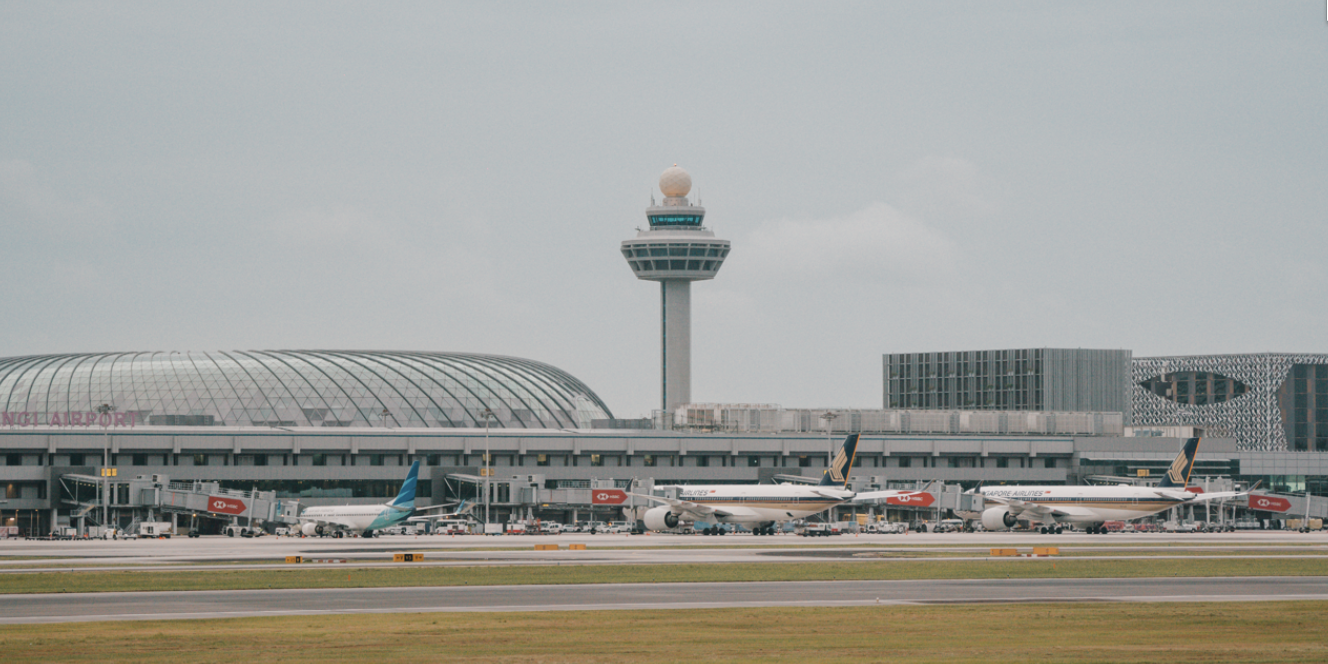
Photo credit: Changi Airport Group.

December 2025, with 6.3 million passenger movements, was the busiest month of the year. The busiest day of the year was 20 December 2025 – the Saturday before Christmas – when over 223,000 passengers passed through Changi’s terminals.

China tops Changi’s passenger traffic 

Traffic growth in 2025 was broad-based, underpinned by steady travel demand and the air hub’s expanded connectivity. Changi Airport’s top five passenger markets for the year were China, Indonesia, Malaysia, Australia and India. China remained Changi Airport’s largest traffic market and posted the strongest year-over-year growth, with passenger movements up 12.2%. Vietnam and Japan were also among the fastest-growing markets, rising 9.8% and 7.0% year-on-year, respectively. The busiest routes for the year were Kuala Lumpur, Bangkok, Jakarta, Denpasar (Bali) and Hong Kong.

On the cargo front, growth was seen across all cargo flows – exports, imports and transshipments. This can be attributed to the front-loading of activities in the first three quarters of the year and to strong global semiconductor demand driven by AI, electric vehicles, and cleantech growth. Changi’s top five air cargo markets were China, the US, Australia, Hong Kong and India, with the top three growth markets being China, the US and Taiwan.

Expanding global connectivity

In 2025, Changi Airport achieved a record year of network growth, adding 13 city links to its global footprint. 

The new destinations are: Changchun, Harbin, Lanzhou, Yichang, and Zhangjiajie in China; 

Labuan Bajo, Padang, and Semarang in Indonesia; 

Vienna (Austria); 

Vijayawada (India); Kota Bharu (Malaysia); 

Ulaanbaatar (Mongolia) and Nha Trang (Vietnam). 

Changi Airport also welcomed two new passenger airlines – MIAT Mongolian Airlines and Pelita Air.

A key addition was Ulaanbaatar, establishing Singapore’s first direct connection to Mongolia and further strengthening Changi’s position as a leading gateway in the region. The new routes in China and Southeast Asia also represent Changi Airport’s ongoing efforts to diversify its network in Asia and enhance its competitiveness as a hub.

Cargo expands

Changi Airport also expanded its freighter network in 2025, launching and reinstating key services. New freighter airline JD Airlines began thrice-weekly freighter services between Shenzhen and Singapore. Turkish Cargo reinstated its freighter operations at Changi Airport with a weekly Istanbul–Ho Chi Minh City–Singapore freighter service, further boosting connections to China, Europe and Southeast Asia. Additionally, FedEx Express expanded its network with the launch of non-stop freighter services to Anchorage, providing dedicated capacity on the Singapore–United States of America lane.

Changi Airport Group Chief Executive Officer Yam Kum Weng said: “2025 was a strong year for Changi Airport as an air hub. We recorded our highest-ever passenger traffic, expanded our network with a record number of new city links, and achieved strong air cargo performance amid a volatile global environment.

“As travel demand in Asia grows, Changi is actively seeking to expand its network in the region, including emerging secondary cities which are witnessing rapid economic and promising tourism developments. As we enter 2026, we look forward to creating new opportunities for airlines and businesses. CAG will also continue to enhance the traveller experience through greater innovation to deliver higher efficiency and more seamless operations. Our goal is to ensure that Changi stays at the forefront of aviation, offering travellers exceptional airport experiences while serving as a key gateway to the region.”

As of January 2026, some 100 airlines operate more than 7,300 weekly scheduled flights at Changi Airport, connecting Singapore to over 170 cities in 50 countries and territories worldwide.

(Source: Changi Airport)

Spring is in the Air

BANGKOK, 23 January 2026: Asian Trails, a leading destination management company in Asia, is offering 60% savings on Southeast Asia’s most sought-after spring retreats — coastal escapes, countryside hideaways and city stays.

Promoting its Spring is the Air offer, Asian Trails says it has secured exclusive rates and offers at more than 180 hotels across Asia, leveraging its strong industry partnerships to give clients access to outstanding value in some of the region’s most inspiring destinations.

This offer is valid for new bookings made between now and 10 April 2026 for stays between 15 February and 30 April 2026. Selected hotels in seven Southeast Asian nations: Cambodia, Laos, Indonesia, Malaysia, Singapore, Thailand and Vietnam.

For a full list of participating hotels and information about how to book, click here

About Asian Trails
Since 1999, Asian Trails has led the way in designing and delivering exceptional travel experiences across East and Southeast Asia. It offers a wide range of innovative travel solutions across the region for leisure travellers and groups, as well as corporate clients and MICE delegates. 

(Source: Your Stories — Asian Trails)

FITUR opens 2026 trade show calendar

MADRID, 23 January 2026: FITUR ushers in the 2026 travel trade show calendar, convening from 21 to 25 January in Madrid, the Spanish capital.

The 46th edition of the International Tourism Fair (FITUR), organised by IFEMA MADRID, is strengthening its position as the sector’s leading platform, highlighting both its international reach and its commitment to knowledge as a driver of industry transformation.

From left to right: María Valcarce, Director of FITUR; Miguel Aguiñiga Rodríguez, Mexico’s Secretariat of Tourism; Mariano de Paco, Community of Madrid; Sheika Alnuwais, Secretary‑General of UN Tourism; José Vicente de los Mozos, Chairman of IFEMA MADRID; Rosario Sánchez, Ministry of Industry and Tourism; Marco Sansavini, Chair of the FITUR OC and President of Iberia; and Almudena Maíllo, Madrid City Council.

Attendance data unveiled at the press conference on the opening day confirmed that the show spans nine halls, with more than 10,000 companies from 161 countries, 111 of them with official representation (10% up on the 2025 edition) and 967 main exhibitors. Overall, FITUR has recorded an 11% rise in international participation.

FITUR has also welcomed 18 new nations, largely from Africa and the Asia–Pacific, where participation has risen by 34% and 22% respectively. Notable newcomers include Abu Dhabi, Dubai, and Zanzibar, alongside regions from Germany and the UK.

FITUR 2026’s figures reflect the strong global momentum across the tourism industry. According to UN Tourism, between January and September 2025, the sector welcomed more than 1.1 billion international travellers, surpassing pre‑pandemic records set in 2019.

FITUR Knowledge Hub 

In this context, FITUR 2026 has strengthened its role as a key forum for industry debate with several major additions. The most relevant is the new Knowledge Hub, located in Hall 12 and open throughout the fair. Conceived as the strategic hub for tourism insight, it features eight auditoriums, ten conference programmes, more than 200 sessions and over 250 high‑level speakers.

The Knowledge Hub highlights include FITUR Experience, focused on experiential tourism as one of the sector’s most dynamic drivers of change, and the first International Summit on Communication and Tourism, which addresses the challenges facing tourism communication and brings together experts and representatives from both the public and private sectors. 

In addition, the Travel Technology Area has doubled in size and is bringing together more than 190 leading innovation companies.

Economic impact and visitor outlook

Strong participation indicates a significant turnout, exceeding 150,000 professionals and nearly 100,000 public visitors over the weekend. FITUR remains a major economic engine for Madrid, generating EUR487 million in business revenue and leads.

Mexico: 2026 Partner Country

Mexico is the Partner Country of FITUR 2026, with a prominent presence at the Fair at a time when its tourism sector grew by 13.9% between January and September 2025, according to SECTUR, and to secure its position as the world’s fifth most visited destination.

Open doors to travel consumers

Over the weekend, FITUR opens its doors to travellers with a full programme of activities, workshops and experiences, reinforcing its status as the sector’s major public celebration.

More information at Fitur 2026 | International Tourism Fair.  

About FITUR
FITUR, the International Tourism Trade Fair, is one of the leading global events in the tourism industry and has been held in Madrid since 1981. Organised by IFEMA MADRID, FITUR has established itself as a global benchmark for driving and promoting tourism.

(Source: FITUR)

Ethiopian Airlines orders more Dreamliners

SINGAPORE, 23 January 2022: Ethiopian Airlines confirmed on Thursday an order for nine 787 Dreamliners from Boeing as demand for long-haul travel continues to rise. 

Ethiopian Airlines will leverage the 787-9 jets to grow its route network, which currently serves 145 international destinations.

Boeing and Ethiopian Airlines announce an order of nine 787-9 Dreamliners to meet demand for long-haul travel.

The airline’s latest 787 purchase follows its commitment for 11 737 MAX jets announced at the Dubai Airshow. Both orders were finalised in December 2025 and boost Ethiopian Airlines’ order book by 20 fuel-efficient Boeing aircraft.

“We are pleased to confirm the order for nine Boeing 787 Dreamliner aircraft to expand our existing fleet further. This order underscores our continued commitment to enhancing our fleet with modern, fuel-efficient aircraft, thereby further strengthening our customer service,” said Ethiopian Airlines Group CEO Mesfin Tasew. “We will continue to acquire more aircraft and adopt the latest technologies as part of our strategic vision to advance sustainable aviation.”

Ethiopian Airlines operates Africa’s largest 787 Dreamliner fleet, flying 787-8 and 787-9 jets on intercontinental routes from Addis Ababa to high-demand destinations across Europe, Asia and North America, as well as key intra-African routes.

“The 787 Dreamliner family has proven to be a game-changer for airlines around the world, and we are proud to support Ethiopian Airlines in their mission to connect Africa with the global community,” said Boeing Vice President of Commercial Sales and Marketing for Africa Anbessie Yitbarek.

Ethiopian Airlines operates the largest Boeing fleet in Africa and has the continent’s largest backlog of 737 MAXs, 777X and 787 Dreamliner aircraft.

(Source: Boeing)

Study shows strong cruise demand for 2026

SINGAPORE, 23 January 2026: Demand for cruises remains strong for 2026, with clear signs that younger travellers and luxury consumers are reshaping the industry, according to research from Internova Travel Group, one of the world’s largest travel services companies.

While traditional ocean cruises remain the most popular option, travellers are increasingly branching out into new formats, from short getaway cruises to high-end expedition voyages to remote destinations around the world, including Antarctica, the Arctic and the Galápagos.

The findings are based on analysis of millions of travel bookings and a survey of 4,000 North American travellers across generations and income levels, and are detailed in The Internova Index: North American Traveller Insights, Internova Travel Group’s proprietary research report.

Although older travellers have historically dominated cruise vacations, the research shows a notable rise in interest among Millennials and Gen Z.

Travel advisors across Internova’s portfolio report that these younger travellers are often new to the experience and are seeking voyages of five days or less, making cruises more compatible with busy schedules and limited paid time off. 

Short cruises serve as an easy, affordable and convenient entry point while offering a variety of experiences.

“Shorter cruises are opening the door for a new generation,” said Internova Travel Group Executive Vice President, Strategy, Henry Gilroy. “These travellers want flexibility and quick getaways.”

The Internova Index also reveals a significant broadening of traveller interest in high-end cruises. One-third of travellers surveyed expressed interest in luxury yacht cruises and expedition-style voyages, with demand particularly strong among affluent and adventure-seeking travellers. These trips attract travellers seeking small-ship intimacy, immersive itineraries and access to far-flung destinations.

“Expedition and yacht-style cruising is one of the fastest-growing segments we’re seeing,” Gilroy noted. “Travellers are willing to pay more for exclusivity, access and once-in-a-lifetime experiences.”

When it comes to prices, the Internova Index shows shifting dynamics across the cruise market. Prices for expedition cruises have risen the most, reflecting high demand and limited capacity. Other cruise products have seen price increases, albeit at a more moderate level. For those looking for lower-cost cruises, the increase in shorter duration itineraries offers an affordable alternative.

Despite the rise of new styles, mainstream ocean cruising remains the largest and most loyal category, with Boomers accounting for a strong share of customers. These travellers, who often have more flexibility, continue to favour longer itineraries.

Across all cruise categories, travellers are increasingly booking through advisors, valuing their expertise in cabin selection, ship amenities, and navigating an increasingly complex array of offerings. Travellers also seek guidance on lesser-known yacht and expedition brands and value personalised recommendations based on their travel style, as well as the support advisors provide in the event of itinerary changes or disruptions.

“Cruises have become more diverse and complex,” Gilroy said. “Travellers want expert insight to help them find the right ship, cabin and itinerary for their needs.”

For the full report or for more information on Internova Analytics and Consulting, please visit www.internova.com/research

About Internova Travel Group
Internova Travel Group is one of the world’s largest travel services companies and a 2026 Forbes Most Trusted brand, bringing together a portfolio of leading brands that deliver high-touch, personalised travel expertise to leisure, corporate and entertainment clients. Internova manages leisure, business and franchise operations and represents more than 100,000 travel advisors across 6,000 company-owned and affiliated locations in the US, Mexico and the UK, with a presence in more than 80 countries worldwide.

(Source: Internova Travel Group)

First look at Oceania Sonata

SINGAPORE, 23 January 2026: Oceania Cruises unveils a first look at the itineraries of Oceania Sonata, the first ship in its all-new Sonata Class, debuting in August 2027.

Now available online for preview with bookings opening on 28 January 2026, Oceania Sonata’s inaugural season features 22 sailings from August 2027 through April 2028, spanning more than 90 destinations on voyages ranging from 7 to 16 days.

Photo credit: Oceania Cruises. Oceania Sonata

Ushering in a new chapter for Oceania Cruises, the 1,390-guest vessel will trace a sweeping route through the capitals and coastal towns of Europe to ports across the Caribbean, Mexico, and Central and South America.

“Oceania Sonata’s inaugural season is defined by the cultural diversity and geographic variety of the destinations she visits,” said Oceania Cruises Chief Luxury Officer Jason Montague. 

“As the first of four ships in the Sonata Class, her premiere sets the tone for the thoughtfully designed itineraries, exceptional comfort and meaningful, unrushed freedom to explore the world that underscore the continued evolution of Oceania Cruises.”

Oceania Sonata’s maiden voyage will set sail from Rome (Civitavecchia) on 7 August  2027, beginning a 14-day journey to Trieste. Highlighted ports of call include Catania, Italy; Valletta, Malta; Katakolon, Greece; Bar, Montenegro; and Zadar, Croatia.

Oceania Sonata’s inaugural season will see her visit storied European cities, including Barcelona, Spain; Athens, Greece; and Lisbon, Portugal, as well as lesser-known ports such as Paros, Greece; Koper, Slovenia; Sarandë, Albania; and Palamós, Spain. 

Following her Mediterranean sailings, Oceania Sonata will transit the Atlantic to Miami, where she will begin her inaugural tropical season. 

Ports of call include long-standing guest favourites in the Caribbean, such as Bridgetown, Barbados, and Tortola, British Virgin Islands; hidden gems across Latin America, such as Zihuatanejo-Ixtapa, Mexico, and Puerto Quetzal, Guatemala; and a daylight transit through the Panama Canal.

(Source: Oceania Cruises)

PATA and PHA hit the share button

BANGKOK, 23 January 2026: The Pacific Asia Travel Association (PATA) brokers a new partnership agreement with the Phuket Hotels Association (PHA), a nonprofit organisation representing hotels in Phuket, southern Thailand.

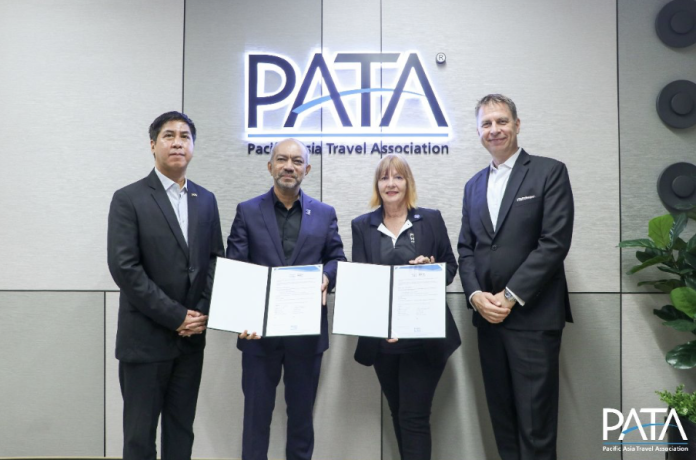
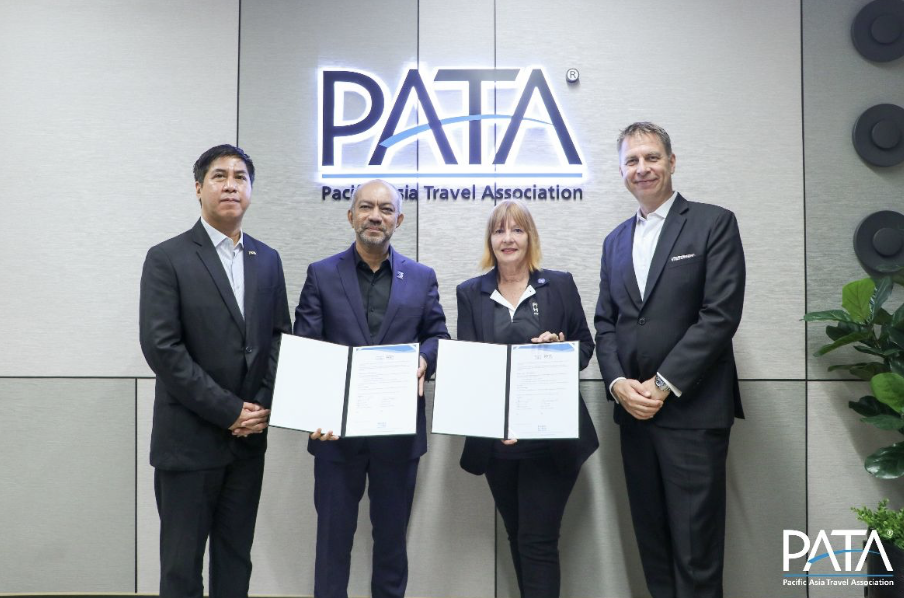
Signed by PATA CEO Noor Ahmad Hamid and PHA Executive Director Jayne MacDougall, the Memorandum of Understanding (MoU) establishes a mutual affiliate membership between the organisations. 

Photo credit: PATA. (L/R): Paul Pruangkarn, Director – Marketing & Communications, PATA; Noor Ahmad Hamid, Chief Executive Officer, PATA; Jayne MacDougall, Executive Director, PHA; and Bjorn Courage, General Manager, InterContinental Phuket Resort, and President, PHA, following the MoU signing.

Hamid noted: “As one of Thailand’s most sought-after island destinations, Phuket’s hospitality sector is a cornerstone of its economy. With this partnership, we pave the path for collaborations with the Phuket Hotels Association on their mission to promote and strengthen Phuket’s standing as a destination recognised for its quality offerings and sustainable practices.”

MacDougall added: “Formalising a partnership with PATA marks an important step in advancing shared goals around responsible tourism, regional collaboration, and innovation, strengthening long-term outcomes for Phuket and the wider region.”

The agreement supports joint activities, including the mutual promotion of events and, where appropriate, speaker participation. Representatives and members of both PATA and PHA will have opportunities to connect through networking sessions and annual events, with registration support provided in line with the agreement.

In addition, the partnership promotes knowledge sharing. It enables PHA to share selected tourism research and insights with the PATA network on a quarterly basis through member-exclusive newsletters and relevant online channels.

About PATA
The Pacific Asia Travel Association (PATA) is a not-for-profit membership association dedicated to advancing a meaningful Pacific Asia tourism economy. PATA brings together governments, industry leaders, academia, and communities to drive positive, lasting change. Founded in 1951 and headquartered in Bangkok, the Association also has an official office in Beijing.

(Source: PATA)

Qantas launches New Year sale

SINGAPORE, 23 January 2026: Australia’s national carrier, Qantas, presents its  ‘New Year, New Zealand’ sale offering special promotional fares until 31 January 2026 for economy class travel across various periods from March to November 2026.

This new campaign enhances connectivity for travellers from Singapore, offering a seamless gateway to New Zealand. It provides connections to the North Island hubs of Auckland and Wellington, as well as to the South Island with service to Christchurch. 

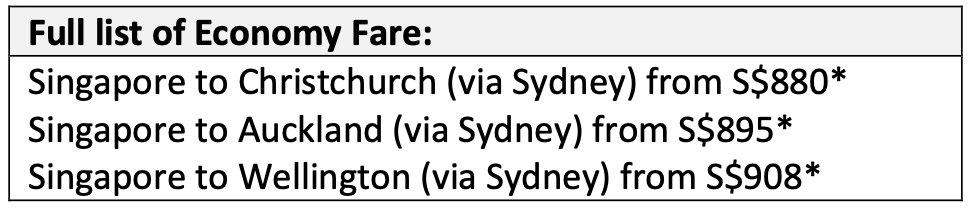
Return fares from Singapore to New Zealand start from SGD880 in Economy*, including:

Qantas Executive Vice President Asia Nick McGlynn commented: “Singapore remains a key strategic market for Qantas, and we are seeing strong growth in demand for travel to aspirational destinations like New Zealand. As part of our ongoing commitment to enhancing connectivity for our customers in Singapore, we are thrilled to launch the ‘New Year, New Zealand’ campaign. This sale offers fantastic value and provides a seamless, premium travel experience to explore the country’s world-renowned attractions.”

Travellers from Singapore can connect via Sydney to the three major cities in New Zealand. 

Fares are available for sale at qantas.com and through travel agents. All Qantas international fares include checked baggage allowance, food and beverages and in-flight entertainment as standard with every booking.

The sale ends at 2359 (Singapore Standard Time) on 31 January 2026, unless sold out. 

*Prices include taxes, fees and carrier charges payable to Qantas (and exclude any amounts payable to third parties at the airport). Prices may fluctuate if taxes or foreign exchange rates change.

(Source: Qantas)

Thailand’s tourism at the crossroads?

BANGKOK 23 January 2026: Thailand’s tourism industry stands at a defining crossroads, with regional travel demand across Asia moving up a gear as Thailand’s performance decelerates.

The divergence is now clear. While neighbouring destinations such as Vietnam and Japan are capturing growth and market share, Thailand is contending with declining foreign arrivals and softer momentum from core source markets. Leadership in Asian tourism no longer depends solely on scale. It now rests on infrastructure readiness, ecosystem coordination, safety perception and value competitiveness.

At yesterday’s TTF 2026, C9 Hotelworks managing director Bill Barnett told the 1,300 attendees at the annual event that “the most pronounced shift was unfolding in the China outbound market, once the cornerstone of Thailand’s tourism engine.” 

Chinese outbound travel was projected to return close to pre-pandemic levels by 2025. However, Thailand’s share of that recovery eroded. Travellers are redirecting towards destinations perceived as safer, better connected and more competitively priced, notably Vietnam. 

“This reflects a broader recalibration in traveller priorities. Safety standards, transport efficiency, seamless airport experiences, digital connectivity and perceived value for money are now decisive factors in destination choice,” he said. 

Thailand’s challenge is not one of demand. Demand exists and is growing. The issue is relative competitiveness. For decades, Thailand has relied on brand familiarity, depth of hospitality, and sheer scale of tourism. Today, competitors are closing the gap and in some cases leapfrogging ahead through faster infrastructure rollout and sharper policy alignment.

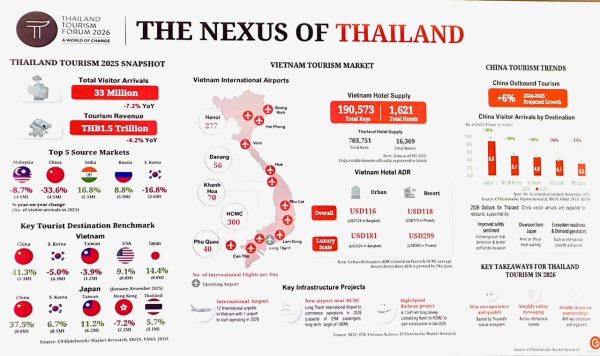
Vietnam’s rise is especially instructive. It illustrates how a coherent national strategy can rapidly reshape regional tourism positioning. Vietnam is experiencing outsized growth driven by lower prices, the aggressive expansion of airport capacity, and the accelerated development of second- and third-tier destinations. Hotel average daily rates in Vietnam are lower than in Thailand’s urban and resort destinations, reinforcing its appeal as a high-value alternative.

Photo: Thailand Tourism Forum 2026 focus

Connectivity is central to Vietnam’s advantage. The country now operates 12 international airports, with the new Long Thanh International Airport for Ho Chi Minh City scheduled to commence operations in 2026. Once operational, Long Thanh will become one of Southeast Asia’s largest aviation gateways, easing congestion and enabling a significant expansion in long-haul and regional connectivity. Crucially, Vietnam’s aviation strategy is not confined to a single mega hub. The footprint of international airports across multiple destinations points to a deliberate policy of distributing tourism growth beyond Hanoi and Ho Chi Minh City. This decentralised model is accelerating development in secondary cities and coastal resort zones, spreading economic benefits and broadening the national tourism ecosystem.

Thailand, by contrast, remains heavily concentrated around a limited number of gateways and mature destinations. Bangkok’s Suvarnabhumi Airport continues to face capacity and efficiency constraints, while progress on major aviation and rail projects has been slower than regional peers. Although expansion plans are underway, the pace of delivery has not kept pace with the urgency of competitive pressures. Infrastructure readiness is now a strategic differentiator, not a background variable.

Safety perception is another critical fault line. Thailand’s brand remains powerful, but periodic high-profile incidents and uneven enforcement of safety standards across destinations have weakened it. In the Chinese outbound market in particular, safety narratives carry disproportionate weight. Even isolated incidents can have outsized reputational effects in the age of social media. Competing destinations have invested heavily in visible safety upgrades and stronger public communication. Thailand’s response has been more fragmented, leaving gaps in confidence that competitors have exploited.

Value competitiveness further complicates the picture. Thailand’s tourism sector has benefited from years of strong demand, enabling hotel rates and ancillary costs to rise steadily. However, in a more price-sensitive post-pandemic environment, relative value now matters more than absolute quality. Vietnam’s lower hotel rates, combined with expanding connectivity and improving service standards, present a compelling alternative. Japan has similarly benefited from a weak yen, turning major cities into perceived bargains for regional travellers.

These shifts highlight a hard reality. Thailand’s traditional leadership model, built on volume, brand recognition and destination maturity, is no longer sufficient. Strategy, infrastructure and ecosystem readiness now define success.

Three priorities stand out for the 2026 tourism agenda 

A step change in strategic infrastructure investment is essential. Aviation capacity, rail connectivity, urban mobility and digital tourism services must be treated as core competitiveness assets. 

Safety standards must be raised consistently across destinations and segments, supported by visible upgrades and clear communication. 

Second and first-tier cities should be actively promoted through policy alignment and budget planning to broaden market readiness and capture shifting global travel demand.

The Chinese market deserves special attention. Chinese outbound travel will remain one of the world’s largest drivers of tourism demand. However, the era of automatic Thai market dominance is over. Winning back share will require targeted airline partnerships, competitive pricing, safety assurance campaigns and product differentiation that goes beyond beach tourism.

Thailand’s tourism future will not be shaped solely by volume. It will be shaped by how quickly the country adapts to a more competitive, value-conscious and infrastructure-driven regional landscape. The inflexion point is now. The decisions taken in 2026 will determine whether Thailand regains leadership momentum or continues to cede ground to faster, more agile competitors.

About the Author
Andrew J Wood is a British-born travel writer, former hotelier and tourism consultant who has lived in Thailand since 1991. A graduate of Napier University, Edinburgh, he began his hospitality career in the early 1980s and brings more than four decades of experience across leading hotel groups in Asia and Europe, including Shangri-La, Minor International, Landmark Hotels and the Royal Cliff Group.

He is a former Director of Skål International, Past President of Skål International Asia, Past President of Skål International Thailand and a two-time Past President of Skål International Bangkok. He is a regular contributor to international travel and hospitality publications, writing on tourism policy, sustainability, destination development and travel trends across the Asia Pacific region.

Curtin University leads IJBEL’s Global Platform

KUCHING, 22 JANUARY 2026: Business Events Sarawak (BESarawak) has officially transferred the management and operations of the International Journal of Business, Events and Legacies (IJBEL) to Curtin University Malaysia, marking a key milestone in strengthening academic–industry collaboration in the business events sector.

The formal handover, marked by the signing of an official agreement witnessed by BESarawak CEO Amelia Roziman, sees Curtin University Malaysia assume full managerial and operational responsibility for the open-access journal. BESarawak will continue to be recognised as the Founding and Strategic Partner, reflecting its pivotal role in conceptualising and establishing IJBEL.

Image: BESarawak, represented by Jason Tan Chin Foo, Deputy CEO (left centre) and Curtin University Malaysia represented by Professor Vincent Lee Chieng Chen, Pro Vice-Chancellor, President, and Chief Executive (right centre). The Memorandum of Agreement signing was witnessed by Amelia Roziman, BESarawak CEO (centre).

“The transfer of ownership reinforces BESarawak’s legacy principles of continuity and sustainability, enabling legacy-driven business events to evolve as a field of study,” said BESarawak Deputy Chief Executive Officer Jason Tan Chin Foo. “We will continue to support the journal through advocacy, promotion, and guidance to ensure that IJBEL lives on as shared, global intellectual capital.”

“This Memorandum of Agreement with Business Events Sarawak marks an important step in strengthening academic–industry collaboration to advance research, knowledge sharing, and thought leadership in business events and legacy studies. Through IJBEL, Curtin University Malaysia is proud to provide a credible, internationally aligned platform that brings together academic research and industry perspectives, while enhancing the visibility and impact of business events across academia, industry, and government,” stated Curtin University Malaysia Pro Vice-Chancellor, President, and Chief Executive Professor Vincent Lee Chieng Chen.

IJBEL was established in 2022 as the world’s first journal to focus explicitly on how business events create economic, social, environmental, and cultural legacies. Curtin University Malaysia served as the academic and operational backbone of IJBEL, providing editorial leadership, global reach, and scholarly credibility, while also enabling the journal to bridge industry insights with research.

In 2025, BESarawak and Curtin University Malaysia marked a significant milestone when Korea announced the publication of the 2026 IJBEL Korea Special Edition. Under this collaboration, the Goyang (Korea) Convention Bureau will work closely with Curtin University Malaysia to publish the special edition and host a legacy forum during Goyang Destination Week, further extending IJBEL’s influence as a platform for advancing legacy-driven business events internationally. 

For more information, visit: Business Events Sarawak

(Source: Your Stories — BESarawak)