Wednesday, May 27, 2026
Home Blog Page 68

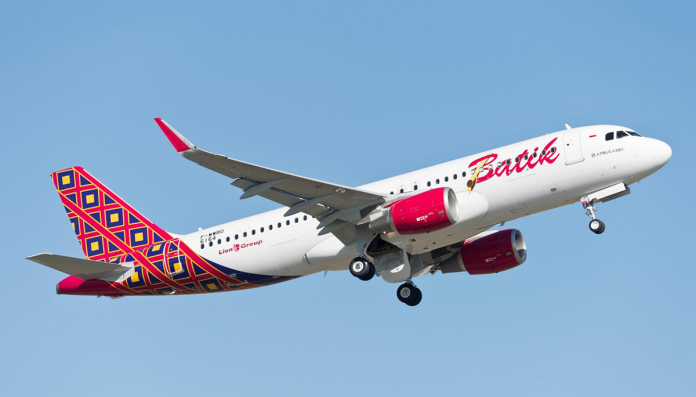
Batik Air flags service to Xining

KUALA LUMPUR, 27 January 2026: Malaysia’s budget airline Batik Air confirms it will launch a weekly flight to Xining, the capital of Qinghai Province in northwestern China, from its home base here in the Malaysian capital this April.

Xining, perched at an elevation of about 2,270 metres on the northeastern edge of the Tibetan Plateau, serves as a gateway to Tibet; the “Roof of the World.”

Batik Air will launch the KUL-XNN route on 18 April, deploying its A330 with 298 seats for the weekly Saturday departure.

Flight schedule

OD686 departs Kuala Lumpur at 1600 and arrives in Xining (XNN) at 2130. (Saturday).
OD687 departs Xining (XNN) at 2330 and arrives in Kuala Lumpur (KUL) at 0515. (Sunday). 

Historically, Xining was a vital hub on the Silk Road and the Tang-Tubo Ancient Road. It is recognised as a multicultural city where Han, Tibetan, and Hui Muslim cultures blend seamlessly.

Why travel to Xining

Gateway to Tibet: Xining is the starting point of the famous Qinghai-Tibet Railway, the world’s highest railway. Travellers spend a few days here to acclimatise to the altitude before heading off to Lhasa.

Natural wonders

Qinghai Lake: About 150 km from the city, it is China’s largest inland saltwater lake. In summer, the surrounding shores are covered in vibrant yellow rapeseed flowers, contrasting with the deep azure water.

Chaka Salt Lake: Known as the “Mirror of the Sky,” its shallow, crystallised surface creates a perfect reflection of the clouds and sky, making it a dream destination for photographers.

Kanbula National Forest Park: Famed for its unique “Danxia” landforms (red sandstone cliffs) and the emerald waters of the Lijiaxia Reservoir.

Spiritual and architectural landmarks

Kumbum (Ta’er) Monastery: One of the six great monasteries of the Gelug school of Tibetan Buddhism. It is the birthplace of Tsongkhapa (the school’s founder) and is renowned for its “Three Wonders”: butter sculptures, barola (embossed embroidery), and intricate murals.

Dongguan Giant Mosque: One of the largest and oldest mosques in northwest China. Its architecture is a unique blend of traditional Chinese palace styles and Islamic design.

Beichan Temple: A Taoist temple “hanging” on the side of a cliff, offering panoramic views of the city.

Travel tips

Best time to visit: While most of China swelters in July and August, Xining remains remarkably cool, with average highs around 17°C to 19°C. This makes it a premier destination for domestic travellers looking to escape the heat. Visit from May to September. If you go in July, you can catch the peak blooming season of the rapeseed flowers around Qinghai Lake.

Altitude prep: Xining stands at 2,270 metres, so stay hydrated and avoid heavy exercise on your first day in the city to help your body adjust before heading to higher ground.

Foodie essential: Do not leave without trying Gaba Yogurt — it’s thick, creamy, and distinctively “Xining.”

Logistics: Xining is the starting point for the Qinghai-Tibet Railway. If planning to take the train to Lhasa, book your tickets at least 30 days in advance.

(Source: Batik Air, Kayak, Guide details compiled with the assistance of Gemini by Google)

Davos: Will tourism scale responsibly?

DAVOS, Switzerland, 27 January 2026: Tourism must be led by economic infrastructure if it is to drive growth, resilience, and human connection in an increasingly fragmented world, His Excellency Ahmed Al-Khateeb, Minister of Tourism of the Kingdom of Saudi Arabia, told the World Economic Forum (WEF) Annual Meeting 2026 in Davos last week.

Speaking during engagements at the World Economic Forum, the Minister emphasised that tourism should no longer be treated as a discretionary sector, but as a strategic system capable of supporting diversification, attracting long-term investment, and creating inclusive employment across regions when planned and governed intentionally.

Photo credit: World Economic Forum.

“With an estimated 2 billion international arrivals by 2030, the question for leaders is not whether tourism will grow, but whether it will scale responsibly,” said His Excellency Ahmed Al-Khateeb. “When tourism is designed as economic, social, and cultural infrastructure, it becomes a powerful engine for diversification, resilience, and long-term value, not simply movement across borders.”

Drawing on Saudi Arabia’s experience under Vision 2030, the Minister highlighted how tourism has become a cornerstone of the Kingdom’s economic transformation. In 2025, the Kingdom recorded 30 million inbound visitors, with a target of 150 million by 2030. 

Saudi Arabia is the world’s largest single investor in tourism, with a pipeline of investments spanning destinations, aviation, digital platforms, and human capital. Tourism now contributes nearly 5% of the Kingdom’s direct GDP and employs more than 1 million people.

He pointed to projects such as AlUla, Diriyah, and the Red Sea as examples of a master-planned approach to destination development, focused on safety, sustainability, governance, and quality of life. This model, he noted, has supported long-term investment, strengthened investor confidence, and aligned tourism growth with community benefit and cultural protection.

During the World Economic Forum, he also highlighted ‘Beyond Tourism’, a multi-sector initiative developed in collaboration with the World Economic Forum to elevate tourism from an industry discussion to a system-level leadership agenda. The initiative aims to align policy, capital, and innovation across sustainability, inclusion, resilience, and investment.

“Tourism remains undervalued in economic decision making,” said His Excellency. Despite representing a USD10 trillion global economy, it is still too often absent from infrastructure, trade, and industrial policy. Elevating tourism requires treating it as a productivity, resilience, and connectivity engine supported by coherent policy and data-driven frameworks.”

Saudi Arabia also highlighted TOURISE, a global platform designed to move tourism from ambition to execution by convening governments, investors, and industry leaders to accelerate collaboration and delivery. Since its launch, TOURISE has convened nearly 10,000 leaders from more than 100 countries and helped catalyse over USD 113 billion in tourism-related investment. The next global TOURISE gathering is scheduled for March 2027.

Globally, travel and tourism account for approximately 10% of global GDP and support more than 357 million jobs, making it one of the most inclusive sectors of the worldwide economy. Beyond economics, the Minister noted that tourism continues to play an important role in fostering people-to-people exchange amid heightened geopolitical tensions.

Speaking at the World Economic Forum, His Excellency Ahmed Al-Khateeb highlighted Saudi Arabia’s role in utilising tourism to benefit other countries, not just itself. He called on governments and global institutions to elevate tourism within economic and infrastructure policy, emphasising its role in supporting growth, resilience, and international cooperation.

“One of our biggest challenges is not just looking at ourselves, but also at other countries and how we can help. 80% of countries worldwide do not attract enough tourists, particularly in regions like Africa and Latin America. We want to strengthen relationships with these places to help them build their own tourism sectors and economies, for global benefit.

“In some of these instances, tourism helps to sustain dialogue when formal channels are under strain. It builds understanding, trust, and connection. Led responsibly, it can act as a stabilising force and a multiplier for peace globally.”

Throughout the week in Davos, Saudi Arabia’s delegation engaged in open, constructive dialogue with leaders from government, business, civil society, and academia to promote global stability and prosperity. In line with the Kingdom’s role as a responsible and committed member of the international community, the delegation showcased how Saudi Vision 2030 has become a blueprint for transformative, growth-driven development.

(Source: Ministry of Tourism of Saudi Arabia)

Thailand’s tourism reality check

BANGKOK, 27 January 2026: As 2026 unfolds, Thailand’s tourism industry faces a complex and delicately balanced moment. The long-expected rebound in Chinese arrivals has fallen short of official forecasts, while breaking news of a new virus outbreak in India and Nepal now threatens to disrupt one of Thailand’s fastest-growing source markets.

Numbers tell a sobering story

The Tourism Authority of Thailand originally forecast around 8 million Chinese arrivals for 2025, banking on a strong post-pandemic recovery and restored air capacity. In reality, Chinese arrivals came in closer to 5.5 million, a shortfall of roughly 2.5 million visitors and a decline of about 30% year-on-year. Overall foreign arrivals fell by 7.2% to 32.97 million, the first annual decline since the pandemic years and nearly 20% below the 2019 peak. These headline figures, however, mask an important structural shift.

China: A forecast missed, but a segmented market

At the Thailand Tourism Forum, held at The Athenee Hotel on Wireless Road in Bangkok last week, several operators acknowledged that the China rebound has not materialised as many had hoped. But when the conversation turned to market structure, a more nuanced picture emerged.

The downturn is concentrated almost entirely in the mass tour group segment. Budget two and three-star hotels, high-volume coach tours, and low-margin group travel have been hit hardest. These are the travellers who arrive in large numbers, follow flag-waving tour guides, stay in lower-end properties and spend relatively little beyond basic sightseeing. By contrast, the four- and five-star markets tell a different story.

Independent travellers, couples and small private groups from China are still coming. High-net-worth Chinese travellers are still travelling. Premium hotels and luxury resorts are maintaining occupancy levels broadly in line with previous years. In other words, the Chinese market has not collapsed. It has segmented. This distinction matters.

A combination of safety perceptions from regional scam centre stories, geopolitical anxiety following the Thailand–Cambodia border conflict, a strong baht eroding Thailand’s budget appeal, and floods in the south has disproportionately affected mass tourism. None of these factors has materially deterred wealthy Chinese travellers or high-end FIT visitors.

Seen in that light, the current China slowdown may be less a collapse and more a structural shift away from low-yield volume tourism toward higher value demand.

Ironically, this shift aligns with one of the Tourism Authority of Thailand’s long-stated strategic pillars, the move from volume to value. In China’s case, however, it appears to have happened more by default than by design. The retreat of low-yield mass tour groups has created a de facto upgrade in market quality, even though a targeted repositioning strategy did not drive it.

That does not make the short-term pain any less real for three and four-star hotels and budget operators. But it does change how the challenge should be understood and addressed.

India and Nepal: A new and potentially more serious risk

Now, just as Thailand was hoping for stabilisation in 2026, a new and potentially more serious external risk has emerged.

Photo: Breaking news from India and Nepal has confirmed an outbreak of the Nipah virus.

This is a rare but deadly zoonotic disease transmitted from animals to humans and capable of spreading through close human contact. The outbreak has been centred in southern India, particularly Kerala, with additional suspected cross-border cases reported in Nepal.

Health authorities have confirmed multiple fatalities, with Nipah historically carrying a fatality rate of between 40 and 75% in past outbreaks. Localised restrictions, school closures, quarantine measures and contact tracing are already underway.

First and foremost, our thoughts and condolences must go to the families and communities affected by this outbreak. This is a human tragedy before it is a tourism story.

For Thailand, however, the implications are profound. India has become one of Thailand’s most important growth markets over the past two years, helping to offset weakness from China. Any prolonged disruption to outbound travel from India would remove one of the few remaining engines of near-term demand growth.

The emergence of a highly fatal virus in one of Thailand’s key source markets, therefore, demands close attention, calm leadership and coordinated international action.

There is currently no specific antiviral treatment or antidote for the Nipah virus. Care remains largely supportive. That makes early detection, isolation, contact tracing and international cooperation even more critical.

Thailand was devastated by the coronavirus pandemic. Borders were closed, airlines grounded, hotels shuttered, and millions of livelihoods put at risk. No one in the travel and tourism industry wants to relive that experience. This latest threat must be handled sensibly, carefully and decisively.

Without creating panic or fuelling unnecessary alarm, Thailand should take a hands-on approach in close coordination with Indian and Nepali authorities. Enhanced health screening at airports, transparent public communication, medical preparedness, and early containment protocols are essential.

We should also offer full support to India’s travel and tourism industry as it navigates this crisis. A strong, transparent and science-led response will be essential to restoring confidence when this outbreak is brought under control.

If there is one lesson Covid taught us, it is that delay and denial are far more damaging than early, coordinated action. Thailand must not repeat the mistakes of the past.

Strategic implications for 2026

For policymakers and industry leaders, the strategic picture is now more complex than a straightforward China-rebound narrative.

The high-end Chinese market is still coming. The independent traveller market is still coming. But the low-yield mass segment has weakened structurally, not cyclically.

At the same time, India, which had been one of Thailand’s brightest growth stories, now faces a health-related risk that could materially alter outbound travel patterns in 2026.

The government’s new target of a 10% increase in foreign arrivals this year, therefore, looks increasingly ambitious.

The challenge now is not to chase volume for its own sake, but to manage a delicate transition.

Thailand remains one of the world’s great tourism destinations. Its natural beauty, hospitality culture, food, wellness offerings and urban energy are unmatched. The opportunity lies in consolidating higher-value tourism, diversifying source markets, and building resilience into a sector that has become dangerously exposed to external shocks.

Chinese New Year 2026 will be an important litmus test. If arrivals remain soft at the mass end but stable at the premium end, it will confirm that Thailand’s Chinese tourism future is no longer about volume. It is about value.

And the emerging health situation in India and Nepal determines whether 2026 becomes a year of stabilisation or another year of uncomfortable adjustment.

About the author
Andrew J Wood has lived in Thailand since 1991. He is a former Director of Skål International and a Past President of Skål International Asia, Past President of Skål International Thailand, and a two-time Past President of Skål International Bangkok. A former hotelier with senior management experience at leading hospitality groups including Shangri-La, Minor International, Landmark and Royal Cliff, he writes regularly for international travel and hospitality publications. His work focuses on tourism trends across Asia, sustainable tourism development, and the future of travel and hospitality in the Asia-Pacific region.


Sabah welcomes Tawau charter flights

KOTA KINABALU, Sabah, 26 January 2026: Greater Bay Airlines has launched a charter series from Hong Kong to Tawau, the prime gateway town to embark on world-class diving adventures in Semporna, a 90-minute drive north of the airport. 

Tawau Airport welcomed its GBA’s first charter flight from Hong Kong on Tuesday, 20 January, with the Boeing 737-800 aircraft receiving a water salute on touchdown.

Photo credit Sabah Tourism Board. Welcome water salute at Tawau airport.

It is Tawau’s first charter this month and enhances regional connectivity, following previous charter series by Loong Air from Shenzhen and AirAsia from Shanghai in December 2025, as well as scheduled flights by Juneyao Airlines from Shanghai.

Sabah’s Minister of Tourism, Culture and Environment, YB Datuk Jafry Bin Ariffin, said the additional flight is a great start to the Visit Malaysia Year 2026.

“Hong Kong travellers now have a direct gateway to Tawau’s natural wonders, such as the Tawau Hills Park, world-class seafood, and the breathtaking islands of Semporna. It is a perfect blend of adventure, relaxation, and the opportunity to support our local products.

“The charter flight is a great avenue to test the market interest and may pave the way for potential permanent scheduled flights.

“I urge Tawau tourism players to seize this opportunity by offering travel packages specially tailored for this market, ensuring our guests experience the very best of the district,” he concluded.

GBA operates the charter series twice a week on Tuesday and Saturday through to 28 March 2026. Flight time is three hours and 15 minutes.

Flight schedule

HB2539 departs Hong Kong (HKG) at 1645 and arrives in Tawau (TWU) at 2000.
HB2540 departs Tawau (TWU) at 2100 and arrives in Hong Kong (HKG) at 0020, plus a day.

Gateway to Semporna 

Most travellers arriving via the Greater Bay Airlines charter will join a 90-minute overland transfer north to Semporna to access the islands.

Sipadan Island: Consistently ranked as one of the top 10 dive sites in the world.

Mabul & Kapalai: Famous for “muck diving” and luxury overwater bungalows.

Tun Sakaran Marine Park: Includes the iconic hike up Bohey Dulang for that famous postcard view of the turquoise lagoon.

Flights via Kota Kinabalu

Since 1 January 2026,  two airlines have served the Hong Kong- Kota Kinabalu route — Hong Kong Express (five weekly) and AirAsia (daily) flights. Travellers heading for Semporna can transfer to AirAsia flights from Kota Kinabalu to Tawau. AirAsia schedules 53 flights weekly on the domestic route. (50-minute flight on an AirAsia A320neo aircraft). 

For more information on Sabah, visit: Sabah Tourism Board

(Source: Your Stories — Sabah Tourism Board).

BWH Hotels opens SureStay Plus near airport rail link

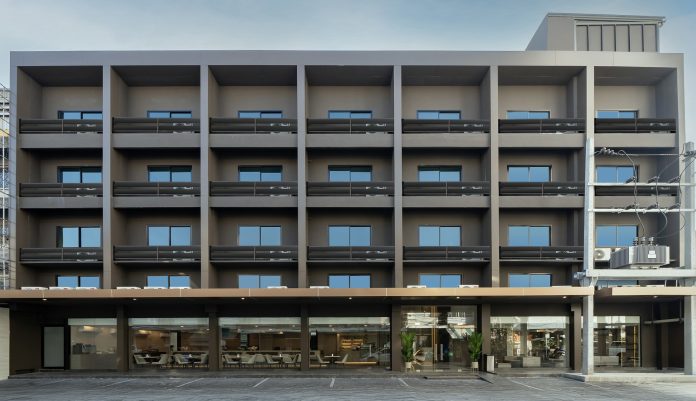
BANGKOK, 26 January  2026: BWH Hotels, a global hospitality enterprise comprising WorldHotels, Best Western Hotels & Resorts and SureStayHotels, is keeping guests fully connected when they travel to Thailand with the launch of SureStay Plus by Best Western Ramkhamhaeng Airport Rail Link Bangkok – a fully renovated and newly opened hotel that offers seamless accessibility to downtown Bangkok and Suvarnabhumi International Airport.

Conveniently located just 200 metres from Ramkhamhaeng Station on Bangkok’s Airport Rail Link, this modern 60-key property will open up a new part of the city for business and leisure guests. In addition to being highly accessible, SureStay Plus by Best Western Ramkhamhaeng Airport Rail Link Bangkok is the closest internationally branded hotel to Rajamangala Stadium, Thailand’s largest sports venue, which regularly hosts major football matches and music concerts by iconic global artists. 

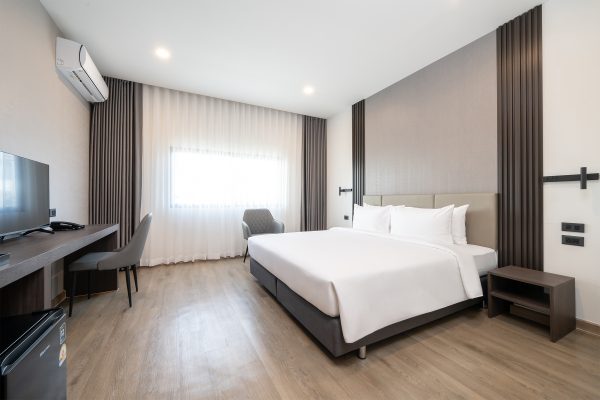
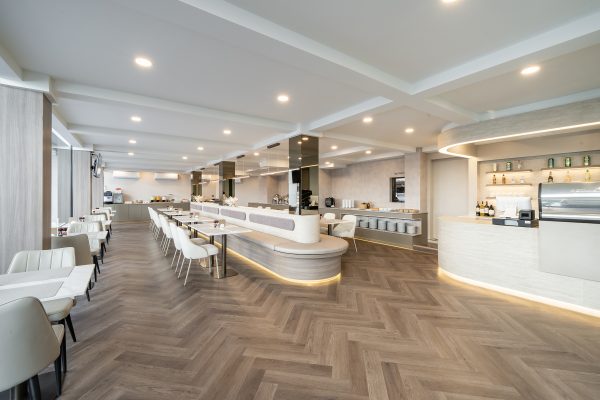
Throughout their stay in this up-and-coming part of Bangkok, guests can unwind in contemporary rooms with comfy beds and dine at the bright, inviting restaurant, which serves freshly cooked local and international cuisine for breakfast, lunch and dinner. 

Urban explorers can take a local boat ride along Khlong Saen Saep, Bangkok’s largest canal, which flows through the heart of downtown and offers a unique way to access shopping malls like CentralWorld, or the famous street food stalls of Pratunam. Thonglor, the Thai capital’s trendiest district, is just 2 km away. At the end of their day of discovery, travellers can relax with a cool drink at the hotel’s rooftop bar.

Every aspect of the hotel experience is underpinned by the enhanced brand standards of SureStay Plus by Best Western, delivering great value with quality extras. Members of Best Western Rewards, the award-winning loyalty program that’s free to join, can enjoy exclusive benefits and points that never expire. These points can be redeemed for exciting rewards such as complimentary room nights, airline miles, and gift cards.

“Bangkok remains one of the world’s most compelling and captivating cities, with a wealth of attractions for all types of travellers. Local and international visitors are seeking to uncover new parts of the city, and Bangkok’s outstanding transport network provides the perfect opportunity for urban exploration. With a portfolio of hotels across the Thai capital, all supported by our world-class standards of service, BWH Hotels lets guests discover the diverse wonders of this dynamic city like never before,” said BWH Hotels Vice President – APAC Olivier Berrivin.

With the opening of SureStay Plus by Best Western Ramkhamhaeng Airport Rail Link Bangkok, BWH Hotels now operates 14 properties in Bangkok across seven brands, making it one of the city’s leading hotel operators. This also marks the group’s 26th property in Thailand.

To book a stay with BWH Hotels in Asia, visit bestwesternasia.com and worldhotels.com

(Source: Your Stories — BWH Hotels)

MSC Cruises homeports in La Romana

MADRID, 26 January 2026: MSC Cruises presented its new year-round operation from La Romana, Dominican Republic, during the FITUR International Tourism Trade Fair held last week in Madrid, Spain. 

Due to start in November, it will mark the cruise line’s first venture in the Southern Caribbean, scheduled to operate year-round from a brand-new homeport in La Romana.

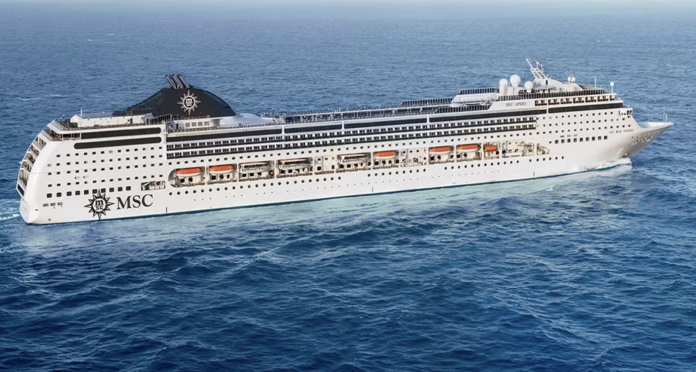
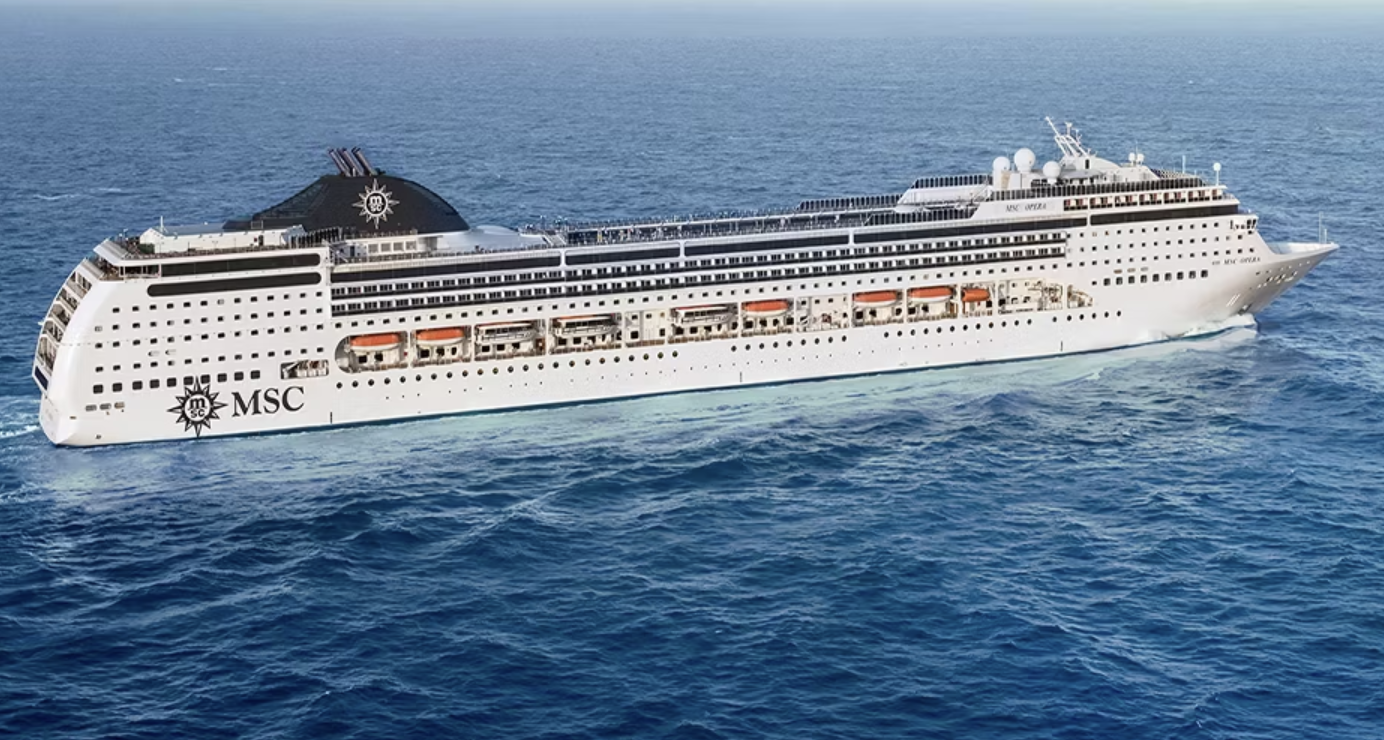
Photo credit: MSC Cruises. MSC Opera.

MSC Opera will offer a brand-new itinerary with weekly departures, and guests can book a seven-night sailing or extend their cruise to a back-to-back 14-night sailing.

Sailings are already available to book, with the first cruise departing on 16 November 16, 2026. 

One of the highlights of this new itinerary is the call to Catalina Island, off the coast of the Dominican Republic, offering guests an exclusive nature reserve experience. Pristine white sand beaches and crystal-clear waters allow guests to relax and unwind, or the more adventurous can snorkel the surrounding coral reefs to view their diverse ecosystems.

MSC Cruises’ CEO Gianni Onorato commented: “MSC Cruises first started calling in the Dominican Republic in 2014, so after more than 10 years, it is a proud moment for me to speak about our new homeporting offering in La Romana. With year-round operations, we extend the traditional season, generating positive economic impact for the local community and attracting 120,000 additional international visitors to La Romana each year. MSC Cruises is committed to the Dominican Republic and this new programme for the long term.”

(Source: MSC Cruises)

Hilton Malaysia launches long weekend deals

KUALA LUMPUR, 26 January 2026: Hilton Hotels Malaysia has launched its “Plan Ahead and Save 2026” campaign, encouraging travellers to book early and enjoy up to 25% savings on stays during Malaysia’s long weekends and public holidays throughout the year.

Until 10 March 2026, guests can book preferred travel dates in advance, with stays valid through 31 December 2026. Hilton’s city hotels, beachfront resorts, and family-friendly properties offer stays for festive reunions, short breaks, or family holidays.

Hilton Malaysia – Plan and Save Campaign 2026

In addition to early booking savings, Hilton highlights enhancements to the Hilton Honours loyalty programme, including a faster path to Elite status, simplified point earning and the introduction of Diamond Reserve, a new premium tier offering elevated benefits.

Plan early for Malaysia’s 2026 long weekends

With “Plan Ahead and Save,” travellers can lock in their stays early and save up to 25% during high-demand periods.

14-18 Feb (Chinese New Year)

Hilton Petaling Jaya – Ideal for reunions with connected rooms.
DoubleTree by Hilton Melaka – Close to heritage attractions for festive outings.

21-23 Mar (Hari Raya Aidilfitri)

Hilton Kota Kinabalu – Relaxed post-Raya family stay.

1-3 May (Labour Day)

DoubleTree by Hilton Kuala Lumpur – Convenient for shopping, dining, and short breaks.

30 May – 2 June (Wesak & Agong’s Birthday)

DoubleTree by Hilton Damai Laut Resort – Beachfront holiday with kids’ water park and Pangkor activities.

29-31 Aug (Merdeka Day)

DoubleTree by Hilton Putrajaya Lakeside – Scenic lakeside escape with family facilities.
Hilton Kuching – Laidback riverfront retreat.

7-9 Nov (Deepavali)

DoubleTree Resort by Hilton Penang – Beachside fun with eco-kids activities.

25–27 Dec (Christmas)

DoubleTree by Hilton Damai Laut Resort – Festive beachfront stay with family packages.
DoubleTree by Hilton Shah Alam iCity – Seasonal dining and city celebrations.

(Source: Hilton)

PATA and APOLA ink partnership pact

BANGKOK, 26 January 2026: The Pacific Asia Travel Association and the Asia Pacific Outdoor Lodging Association have entered into a formal partnership through a Memorandum of Understanding signed last week.

APOLA has been incorporated as a not-for-profit organisation with the mission to foster sustainable growth, innovation and excellence within the Asia Pacific Outdoor Lodging sector, often called “glamping”.

PATA and APOLA agreement signed 22 January: (L to R) Matt Gebbie, Director, Horwath HTL, and Executive Committee Member, APOLA; Shyn Yee Ho, Director, Horwath HTL, and Executive Committee Member, APOLA; Willem Niemeijer, Executive Committee Member and Founding Member, APOLA; Noor Ahmad Hamid, CEO, PATA; and Michael Sagild, Co-founder & President, Cloud Collective, and Executive Committee Member, APOLA, at the signing cereomny.

The MOU was signed by PATA CEO Noor Ahmad Hamid and APOLA Executive Committee member Willem Niemeijer on 22 January on the sidelines of the Thailand Tourism Forum 2026 in Bangkok.

PATA CEO Noor said: “This partnership between PATA and APOLA will lead to a stronger foundation for international collaboration within the Asia Pacific region, opening the door to effective exchange of best practices and meaningful collaborations. We look forward to jointly advancing responsible and sustainable tourism in the region alongside APOLA, and bringing value to our respective members.”

 APOLA founding member Willem Niemeijer said: “Outdoor lodging is growing at around 11% a year in the region. It is therefore fitting that APOLA works with PATA, the leading voice and authority on tourism in Asia Pacific, to draw attention to the potential that the sector has to deliver quality, nature-based responsible tourism experiences.”

Niemeijer added that demand for nature-first tented camps, cabins, yurts, treehouses, or nature pods on beaches, mountains, forests, and other natural areas has increased dramatically during and since the COVID pandemic. Apart from promoting sustainable practices, Niemeijer said APOLA also aimed to establish sector-wide standards.

As outlined in the agreement, the areas of cooperation include reciprocal, complementary membership access, enabling both organisations to utilise each other’s member benefits at the respective association levels. The partnership also covers research and knowledge exchange, with APOLA contributing selected research, tourism insights, and travel trends every quarter through PATA’s members-only communication channels.

In addition, the organisations will support reciprocal activities, including the mutual promotion of events and, where appropriate, speaker participation. Representatives and members of PATA and APOLA will be offered opportunities to engage across organisations through networking and annual events, with registration support provided in line with the agreement.

About PATA
The Pacific Asia Travel Association (PATA) is a not-for-profit membership association dedicated to advancing a meaningful Pacific Asia tourism economy. Founded in 1951 and headquartered in Bangkok, the association also has an official office in Beijing.

About the Asia Pacific Outdoor Lodging Association
APOLA is an industry body driven by local professionals dedicated to uniting and empowering the Asia Pacific outdoor lodging community, championing sustainable growth, innovation, and collaboration to elevate the industry’s standards.

(Source: PATA)

Atlas Ocean Cruises builds a sailing yacht

SINGAPORE, 26 January 2026: Atlas Ocean Voyages announced last week that it is building its first-ever luxury expedition sailing yacht, a next-generation newbuild platform that represents a significant milestone in the company’s continued evolution and growth within the luxury expedition cruise industry.

The new Atlas-class vessel is an eco-friendly exploration yacht with hybrid propulsion and solid sails, representing a natural evolution of Atlas Ocean Voyages’ World-class expedition fleet. 

Photo credit: Atlas Ocean Cruises.

Atlas Adventurer is purpose-built for global exploration, seamlessly balancing advanced technology with elevated comfort. The yacht features advanced marine systems and is equipped with three carbon masts and solid sails. When conditions at sea and with the wind permit, these elements will enhance operational efficiency and enable zero-emission cruising, allowing for a silent presence on the water. This reinforces Atlas’s commitment to environmentally conscious modern global exploration.

Engineered for worldwide discovery, Atlas Adventurer is a 26,000-gross-ton luxury expedition sailing yacht measuring 690 feet in length. The yacht is equipped with dual-fuel engines and electric-hybrid propulsion, featuring an extensive 9-megawatt marine battery system that enables high speeds even in light wind conditions, enhancing the sailing experience with virtually silent operation. 

Atlas Adventurer is equipped with zero-speed fin stabilisers, two vertical fin stabilisers, a reinforced hull, and Ice Class 1B (Polar Category C) capability. This design allows it to navigate a wide range of global destinations with confidence, efficiency, and refined performance.

“This new Atlas-class sailing yacht represents the next step in our growth,” said Atlas Ocean Voyages President & CEO James Rodriguez.

“It allows us to expand our destination footprint into regions our guests have been asking us for, while further solidifying Atlas’ position within the luxury expedition cruise category. As our brand continues to evolve, this vessel is a powerful expression of where we are headed: thoughtful growth, intentional design, and deeper global exploration.”

Accommodating up to 400 guests, supported by a crew of 275, the Atlas-class sailing yacht will introduce a significantly expanded onboard experience, including all-suite accommodations across every category, increased space and amenities, and a broader range of dining, wellness, and social offerings, while maintaining the boutique hospitality that defines Atlas Ocean Voyages.

The vessel will include seven dining venues, featuring speciality restaurants and a new culinary studio for hands-on learning and destination-inspired programming. It will also have five lounges, a cocktail bar, social spaces, and two outdoor bars. Additionally, there will be an expanded fitness and wellness centre, a swimming pool, and purpose-built expedition capabilities, including Zodiacs, luxury motorboats, and a marina platform with an ocean pool for water-based exploration.

Beginning in late 2028, Atlas Adventurer will explore destinations across Asia, including Japan, South Korea, China, Vietnam, Indonesia, Malaysia, Thailand, and the Philippines, and Africa, including Seychelles, Madagascar, Tanzania, Kenya, Mozambique and South Africa, further extending the line’s global reach while continuing to redefine luxury expedition cruising to remote destinations around the world.

Atlas Ocean Voyages has also opened Early Access Priority reservations, inviting guests to secure their place on an inaugural season voyage with a USD2,000 deposit, register their interest, and be among the first to receive updates on the yacht’s design, onboard experiences, destinations, culinary offerings, and service as details are unveiled. 

(Source: Atlas Ocean Voyages)

Agoda monitors surge in Tet travel searches

HO CHI MINH CITY, 23 January 2026: With the Tet national holiday just around the corner, the spirit of reunion and celebration is already building across Vietnam, and travel plans are no exception. 

Digital travel platform Agoda has revealed that more Vietnamese travellers are planning to pack their bags for the national Tet holiday this year than for the holiday period last year, with a clear preference for exploring destinations within the country.

Based on searches made by travellers in Vietnam between October and November 2025 for check-ins between 14 and 22 February 2026, Agoda observed that overall Tet travel interest for both domestic and international travel increased compared to last year’s Tet travel period. Most of this growth is driven by domestic travel, which rose by 22%, while interest in outbound trips also increased, though more modestly, by 7%.

This trend reflects findings from Agoda’s 2026 Travel Outlook Report, which shows that 50% of Vietnamese respondents plan to travel domestically in 2026. With nine consecutive days off during Tet – and a cultural tendency to add some annual leave to the period and extend the break – the holiday offers the ideal opportunity for Vietnamese families to reconnect, relax, and explore destinations across the country without the complexities of international travel.

According to Agoda, Da Lat remains the top domestic destination for Tet 2026, with searches up 44% thanks to its cool climate and festive atmosphere. Phu Quoc has overtaken Nha Trang to secure second place with a 41% increase, appealing to travellers seeking sun, beaches, and family-friendly resorts. Nha Trang and Da Nang remain strong contenders, ranking third and fourth, respectively, known for their coastal charm and diverse activities. Vung Tau rounds out the top five with a 31% increase, remaining a convenient short getaway for Ho Chi Minh City residents.

Bangkok remains the most favoured international destination for Vietnamese travellers during the upcoming Tet holiday. Singapore rises to second place this year, with a 25% increase in travel interest, replacing Tokyo, which now sits in third place. Meanwhile, Hong Kong makes a notable appearance in fourth place, recording a 46% increase in Tet travel interest. Bali completes the top five, maintaining its reputation as a relaxing and culturally rich holiday spot.

Agoda Vietnam Country Director Vu Ngoc Lam said: “Tet is one of the most meaningful times of the year for Vietnamese travellers. With an especially long break this year, it becomes the perfect moment for families and friends to begin new journeys – whether exploring the beauty of Vietnam or venturing abroad. Agoda is delighted to support this spirit of travel by offering a seamless platform and a wide range of accommodation, flight, and activity options, helping travellers enjoy a smooth and memorable Tet holiday.”

(Source: Agoda)