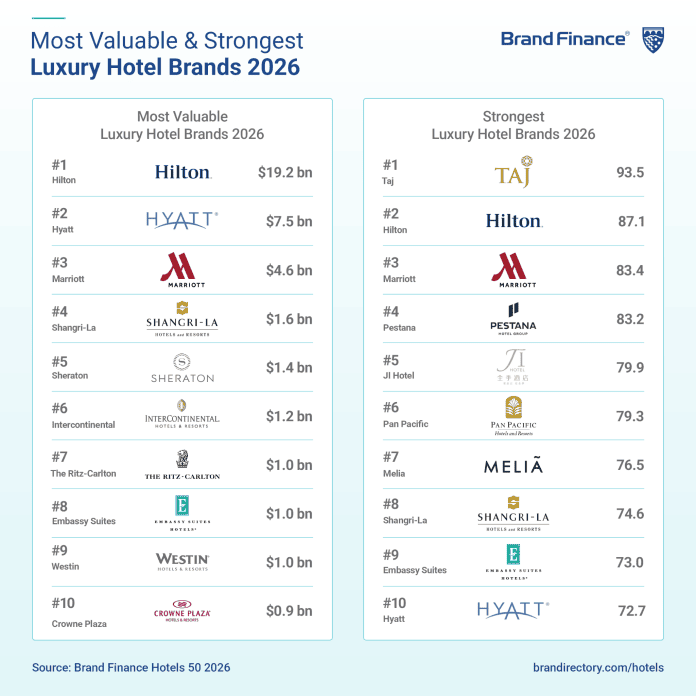
LONDON, 24 July 2026: Hilton Hotels & Resorts remains the world’s most valuable luxury hotel brand, while Taj Hotels retains its position as the world’s strongest luxury hotel brand, according to the Hotels 50 2026 report from Brand Finance, a brand valuation consultancy.
Brand Finance’s latest luxury hotels ranking shows no change among the top 10 brands, reinforcing the sector’s resilience amid evolving market conditions
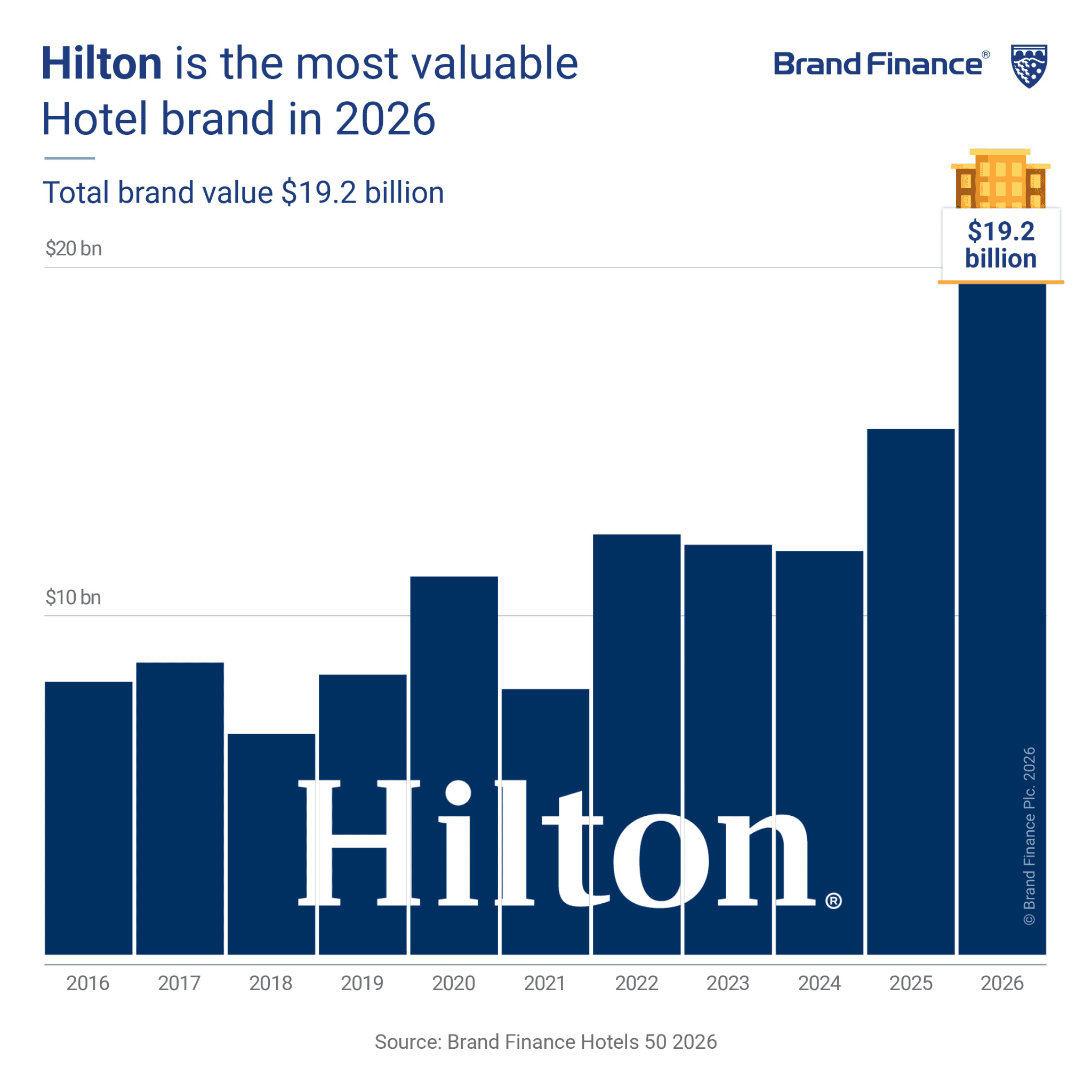
Hilton Hotels & Resorts (brand value up 28% to USD19.2 billion) has seen growth supported by its strong premium positioning, global reputation for high-quality hospitality, and continued investment in its luxury portfolio, including Waldorf Astoria, Conrad Hotels & Resorts, LXR Hotels & Resorts, and NoMad Hotels.
Expansion into high-demand luxury destinations has further strengthened Hilton’s global presence and reinforced its appeal among affluent travellers.
Hyatt (brand value down 6% to USD7.5 billion) retains its position as the world’s second most valuable luxury hotel brand. The brand continues to strengthen its luxury positioning through the expansion of its premium portfolio, including Park Hyatt, Alila, Miraval, and Andaz, which cater to growing demand for personalised and experience-led stays. Hyatt’s record development pipeline of 148,000 rooms and continued growth of its World of Hyatt loyalty programme to approximately 63 million members further support its long-term growth prospects, as the brand expands its presence across key luxury travel markets.
Marriott (brand value up 23% to USD4.6 billion) ranks as the world’s third most valuable luxury hotel brand, supported by continued portfolio expansion and strong global brand equity. The group’s luxury offering, spanning brands such as Ritz-Carlton, St. Regis, JW Marriott, and EDITION, continues to benefit from rising demand for premium experiences and personalised hospitality.
Growth initiatives, including expanding its luxury portfolio and launching new concepts such as Series by Marriott, have strengthened Marriott’s ability to cater to evolving luxury traveller preferences. Its Marriott Bonvoy ecosystem, with 271 million members globally, further reinforces customer loyalty and supports sustained brand growth across international markets.
Meanwhile, with a Brand Strength Index (BSI) score of 93.5/100 and an AAA+ brand strength rating, Taj Hotels (brand value up 32% to USD878 million) retains its position as the world’s strongest luxury hotel brand. As luxury travellers increasingly seek authentic and experience-led stays, Taj continues to differentiate itself through its distinctive blend of Indian heritage, personalised hospitality, and timeless luxury. Its strong brand equity reflects its ability to deliver meaningful guest experiences while preserving its unique cultural identity on the global hospitality stage.
Hilton Hotels & Resorts ranks as the world’s second strongest luxury hotel brand, achieving a BSI score of 87.1/100 and an AAA-brand strength rating, underpinned by its premium positioning, extensive global luxury portfolio, and reputation for delivering high-quality hospitality across international markets. Marriott ranks third strongest, with a BSI score of 83.4/100 and an AAA brand strength rating, reflecting the strength of its diverse luxury brand portfolio, global reach, and continued investment in premium guest experiences.
As part of the Hotels 50 2026 report, Brand Finance has separately ranked the world’s 10 leading luxury hotel brands by brand value and brand strength.
SINGAPORE, 24 July 2026: Allianz Partners, a B2B2C insurance and assistance services provider, and Singapore-based Travelgoogoo join forces to deliver connectivity to Allianz customers across Asia Pacific.
Through this collaboration, eligible Allianz travel insurance customers will gain access to the Travelgoogoo365 Annual Plan, which includes membership to the Travelgoogoo eSIM Travel Club.
Photo credit: Allianz Partners.
Allianz Partners, Managing Director, Asia Pacific, Middle East and Africa, Vinay Surana said: “Today’s travellers expect a seamless, end-to-end travel experience. Partnering with Travelgoogoo allows us to address the growing expectation for always-on connectivity, enhancing our travel insurance offering to give customers greater confidence and convenience wherever they go.”
The Travelgoogoo eSIM Travel Club is a membership ecosystem designed to provide travellers with always-on connectivity and exclusive travel benefits. Members enjoy unlimited messaging and data voice calls across popular messaging platforms, including WhatsApp, LINE, Telegram, WeChat, Viber, and Zalo, without needing to purchase a data plan in 123 destinations. They can also purchase high-speed travel data at member-exclusive rates whenever needed.
As part of the launch offer, Allianz customers will also receive a complimentary 1GB Global Starter Data Pack for a limited period, enabling them to enjoy high-speed connectivity from the start of their journey.
Travelgoogoo enables a more seamless travel experience by removing the need for SIM swaps, reducing connectivity challenges associated with roaming, and eliminating the hassle of searching for Wi-Fi. Members can also access support via WhatsApp to check usage or purchase additional data plans at their convenience.
Travelgoogoo Founder and CEO Richard Bok commented: “Connectivity has become a fundamental part of how people travel, from staying in touch with loved ones to accessing essential services on the go. It’s what keeps people close, informed, and moving with confidence across borders.”
KUALA LUMPUR, 23 July 2026: Travel continues to be a priority for consumers across ASEAN, with travellers becoming increasingly intentional about how they plan and spend on their journeys.
As economic and global conditions evolve, they are making smarter choices on where they go, how much they spend and when they book.
According to AirAsia MOVE’s insights from forward bookings for travel between 1 July and 31 December 2026, travellers are increasingly prioritising value, convenience and thoughtful planning over volume alone.
The findings indicate that travellers are moving away from spontaneous decision-making towards more intentional travel in 2026, prioritising destinations that offer greater value, shorter travel times and meaningful experiences without compromising affordability.
Travellers are spending smarter, not less
One of the clearest shifts is not whether people are travelling, but how they are allocating their travel budgets. Average flight spending for the second half of 2026 is currently around 35% higher than the average hotel spend. The data suggests that travellers remain willing to invest in reaching their preferred destinations, while becoming more selective about where they stay.
Rather than choosing premium luxury accommodation, travellers are increasingly opting for hotels that provide the right balance of comfort, convenience and affordability.
This is reflected across the more than one million hotels available on MOVE worldwide, where 76% of bookings are for three- and four-star properties, demonstrating a clear preference for quality accommodation that delivers greater value.
Payday is when travellers turn plans into bookings
MOVE’s booking intelligence shows that nearly 40% of flight bookings are made for travel taking place between the 25th and 5th of each month, closely aligning with salary cycles across many ASEAN markets.
The pattern suggests that while travellers often begin researching and planning earlier, many choose to make the trip closer to the payday period, reflecting a more disciplined approach to discretionary spending.
As affordability becomes increasingly important, financial planning is becoming an integral part of the travel decision-making process.
Convenience is driving destination choices
Travellers continue to favour destinations that are easier and quicker to reach.
While domestic travel remains resilient across the region, international demand continues to be concentrated on destinations within four hours’ flying time, where travellers can maximise both their time and travel budgets.
Bookings for international flights under four hours increased by 14% in the second half of 2026 compared to the same period in 2025. The trend reflects growing demand for destinations that offer convenience, accessibility and strong overall value, making shorter regional getaways increasingly attractive.
International travel is expected to strengthen in H2
Travellers are also planning holidays earlier, with a growing proportion of bookings now being made more than 120 days before departure. The trend points to renewed confidence in longer-term travel planning after a period characterised by shorter booking windows.
Malaysia, Thailand, Indonesia, Japan and the Philippines are expected to remain among the strongest destination markets during the remainder of the year, reflecting continued demand for regional travel supported by strong connectivity and competitive value.
Millennials and Gen Z continue to power travel demand
Millennials remain the largest travelling generation on MOVE, accounting for 43% of all bookings, followed by Gen Z at 23%. Together, they represent almost two-thirds of bookings across the platform, reinforcing that younger travellers continue to shape the region’s travel economy.
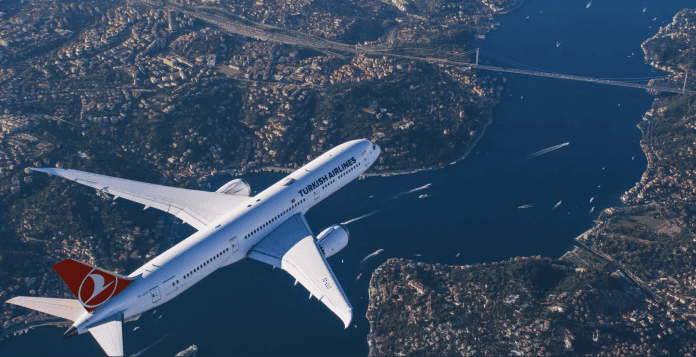
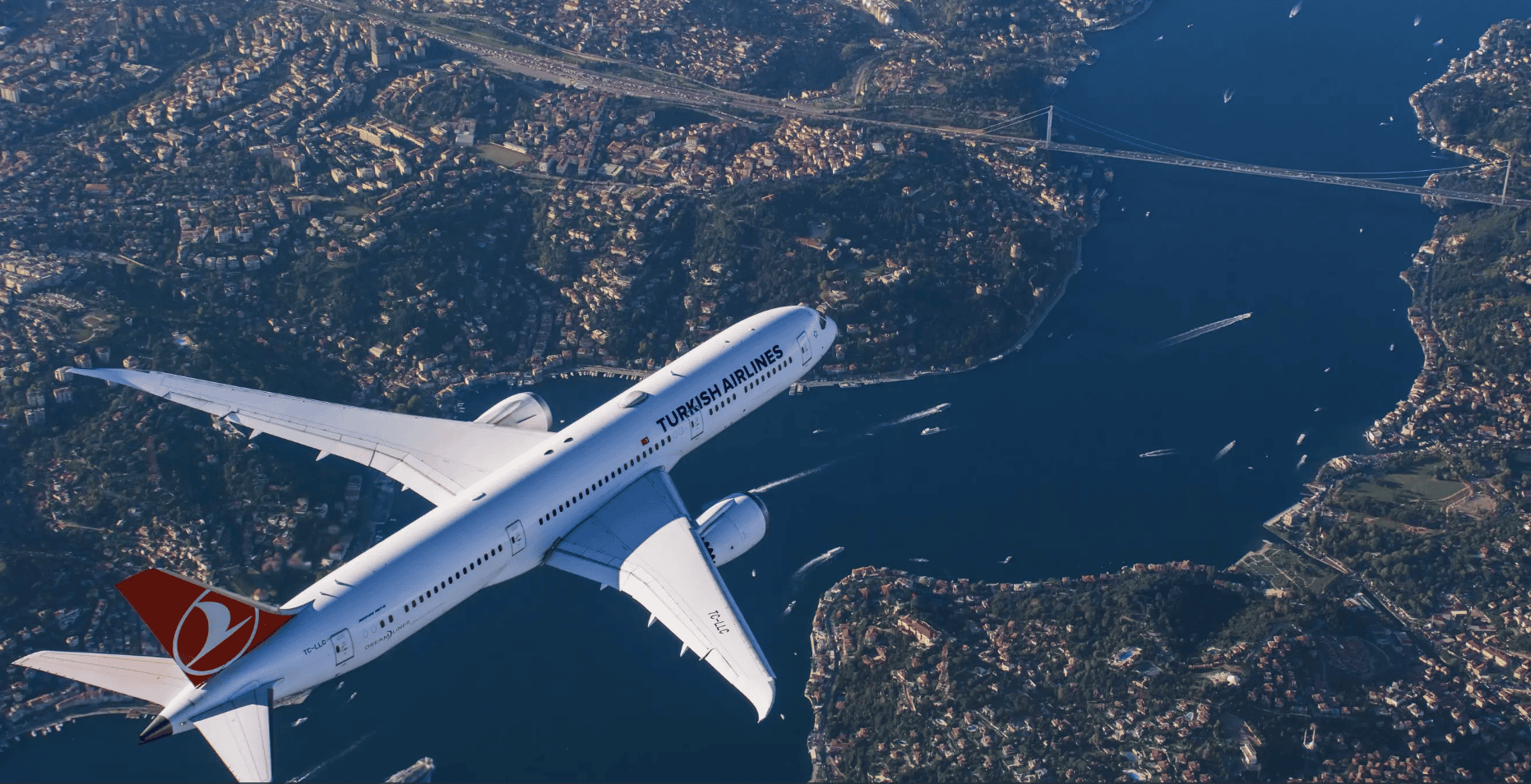
SINGAPORE, 23 July 2026: Turkish Airlines carried 7.9 million passengers in May 2026, delivering an International load factor of 84% while domestic load factor reached 84.4%.
Available seat kilometres (ASK) increased by 2.5% to 23.2 billion during May 2026 from USD22.6 billion for the same period of 2025.
Photo credit: Turkish Airlines.
Cargo/Mail carried during May 2026 increased by 8.6% from May 2025, totalling 203.1 thousand tons.
January-May 2026 traffic results
Passengers increased by 7.3% to 36.4 million compared to the same period of 2025.
Total load factor recorded 83.6%. International load factor reached 83.5% and the domestic load factor 84.3%.
Available seat kilometres (ASK) increased by 6.5% to 112.1 billion from 105.3 billion for the same period of 2025.
Cargo/Mail carried during this period increased by 13.5% to 954.6 thousand tons from 840.7 thousand tons in the same period of 2025.
By the end of May 2026, the number of aircraft in the fleet reached 542.
Traffic results are consolidated and include Turkish Airlines’ main brand and AJet data.
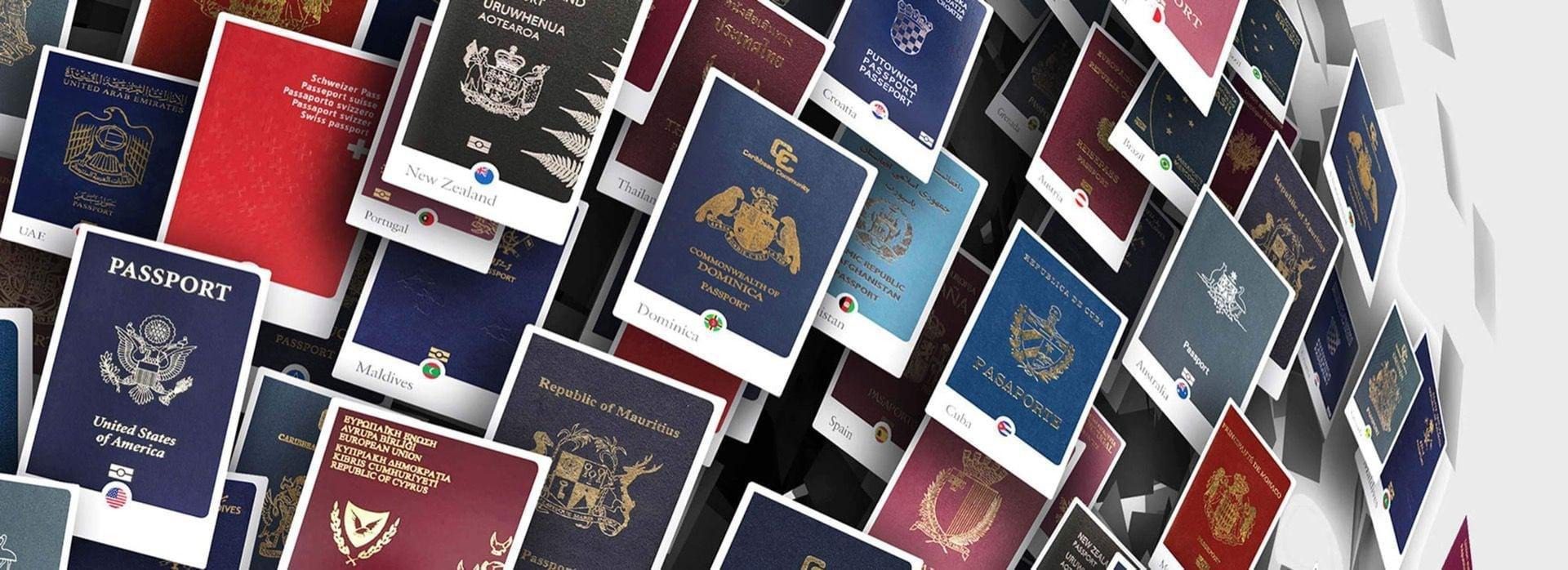
LONDON, 23 July 2026: The average passport now provides visa-free access to 108 destinations worldwide — up from just 58 when the index was first launched in 2006, according to the 20th anniversary edition of the Henley Passport Index
It demonstrates how dramatically global mobility has expanded over the past two decades. Findings stand in stark contrast to the latest Global Peace Index, which also marks its 20th edition and paints its bleakest picture yet.
Photo credit: Henley & Partners.
According to the Institute for Economics & Peace, the world is experiencing the highest number of state-based conflicts since the Second World War, with global peacefulness declining for the 12th consecutive year.
Today, 119 of the 163 countries measured are less peaceful than they were in 2008, while 103 countries have been involved in an external conflict during the past five years — almost double the number recorded when the index began.
As millions of travellers prepare to cross borders for the peak Northern Hemisphere summer holiday season, the July 2026 Henley Passport Index — based on exclusive Timatic data from the International Air Transport Association (IATA) — shows that international mobility continues to evolve despite an increasingly complex and conflicted geopolitical landscape.
Singapore retains its position as the world’s most powerful passport with visa-free or visa-on-arrival access to 192 destinations. At the same time, the United Arab Emirates is the biggest mover since January, climbing three places to join Japan and South Korea in second place with access to 188 destinations.
The UK has climbed one place to 6th since the start of the year after securing visa-free access to China and Malawi, while Canada has risen to 7th following similar gains. The US remains in 10th place and is now one of the few top-ranked passports whose citizens still require a visa to visit China.
UAE — the making of a mobility superpower
The UAE’s latest rise is particularly significant in this anniversary year, recording the greatest improvement of any passport in the index’s history, adding 153 visa-free destinations over 20 years and rising from the middle of the rankings to become one of the world’s most powerful passports — a striking example of how sustained diplomatic engagement and international cooperation can transform global mobility.
Henley & Partners Chairman and creator of the Henley Passport Index, Dr Christian H Kaelin, says the two historic datasets reveal a profound shift in global power.
“Twenty years of data show that passport power is one of the clearest expressions of a country’s geopolitical capital. It reflects far more than peace or prosperity alone. The world’s strongest passports belong to nations that other countries want as partners — for trade, investment, security, or cooperation. Mobility is ultimately a measure of the value other countries place on their relationship with you.”
The winners, the losers, and the growing gap
Over the past 20 years, global travel freedom has expanded dramatically. In 2006, the most powerful passports — held by citizens of the USA, Denmark, and Finland — provided visa-free access to 130 destinations. Today, Singapore sits at the top of the index with access to 192 destinations.
Yet the gap between the most and least mobile citizens has widened sharply. In 2006, Afghanistan ranked last with access to just 12 destinations, creating an 118-destination gap between the top and bottom of the index. Today, Afghanistan remains at the bottom with access to only 22 destinations, while Singapore’s score of 192 creates a record-breaking 170-destination global mobility gap.
Remarkably, Bolivia is the only passport in the world to have recorded a net loss in visa-free access over the past two decades, reducing its score by six destinations. Every other passport has become more powerful.
The waning power of the Atlantic alliance
The composition of the world’s mobility elite has changed significantly since the Henley Passport Index was launched. In 2006, the US enjoyed first place and the UK ranked third. Twenty years later, the US sits in 10th place, and the UK ranks sixth, underscoring a longer-term shift in mobility power away from the traditional transatlantic leaders.
Asia has become far more prominent at the top of the index. Singapore, which ranked 8th in 2006, now holds first place, while Japan and South Korea share second place with the UAE.
Europe still dominates the upper ranks, but the balance has changed. The top 10 now includes 38 passports, compared with 26 in 2006, with more countries competing within a narrower bandwidth of high mobility. This reflects a broader trend: passport power has expanded globally, but relative advantage has become harder to maintain.
When peace predicts passport power
New analysis by Henley & Partners comparing the Henley Passport Index (HPI) and the Global Peace Index (GPI) over the past two decades reveals a strong positive relationship between peacefulness and passport power (Spearman rank correlation ρ = 0.65, p < 0.001). At both ends of the spectrum, the pattern is remarkably consistent. Many of the world’s most peaceful countries also hold the world’s strongest passports. Singapore ranks 8th on the GPI and 1st on the HPI, while Japan, Switzerland, Ireland, Austria, Portugal, Finland, Denmark, New Zealand, Canada, Czechia, and Malaysia all feature among the global leaders on both indexes.
The same pattern is evident at the opposite end of the rankings. Afghanistan, Syria, and Yemen sit among the world’s least peaceful nations and have the world’s weakest passports, illustrating the impact that conflict, instability, and state fragility have on international mobility.
When diplomacy and geopolitical power trump peace
The most revealing findings emerge from the exceptions. Countries whose passports significantly outperform what their peace rankings alone would predict include Israel (159th on GPI, 18th on HPI), the US (134th on GPI, 10th on HPI), France (99th on GPI, 4th on HPI), Ukraine (160th on GPI, 31st on HPI), the UAE (73rd on GPI, 2nd on HPI), South Korea (57th on GPI, 2nd on HPI), Brazil (124th on GPI, 16th on HPI), Mexico (139th on GPI, 22nd on HPI), and Russia (163rd on GPI, 47th on HPI). Their positions demonstrate that while peace provides the foundation for international mobility, diplomacy, geopolitical influence, economic strength, and regional integration can all have an even greater impact.
America and Israel are the clearest statistical outliers. Despite the USA sitting in the bottom fifth of the GPI rankings and Israel among the five least peaceful nations in the world, both continue to enjoy exceptionally powerful passports.
Their positions reflect decades of accumulated diplomatic capital, geopolitical influence, economic importance, and international confidence in the integrity of their institutions and travel documents. At a time when tensions with Iran and instability across the Middle East once again dominate headlines, their mobility strength illustrates that passport power is shaped by far more than peacefulness alone.
BERLIN, 23 July 2026: ITB exhibitors will tread unfamiliar ground at ITB Berlin 2027 as their longstanding venue, Hall 9, closes for long-term modernisation of the Berlin Exhibition Grounds.
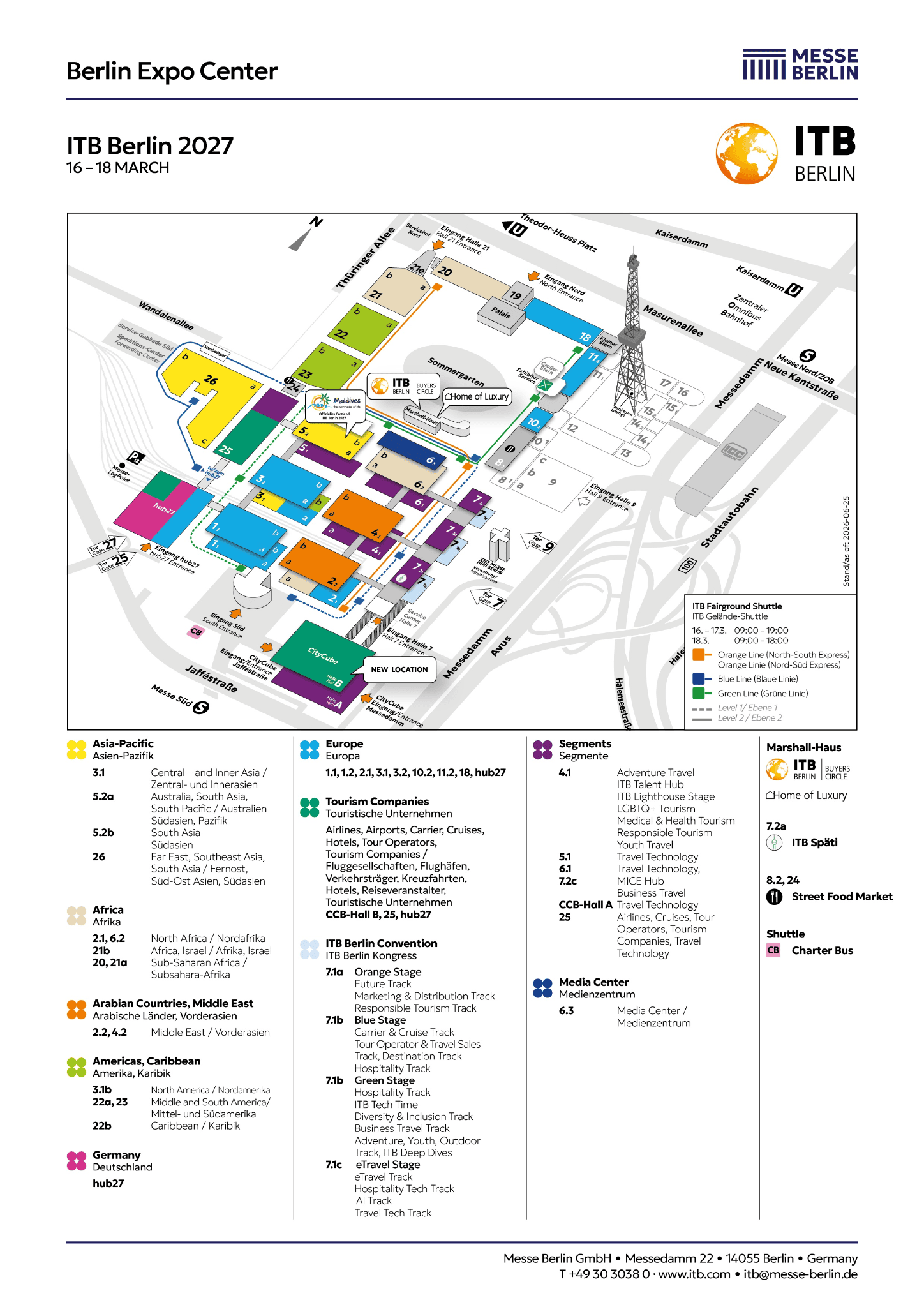
ITB Berlin scheduled for 16 to 18 March 2027) is adapting its hall layout to allow for the construction of dock9, the new multi-purpose convention and event venue, on the site of the former Hall 9.
During the construction of dock9, the exhibition grounds will undergo forward-looking development, and the hall layout will be individually optimised.
Exhibitors from Halls 7.1c, 8.1, 9 and 10.1 will find a new home in the CityCube Berlin. The new layout creates theme-oriented clusters and short distances between halls.
The CityCube Berlin will be even more closely integrated into ITB Berlin, expanding the exhibition grounds with state-of-the-art, high-quality floor space. As an integral part of the new hall layout, it will play a pivotal and effective role in enhancing the trade show concept.
“The adapted hall layout is more than just a response to the construction of dock9. It allows us to align ITB Berlin even more closely with the requirements of our international exhibitors and trade visitors and make thematic focal points more visible“, said ITB Berlin Director Deborah Rothe.
Dock9 is a new multi-purpose conference and event centre being built on the Berlin Exhibition Grounds and replaces the existing Hall 9. From October 2026, Hall 9 will be demolished to make way for the new building. ITB Berlin is using this change to adapt its hall layout and organise the available space even more efficiently.
ITB Berlin 2027 is in contact with the exhibitors affected by the relocation plans. Through close coordination, individual and, wherever possible, suitable reallocation solutions are being developed. This process is purposely being carried out in stages, as exhibitor reallocation is still undergoing final coordination.
The final assignment of stand space will be completed later this year.
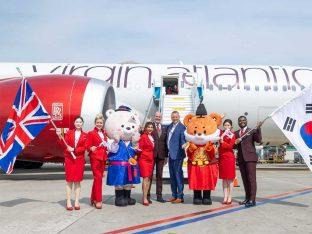
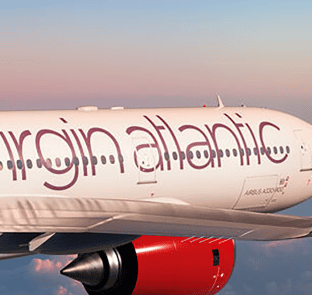
BANGKOK, 23 July 2026: Virgin Atlantic launches non-stop flights from London Heathrow to Phuket on 18 October 2026, soaring seasonally to Phuket three times a week, flying a Boeing 787-9.
It marks the introduction of the only direct route between London Heathrow and Phuket. In addition, Norse Atlantic confirmed direct thrice-weekly flights are scheduled from its London Gatwick hub to the Southern Thailand holiday island, starting 4 December 2026 through to 31 March 2026. Round-trip fares start at UKP326.
The Slate Phuket’s Consultant Events, David Barrett, shared observations on the travel market between the UK and Phuket on his Facebook page this week: “The most significant development comes from a substantial strengthening of direct air connectivity between Britain and Thailand.”
Based on the Tourism Authority of Thailand’s Strategic Directions for the UK market, he noted: “Norse Atlantic Airways expands its Thailand operations with direct services from both London Gatwick and Manchester to Phuket while Virgin Atlantic will launch the first ever non-stop Heathrow to Phuket service this October.
“The timing could hardly be better. Phuket continues to evolve beyond a traditional beach destination into a gateway for Southern Thailand, offering convenient access to Phang Nga, Krabi, Khao Lak and the growing collection of premium resorts across Thailand’s Andaman coast.”
In its press statement announcing the seasonal route, Virgin Atlantic said it was “delighted to be launching new services between London Heathrow and Phuket for Winter 2026.”
The three-times-a-week service will operate seasonally from 18 October 2026, capturing the growing demand for winter escapes. As the only direct route from London Heathrow to Phuket, UK residents can book package holidays with Virgin Atlantic Holidays, with prices starting from UKP999 per person.
Beyond its beaches, Phuket boasts a rich culinary scene and cultural attractions ranging from the majestic Golden Buddha at Wat Khao Rang to the twisting streets of old Phuket town, offering a mix of sun, culture and adventure. Virgin Atlantic Holidays offers more than 20 accommodation options in Phuket and over 80 throughout Thailand, including the destinations of Khao Lak, Krabi, Koh Phi Phi, Koh Yao Noi / Koh Yao Yai, Hua Hin, Samui, Pattaya and Thailand’s capital, Bangkok.
A partnership with Bangkok Airways, as well as land and sea transfers, allows connectivity for those travellers looking to explore beyond Phuket, with numerous flight options to Bangkok, Koh Samui, Krabi and beyond.
Virgin Atlantic flies the route three times weekly (Wed, Fri, Sun from London Heathrow and Thurs, Sat and Mon from Phuket) using a Boeing Dreamliner-9 configured with 31 upper class seats, 35 premium, 192 economy.
Flight schedule
VS214 departs London (LNR) at 1200 and arrives in Phuket (HKT) at 0710 plus a day. VS215 departs Phuket (HKT) at 0920 and arrives in London (LNR) at 1600.
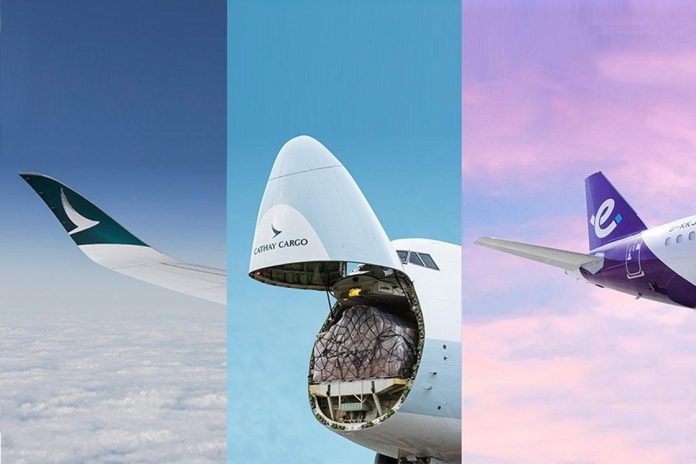
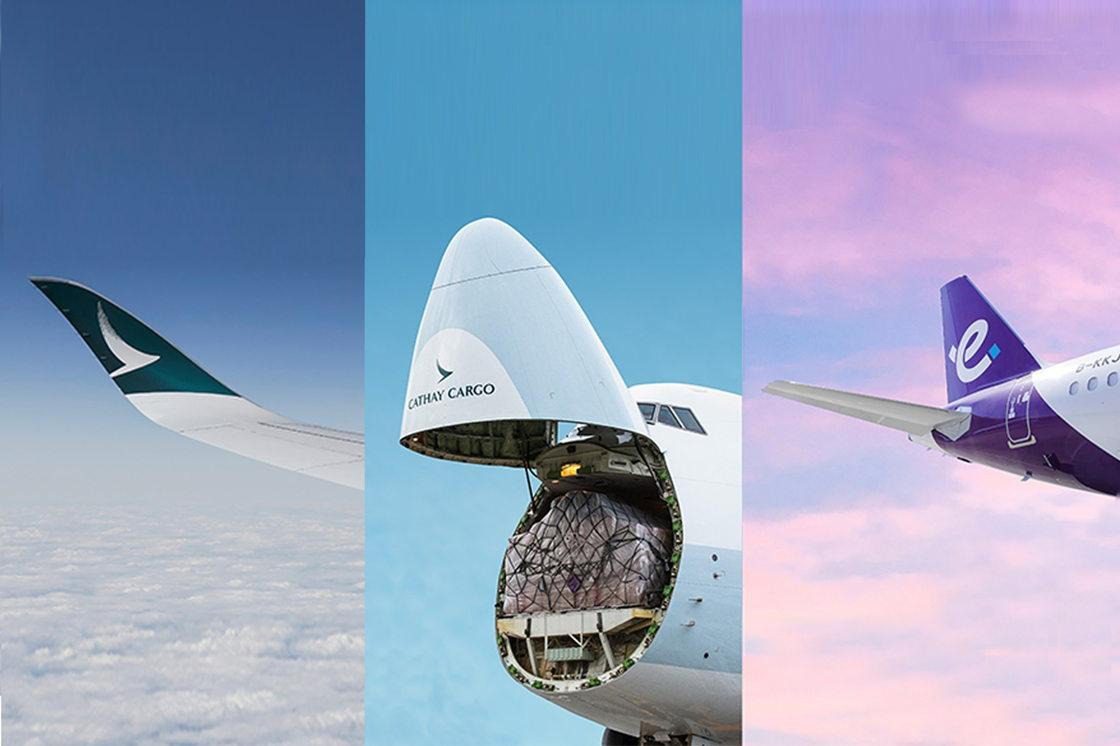
HONG KONG, 23 July 2026: The Cathay Group released its traffic figures this week for June 2026 and presented an update on its first-half 2026 financial performance
Cathay Chief Customer and Commercial Officer Lavinia Lau said: “The Cathay Group continued our growth momentum in June, although jet fuel prices remained elevated. Cathay Pacific and HK Express carried a combined total of more than 3.1 million passengers, while Cathay Cargo carried around 145,000 tonnes of cargo, both representing an increase of 9% year on year.
Photo credit: Cathay Group.
“Meanwhile, we continue to enhance connectivity for our customers, with HK Express having recently launched direct daily flights to Wuxi, further expanding the Group’s network in the Chinese Mainland.”
Cathay Pacific
Cathay Pacific carried 12% more passengers in June 2026 compared with June 2025, while Available Seat Kilometres (ASKs) increased by 6%. In the first six months of 2026, the number of passengers carried increased by 17% compared with the same period for 2025.
Lau said: “The start of June has historically been a softer period for passenger travel demand, but this year load factors remained elevated, amplified by increased traffic through Hong Kong due to the Middle East situation. This was further supported by the mid-month Dragon Boat Festival long weekend, which drove healthy outbound demand from Hong Kong to various short-haul destinations, followed by inbound student traffic from long-haul markets in the latter half of the month. Demand in our premium cabins also remained robust, driven by strong corporate and premium leisure travel.
“The outlook for the summer peak remains encouraging, particularly across our long-haul network. Meanwhile, demand from Hong Kong to short-haul destinations continues to be robust, with the Chinese Mainland and other destinations in Northeast Asia being particularly popular.”
Cathay Cargo
Cathay Cargo carried 9% more cargo in June 2026 than in June 2025, while Available Freight Tonne Kilometres (AFTKs) increased by 1%. In the first six months of 2026, the total tonnage increased by 9% compared with the same period for 2025.
“Cargo tonnage recorded a solid year-on-year increase in June. During the month, we saw strong cargo flows from the Chinese Mainland into Southeast Asia alongside steady demand within Southeast Asia. Shipments into the Chinese Mainland and Hong Kong remained resilient. At the same time, our specialist solutions continued to perform well, with semiconductor and pharmaceutical shipments supporting growth in Cathay Expert and Cathay Pharma respectively. Cathay Priority also saw strong demand into Hong Kong, Southeast Asia and the Americas, reflecting shippers’ need for time-definite solutions to replenish inventory.”
HK Express
HK Express carried more than 560,000 passengers in June 2026, a decrease of 4% year on year, while Available Seat Kilometres (ASKs) decreased by 7%. In the first six months of 2026, the number of passengers carried increased by 10% compared with the same period for 2025.
Lau said: “As with previous years, June is typically a period of softer travel demand for HK Express. That said, a few regions sustained solid performance during the month, with the Chinese Mainland, the Philippines and Thailand all recording passenger load factors above 85% — a double-digit percentage point increase compared with June the previous year. HK Express saw a reduction in year-on-year capacity in June 2026 due to the consolidation of a small number of flights to mitigate part of its increased fuel costs, as was announced in April 2026. Turning to the summer travel peak, bookings for July are ahead of last year.”
First-half 2026 financial performance
The group is expected to record a consolidated profit attributable to shareholders of approximately HKD6.0 to HKD6.5 billion for the six months ended 30 June 2026 (First-Half 2026), which includes a gain on deemed partial disposal of associates of approximately HKD1.4 billion arising from the dilution of the group’s equity interest in Air China Limited, as disclosed in the company’s May 2026 Traffic Figures announcement dated 23 June 2026. This compares with a profit attributable to shareholders of around HKD3.7 billion for the six months ended 30 June 2025.
The group’s first-half 2026 results were also positively impacted by continued solid demand for Cathay Pacific and Cathay Cargo, improved performance from HK Express, and stronger contributions from associates.
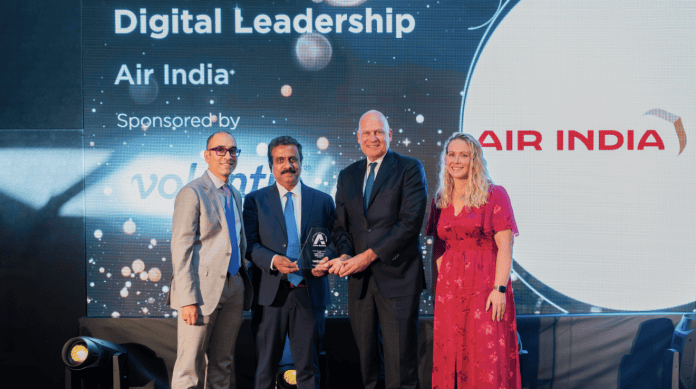
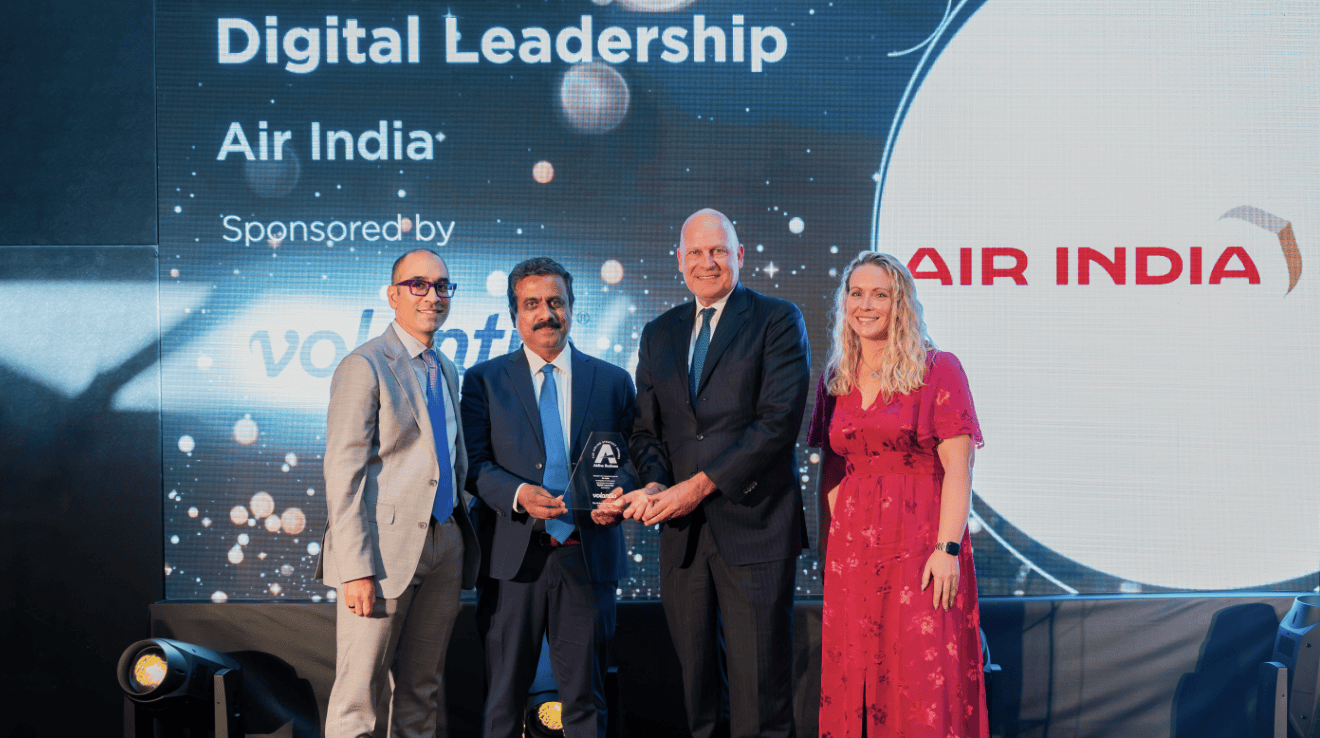
NEW DELHI, 23 July 2026: Air India has been recognised with the ‘Airline Strategy Award for Digital Leadership’ conferred by FlightGlobal, a UK-based global platform of news and data for aviation and aerospace industries.
The award recognises Air India’s digital transformation since its return to the Tata Group.
The award was received by Air India’s Chief Executive Officer and Managing Director, Campbell Wilson, and its Chief Digital and Technology Officer, Satya Ramaswamy, at an event organised in London.
The award for Digital Leadership acknowledged the impactful progress made by Air India in its digital transformation since the takeover by the Tata Group in 2022. The airline had embarked on a technology-powered reinvention, embracing emerging digital and AI solutions to drive a significant transformation of the company and turning a structural weakness into a strength.
Air India Chief Executive Officer and Managing Director, Campbell Wilson, said: “The recognition is a testament to the progress Air India has made since its return to the Tata Group and reaffirms the commitment of Air Indians driving our transformation journey.”
BANGKOK, 23 July 2023: Thailand has won the bid to host the 2030 IEEE International Conference on Robotics and Automation (IEEE ICRA 2030), marking the first time the world’s premier conference on robotics, artificial intelligence (AI), and automation will be held in the country.
The successful bid was jointly led by the Thailand Convention and Exhibition Bureau (TCEB), the Faculty of Engineering, Mahidol University, the IEEE Robotics and Automation Society (RAS) Thailand Chapter, and the IEEE Thailand Section.
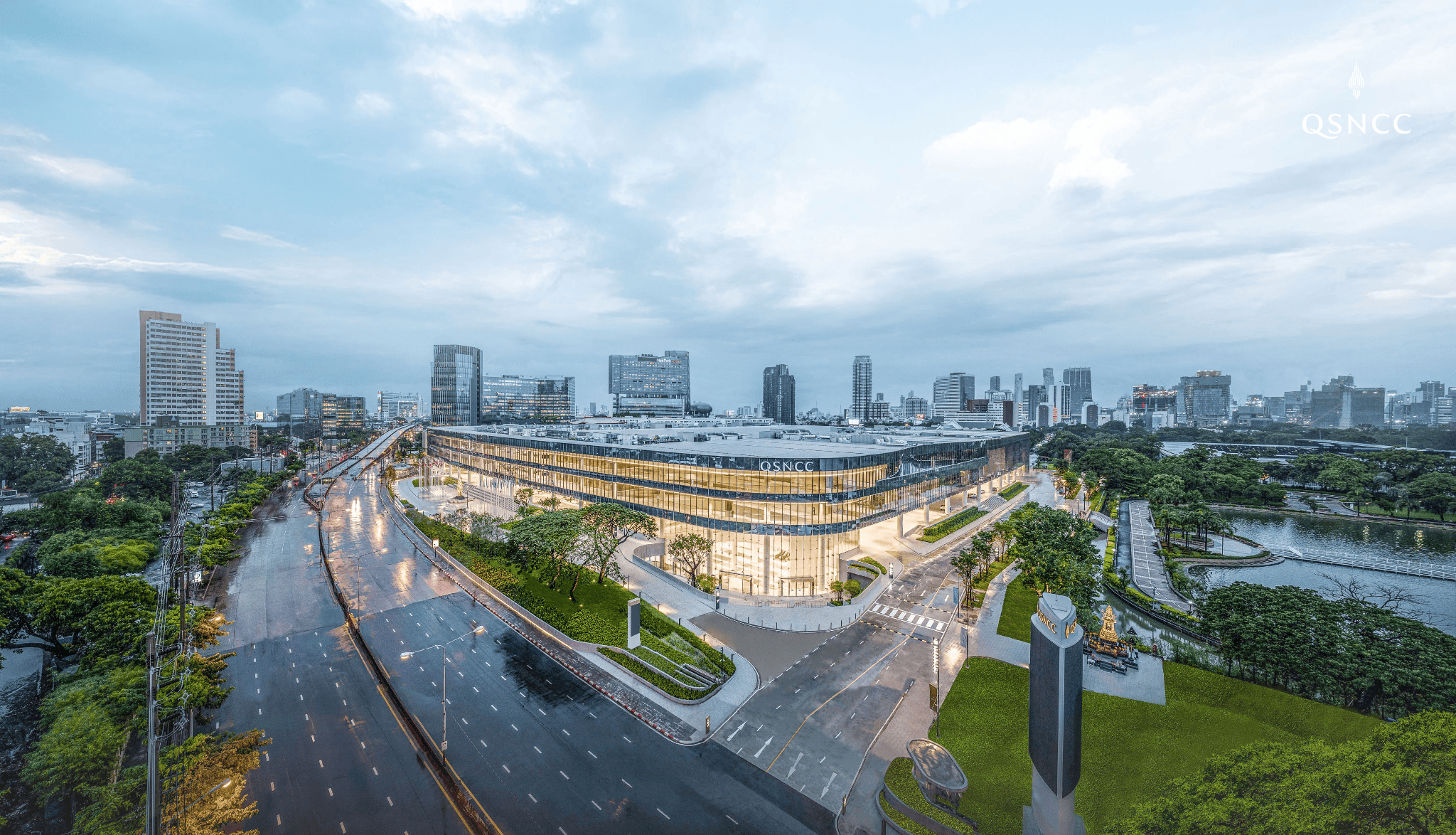
Queen Sirikit National Convention Centre (QSNCC) in Bangkok.
The latter three organisations, together with the Thailand Medical Robotics and AI Association, will co-host the conference from 13 to 17 June 2030 at the Queen Sirikit National Convention Centre (QSNCC) in Bangkok.
Recognised as the world’s flagship conference on robotics, AI, and automation, IEEE ICRA 2030 is expected to attract approximately 10,000 delegates, including 8,000 international participants, bringing together leading researchers, innovators, industry executives, investors, and policymakers from around the world.
The bid victory was officially announced at a press conference held on 21 July at The St Regis Bangkok Hotel.
TCEB Director of the Conventions Department Jittanun Techasarin said securing IEEE ICRA 2030 reflects TCEB’s strategic approach to positioning international business events as platforms that drive economic growth, innovation, investment, and cross-sector collaboration in high-value industries.
IEEE ICRA 2030 represents a major milestone in TCEB’s long-term bidding strategy.
“Between late 2026 and 2029, before IEEE ICRA 2030, the IEEE Thailand Section will host five international conferences related to advanced technologies, all supported by TCEB. Winning the bid for IEEE ICRA 2030 reinforces our strategy of attracting world-class events in high-value sectors such as robotics, automation, and advanced technologies,” said Jittanun.
IEEE ICRA is internationally recognised for bringing together academia, industry, and government on a single collaborative platform.
Thailand’s successful bid demonstrates the country’s growing reputation as a regional manufacturing and innovation hub for the automotive, electronics, robotics, and automation industries. The achievement reflects strong government policies supporting AI, robotics, and future industries, together with a robust research ecosystem comprising universities, laboratories, and specialised robotics research centres.
IEEE ICRA 2030 is projected to generate more than THB1.06 billion in direct economic activity, contribute approximately THB590.6 million in value added to the Thai economy, create around 745 jobs, and generate an estimated THB36.4 million in government tax revenue.