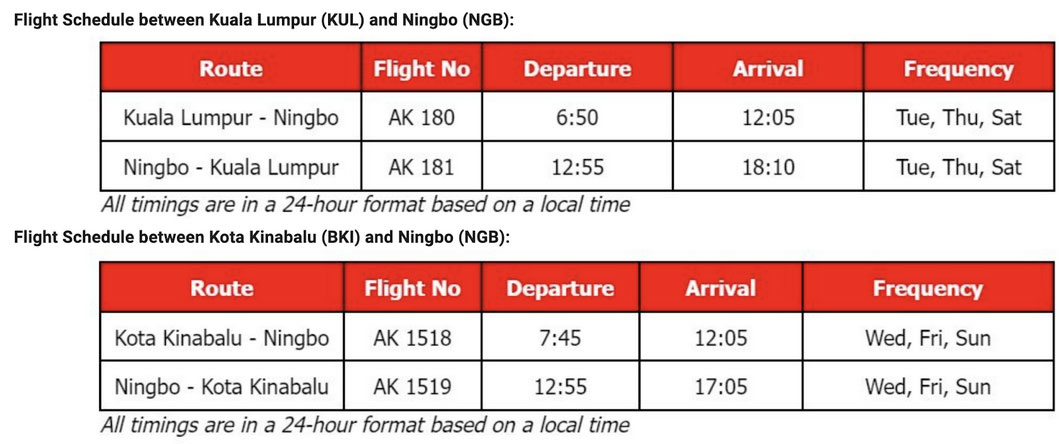
KUALA LUMPUR, 9 July 2024: AirAsia will regain its position as the largest foreign airline in China with the launch of two new routes from its major hubs in Kuala Lumpur and Kota Kinabalu to Ningbo, in Zhejiang province.
Ningbo marks AirAsia Group’s 17th destination in China, operated by AirAsia Malaysia (AK) with six total weekly flights. Starting 1 August, travellers can fly directly from Kuala Lumpur or Kota Kinabalu to Ningbo with three weekly flights from each Malaysian city to Ningbo.
To commemorate the launch of the new destination, AirAsia is offering promotional fares from Kuala Lumpur and Kota Kinabalu to Ningbo from MYR268 all-in* one way and base fare of CNY138** one way flying from Ningbo.
Until the end of 2025, all Malaysians are eligible for visa-free entry to China for tourist visits of up to 15 days.
Ningbo, situated in the eastern part of Zhejiang province, is one of China’s ancient cities, boasting a rich heritage and serving as a vital port city. Renowned for its captivating cultural and historical landmarks, Ningbo is a favoured destination for travellers who seek short getaways. Visitors can explore Tian Yi Ge, China’s oldest library, housed in a weathered building that echoes the cultural essence of the 16th century. Nature enthusiasts can indulge in the breathtaking vistas of Dongqian Lake, offering serene mountain views and picturesque landscapes. The enchanting Xikou Ancient Town also beckons with its flawless landscapes and captivating historical charm. Prepare to immerse yourself in the wealth of cultural heritage awaiting exploration in Ningbo.
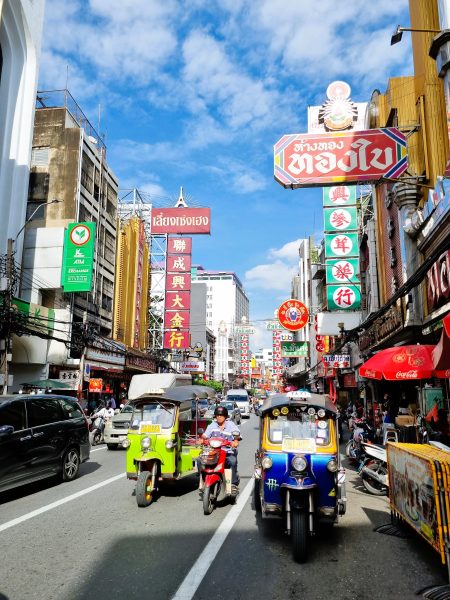
BANGKOK, 9 July 2024: Seeing Yaowarat Road deserted of people and traffic is rare, except perhaps during the Covid-19 pandemic or when the Chinatown street featured in Lisa’s* recent music video ‘Rockstar,’ where she appears in the middle of a traffic-free Yaowarat.
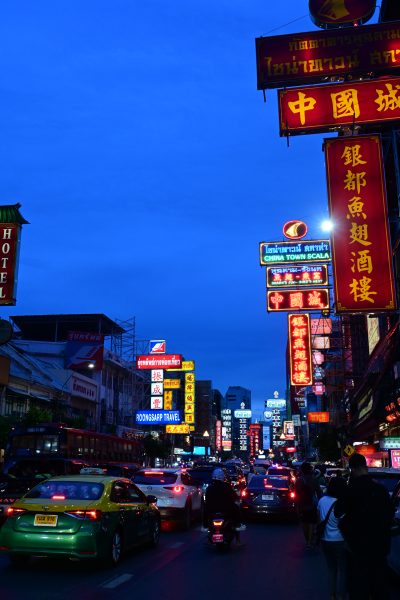
The flashy video transformed this 132-year-old street into a stage for Lisa’s globalised performance, with the familiar backdrop of neon lights highlighting this historic, vibrant street.
Day or night, Yaowarat’s vibrant energy attracts all.
With the establishment of Chinese communities in Thailand after the founding of Rattanakosin during King Rama I’s reign, Chinese immigrants initially settled near the Grand Palace area. Following the palace’s construction, they relocated to Sampeng, forming a new community.
Later, between 1892 and 1900, Yaowarat Road was constructed during King Chulalongkorn’s reign (King Rama V), becoming a vital trade centre between the Chinese and foreigners.
Yaowarat has witnessed change throughout the eras. Yet, at its core, it remains a commercial centre for the Chinese and Thai-Chinese communities. Historically, the area served as a crucial trading hub for imported goods from China and its profusion of gold shops, earning Yaowarat the nickname “the Gold Road,” Even today, the gold shops remain the most prominent businesses along the historic trading street.
*Lalisa Manoban, also known as Lisa, is a 27-year-old Thai rapper, singer, and dancer. She is a member of the internationally known K-pop group Blackpink. Lisa recently made her solo debut with the single “Rockstar,” which was released on 28 June 28, 2024. The music video was shot in Bangkok’s Yaowarat district and gained over 85 million YouTube views on 7 July.
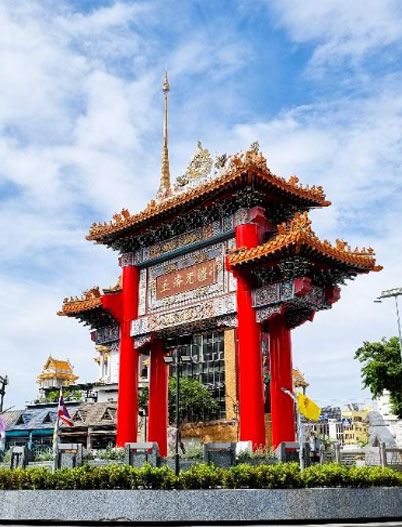
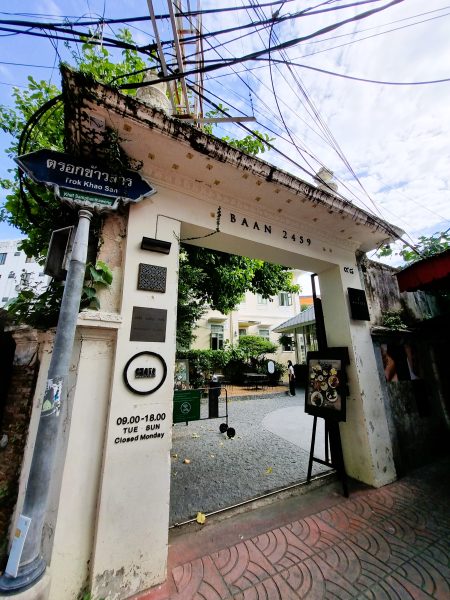
The Chinatown Gate marks the entrance to Chinatown.
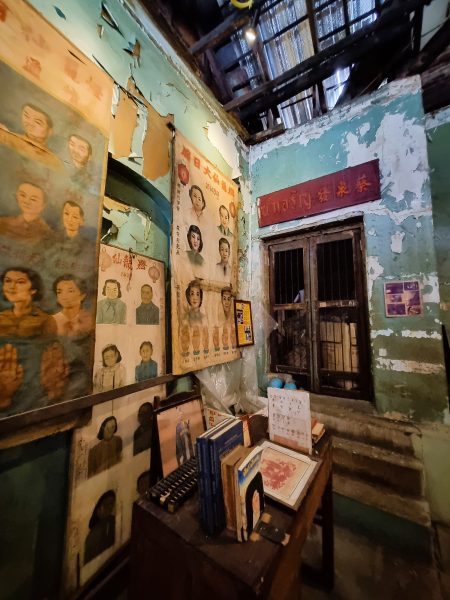
The charm of Yaowarat lies in its vibrant tapestry of past and present. Generations weave together, with modern shops nestled beside those preserving their heritage. Faded photographs displayed within shops and original wall tiles evoke a sense of nostalgia, whispering tales of Yaowarat’s long history.
The Yaowarat market showcases the continuous cultural life of the Chinese community, selling everything for life’s milestones, from daily necessities to joss papers. Here, handmade Chinese traditional clog shoes are found alongside flowing cheongsams, while the air is filled with pungent pickles and herbal medicines. This vibrant space caters to everyone, whether seeking a cultural experience or simply wanting to reminisce about childhood memories.
Even for visitors unfamiliar with Chinese culture, Yaowarat offers a multitude of day-trip activities. Art galleries and graffiti art coexist with trendy cafes and bars in classic buildings. Classic noodle bowls and a wide variety of street foods — Yaowarat’s true rockstars —await exploration by visitors.
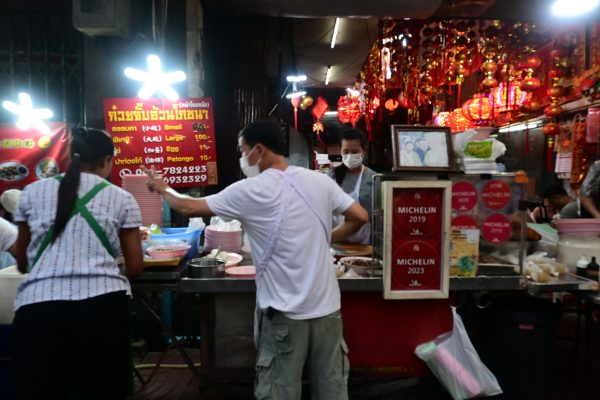
Visiting Yaowarat is easy via the MRT Blue Line. Visitors stepping out at Wat Mangkon Station on Charoen Krung Road are immediately greeted by Yaowarat’s vibrant energy. Bustling food stalls, shops, hidden museums, and even Michelin-recommended restaurants are all within easy reach.
Capture Yaowarat’s Endless Story Through the Lens
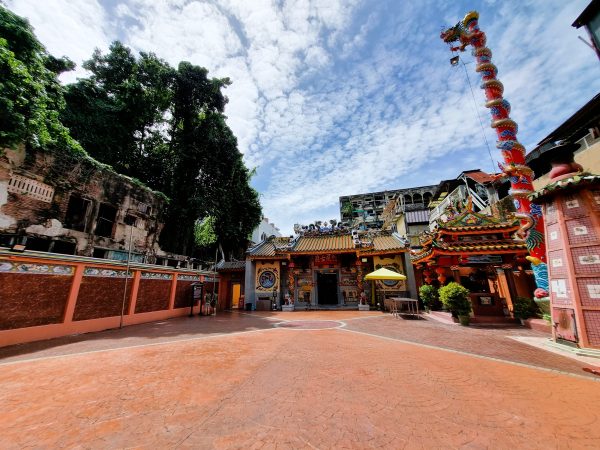
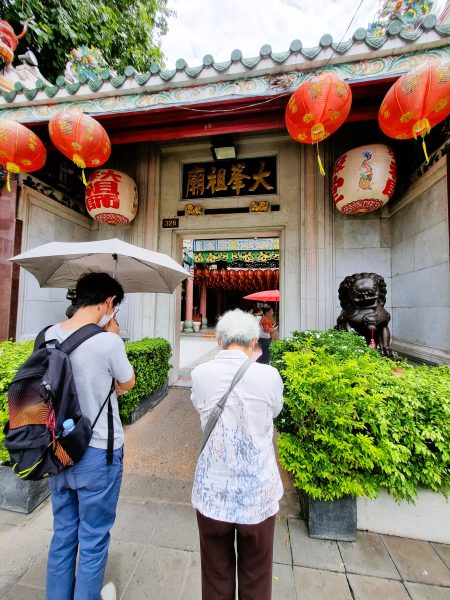
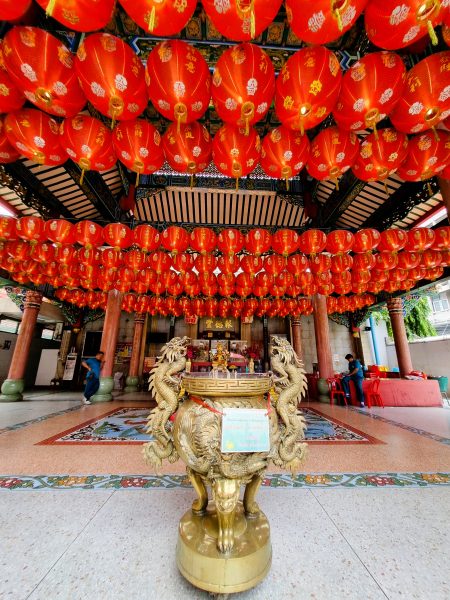
Spiritual Heritage of Yaowarat.
Yaowarat’s temples and shrines, such as Wat Mangkon Kamalawat, Kwang Tung Shrine, Lee Ti Miew Shrine, Tai Hong Kong Shrine, and Leng Buai Ia Shrine, showcase ancient rituals blending with the vibrant pulse of Bangkok’s Chinatown. Leng Buai Ia Shrine, at Charoen Krung 21, is the oldest Chinese shrine in Thailand, with a plaque dating its construction to 1658.
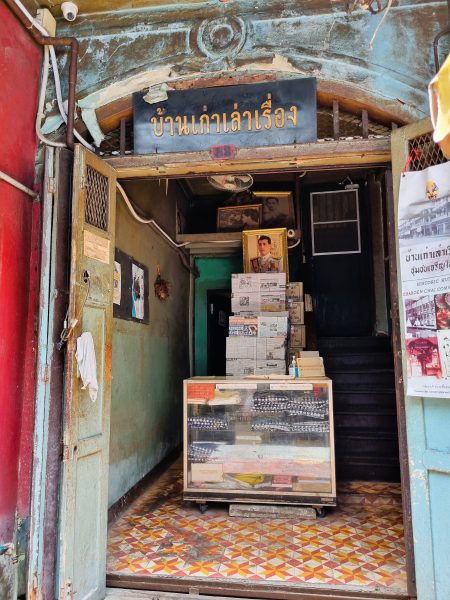
Hidden Community Museum.
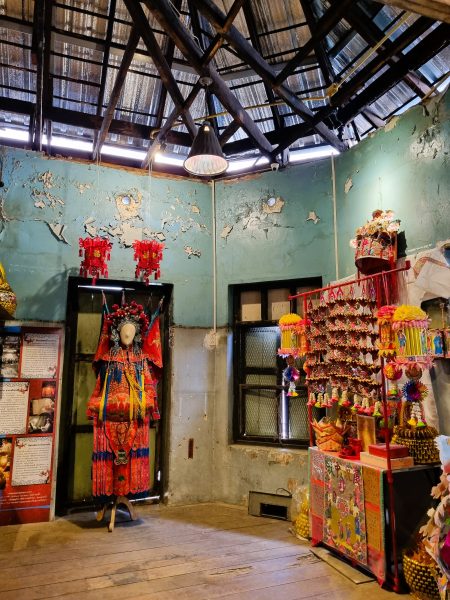
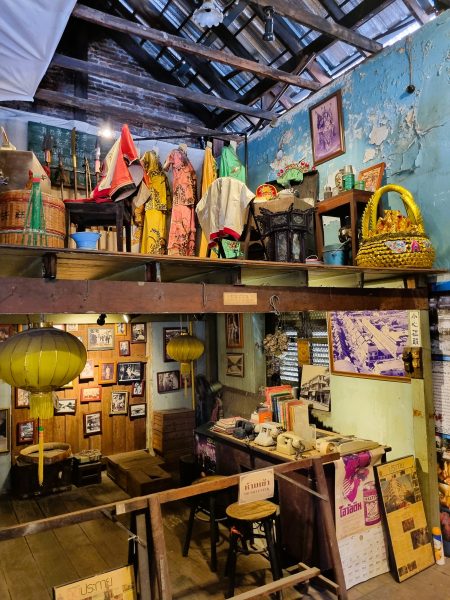
Hidden among the joss paper shops in Charoen Chai Alley (Charoen Krung 23), Charoen Chai Community Museum is the first and only community museum in Chinatown. This little historic row house tells the story of the opera artists’ families who once lived there.
The Yaowarat marketplace is a vibrant hub of traditional Chinese culture. Brightly coloured stalls overflow with an array of items, from everyday necessities to religious symbols. Shoppers can find an assortment of red and gold decorations, paper goods for ceremonies, traditional footwear, and various containers and utensils. This lively market reflects the rich cultural heritage and continuous traditions of the Chinese community in Bangkok.
Destination for Food Enthusiasts:
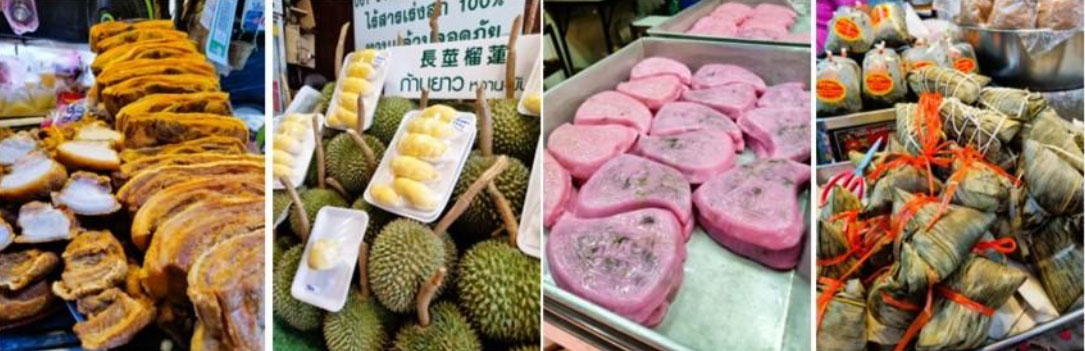
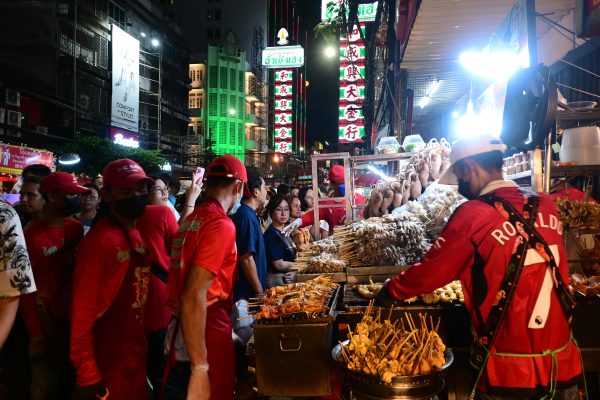
Yaowarat Market isn’t just a feast for the eyes; it’s also a haven for the taste buds. The market offers a wide range of delicious food highlighting the rich Thai-Chinese culinary culture. Visiting the market without indulging in or taking away some of these delectable daily delights is almost impossible.
Gold trading in Yaowarat traces its origins to the early Chinese immigrants who settled on the famous street or in nearby alleys and lanes. These pioneering traders brought a tradition of gold craftsmanship and trading, establishing Yaowarat as the premier destination for gold in Thailand. Over the years, the gold shops have become iconic, symbolising wealth, prosperity, and cultural heritage. Today, bustling shops selling gold stand alongside others that, though no longer in the trade, preserve their original buildings and display cabinets – silent testaments to Yaowarat’s glorious history.
Bridging Old and New Through Architecture.
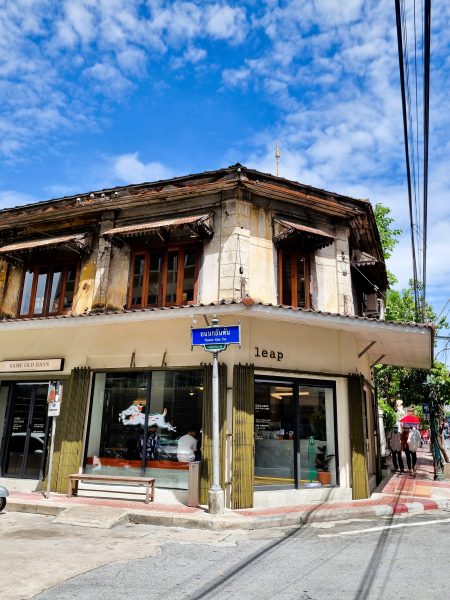
Yaowarat embodies a blend of old and new. Many historic buildings stand as a testament to their architectural heritage. New businesses have been established within these classical structures, preserving their old-world charm while embracing modern lifestyles. Visitors can experience this unique blend firsthand, even at the MRT Wat Mangkon entrance, where the classical ambience is carefully preserved.
When the sun sets over Bangkok’s vibrant Chinatown, Yaowarat transforms into a bustling culinary paradise that attracts locals and tourists alike. Known for its lively atmosphere and diverse flavours, Yaowarat street food offers a tantalising journey that explores the living legends and local wisdom that imbues Thai-Chinese culinary delights.
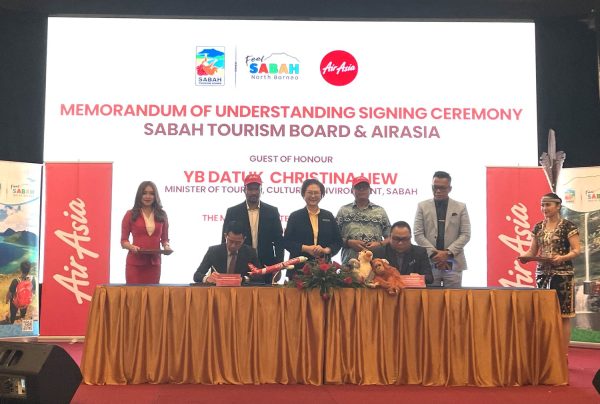
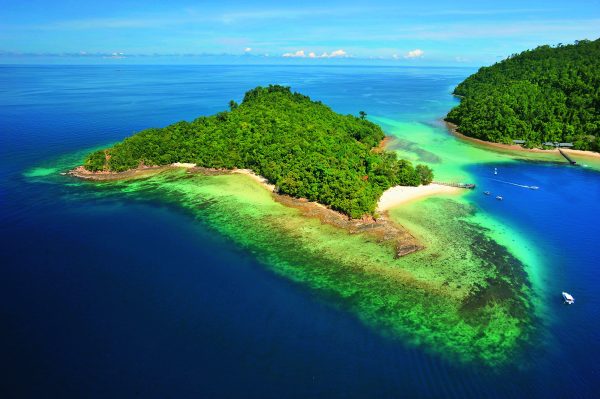
KOTA KINABALU, 8 July 2024: AirAsia and Sabah Tourism Board (STB) signed a Memorandum of Understanding (MoU) last week to establish a strategic partnership to boost the tourism industry for the next five years.
This partnership is set to bolster the Land Below the Wind’s status as a top-tier tourist hotspot by enhancing air connectivity between Sabah and the Brunei Darussalam-Indonesia-Malaysia-Philippines East ASEAN Growth Area (BIMP-EAGA), as well as the larger ASEAN region, North Asia, and Oceania for the period of 2024-2028.
The MoU was signed by Datuk Captain Chester Voo Chee Soon, Deputy Group CEO (Airline Operations) of AirAsia Aviation Group, and Julinus Jeffery Jimit, CEO of Sabah Tourism Board, witnessed by Datuk Christina Liew, Minister of Tourism, Culture and Environment Sabah. The MoU signing ceremony was also attended by Datuk Joniston Bangkuai, Assistant Minister of the Ministry of Tourism, Culture and Environment Sabah and Chairman of STB; Tuan Murad Abdul Rashid, Principal Senior Assistant Secretary representing the Permanent Secretary of the Ministry of Tourism, Culture and Environment Sabah and Ahmad Al Farouk Ahmad Kamal, Deputy Group CEO (Corporate) of AirAsia Aviation Group.
AirAsia Group aims to enhance overall connectivity in Sabah by potentially launching 14 new exciting domestic and international routes, including Kota Kinabalu-Bandar Sri Begawan, Kota Kinabalu-Perth, Tawau-Guangzhou, Sandakan-Hong Kong, and more. These will be subject to market review and evaluation over the course of the coming months to assess demand for each route, regulatory approvals and other favourable market factors and conditions.
The partnership also includes greater collaboration between the airline and the tourism body to potentially develop the Kota Kinabalu International Airport as a regional aviation hub in the future.
Minister of Tourism Culture and Environment Sabah, Datuk Christina Liew said: “We are pleased to establish this five-year strategic partnership with AirAsia, where we will support bridging the conversation between the airline and relevant stakeholders. Over the past few months, Sabah has become one of the top affordable travel destinations, and AirAsia has played a crucial role in facilitating this milestone. In the first half of the year, we successfully welcomed 1.24 million tourists to Sabah to date, and with AirAsia’s vast reach, we are confident that we can attract more visitors and showcase the unique experiences Sabah has to offer to travellers beyond this region.
“As tourism flourishes, it creates a ripple effect that benefits the local economy in multiple ways. Tourism directly creates jobs in various sectors, such as hospitality, transportation, and retail. As of 2022, tourism alone has contributed 22.8% of employment in the state, including positions in hotels, restaurants, travel agencies, and local attractions. The influx of tourists generates additional income for local businesses, supporting small and medium-sized enterprises (SMEs) in the region. Furthermore, the growth in tourism prompts the development of better infrastructure, including roads, airports, and public amenities, benefiting both tourists and residents in the future.”
Sabah Tourism Board CEO Julinus Jeffery Jimitnoted that with 90% of arrivals into Sabah being by air, this strategic partnership will further amplify travel opportunities. He thanks AirAsia for being a supportive camaraderie.
AirAsia Aviation Group, Deputy Group CEO (Airline Operations) Datuk Captain Chester Voosaid: “This partnership marks a significant step for us to expand our connectivity from our second biggest hub in Malaysia, providing more opportunities for our guests in the state to explore the world and for the world to get to know and fall in love with Sabah. Since 2002, we have flown close to almost 80 million guests to and from Sabah, both domestically and internationally. We look forward to seeing these numbers grow exponentially in the next five years with this partnership.
“In 2023 alone, AirAsia flights contributed to a 60% market share for tourism in Sabah, highlighting the immense potential of this region as a major travel destination. Increased connectivity brings more international visitors to Sabah, fostering cultural exchange and mutual understanding and leading to new opportunities in various sectors. With the continuous support of our guests and partners, we are confident that AirAsia will play a pivotal role in transforming Sabah into a vibrant tourism hub, driving economic growth and improving the livelihoods of its people.”
AirAsia Group flies to 23 destinations to/from Sabah with a total of 294 flights weekly. These destinations include from Kota Kinabalu to Kuala Lumpur, Penang, Hong Kong, Seoul and more; from Tawau to Kuala Lumpur and Johor Bahru and from Sandakan to Kuala Lumpur, excluding the destinations within the Sabah state.
For more information on Sabah’s attractions, head to the website www.sabahtourism.com.
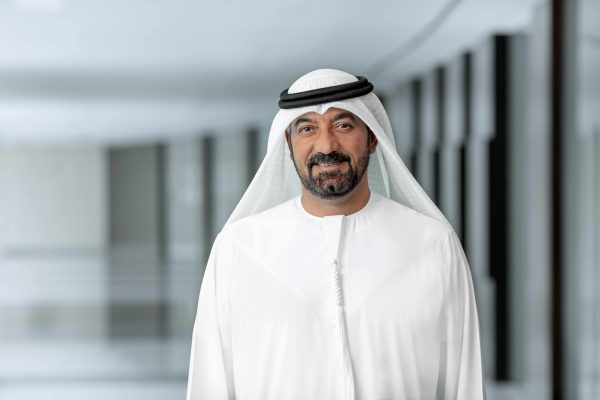
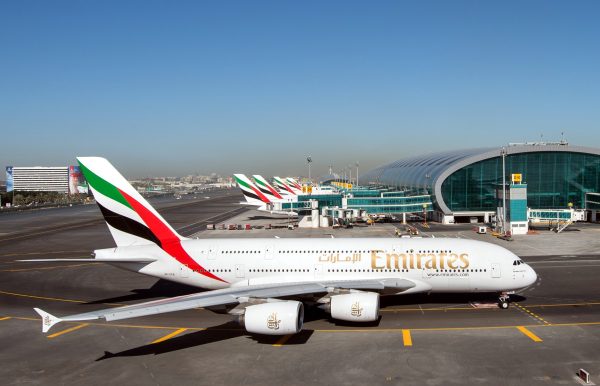
DUBAI, 8 July 2024: Emirates Group Chairman and Chief Executive, His Highness Sheikh Ahmed bin Saeed Al Maktoum, has announced senior appointments to support the organisation’s growth and strengthen its leadership bench.
This latest list of promotions and senior appointments includes seven UAE nationals, many of whom have grown their careers at the Emirates Group in different roles and continue to play key roles in the organisation’s success.
HH Sheikh Ahmed said: “These appointments reflect the expanded scale, breadth, and ambition of our business. I’m heartened that we have been able to fill these roles with internal talent, including UAE nationals. The Emirates Group will continue to invest in being an employer of choice for the best talent in the industry, to deliver world-leading products and services, and reflect Dubai’s vision to be number one in everything we do.”
Appointments effective 8 July
Mr Ali Mubarak Al Soori, Chief Procurement and Facilities Officer
Mr Ahmed Safa, Head of Engineering and MRO
Mr Badr Abbas, Divisional SVP Emirates SkyCargo
Capt Mark Burtonwood, Divisional SVP Group Safety and Network Operations
Mr Mostafa Karam, Divisional SVP Customer Affairs and Service Audit
Mr Yousuf Mohammad Ali, Divisional SVP Group Procurement and Logistics
Mr David Broz, SVP Aeropolitical and Airline Industry Affairs
Mr Devarajan Srinivasan, SVP Facilities and Asset Management
Mr Mahmood Al Khaja, SVP Material Management and Repairs
Mr Will Lofberg, SVP International and Government Affairs
Appointments effective 1 September
Mr Shahreyar Nawabi, CEO Emirates Flight Catering
Mr Mahmood Ameen, Divisional SVP Engineering Projects and Aircraft Procurement
For more information on the airline and to make bookings visit www.emirates.com.
DUBAI 8 July 2024: Dnata Travel, UAE’s longest-serving travel provider, is reporting a 35% increase in bookings for international travel across July and August 2024 compared to the same timings last year.
As one of the busiest travel seasons fast approaches, the travel agency is supporting thousands of travellers with pre-booked itineraries and last-minute requests across its multiple channels.
For July and August, dnata Travel’s most popular destinations for international travel from the UAE are Thailand, Maldives, Mauritius, Turkey, and the UK, respectively. Compared to trends released earlier this summer, Mauritius has emerged to enter the ‘top three’ most-booked holiday destinations. Across summer 2024, the island country is one of the fastest-growing holiday locations for dnata’s travellers, alongside Germany and Malaysia.
International trips are on the agenda for this popular time for summer travel, dominating a 90% majority of overall bookings this year, compared to 10% for UAE staycations. In comparison, the split was reported by dnata Travel experts as 65% international and 35% staycations over the Eid al-Adha break for 2024, with demand for outbound travel witnessing a significant increase.
Dnata Travel Head of Retail and Leisure UAE Meerah Ketait commented: “International travel is in high demand this summer, with destinations including Mauritius, Malaysia, and Germany witnessing some of the strongest growth we’ve seen this year. Mauritius and Malaysia offer the chance to stay on world-class beaches and in exceptional resorts at affordable prices. Kuala Lumpur is also a popular destination in Asia for a city break because of its impressive skyline and opportunities for shopping and dining. Meanwhile, Germany’s vibrant cities are popular this month, as travellers seek to soak up the action of the UEFA European Football Championship, taking place across the country.”
Dnata Travel experts continuously monitor trends and work with long-standing international partners to offer exclusive rates and added extras for the local market alongside the latest in travel inspiration. The travel agency’s summer campaign includes last-minute travel bookings for trending beach and city breaks worldwide.
Highlight offers include holidays in popular summer destinations such as Thailand, Maldives, Mauritius, and Turkey.
A top Thailand offer features a three-night stay at the five-star Pimalai Resort and Spa, Krabi (located on Lanta Island), on full-board with complimentary extras, including an excursion, a spa treatment for adults, and activity for kids, in addition to return flights and airport transfers, with a starring price of AED4,000 per person. Pimalai Resort and Spa is enhancing its facilities by adding an underground tunnel near the resort’s main entrance to connect the resort’s beachside estate with its hill estate. The project will be completed by early September 2024.
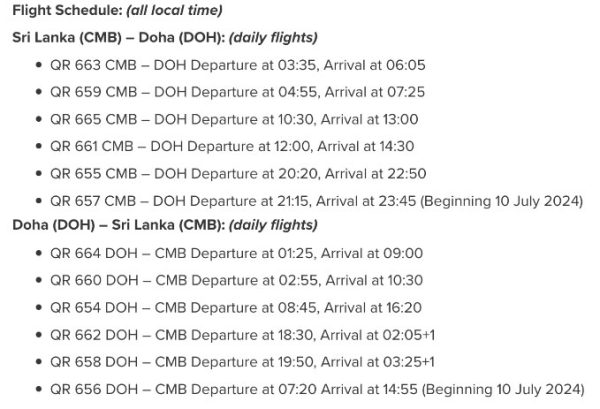
COLOMBO, Sri Lanka, 8 July 2024: Qatar Airways will increase its Sri Lanka-Doha flights from the current five-daily schedule to six-daily, effective 10 July 2024.
The additional flights will be served by the Boeing 787 aircraft, which will fly the additional services, featuring 30 business class seats and 281 economy class seats. With this network enhancement, Qatar Airways will operate a total of 42 weekly flights to and from Sri Lanka, connecting passengers to nearly 170 global destinations worldwide.
Qatar Airways Country Manager Sri Lanka & Maldives, Jonathan Fernando said: “We are thrilled to be increasing our flights to and from Sri Lanka to provide even better connectivity to our passengers. This flight increase is a testament to our commitment to providing our passengers with the best travel experience possible onboard the World’s Best Airline. With more flights to and from Sri Lanka via our home hub, Hamad International Airport, we hope to make it easier for more travellers to discover their dream destination within our robust network.”
The newly added flights will provide passengers with more options to connect to major destinations in the Middle East, Europe, and Africa via Skytrax World’s Best Airport, Hamad International Airport.
SINGAPORE, 8 July 2024: The Singapore Tourism Board (STB) has launched a Concept and Price Revenue tender to develop and operate a wellness attraction at the Marina South Coastal site.
The project is a key part of STB’s strategy to grow wellness tourism, offering holistic and immersive wellness experiences as part of our tourism offerings for visitors.
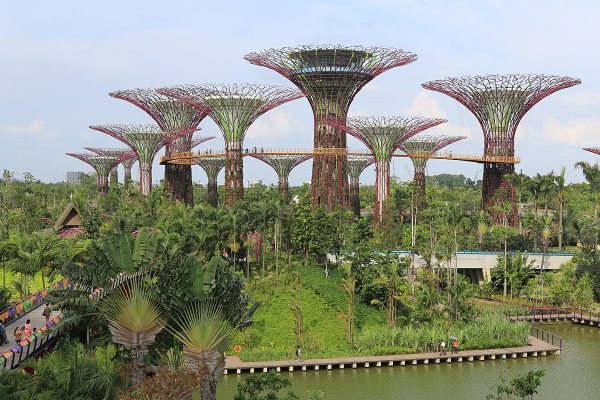
The four-hectare site is located along the waterfront, and the wellness attraction, when completed, will complement other places of interest such as Gardens by the Bay, Founders’ Memorial in Bay East and Marina Barrage.
In a press statement, STB said it sought proposals “with innovative, high-quality concepts that can positively impact physical, emotional, or mental wellness. These may include therapeutic art,tech-based offerings such as floatation or light and frequencies-based therapies, and complementary health and alternative therapies, as well as fitness or recovery-related activities, such as indoor and outdoor water or equipment-based activities.”
Additionally, the wellness attraction must also implement a strong pipeline of regular, high-quality wellness-themed events or programmes on its premises, as well as in public spaces within the wellness attraction or in the surrounding areas, which will appeal to both tourists and residents.
Singapore Tourism Board Executive Director, World Expo and Special Projects Carrie Kwik said: “With the rising demand for more restorative and wellness-related experiences, we believe Singapore is well-placed to be a leading Urban Wellness destination that prioritises holistic well-being.
“The tender marks a significant stride towards realising our wellness ambition as we leverage Singapore’s strengths in accessibility and technology as a strong business hub. This wellness attraction will contribute to Singapore’s tourism sector by giving travellers more compelling reasons to extend their stay and spend more in Singapore. Locals will also enjoy the wide range of wellness offerings available.”
The tender is open to local and international bidders for three months, with the closing date for submitting proposals set for 4 October 2024.
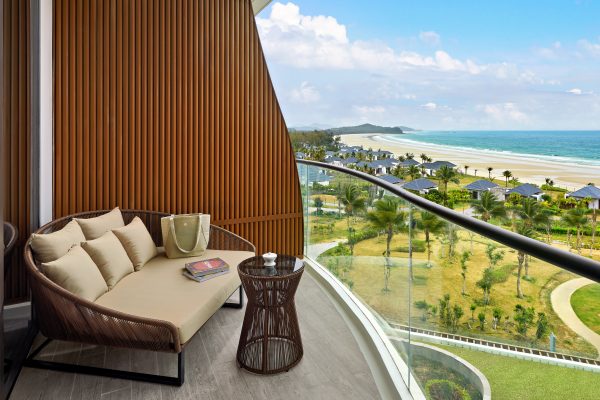
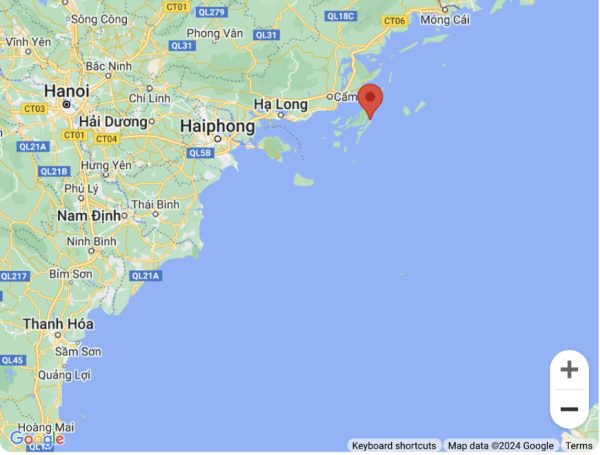
HANOI, Vietnam, 8 July 2024: Banyan Group opened Angsana Quan Lan on 1 July, the group’s latest property in Vietnam, located on an island in Bai Tu Long Bay east of Halong Bay.
Angsana Quan Lan features 156 rooms and suites offering views of the Gulf of Tonkin. An isolated gateway to Vietnam’s UNESCO World Heritage Site of Halong Bay, Quan Lan lies on the eastern edge of Bai Tu Long Bay, just a three-hour drive from Hanoi and a short seaplane or speedboat ride.
“We are thrilled to present Angsana Quan Lan, nestled on an outlying island with a verdant landscape and incredible history. Once a thriving trading port in ancient times, Quan Lan is poised to be reintroduced to the world with our resort debut and will certainly appeal to discerning travellers looking for a unique location,” said Angsana Quan Lan General Manager Karim Klaa. “We look forward to welcoming guests to explore this emerging part of Vietnam and savour unforgettable moments together.”
The resort’s architecture blends Vietnam’s multifaceted culture and natural scenery, offering views of the Gulf of Tonkin. Additional amenities include a rooftop mini-golf course and Vietnam’s first and only coastal zipline integrated into a resort.
Angsana Quan Lan’s dining options include a restaurant highlighting Vietnamese and Asian street food, a Sky Bar, and a marketplace that provides an all-day dining experience with Vietnamese regional specialities. T
The resort’s extensive recreational options include the largest outdoor lagoon-shaped pool in the region, an indoor all-season pool, and direct access to Son Hao Beach, known for its water sports.
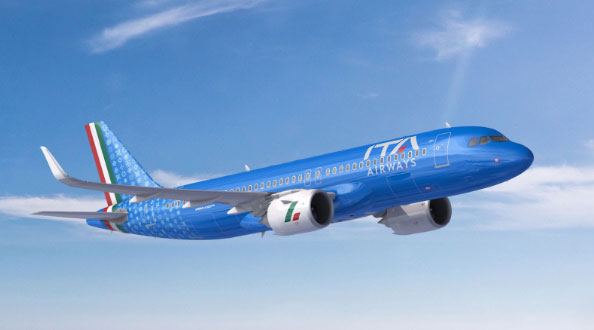
SINGAPORE, 8 July 2024: The European Commission’s Competition Authority has approved Deutsche Lufthansa AG’s bid to acquire 41% of ITA Airways, subject to conditions.
The transaction should be completed in the fourth quarter of 2024, leading to the swift integration of the Italian airline into the Lufthansa Group. The airline is owned by the Italian Ministry of Economy and Finance and, under its present ownership, has been active since 2020.
Photo credit: Lufthansa Group.
Deutsche Lufthansa AG Chief Executive Officer Carsten Spohr says: “The approval from Brussels is excellent news for ITA Airways and Lufthansa, especially for all passengers flying to and from Italy.
“We look forward to welcoming ITA Airways and its outstanding employees as new members of our airline family soon. The decision is also a clear signal for strong European air traffic, which can successfully assert itself in global competition.”
Lufthansa Group, the Italian Ministry of Economy and Finance (MEF) and ITA Airways have welcomed the EU Commission’s approval under competition law. With this clearance of the competition authority, the way is now clear for the acquisition of a minority stake of 41% in ITA Airways (Italia Trasporto Aereo SpA) and the subsequent acquisition of the remaining shares by Deutsche Lufthansa AG for a capital contribution of EUR325 million, which was already agreed in May 2023. The investment will be completed through a capital increase. The transaction is expected to close in the fourth quarter of 2024.
This requires both the prior implementation of the remedies negotiated with the EU Commission and the approval of other competition authorities outside the EU. Lufthansa Group and MEF have agreed to options for the acquisition of the remaining shares in ITA Airways, which can be exercised as soon as 2025.
ITA Airways will become the fifth network airline to be closely integrated with Lufthansa Group while keeping its brand name as part of the multi-hub, multi-airline, and multi-brand system successfully established by the Lufthansa Group. This will strengthen and further develop ITA Airways’ economic situation. Italy will become the Lufthansa Group’s fifth “home market”. It will then be the Lufthansa Group’s second-largest market in terms of revenue after Germany and the US.
Flights to Bangkok
Meanwhile, ITA’s website is promoting a new service from Rome to Bangkok that will start this November with five flights weekly until the end of the winter timetable 28 March 2025.
The new route is the first ITA Airways connection between Italy and Thailand and represents one of the highlights of the upcoming 2024/2025 Winter season, alongside the Rome Fiumicino – Dubai flight inaugurating on 27 October 2024.
The Rome – Bangkok flight opened for sale on 1 July. According to the schedule, an Airbus A330neo will fly the route on Monday, Wednesday, Thursday, Saturday and Sunday from 16 November 2024 to 28 March 2025.
In the current summer season, ITA Airways operates 57 destinations, including 16 domestic, 26 international, and 15 intercontinental. The company has recently launched new nonstop flights from its Rome Fiumicino hub to Chicago (April 2024) and Toronto (May 2024), Riyadh (June 2023), and Accra (June 2023). It will inaugurate flights to Dakar on 3 July and Jeddah on 1 August 2024.
ITA Airways was founded in November 2020, started its operations on 15 October 2021 and currently has around 4,860 employees. Based in Rome, the airline carried almost 15 million passengers last year and has a modern fleet of 96 Airbus aircraft, including 23 long-haul and 73 short-haul aircraft. The hub in Rome offers ideal conditions for expanding the joint route network towards Africa and Latin America, thus providing customers with improved connections to the southern hemisphere. ITA Airways currently serves 69 destinations.
GURUGRAM, India, 8 July 2024: Air India will start nonstop services between Delhi and Kuala Lumpur in Malaysia on 15 September 2024.
Using its two-class configured Airbus A320neo aircraft, Air India will operate daily on the new route.
The new route will further strengthen Air India’s network of destinations in Southeast Asia, offer a new flight option to an increasing number of travellers between India and Malaysia, and open new connections for Malaysian travellers to access Air India’s global route network.
“We are happy to support the fast-growing tourism and trade corridor between India and Malaysia with this new daily service,” said Air India Chief Commercial & Transformation Officer Nipun Aggarwal. “Leveraging our robust global network, this route will not only serve travellers flying between the two nations but also offer convenient one-stop connections for travellers from Europe and North America seeking to explore the wonders of Malaysia.”
The new services to Kuala Lumpur will enable convenient one-stop connections via Delhi for travellers from the US, Canada, the UK, and Europe.
Currently, Air India flies nonstop between India and five points in Southeast Asia: Singapore, Bangkok and Phuket (Thailand), Ho Chi Minh City (Vietnam), and Yangon (Myanmar). New flights are being progressively opened for bookings on airindia.com and through travel agents worldwide.