KUALA LUMPUR, 23 April 2026: Batik Air slashes 35% off its economy Value and Flexi fares for bookings from now until 30 April 2026. Travel is valid through to 31 January 2027.
Both fares include complimentary date changes — one-time for Value and unlimited for Flexi (fare difference applies). A baggage allowance of up to 25kg improves the travel offer.
Travel is booktagle to a wide network of destinations, including Sydney, Shanghai, Bali, Phuket, Colombo, Bangkok and New Delhi.
Bookings are open through the airline’s website and mobile app.
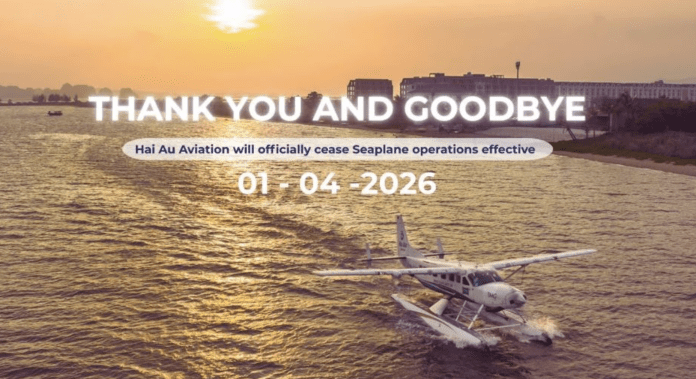
BANGKOK, 23 April 2026: Hai Au Aviation has suspended its seaplane sightseeing service since 1 April, according to a report in ICS Travel Group’s latest newsletter emailed to partners worldwide earlier this week.
In its April product update, ICS, a regional tour company, noted that the seaplane’s scenic flights had served international travellers to Halong Bay for more than a decade.
Photo credit: Vietnam Seaplane Tours. Halong Bay flights say goodbye.
“Travellers booked the flights for a memorable excursion that offered panoramic views of limestone karsts rising from the bay’s emerald waters,” the ICS newsletter stated.
ICS Travel Group noted that “the pause mainly comes from operational adjustments and updated regulations for aviation activities within this protected heritage area, as authorities review how tourism can continue to grow while protecting the natural landscape that makes the bay so special.”
On its Facebook page, Hai Au Aviation officially confirmed that the scenic flights had halted on 1 April — “We are truly honoured to have been part of so many unforgettable moments in the sky.”
“As every remarkable journey eventually turns a new page, Hai Au Aviation would like to officially announce that our seaplane services will cease operations starting 1 April 2026.
“We extend our heartfelt gratitude to all our valued customers and partners who have trusted and supported us throughout the years,” Hai Au Aviation concluded.
About ICS Travel Group Founded in 1994, ICS Travel Group began its journey by establishing its own operations in Vietnam, Cambodia, Laos and Myanmar and opening its head office in Bangkok, Thailand, to serve as a central hub for operations, followed by the launch of a dedicated office in Bali, Indonesia. It has steadily expanded to include countries such as Japan, China, India and the Philippines.
SINGAPORE, 23 April 2026: Abercrombie & Kent (A&K) announces an expanded 2027 portfolio of Small Group Journeys, introducing nine new itineraries that reach from the wilds of Alaska and Southern Africa to the cultural crossroads of Armenia, Georgia, Albania and North Macedonia.
They join enduring destination favourites such as Italy, the Alps, and Poland, along with a luxury rail journey in Malaysia.
Photo credit: A&K.
“For 2027, to meet the continued demand for Europe, we are looking beyond the expected with itineraries in less-explored regions such as Eastern Europe, while reimagining how guests experience perennial favourites like Italy through deeper access and more thoughtful pacing,” says Abercrombie & Kent. Director of Global Group Product, Suzanne Teng. “We are also seeing rising demand for experiential luxury, from the renewed appeal of rail journeys to a growing desire for immersive nature experiences in stunning settings like Alaska or Southern Africa.”
Each Small Group Journey itinerary is led by A&K Resident Tour Directors and expert local guides, with insider access shaped by more than 60 years of experience.
Travelling with an average of just 14 guests, guests enjoy a more intimate way to explore, with the freedom to go deeper and experience more.
New small group journeys for 2027
Alaska Wilderness, Denali and the Last Frontier 9 DAYS | FROM AUD19,125
Experience the many facets of Alaska’s still-wild frontier, from walking portions of the Port Valdez Trail System and travelling along the Denali Highway to cruising icy fjords of Prince William Sound, driving through the Anton Anderson Memorial Tunnel, one of Alaska’s most unique passages, and landing by helicopter on top of a glacier.
Singapore to Bali: Malaysia by Luxury Rail 12 DAYS | FROM AUD39,790
Explore Singapore before boarding the luxurious Eastern & Oriental Express train, discovering Malaysia’s hidden sites with a choice of activities from a look into traditional Malay culture in Perlis to relaxing on a scenic beach in Langkawi, then fly to Bali for a respite in the lush rural settings of Ubud and the beach at Jimbaran Bay.
Ultimate South Africa Adventure 11 DAYS | FROM AUD24,485
Venture off the beaten path for curated experiences focused on food and wine, nature, marine life and wildlife, including a three-night stay at Grootbos Forest Lodge. Spend two days on game drives in MalaMala Game Reserve, one of the largest private Big Five game reserves in South Africa, and search for the Marine Big Five on a boating adventure. Discover the historic Stellenbosch on foot and embark on several wine tastings at estates in the famed Cape Winelands.
Family Adventure in Southern Africa 11 DAYS | FROM AUD30,605
Discover the diverse treasures of Southern Africa on a journey designed specifically for families, from hotels chosen with kids in mind to curated kid-friendly activities not available on other group journeys, including viewing the Shark Exhibit at Two Oceans Aquarium over dinner, and taking part in a veterinarian-led rhino conservation experience in Marakele National Park.
Italian Treasures: Venice to Amalfi 12 DAYS | FROM AUD28,310
Experience Italy’s highlights with unrivalled insider access to historic sites, exquisite food and wine, and exclusive encounters. Venture off the beaten path on a walking tour through Venice’s hidden gardens and private palaces, join in a pasta-making experience in Bologna, enter the private areas of Rome’s Villa Medici on an exclusive tour and experience the Vatican Museums and admire the Sistine Chapel at their best, visiting early to avoid the crowds.
The Alps to the Adriatic 12 DAYS | FROM AUD24,485
Exceptional hotels, expert guides, and exclusive experiences elevate this route as it unfolds from Munich and Salzburg through Tyrol and the soaring Dolomites, ending in the coastal city of Trieste. Savour an authentic taste of Bavaria on a guided foodie walking tour and discover the secrets of prosecco in the Treviso hills, then walk it all off on a wellness-focused trek through the Alpine foothills alongside alpacas.
Poland: Witness to History 10 DAYS | FROM AUD13,770
Take in the country’s beautiful landscapes and Baroque architecture as well as its solemn history. Discover the lively culture and cuisine of this often-overlooked European gem during a guided tour of medieval Malbork Castle, a back-streets food tour of Warsaw and a private Chopin recital.
Armenia and Georgia: Cultures of the Caucasus 12 DAYS | FROM AUD13,770
Explore two former Soviet republics with jaw-dropping scenery and rich cultural heritage. Sample rare wines in Georgia, behold magnificent churches in neighbouring Armenia and savour this diverse region’s music and cuisine.
Cultural Landscapes of Albania and North Macedonia 11 DAYS | FROM AUD10,705
Stunning mountain vistas, inviting beaches on the turquoise Adriatic and savoury Balkan cuisine make this the next must-visit region in Europe. Trace the legacy of the Ottoman Empire and find the region’s rich traditions of religious tolerance and peaceful coexistence reflected in its architecturally diverse mosques and churches.
Each Small Group Journey includes handpicked accommodations, from five-star properties that combine first-rate comfort with a keen eye toward the locale, to intimate boutique camps and lodges in wilderness areas, available only to smaller groups.
A&K exclusives include Traveller’s Valet, complimentary mid-journey laundry service and Travelling Bell Boy service to transfer luggage between accommodations. Private arrival and departure transfers are included, regardless of the date of arrival.
Find Abercrombie & Kent’s complete 2027 portfolio of 85 Small Group Journeys at www.abercrombiekent.com.
BANGKOK, 23 April 2026: Thailand has lost one of its most influential figures in healthcare and aviation with the passing of Dr Prasert Prasarttong-Osoth at the age of 93.
A prominent surgeon-turned-businessman, he founded both Bangkok Airways and Bangkok Dusit Medical Services, leaving a legacy that reshaped private healthcare and regional air travel in Thailand.
Dr Prasert Prasarttong-Osoth.
Dr Prasert passed away on Tuesday, 21 April, following treatment for an undisclosed condition, according to Bangkok Dusit Medical Services. Funeral rites will be held at Wat Thepsirin in Bangkok.
Born in Bangkok on 22 March 1933, he was the fourth of 10 children. His early education at Assumption College, Bang Rak and Triam Udom Suksa School set the foundation for a distinguished academic path, leading to medical studies at Chulalongkorn University. His training as a surgeon would later inform a visionary approach to healthcare delivery in Thailand.
In 1972, he founded Bangkok Hospital, the cornerstone of what would become one of Asia’s largest private healthcare networks under Bangkok Dusit Medical Services. His commitment to raising standards in medical care helped position Thailand as a leading destination for international patients, contributing significantly to the country’s medical tourism sector.
Beyond healthcare, Dr Prasert demonstrated remarkable foresight in aviation. He established Bangkok Airways, Thailand’s boutique airline, which played a pivotal role in opening up key leisure destinations, most notably Koh Samui, to global tourism. His unique model of integrating airline services with airport ownership helped unlock regional connectivity and accelerate tourism development in secondary destinations.
Throughout his career, Dr Prasert was widely respected for his entrepreneurial vision, discipline, and long-term commitment to national development. His contributions extended beyond business, influencing Thailand’s positioning in both the global healthcare and tourism industries.
Industry leaders have paid tribute to a man whose work bridged sectors and generations. His legacy lives on through the institutions he built, the industries he helped transform, and the thousands of professionals whose careers were shaped under his leadership.
Dr Prasert Prasarttong-Osoth is survived by his family and a nation that benefited from his extraordinary life’s work.
About the Author Andrew J. Wood is a Bangkok-based media executive, travel writer and former hotel executive specialising in Asian tourism.
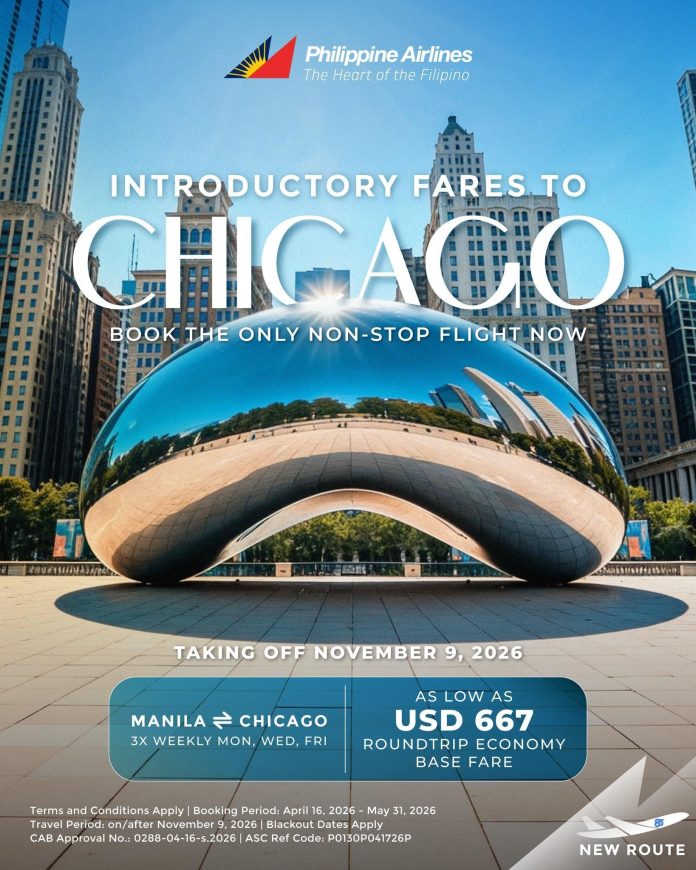
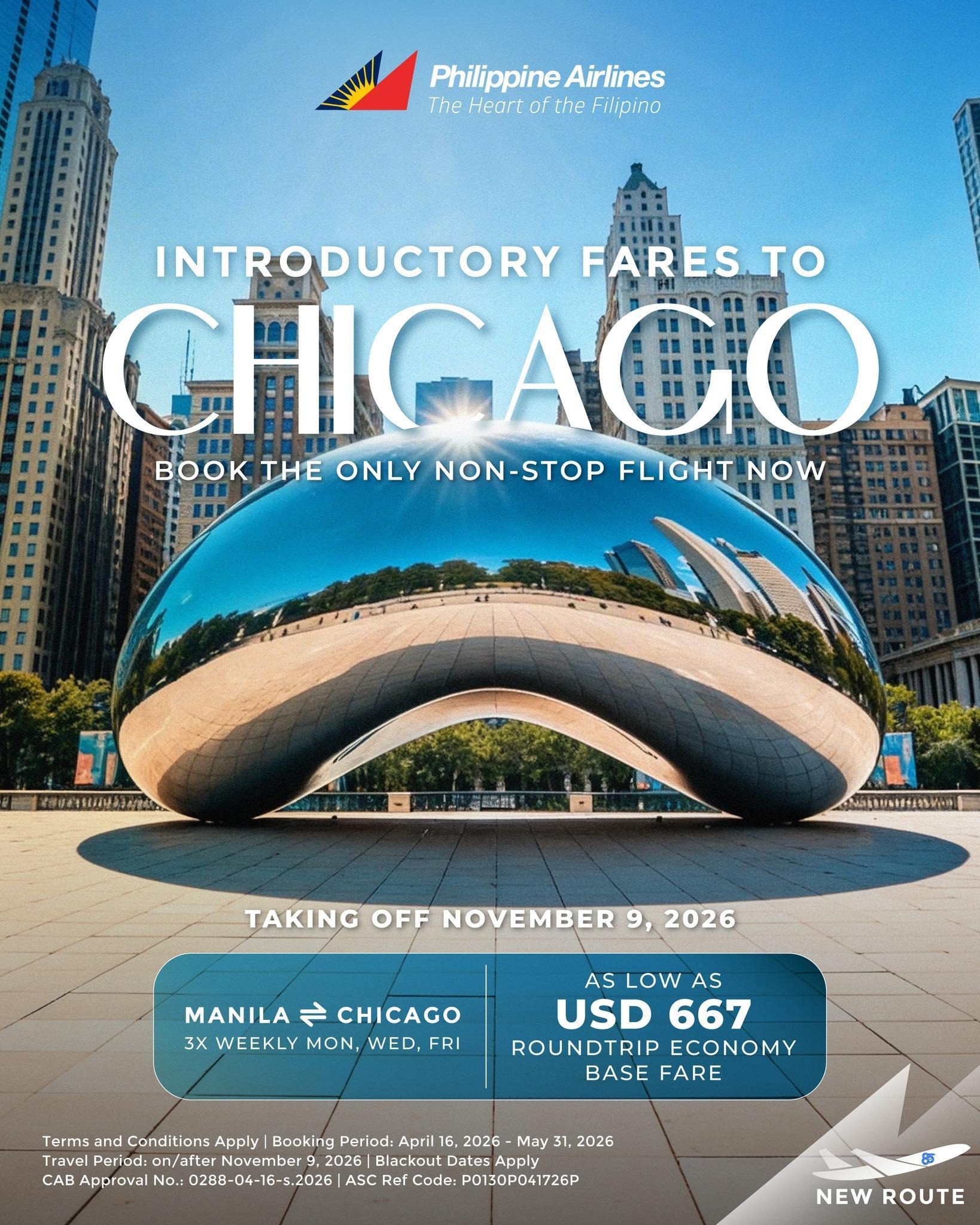
MANILA, 23 April 2026: Philippine Airlines will expand its presence in the US with the launch of a new nonstop service between Manila and Chicago.
The new route, set to begin on 9 November, marks PAL’s eighth destination across the US and its territories, joining Honolulu, Los Angeles, San Francisco, Seattle, New York, Guam, and Saipan.
Photo credit: Philippine Airlines.
With the addition of Chicago, PAL further solidifies its leadership as the Southeast Asian airline with the most expansive network connecting travellers to the US mainland and its island territories.
“Chicago is considered one of the premier hubs in the United States, and our entry into this vibrant city will provide direct connectivity to the Midwest,” said the airline’s president, Richard Nuttall. “At the same time, serving the Chicago–Manila corridor will create vital links to key regional destinations and major Philippine domestic markets through our Manila hub.”
Scheduled to operate three times a week — every Monday, Wednesday and Friday — flights will depart Manila in the afternoon and arrive at Chicago’s O’Hare International Airport likewise in the afternoon local time. The return service from Manila will operate on the same days, departing in the evening and arriving in Manila early morning.
To mark the launch of the new route, PAL is offering introductory fares, with round-trip economy base fares starting at USD 667 for bookings made by 31 May 2026.
Philippine Airlines will deploy a 360-seat Airbus A350-900 on the Manila-Chicago route.
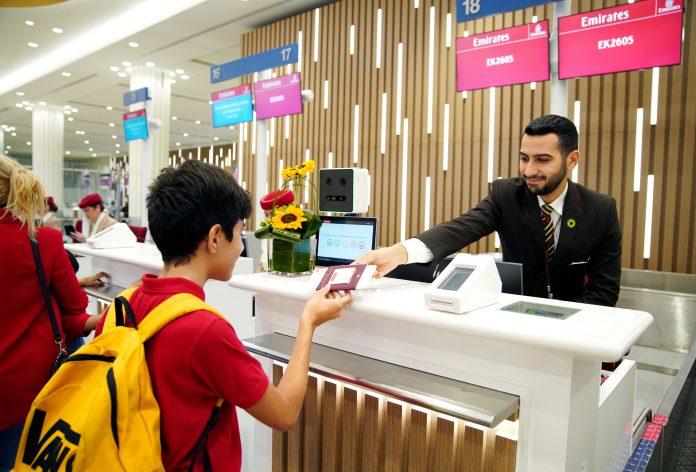
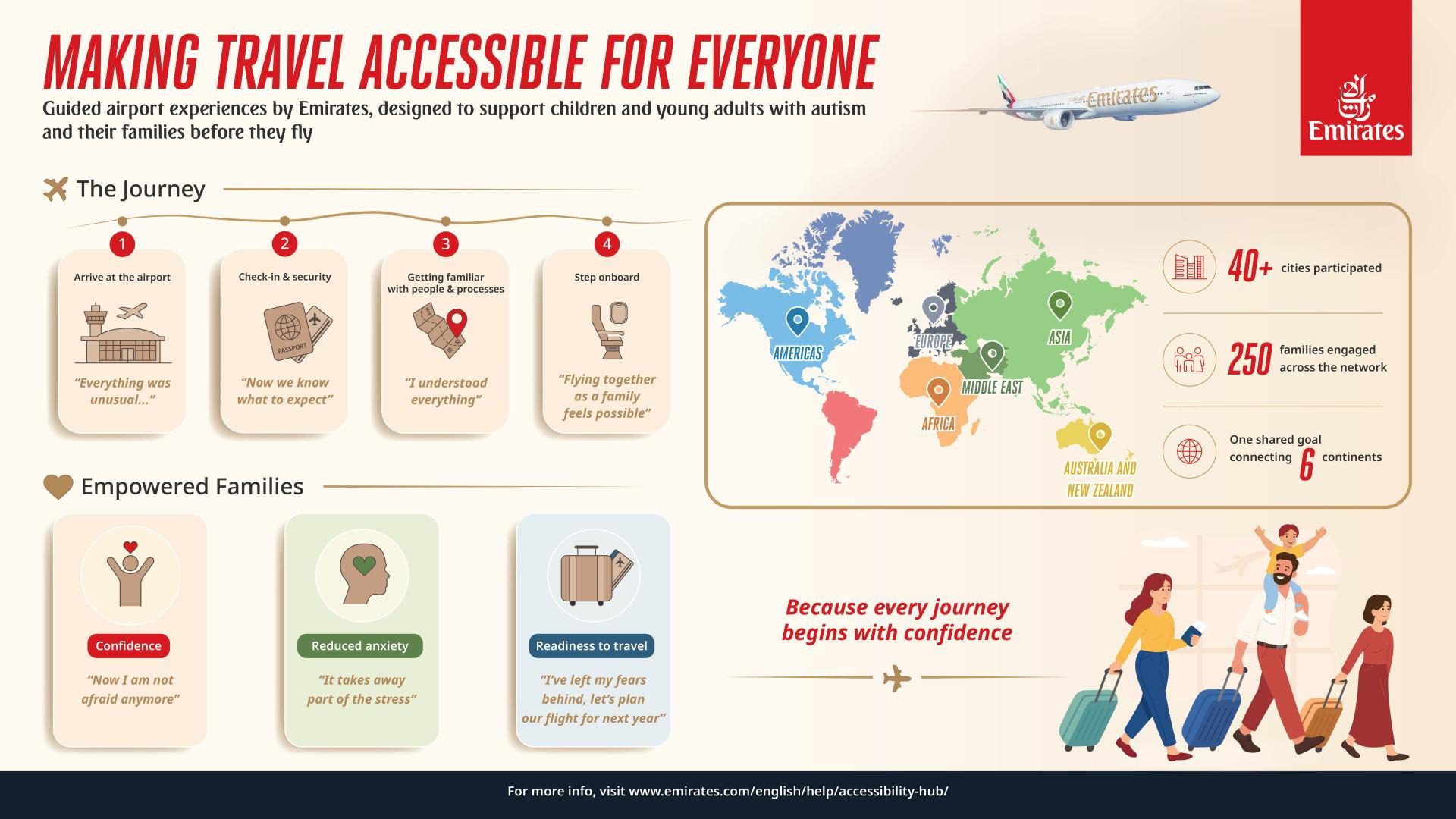
DUBAI, UAE, 22 April 2026: Emirates has continued its commitment to making travel more accessible for all by successfully arranging bespoke Emirates Travel Rehearsals across more than 40 cities globally over the past year.
With more than 250 families positively impacted, Emirates Travel Rehearsals are designed to support children and young adults with autism by allowing them to practice the journey through the airport to prepare for real flights — easing travel anxiety and empowering them to fly with greater confidence.
After the initial Emirates Travel Rehearsals in Dubai received positive feedback from families, schools and autism organisations, the Emirates Office of Accessibility & Inclusion developed the travel rehearsal into an official programme to be rolled out across its global network.
Since April 2025, Emirates’ Airport Services teams have come together to arrange more than 40 of these travel rehearsals across airports like Accra, Athens, Bali, Bangalore, Barcelona, Bologna, Brussels, Cairo, Christchurch, Da Nang, Delhi, Dubai, Dublin, Durban, Düsseldorf, Edinburgh, Glasgow, Guangzhou, Hanoi, Harare, Hong Kong, Istanbul, London, Luanda, Madrid, Mauritius, Milan, Newcastle, Nice, Orlando, Oslo, Paris, Peshawar, Port Luis, Rome, Stansted, Stockholm, Sydney, Toronto, Trivandrum, Venice and Vienna.
More than 35,000 Emirates staff have been trained to support customers with autism and can help facilitate travel and Travel Rehearsals. Emirates teams work very closely with airport authorities and partners to make sure each rehearsal is a supportive and successful experience for the families.
Emirates Airport Services Outstation & Business Support Senior Vice President, Sami Aqil Abdullah commented: “The Emirates Travel Rehearsal programme has been a resounding success across six continents, with impressive collaboration and drive shown by all stakeholders, from our own Emirates teams to our airport partners, and the parents and teachers who trusted us to support their children. We will continue to amplify this success with more locations, more teams involved, and more families positively impacted and empowered to fly with confidence.”
What is an Emirates Travel Rehearsal?
As the world’s first autism certified airline, Emirates is aware that for many families, international air travel is a highly challenging experience, or something to be avoided completely due to the high level of sensory stimuli that is involved. A survey on AutismTravel.com revealed that 78% of families are hesitant to travel or visit new locations for these reasons. For many people with autism, planning and predictability are critical – and an airport represents a world of unknown processes and stimuli.
Emirates Travel Rehearsals are a purposeful community collaboration and learning exercise arranged by Emirates, with the support of international airport teams, Border Control and Security teams, and schools and centres for autism across the world. The travel rehearsals empower neurodivergent people to participate in a real-time journey through the airport, practising the actions of checking in, dropping baggage, going through immigration and security, and experiencing the hustle and bustle of retail and dining areas. While familiarising themselves with the airport, participants are also issued mock boarding passes and given the chance to meet the many uniformed staff encountered along the way. In some airports, Emirates’ teams managed to arrange access to real aircraft for the children and young adults.
Positive feedback from participants
Now on an international level, parents, therapists, teachers, young adults, and children involved in the travel rehearsals so far have reported to Emirates that the experience has been invaluable in helping them have a safe and successful flight, by offering the comfort of preparation and familiarity, as well as trained staff to support.
Emirates will continue to arrange Travel Rehearsals across its global network throughout 2026, inviting more schools and centres to participate.
For more information on flights and to book, visit www.emirates.com.
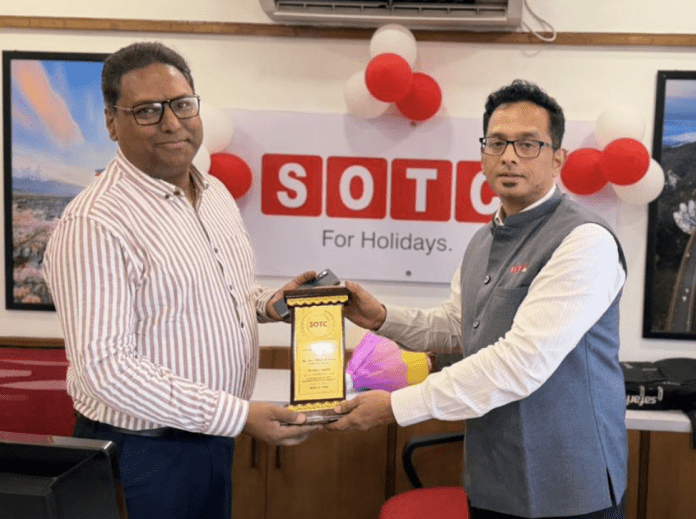
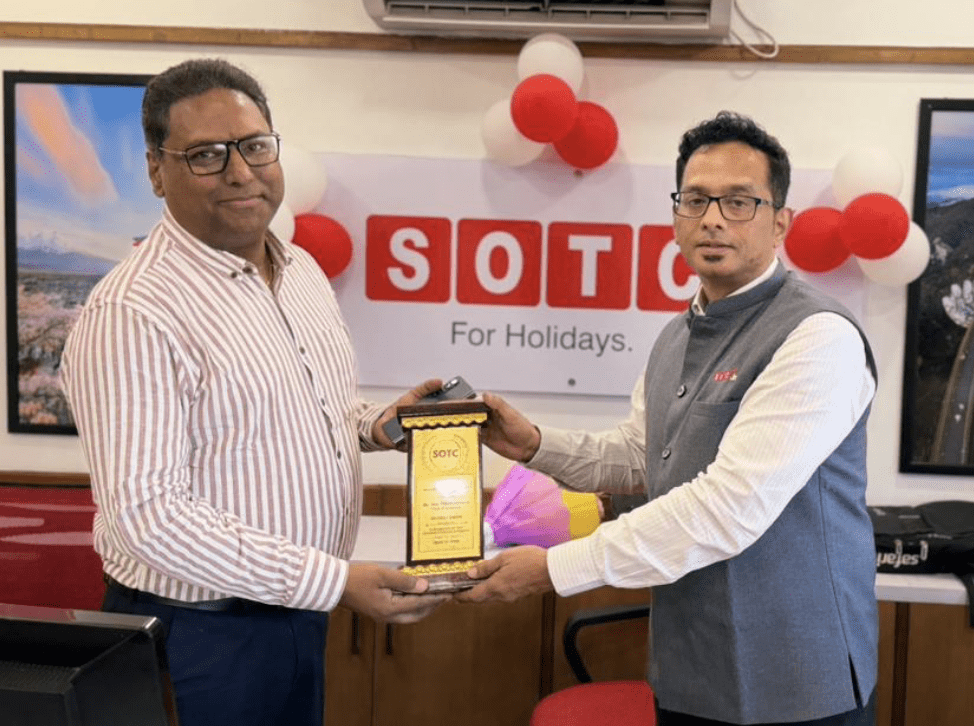
MUMBAI, 22 April 2026: SOTC Travel, a leading omnichannel travel company, has strengthened its presence in North India by launching two new franchise outlets in Bareilly and Noida, Uttar Pradesh.
This strategic expansion underscores the company’s focus on deepening its regional footprint across high-potential Tier 1 and 2 markets.
Photo credit: SOTC.
Bareilly, an emerging market with rising disposable incomes and evolving travel aspirations, presents a compelling opportunity for SOTC to engage new and first-time holiday consumers. In contrast, Noida, a key hub in the NCR region, has a large base of affluent professionals, a strong corporate presence, and high outbound travel demand. Together, these locations highlight a strategic expansion, enabling the company to effectively cater to diverse, high-potential consumer segments across North India.
Both stores will offer a comprehensive portfolio of domestic and international holidays, group tours, personalised holidays and cruises, along with value-added services, including travel insurance.
Uttar Pradesh travel trends
Top domestic destinations: Kashmir, Himachal Pradesh, Uttarakhand, Kerala, Andaman & Sri Lanka.
International: Japan, South Korea, Australia, New Zealand, Singapore, Malaysia, Thailand, Philippines, Vietnam, Dubai and Abu Dhabi, South Africa, Morocco, Europe.
Spiritual/Darshan portfolio: Strong interest in pilgrimage experiences, including the Kailash Mansarovar Yatra, Do Dham/Char Dham Yatra and Vaishnodevi Yatra, reflecting the region’s continued affinity for spiritual travel.
Regional product portfolio: Exclusive special tours designed specifically for our customers. These itineraries include local Indian language–speaking tour managers, Indian cuisine options, and culturally aligned experiences, ensuring greater comfort and familiarity for travellers.
Emerging Travel Preferences: Travellers from the state are increasingly seeking experiential and bucket-list holidays such as luxury multi-destination cruises, polar expeditions to Antarctica, Northern Lights experiences across Finland, Norway and Iceland, self-drive holidays and adventure-led itineraries.
Top customer segments: Multi-generational families, honeymooners and couples, working professionals, millennials and Gen Z. Average holiday duration: four to six days for domestic/short haul; 10 to 15 days for long haul.
SOTC Travel Limited Senior Vice President & Head – Holidays, Rakesh Bawa said: “North India continues to be a key growth engine for SOTC, with strong demand emerging from both metro and tier 2 markets. While Bareilly represents a fast-growing market with increasing travel aspirations, Noida offers access to a mature and well-travelled customer base within the National Capital Region (NCR).”
SINGAPORE, 22 April 2026: Club Med and Central Group Capital announce the signing of a hotel management agreement for a resort located on Samui Island, Thailand.
The partnership will bring the Club Med Exclusive Collection Resort brand to the Thai island destination in mid- 2028, marking the third Collection Resort-branded property in the East South Asia, and Pacific (ESAP) region.
Photo credit: Club Med.
Club Med Exclusive Collection Koh Samui will feature 303 rooms, marking the brand’s first Exclusive Collection Resort in Thailand and the second Club Med-branded property, following Club Med Phuket, which opened its doors in 1985 on Phuket Island’s west coast.
Located just a 25-minute commute from Samui Airport, Club Med Exclusive Collection Koh Samui will join Club Med’s global network of over 60 Premium and Exclusive Collection Resorts across 25 countries.
The official unveiling of the new resort took place at Club Med Kiroro Peak, Japan, held in the presence of Stéphane Maquaire, President and CEO of Club Med, Rachael Harding, CEO, ESAP of Club Med, and Soravit Chairoj, Managing Partner and Co-Head of Central Group Capital.
SINGAPORE, 22 April 2026: Air Astana takes home more international awards recognising its high-quality onboard service at the annual WTCE exhibition, held in Hamburg from 14 to 16 April 2026.
The airline was honoured with Travel Plus, Onboard Hospitality and PAX Readership Awards across several categories.
Photo credit: Air Astana.
The airline won Travel Plus Gold Awards for its business class amenity kit, business class bedding collection, children’s amenity kits for passengers aged over six and for infants, and also received a five-star rating for passenger service and amenities.
The infant amenity kit received the highest recognition from the Onboard Hospitality Awards jury in the category “Best Onboard Amenities for Young Passengers.”
In addition, Air Astana was named the winner of the PAX Readership Awards in the CIS region in the following categories:
Best Passenger Experience, Best Inflight Catering, Best Economy Class Amenity Kit, Best Children’s Amenity Kit, Best Business Class Amenity Kit, and Best Business Class Table Linen.
WTCE (World Travel Catering & Onboard Services Expo) is a leading international exhibition dedicated to inflight catering, onboard retail and passenger service solutions. The event has been held annually since 2012, and Air Astana has repeatedly been among its award winners.
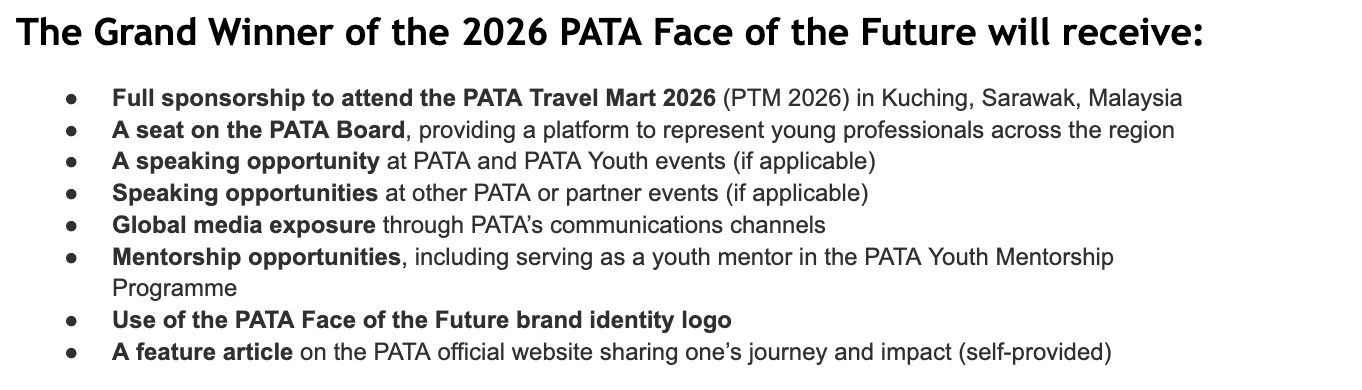
For almost 25 years, PATA has annually presented its PATA Face of the Future Award to single out exceptional ‘rising stars’ in the travel and tourism industry.
Photo credit: PATA.
This honour is granted to selected young professionals who have exhibited initiative and leadership in the advancement of tourism and demonstrate commitment to the sustainable development of the Asia Pacific travel industry in line with PATA’s mission.
PATA CEO Noor Ahmad Hamid explains: “The PATA Face of the Future is the association’s most prominent award for young talents; a great motivation for the next generation to pursue the path that leads to a difference. This year, as the award also coincides with PATA’s 75th Anniversary, we would be delighted to celebrate a new face of leadership at the beginning of our new chapter, and look forward to seeing how they set the standards for the generation that follows.