

DOHA, 19 March 2026: In response to the military conflict in the Persian Gulf, Hamad International Airport confirms that it is withdrawing participation from all external exhibitions, conferences, industry events, and awards programmes.
That also includes the Skytrax World Airport Awards 2026 and the Passenger Terminal Expo 2026, London.
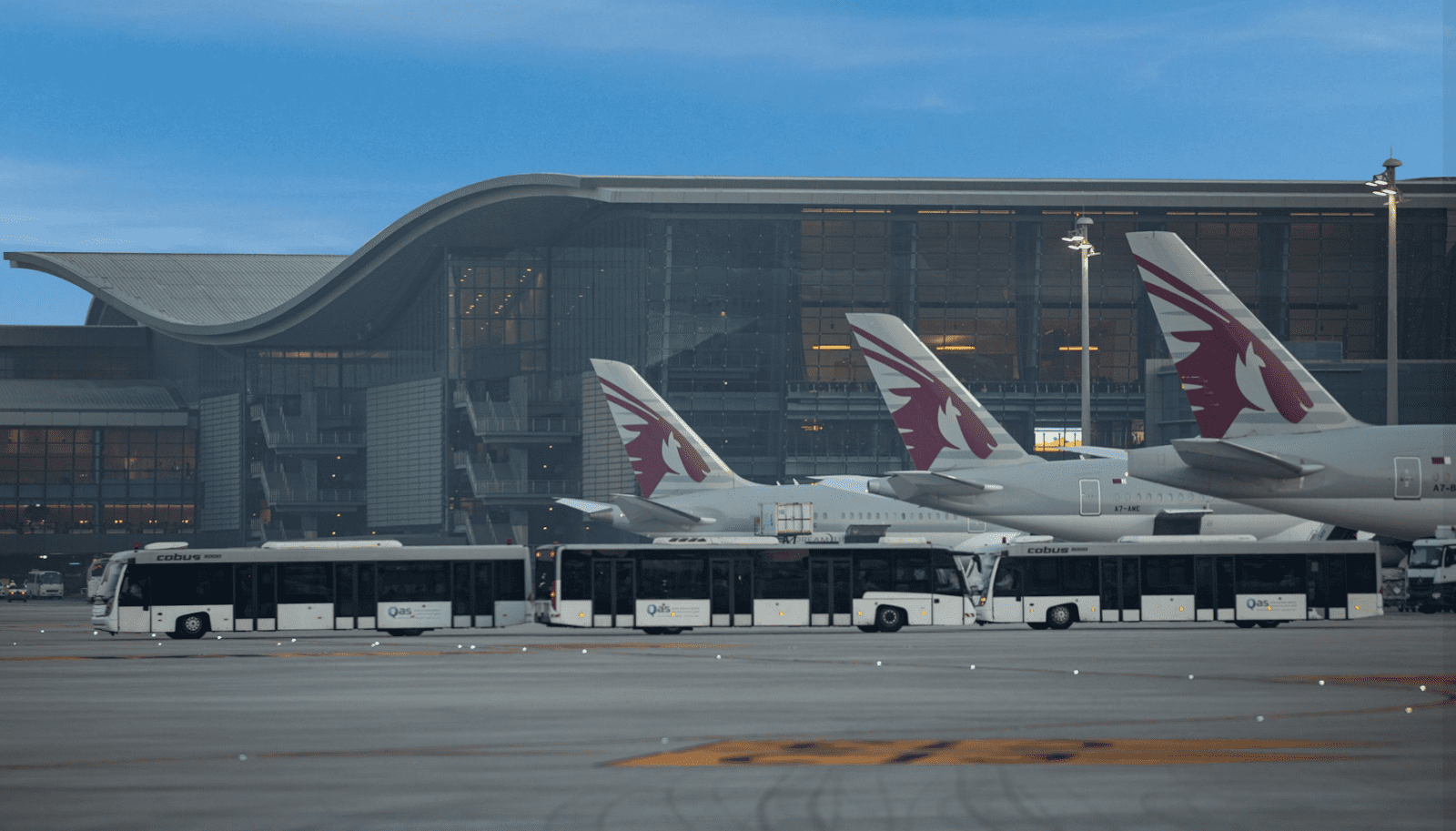
Commenting on the ongoing hostilities, the airport authorities say the “safety and well-being of passengers, staff, and their families is, and remains, its absolute priority.”
Arabian Travel Market moves dates
Exhibitions have also fallen victim to the war and indiscriminate missile and drone attacks on the Gulf countries. On Wednesday, the exhibition organiser RX confirmed that the 2026 edition of Arabian Travel Market (ATM), originally scheduled to take place from 4 to 7 May 2026 at Dubai World Trade Centre, Dubai, will now be held from 17 to 20 August 2026, with the venue remaining unchanged.
The decision to reschedule the event has been made to prioritise the safety and well-being of customers, partners and colleagues, and to give the global travel and tourism community greater confidence and flexibility to attend.
Meanwhile, in Doha, Qatar Airways reports that Qatar Civil Aviation Authority has approved operating corridors for a limited number of flights, and Qatar Airways will operate a revised limited schedule through 28 March to global hubs (for example: London, Paris, Bangkok) via the approved corridors.
The operational status of airports in the Gulf remains highly volatile and subject to sudden changes due to the ongoing regional conflict. As of 18 March 2026, most major hubs are in a “partial recovery” phase, operating with significantly reduced capacity and frequent temporary closures.
Qatar
Hamad International (DOH): Qatari airspace remains officially closed to standard commercial traffic.
Operational Status: Only a limited “authorised corridor” is currently open for specific repatriation and emergency flights.
United Arab Emirates (UAE)
Dubai International (DXB) & Al Maktoum (DWC): Both are open but operating at roughly 40-60% capacity.
Recent Incident: A drone strike on a fuel tank near DXB on 16 March caused a temporary suspension of all flights. Operations have since resumed, but schedules are fluid.
Travel Rule: Access to terminals is restricted to passengers with confirmed tickets only. Passengers should not head for the airport unless the airline has confirmed their flight.
Zayed International (AUH), Abu Dhabi: Partially open under a reduced schedule.
Status: Etihad has resumed service to approximately 70 destinations, though total airport movements remain below one-third of pre-conflict levels. Airspace was briefly closed on 17 March as a precaution.
Saudi Arabia
King Khalid International (RUH), Riyadh: Remains fully open and operational 24/7, though it is facing significant disruptions.
Regional suspensions: Saudia has suspended most routes to other Gulf destinations like Kuwait, Dubai, Abu Dhabi, and Doha.
Security advisory: EASA has issued warnings regarding Saudi airspace due to high drone and missile interception activity in the region.
King Abdulaziz International (JED), Jeddah: Open and functioning, often serving as a primary alternative hub for traffic diverted from more active conflict zones.
Other regional hubs
Muscat, Oman (MCT): Currently, the most stable hub in the region. It remains fully operational and is acting as the primary relief airport for diverted flights and passenger transfers.
Kuwait and Bahrain: Both are in a “partial recovery” phase. Most international arrivals are still facing heavy cancellations or long diversions to avoid active military zones.
Current status of Gulf airports (18 March 2026)
| Airport | Status | Key Constraint |
| Dubai (DXB) | Partial / High Alert | Operating at ~50% capacity; strictly confirmed tickets only. |
| Abu Dhabi (AUH) | Partial / Open | Operating at ~30% capacity; focus on point-to-point travel. |
| Doha (DOH) | Heavily Restricted | Limited to “Authorised Corridors” only; most commercial flights suspended. |
| Riyadh (RUH) | Open | Fully operational, but regional Gulf routes are suspended. |
| Muscat (MCT) | Fully Operational | Acting as the primary regional relief and diversion hub. |
(Source: Hamad International Airport plus additional reporting)