

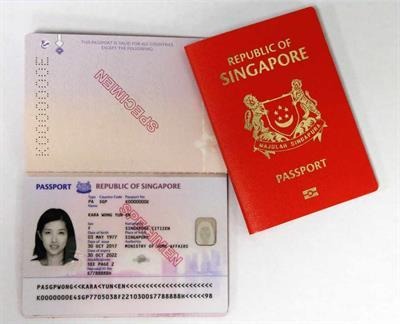
LONDON, 15 January 2026: Singapore retains its position as the world’s most powerful passport, offering visa-free access to 192 destinations.
At the opposite end, Afghanistan once again ranks last, with access to just 24 destinations.
The resulting 168-destination gap illustrates the scale of global mobility inequality in 2026 — a dramatic widening since 2006, when the difference between the then-top-ranking US passport and Afghanistan was only 118 destinations.
Marking two decades since its inception, the Henley Passport Index 2026 reveals a widening divide between the world’s most and least mobile populations.
Based on exclusive Timatic data from the International Air Transport Association (IATA), the index ranks all global passports by the number of visa-free destinations their holders can access.
While a record number of passports now cluster at the top of the rankings, those at the bottom remain increasingly isolated, underscoring a growing global mobility gap.
“Over the past 20 years, global mobility has expanded significantly, but the benefits have been distributed unevenly,” says Henley & Partners, Chairperson Dr Christian Kaelin. “Today, passport privilege plays a decisive role in shaping opportunity, security, and economic participation.”
This imbalance is intensifying even as international travel demand continues to grow. IATA forecasts that airlines will carry more than 5.2 billion passengers globally this year.
“A record number of people are expected to travel in 2026,” says IATA Director General Willie Walsh. “But as many governments look to tighten their borders, technological advances such as digital ID and digital passports should not be overlooked by policymakers. Convenient travel and secure borders are possible.”
Top-tier passport rankings
Japan and South Korea rank joint second in 2026, each offering visa-free access to 188 destinations. Denmark, Luxembourg, Spain, Sweden, and Switzerland rank third, with access to 186 destinations, ahead of an unprecedented group of 10 European countries tied for fourth place.
Europe continues to dominate the upper tiers, with notable exceptions including the UAE (5th), New Zealand (6th), Australia (7th), Canada (8th), and Malaysia (9th).
The US has returned to the top 10 after briefly dropping out in late 2025, but this recovery masks a longer-term decline for both the US and the UK, which jointly held first place in 2014. Over the past year, both countries recorded their steepest annual losses in visa-free access, shedding seven and eight destinations respectively. Over the past two decades, the US has fallen six places to 10th, while the UK has dropped four places to 7th.
The UAE stands out as the strongest performer on the Henley Passport Index over the past 20 years, adding 149 visa-free destinations since 2006 and climbing 57 places to 5th in the rankings, with access to 184 visa-free destinations, driven by sustained diplomatic engagement and visa liberalisation.
Countries across the Western Balkans and Eastern Europe have also made significant gains, led by Albania (+36 to 43), Ukraine (+34 to 30th), Serbia (+30 to 34), and North Macedonia (+27 to 38).
Bolivia is the only country on the index to have seen an overall decline in visa-free access over the past 20 years, falling 32 places to rank 61st in 2026.
Over the past decade, Kosovo has recorded the largest rise, climbing 38 places, while China has risen 28 places, positioning both countries as joint 59th on the index, with access to 81 visa-free destinations.
Closed doors
While US passport holders enjoy visa-free access to 179 destinations, America allows only 46 nationalities to enter without a prior visa, ranking 78th globally on the Henley Openness Index — one of the widest gaps worldwide between outbound mobility and inbound access.
China, by contrast, now permits visa-free entry to 77 nationalities and ranks 62nd, following the addition of more than 40 countries over the past two years.
Analysis commissioned for the Henley Global Mobility Report 2026 warns that a late-2025 proposal by US Customs and Border Protection could effectively end visa-free travel under the Visa Waiver Programme. Citizens of 42 allied nations may be required to submit extensive personal, biometric, and digital data, with implementation possible as early as February.
“This level of data collection enables real-time ideological screening and creates the risk that personal information could be shared, repurposed, or weaponised,” warns Greg Lindsay, non-resident senior fellow at the Atlantic Council.
These proposals follow the most extensive simultaneous expansion of US travel bans in modern history. From 1 January 2026, full or partial entry restrictions now apply to 39 countries.
(Source: Henley & Partners)