
Wednesday, June 10, 2026
Home Blog Page 53

Fliggy joins ETC’s global campaign

BERLIN, 9 March 2026: Fliggy, an online travel platform and wholly-owned subsidiary of Alibaba Group and the European Travel Commission (ETC), are partnering to promote ETC’s global campaign “Unlock an Unexpected Upgrade”. 

The campaign is co-funded by the European Union and supported by a coalition of leading destinations and travel brands, and encourages a shift towards more responsible travel.
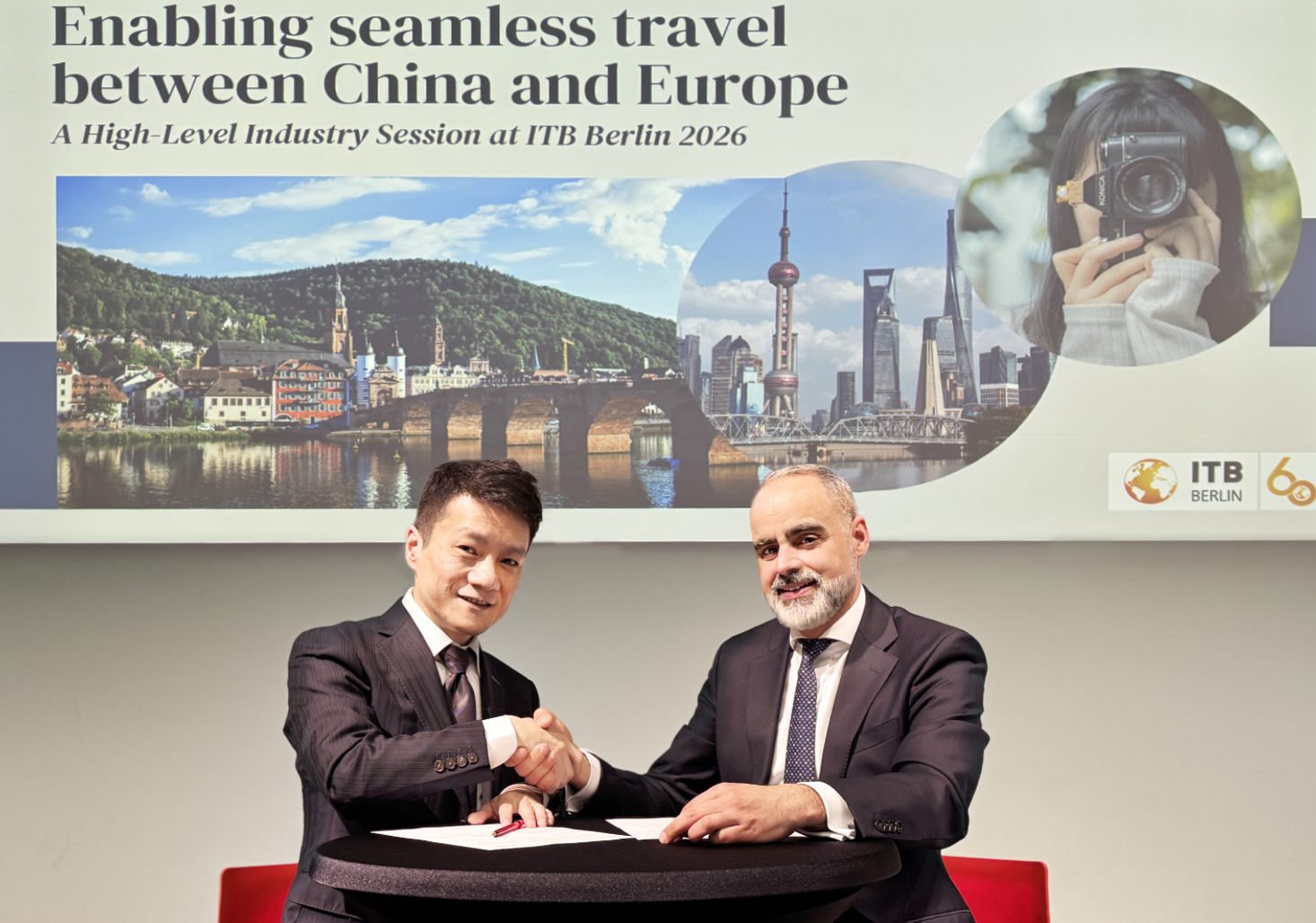
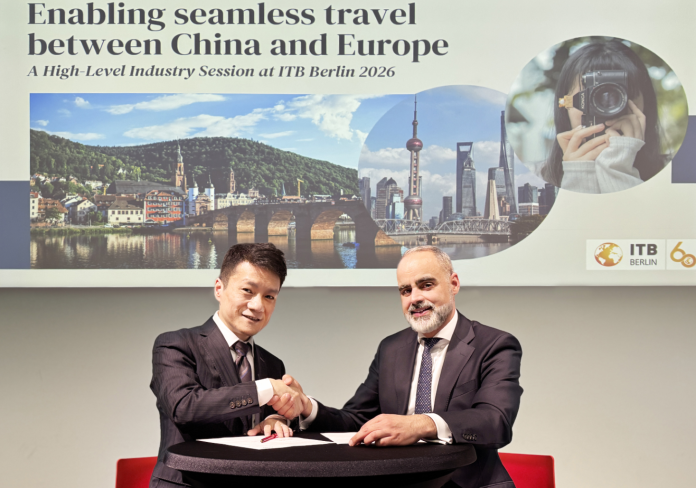
Photo credit Fliggy. Fliggy, CTO Dr Alex Chen (left) and European Travel Commission CEO Eduardo Santander (right).

Fliggy, the first Chinese partner for “Unlock and Unexpected Upgrade”, officially joined the initiative by signing the partnership agreement with ETC during ITB Berlin last week. 

The campaign reimagines responsible travel as an unexpected upgrade — encouraging travellers to explore off-peak seasons, venture beyond popular hotspots, choose low-carbon transport, and support local businesses for fewer crowds, deeper connections, and more meaningful experiences across Europe.

Travellers are invited to kayak the serene Baltic Sea, walk Dubrovnik’s ancient walls in quiet moments, celebrate carnivals like a local in Germany, or discover hidden coastal towns and seasonal flower festivals.

Fliggy CTO Dr Alex Chen said: “We are pleased to partner with ETC on this initiative as Europe offers endless opportunities for discovery. Through this partnership, we’re leveraging our technology to help travellers unlock richer experiences — from hidden gems to local festivals — making every journey to the continent more immersive.”

European Travel Commission CEO Eduardo Santander said: “We’re excited to join forces with Fliggy to bring the ‘Unlock an Unexpected Upgrade’ campaign to Chinese travellers. This is more than a campaign. It’s a collective movement to make travel more meaningful and rewarding for everyone.”

As part of the partnership, Fliggy will deploy the “Unlock an Unexpected Upgrade” campaign assets, recommend popular tourist attractions and product routes, and jointly develop niche European destination routes for users on its platform. Fliggy and ETC will further cooperate on special event promotions, including the flower season, Christmas, and snow and ice travel, during the Global Travel Festival and mid-year sales.

Learn more about the campaign at https://unexpectedupgrade.eu

About Fliggy 
Fliggy, a wholly-owned subsidiary of Alibaba Group, is one of the leading online travel platforms in China. 

About the European Travel Commission
The European Travel Commission (ETC) represents the national tourism organisations of Europe. Established in 1948, ETC’s mission is to strengthen Europe’s sustainable development as a tourist destination and to promote Europe in third markets.

(Source: Fliggy)

Air India expands Asia footprint

DELHI, 9 March 2026: Air India will launch two new international routes as part of its continued expansion across Asia starting this May.

Effective 1 May 2026, Air India will operate direct flights between Delhi and Hanoi, making Hanoi the airline’s second gateway in Vietnam after Ho Chi Minh City.

Photo credit: Air India

Air India will also introduce direct flights between Mumbai and Tokyo (Haneda) from 15 June 2026, in addition to its Delhi-Tokyo (Haneda) services.

The new service from Delhi to Hanoi will operate five times a week, complementing the already established daily flights to Ho Chi Minh City. This provides greater flexibility to travellers who intend to visit Vietnam with open-jaw itineraries (entering Vietnam at Hanoi and exiting via Ho Chi Minh City or vice versa).

Air India will deploy its A320neo aircraft on the Delhi-Hanoi route, featuring business class, premium economy and economy class. The opening of this new route adds 7,028 seats to and from Vietnam each month.

Air India flights to and from Vietnam offer convenient connections to several destinations across the airline’s domestic and international route networks, including the United Kingdom and much of Europe.

Boosting connectivity to Japan

The new services between Mumbai and Tokyo (Haneda) will operate four times a week using Air India’s Boeing 787-8 aircraft.

Recently, Air India increased the frequency between Delhi and Tokyo (Haneda), increasing from four to seven weekly flights. Effective 14 February 2026, the airline upgraded its product offering on the route to B787-9 aircraft featuring new cabin interiors and introduced premium economy.

Air India has an active codeshare partnership with fellow Star Alliance member airline All Nippon Airways (ANA) to provide its guests with convenient onward connections from Tokyo Haneda to 6 other major cities in Japan: Fukuoka, Hiroshima, Nagoya, Okinawa, Osaka, and Sapporo. 

Air India Chief Commercial Officer, Nipun Aggarwal, said: “Since Air India’s privatisation, we have significantly grown our network across Southeast Asia and the Far East, having added several new routes, optimised flight schedules to enable convenient cross-continent connections, and forged new partnerships with other carriers.”

He added: “Japan and Vietnam have both emerged as fast-growing destinations for Indian travellers, while India’s economic and commercial ties with both nations continue to deepen and present more opportunities for business and trade on both sides. The launch of these new routes supports this growth and strengthens our presence in the region.”

Japan has rapidly emerged as one of the fastest-growing outbound destinations for Indian travellers. According to the Japan National Tourism Organisation, over 3,15,000 Indians visited Japan in 2025, representing a 35% increase over 2024 and nearly 80% growth compared to pre-pandemic levels.

Vietnam continues to gain popularity among leisure travellers and corporate groups as its leisure and business event tourism sectors expand. The country now ranks third in Southeast Asia in terms of visitor numbers, having recorded over 20 million visitors in 2025. 

Flights will progressively be available for booking through all channels, including Air India’s official website, mobile app, and travel agents.

(Source: Air India)

Lufthansa launches direct Frankfurt-Kuala Lumpur flights

KUALA LUMPUR, 9 March 2026: Lufthansa will launch direct flights from Frankfurt to Kuala Lumpur this October to strengthen its network in Southeast Asia

Effective 25 October, the airline will fly five times weekly between Frankfurt and Kuala Lumpur year-round — operating on Monday, Wednesday, Friday, Saturday and Sunday. Bookings are already open for the new route.

Photo credit: Lufthansa: Malaysia’s capital, Kuala Lumpur.

Flight schedule

LH704 will depart Frankfurt at 2130 and arrive in Kuala Lumpur at 1640 local time the following day. 
LH705 will depart Kuala Lumpur at 2355 and arrive in Frankfurt at 0600 on the following day. 

The flight will be operated by a Boeing 787-9, configured with 287 seats in three classes and the new Allegris cabin.

Lufthansa Airlines CEO Jens Ritter said: “With the new nonstop connection to Kuala Lumpur and the deployment of our state-of-the-art Dreamliner, we are creating ideal conditions to participate in the growth in Southeast Asia. The innovative Allegris cabin offers our guests the highest comfort and highlights underscore our premium aspiration to offer both leisure travellers and business travellers a first-class travel experience.” 

Malaysia is a popular destination for both leisure travellers and business travellers. In 2025, Malaysia welcomed 42.2 million visitors, making it the most visited country in Southeast Asia. It is also economically strong and growing rapidly. Germany is Malaysia’s most important trading partner in the European Union, and over 700 German companies are based in Malaysia. 

From the Lufthansa Group home markets (Germany, Austria, Switzerland, Belgium, and Italy), Lufthansa Airlines will be the only airline offering nonstop flights to Malaysia. This makes Kuala Lumpur the third Lufthansa Group destination in Southeast Asia, alongside Bangkok, Singapore and Phuket.

(Source Lufthansa Group)

Royal Cliff Beach Resorts: Video Storytelling

peachthailand.com  · royalcliff.com  · royalwingsuites.com  · royalcliff.com

ITB Berlin: Langkawi refreshes destination narrative

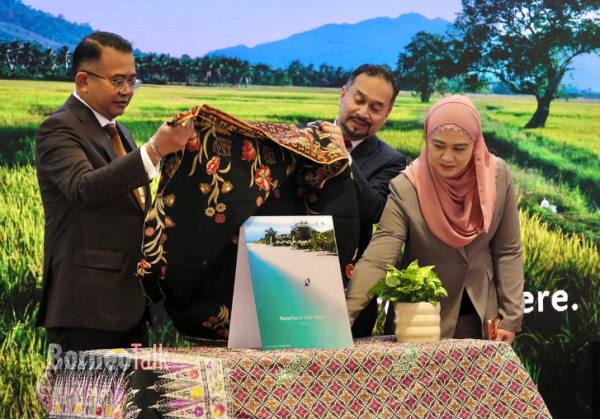
BERLIN, 6 March 2026: Langkawi is redefining how it presents itself to the world, unveiling a refreshed destination positioning at ITB Berlin 2026 that reflects the island’s evolving role within the global travel landscape.

An archipelago of 99 islands off Malaysia’s northwest coast, Langkawi has long been recognised for its natural beauty, biodiversity and geological heritage. Through this renewed destination narrative, the island is sharpening how it introduces these strengths to international audiences.

In 2025, Langkawi recorded 3.2 million visitor arrivals, generating RM8.3 billion in tourism-related revenue. That same year, the island welcomed 370,395 visitors from the UK and Europe, reaffirming the continued importance of long-haul markets within Langkawi’s tourism mix. Europe remains a core source market for the destination, supported by growing interest from emerging regions driven by demand for slower travel, longer stays and experience-rich itineraries.

A broader expression of the destination

Langkawi’s refreshed brand positioning reflects the island’s ability to serve a wide range of travel needs within a single destination. From luxury and wellness experiences to long-stay travel, remote working lifestyles and independent exploration, Langkawi offers choice without sacrificing its natural character. Experiences unfold across varied landscapes. Rainforest paths traverse lowland areas and rise toward elevated terrain, while mangrove networks provide quiet routes for exploration by boat or kayak. Panoramic viewpoints at the Langkawi SkyCab and Sky Bridge offer sweeping views across the island and sea. 

International recognition continues to evolve, with Langkawi ranked second among the Top Islands in Asia in the Condé Nast Traveller Readers’ Choice Awards 2025.

Langkawi’s destination story is closely tied to its natural systems and geological past. Surrounding waters support marine life shaped by mangroves and reefs, with dolphins frequently sighted along the coast. Recent years have also recorded increased turtle nesting and sightings of Bryde’s whales, reflecting the vitality of the island’s marine environment.

On land, Langkawi is home to more than 200 bird species, including the Oriental Pied Hornbill, Wreathed Hornbill and the rare Great Hornbill. Beneath this biodiversity lie some of Southeast Asia’s oldest rock formations, where ancient fossils reveal the island’s deep geological history.

Ongoing research by Malaysian scientists continues to uncover new species, reinforcing Langkawi’s status as a UNESCO Global Geopark.

Guided by the principles of conservation and low-impact development, tourism growth across the island is shaped by environmental stewardship, responsible resort design, and community-based initiatives — aligning with global travellers’ expectations for sustainability-led destinations.

At ITB Berlin, Langkawi engaged with international media, travel trade and industry partners to explore long-term collaborations that support meaningful storytelling, sustained visibility and responsible growth for the destination in the years ahead.

About Naturally Langkawi
Naturally, Langkawi is a story 550 million years in the making. It has a nature that is beautifully unique, wonderfully rare, and vastly accessible. It envelopes the 99 islands and the people who live there, creating a culture rich with stories as unique as the archipelago itself.

A land steeped with captivating legends, myths and folklore as interesting as the people who tell them.

It is a place full of diverse, incredible experiences where moments become memories, naturally.

For more information on Langkawi and its attractions, visit: Naturally Langkawi

(Source: Your Stories — Naturally Langkawi).

Slow travel to the Himalayas pauses in Pokhara

BANGKOK, 6 March 2026: As travellers increasingly seek slower, more meaningful ways to experience destinations, Centara Hotels & Resorts introduces a new gateway to the Himalayas with the opening of Himalayan Hideaway Resort Pokhara, The Centara Collection, its first property in Nepal.

Set in the hills above Pokhara, the resort offers an alternative to high-intensity Himalayan travel — inviting guests to slow down, stay rooted in one place, and experience Nepal through everyday life, seasonal rhythms and a deep connection to landscape.

A tranquil base above Pokhara

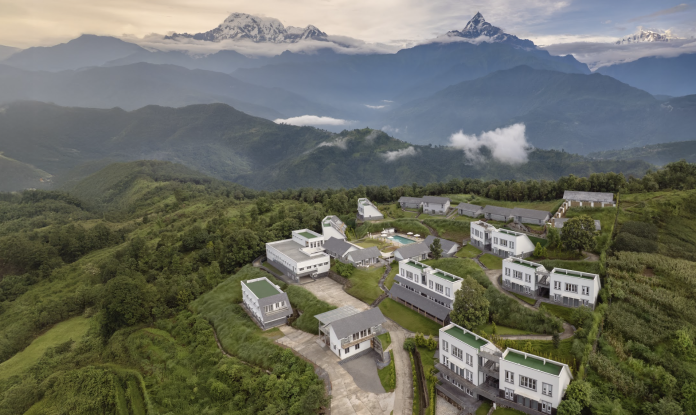
Located in the peaceful village of Kaskikot, approximately 35 minutes from Pokhara, Himalayan Hideaway Resort Pokhara is surrounded by sweeping views of the Annapurna range and Machhapuchhre (Fishtail). Rather than positioning itself as a staging point for constant movement, the resort is designed as a calm base — a place to pause, observe and engage with the Himalayas at an unhurried pace.

Walking the Sarangkot Loop Trail through living mountain communities.

With direct access to the Sarangkot Loop Trail, guests are encouraged to explore gradually, returning each day to a sense of stillness shaped by mountain light, village life and open skies.

Walking Through Living Culture

Village walks along the Sarangkot Loop Trail form the heart of the resort’s destination-led experiences. Guided routes pass through Chhetri, Bahun and Gurung communities, where daily life continues to be shaped by agriculture, family routines and long-held traditions.

Seasonal village life unfolds naturally — from rice-planting and harvest rituals to home visits, shared meals, and traditional tika blessings.

Depending on the season, guests may encounter rice planting in June and July, local harvest cycles, or informal moments of village life — from morning prayers to shared meals. Curated home visits offer opportunities for genuine interaction, including traditional tika blessings and conversations that unfold naturally, without performance or staging.

History encountered in context

Kaskikot holds an important place in Nepal’s history. The area is home to the revered Gupta Kali Temple and the ruins of a former palace associated with the Shah dynasty, which unified Nepal and ruled for nearly 240 years.

The historic ruins of Kaskikot and the revered Gupta Kali Temple.

Rather than presenting history as a checklist of sights, the resort facilitates access that allows guests to encounter heritage as part of daily life. Local festivals, including Dashain celebrations featuring traditional sword-fight performances, continue to preserve this legacy and can be experienced respectfully through community-led introductions.

A Gentle Approach to the Himalayas

From Pokhara, guests can also connect to Nepal’s iconic landscapes without rushing. The Annapurna Base Camp trek remains one of the region’s most celebrated routes, valued for its changing scenery and cultural depth as much as for its physical challenge.

The trail sits within the Annapurna Conservation Area Project (ACAP), where community-led conservation ensures trekking is responsibly managed — aligning naturally with a slower, more considered approach to Himalayan exploration.

Paragliding above Phewa Lake with panoramic Himalayan views.

For those seeking perspective rather than endurance, Pokhara also offers paragliding over Phewa Lake and ultralight flights that reveal the scale and serenity of the Annapurna range from above, best enjoyed during the clearest months of October, November, March and April.

A Himalayan hideaway rooted in place

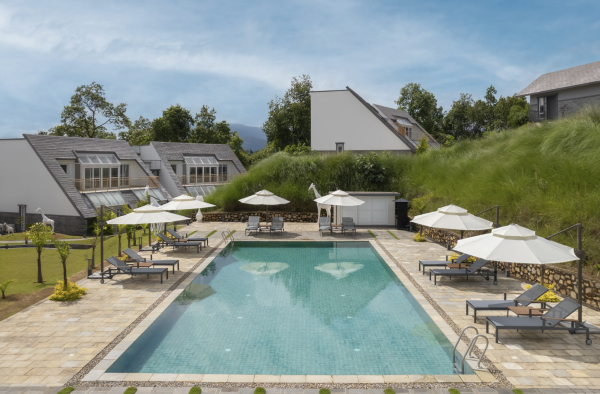
Part of The Centara Collection, Himalayan Hideaway Resort Pokhara features 42 rooms, suites and villas designed to reflect the surrounding environment through warm wooden tones and subtle Nepali design elements. Wellness facilities, destination-inspired dining and curated experiences reinforce the resort’s role as a place to slow down and reconnect — with nature, culture and self.

Photo 6

Warm, Nepali-inspired interiors and outdoor spaces designed for rest and reconnection.

With this opening, Centara expands into one of South Asia’s most compelling regions, offering travellers a more grounded, human, and unhurried way to experience the Himalayas.

A new gateway to Nepal

As global travel shifts toward depth over speed, Himalayan Hideaway Resort Pokhara introduces a new way into Nepal — one shaped not by distance covered, but by moments noticed, conversations shared, and landscapes experienced at their natural rhythm.

For more information or to book, visit: https://www.centarahotelsresorts.com/the-centara-collection/hhn.

(Source: Your Stories — Centara Hotels & Resorts)

JLL advises on Compass Hotel Nagoya sale

TOKYO, 6 March 2026: JLL Hotels & Hospitality Group announced earlier this week that it has advised on the sale of the Compass Hotel Nagoya, owned by Nagoya Hotel Investments TMK, to ES-CON JAPAN REIT Investment Corporation for a total consideration of JPY4.4 billion.

Opened in 2019, the Compass Hotel Nagoya is an urban-type hotel with 130 rooms, located in the Nagoya Station area, a gateway and economic hub of the Chukyo region. 

Photo credit: Compass Hotel Nagoya.

The area continues to undergo urban enhancement and redevelopment, offering exceptional accessibility for both domestic and international travellers, including tourists and business users alike.

“Nagoya offers both geographical advantages, being close to popular tourist destinations such as the Ise region and Takayama in Gifu, and a strong economic base supported by major companies such as Toyota Motor Corporation. 

This unique combination attracts both leisure and business travellers,” said JLL Hotels & Hospitality Group Managing Director, Investment Sales Japan, James Abe.

“Furthermore, with upcoming major events like the 2026 Asian Games in Aichi-Nagoya, as well as strong draws such as Ghibli Park and LEGOLAND Japan, along with expectations surrounding the Maglev (Linear) train opening, investor interest in Nagoya’s hotel market is expected to remain robust.”

(Source: JLL)

Attacks in the Gulf threaten oil price stability

BANGKOK, 6 March 2026: The immediate concern is not panic, but price. If oil remains below USD115 a barrel, the impact on Thailand and its regional neighbours should be manageable. 

If it moves decisively above that level and stays there, the economic consequences will become harder to contain.

Thailand is once again taking a measured stance as geopolitical tensions push oil prices higher and rattle global markets.

BANGKOK, 6 March 2026: Thailand is particularly exposed as a net importer of energy. Higher oil prices quickly filter through transport costs, food prices, aviation fuel, and household expenses. The result is pressure on inflation, margins and consumer confidence at a time when economic recovery remains uneven.

This is not a Thailand-only issue. Across Southeast Asia, higher energy costs affect logistics, airlines and manufacturing. In Northeast Asia, Japan and South Korea face similar challenges due to their reliance on imported fuel. 

Australia and New Zealand, while resource-rich in parts, are highly sensitive to fuel costs in aviation, given the long distances involved in regional and long-haul travel.

Stock markets across the Asia-Pacific region have already become volatile. Energy stocks have strengthened, while airlines, transport and tourism-related shares have come under pressure. Investors are increasingly defensive, watching central banks closely as energy-driven inflation risks complicate interest rate policy.

Travel is where the impact becomes most visible. Short-haul and intra-Asia routes are likely to prove more resilient, supported by strong regional demand and competitive carriers. Long-haul travel between Asia, Oceania, Europe, the Americas and Canada is more vulnerable, as fuel costs make thin-margin routes harder to sustain without higher fares.

Thailand’s tourism sector is better positioned than in previous crises, with diversified source markets and strong regional traffic. However, prolonged high oil prices would eventually push up airfares, dampen discretionary travel, and slow momentum into 2026.

Gold prices have risen as investors seek safe havens amid uncertainty. While this reflects heightened risk awareness, sustainability depends on how long tensions persist. If oil prices stabilise and supply fears ease, gold’s rally may lose momentum. If instability deepens, further gains are possible. For now, Thailand’s response remains pragmatic and calm.

Key points shaping the outlook

• Oil prices are the critical variable, with USD115 a barrel seen as a key threshold

• Inflation risks rise quickly when fuel costs remain elevated

• Intra-Asia travel is more resilient than long-haul aviation

• Airlines face margin pressure if fuel costs stay high

• Equity markets remain volatile, favouring defensive sectors

• Gold reflects uncertainty, not necessarily long-term conviction

The hope across the region is that current energy shocks prove temporary. Thailand, like its neighbours, has lived through similar cycles before. If prices stabilise and shipping routes remain open, the economic impact should be containable. If not, the effects will be felt not only in markets and balance sheets, but in everyday travel, costs, and confidence.

About the author
Andrew J Wood is a respected travel, tourism and hospitality commentator with over three decades of experience in the Asia Pacific. Based in Thailand, he has worked across hotel operations, airline strategy and destination marketing, and is a regular contributor on regional tourism, aviation and economic trends.

ITA Airways expands summer season network

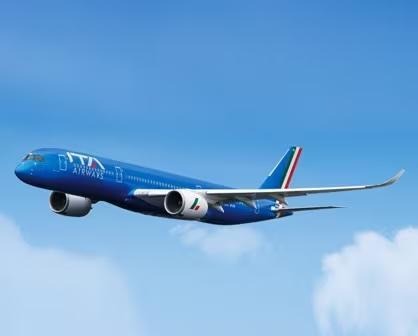
ROME, 6 March 2026: ITA Airways will increase flights to Germany during the summer season 2026, offering  47 weekly frequencies between the two countries, the airline announced this week at ITB Berlin. 

Flights will connect Frankfurt, Munich, and Hamburg with ITA’s hubs at Rome Fiumicino and Milan Linate. 

Photo credit: ITA Airways.

During the upcoming summer season, ITA Airways will operate flights to 72 destinations, including 19 domestic, 36 international, and 17 intercontinental, with 12 seasonal routes (three domestic and nine international) serving the Italian, Greek, and Spanish islands.

ITA Airways will also resume flights to London Heathrow (LHR). The new connection from Rome Fiumicino to the British capital will offer a twice-daily service.

The new intercontinental flight to Houston, US, will also begin on 1 May  2026, the first direct connection between Rome Fiumicino and the Texas state capital. ITA will fly three weekly services, increasing to five in June. Houston is ITA Airways’ ninth destination in the North American market, further strengthened by an increase in weekly frequencies to Miami, from seven to nine starting in June.

The summer schedule features new direct flights from Rome Fiumicino to Malaga, Valencia and Marseille, as well as an increase of seven weekly flights to Tunis between June and September, in addition to seasonal connections between Olbia and Turin and between Olbia and Genoa, both operating in August with one weekly frequency on Saturdays.

ITA Airways continues its integration into the Lufthansa Group, which includes 63 projects aimed at generating benefits, including increased revenues and reduced costs. 

Since the launch of operations in October 2021, ITA Airways has expanded its fleet from 52 aircraft to 106 Airbus aircraft, 72% of which are next-generation models, with an average age of 6.3 years. 

(Source: ITA Airways)

Buy a fare and the chance to win gold

SINGAPORE, 6 March 2026: Vietjet invites international travellers to discover Vietnam’s vibrant festivals showcasing its rich cultural heritage and festive street scenes with its special promotion, “Fly Vietjet, Strike Gold,” running until 19 May 2026.

As part of the campaign, passengers stand to win prizes, including a grand prize of one bar of gold (1.2 oz), weekly gold and silver rewards, and e-vouchers for future travel. 

Photo credit: Vietjet.

For more details, check Vietjet’s website: www.vietjetair.com

To celebrate International Women’s Day on 8 March, Vietjet is also offering up to 83% off Eco fares (excludes taxes and fees). 

Travellers can apply promo code SALE83 when booking via the airline’s website or the Vietjet Air mobile app. The booking window closes on 8 March 2026, for travel between 1 April and 31 December 2026 (Travel periods may vary by route, blackout dates apply, and public holidays are excluded).

Vietjet Commercial Director Ha Nang Viet said: “Through the ‘Fly Vietjet, Strike Gold’ campaign, we aim to offer accessible travel while sharing the spirit of optimism, prosperity and good fortune with passengers around the world.”

Following the Lunar New Year season, March to May is an especially rewarding time to explore Vietnam, with Ideal weather across the country, from the far north mountains of Sapa to the beaches of Phu Quoc island in the south.

Vietjet’s extensive Asia-Pacific network makes Vietnam more convenient and accessible for spring getaways, family visits, or business trips. 

Singapore travellers can fly to Hanoi, Da Nang, Ho Chi Minh City, and Phu Quoc, unlocking easy access to Vietnam’s UNESCO World Heritage sites, natural wonders, and dynamic food scene.

(Source: Vietjet)