MANILA, 16 April 2026: The Philippines Department of Tourism (DOT) has confirmed the appointment of Maria Bernardita Angara-Mathay as Secretary of Tourism following a 10 April order from the Presidential Communications Office of President Ferdinand R. Marcos Jr.
In a Facebook message, the Department of Tourism stated: “The entire department stands united in working closely with her, alongside stakeholders across government, industry, local communities, and the private sector, to advance a more connected, competitive, sustainable, and resilient Philippine tourism industry.”
Photo credit: Office of the President. (Right) Maria Bernardita Angara-Mathay, Secretary of Tourism, was sworn in by President Ferdinand R. Marcos Jr during her oath-taking ceremony.
She succeeds Christina Garcia-Frasco, who moved to a new role as presidential adviser for sustainable and resilient communities in mid-March.
The selection of Angara-Mathay signals a shift toward treating tourism as a primary economic engine rather than just a cultural showcase.
Angara-Mathay is a veteran trade diplomat with decades of experience in the Foreign Trade Service Corps.
She most recently served as the Commercial Counsellor and Special Trade Representative at the Philippine Trade and Investment Centre in Tokyo, Japan.
During her time in Tokyo, she was credited with securing approximately PHP 56.35 billion in Japanese investment for the Philippines. She also has extensive experience representing the Philippines at international summits on sectors such as electronics, sustainable textiles, and MSME (micro, small, and medium enterprise) development.
The Presidential Communications Office (PCO) highlighted that her appointment would drive tourism investment by using her diplomatic expertise to attract foreign capital for Philippine tourism infrastructure.
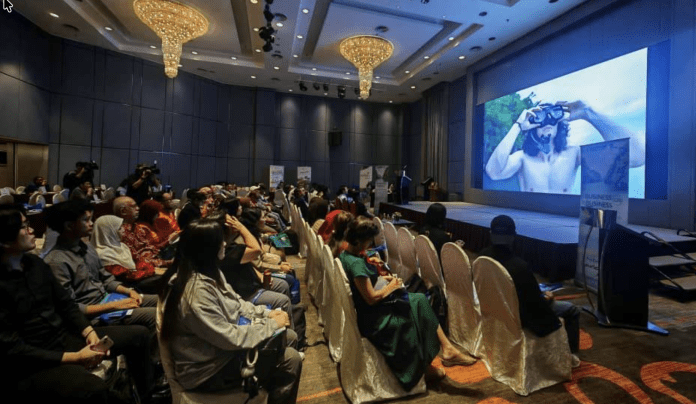
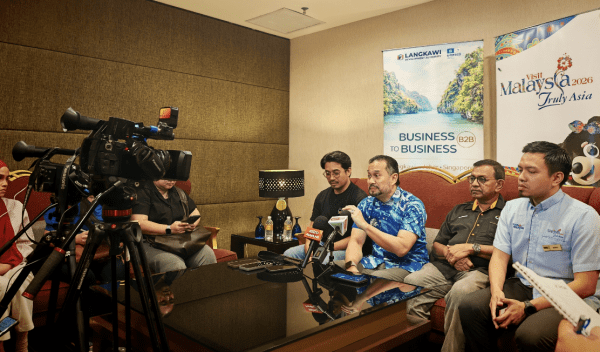
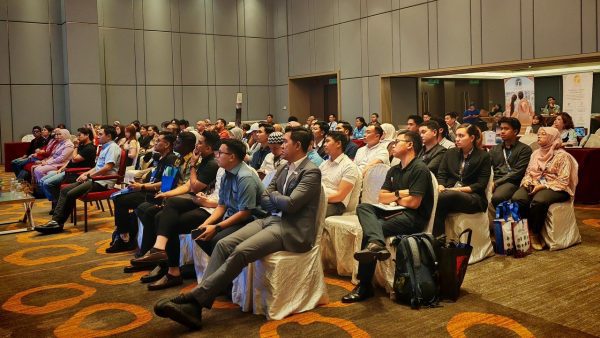
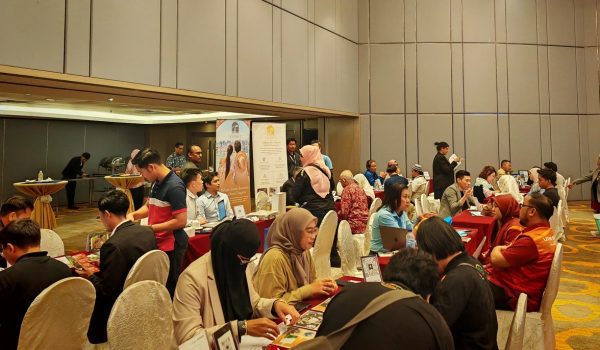
JOHOR BAHRU, Malaysia, 10 April 2026: The Langkawi Development Authority (LADA) strengthened its regional growth strategy on Thursday through a high-impact Business-to-Business (B2B) engagement session at the Grand Paragon Hotel, Johor Bahru.
By bringing together Langkawi’s tourism innovators and key hosted buyers, this initiative serves as a cornerstone of LADA’s mission to elevate the island’s visibility in short-haul markets while fostering the professional collaborations necessary for sustainable tourism growth.
The importance of this engagement is underscored by the deep-rooted travel links between Langkawi and its southern neighbours, which remain vital drivers of the island’s economy. These markets continue to demonstrate remarkable resilience; as of Q3 2025, Langkawi recorded 52,867 visitors from Johor and 48,119 from Singapore. To capitalise on this momentum, the B2B programme serves as a dedicated growth engine, enabling industry players to move beyond general promotion and identify strategic partners to actively expand Langkawi’s marketing reach.
By facilitating these direct, face-to-face engagements, LADA creates a productive environment for business negotiations and the development of joint travel packages. This collaborative approach allows service providers to align their offerings with precision, responding to the evolving demands of modern travellers with greater agility.
As these partnerships solidify, they unlock access to higher-value segments, including the MICE (Meetings, Incentives, Conferences and Exhibitions) sector, premium family travel and niche special-interest groups.
Building on these professional synergies, the resulting cross-border packages further enhance Langkawi’s regional appeal by offering travellers more structured, seamless and value-driven experiences. Such curated offerings provide the commercial depth required to encourage longer stays and drive repeat visitation, which is essential for a sustainable tourism ecosystem. These efforts are aligned with the national agenda, directly supporting the Visit Malaysia 2026 campaign while reinforcing the “Naturally Langkawi” brand on the global stage.
The success of this strategy is further supported by direct connectivity between Langkawi, Johor and Singapore, which remains a key driver of visitor arrivals. When paired with focused promotional efforts, this accessibility ensures Langkawi maintains a strong competitive position within the regional landscape. Collectively, these initiatives represent a significant step towards achieving Langkawi’s target of 3.65 million tourist arrivals by 2026.
For more information on Langkawi’s tourism attractions, visit: Naturally Langkawi.
About Naturally Langkawi Naturally, Langkawi is a story 550 million years in the making. Blessed with a nature that is beautifully unique, wonderfully rare, and vastly accessible, Langkawi envelopes the 99 islands and the people who live there, creating a culture rich with stories as unique as the archipelago itself. A land steeped in captivating legends, myths and folklore as interesting as the people who tell them. It is a place full of diverse, incredible experiences where moments naturally become memories.
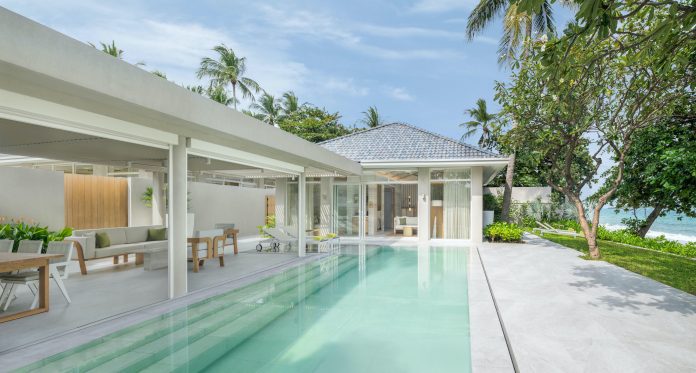
Samui Island, 10 April 2026: For Songkran 2026, Centara Reserve Samui presents a two-day programme shaped around how the Thai New Year is truly meant to be enjoyed; beginning with morning rituals, moving into festive gatherings, and concluding over shared food and live music to set the scene for an unforgettable evening experience.
From 12 to 13 April, guests will feel at the centre of the festivities through traditional ceremonies, live performances, expertly curated Thai cuisine, and cocktails crafted from local Thai spirits.
Sunday 12 April: Songkran Beachfront Brunch
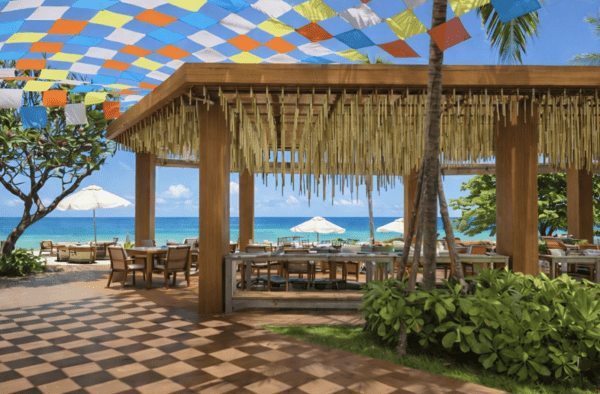
Salt Society Beach Bar & Kitchen hosts a Songkran brunch accompanied by a drum parade moving through the resort before live DJ and band performances lead into water celebrations along the shoreline.
The “Vitamin A” brunch option includes soft drinks and is priced at THB 2,088++ per person (with a 50% discount for children ages 4 to 11). The “Vitamin B” brunch package at THB 3,588++ includes soft drinks, wine, beer and cocktails, while “Vitamin SEA” priced at THB4,188++ also adds sparkling Prosecco. The cocktail selection focuses on Thailand’s craft distillation: cocktails are prepared with Chalong, Dandy, Saneha, and Lanna spirits, and are inspired by Thai ingredients and flavours.
Monday 13 April: Ceremony and Evening Feast
The morning begins with monks leading the Rod Nam Dum Hua blessing ceremony, where guests offer water as a gesture of respect and receive blessings for the year ahead. A traditional procession follows, easing into Songkran water celebrations across the property.
In the evening, Act 5 – The Grill presents a Songkran buffet dinner from 1830 to 2230, featuring Thai live music, dances, and a fire show.
The menu highlights celebratory Thai dishes prepared across live stations and buffet counters, including:
Pad Thai Goong Sod – Wok-fried rice noodles with prawns cooked to order;
Gai Gab Moo Yang – Charcoal-grilled pork neck and marinated chicken;
Hor Mok Pla – Steamed fish custard in a banana leaf;
Gaeng Massaman Gai – Slow-stewed chicken Massaman curry;
Nuea Pad Nam Man Hoi – Wok-fried Wagyu beef with oyster sauce;
Yum Thai and Khao Phad Puu – Tossed spicy Thai salads and crab meat fried rice;
Traditional desserts complete the meal, including Look Chup – moulded mung bean sweets and Khao Niew Mamuang – fresh mango with sweet sticky rice, prepared live.
Dinner is priced at THB1,900++, including a welcome drink, with optional beverage packages available.
An outdoor cocktail bar continues the celebration into the evening, offering locally inspired drinks and a guest mixologist’s four-cocktail tasting flight, with this special drinks package – inspired by Thai spirits and flavours priced at THB999++.
Stay Experiences
Guests staying during the period can pair the celebrations with the resort’s signature stays: The Reserve Journey, The Suite Reserve Experience and The Villa Reserve Experience, which remain bookable throughout the special holiday period.
Songkran at Centara Reserve Samui centres on the festival’s essentials: paying respects in the morning, gathering together in the afternoon, and sharing vibrant celebrations in the evening, all experienced through Thai cooking, music, and spirits throughout the festival.
Reservations:
To reserve your dining experience, please email [email protected] or call +66 (0) 77 230 550.
DELHI, 10 April 2026: Air India group has announced further revisions to its fuel surcharge structure across domestic and international routes, effective on 8 April.
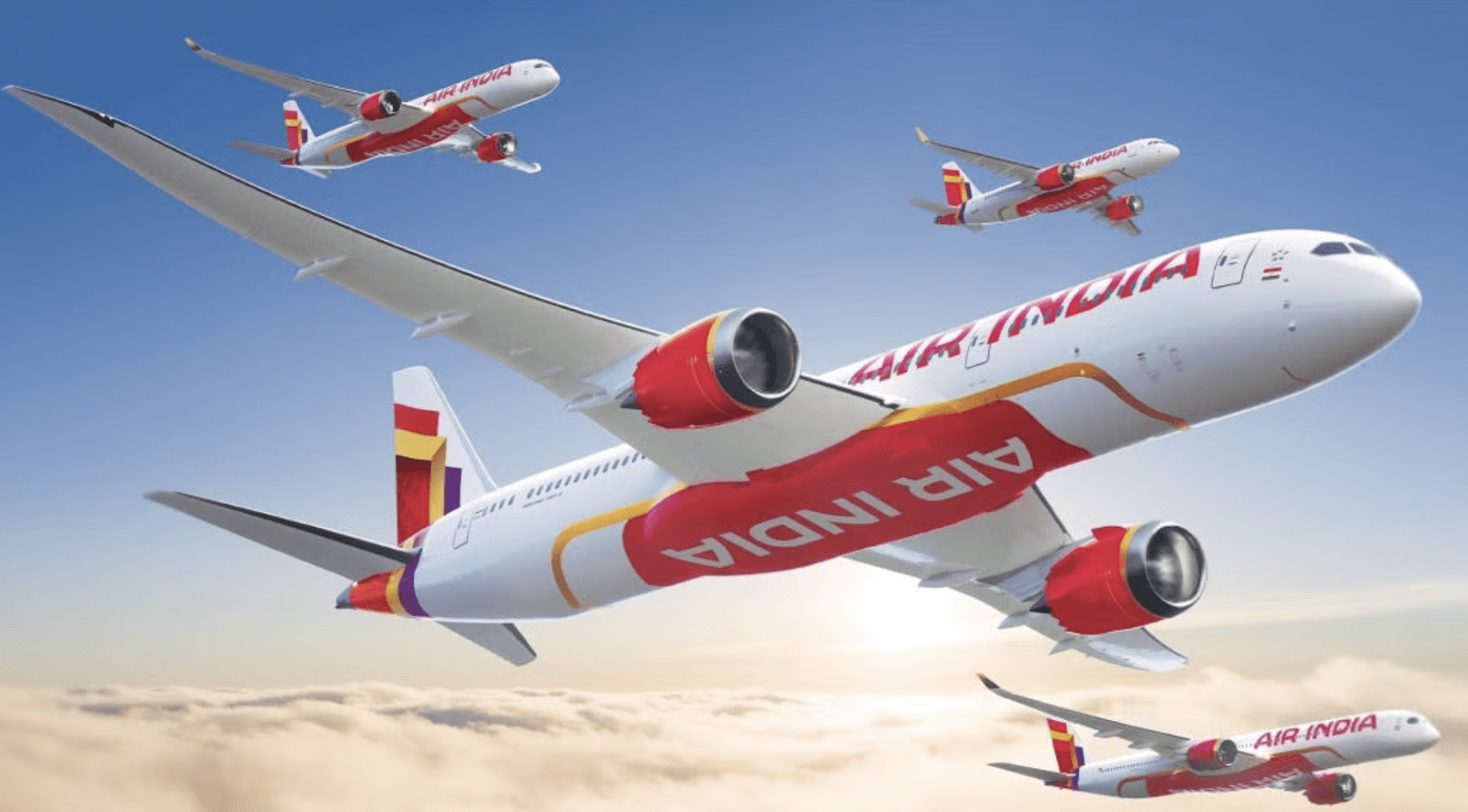
Photo credit: Air India.
Fuel surcharge on domestic India routes
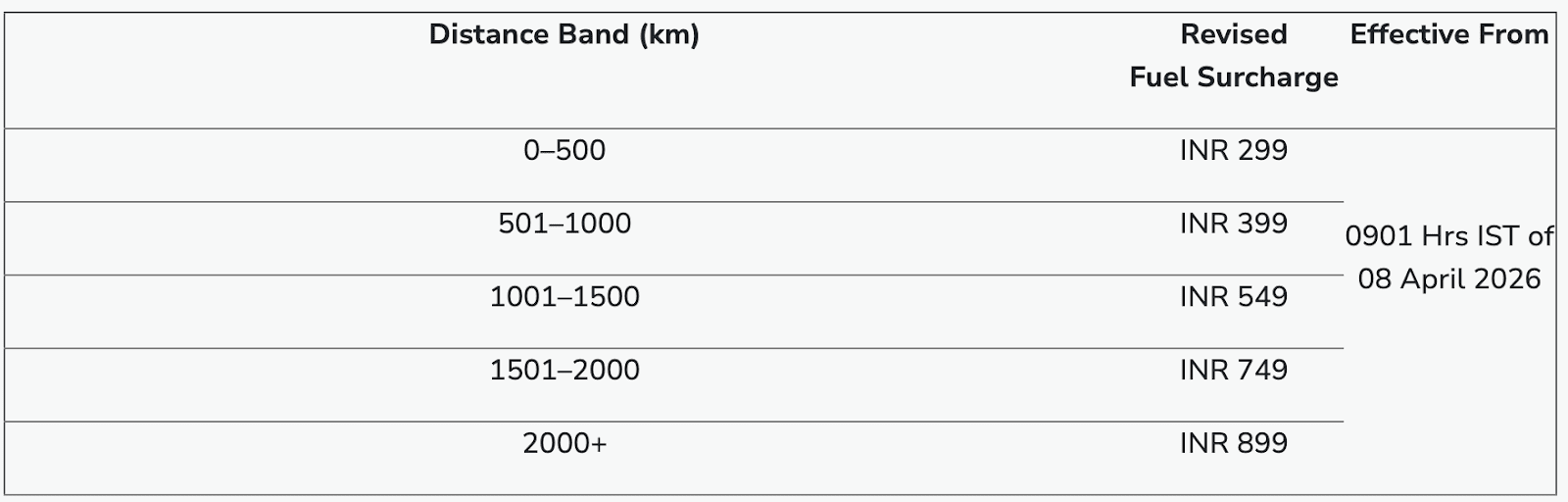
Following the Ministry of Petroleum & Natural Gas’ and Ministry of Civil Aviation’s decision to cap domestic Aviation Turbine Fuel (ATF) price hike at 25%, Air India group is reflecting this calibrated approach, transitioning from a flat domestic surcharge to a distance‑based grid as follows on Air India and Air India Express.
FUEL SURCHARGE PER PASSENGER, PER SECTOR
Fuel Surcharge on International Routes
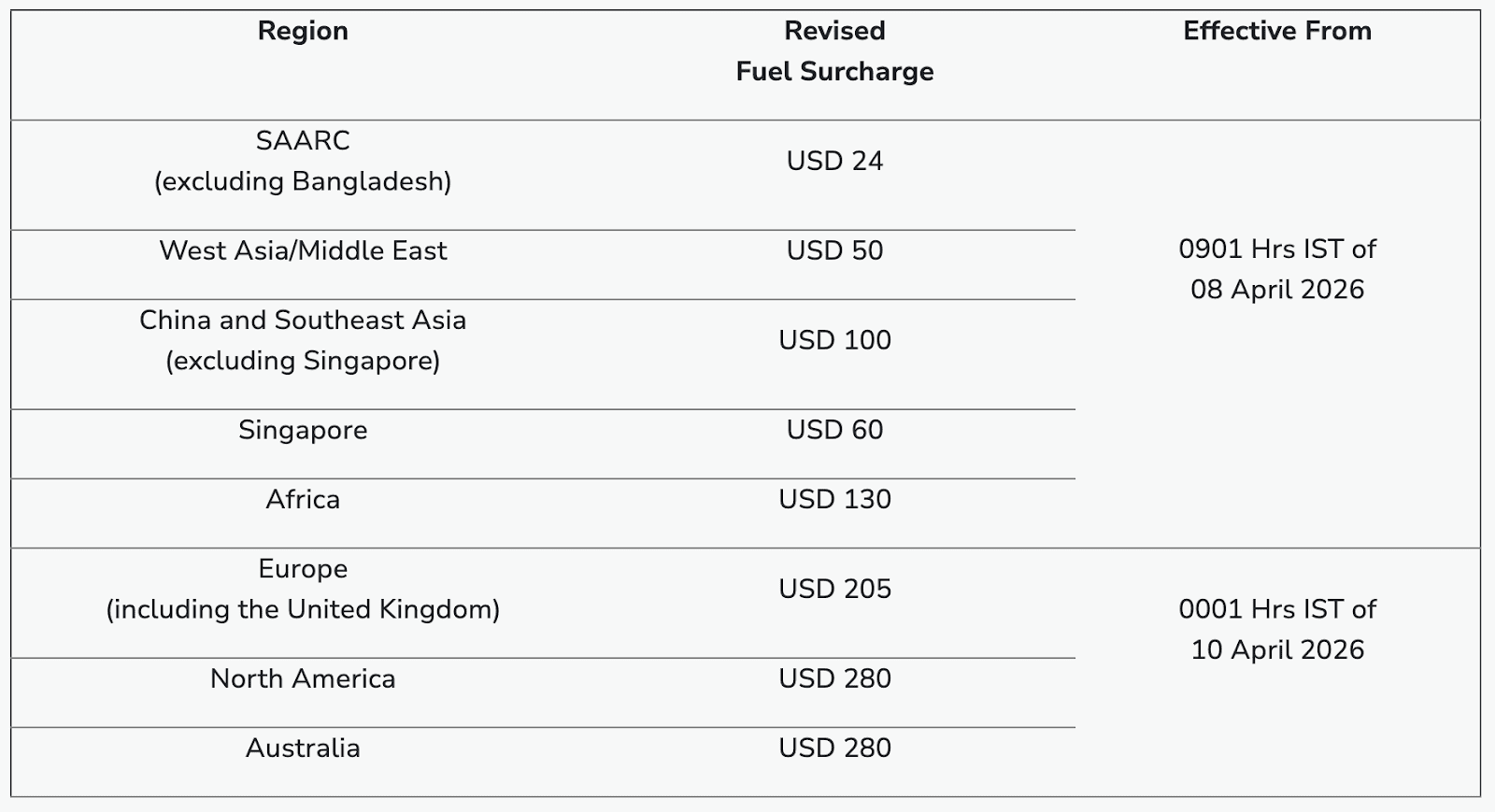
At the same time, in the absence of any such mitigations on international ATF prices, the Air India group will be implementing more significant changes to fuel surcharges as follows.
According to the latest data published by the International Air Transport Association (IATA), the global average jet fuel price rose to USD 195.19 per barrel for the week ending 27 March 2026, up from USD 99.40 at the end of February, representing a nearly 100% increase. ATF, produced by refining crude oil, has seen simultaneous increases in both its crude oil component as well as the refinery margin, known as ‘crack spread’, with the latter having nearly tripled within three weeks. It increased from USD 27.83 per barrel for the week ending 27 February to USD 81.44 for the week ending 27 March. This steep rise compounds the impact of rising crude oil prices, creating one of the most challenging fuel cost environments that airlines globally have faced in recent years.
The fuel surcharges on international routes do not compensate for the exponential increase in jet fuel prices. Air India continues to absorb a significant portion of this increased cost.
FUEL SURCHARGE PER PASSENGER, PER SECTOR – BY REGION
Revisions to fuel surcharge on flights to and from Bangladesh and Far East destinations, namely Japan, Hong Kong, and South Korea, will be advised in due course, subject to the requisite regulatory approvals.
Tickets issued before the above times will not incur the new surcharge unless customers request date or itinerary changes that require a fare recalculation.
The airline says it will review its surcharges periodically and make any necessary adjustments.
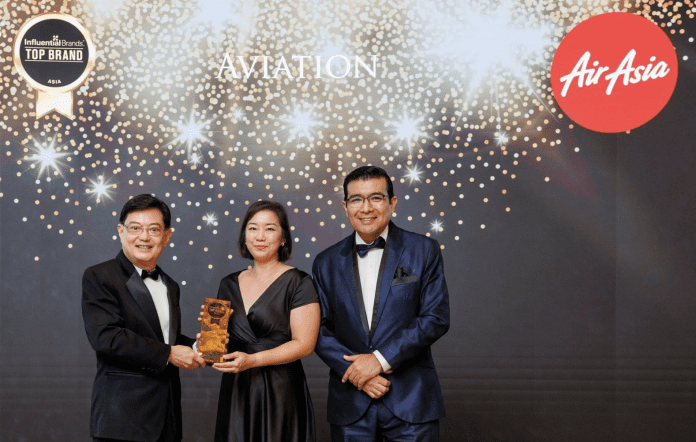
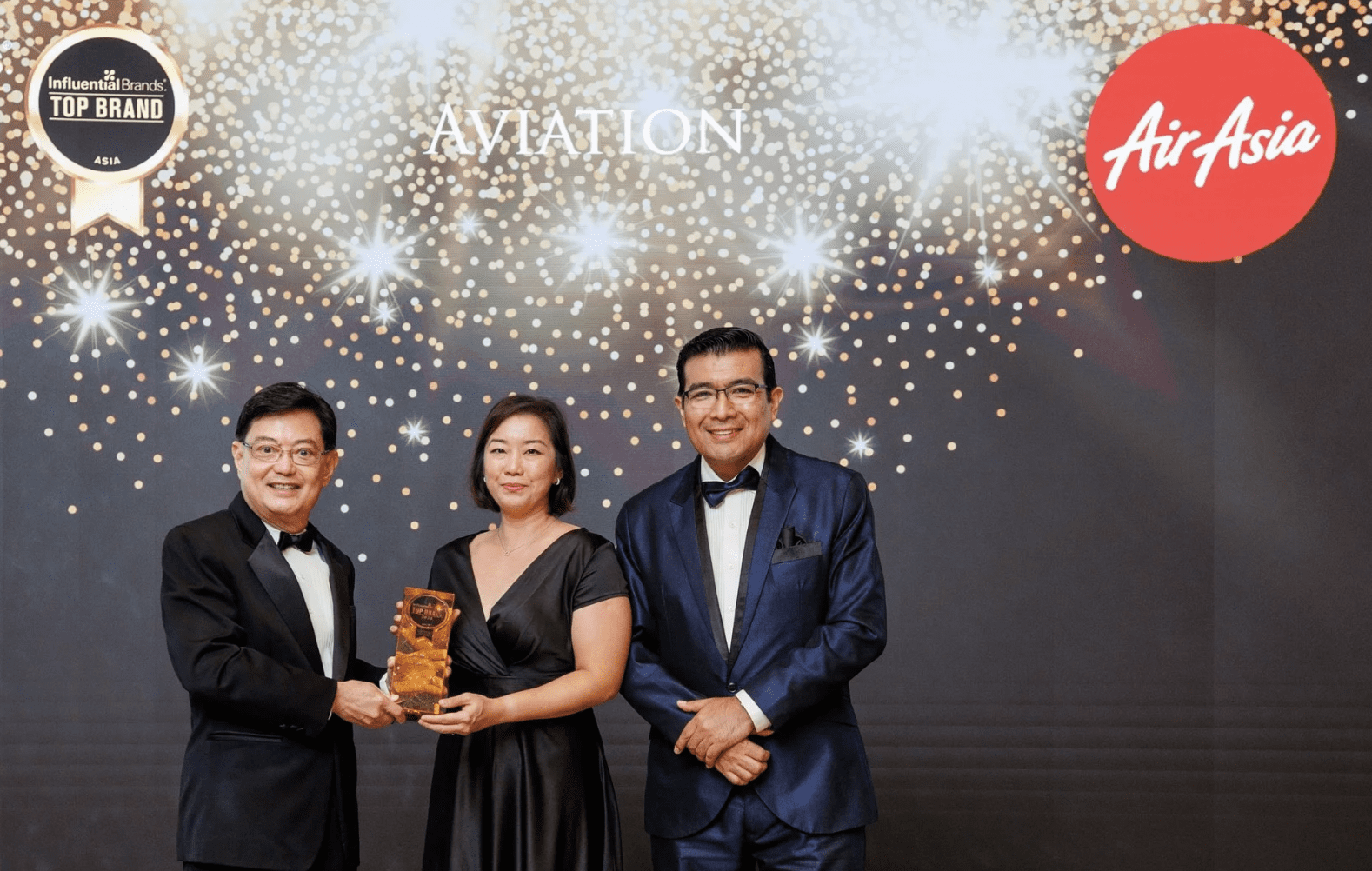
SINGAPORE, 10 April 2026: AirAsia was once again named the Top Influential Brand in the Airline category at the 2026 Asia CEO Summit & Awards Ceremony organised by Influential Brands
Marking the airline’s second consecutive win in the category, the award continues to recognise AirAsia’s position as the largest foreign low-cost carrier by market share in Singapore. It reflects its continued commitment to delivering affordable, accessible and high-quality travel experiences for guests across the region.
Photo credit: AirAsia. (Middle): Shahidah Musa, Senior Manager, Marketing of AirAsia in Singapore, accepted the Top Influential Brand award in the Airline category last night at the 2026 Asia CEO Summit & Awards Ceremony.
The Top Influential Brand award, presented annually by Influential Brands during the Asia CEO Summit & Awards Ceremony, honours companies that have significantly shaped consumer preferences and industry benchmarks. The award recognises brands that demonstrate strong brand equity, innovation and sustained customer engagement across a range of sectors.
SINGAPORE, 10 April 2026: United has introduced a new tiered fare structure, giving customers more options across all ticket types.
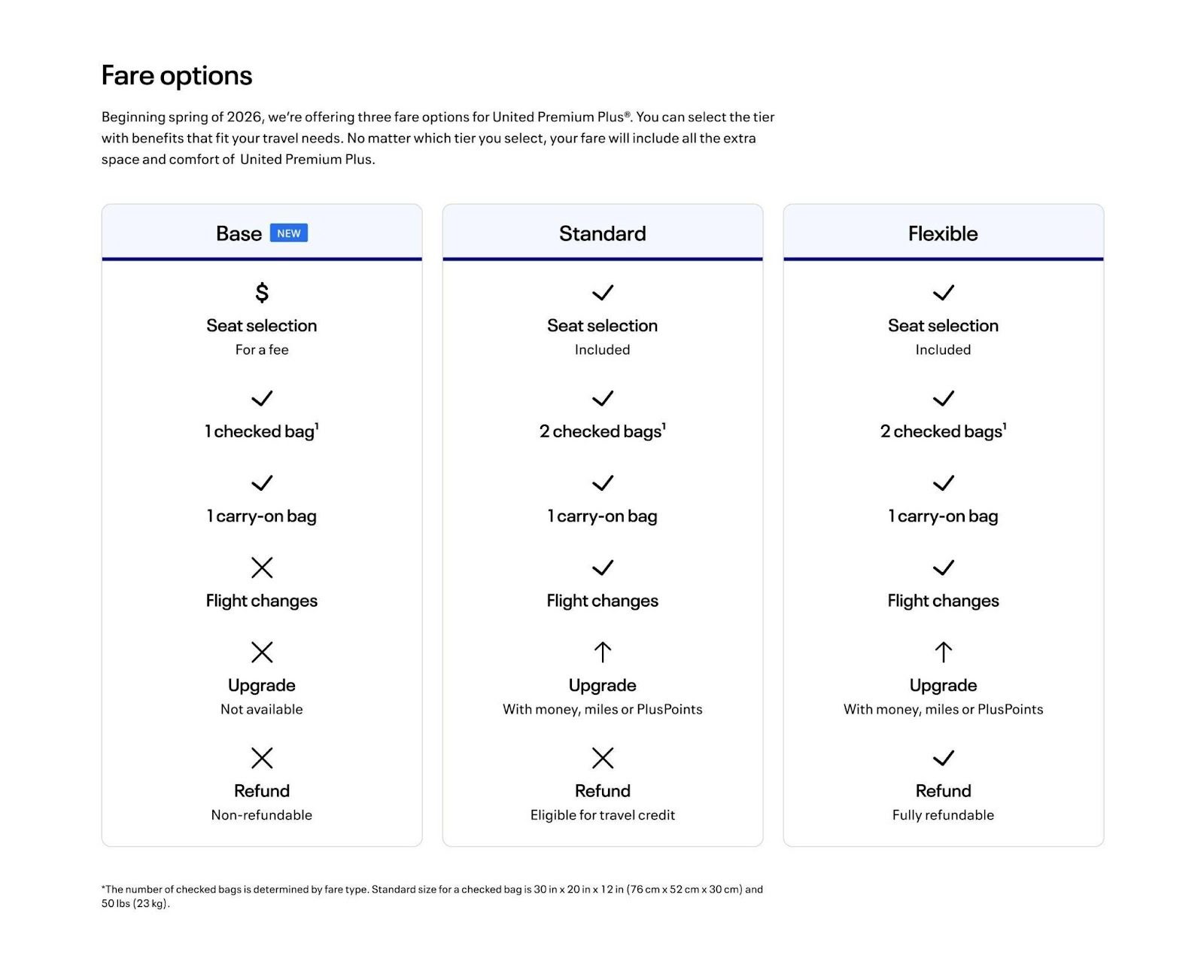
The airline will offer three premium cabin fare options for long-haul international flights, transcontinental US flights, and select flights to Hawaii. They are base (new offer) standard and flexible, in the premium cabin, which will join the airline’s existing standard and flexible fares tiers in the economy cabin.
Photo credit: United.
The front cabin will also be branded United Polaris on select transcontinental US and select longer Hawaii flights. Customers who buy the standard or flexible fares in United Polaris on these flights will have access to the United Polaris lounge. Customers who purchase the base United Polaris option will still have access to the United Club.
United has also redesigned the shopping pages on its website and mobile app to accommodate this change and launch the new categories in select markets during April. It will expand the fares to additional long-haul international, transcontinental US and longer Hawaii flights later this year.
“These new tiered options give customers more choice and make it easier to find a fare that includes the benefits they want most – whether that’s a great value, added perks, or maximum flexibility,” said United’s Chief Commercial Officer Andrew Nocella.
For domestic and short-haul international flights, and for travel in United economy cabins on long-haul international flights, there’s no change to what’s included in the basic, standard, and flexible categories. They will simply be displayed on United’s shopping pages in a new, clearer way.
In premium cabins on long-haul international and transcontinental US flights and flights between the airline’s hubs in Newark, Washington D.C. and Chicago and Hawaii, the base category offers customers the lowest price point, the standard category offers perks like free seat selection, additional checked bags and the ability to make changes, and tickets in the flexible category are fully refundable and offer all the benefits included in standard tickets.
SINGAPORE, 10 April 2026: What began two years ago as a rigorous recognition of 16 outstanding Halal restaurants in Singapore has grown into the region’s most anticipated Halal culinary awards programme with big plans unfolding in 2026.
At this week’s HalalTrip Gastronomy Awards (HTGA) 2026 Singapore Hari Raya Open House event, HalalTrip and the Singapore Halal Culinary Federation (SHCF) unveiled plans to bring the HalalTrip Gastronomy Awards to three cities in 2026: Singapore, Johor, and Jakarta.
HalalTrip Gastronomy Awards 2026, third edition.
It is the most significant expansion in the programme’s history, and a clear signal that the region’s Halal food scene is ready for a definitive standard of recognition.
Since its debut in 2024, the HTGA has earned a reputation as a rigorous and credible recognition programme for Halal dining in the region. Restaurants are evaluated through an anonymous process covering culinary excellence, menu diversity, beverage excellence, service excellence, and atmosphere & environment.
In 2025, that recognition extended to Johor for the first time. In Singapore, establishments like ASAP & Co, The White Label, Loong Dim Sum, and the 70-year-old institution Rumah Makan Minang joined a growing list that now carries the HTGA distinction.
A growing ecosystem for the Halal F&B industry
The HTGA 2026 programme will feature an expanded awards framework, a high-profile Gala Dinner, and the return of the Gastronomy Showdown, a live cooking competition where Halal dining establishments nominate their chefs to go head-to-head in a high-pressure culinary arena.
The 2026 finals to crown the Best Forward Chef will take place once again for the third consecutive year aboard StarDream Cruises in September 2026.
The 2026 Singapore edition will once again feature the programme’s celebrated awards tiers.
Diamond Awards: Recognising restaurants achieving the highest standards of Halal dining excellence.
Best-in-Class Awards: Honouring category-leading establishments across concept, speciality, heritage, service, and chain dining.
Chef Awards: Spotlighting culinary talent with the Best Forward Chef and Most Promising Chef accolades.
Legacy Award: Presented to establishments whose enduring contribution has shaped the Halal culinary heritage of the region.
Best-In-Class Awards categories for HTGA 2026
Best Ethnic Restaurant or Café
Best Hotel Café or Restaurant
Best Concept Restaurant or Café
Best Speciality Café, Kiosk or Bakery
Best Newcomer
Best Halal Caterer – Party Packs
Service Excellence Award
Sustainability in Halal Gastronomy Award
Innovation in Fusion Cuisine Award – NEW in 2026
Healthy Dining Award – NEW in 2026
The Diamond Awards will also continue to recognise dining establishments that have demonstrated sustained excellence, with multi-year designations awarded to those qualifying for two or three consecutive years.
Setting the standard for Halal culinary excellence
“The HalalTrip Gastronomy Awards was born from a simple but powerful belief, that Halal dining deserves the same level of recognition, rigour, and prestige as the world’s most celebrated culinary awards,” said CrescentRating and HalalTrip Director of Operations Raudha Zaini. “As we bring the HalalTrip Gastronomy Awards to three cities in 2026, we are building a movement that elevates the standard of Halal cuisine worldwide and empowers chefs and entrepreneurs behind it.”
In its third edition, the HTGA 2026 will retain its strong partnership between HalalTrip and the Singapore Halal Culinary Federation (SHCF), underscoring a shared commitment to championing culinary talent and raising the profile of Singapore’s vibrant Halal food scene on the global stage.
“The HalalTrip Gastronomy Awards has been a tremendous platform to shine a spotlight on the incredible talent and dedication within Singapore’s Halal food industry. As we enter our third year of partnership with HalalTrip, we are proud to see this program grow from strength to strength, not just in Singapore, but across the region. For our chefs and restaurateurs, recognition of this kind is an affirmation that Halal cuisine belongs at the highest table of global culinary excellence. SHCF remains committed to nurturing that talent and raising the bar for what Halal dining can and should be,” said Singapore Halal Culinary Federation (SHCF) President Chef Muhammad Imran.
What the HTGA recognition has meant for past winners
For the restaurants recognised at HTGA 2025 Singapore, the awards have delivered more than a plaque on the wall. Winners like ASAP & Co and RROOLL, both recipients of the Two Diamonds Award in consecutive editions, have seen their distinction carry weight with diners who use the HTGA Winners Guide as a trusted dining resource throughout the year. The guide, published following each edition, serves as a living reference for Halal-conscious consumers across the region.
The programme also spotlights the full spectrum of Singapore’s Halal dining scene. Best-in-Class winners in 2025 ranged from The White Label, recognised for Best Concept Restaurant, to Dutch Colony Coffee Co. for Best Speciality Café, and Ginger at PARKROYAL on Beach Road for Best Hotel Café or Restaurant. The Gastronomy Legacy Award, presented to Rumah Makan Minang, honoured over seven decades of unbroken culinary heritage in Kampong Gelam.
Looking Ahead
The global Muslim travel and dining market remains on a strong growth trajectory. International Muslim arrivals reached 176 million in 2024 and are projected to hit 245 million by 2030, bringing with them growing demand for trusted, credible Halal dining options. The HTGA sits at the heart of that demand, providing consumers with a reliable guide and a standard to aim for in the Halal food sector.
KUALA LUMPUR, 10 April 2026: The Malaysian Association of Tour and Travel Agents (MATTA) has expressed deep concern over the continued hikes in diesel prices and their growing impact on tourism transport operators across Malaysia.
According to a recent survey conducted by MATTA on tour bus and van operators, 68.5% of tour van operators consume more than 1,500 litres of diesel per month per vehicle. In comparison, 54.8% of tour bus operators consume more than 3,500 litres per month per bus.
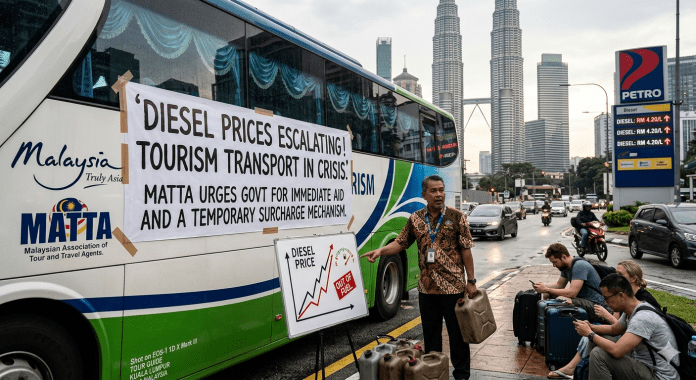
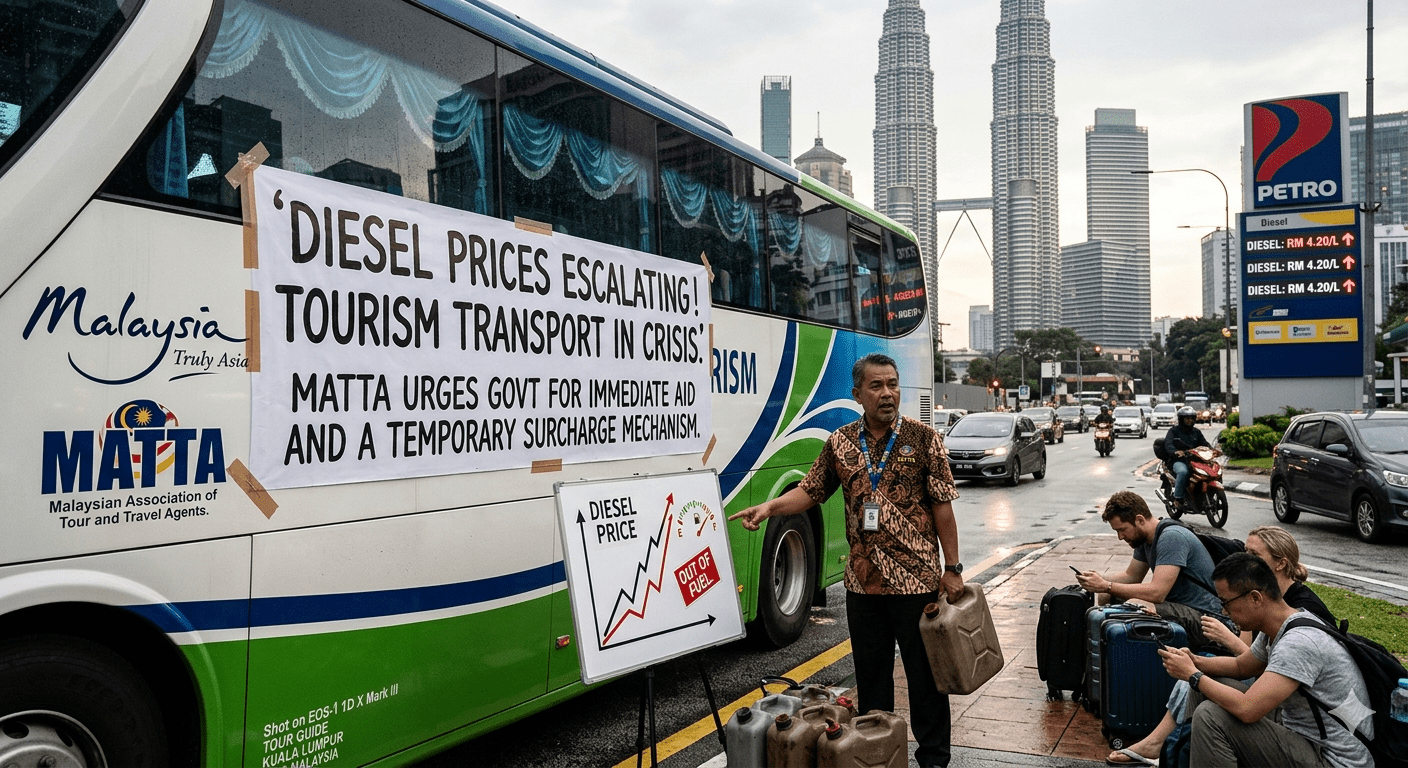
An illustrative image highlights the escalation of fuel costs for Malaysia’s tourism operators.
These figures highlight the significant fuel dependency of tourism transport operators, many of whom are already operating at minimal return on investment (ROI) and can only maintain day-to-day operations and fulfil existing contractual obligations.
The continuing increase in diesel prices is threatening the business viability of operators and the wider tourism ecosystem. MATTA is recommending temporary measures, such as targeted subsidies and a surcharge mechanism, to help provide relief to stakeholders during the current crisis.
To preserve customer trust while ensuring business continuity, MATTA recommends implementing a temporary fuel surcharge mechanism, similar to that adopted in the aviation sector, that emphasises transparency and the adoption of industry best practices to address this challenge.
Such surcharges should be implemented in a manner that does not contradict any relevant laws or regulations, with each company independently determining the appropriate surcharge based on its actual fuel consumption and operational profile.
This ensures that the surcharge remains fair, proportionate, and directly reflective of the additional costs incurred. The mechanism must also be clearly communicated to consumers, applied transparently, and be strictly temporary, with removal once diesel prices stabilise.
It should also be designed solely to offset the additional fuel costs incurred by operators, rather than to generate excess profit.
“The continued rise in diesel prices is placing an unsustainable burden on tourism transport operators, many of whom are already operating on very thin margins. We must adopt practical, balanced measures to ensure business continuity without compromising consumer trust. A temporary and transparent fuel surcharge mechanism, combined with targeted government support, will help the industry navigate this challenging period while maintaining service standards across Malaysia’s tourism sector,” said MATTA President Nigel Wong.
At the same time, MATTA calls on the Government to introduce targeted diesel subsidies to support tourism transport operators.
A proposal of up to 3,500 litres per month per vehicle operated by legitimate tour operators would provide immediate and meaningful relief, helping operators manage escalating fuel costs while continuing to deliver essential services to the tourism industry.
“Tourism transport operators are not in a position to absorb continuous fuel cost increases. A temporary, transparent fuel surcharge mechanism is the most practical way to ensure service continuity while maintaining customer trust,” said MATTA Vice President of Land Transportation, Subramaniam Kandasamy. “At the same time, targeted subsidies, such as the proposed monthly allocation of 3,500 litres, would provide immediate relief to operators who are struggling to sustain operations under current market conditions. This is not about increasing profits, but about survival and maintaining the integrity of Malaysia’s tourism supply chain.”
DELHI, 10 April 2026: Air India will add a service to Halwara (Ludhiana) as its newest destination in India, enhancing access for travellers between the industrial heartland of Punjab and Delhi.
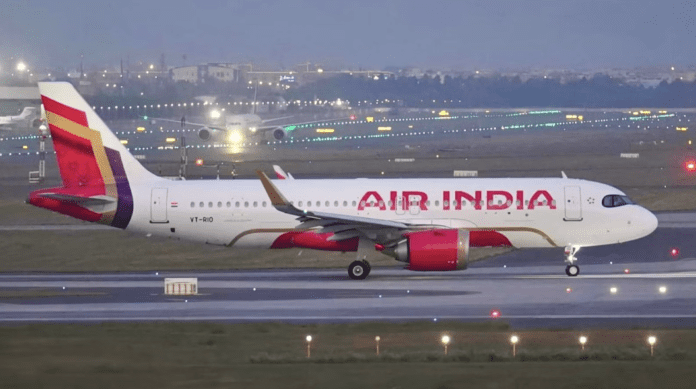
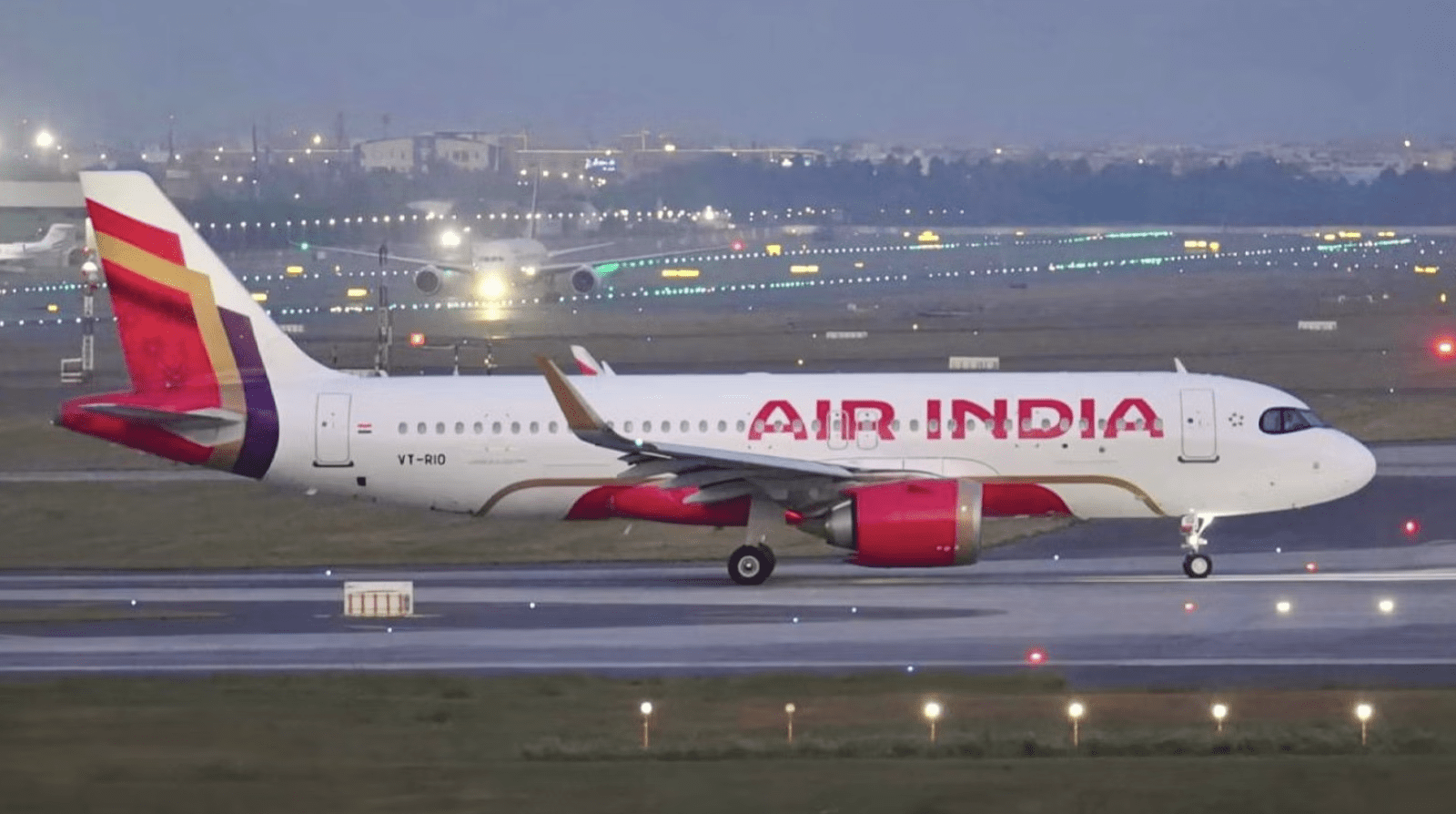
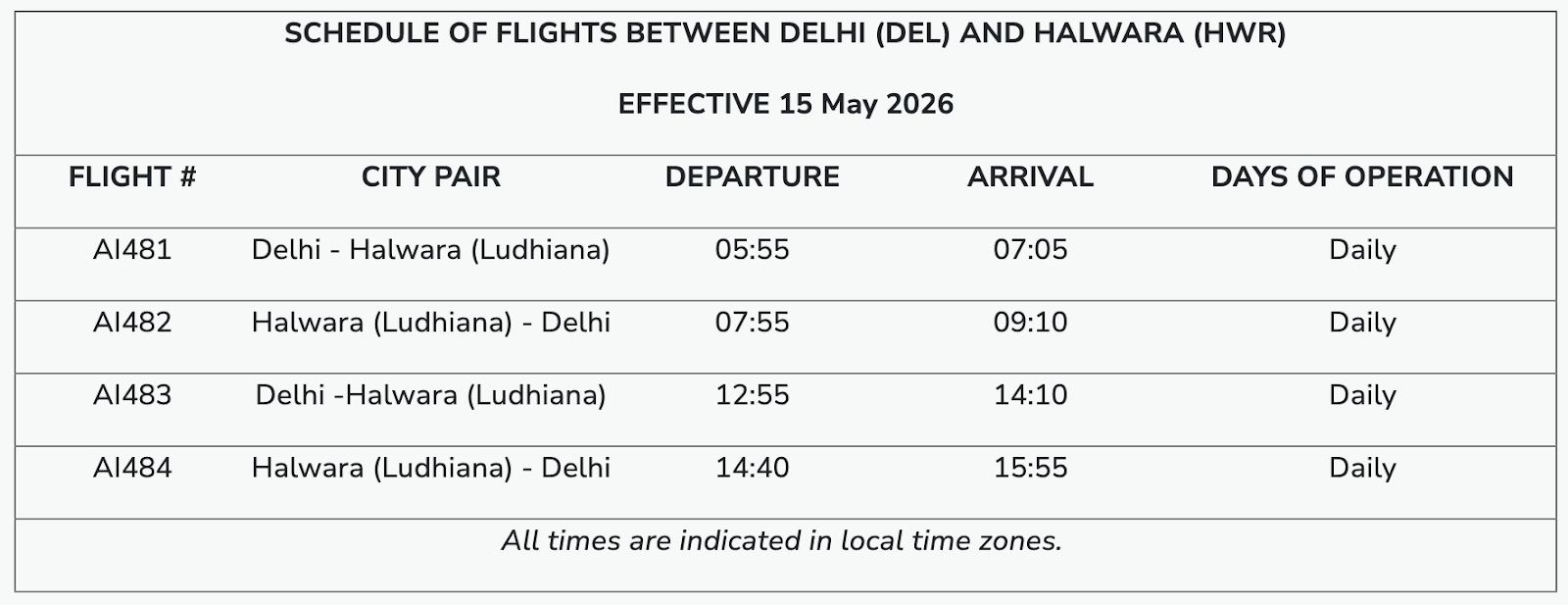
Beginning 15 May 2026, Air India will operate two daily flights between Delhi and Halwara using its A320 Family aircraft.
Photo credit: Air India.
The flight schedule has been designed to offer same-day connectivity via Delhi to destinations across the UK and the rest of Europe. Passengers from Halwara/Ludhiana and surrounding areas can travel with Air India to Delhi and join onward flights from the same terminal, direct to London, Birmingham, Rome, Milan, and Paris – on a single ticket with baggage checked through to their final destinations.
Air India Chief Commercial Officer, Nipun Aggarwal, said: “We are pleased to serve the people and communities in Ludhiana and neighbouring towns and cities with the convenience of travelling across continents via Delhi. With this addition to our network, we are making international travel simpler and more seamless for more customers across Punjab.”
Air India flights to Halwara are available for booking across all channels, including Air India’s official website, mobile app and through travel agents worldwide.
SINGAPORE, 10 April 2026: The World Travel & Tourism Council (WTTC) welcomes Allianz Partners as its newest industry partner, further strengthening its global network of leading organisations shaping the future of Travel & Tourism.
As part of WTTC’s membership, Allianz Partners will contribute its expertise in travel protection, assistance, and digital innovation to advance discussions around traveller confidence, emergency services, and the evolution of seamless, end-to-end travel experiences.
WTTC President & CEO Gloria Guevara said: “Welcoming Allianz Partners to WTTC highlights the increasing importance of resilience and traveller assurance in a rapidly evolving Travel & Tourism landscape. As the sector grows and adapts, integrated insurance and assistance solutions play a vital role in enabling safe, confident, and frictionless journeys. Allianz Partners brings valuable global insight and innovation that will help strengthen our collective efforts to build a more resilient and future-ready sector.”
Allianz Partners, interim Chief Officer Global Strategic Partnerships & Travel Anna Kofoed, noted: “The travel industry is transforming faster than ever, and WTTC is at the heart of that transformation. Becoming a member allows us to bring our digital expertise and global perspective to a network that is actively shaping the future of travel.
At the same time, it allows Allianz Partners to learn from WTTC and its members, leaders who are redefining resilience, sustainability, and innovation across the sector. I’m thrilled for us to contribute to this collective momentum, to exchange knowledge, and to work alongside WTTC members to push boundaries and unlock new possibilities for travellers worldwide.”
Through its participation, Allianz Partners will support WTTC’s research, policy engagement, and industry collaboration—helping to strengthen resilience, enhance traveller trust, and reinforce the sector’s long-term economic and social impact globally.
About Allianz Partners Allianz Partners is a world leader in B2B2C insurance and assistance, offering global solutions spanning international health and life, travel insurance, and mobility and assistance.