BANGKOK, 9 April 2026: Anurak Lodge, a 19-key nature-based ecolodge located on the edge of Khao Sok National Park in southern Thailand, has published its 2025 Impact Report.
The report outlines Anurak’s progress towards regenerative tourism principles guided by the ‘4Cs’ of conservation, community, culture and commerce, a framework developed by sustainable tourism advocacy body, The Long Run.
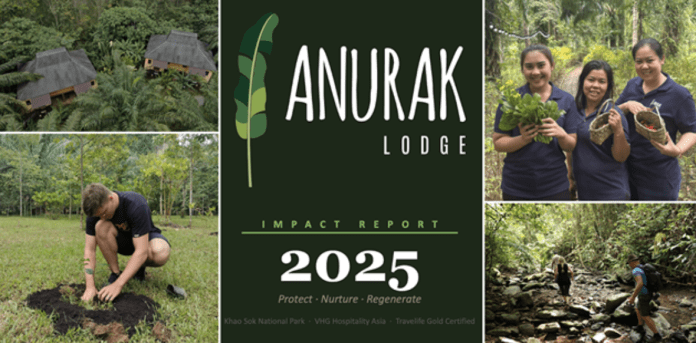
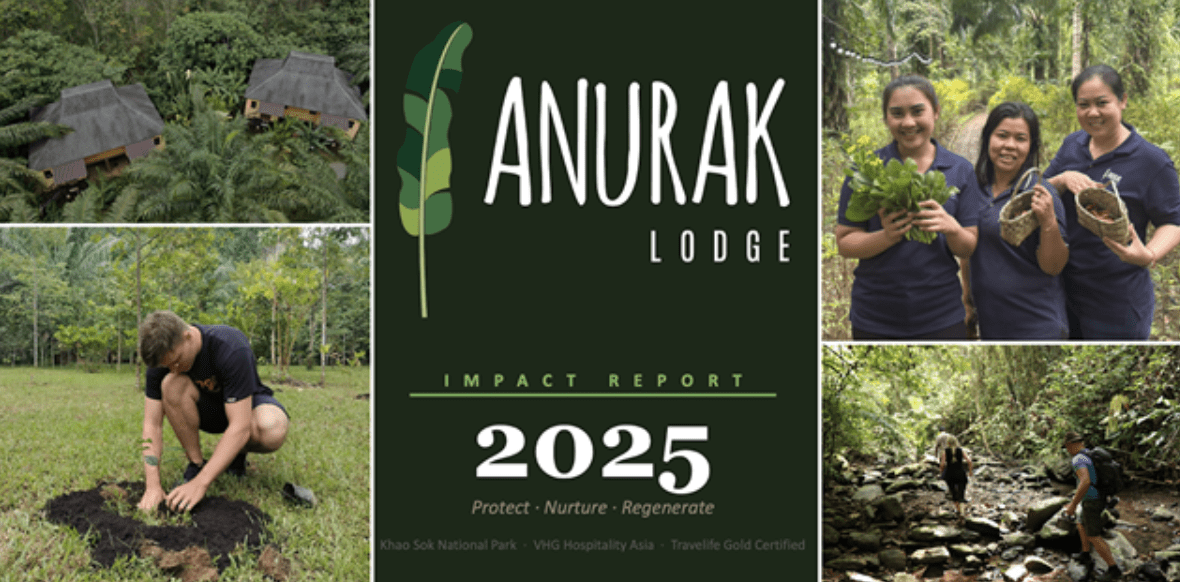
Part of Anurak Lodges’ commitment to regenerative tourism: planting indigenous tree species, garden-to-table tastes and immersion in nature.
The impact statement demonstrates how the lodge is embedding sustainability in all aspects of its operations. A key milestone in 2025 was the completion of a full year of consistent measurement of electricity, water and waste. The ecolodge also maintained its Travelife Gold Certification, reflecting adherence to internationally recognised sustainability standards.
The report shows that Anurak Lodge advanced its “Rainforest Rising” initiative, restoring land previously used for oil palm cultivation at the lodge. For food and pollination purposes, birds and insects prefer indigenous plant species such as black plum, Burmese grape tree, and cowa mangosteen. In 2025, 30 native trees were planted by guests staying at Anurak Lodge as part of Rainforest Rising.
Over the last 16 months, the lodge expanded its on-site gardens with 18 herb and vegetable varieties for garden-to-table guest dining. The vegetables and herbs are nourished by compost from a newly purchased HASS Food Waste Composter. The machine processes 10 kg of kitchen scraps into nutrient-rich compost within 24 hours.
Community impact remains central to operations. Some 82% of staff are hired locally. The lodge invests in ongoing training and development, covering topics from regenerative tourism to environmental management. In addition, Anurak Lodge supported five community initiatives in 2025, contributing to education, conservation and local cultural activities in surrounding villages.
There is more to be done. “Challenges remain, especially with soil health, water retention and reducing waste, such as plastics. We are measuring inputs and outcomes, which helps us advance our regenerative tourism goals,” said Newling-Ward.
Regenerative tourism aims to enhance or improve a place through tourism, not just mitigate negative impacts.
In 2026 and beyond, Anurak Lodge plans to focus on improving soil moisture through drip irrigation and composting, expanding forest restoration efforts, and deepening engagement with both guests and the community.
Guest activities at Anurak Lodge include guided forest hikes, bamboo rafting, cycling, and relaxing at the ecolodge’s Hornbill restaurant, which offers spectacular mountain views.
The Anurak Lodge 2025 Impact Report is available here.
About Anurak Community Lodge Located a 75-minute drive from Surat Thani airport, a two-hour 30-minute drive from Phuket airport, and two hours from Krabi airport, Anurak Community Lodge is an award-winning eco-retreat for active lifestyle visitors who respect nature and local community traditions. The 19-key lodge offers Deluxe Green Double, Eco Double, Eco Twin options, plus one Superior Bungalow. Surrounded by spectacular limestone karst scenery, the lodge is an ideal base for exploring the adjacent Khao Sok National Park and the majestic Chiew Larn Lake.
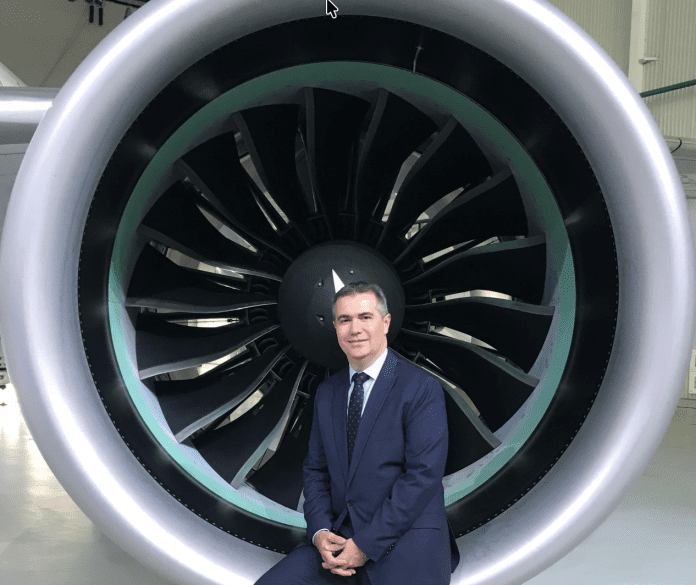
SINGAPORE, 9 April 2026: SalamAir, Oman’s Low-Cost Carrier, has announced its On-Time Performance (OTP) results for the first quarter of 2026, which reflected a decline due to the impact of the US-Israel-Iran war during March.
OTP is an internationally recognised measure of punctuality, calculated as the percentage of flights that depart within 15 minutes of their scheduled departure time.
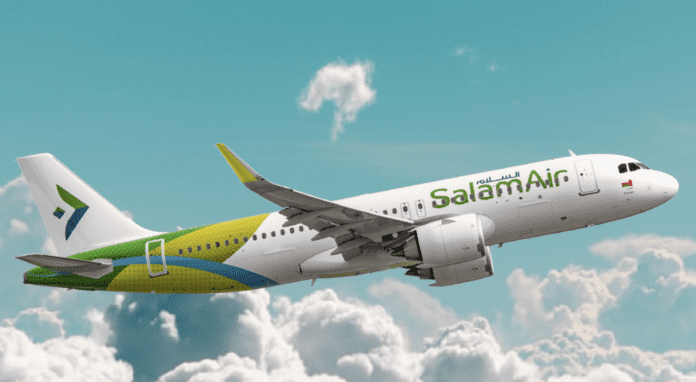
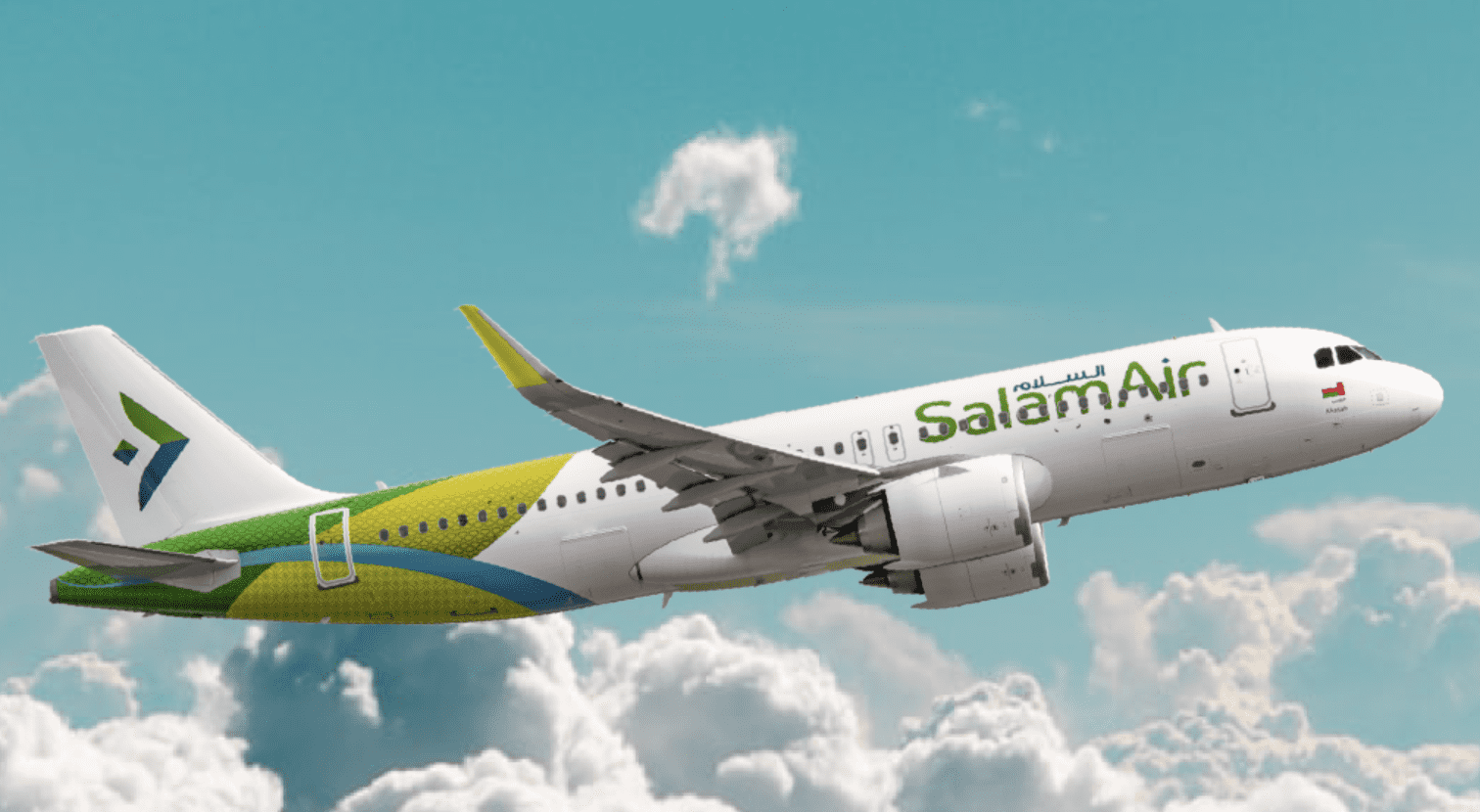
Photo credit: SalamAir.
During the first quarter of 2026, SalamAir operated 5520 flights and carried 778,410 passengers across its network, achieving an On-Time Performance of 65.6%, down 26% from the fourth quarter of 2025.
Performance in the first quarter of 2026 was affected by several extraordinary challenges, including regional airspace restrictions and airport closures resulting from the rerouting or diversion of aircraft during the outbreak of hostilities in the Persian Gulf.
All these events led to schedule adjustments and disruptions across parts of the network, which impacted OTP.
SalamAir’s OTP for the fourth quarter of 2025 was 89%, and the drop to 65.6% in Q1 2026 represents a 26% decrease in On Time Performance.
Commenting on the results, SalamAir’s Chief Executive Officer Adrian Hamilton-Manns said: “On-time performance is a core measure of our operational delivery and reliability. In the first quarter of 2026, we recorded an OTP of 65.6%. While we acknowledge that it was a complex period with extraordinary factors affecting flight schedules and operational performance, we apologise to all our customers who did not reach their destinations on time. We have previously been among the Top-5 airlines in the region for OTP, so today’s results are below our target. We shall focus on strengthening operational resilience and improving schedule reliability to ensure we deliver a consistent and dependable experience for our passengers.”
Since the third quarter of 2024, SalamAir has published its OTP results quarterly, reflecting the airline’s commitment to transparency and accountability. This approach enables passengers to make informed travel decisions while supporting best practices in operational reporting within the regional aviation sector.
SalamAir, Oman’s Low-Cost Carrier, commenced operations in 2017 and currently operates a fleet of 15 Airbus A320/A321 aircraft, with over 80 daily flights to 38 destinations.
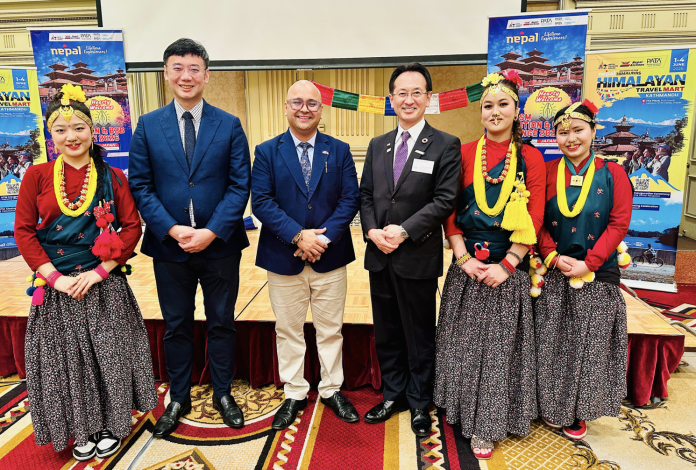
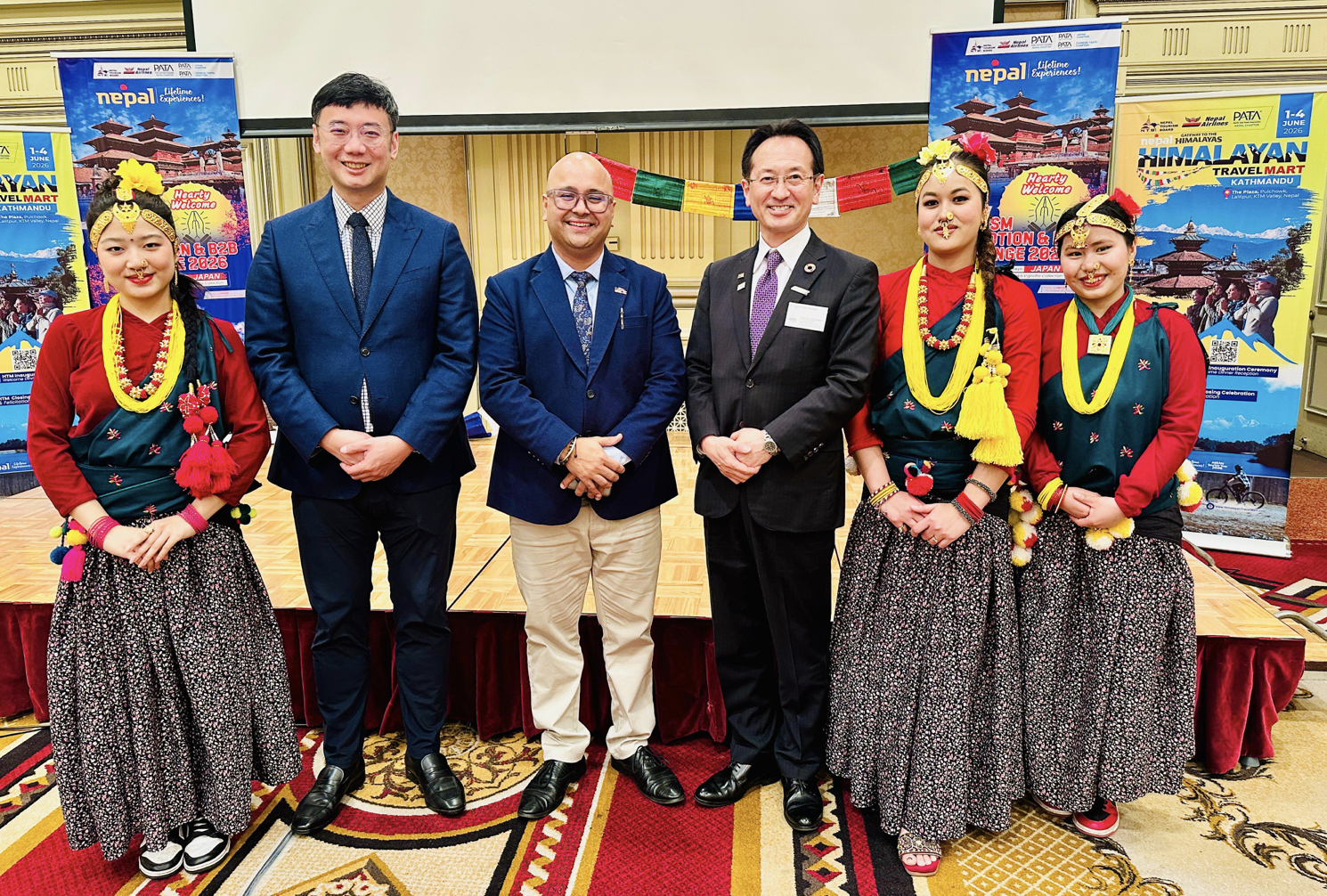
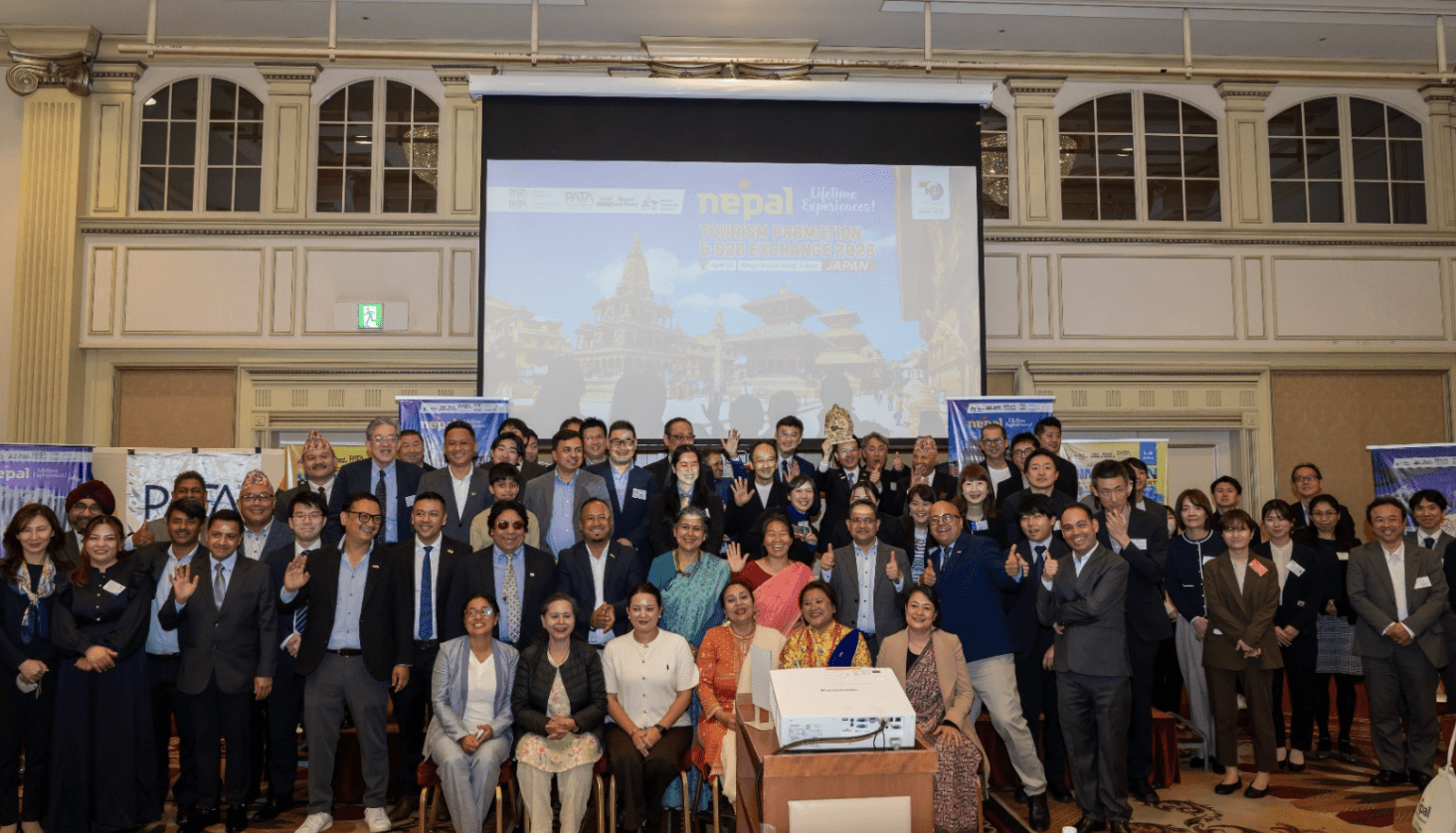
SINGAPORE, 9 April 2026: Nepal has reinforced its presence in Japan’s tourism market with the successful completion of the Nepal Tourism Promotion and B2B Exchange Programme 2026, held in two sessions hosted in Tokyo and Osaka last week.
The first session took place at the Rihga Royal Hotel Tokyo on 2 April, followed by the second event on 5 April at the Rihga Royal Hotel Osaka, attended by 60 participants from Osaka and Nepal.
Photo credit: PATA Nepal Chapter.
Jointly organised by the PATA Nepal Chapter and the Nepal Tourism Board, in collaboration with the Nepal Airlines Corporation, the PATA Japan Chapter, and the PATA Chinese Taipei Chapter, the programme strengthened bilateral tourism cooperation. The initiative also coincided with the celebration of 70 years of diplomatic relations between Nepal and Japan.
The Tokyo event attracted 90 participants, including a 23-member delegation from Nepal representing 12 leading tourism and hospitality companies. Across both sessions, Nepal showcased a diverse range of tourism offerings, including adventure, nature, culture, spirituality, and luxury experiences.
A notable highlight was the strong participation from Japan’s travel trade industry. Leading organisations such as JTB and the Japan Association of Travel Agents (JATA), along with prominent tour operators and travel professionals, participated in the events — reflecting growing interest in Nepal as a destination for Japanese travellers.
The Destination Nepal presentation by the Nepal Tourism Board highlighted the country’s positioning as a destination offering authentic and diverse travel experiences. Additional presentations on the upcoming 6th Himalayan Travel Mart (HTM 2026) and Nepal Airlines Corporation emphasised improved connectivity and expanding opportunities for tourism and trade.
A cultural showcase, along with presentations of Nepal’s diverse tourism products, further enriched the programmes — offering participants deeper insights into the destination.
The B2B exchange sessions in both Tokyo and Osaka provided direct engagement between Nepalese travel sellers and Japanese outbound tour operators.
PATA Nepal General Secretary and NTB Executive Committee Member, Narendra Bhatta, commented: “Japan remains a highly valued source market for Nepal, and initiatives like these play a crucial role in building trust, strengthening partnerships, and creating meaningful business linkages. We are encouraged by the strong interest and engagement from the Japanese travel trade and look forward to further expanding our collaboration in the years ahead.”
BANGKOK, 9 April 2026: China is a tourism dynamo. Its true power lies in the billions of journeys made within its own borders. To understand China’s dominance, it helps to compare it directly with other major tourism markets. The gap is not marginal. It is structural.
International travellers at the Great Wall, while inbound tourism is rising, China’s true power lies in the billions of journeys made within its own borders.
China is the world’s largest tourism market. Not marginally bigger. Not competitively ahead. Overwhelmingly dominant.
Every year, it generates around 6 billion domestic trips, a level of movement no other country has ever come close to achieving.
To put that into perspective:
• Around three times the size of the United States (2.4 billion)
• Roughly 15 times larger than France
• Close to 20 times larger than Spain
This is not growth. This is on a completely different scale.
What China has built is not simply a tourism sector. It is a vast, continuous system of movement, driven internally and operating at a magnitude that redefines global benchmarks.
Global tourism snapshot
China leads overwhelmingly in total movement. The US leads in revenue. Europe leads on inbound tourism density.
But no country combines population, frequency and scale the way China does.
A market powered from within
Unlike most major destinations, China is not dependent on international arrivals to sustain its tourism economy.
Its strength lies in its domestic engine:
• A population of over 1.4 billion
• A rapidly expanding middle class
• High-speed rail networks connecting cities across vast distances
• Digital ecosystems that make travel planning, booking and payment seamless
From weekend urban breaks to long-distance heritage journeys, Chinese travellers travel frequently and in large numbers.
This creates a tourism system that is self-sustaining, resilient and far less exposed to global shocks than markets reliant on inbound flows.
Infrastructure at scale
China’s infrastructure is a defining competitive advantage.
The country’s high-speed rail network, the largest in the world, connects major cities and regional centres with speed and efficiency. Airports continue to expand, while domestic aviation remains highly active.
Layered onto this is a fully integrated digital ecosystem, where mobile payments, super apps and real-time booking platforms have removed friction from the travel experience.
The result is simple. Travel within China is easy, fast, and accessible, which drives frequency.
Inbound tourism, rising but not defining
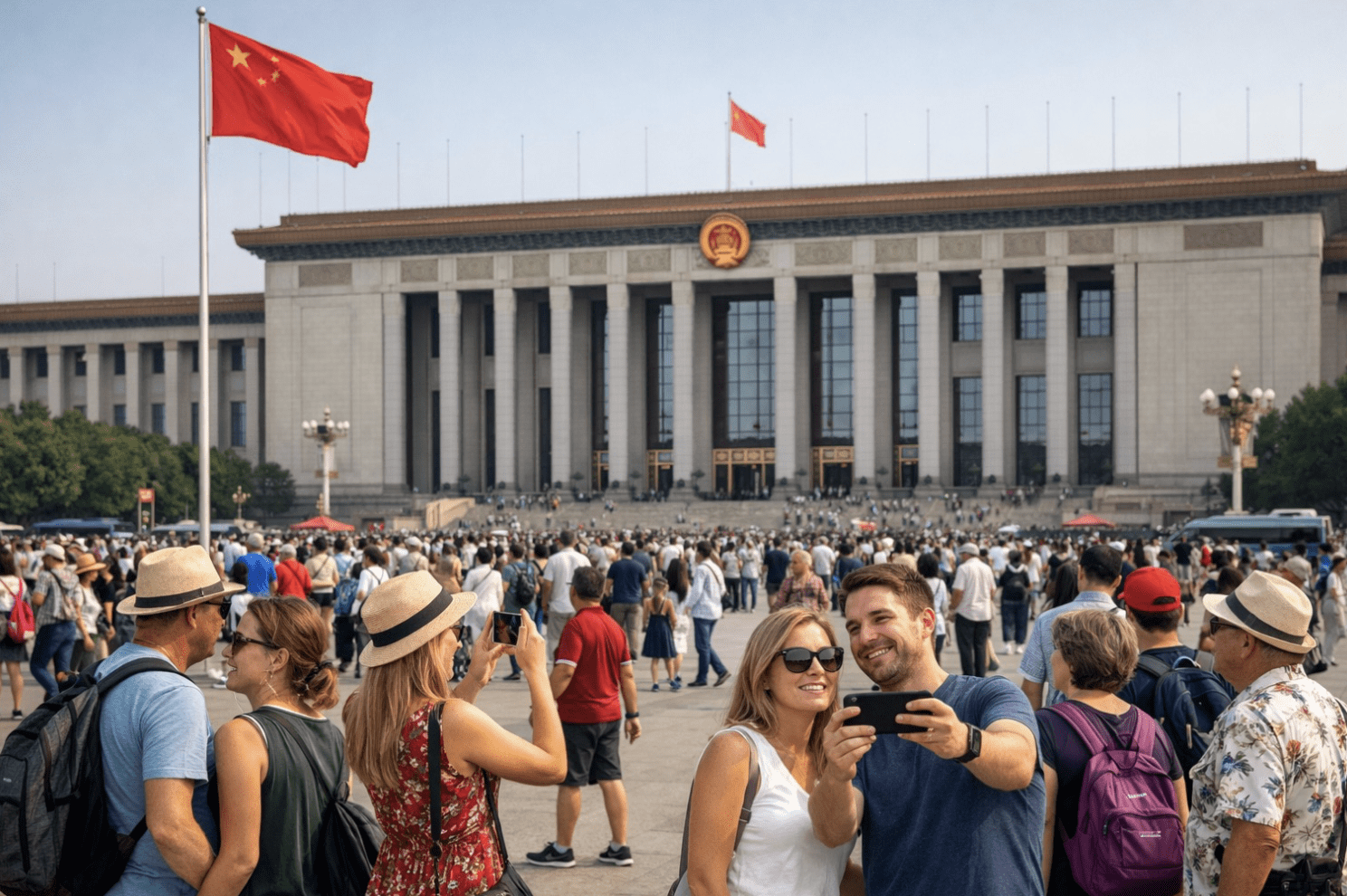
International visitors among the crowds at Tiananmen Square highlight the recovery of inbound travel in the world’s largest domestic tourism market.
International arrivals to China are recovering, but they remain a secondary component of the overall tourism picture.
Even as global visitors return to landmarks such as the Great Wall and the Forbidden City, inbound tourism accounts for only a small proportion of total travel activity.
This is the defining difference. While most countries compete aggressively for international visitors, China’s tourism strength is fundamentally internal. China may be the world’s largest tourism market by total movement, but it is not yet the leading destination for international visitors. Official figures show around 130 to 150 million inbound trips annually, although a large share comes from Hong Kong, Macau and Taiwan.
Strip those out, and China receives roughly 80 million foreign visitors a year, still behind Europe’s top destinations such as France and Spain. Long-haul arrivals from Western markets remain far smaller, typically around 25 to 30 million, highlighting the gap China must close to become a truly global inbound powerhouse. Inbound growth matters, but it does not define the market.
Economic power, measured in trillions
Tourism in China is not just about volume. It is about economic impact.
By comparison, the US generates higher overall tourism revenue, but through a different model that combines domestic strength with strong inbound spending. China’s model is unique. It is built on internal demand.
Global comparison: The gap is structural
Other leading tourism markets rely far more heavily on inbound travel.
France and Spain depend on international arrivals for economic impact.
Thailand balances inbound tourism with a solid domestic base.
The US benefits from both strong domestic travel and high-value international visitors.
China stands apart. Its tourism system is not driven by external demand. Its own population powers it. This makes its dominance structural rather than cyclical.
Behavioural shift and travel patterns
Chinese travellers are evolving. There is a growing preference for experiential travel, cultural immersion and shorter, more frequent trips. Secondary cities and regional destinations are seeing increased demand as travellers seek new experiences beyond traditional hotspots.
At the same time, value, convenience and accessibility remain critical drivers. This behavioural shift further reinforces domestic travel.
What happens next
China’s tourism leadership is secure, but the next phase of growth will be shaped by direction rather than volume.
Rising fuel costs, economic uncertainty and shifting consumer priorities are expected to reinforce domestic travel patterns.
Short-haul and regional travel will continue to dominate, supported by infrastructure and convenience.
International travel will recover steadily, but the gap between domestic and inbound tourism will remain significant.
China will continue to generate billions of trips internally, while gradually rebuilding its position in global inbound tourism.
The bottom line
China is already the world’s No 1 tourism giant. Not because it attracts the most international visitors. But because it moves more people, more often, than any country in history.
Measured in billions, not millions, China has redefined the scale of travel.
It is not simply leading the global tourism industry – it is operating at a level no other market can match.
About the Author Andrew J Wood is a Bangkok-based media executive, travel writer and former hotel executive specialising in Asian tourism. A resident of Thailand since 1991, he brings over four decades of international hospitality experience, including senior roles with leading hotel groups such as Shangri-La Hotels and Resorts, Minor Hotels and the Royal Cliff Hotels Group.
A former Director of Skål International, he also served as President of Skål Asia and National President of Skål Thailand, and twice as President of Skål International Bangkok. He writes widely on tourism and aviation trends across Asia.
KUALA LUMPUR, 9 April 2026: AirAsia X welcomed Tan Sri Jamaludin as the Independent Non-Executive Chairman earlier this week, as the group outlined its strategy to navigate rising fuel costs and growing uncertainty across global aviation markets.
Despite the increasingly complex operating environment, the group remains confident in its resilient business model, strong Asean network and the region’s long-term growth.
Photo Caption: (L-R) Benyamin Ismail, General Manager of AirAsia X; Dato’ Captain Fareh Mazputra, General Manager of AirAsia Malaysia; Amanda Woo, Chief Commercial Officer of AirAsia X; Bo Lingam, Group CEO of AirAsia X; Tan Sri Tony Fernandes, Co-Founder and Advisor to AirAsia X; Tan Sri Jamaludin Ibrahim, Independent Non-Executive Chairman of AirAsia X; Datuk Kamarudin Meranun, Co-Founder, Non-Independent Executive Director of AirAsia X; Farouk Kamal, Deputy Group CEO of AirAsia X; Chin Min Ming, Independent Non-Executive Director of AirAsia X; Low Kar Chuan, Chief Financial Officer of AirAsia X and Captain Suresh Bangah, Group Chief Operations Officer of AirAsia X.
It continues to see solid travel demand and remains committed to strengthening Kuala Lumpur as its main hub for seamless, affordable regional connectivity.
Commitment to the Bahrain hub
AirAsia X also reaffirms its commitment to developing Bahrain as a key strategic hub, connecting travellers between Asia, the Middle East and Europe. The service is scheduled to commence on 26 June 2026, with optimism that the conditions in the region will normalise by then. In the meantime, the group has proactively reallocated capacity to stronger-performing and higher-yielding routes, such as Almaty (Kazakhstan), Tashkent (Uzbekistan) and Istanbul (Türkiye), to capture displaced demand, whilst also exploring opportunities to further develop our key domestic hub in Senai, Johor Bahru.
Tan Sri Jamaludin Ibrahim said: “While we are experiencing a period of global uncertainty, we are entering this phase from a position of strength. The group’s fundamentals are solid, supported by a lean and disciplined cost structure, a resilient Asean-focused network and robust Fly-Thru connectivity that allows us to respond quickly to market changes”
AirAsia X Advisor Tony Fernandes added: “Tan Sri Jamaludin’s distinguished leadership and deep governance expertise are pivotal to AirAsia X as the unified airline group embarks on a new chapter. His leadership brings the governance depth and independent oversight that our Board upholds, complementing the strength of our management team. I have full confidence that under his chairmanship, AirAsia X will continue to perform and deliver better value and reliability to our guests, partners and investors.
“At the same time, the strength of the Capital A ecosystem continues to provide its resilience to aviation – removing costs while driving higher revenue, where AirAsia MOVE has redoubled its sales and connectivity efforts, ADE continues to optimise and reduce the cost base, and AirAsia Next leverages its strong tech capabilities and extensive database to maximise aviation sales.”
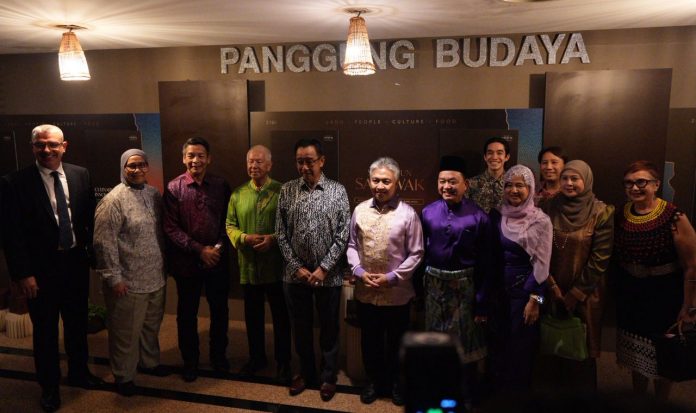
KUCHING, 8 APRIL 2026: Following a journey through Kuala Lumpur, Osaka, and Mulu, Serumpun Sarawak returns to Kuching for its defining finale at Sarawak Cultural Village.
This final chapter brings together culture, cuisine, and community in an immersive experience that reflects both the platform’s evolution and its next phase.
A fine-dining experience in Serumpun Sarawak is described as a living archive, where culture is not simply displayed but actively practised, shared, and continuously evolved.
More than a showcase, Serumpun Sarawak has evolved into a living platform — one that translates Sarawak’s deep food knowledge, indigenous traditions, and biodiversity into a contemporary experiential format. Its return to Kuching marks a point of convergence, bringing together its journey into a cohesive expression rooted in place, reinforcing Sarawak’s culinary identity as a living system shaped by its people, environment, and traditions.
At its core, Serumpun Sarawak is built on collective custodianship, bringing together chefs, indigenous knowledge holders, farmers, producers, artisans, and cultural practitioners under a shared commitment to preserve, interpret, and elevate Sarawak’s food culture.
Drawing from the state’s ecological and cultural knowledge systems — from forest and river ingredients to fermentation practices — the platform presents cuisine not as static heritage, but as a living, evolving practice.
Guided by Chef James Won as custodian, the Serumpun Sarawak kitchen operates as a collaborative space. This finale edition features collaborating chefs John Lim, Laura Sim, and Robbie Balcarek, who work within Sarawak’s ingredient landscape and cultural context.
The emphasis shifts from individual authorship to shared interpretation, contributing to a wider culinary narrative grounded in place.
Set within the living cultural landscape of Sarawak Cultural Village, the experience unfolds as an integrated journey connecting guests to the land, its people, and its stories.
It begins with a curated exhibition featuring artisans, producers, and cultural practitioners, offering insight into the ecosystem behind Sarawak’s cuisine, before transitioning into a multi-course gastronomic experience where each dish reflects the depth of Sarawak’s biodiversity and cultural memory.
Guided by a hyperlocal philosophy, ingredients are sourced from forests, rivers, and farms, shaped by indigenous knowledge and practices, with each course accompanied by storytelling that reveals the origins, science, and cultural significance behind the ingredients.
Together, the dining and exhibition form what Serumpun Sarawak describes as a living archive, where culture is not simply displayed, but actively practised, shared, and continuously evolved, reinforcing the idea that cuisine does not exist in isolation, but is the result of communities, landscapes, and generations of knowledge working together.
A defining principle of Serumpun Sarawak is its emphasis on shared ownership.
While Chef James Won leads its curation, the platform is intentionally built as a collective movement, ensuring that Multiple voices and perspectives across communities and generations carry forward Sarawak’s food culture.
While this finale marks the culmination of Serumpun Sarawak as a travelling platform, it also signals the beginning of its next phase.
Through mentorship, training, and collaboration, the platform aims to inspire and nurture a new generation of chefs to engage more deeply with Sarawak’s ingredient landscape, encouraging exploration, thoughtful interpretation, and the continued elevation of local produce within contemporary cuisine.
The introduction of its mentee initiative reflects this commitment to continuity, forming part of a broader ecosystem that supports knowledge transfer and long-term development, while ensuring that the platform’s impact extends beyond the experience itself.
This direction is further strengthened by Sarawak’s broader efforts in gastronomy development, including the completion of the Sarawak Gastronomy Centre, which will serve as a dedicated platform to showcase, study, and elevate the state’s culinary identity while supporting the development of future culinary talent.
As Serumpun Sarawak concludes this chapter in Kuching, it stands not only as a culmination but as a foundation for what comes next, positioning cuisine as a means of preserving heritage, sustaining biodiversity, and shaping Sarawak’s evolving cultural narrative.
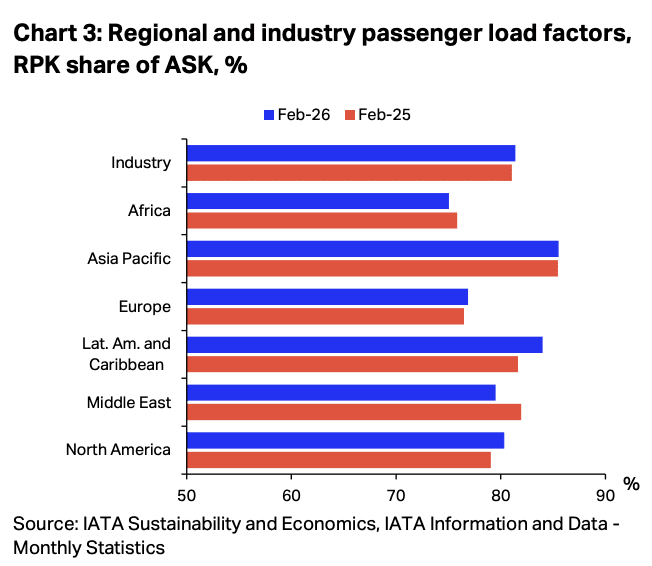
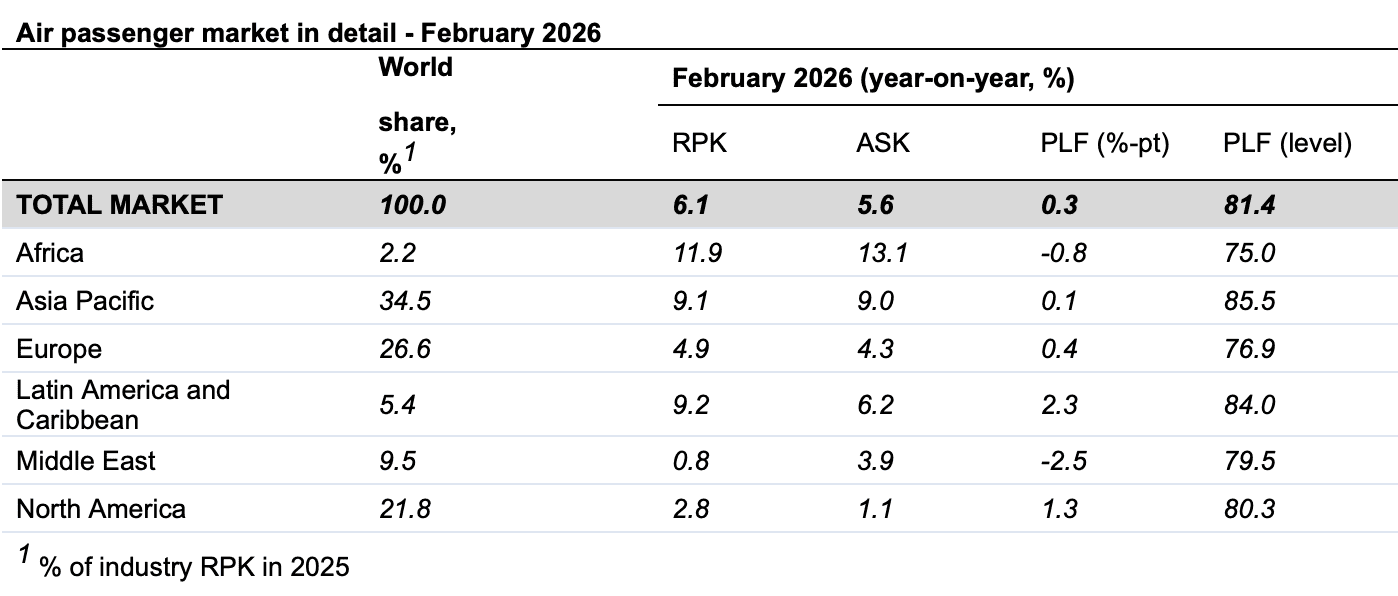
SINGAPORE, 8 April 2026: Global passenger demand, measured in revenue passenger kilometres (RPK), was up 6.1% compared to February 2025, according to the International Air Transport Association’s latest data for February 2026.
Total capacity, measured in available seat kilometres (ASK), increased 5.6% year-on-year. The load factor was 81.4% (+0.3 ppt compared to February 2025), the highest February figure on record.
International demand rose 5.9% compared to February 2025. Capacity was up 5.3% year-on-year, and the load factor was 80.5% (+0.5 ppt compared to February 2025).
Domestic demand increased 6.3% compared to February 2025. Capacity increased 6.2% year-on-year. The load factor was 82.8% (+0.1 ppt compared to February 2025).
“With an RPK expansion of 6.1%, February was a strong month, showing that the fundamentals for demand growth were in place for a positive year. However, without knowing the length and intensity of the war in the Middle East, it is impossible to quantify the full impact on airline prospects. But some things are already clear. Fuel costs have risen sharply. With tight capacity and thin margins, airfares are already rising. Capacity deployment is also adjusting, particularly for traffic to, from, or through the Middle East, or in areas where fuel supply is an issue. Capacity growth scheduled for March, for example, has eased to 3.3% from earlier predictions of more than 5%,” said IATA’s Director General Willie Walsh.
Regional Breakdown – International Passenger Markets
International RPK growth reached 5.9% in February compared to a year ago, with growth particularly strong in Latin America. Asian traffic benefited from the Lunar New Year travel demand. Traffic between Europe and Asia was especially robust (+14%), particularly between Asia and Spain and Italy.
Asia-Pacific airlines achieved an 8.6% year-on-year increase in demand. Capacity increased 7.3% year-on-year, and the load factor was 86.6% (+1.0 ppt compared to February 2025).
European carriers had a 5.0% year-on-year increase in demand. Capacity increased 4.5% year-on-year, and the load factor was 75.6% (+0.4 ppt compared to February 2025).
North American carriers saw a 5.0% year-on-year increase in demand. Capacity increased 2.4% year-on-year, and the load factor was 80.9% (+2.0 ppt compared to February 2025).
Middle Eastern carriers saw a 0.9% year-on-year increase in demand. Capacity increased 3.8% year-on-year, and the load factor was 79.6% (-2.2 ppt compared to February 2025).
Latin American airlines saw a 13.5% year-on-year increase in demand. Capacity climbed 9.3% year-on-year. The load factor was 85.0% (+3.1 ppt compared to February 2025).
African airlines saw a 4.8% year-on-year increase in demand. Capacity was up 6.6% year-on-year. The load factor was 74.5% (-1.3 ppt compared to February 2025).
HONG KONG, 8 April 2026: Hyatt Hotels Corporation has announced the next stage of growth of Hyatt’s business in India with the appointment of Vikas Chawla in the newly created senior role of President – India & Southwest Asia to lead the business in the region.
Effective 1 April, Chawla will report to Hyatt Group President Asia Pacific, David Udell.
Photo credit: Hyatt. Vikas Chawla has been appointed President – India & Southwest Asia for Hyatt.
“The creation of this new senior leadership role reflects both the scale of opportunity we see in India and our commitment to this market,” said Udell. “Over more than four decades, Hyatt has built a strong foundation in India. As we enter our next phase of growth, Vikas’ extensive experience and entrepreneurial leadership will bring the fresh knowledge, skills and abilities required at the top of our organisation in India. His deep understanding of the Indian consumer will be pivotal to drive our strategic growth in this critical market as we accelerate our brand-led expansion and unlock new avenues for success.”
A seasoned entrepreneur with over 30 years of global leadership experience in food and beverage and consulting, Chawla will lead Hyatt’s overall strategy, growth, and performance in India and Southwest Asia.
“I am incredibly excited to join Hyatt at such a dynamic moment in its growth journey in India,” said Chawla. “My ambition is to develop Hyatt’s portfolio further, making it the most preferred hospitality brand amongst discerning travellers in India, the best hospitality brand to work for in India, and to become a significant pillar of growth for Hyatt’s global portfolio.”
India represents one of the most dynamic growth opportunities for Hyatt in the Asia Pacific. Rising middle-class demand for premium travel, luxury experiences, and differentiated dining align closely with Hyatt’s strengths in luxury and lifestyle, experiential offerings and F&B. This has powered Hyatt’s growth in the region, with deals signed in 2025 contributing nearly 5,000 rooms to its India and Southwest Asia pipeline.
Building on its existing footprint of 55 hotels across nine brands across India and Southwest Asia, the first Destination by Hyatt property in Asia Pacific, Hari Bagh Jaipur, is set to debut in 2026. The Destination by Hyatt brand represents a diverse collection of independent hotels, resorts and residences that are individual at heart yet connected by a commitment to embody the true spirit of each location. The arrival of the Destination by Hyatt brand will mark Hyatt’s second collection brand in India, and Hari Bagh Jaipur will mark the third Hyatt hotel in Jaipur.
Looking ahead, Hyatt plans to continue strengthening its brand presence in key gateway markets, including Mumbai, Bengaluru, New Delhi, and Hyderabad.
SINGAPORE, 8 April 2026: Air Astana veteran Ibrahim Canliel has stepped up to become the new Chief Executive Officer of Air Astana Group, the airline reported over the weekend
Ibrahim Canliel has served as the airline’s Chief Financial Officer since 2017 and, over the previous 14 years, was a member of the leadership team that shaped the carrier’s strategic and financial development, culminating in its becoming a UK and Kazakhstan publicly listed company in 2024.
Photo credit: Air Astana. Air Astana veteran Ibrahim Canliel steps up to become the group’s new CEO.
In the new CEO capacity, Canliel will focus on strengthening operational resilience, supporting sustainable growth and advancing the group’s dual-brand strategy across Air Astana and FlyArystan.
Commenting on his new appointment, Canliel stated: “I am delighted and feel privileged to take the helm as CEO of the Air Astana Group today. Whilst this is a significant milestone personally, it also provides continuity to all our 7,000 employees and stakeholders.”
“The Air Astana Group is the clear leader in Central Asia and the Caucasus; not only from a fleet and passenger numbers perspective, but also in operational standards, service levels and international coverage. It is my commitment to protect and enhance our founding principles: ensuring the highest global operational, safety and services standards; preserving the utmost level of corporate governance; and maintaining commercial and financial independence.”
“Our location, with almost half of the World’s population living in our vicinity, gives us a unique strategic advantage that we will harness. I am excited to have the opportunity to write the next chapter of the success story and to strengthen further our position as the airline of choice for travel in our region.”
KUALA LUMPUR, 8 April 2026: Acknowledging the 58th edition of the MATTA Fair once again scored a record turnout of travel consumers, MATTA President Nigel Wong emphasised that the focus remains on strengthening trust and confidence within the travel industry.
“Today, travel is about assurance; it’s about trusting the right providers. At MATTA, we place strong emphasis on building trust between travellers and our licensed members.
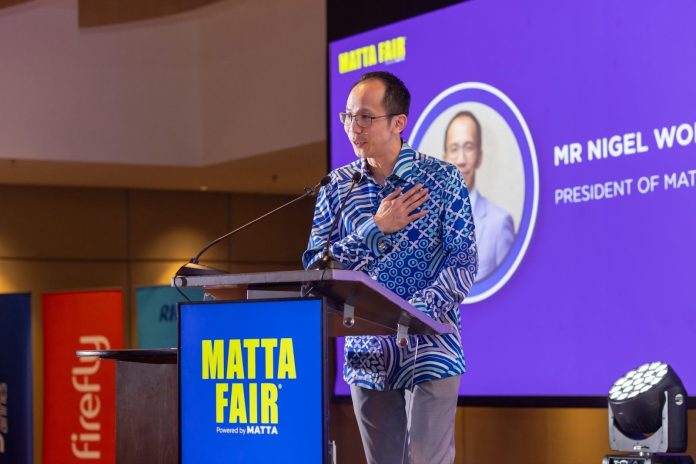
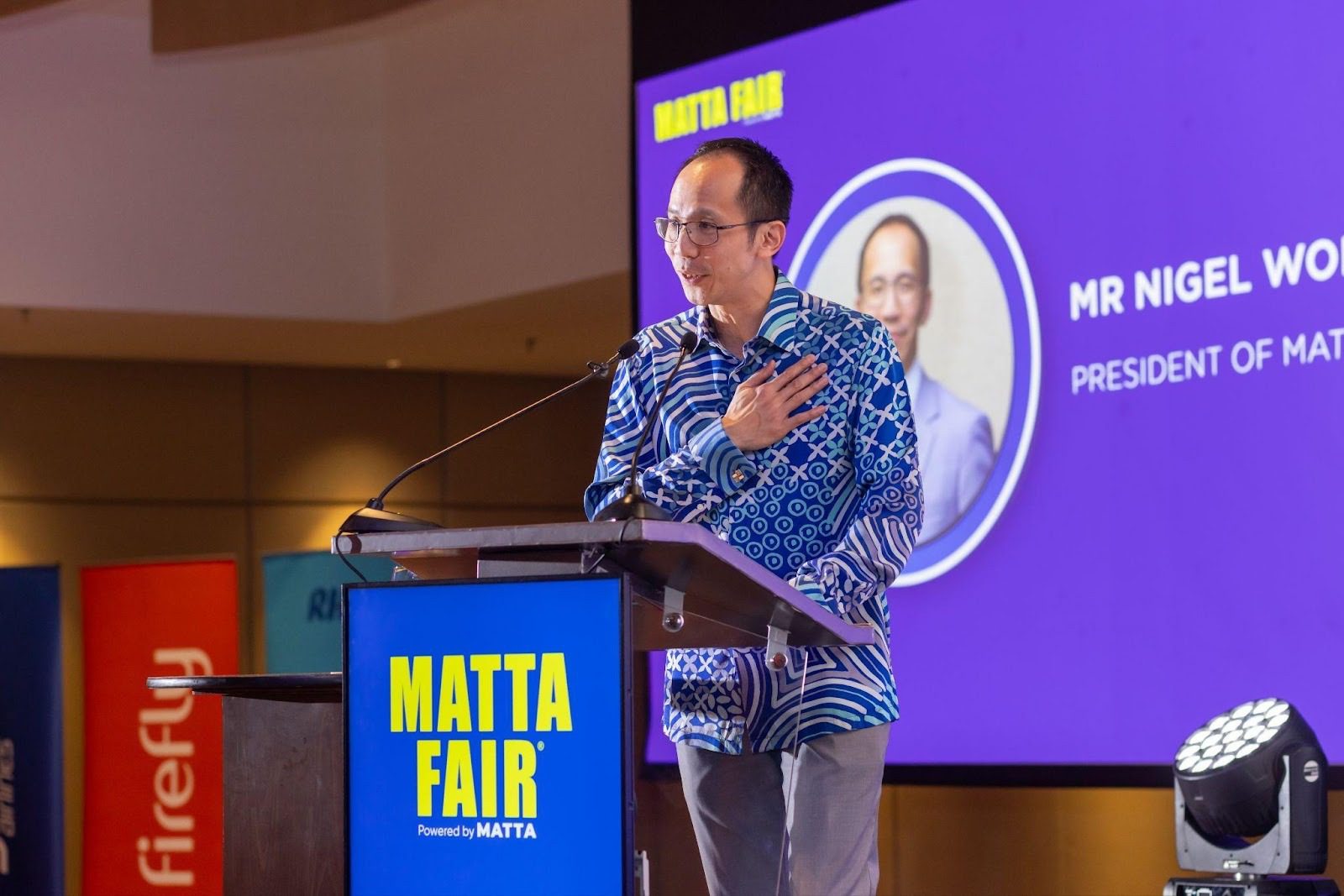
Photo credit: MATTA. MATTA president Nigel Wong reflects on the travel fair’s track record for delivering trust and confidence for travel consumers.
“When visitors engage with MATTA members, they are dealing with accountable, credible professionals who can manage every aspect of their journey, from planning and booking to on-the-ground support. This is where real value lies, and this is what gives travellers peace of mind,” he said.
“From here on, our role is to continue strengthening this industry, ensuring that travellers are supported, protected and able to plan with confidence,” he added.
Looking ahead, MATTA also continues to align its efforts with national tourism priorities, particularly in support of Visit Malaysia 2026. With Malaysia targeting significant growth in international arrivals and tourism receipts, platforms like the MATTA Fair play a key role in driving both inbound and outbound travel and strengthening industry readiness and collaboration.
The Malaysian Association of Tour and Travel Agents (MATTA) closed on Sunday evening, reporting impressive statistics. Traversing 40,820 square metres across 10 halls, the fair recorded its largest participation to date, with 2,051 booths and 332 participating organisations. This includes 210 tour and travel agencies, alongside National Tourism Organisations, State Tourism Organisations, hotels, theme parks and service providers, signalling continued confidence in the industry’s growth trajectory.
These figures come at a time when travel demand remains resilient, supported by stronger inbound and outbound interest among Malaysians and steady recovery across domestic and international markets. MATTA Fair continues to respond to these shifts by creating a more comprehensive and accessible platform for both industry players and consumers.
Travel has always given people something to look forward to, whether it is visiting somewhere new or returning to a familiar place. Moving forward, through initiatives like MESTI, we are placing more attention on sustainability.
As we move further into Visit Malaysia 2026, MATTA continues its efforts to support the industry. We will continue to provide a steady and trusted platform for the industry and for consumers to plan their travels with greater confidence,” said Wong.
Through this meaningful step, MATTA has introduced TRUST, an additional system designed to help travellers more easily identify legitimate MATTA members. This initiative strengthens consumer confidence by ensuring that members and travellers engage with credible and accountable operators, while raising the standard of professionalism across the industry.