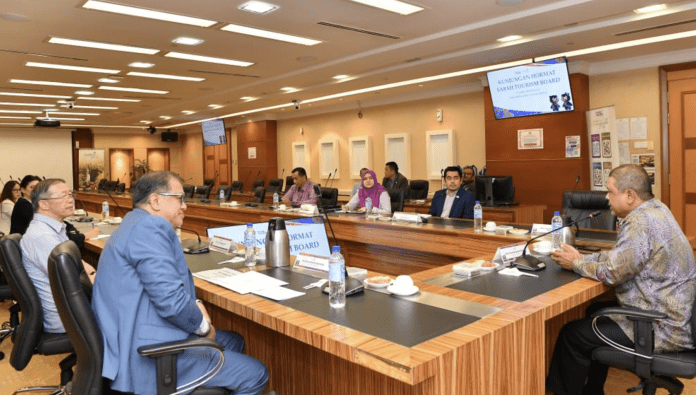
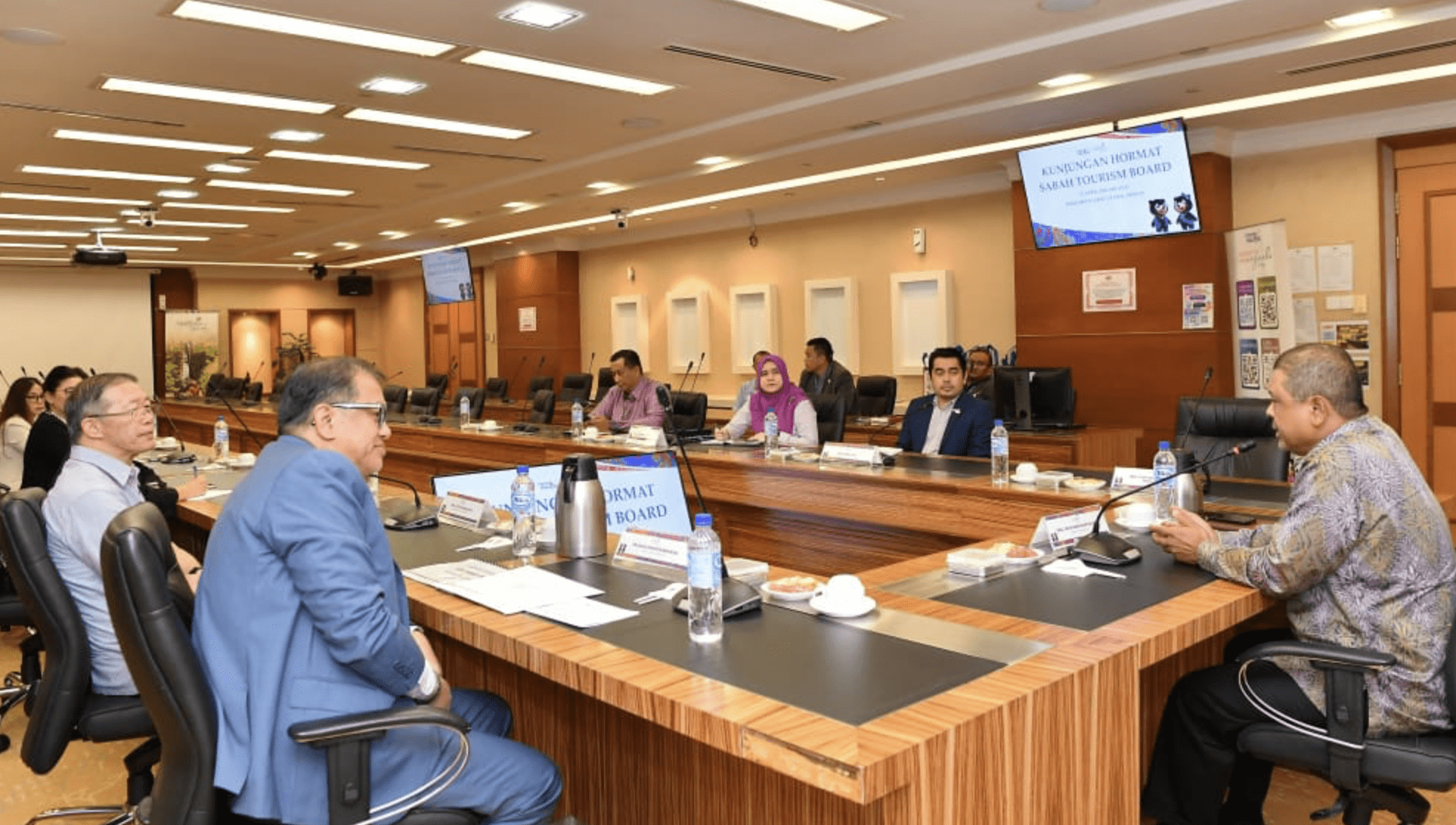
KOTA KINABALU: Sabah Tourism Board hosted a feedback session with the state’s tourism players on Friday to address operational challenges arising from fuel supply constraints and the need for temporary subsidies.
STB Chairman, Datuk Joniston Bangkuai, who is also Assistant Minister to the Chief Minister, led the session to gather feedback and proposals to present to the Ministry of Tourism, Culture and Environment, and subsequently the Ministry of Domestic Trade and Cost of Living.
Assistant Minister to the Sabah Chief Minister and STB chairman Datuk Joniston Bangkuai (centre front) chaired an engagement session with Sabah tourism players — STB deputy chairman Datuk KL Tan (front right), Chief Strategic Officer Humphrey Ginibun (left), and Head of Stakeholder and Industry Relations Halimah Hassan (2nd left).
The session focused on the fuel crisis and its impact on tourism operators running island resorts, boat transfer services, and inland eco-tourism operations.
Operators reliant on diesel for generators and daily boat transfers said repeated applications for fuel subsidies have been unsuccessful despite multiple submissions.
Several operators said they are currently absorbing higher fuel costs to honour existing bookings made before recent price increases, limiting their ability to adjust package pricing.
BANGKOK, 27 April 2026: The travel industry has always evolved alongside technology, but in 2026, the shift feels more profound than ever.
This is no longer about faster searches or better booking engines. It is about a complete transformation of the traveller journey, where artificial intelligence, biometrics and mobile integration are removing friction at every stage, from inspiration to arrival.
Artificial intelligence, biometrics and mobile integration are removing friction at every stage, from inspiration to arrival.
Today’s traveller begins not with a travel agent, but with a screen. Within seconds, destinations, hotels and flights are compared, reviewed and priced in real time. What once required hours of research is now distilled into a few intuitive clicks. The modern traveller is informed, empowered and increasingly spontaneous, guided by platforms that combine data, imagery and peer feedback into a seamless decision-making process.
Artificial intelligence is driving much of this change. Travellers can now generate complete itineraries tailored to their preferences, whether a multi-city European journey or a regional escape across Southeast Asia. Flights, hotels and experiences are bundled together with remarkable speed and accuracy, reducing complexity and opening up new possibilities for both leisure and business travel.
Pricing has evolved just as rapidly. Airlines and hotels now use sophisticated systems to adjust rates dynamically, responding to demand, seasonality and even external factors such as weather or major events. For travellers, this means opportunities to secure better value. For the industry, it ensures greater efficiency and improved yield management.
Connectivity, once a persistent challenge, has been quietly solved. The rise of eSIM technology allows travellers to stay connected across multiple countries without changing SIM cards or incurring excessive roaming charges. It is a simple innovation, yet one that has significantly enhanced the ease of international travel, particularly for those making multiple stops on a single trip.
Digital identity systems are reducing queues and improving flow.
Nowhere is the impact of technology more visible than at the airport. Biometric systems are replacing traditional processes, allowing passengers to move through check-in, security and boarding with minimal interruption. Facial recognition and digital identity systems are reducing queues and improving flow, creating a more relaxed and efficient airport experience.
Airlines have embraced mobile integration, placing the entire journey in the traveller’s hands. Boarding passes, real-time updates and baggage tracking are all managed through apps, ensuring that passengers are informed at every stage. The uncertainty that once defined air travel is gradually being replaced by clarity and control.
Hotels and restaurants are undergoing a similar transformation. Digital check-in, mobile room access and app-based concierge services are becoming standard, particularly in major cities and resort destinations. Guests can arrive, settle in and request services without waiting in line, while restaurants increasingly offer digital menus and contactless payment options that streamline the dining experience.
Loyalty programmes have also moved fully into the digital space. Points, upgrades and rewards are now integrated across platforms, allowing travellers to navigate between airlines, hotels and other services with ease. The traditional reliance on physical cards and printed confirmations is rapidly fading.
Even travel gear has adapted. Smart luggage equipped with tracking technology, charging capabilities and weight sensors is becoming more common, offering reassurance and convenience for frequent travellers. While the occasional lost bag remains a reality, the ability to monitor its location in real time has significantly improved recovery and reduced anxiety.
Loyalty programmes have also moved fully into the digital space, with points, upgrades and rewards now integrated.
Sustainability is another area where technology is making a meaningful impact. Airlines are optimising routes to reduce fuel consumption, while hotels are using smart systems to manage energy and water more efficiently. Travellers themselves are becoming more aware of their environmental footprint, with technology providing greater transparency and enabling more responsible choices.
Looking ahead, the direction is unmistakable. The future of travel technology is not about adding layers of complexity, but about removing them. Each innovation is designed to simplify the journey, allowing travellers to focus less on logistics and more on the experience itself.
As global travel continues to grow, the role of technology will only become more central. The companies that embrace these changes will lead the industry forward, while travellers who adapt will enjoy a smoother, more connected and more rewarding way to explore the world.
About the author Andrew J. Wood is a Bangkok-based travel writer and well-respected tourism expert. A former hotelier, he has lived in Thailand since 1991. A past President of Skål Asia and long-time tourism industry leader, he writes widely on hospitality, travel and tourism trends across Asia.
BANGKOK, 24 April 2026: Dusit Hotels and Resorts invites travellers to extend their stays for less with the launch of ‘A Night on Us’, a limited-time offer featuring complimentary nights on eligible stays of two to eight nights.
Available for just six days, from 22 to 27 April 2026, exclusively on dusit.com, with early access for Dusit Gold members from 22 to 24 April, the offer provides exceptional value across a curated collection of participating Dusit properties in Guam, Malaysia, the Maldives, the Philippines, Singapore, and Thailand.
From island escapes such as Dusit Thani Maldives, dusitD2 Feydhoo Maldives, Dusit Thani Laguna Phuket, and Dusit Thani Lubi Plantation Resort in the Philippines, to beachfront retreats including Dusit Thani Hua Hin, Dusit Thani Pattaya, and Dusit Thani Guam Resort, as well as city stays like Dusit Princess Melaka, Dusit Thani Laguna Singapore, ASAI Bangkok Chinatown, Dusit Princess Chiang Mai, and Dusit Thani Manila and dusitD2 Davao in the Philippines, and mountain escapes such as dusitD2 Khao Yai in Thailand, guests can enjoy up to four complimentary nights when booking stays of up to eight nights, for stays from 22 April to 20 December 2026.*
How ‘A Night on Us’ works
· Pay for 1 night, stay for 2
· Pay for 2, stay for 4
· Pay for 3, stay for 6
· Pay for 4, stay for 8
By booking directly, guests not only maximise value but also gain access to Dusit’s full suite of personalised services and exclusive offers.
Dusit Gold membership is complimentary and can be activated at dusit.com/signup, unlocking benefits including preferential room rates and dining offers.
KUCHING, SARAWAK, 24 APRIL 2026: Sarawak has won hosting rights for the 11th Asia Pacific Regional Conference 2028 (APRC 2028) of the International Union Against Tuberculosis and Lung Disease, marking a significant milestone in the destination’s continued rise as the legacy capital of business events in Malaysia and Borneo.
Scheduled for 23 to 26 March 2028 in Kuching, in conjunction with World Tuberculosis Day, the conference is expected to attract over 1,000 delegates from across the Asia Pacific (APAC) region, generating an estimated total economic impact of MYR8.2 million. It will be the first time APRC is hosted in Borneo and the second time in Malaysia since Kuala Lumpur in 2007.
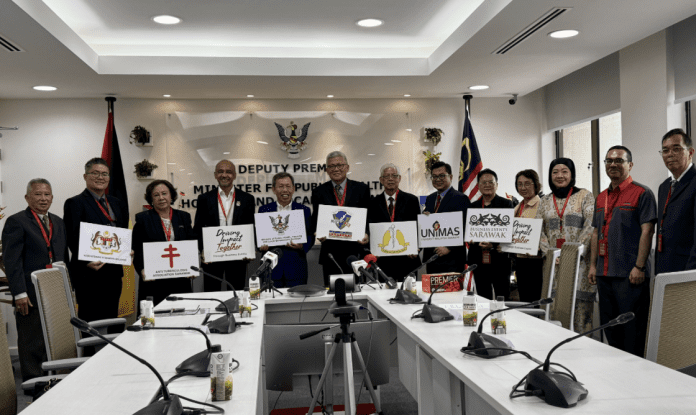
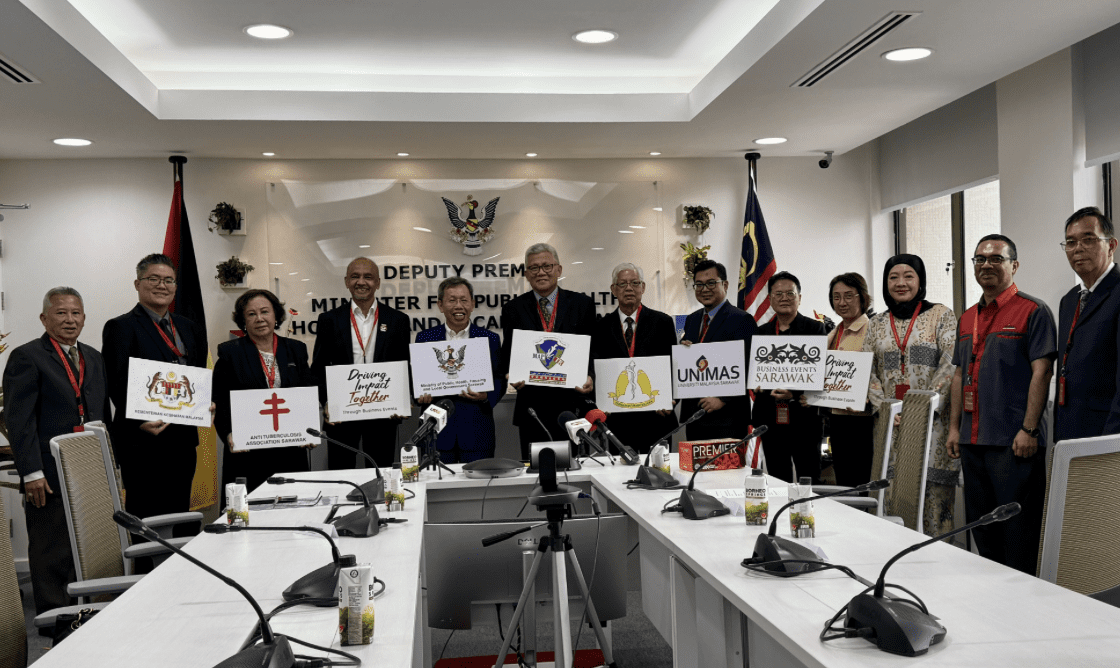
Press Conference Announcement for the 11th Asia Pacific Regional Conference 2028 (APRC 2028) of the International Union Against Tuberculosis and Lung Disease.
Tuberculosis remains one of the world’s most urgent public health challenges, driven by the rise of drug-resistant strains, delayed diagnoses, treatment adherence gaps, persistent stigma, and unequal access to healthcare. Across the Asia-Pacific, the diversity of healthcare systems further complicates coordinated control efforts.
In Sarawak, efforts to strengthen early detection and access to care are already underway, including the adoption of portable handheld X-ray technology by the Bintulu Divisional Health Office to enhance tuberculosis screening, particularly in reaching underserved and remote communities. However, scaling these efforts across the region requires stronger collaboration, innovation, and knowledge exchange.
APRC 2028 will respond to this need by bringing together global and regional leaders to accelerate practical solutions in prevention, diagnosis, and treatment, while strengthening partnerships across borders and sectors.
“APRC 2028 directly supports Sarawak’s Post COVID-19 Development Strategy 2030, where healthcare is not only about treatment, but about equity and inclusion. The Sarawak government’s support towards APRC 2028 is our commitment to ensuring that Sarawak’s healthcare system is inclusive, accessible, and leaves no one behind,” said
Deputy Premier and Minister of Public Health, Housing, and Local Government, Sarawak, Datuk Amar Prof Dr Sim Kui Hian.
Deputy Premier and Minister of Public Health, Housing, and Local Government, Sarawak, Datuk Amar Prof Dr Sim Kui Hian.
“Better prevention and control of tuberculosis and other lung diseases require strong collaboration between government, academia and communities to improve access, strengthen awareness, and build trust. This is critical in addressing stigma, ensuring people feel safe and supported to seek early diagnosis and treatment.”
“We want to bridge science, policy, and practice for a tuberculosis-free future and better lung health for all, hence the APRC 2028 will feature a large-scale programme with workshops, plenaries, symposiums, and community outreach sessions to include all segments of society. We believe that everyone – government, associations, industry, academia and local communities – can be advocates for a tuberculosis-free future,” said the Organising Chairman of APRC 2028 and member of the Malaysian Association for the Prevention of Tuberculosis (MAPTB), Prof Dato Dr Abdul Razak bin Abdul Muttalif.
“Winning APRC 2028 reflects Sarawak’s growing reputation as the legacy capital of business events in Malaysia and Borneo,” said Business Events Sarawak (BESarawak) Acting Chief Executive Officer Jason Tan Chin Foo. “With strong government backing under the Post COVID-19 Development Strategy 2030 and BESarawak’s legacy framework, we are committed to ensuring that APRC 2028 delivers meaningful legacy outcomes. By convening global experts and stakeholders, the conference will catalyse advancing solutions to critical health challenges, particularly tuberculosis, while contributing to long-term development goals aligned with national priorities and the United Nations Sustainable Development Goals.”
APRC 2028 is organised by the Malaysian Association for the Prevention of Tuberculosis (MAPTB) in collaboration with the Sarawak State Health Department, Malaysian Thoracic Association, the Anti-Tuberculosis Association of Sarawak (ATAS), and Universiti Malaysia Sarawak (UNIMAS). APRC 2028 is supported by the Ministry of Public Health, Housing and Local Government, Sarawak and Business Events Sarawak (BESarawak).
PUTRAJAYA, 24 April 2026: The Sabah Tourism Board and Tourism Malaysia engaged in discussions on the need to align tourism promotion strategies following the extension of the Visit Malaysia campaign to end-2027.
The Sabah Tourism Board (STB) was led by Chairman Datuk Joniston Bangkuai, who is also Assistant Minister to the Chief Minister of Sabah, while Tourism Malaysia was represented by its Chairman Datuk Manoharan Periasamy.
Assistant Minister to the Sabah Chief Minister and Sabah Tourism Board Chairman Datuk Joniston Bangkuai (left) and Tourism Malaysia Chairman Datuk Manoharan Periasamy (right) during a discussion engagement in Putrajaya, earlier this week.
Manoharan briefed the Sabah delegation on Tourism Malaysia’s current focus, citing the geopolitical situation as a key factor behind a stronger emphasis on domestic tourism and on the ASEAN region as a priority market under the revised campaign period.
Joniston said STB would support continued coordination to ensure consistency in promotional direction between federal and state tourism initiatives. He said both parties recognised the importance of regular engagement to support the success of Visit Malaysia Year and Visit Sabah 2027. He added that Sabah would continue to emphasise cultural and nature-based tourism under its Visit Sabah 2027 campaign, with key cultural events such as Kaamatan playing a central role in strengthening destination identity.
Present at the meeting were: Tourism Malaysia Head of Secretariat for Visit Malaysia Year, Mohd Akbal Setia; Tourism Malaysia Corporate Communications Director, Yasmin Faezah Samsudin; STB Deputy Chairman, Datuk KL Tan; Deputy Permanent Secretary to the Ministry of Tourism, Culture, and Environment of Sabah, Mary Malangking; STB Chief Marketing Officer, Josephine Chai; STB Special Officer, Normegawati Baiduri Sapian; STB Head of Research, Angeline Engchuan; and STB Head of Digital and Communications, David Michael.
SINGAPORE, 24 April 2026: Vietjet has been recognised as the most emissions-efficient airline for intra-Southeast Asia operations, according to the 2025 Flight Emissions Review by Cirium, a leading global aviation data and analytics provider.
The ranking is based on Cirium’s EmeraldSky methodology, which uses CO₂ per Available Seat Kilometre (CO₂/ASK) as its core metric. This measures the amount of fuel an airline burns relative to its passenger capacity. According to the report, Vietjet recorded 64.5 grams CO₂/ASK, placing first in the Southeast Asia intra-regional ranking, ahead of Singapore Airlines (66.7 grams) and Lion Air (67.1 grams).
Photo credit: Vietjet.
The ranking compares emissions performance on flights operating entirely within Southeast Asia, where the dominance of short- and medium-haul routes can make fuel efficiency more challenging to optimise. Against this backdrop, Vietjet’s ability to deliver the lowest emissions reflects its strong operational efficiency across the entire value chain, from aircraft configuration and network planning to load management.
A key driver of Vietjet’s emissions performance is its new-generation fleet. The airline primarily operates Airbus A320 and A321 aircraft, including the latest “NEO” variants, which offer approximately 15 to 20% fuel savings compared to previous-generation models. With one of the youngest fleets in the region, Vietjet is well-positioned to optimise fuel consumption and CO₂ emissions per flight. In parallel, the airline continues to strengthen technology adoption across its operations, from flight data analytics platforms such as SkyBreathe to fuel-optimisation initiatives like SFCO₂, thereby improving efficiency across its entire network.
Previously, Vietjet was also named among the Top 7 global airlines for sustainability in 2025 by AirlineRatings, in recognition of its efforts to reduce emissions, improve fuel efficiency, and support the green transition. The airline has also received ESG (Environmental, Social, and Governance) recognition in markets such as Taiwan.
The Flight Emissions Review is Cirium’s annual ranking, providing an independent assessment of the world’s 100 largest airlines based on actual operational data. It enables transparent comparisons of emissions performance across airlines by scale and geographic region, serving as a benchmark for the global aviation industry.
SINGAPORE, 24 April 2026: Nepal Tourism Board, in coordination with the Ministry of Culture, Tourism and Civil Aviation, will intensify promotions and launch Nepal Wellness Year 2027 to draw more international tourists to the country.
The Minister for Culture, Tourism and Civil Aviation, Khadak Raj Paudel, emphasised that Nepal’s wellness offerings extend beyond tourism, encouraging visitors to engage in deeper self-discovery through the country’s spiritual and cultural heritage, stating: “Do not just visit Nepal; come and discover yourself.”
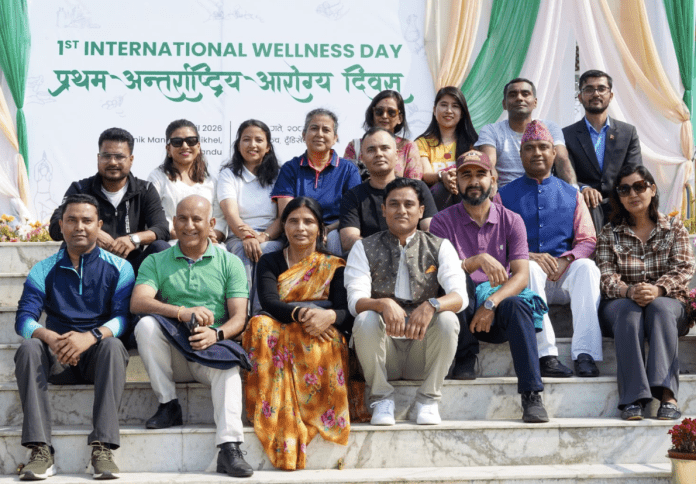
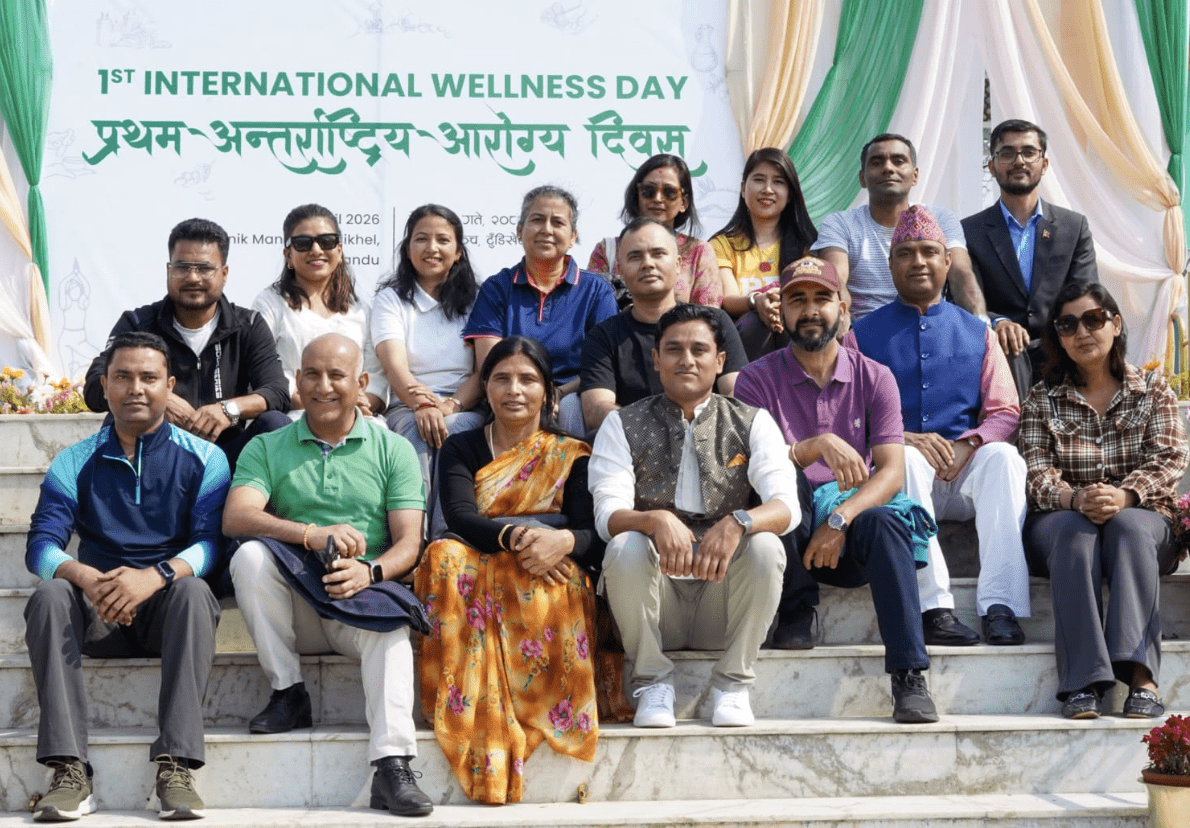
Photo credit: Nepal Tourism Board. NTB Chief Executive Officer Deepak Raj Joshi (second left) shares a wellness moment with his team.
The Wellness Year announcement was made during celebrations on 15 April to mark International Wellness Day and reflects a broader national effort to promote wellness practices across communities in the lead-up to Nepal Wellness Year 2027.
“As Nepal advances its wellness tourism agenda, the country continues to offer transformative lifetime experiences rooted in nature, spirituality, and holistic wellbeing, inviting visitors not only to explore its landscapes but also to reconnect with themselves,” said Nepal Tourism Board Chief Executive Officer Deepak Raj Joshi.
Nepal Wellness Year 2027
Nepal is officially preparing to observe 2027 as “Nepal Wellness Year,” a major national initiative aimed at repositioning the country as a global hub for holistic health, spiritual healing, and sustainable tourism.
The campaign follows a significant diplomatic win for Nepal. Last March, the UN General Assembly adopted a resolution (initiated by Nepal) to proclaim 15 April International Wellness Day.
The “Nepal Wellness Year 2027” is designed to shift Nepal’s tourism narrative from its current emphasis on adventure to establish the destination as a premier destination for Yoga, meditation, Ayurveda, and natural healing.
The objective is to target “high-value” travellers who typically spend 53% more than the average tourist.
Embracing wellness and sustainability could also reduce the economic burden on the country’s health sector and help achieve Sustainable Development Goals (SDGs) through preventive health practices.
Wellness tourism can attract visitors year-round and help balance the traditional spring and autumn trekking peaks.
The government and the Nepal Tourism Board (NTB) are now developing a Special Wellness Calendar for 2027.
Campaign highlights five major pillars:
Category
Highlights
Spiritual Heritage
Leveraging Nepal’s status as the birthplace of the Lord Buddha (Lumbini) and its deep Hindu and Buddhist roots.
Traditional Medicine
Promoting Ayurveda, Tibetan medicine (Sowa Rigpa), and indigenous shamanic healing.
Mindfulness
Leveraging Nepal’s status as the birthplace of the Lord Buddha (Lumbini) and its deep Hindu and Buddhist roots.
Infrastructure
Developing a Trans-Himalayan Wellness Tourism Corridor (in collaboration with China) and investing in eco-resorts.
Community Engagement
Focusing on meditation retreats, yoga ashrams, and “forest bathing” in the Himalayas.
Strategy Development: A 10-year National Wellness Tourism Strategy (2026–2035) has been drafted, along with a five-year action plan.
International Diplomacy: Acting Nepali Ambassadors (including those in China and Bangladesh) are promoting the 2027 initiative to attract international investment and trade partners.
Management: The Nepal Tourism Board, led by CEO Deepak Raj Joshi, is coordinating with private-sector bodies, such as the PATA Nepal Chapter, to integrate wellness programmes into the national tourism calendar.
The government is expected to establish a National Wellness Tourism Committee shortly to oversee a dedicated budget and brand-identity campaign for the 2027 launch.
(Source: Nepalish Insider, Nepal Economic Forum, Tourism Mail Nepal)
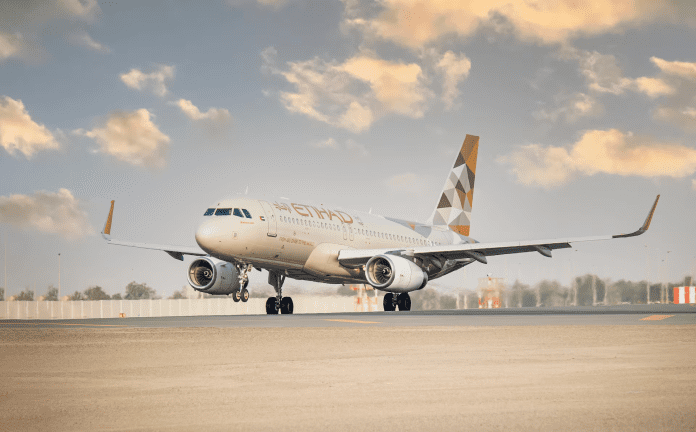
ABU DHABI, UAE, 24 April 2026: Etihad Airways is expanding its Africa network, adding new routes to the Democratic Republic of the Congo, Eritrea, Ghana, Nigeria and Zimbabwe from its home base in Abu Dhabi.
The expansion builds directly on Etihad’s recently announced China growth, including increased frequencies and a deepened partnership with China Eastern Airlines. Together, these developments position Abu Dhabi as a key gateway between Africa, India and Asia, enabling more efficient movement of goods, investment and people between two of the world’s fastest-growing regions.
Photo credit: Etihad Airways.
It also aligns with growing economic ties between the UAE and Africa, with increasing trade, investment, and commercial partnerships across sectors, including energy, infrastructure, mining, and logistics. Abu Dhabi continues to strengthen its role in enabling these flows, supporting deeper economic engagement between the regions.
In parallel, it also complements Etihad’s strategic joint venture with Ethiopian Airlines, which this month marked 80 years of operations, further strengthening connectivity across the African continent.
Etihad Airways Chief Executive Officer Antonoaldo Neves said: “Africa is a natural and compelling next step in Etihad’s network expansion. These are markets with strong underlying demand, driven by trade, investment and population growth. Our role is to provide the connectivity that enables that growth.
“Demand for air connectivity across key African markets is outpacing existing supply, particularly in cargo and trade-linked sectors. This expansion is a direct response to that structural opportunity.
“By extending our network alongside our recent China expansion, we are enabling a more efficient corridor linking Africa, the Middle East and Asia through Abu Dhabi. For passengers, this creates simpler, faster journeys. For cargo, it provides more direct and reliable access between two regions where trade is growing rapidly.”
The new services will provide direct links between African markets and Abu Dhabi, while enabling one-stop connections to China, India, across Asia and throughout the Middle East.
Destinations
Accra, Ghana; One of West Africa’s most welcoming and energetic capitals, where a thriving arts scene and the buzzing Osu neighbourhood make it an increasingly compelling destination.
Asmara, Eritrea: A city frozen in elegant time, Asmara’s UNESCO-listed modernist and art deco streetscapes lend it an otherworldly atmosphere quite unlike anywhere else on the continent.
Harare, Zimbabwe: A leafy, grid-planned capital at high altitude on the Highveld, where the National Gallery, vibrant Mbare market and a warm-hearted population make it a city of charm and understated sophistication.
Kinshasa, DR Congo: A major river city of some 17 million on the banks of the Congo, birthplace of soukous and rumba and home to a cultural scene of extraordinary depth and creativity.
Lubumbashi, DR Congo: The copper-rich capital of Haut-Katanga province in the DRC’s deep south, shaped by mining wealth, with the Lubumbashi Museum offering one of Central Africa’s finest ethnographic collections.
Lagos, Nigeria: Africa’s largest city, a megapolis of more than 20 million people, where entrepreneurial energy and a globally influential music and food scene define the experience.
The addition of African routes enables single-connection journeys between key cities across Africa and Asia via Abu Dhabi, creating a more efficient and commercially relevant corridor for both passengers and cargo. This is particularly significant for sectors including manufacturing, agriculture, pharmaceuticals and infrastructure, where speed, reliability and direct market access are critical.
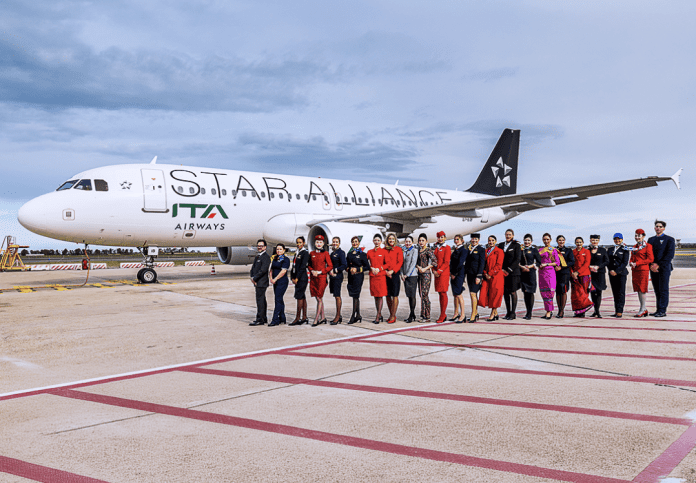
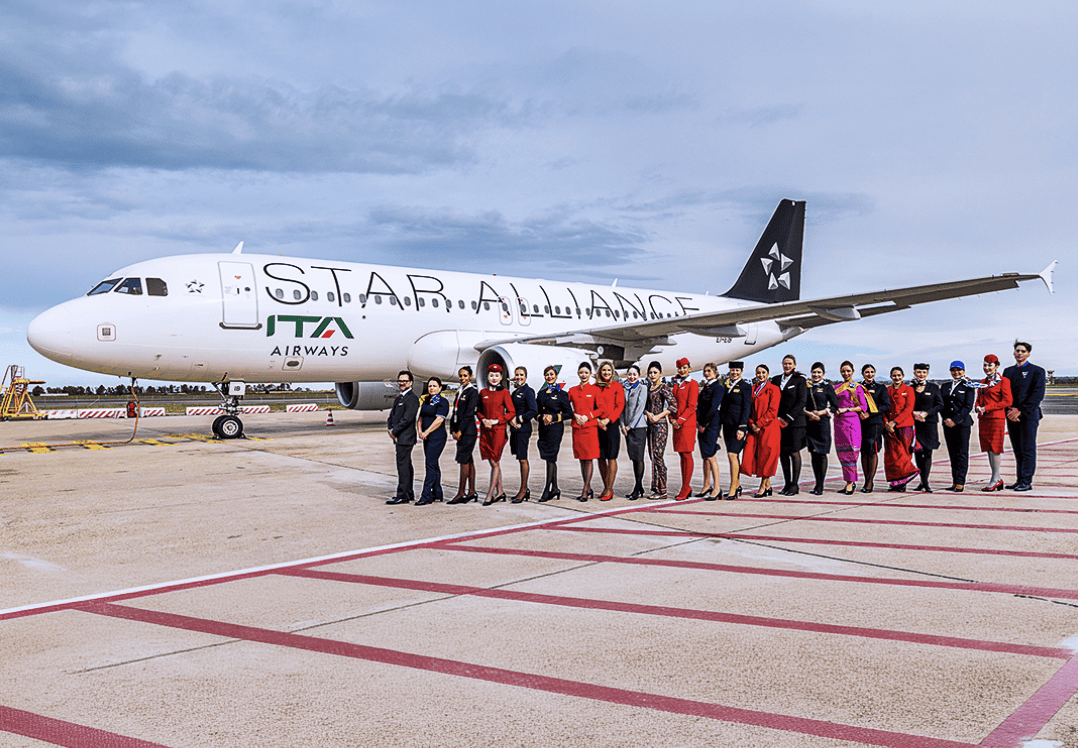
SINGAPORE, 24 April 2026: ITA Airways confirms it is expanding its connections with India and Thailand during the peak of the 2026 summer season, responding to the growing demand for direct flight connections between Italy and India as well as Southeast Asia.
Throughout August 2026, ITA Airways’ direct flights from Rome Fiumicino to Bangkok will increase from three to five weekly, while the route between Rome Fiumicino and Delhi will be upgraded to daily.
Photo credit: ITA Airways.
“In a phase where the geopolitical landscape makes the ability to reach Asia through direct and reliable connections even more valuable, the increase in frequencies to Delhi and Bangkok during August 2026 is a concrete sign of confidence in the market and in ITA Airways’ ability to respond quickly to passenger demand,” said ITA Airways CEO and General Manager Joerg Eberhart.
This strategic decision by ITA Airways is aimed at effectively meeting customer needs, supporting both tourism and business travel during the peak summer period. The goal is to offer passengers greater reliability and a wider range of options for direct flights to Bangkok and Delhi from Rome.
At the same time, the increase in capacity will allow passengers from Thailand and India to reach, via Rome, summer destinations across the ITA Airways network and those of its partners in Italy, Europe, Africa, North and South America.
Tickets for the additional flights are now available at the airline’s website or through its mobile app.
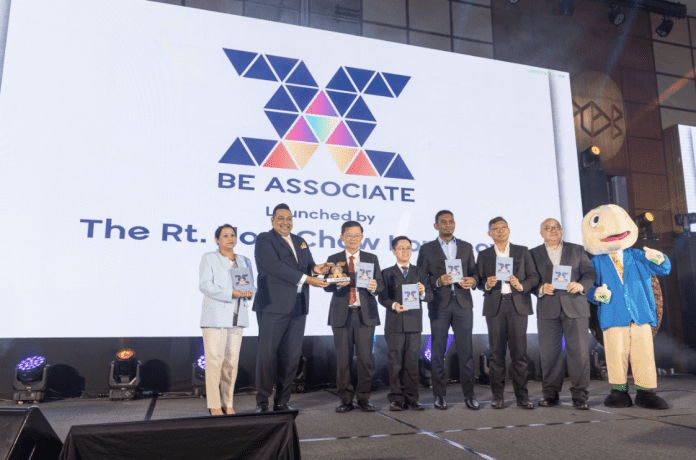
PENANG, 24 April 2026: Penang Convention & Exhibition Bureau (PCEB) has officially launched the BE Associate programme, a first-of-its-kind initiative in Malaysia designed to cultivate a future-ready talent pipeline for the business events industry.
As the industry continues to evolve in complexity and global competitiveness, BE Associate is positioned as a platform that goes beyond conventional academic learning.
Photo credit: PCEB.
The programme, which is complementary for students to join, focuses on building long-term industry resilience by equipping participants with practical skills, real-world exposure and direct access to industry professionals, ensuring a continuous flow of capable talent into the ecosystem.
“BE Associate reflects our commitment to strengthening the industry from within,” said PCEB CEO Ashwin Gunasekeran. “Sustainability in this context is about continuity — developing talent, enhancing capability, and ensuring the business events industry in Malaysia remains competitive, adaptive and future-ready. This programme is designed to bridge the gap between education and industry expectations.”
The initiative has gained strong support from the state’s leadership. Chief Minister of Penang, Chow Kon Yeow, commented: “The launch of BE Associate marks a significant step in strengthening Penang’s position as a leading business events destination. By investing in talent development and industry readiness, we are not only supporting the sector’s growth today but also ensuring its long-term resilience and global competitiveness. This initiative reflects our commitment to building a strong, future-ready workforce that will continue to drive Penang’s economic development.”
Through a dynamic, flexible structure, BE Associate enables participants to engage with the industry in meaningful, practical ways. Students are not confined to traditional classroom learning but instead are immersed in real-event environments, gaining hands-on experience across various roles, from operational support to event execution. This exposure is complemented by direct mentorship from industry practitioners, allowing participants to seek guidance and insights in real time.