

BANGKOK, 30 March 2026: Thailand is getting older, and quietly, a new kind of property boom is taking shape.
First-time buyers or speculative investors do not drive it. It is being fuelled by something far more predictable. Demographics.
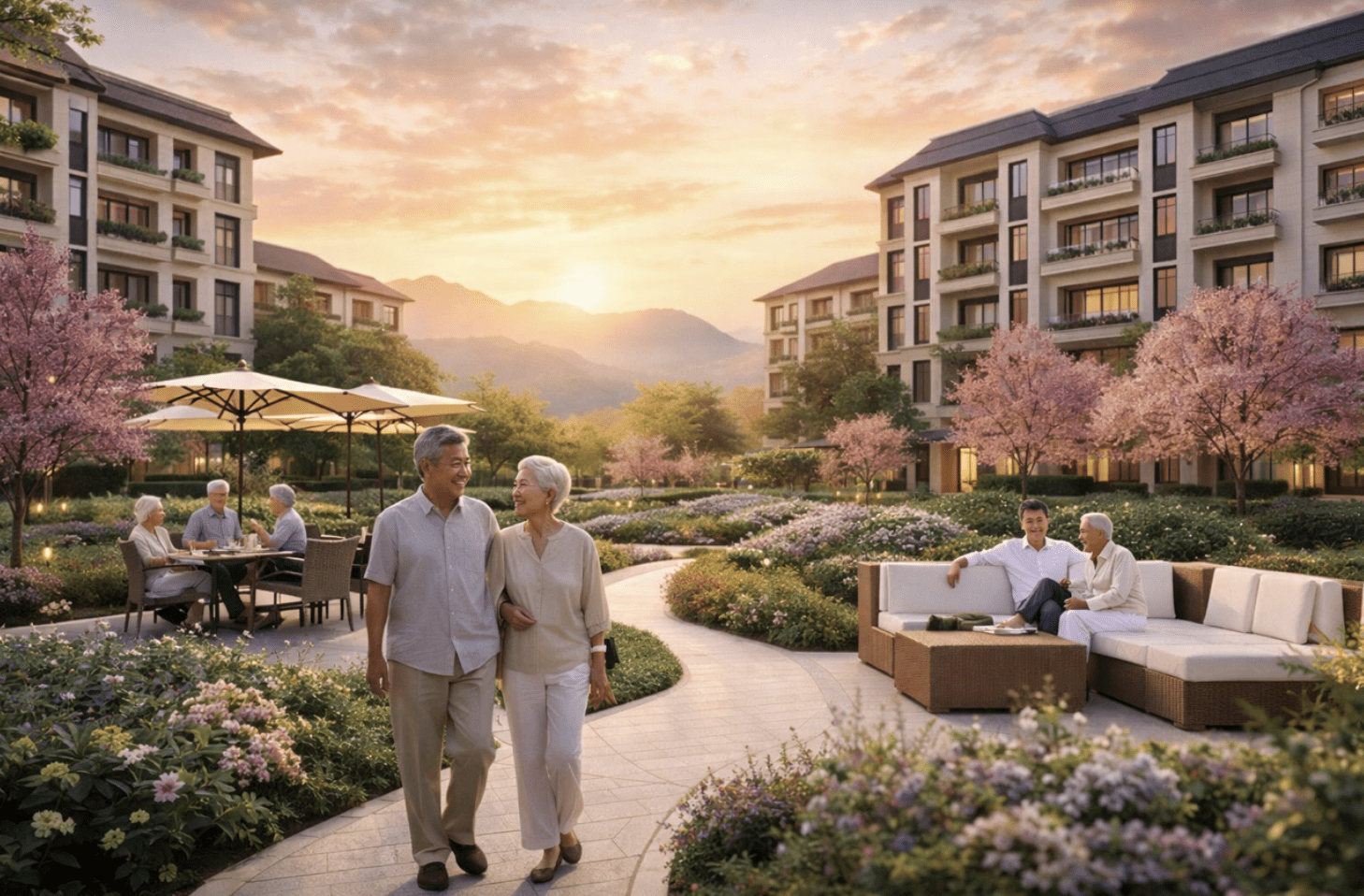
Across the kingdom, developers are waking up to what many call the “silver economy”, and they are building for it.
At the premium end sits The Aspen Tree, located within the green expanse of The Forestias in Bangna, just outside Bangkok. Designed for the over-50s, it blends nature, luxury living and integrated healthcare into one seamless experience. Prices typically start around THB 15 million and can exceed THB 60 million.
In simple terms, it is less about retirement and more about reinvention.
With its dedicated Health and Brain Centre, wellness programmes and lifestyle-driven design, The Aspen Tree by Magnolia offers a community where residents can stay active, independent and fully engaged, with the reassurance that expert care is always close at hand.
But while Bangkok sets the benchmark, the real momentum lies beyond the capital.
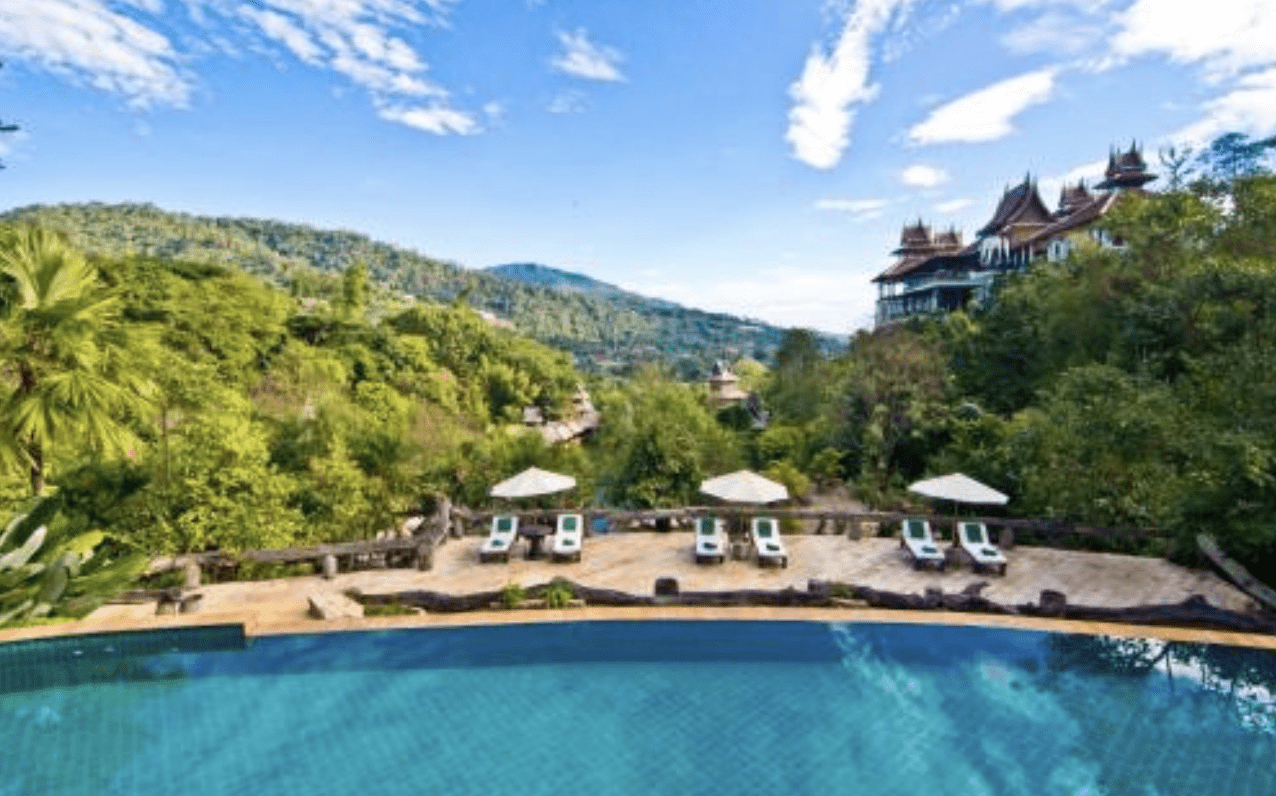
Head north to Chiang Mai, and the tone shifts immediately. Developments such as Vivobene Village and Care Resort Chiang Mai feel less like housing and more like a sanctuary.
Think also of mountain views, open space, fresh air and a slower rhythm of life. These communities are built around a simple but powerful idea. Ageing well is not just about care. It is about the environment. This is where a clear trend is emerging.
Thailand’s senior living market is moving away from dense urban settings towards greenfield destinations—places where nature, space and wellbeing take priority over congestion and convenience.
Chiang Rai, Hua Hin and Pranburi are following the same path. Low-rise, thoughtfully designed communities that blend residential living with hospitality and healthcare. They are designed for living, not withdrawing. And this is not just a Thai story.
International interest is rising, driven by Thailand’s long-standing strength in medical tourism. Increasingly, retirees are looking beyond short stays and towards long-term living.
The appeal is clear — high-quality healthcare, comparatively affordable costs and a lifestyle that balances comfort with care. But perhaps the most telling shift is who is making the decision.
More often than not, it is the family. Adult children, busy and often living elsewhere, are seeking solutions that allow parents to live independently but safely. A place where help is immediate if needed, yet unobtrusive if not.
In many ways, these developments are solving a modern dilemma.
How to provide care without compromising independence. Healthcare sits firmly at the centre of this evolution.
Today’s senior living communities are integrated ecosystems. On-site clinics, emergency response systems, specialist care and hospital partnerships are becoming standard.
Some go further, offering a full continuum of care, allowing residents to transition through different stages of support without ever leaving the community.
For Thailand, this presents a strategic opportunity. The Tourism Authority of Thailand has long promoted the kingdom as a global hub for wellness and medical travel. Senior living extends that proposition into long-stay and retirement markets.
Retirees are not seasonal visitors. They stay longer, spend steadily and contribute across multiple sectors, from healthcare to hospitality.
In tourism terms, they are high-value, low-seasonality guests. For developers, the attraction is equally compelling. This is not a cyclical market. It is a demographic certainty. Thailand is ageing steadily and irreversibly.
From Bangkok’s integrated luxury communities to the green, resort-style developments of the north and coastal regions, the direction is clear.
Thailand’s next property boom may not be loud. But it will be lasting.
About the Author
Andrew J Wood is a British-born travel writer and former hotelier who has lived in Thailand since 1991. Born in Yorkshire, England, he is a hotel graduate of Napier University in Edinburgh. In 1991, he joined the Shangri-La Hotel as Director of Marketing, beginning a long association with Thailand’s tourism and hospitality sector. During his career, he has held senior roles with several leading hotel groups, including Thistle Hotels, Shangri-La Hotels and Resorts and Minor Hotels, as well as the Landmark Lancaster Hotel Group and the Royal Garden Resort Group, now Anantara, part of Minor Hotels. He served as Vice President before moving into General Manager roles with the Royal Cliff Hotels Group in Pattaya and the Chaophya Park Hotel, Bangkok and Resorts.
A long-standing member of Skål International, Andrew has served as a Director on the Skål International board and held National, Regional, and Club leadership roles within the association. He writes widely on tourism and hospitality trends across Asia and is a regular guest lecturer at universities in the region.
(Images: The accompanying images are illustrative)