
Tuesday, October 27, 2026
Home Blog Page 33

SalamAir flies to Sylhet, Bangladesh

MUSCAT, Oman, 2 September 2026: SalamAir, Oman’s low-cost carrier, has launched its first direct flight between Muscat and Sylhet, Bangladesh, becoming the first foreign airline to operate scheduled services to the city. 

Sylhet becomes SalamAir’s third destination in Bangladesh, further strengthening international connectivity and expanding the airline’s presence across the Indian Subcontinent.  The other two destinations in Bangladesh are Dhaka and Chittagong.
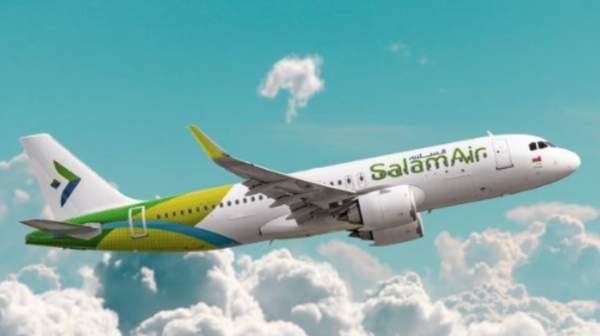
The inaugural flight departed Muscat International Airport on 1 September with a load factor of approximately 70%, reflecting encouraging demand for the new route. 

To commemorate the occasion, SalamAir CEO Adrian Hamilton-Manns and representatives met with Mahmudur Rahman, Chargé d’Affaires of the Embassy of the People’s Republic of Bangladesh in Oman, before the flight’s departure. 

Upon arrival at Osmani International Airport, the flight was welcomed with an official ceremony attended by senior representatives from SalamAir, airport authorities, government officials, aviation partners, and the media. 

The new service provides passengers with a convenient, affordable direct connection between Oman and Bangladesh, meeting the travel needs of one of the Sultanate’s largest expatriate communities.  It will also reduce the need for connecting journeys through other airports, offering passengers shorter travel times and greater convenience. 

Commenting on the launch of SalamAir, Chief Commercial Officer Steven Allen said: “The launch of our service to Sylhet, SalamAir’s third destination in Bangladesh, marks an important milestone in our continued expansion across the Indian Subcontinent. As the first foreign airline to operate scheduled services to Sylhet, we are opening a new international gateway and providing the Bangladeshi community in Oman with a more convenient and affordable travel option.” 

The launch of Sylhet reflects SalamAir’s broader network strategy to expand into markets with strong direct travel demand and connect underserved communities. It also supports the objectives of Oman Vision 2040 by strengthening the Sultanate’s international connectivity and contributing to the growth of the aviation and tourism sectors. 

Flights are available for booking through SalamAir’s website, mobile application, call centre and authorised travel agencies. 

Flight schedule

OV421 departs Muscat (MCT) at 0045 and arrives in Sylhet (ZYL) at 0735. Three flights weekly — Tuesday, Thursday and Saturday.
OV422 departs Sylhet (ZYL) at 0820 and arrives in Muscat (MCT) at 1120. (Tuesday, Thursday, and Saturday). 

The airline deploys an A321neo with 217 seats on the route with a flight time of four hours and 50 minutes.

About SalamAir 
SalamAir is Oman’s low-cost airline, commencing operations in 2017 with a mission to make air travel more affordable and accessible while strengthening connectivity to high-potential and underserved markets. Today, the airline operates a modern fleet of 18 Airbus A320neo Family aircraft, serving more than 40 destinations across the Middle East, Africa, Asia and Europe, with over 90 daily flights. In February 2026, SalamAir announced the completion of the Government of Oman’s majority ownership in the airline, supporting the Sultanate’s tourism ambitions, economic diversification and Oman Vision 2040. 

(Source: SalamAir)

Thailand can share success with Vietnam

BANGKOK, 2 September 2026: As Vietnam surges ahead, Thailand has an opportunity to turn competition into collaboration and take the lead in creating a new generation of multi-country ASEAN holidays

For decades, Thailand has been one of Southeast Asia’s great tourism success stories. Bangkok, Phuket, Pattaya, Chiang Mai and our wonderful islands are recognised around the world.

But Vietnam is gaining ground fast, and Thailand would be wise to pay close attention.

In 2025, Vietnam welcomed a record 21.2 million international visitors, more than 20 per cent above the previous year. Thailand received approximately 33 million, down 7.2%.

It is tempting to portray this simply as Vietnam rising while Thailand declines.

I think that misses a much bigger opportunity.

Vietnam isn’t replacing Thailand. Increasingly, it is learning how to share Thailand’s tourists.

Russia provides a fascinating example. Russian travellers have enjoyed a long love affair with Thailand, particularly Phuket and Pattaya. Thailand welcomed almost 1.9 million Russians in 2025.

But Russians are now also falling in love with Vietnam.

Vietnam received almost 690,000 Russian visitors in 2025, nearly three times the previous year’s total. Nha Trang and Phu Quoc are increasingly competing for travellers who might once have automatically chosen Phuket, Pattaya or Samui.

Should Thailand see this simply as a threat?

In my view, no.

Perhaps it is time to revisit one of ASEAN tourism’s oldest ambitions: getting its member countries to work together more effectively as one great regional destination.

Historically, that has often been easier to discuss than to deliver, but today’s traveller is changing. Better air connectivity, competitive fares and easier entry arrangements make two- and three-country holidays increasingly practical.

Thailand, with its extraordinary tourism infrastructure and Bangkok’s position as one of Asia’s great aviation gateways, is ideally placed to take the lead.

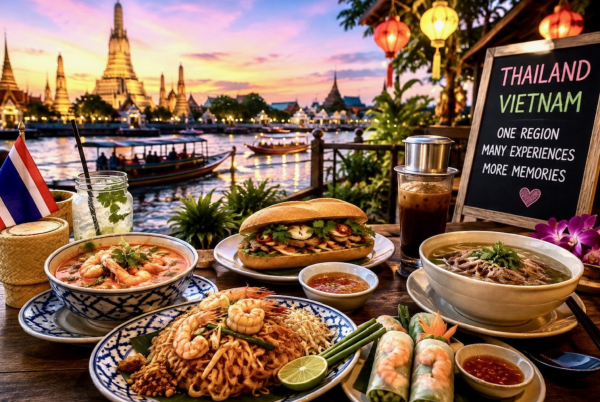
Imagine selling not simply Thailand, but Thailand plus Vietnam. Bangkok, Chiang Mai and Hanoi. Bangkok, Phuket and Phu Quoc. Or Thailand, Vietnam and Cambodia combined into one memorable Asian journey.

Instead of worrying about losing four nights of a 14-night holiday to Vietnam, we should ask whether working together could persuade that visitor to spend 18 or 21 nights in Southeast Asia.

This is not an entirely new idea. Specialist travel agents and DMCs have been offering multi-country ASEAN itineraries for as long as I can remember, certainly since I arrived in Thailand in 1991, and they have regularly featured around major regional gatherings such as the ASEAN Tourism Forum (ATF).

What feels different today is the scale of the opportunity. Perhaps now is the time to supercharge the concept, with stronger regional leadership and a clearer framework for cooperation. Thailand, with its tourism experience, connectivity and established position as a regional gateway, is ideally placed to take the lead.

The goal should be simple: make it easier and more attractive for visitors to combine two or three ASEAN countries in one holiday, while ensuring Thailand remains at the heart of that journey.

That, to me, is where the real opportunity lies.

Experience has taught me that destinations can never afford to take their visitors for granted. Vietnam is improving quickly, with excellent food, culture, beaches, resorts and tremendous value.

Under ASEAN, connected through food, people and culture.

Thailand still possesses formidable advantages: mature infrastructure, superb hotels, outstanding hospitality, food, wellness, shopping and an enviable position at the heart of the region.

So why not use them?

Thailand should take the initiative and help turn ASEAN’s long-standing ambition of greater tourism cooperation into something travellers can actually buy.

The question need not be: Thailand or Vietnam?

Increasingly, it could be: Thailand and Vietnam. Perhaps Laos too.

That is not surrendering tourists to our neighbours. It is giving them another reason to come to Southeast Asia, stay longer and, importantly, keep Thailand at the centre of their journey.

About the author
Andrew J Wood is a British-born travel writer and former hotelier who has lived in Thailand since 1991. A graduate of Napier University, Edinburgh, he has spent more than four decades in international hospitality and tourism.
A long-standing member of Skål International, Andrew is a former Director of Skål International and Past President of Skål International Asia, Thailand and Bangkok. He currently serves as Vice President of Skål International Bangkok. He writes extensively about travel, tourism, hospitality and developments shaping the industry across Thailand, ASEAN and the Asia-Pacific region.

TG opens recruitment for new CEO

BANGKOK, 2 September 2026: Thai Airways Public Company Limited announced on 1 September that it is recruiting for the position of Chief Executive Officer (CEO), with applications open from 7 to 27 September.  

Interested candidates can find qualifications, details, required documents, and the application process at https://career.thaiairways.com/dd-recruitment-2026/. 

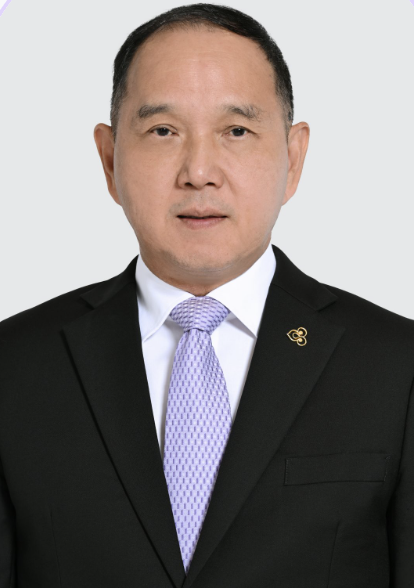
Photo credit: THAI. Chai Eamsiri, airline CEO.

Primary reasons for the executive search 

Completion of tenure:  The current CEO, Chai Eamsiri, is nearing the end of his term, which officially concludes in January 2027. The recruitment process (scheduled for September 7–27, 2026) is designed to ensure a smooth leadership transition well ahead of his departure.

Post-restructuring leadership: Having successfully steered the airline through its court-supervised corporate rehabilitation programme and financial restructuring following the pandemic, the board is seeking executive leadership to drive Thai Airways’ next growth phase, long-term fleet expansion, and market repositioning.

The incumbent CEO, Chai Eamsiri, is also the airline’s secretary to the board of directors, according to the airline’s website. He took office on 1 February 2023, under a fixed term aligned with Thai Airways’ court-monitored restructuring plan. His current contract ends in January 2027.

Under THAI’s Business Rehabilitation Plan, the airline is completing its capital restructuring and preparing to exit court supervision. Initiating an executive search several months in advance is standard practice to ensure leadership continuity as the company transitions back to full operational normalisation and SET re-listing routines.

Opening applications four to five months ahead of the January 2027 transition gives the nomination committee and creditors’ committee sufficient time to vet candidates without creating an operational vacuum.

Industry sentiment generally views the announcement as a routine, scheduled governance action following the successful turnaround phase under Chai’s tenure.

THAI’s executive nomination committee is handling qualifications and candidate selection as part of the airline’s planned leadership transition.

Wanted: Director of Sales

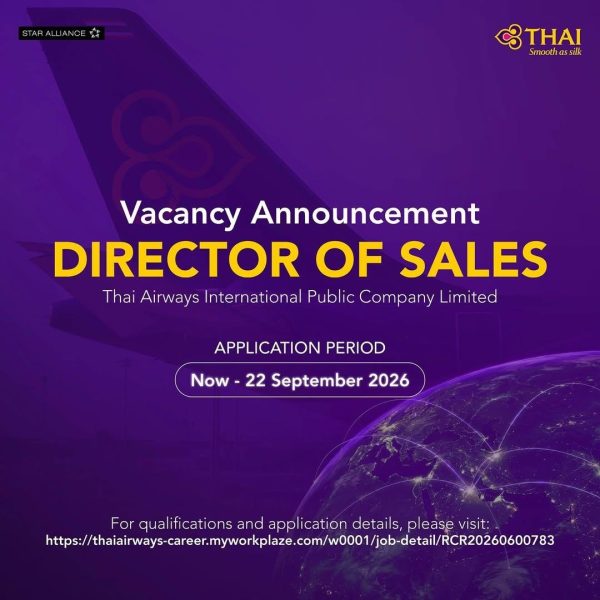
In addition, the airline is recruiting a Director of Sales, according to a Facebook post from the airline’s communications department.

“THAI Airways is looking for an experienced and visionary leader to join us as Director of Sales to lead THAI Airways’ global sales organisation to drive sustainable and profitable revenue growth, strengthen market position and maximise the commercial value of THAI’s network through effective sales execution, revenue quality and channel/customer mix.”

Apply for Director of Sales at THAI⁠ click https://thaiairways-career.myworkplaze.com/…/RCR2026060…

(Source: THAI)

Four Points by Sheraton Sydney, Central Park sold

SYDNEY, 1 September 2026: Four Points by Sheraton Sydney, Central Park has been sold to Singapore-based Hoi Hup Realty Pte Ltd (“Hoi Hup”) for USD201.8 million, marking the first time the group has entered the Australian property market.

The transaction underscores continued investor appetite for quality hotel assets in Sydney’s central business district.

Photo credit: Four Points by Sheraton Sydney, Central Park.

Gus Moors and Andrew Langsford from JLL’s Hotels & Hospitality Group completed the transaction with Michael Simpson from CBRE Hotels.

“This transaction highlights the ongoing strength of the Sydney hotel investment market,” said JLL’s Hotels & Hospitality Group Managing Director Gus Moors. “Investment-grade hotel assets in Sydney remain tightly held, and opportunities to acquire properties of this calibre are rare. The competitive sale process reflected strong interest from both domestic and international investors.”

Andrew Langsford added: “Four Points by Sheraton Sydney, Central Park offered investors the opportunity to acquire a modern, well-located asset in the heart of Tech Central. The hotel’s strategic position within this rapidly developing precinct, combined with recent capital improvements, positioned it as an attractive investment proposition.”

The hotel, which opened in late 2018, has recently undergone extensive capital expenditure works, including converting an under-utilised conference floor into 12 new guest rooms, as well as renovating and repositioning the ground-floor food and beverage offering to capitalise on the area’s residential density and vibrant student population.

Four Points by Sheraton Sydney, Central Park features 309 guest rooms including 45 suites, together with a recently renovated bar and restaurant (“Dizzy Bird”), fitness centre, 44 dedicated car parking spaces, and 270 sqm of conference and meeting space.

The property is located at 88 Broadway, Chippendale, forming part of Tech Central, a major technology and innovation district in Sydney. The precinct comprises several multi-billion-dollar office projects, including Dexus and Frasers Property’s USD2.5 billion Central Place Sydney, which encompasses over 140,000 sqm of office space. A major redevelopment adjacent to Central Railway Station will see Atlassian accommodate 4,000 employees as the anchor tenant of a USD1 billion, 39-storey timber tower.

The property benefits from excellent connectivity via Central Station, Sydney’s busiest transport hub, which services trains, buses, light rail, and the recently opened Metro line.

The hotel is located near major demand drivers, including Chinatown, Surry Hills, the University of Sydney, the University of Notre Dame, the University of Technology Sydney, and the Darling Harbour convention and entertainment precinct.

Marriott International manages the hotel under the Four Points by Sheraton flag.

(Source: JLL)

Qatar Airways and Uber begin partnership

DOHA, Qatar, 1 September 2026: Qatar Airways has launched its latest partnership with Uber for Business to enhance the corporate travel experience by delivering greater flexibility and convenience for businesses and corporate travellers worldwide.

Through this partnership, members of Qatar Airways’ corporate travel programme, Beyond Business, can redeem Qrewards for Uber ride vouchers, credited directly to the user’s Uber wallet and used for global business travel.

Photo credit: Qatar Airways.

By transforming corporate ground transportation and employee mobility, Uber for Business delivers the seamless, premium travel experiences that modern workforces expect. At the same time, its intuitive central dashboard gives travel managers the precise oversight and automated expensing needed to enforce policy compliance and maximise savings.

This integration extends Qatar Airways’ premium corporate offering beyond air travel, offering businesses of all sizes greater flexibility in managing end-to-end journeys and providing corporate travellers with priority services and seamless access to ground transportation.

The collaboration creates additional opportunities for corporate travellers to save and earn rewards while travelling for business. It also allows businesses to track and control travel spending more effectively.

Beyond Business members can enjoy free-of-charge high-speed Wi-Fi on up to 323 Starlink-enabled daily flights, earn and redeem Qrewards, access Privilege Club tier offers, and receive priority baggage benefits.

(Source: Qatar Airways)

Sportcations: The next big travel trend

SINGAPORE, 1 September 2026: Active travel or ‘sportcations’ are becoming the next big travel trend, with Trip.com Group seeing a strong double-digit increase in booking Gross Merchandise Value (GMV). 

From cycling through mountain passes to joining diving camps and wellness retreats, active travel is becoming a defining part of how people experience the world.

A growing passion for active travel

This shift is gathering pace across the full travel journey, with searches for active sports experiences growing by over 30% year on year, with markets witnessing substantial increases: 80% in Singapore, 65% in Malaysia, and 50% in the UK, while France, Italy, Germany, and Spain all recorded triple-digit growth.

Total travel booking GMV has increased by almost 40%, with markets such as South Korea (+150%), Singapore (+104%), and Thailand (+200%) seeing bookings more than double over the past year. The same is seen for European travellers. The UK saw bookings grow by over 100%, and Germany by over 600%, highlighting that travellers are increasingly planning holidays around experiences that get them moving.

Travellers are following their passions

Active travel is taking many forms, reflecting the wide range of interests shaping today’s holidays. Globally, diving ranks as the most-booked sporting experience, followed by activities such as ziplining, paragliding, skydiving and cycling.

Across individual markets, preferences vary, giving destinations their own unique sporting identities. Adventure activities prove especially popular across Asia. Diving leads bookings in South Korea, Malaysia, Germany, Spain, Italy and France. At the same time, skydiving ranks first in Hong Kong, Taiwan and Thailand, while Japanese travellers show the strongest preference for cycling.

Destinations drive signature experiences

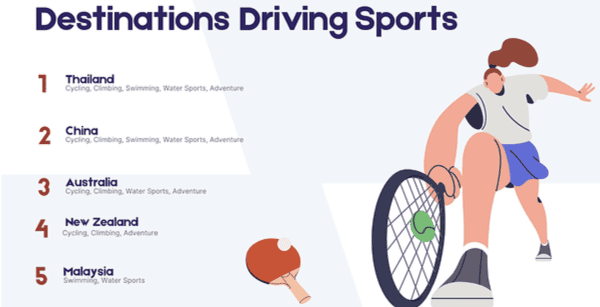
As travellers increasingly build holidays around the activities they love, certain places are emerging as go-to destinations for particular passions. The data shows that five destinations stand out across multiple types of active travel, with Thailand, China, Australia, New Zealand and Malaysia appearing among the leading destinations for cycling, climbing, swimming, water sports and adventure experiences.

Thailand leads the way, appearing across all five categories and ranking as the leading destination for diving, while also featuring among the top destinations for cycling, water sports and adventure activities. This breadth of experiences makes it a particularly strong destination for travellers looking to combine different activities within one trip.

Australia stands out as another versatile destination, attracting travellers for cycling, rock climbing, surfing and kayaking, as well as adventure activities such as paragliding and skydiving. Its presence across multiple categories reflects the growing appeal of destinations where travellers can combine diverse active experiences within the same holiday.

From travelling together to inspiring others

While the passion for active experiences is shared globally, travel patterns differ across regions. In Europe, the average travel party is one to two people, suggesting many travellers are embarking on solo adventures or trips with a partner. Across the Asia-Pacific region, the average group size increases to two to three, highlighting the popularity of travelling with friends and family to share new experiences.

These experiences are also shaping how travellers engage online. Active travel-related posts on ‘Trip.Moments’ have nearly doubled globally, growing by 99% year on year as more travellers document their adventures and inspire others to follow in their footsteps. Several markets have seen particularly strong growth in community sharing, including Spain (224.9%), the UK (122.2%), Italy (118.9%), China (96.2%) and France (86.9%), reflecting the growing popularity of active travel across both Asia and Europe.

The conversations are becoming more engaging, too. While the number of posts has nearly doubled, comments have grown twelvefold compared with the previous year, demonstrating that active travel is encouraging richer conversations rather than simply more content. From destination tips to training advice and first-hand recommendations, travellers are helping one another discover their next active escape, creating a cycle where inspiration leads to bookings and every journey inspires the next.

As travellers continue looking for more meaningful ways to explore the world, active travel is evolving from a niche interest into a mainstream travel trend. Whether it is mastering a new skill, training for a personal goal or simply enjoying the outdoors, active experiences are helping people build stronger connections with destinations and with each other.

(Source: Trip.com)

WTTC recruits ClubMed as global member

SINGAPORE, 1 September 2026: The World Travel & Tourism Council (WTTC) welcomes ClubMed Lifestyle Group as a Global Member. 

Founded in 1950, Club Med operates 69 premium resorts worldwide and has established a global sales network spanning six continents and over 40 countries and regions.

Club Med’s products include sun‑and‑beach destinations, mountain and ski locations, and near‑urban destinations. For its mountain‑and‑ski offerings, Club Med has a presence in all four of the world’s major ski destinations: the European Alps, Hokkaido in Japan, North America and Northeast China. 

Club Med has a 76-year brand heritage, a premium all-inclusive resort model and a distinctive G.O. (Gentils Organisateurs, or “Gracious Organisers”) culture. These qualities enable Club Med to provide guests with immersive vacation experiences characterised by active participation and emotional connection. 

Leveraging Club Med’s brand influence and global operating capabilities, ClubMed Lifestyle Group expands its vacation offerings through an asset-light model, including Integrated Vacation Destinations and Cultural-Tourism Complexes, as it continues to build diversified vacation lifestyles. With the mission of “Better Vacation, Better Life”, it is committed to delivering high-quality vacation experiences to guests worldwide.

WTTC President & CEO Gloria Guevara said: “We are delighted to welcome ClubMed Lifestyle Group as a Global Member. For more than seven decades, Club Med has helped shape the global leisure travel landscape, building a trusted premium brand with a worldwide footprint and a strong reputation for delivering exceptional guest experiences. Through its combination of world-class resort operations, innovative vacation concepts and expanding lifestyle offerings, ClubMed Lifestyle Group reflects the dynamism and long-term vision that are driving the future of Travel & Tourism.”

Fosun International, Chairman of ClubMed Lifestyle Group, CEO Xiaoliang Xu said: “We look forward to engaging in business discussions with tourism business leaders and experts from across the globe. We hope to explore more collaboration opportunities and jointly identify the future development directions of the tourism industry.”

(Source: World Travel & Tourism Council)

AAHK showcases sustainability path

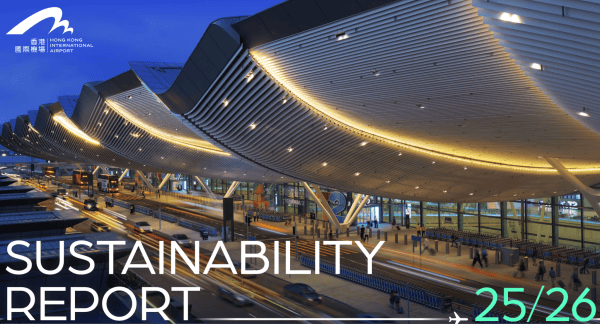
HONG KONG, 1 September 2026: Airport Authority Hong Kong (AAHK) has released its Sustainability Report 2025/26, outlining the sustainability performance of Hong Kong International Airport (HKIA) in the fiscal year ending 31 March 2026.

AAHK has continued to implement its Ascend sustainability strategy, focusing on 24 strategic goals across four sustainability pillars: Environmental Excellence, Operational Excellence, Thriving Economies and Societies, and Thriving People.

Photo credit: AAHK

Highlights of this year’s Sustainability Report

Overview

HKIA’s Flood Resilience Studies were honoured with the highest Platinum award at the Airports Council International Asia-Pacific & Middle East Green Airports Recognition 2026.

For the first time, the Sustainability Report incorporated a Nature-related Financial Disclosure Statement, making HKIA one of the first airports in Asia to adopt the recommendations of the Taskforce on Nature-related Financial Disclosures.

AAHK strengthened its double materiality assessment, which identifies sustainability-related impacts, risks, and opportunities for stakeholders and the authority, through an in-depth review of the global risk context, value chain mapping, and megatrend analysis.

Environmental excellence

AAHK achieved a target to increase its recyclables recovery rate by 25% by 2025 against a 2018 baseline, demonstrating its commitment to waste management.

Completed deployment and monitoring of 500 additional artificial reef units in North Lantau waters to provide additional shelter and nursery grounds for marine species.

Thriving economies and societies

New passenger departure facilities and the Coach Hall at the expanded Terminal 2 (T2) were commissioned, strengthening HKIA’s capacity to meet growing passenger demand while enhancing passenger experience.

Launched the “Park & Fly” and “Park & Visit” services. “Park & Fly” allows eligible vehicles from Guangdong and Macao to travel via the Hong Kong-Zhuhai-Macao Bridge (HZMB) to an automated car park adjacent to HKIA for onward flights worldwide. In contrast, “Park & Visit” allows travellers arriving by car via the HZMB to park at designated facilities and conveniently visit destinations across Hong Kong.

Operational excellence

Conducted 36 drills and exercises, including a full-scale passenger departures trial at T2 and an aircraft crash and rescue exercise, as well as 79 training sessions and workshops, covering various operational and emergency scenarios to reinforce HKIA’s ability to operate reliably under a wide range of conditions.

Substantially completed Phase 2 of the Digital Apron and Tower Management System, installing eight additional cameras across the Three-runway System (3RS) to strengthen real-time monitoring, situational awareness and operational planning.

Implemented the Arrival Baggage Tracking System and launched a real-time visualisation dashboard at Terminal 1 baggage halls to track baggage movement from aircraft stands.

Completed the first phase development of a human-like customer service avatar powered by a Generative Artificial Intelligence system to handle trilingual passenger enquiries.

Thriving people

AAHK enhanced the Staff Recognition Programme with a structured, three-tier recognition framework to strengthen our culture of appreciation across the organisation.

Over 94,000 hours of in-person and online training were conducted, including sessions delivered by managerial staff who share their expertise on diverse topics to broaden perspectives and support professional development

(Source: AAHK)

Oceania Sonata floats out

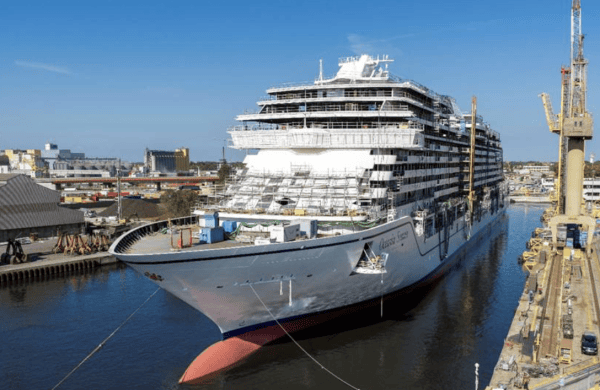
SINGAPORE, 1 September 2026: Oceania Cruises has marked a major milestone in the construction of its newest ship, Oceania Sonata, as the vessel was floated out at the Fincantieri shipyard in Marghera, Italy last week. 

Featuring 695 rooms and suites, the ship now moves from dry dock to the fitting-out berth, where work will continue on her interiors ahead of her highly anticipated debut in August 2027.

Photo credit: Oceania Cruises

Oceania Sonata is the first of five ships planned for the line’s new Sonata Class. It will be followed by sister ship Oceania Arietta in 2029, with three additional ships scheduled for delivery in 2032, 2035 and 2037. 

The Sonata Class represents the next generation of Oceania Cruises’ small-ship luxury philosophy, combining more space, elevated suite accommodations, and enhanced culinary experiences with the line’s signature destination- and culinary-focused itineraries.

With her exterior structure now complete, work will turn toward bringing Oceania Sonata’s interiors and onboard experiences to life. At approximately 86,000 gross tons, Oceania Sonata will be nearly 30% larger than Oceania Allura, yet will feature only 90 additional guest accommodations, creating an exceptional sense of space and comfort throughout her elegant interiors. The ship will offer a serene adults-only environment, with expansive public spaces, including bars and lounges, plus thoughtfully designed guest suites and rooms.

Oceania Sonata will embark on a wide-ranging inaugural season from August 2027 through April 2028, visiting more than 90 destinations across Europe, the Caribbean, Panama Canal, Mexico, and Central and South America.

(Source: Oceania Cruises)

Club Med breaks ground on Samui

SAMUI, Thailand, 1 September 2026: A groundbreaking ceremony for the new Club Med Koh Samui resort was held last week, marking a significant milestone for both Club Med and Central Capital Group, one of Thailand’s leading business conglomerates.

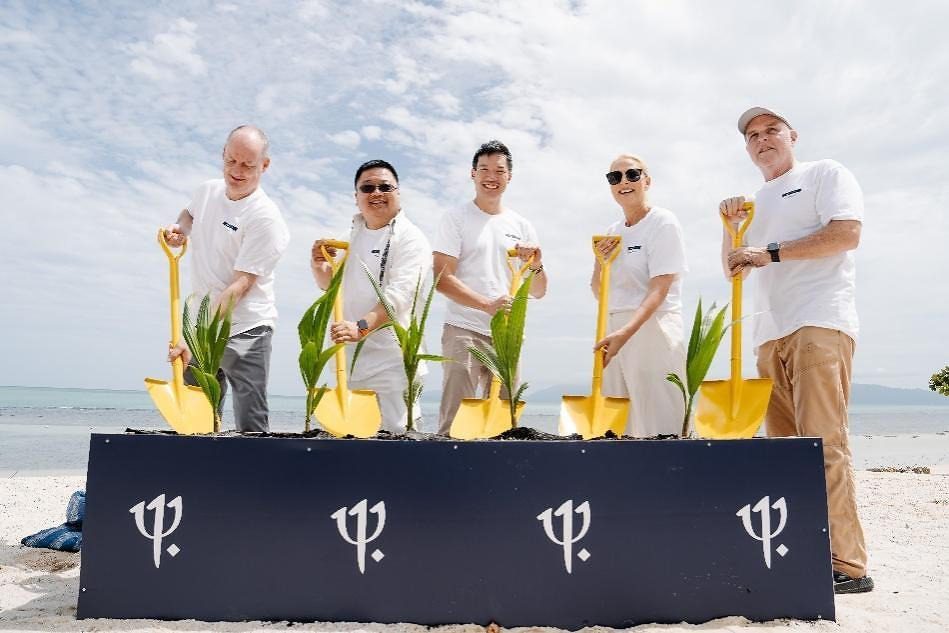
The event included a traditional ceremony and a symbolic planting of native Samui coconut seedlings, signifying a tribute to the locale, a new beginning, and a vision of future success. This follows the signing of the Hotel Management Agreement (HMA) earlier this year.

(Left to Right) Jason Dunn, Managing Director, CIO, Central Capital Group; Andrew Xu, Deputy CEO & Chief Growth Officer, Club Med; Phoom Chirathivat, Managing Partner, Co-founder Central Capital Group; Rachael Harding, CEO, Southeast Asia and Pacific, Club Med; Charles Rubin, Managing Director, IR, GC and Risk, Central Capital Group.

Club Med Koh Samui resort will be a Club Med Exclusive Collection Resort, the third in this product range in Asia and the Pacific region. Club Med Exclusive Collection Koh Samui will mark the brand’s first Exclusive Collection Resort in Thailand and second in the country, following Club Med Phuket, which opened its doors 40 years ago in 1985.

This expansion of Club Med and the Exclusive Collection product range continues the upscale trajectory of Club Med’s global upgrade, which was completed in 2024. Since then, the group has focused on accelerating the development of new resorts around the globe, including both Premium All-Inclusive and Exclusive Collection resorts.

With the ambition to double the number of resorts globally by 2030, Club Med’s development expansion roadmap is well-paced to deliver new resorts such as Club Med South Africa (newly opened in July 2026) and a brand-new beach resort, Club Med Borneo, in Kota Kinabalu, Malaysia (end of 2026).

Other upcoming projects include opening resorts in Canada, Italy, Oman, and Indonesia in the next few years.

(Source: Club Med)