
Tuesday, November 3, 2026
Home Blog Page 32

New Zealand targets 3.9m visits in 2027

SINGAPORE, 10 September 2026: Tourism New Zealand forecasts international visitor arrivals will reach 3.9 million and international visitor spend will grow to AUD14.4 billion by June 2027.

New insights from the International Visitor Survey (IVS) for the year to June 2026 show tourism remains one of New Zealand’s most important export industries, with international visitor spend continuing to support businesses, jobs and communities across the country.

Tourism New Zealand Chief Executive René de Monchy says the results highlight the role tourism plays in strengthening New Zealand’s economy.

“Tourism is New Zealand’s second largest export earner, and these results show the value international visitors bring to the country,” says de Monchy. “Visitor spending flows through our regions, supporting accommodation providers, tourism operators, restaurants, retailers and communities right across Aotearoa New Zealand.”

The year-to-June result provides a solid base for the year ahead, with Tourism New Zealand focused on growing tourism value to AUD14.4 billion this fiscal year.

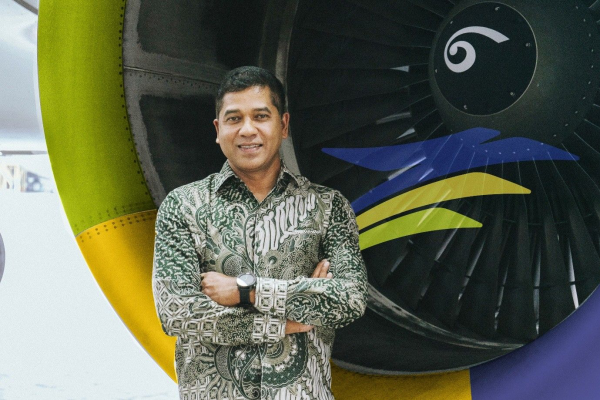
Tourism New Zealand Chief Executive René de Monchy

“International visitor spend and arrivals are both moving in the right direction, giving us a good platform to keep building value for New Zealand, but it’s particularly good to see that visitor value has continued to grow, with the average spend per visit up 10.2% yoy to AUD4537,” says de Monchy.

Spend growth has been particularly strong from New Zealand’s top three visitor markets: Australia up 25%yoy to AUD4.4 billion, the United States up 20% yoy to AUD2.2 billion and China growing 26% yoy to AUD1.5 billion. New Zealand’s top 15 visitor markets, where Tourism New Zealand undertakes marketing activity, contribute 85% of visitor value to New Zealand.

Tourism New Zealand’s audience research also shows a record 183 million people are considering a trip to New Zealand. The larger pool of potential visitors gives Tourism New Zealand more opportunity to reach high-intent audiences and encourage them to book.

“People who are thinking about a trip to New Zealand are telling us they feel confident about international travel,” says de Monchy. “That confidence, combined with a favourable exchange rate for visitors, strong demand for the experiences New Zealand offers and projected growth in airline capacity of 5% in the next six months, puts us in a good position for tourism to contribute more to New Zealand this fiscal year.”

Tourism New Zealand will use three themes — food and beverage, active escapes and wellness — to connect potential visitors with experiences across the regions and help create urgency to book.

Active escapes will show New Zealand as a great place for outdoor holidays, from walking and cycling to other ways visitors can enjoy our landscapes. Wellness will show New Zealand as a place to slow down, spend time in nature and feel refreshed, with te ao Māori helping shape the story. Food and beverage will highlight New Zealand’s unique food story, including our landscapes, seasons, local produce, culture and the New Zealand Michelin Guide.

Visitor spending on dining has increased year on year to AUD2.07 billion, showing strong interest in New Zealand’s food and beverage scene. This aligns with Tourism New Zealand insights showing 84% of potential visitors want to try local cuisine.

The IVS also showed visitor satisfaction remained high, with 91.3% of visitors saying New Zealand met or exceeded their expectations, illustrating that New Zealand and the tourism businesses that deliver visitor experiences provide a high-quality experience that visitors will return home to recommend.

“New Zealand’s tourism businesses, from hotel brands that deliver a consistent experience around the country to the unique visitor experiences offered by families from Northland to Rakiura, Stewart Island, are what drives the success of this sector, and I thank them for making our job of promoting Aotearoa New Zealand to the world so rewarding.”

Regional growth remains a key part of the opportunity. International visitor spend is up across 27 of 31 regions according to MBIE’s Monthly Regional Tourism Estimates.

(Source: Tourism New Zealand)

Extraordinary Travel Fest returns to Bangkok

BANGKOK, 10 September 2026: Award-winning travel photographer, podcaster, blogger, and filmmaker Ric Gazarian announces the return of the Extraordinary Travel Festival (ETF III) to Bangkok, Thailand. 

Scheduled for October 22-25, 2026, at the Ambassador Hotel on Bangkok’s Soi Sukhumvit 11, the third iteration of the festival promises to be an unparalleled convergence of the world’s most accomplished and adventurous travellers.

Photo credit: ETF.

“The Extraordinary Travel Festival is more than just an event; it’s a celebration of global exploration and human connection,” says Gazarian, whose website, GlobalGaz, features stories and images from his extensive travels. “Following the tremendous success of our previous gatherings, we are excited to bring together this unique community once again in a city that truly embodies the spirit of adventure.”

ETF III is designed for both seasoned mega-travellers (those who have visited many countries, including all 193 UN sovereign nations) and passionate individuals aspiring to push their own travel boundaries. 

Attendees will gain invaluable insights, share captivating stories, and learn practical strategies from those who have truly gone the distance. While many speakers and attendees have achieved the rare feat of visiting all 193 sovereign countries — an accomplishment that about 500 people can claim — the festival aims to inspire and inform everyone who shares a deep love of travel, regardless of their current country count.

The festival will feature over 40 dynamic speakers, delivering engaging keynotes, insightful breakout sessions, and lively panel discussions. 

This year’s lineup 

Jamie Aleman: Travelled to every country in the world, both the North and South Pole, and has travelled to outer space.

Jason Wang: Recently completed summiting Mount Everest, completing all Seven Summits.

Kach Medina Umandap: Has visited every country in the world, being the first to complete this quest on a Filipino Passport.

Thor Pedersen: Travelled to every country on an unbroken 10-year journey without ever flying. 

“Imagine the world’s modern-day Marco Polos gathered in a single location,” Gazarian adds. “The energy, enthusiasm, and vast knowledge exchanged about travel and country-collecting at our previous events were truly transformative.”

The largest mega-travel clubs will be prominently represented, including Every Passport Stamp (40,000 members), Travel Massive (80,000 members), Pangea, Most Travelled People (40,000 members), and NomadMania (50,000 members), fostering an unparalleled networking environment.

Building on the success of past festivals, ETF III will offer attendees a robust speaker schedule, complemented by parties and a gala dinner. 

Ticket Information: Attendees wishing to reserve a spot can now purchase tickets online at: https://extraordinarytravelfest.com/tickets/

Use code BANGKOK to save on your ticket to this event.  

(Source: ETF)

Marriott teams up with MyCEB to promote events

KUALA LUMPUR, 10 September 2026: Marriott International is working with Malaysia’s convention bureaus to present the country as a connected, multi-destination proposition for regional planners. 

The company has launched Destination Convention Malaysia in collaboration with the Malaysia Convention & Exhibition Bureau (MyCEB), Business Events Sarawak (BESarawak) and Sabah Convention Bureau. 

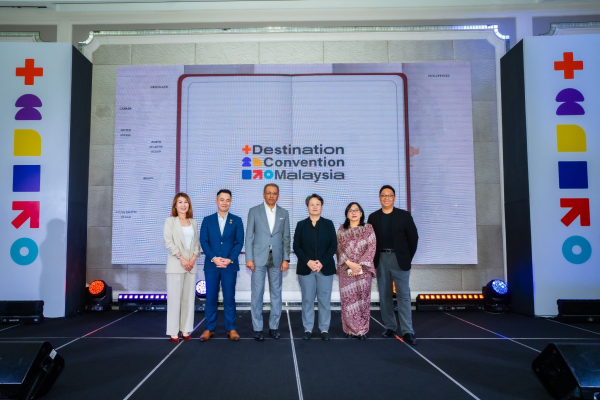
From L to R: Joyce Wong, Country Director of Sales and Distribution, Malaysia, Jason Tan Chin Foo, Chief Executive Officer, Business Events Sarawak (BESarawak) and Chair, ICCA Asia Pacific Chapter (2026–2028), George Varughese, Market Vice President – Malaysia, Marriott International, Tan Mei Phing, Chief Executive Officer, Malaysia Convention & Exhibition Bureau (MyCEB), Noredah Othman, Chief Executive Officer, Sabah Convention Bureau; and Zhamir Faris Zulkifli, Director, Field Marketing, Malaysia at the launch of Destination Convention Malaysia.

The new platform brings together Malaysia’s convention infrastructure, hospitality capabilities and destination experiences, giving organisers a broader view of what the country can offer across different locations and event formats.

Rather than focusing on a single city or venue, the initiative pairs Kuala Lumpur’s international connectivity and established convention infrastructure with the cultural, natural and incentive experiences available across Sarawak, Sabah and other destinations in Malaysia. 

More choice within a single market

Destination Convention Malaysia makes it easier for regional organisers to identify locations and experiences suited to different event objectives and delegate profiles.

Malaysia’s offering spans major urban convention centres, resort and leisure destinations, nature-based experiences and locations with distinctive cultural identities. This gives planners the flexibility to host large-scale conventions, corporate meetings, incentive programmes and experience-led events within one national market.

“Regional planners increasingly want destinations that can provide strong infrastructure while also giving delegates a meaningful experience outside the formal programme,” said Marriott International Market Vice President Malaysia George Varughese. “Malaysia can offer both. It combines international connectivity and established convention capabilities with an extraordinary variety of cultures, landscapes and experiences. Through Destination Convention Malaysia, we want to make that full proposition more visible and accessible to planners across Asia-Pacific.”

The initiative was unveiled during Malaysia Means Business, an industry forum convened by Marriott International at the St Regis Kuala Lumpur. The event brought together leaders from the country’s business events, destination and hospitality sectors to examine how Malaysia could capture a greater share of the regional meetings, incentives, conferences and exhibitions market.

A panel discussion featuring senior representatives from Marriott International, MyCEB, BESarawak and Sabah Convention Bureau explored how Malaysia could capture a greater share of the Asia-Pacific MICE market.

Panellists explored how organiser and delegate expectations are changing. Personalised programmes, wellness, sustainability, technology and experiences connected to the host destination are playing a greater role in event planning, alongside practical considerations such as accessibility, accommodation and venue capacity.

“Malaysia’s strong business events pipeline reflects the confidence organisers have in our capabilities, and our opportunity now is to build even greater awareness of the diversity we can offer across the country,” said MyCEB Chief Executive Officer Tan Mei Phing.

“By bringing destinations together through Destination Convention Malaysia, we can showcase the collective strength of Malaysia’s business events ecosystem and present an even more compelling proposition to regional and international organisers.” 

Marriott International currently operates 65 hotels across Malaysia, giving regional planners access to accommodation and event facilities across key business and leisure destinations. Its portfolio provides access to major convention and event facilities including Marriott Putrajaya International Convention Centre, Renaissance Kuala Lumpur Hotel & Convention Centre, Courtyard by Marriott Kuala Lumpur South, Desaru Coast Conference Centre and Langkawi International Convention Centre.

(Source: Marriott International)

TransNusa launches Bali-Phuket route

BALI, Indonesia, 10 September 2026: TransNusa officially launched its maiden nonstop flight between Bali and Phuket on 9 September.

Flight 8B 541 departed I Gusti Ngurah Rai International Airport at 1130 for Phuket on 9 September, linking two of Southeast Asia’s most iconic beach destinations. 

Datuk Bernard Francis.

The airline said in its launch promotions that the new route eliminates tedious layovers, turning a previously long travel day into a smooth four-hour flight.

“Today we celebrate more than just a new flight; we are bridging two world-class tourism capitals,” said TransNusa Group Chief Executive Officer Datuk Bernard Francis. “As Bali’s International Premium Airline, our goal is to design ultimate island experiences that bring the best of sun, sea and healing straight to our passengers. 

“This route was established to boost tourism in the region, create new economic opportunities, and further strengthen TransNusa’s hub in Bali. By providing a direct link, we make it easier than ever for global travellers to experience the unique cultures of Phuket, Bali and beyond Bali in a single itinerary”.

TransNusa has recently launched new services connecting island destinations directly with Bali, giving travellers direct access to Indonesia’s hidden gems such as Wakatobi, Lombok, Manado, and Bima.

Wakatobi: Home to the world’s second-largest barrier reef, this remote marine haven is a top spot for world-class diving and pristine underwater ecosystems.

Lombok: A premier leisure escape featuring holistic health retreats, oceanside yoga, and traditional Sasak healing therapies. In addition, Lombok is also known for its pristine coastal and volcanic adventures and high-octane sports tourism, including world-class surfing and the Mandalika international racing circuit.

Manado: Located in North Sulawesi, this diving destination is framed by dramatic volcanic beauty and serves as the gateway to the world-renowned Bunaken National Marine Park.

Bima: Situated on Sumbawa Island, Bima offers rugged landscapes, rich cultural heritage, and serves as an ideal entry point for surfers and adventure seekers looking for raw natural beauty.

Expanding Horizons: Gateway to Singapore and Perth

TransNusa also bridges Bali with major international hubs beyond Thailand. The airline operates routes from Bali to Singapore and Perth, marking a successful expansion that connects Western Australia.

Flight schedule: Bali-Phuket

The new Bali–Phuket route operates four times weekly on Monday, Wednesday, Friday, and Sunday, and will expand to daily service on 3 October 2026.

8B541 departs Denpasar (DPS) at 1130 and arrives in Phuket (HKT) at 1435. 
8B542 departs Phuket (HKT) at 1535 and arrives in Denpasar (DPS) at 2035.

For the four-hour scheduled flight from Bali to Phuket, TransNusa deploys an Airbus A320 with 174 seats.

To celebrate the Bali-Phuket launch, TransNusa offers an introductory promotional fare starting from IDR2,399,000 (USD135) one-way, bookable via the airline’s website. 

(Source: TransNusa)

Cathay and Google tracking contrails

HONG KONG, 9 September 2026: Cathay Pacific and Google have announced a partnership to advance research on contrails and their contribution to aviation’s climate impact. 

Cathay Pacific is Google’s first commercial airline partner in Asia-Pacific to trial its AI-powered contrail mitigation technology, and the first airline globally to test contrail avoidance on ultra-long-haul flights. 

From left to right: Captain Tony Pringle, Cathay Pacific Line Operations Manager, Lawrence Fong, Cathay Director Digital and IT, Michael Yue, Managing Director and General Manager, Google Hong Kong and Kemal Armada, Product Manager, Climate & AI, Google.

The companies have started trials to evaluate the operational feasibility and constraints of contrail avoidance across Cathay Pacific’s extensive global network. The trials will contribute valuable new data to global contrail research and advance understanding of contrail formation and avoidance in the Asia-Pacific region, which has been underrepresented in previous trials. The real-world data gathered through the trial would help the industry better understand the climate benefits of contrail avoidance in actual operational environments.

The thin white lines that sometimes form behind aircraft in the sky are known as contrails, or condensation trails. They form when aircraft fly through certain cold, humid conditions at high altitude. While many disappear quickly, some persist and spread into broader cloud formations that can trap heat in the atmosphere. 

Previous research suggests these persistent contrails could account for around one-third of aviation’s total climate impact, making them an important area of study alongside carbon dioxide (CO₂) emissions.

Cathay recognises aviation’s contribution to climate change and is working to address climate impacts through multiple approaches. Reducing CO₂ emissions remains a primary focus for Cathay through fleet modernisation, operational efficiency improvements and the adoption of sustainable aviation fuel (SAF). At the same time, the airline recognises the importance of growing scientific understanding of non-CO₂ climate effects, including contrails. 

Through this partnership, Cathay Pacific and Google are supporting contrail research using real-world operational data from flight trials. The insights will help build further understanding of the impact and possible actions airlines can take against individual contrails, while exploring how contrail avoidance could be implemented and managed at scale across the aviation industry.

AI in the cockpit shows encouraging early results

Google’s contrail mitigation solution combines AI-based predictive models, satellite imagery detection tools, and extensive weather intelligence to forecast contrail-forming zones. This actionable data allows flight dispatchers and pilots to make informed altitude adjustments, navigating around these zones much like they routinely do to avoid turbulence.

Onboard, Cathay Pacific leverages its modernised fleet capabilities, combining in-flight Wi-Fi connectivity with its proprietary, in-house developed Electronic Flight Folder (EFF). The EFF system equips pilots with dynamic Google contrail forecasts alongside real-time operational parameters, enabling seamless decision-making in the cockpit without disrupting normal operations.

An operational trial began in late 2025, with more than 100 flights targeted across Cathay Pacific’s network. Over 80 flights followed contrail-avoidance routes[1], and Google estimates that these flights achieved roughly a 40% reduction in the warming impact of contrails.

The Hong Kong-Singapore corridor was one of the routes tested, as flights in this airspace frequently encounter conditions where persistent contrails form. Early analysis indicates that minor altitude adjustments can successfully prevent contrails, with actions taken on this single route accounting for more than 50% of the trial’s total climate impact.

Cathay Director Digital and IT Lawrence Fong said: “Aviation needs solutions to address climate change, and AI is accelerating that progress. This partnership combines Cathay’s operational expertise with Google’s world-class AI capabilities to tackle complex sustainability challenges at scale. At Cathay, we believe innovation should deliver tangible and meaningful impact, and this collaboration sets a new benchmark for leadership in our industry.”

Google Hong Kong Managing Director and General Manager, Michael Yue, said: “At Google, we believe AI has the power to help address complex environmental challenges, and our partnership with Cathay Pacific is a prime example of this in action—researching how predictive AI can be deployed in live operations to help address the climate impact of contrails with today’s aircraft and today’s fuel. This work reflects our ongoing commitment to developing sustainable solutions that deliver lasting impact, and we’re excited to expand our trial with Cathay Pacific and continue contributing to open climate science together.”

Shaping the future of aviation

The initial trial provided valuable experience integrating predictive AI data into live flight planning to support contrail avoidance at flight level, while bringing together the operational and technical stakeholders needed to make such trials possible. While the partnership delivered encouraging results on individual flights, further trials and research are needed to assess the benefits of applying contrail avoidance measures across airlines and airspaces. Such robust scientific evidence will enable further industry considerations and policy development by airlines, regulators, and other industry players.

Therefore, the partners are embarking on a larger second phase of flight trials to generate a broader set of real-world operational data and further insights across Cathay Pacific’s Asia and transpacific network. Contrails.org, a nonprofit initiative dedicated to advancing the science of contrail mitigation, is also a partner in the project. The ongoing partnership aims to generate a robust operational dataset to further scientific understanding of contrail avoidance and inform future industry best practices.

(Source: Cathay Pacific)

Vietnam’s national holiday trends

SINGAPORE, 9 September 2026: Digital travel platform Agoda identified the most-searched domestic and international destinations among Vietnamese travellers during the National Day holiday season, from 29 August to 2 September. 

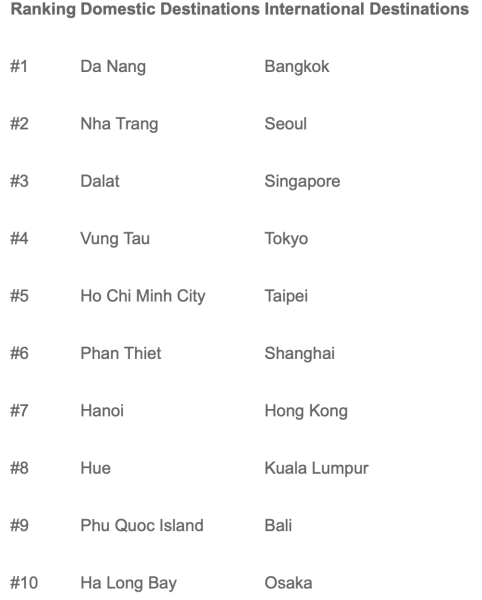
Da Nang tops the domestic ranking, while Bangkok leads the international list.

Vietnamese travellers enjoyed five consecutive days off from 29 August to 2 September for this year’s National Day holiday, providing an extended opportunity to plan trips within Vietnam or travel abroad. 

Based on accommodation searches made on Agoda between 1 May and 31 July 2026, for stays between 28 August and 2 September 2026, here are the top 10 most-searched domestic and international destinations.

Domestic Travel: Coastal getaways lead 

With the National Day holiday falling toward the end of summer, the five-day break offers Vietnamese travellers one of the last opportunities to enjoy coastal getaways and cooler destinations before autumn begins.

Based on accommodation searches, Da Nang and Nha Trang take the top two spots, while Vung Tau, Phan Thiet, Phu Quoc Island and Ha Long Bay rank fourth, sixth, ninth and tenth, respectively. Together, coastal and island destinations account for six of the ten most-searched domestic destinations, giving travellers plenty of options for a seaside escape over the five-day holiday.

Da Lat ranks third and is the highest-ranked highland destination on the list. With its cooler climate, scenic surroundings and relaxed atmosphere, the city offers an alternative for travellers seeking milder weather during the late-summer break.

Ho Chi Minh City and Hanoi place fifth and seventh, respectively, showing that major urban destinations also remain part of holiday considerations. Both cities offer a broad range of dining, shopping, entertainment and cultural experiences for those looking to explore closer to home during the extended break.

Hue rounds out the mix in eighth place, adding a heritage-focused destination to the ranking. Home to the UNESCO-listed Complex of Hue Monuments, the former imperial capital offers visitors a combination of history, architecture and cultural experiences. During this year’s National Day holiday, Hue is also set to host Hue Wonderverse Music Fest 2026 from 30 August to 1 September, bringing contemporary music and cultural programming into the city’s heritage setting.

Outbound Travel: Urban destinations lead international searches

For travellers looking beyond Vietnam, city destinations feature prominently in international searches for the Vietnam National Day holiday, accounting for nine of the ten most-searched destinations. The ranking spans major cities across both Southeast Asia and Northeast Asia, with Bali the only island destination in the top ten.

Bangkok, Singapore and Kuala Lumpur represent Southeast Asia in the ranking, offering travellers a mix of food, shopping, entertainment and cultural experiences. Further north, Seoul, Tokyo, Taipei, Shanghai and Hong Kong also feature in the list, providing a range of city-break options that combine modern attractions with local cuisine and cultural landmarks.

Bali stands apart from the predominantly urban ranking as the only island destination in the top 10. Beyond its beaches, the destination offers nature, wellness, local culture, and dining experiences, giving travellers another option for an extended holiday that combines relaxation with exploration.

Famous for its vibrant atmosphere and multicultural character, Osaka rounds out the top ten and serves as a convenient gateway to the wider Kansai region, allowing travellers to combine a city break with visits to nearby cultural destinations such as Kyoto and Nara.

Agoda Country Director, Vietnam Vu Ngoc Lam said: “Agoda’s search data shows that Vietnamese travellers are considering a diverse range of destinations for the National Day holiday, from coastal, highland and urban destinations within Vietnam to popular destinations across Asia. With five consecutive days off, travellers have greater flexibility to plan trips that suit their schedules, budgets and preferred experiences. At Agoda, we aim to make travel planning easier by providing travellers with a wide range of accommodation, flight and activity options to make confident travel decisions.”

(Source: Agoda)

Robot joins Adora Mediterranea crew

KUALA LUMPUR, 9 September 2026: Following the announcement of Adora Mediterranea’s first overseas homeport deployment from Port Klang, Adora Cruises and Malaysia’s Hwajing Travel & Tours unveiled a new Robot Cultural Ambassador at Sea at last week’s MATTA Fair, in collaboration with Tourism Malaysia and Tourism Selangor. 

Visitors were given a first look at how robotics and artificial intelligence can add a new dimension to cruising from Malaysia.

From left: Chua Yee Ling, Chief Executive Officer of Tourism Selangor; Kenny Cheong Ken Lee, Managing Director of Hwajing Travel & Tours; and Alvin Geoffrey, Chief Executive Officer of Port Klang Cruise Terminal (PKCT).

The Unitree G1 EDU humanoid robot is an advanced, developer-focused version of the G1 humanoid robot built by Unitree Robotics. During Adora Mediterranea’s homeport season from Port Klang, it will take on the role of an interactive Robot Cultural Ambassador named Hwajing SeaMate — Master Hwa. 

The robot will bring together artificial intelligence, advanced robotics, Malaysia’s multicultural heritage and cruise entertainment to create a more engaging journey for guests.

Designed to add a new dimension to onboard hospitality, Master Hwa will take part in selected guest moments, including embarkation welcomes, sail-away ceremonies, cultural showcases, family activities, entertainment, photo opportunities and farewell moments. Appearances and activities will be scheduled in accordance with operational and safety requirements.

Planned multilingual capabilities in Bahasa Malaysia, English and Mandarin will help Master Hwa engage local and international travellers. At the same time, its programming will introduce elements of Malaysia’s multicultural heritage, local customs and Muslim-friendly hospitality.

Hwajing Travel & Tours Managing Director Kenny Cheong said: “We are introducing more than a new technology; we hope to create a new dimension of the cruise experience. Master Hwa will complement our onboard service and entertainment offerings, bringing technological innovation together with the human touch of cruise hospitality.”

He added: “Malaysia is rich in cultures, languages and traditions. Through Master Hwa, our Robot Cultural Ambassador at Sea, we hope to showcase Malaysian culture in a more innovative, youthful and internationally engaging way, while creating cruise experiences that guests will genuinely want to capture and share.”

With years of expertise in cruise charter operations, Hwajing Travel has remained committed to its vision of being a “Cruise Holiday Designer Dedicated to Excellence”. Its experience in full-ship charters, itinerary planning and personalised travel services allows the company to create journeys around the moments that matter to its guests.

With Master Hwa joining Adora Mediterranea, Hwajing Travel is introducing a distinctive new way for guests to celebrate life’s special moments through personalised arrangements and interactions with its Robot Cultural Ambassador at Sea.

Offered through Hwajing Travel Signature Bespoke Experiences, the concept brings together personalised celebration arrangements and interactions with Master Hwa against an ocean backdrop. From romantic proposals and honeymoons to silver and golden wedding anniversaries and significant personal or professional milestones, each celebration will be tailored to the occasion, giving guests a unique and memorable way to mark life’s special moments at sea.

The collaboration between Hwajing Travel and Adora Cruises reflects a broader ambition to bring new dimensions of technology, culture, and experiential tourism into Malaysia’s cruise industry while creating opportunities across the wider tourism ecosystem, including ports, destinations, hotels, transportation, dining and retail. Together, these efforts aim to strengthen Port Klang’s appeal as a regional cruise homeport.

Hwajing Travel will operate eight sailings aboard Adora Mediterranea, departing from Port Klang between 24 November and 14 December 2026. 

The sailings offer a choice of four itineraries for families, multi-generational travellers, first-time cruisers and returning guests:

  • 3D2N Port Klang – Penang – Port Klang;
  • 4D3N Port Klang – Penang – Langkawi – Port Klang;
  • 4D3N Port Klang – Phuket – Port Klang;
  • 6D5N Port Klang – Nha Trang – Guangzhou, departing 14 December 2026 (one-way).

Hwajing Travel will also operate an additional six-day, five-night one-way repositioning cruise, which is separate from the eight sailings above:

· 19 November 2026: Shenzhen – Nha Trang – Port Klang, bringing Adora Mediterranea to Port Klang ahead of its homeport season.

(Source: Hwajing Travel)

Air Astana highlights summer results

SINGAPORE, 9 September 2026: The Air Astana Group (Air Astana and FlyArystan) summarises the results of the summer season, which saw the airlines operate 525 domestic flights per week across Kazakhstan (75 per day), 57 flights to the Caucasus and 49 flights to China.

“This past summer demonstrated strong demand for air travel. We delivered a record flight programme, significantly increasing flight frequencies and expanding our route network. said the Air Astana Group Chief Executive Officer Ibrahim Сanliel.

“The flexibility of our network allowed us to redeploy aircraft to meet strong customer demand in alternative markets, underscoring the countercyclical nature of our operations in this ‘New Normal’. 

“With an on-time performance of 86%, a top-class performance, I would like to thank all operational and supporting teams for achieving this excellent outcome.”   

Key results and plans

Capacity to China increased by 81% compared with summer 2025, reaching 49 flights per week across seven destinations. New routes were launched from Almaty to Shanghai and Xi’an, from Astana to Guangzhou, and from Aktau to Urumqi.

Flights from Almaty to Guangzhou became daily as of 1 September 2026, while on 23 September, FlyArystan will launch flights from Almaty to Chongqing twice a week.

Central Asia and the Caucasus: The frequency of flights between Almaty and Tashkent increased to three times daily for the first time. Flight frequencies to Georgia and Azerbaijan were also increased. FlyArystan launched new services to Samarkand, Issyk-Kul and Batumi.

Europe and Türkiye: The frequency of flights between Almaty and London increased to four per week, while Frankfurt was served with up to 11 flights per week from Almaty, Astana and Uralsk. Flights to Istanbul increased to 25 per week, and to Bodrum to five per week. In addition to the seasonal service to Podgorica, the group launched a new route from Almaty to Larnaca, Cyprus, which will operate through 4 October.

Asia: Flights to Delhi operate twice daily, while Mumbai is served three times a week. Flights to Nha Trang operate daily, and flights to Da Nang operate five times a week. The group also operates regular services to Thailand (12 flights per week) and South Korea (11 flights per week).

The group’s on-time performance for the three summer months of 2026 reached 86%, up 12.5 percentage points from the same period last year. Compared with European carriers, the group’s current on-time performance is 16% higher (June–July 2026). By international standards, an on-time performance above 80% is considered a high level of operational efficiency.

(Source: Air Astana Group)

PATA members mobilise to support Nepal’s recovery

BANGKOK, 9 September 2026: Pacific Asia Travel Association chairman Henry Oh presents an impassioned plea for the travel industry to stand alongside families and communities in Nepal, while also helping ensure that Nepal’s tourism economy can continue to support livelihoods and contribute to recovery.

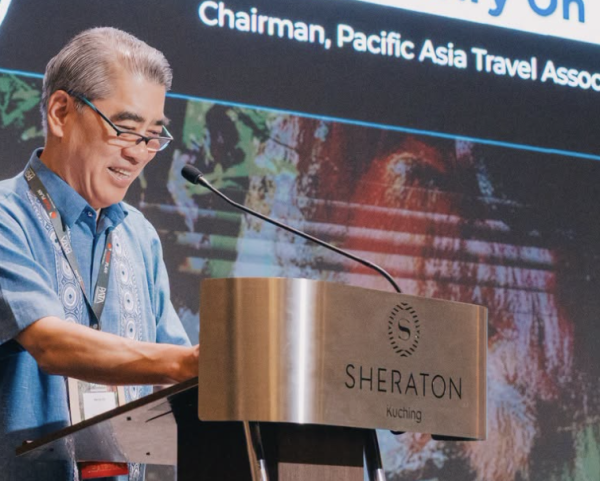
PATA Chair Henry Oh at the recent PTM event in Kuching, Sarawak.

In a message to the association’s global membership, Oh said: 

“Our thoughts are with Nepal following the devastating flash floods of 26 August, which have caused significant loss of life and widespread damage along specific river corridors in the Bhote Koshi and Trishuli areas, particularly in Rasuwa district and downstream communities. 

“Our deepest condolences go to the families who have lost loved ones, and our solidarity goes to our colleagues, their families, local communities, guides, drivers, porters, and tourism businesses directly affected by the disaster. We also extend our respect to the first responders, search and rescue teams, and all those working in extremely difficult conditions.”

“At the same time, as the situation continues to develop, it is important that we provide travellers and tourism stakeholders with an accurate picture of what has been affected — and what has not.

“The impact of the floods is significant, but it is geographically concentrated. The vast majority of Nepal remains unaffected and continues to welcome visitors. Kathmandu Valley, Pokhara and the Annapurna region, the Everest and Khumbu region, Chitwan, Bardiya, Lumbini and the Terai, as well as Nepal’s airports and major tourism infrastructure, continue to operate. The affected areas are concentrated along specific corridors, including parts of Rasuwa, Langtang and the Bhote Koshi, where search and rescue and recovery operations are ongoing.

“For international travellers and the tourism industry, this distinction matters. Nepal is a country of extraordinary geographic and cultural diversity, and conditions in one river corridor should not be taken to represent the situation across the entire country. We therefore encourage travel businesses, media, travellers and other tourism stakeholders to rely on verified information and to assess travel plans based on the specific destination or route concerned.

“For Nepal’s tourism community, continued responsible travel to unaffected destinations is also an important way of standing with the country at this difficult time. Tourism provides livelihoods for millions of people, and continued visitor activity in destinations that remain operational can help sustain businesses, workers and communities. At the same time, recovery efforts focus on the areas most directly affected.

“Nepal has been part of the PATA family since our earliest years. The PATA Nepal Chapter and Student Chapter are among the most active in our network, and our connections across the country extend far beyond our membership. At a time like this, our responsibility is to stand alongside our colleagues, their families and communities, while also helping ensure that Nepal’s tourism economy can continue to support livelihoods and contribute to recovery.”

OH’s message identifies two support paths

Give to the Nepal Tourism Recovery Fund

The PATA Foundation’s Nepal Tourism Recovery Fund will be live shortly, focused on recovering tourism livelihoods — the guides, drivers and porters, and the families running the homestays, lodges, teahouses and small hotels along the affected corridor. Many of these families have lost their premises and their equipment as well as their homes, and with them the income they would have earned this season. Helping them rebuild is how income returns to the affected communities, and it is work our industry is well placed to support.

“This is where we are asking members, their customers and their networks to direct support.”

Oh confirmed the association will share the donation route through PATA’s channels and on patafoundation.org, which he asked members to be ready to pass it on to their own customers and networks.

“If your organisation would like to contribute directly, or discuss a larger commitment, write to [email protected] now, and we will come back to you.”

Check what you are telling travellers about Nepal

“As set out above, the effects of the floods are concentrated along one river corridor. International coverage has not consistently made that distinction, and trips are being cancelled to parts of Nepal that were not affected. This is also the main planning and booking season for travel to the country, which makes the accuracy of published information particularly important at this moment,” Oh concluded

Where to get accurate information

NepalNow — the Nepal Tourism Board’s live travel information page, updated daily, with destination-by-destination status, a corridor map, traveller FAQs and emergency contacts: nepalnow.travel

Rely on figures issued by Nepal Police and the NDRRMA, and do not repeat unverified numbers.

PATA Nepal Chapter —  www.pata.org.np 

The Chapter will confirm operating conditions in the affected region as the situation stabilises. Chairman

Contact PATA Foundation

Pacific Asia Travel Association (PATA)Foundation enquiries: [email protected] 

(Source: PATA)

ACI releases air connectivity index

HONG KONG, 9 September 2026: Airports Council International Asia-Pacific & Middle East, the trade association representing over 600 airports across Asia-Pacific and the Middle East, has released its flagship Air Connectivity Index, recording an average growth of 11% in 2025 across the two regions. 

The ACI Asia-Pacific & Middle East Air Connectivity Index is a passenger-centric analytical tool that measures airport connectivity through network scale and frequency, the economic weight of destinations, and connection quality and efficiency by aircraft type, domestic/international status, number of stops, and alliance membership.  

Photo credit: ACI.

The Middle East posted 21% growth in air connectivity, driven by the expanding reach of Gulf-based carriers, while Asia-Pacific grew 10%, reflecting continued network expansion.  

The growth reflects expanding international networks, stronger hub connectivity, and the continued recovery of city-pair connections. As the regions enter the next phase of growth, the focus will be on ensuring that airport and airspace capacity, infrastructure, and the wider policy environment keep pace.

The first half of 2026, however, highlights the importance of resilience: Asia-Pacific connectivity remained positive amid a challenging global environment, while in the Middle East, the region’s strategic geographic position and strong underlying aviation market continue to support its role as a major global connectivity hub, even as geopolitical developments have created short-term challenges for airline schedules, airspace, and connectivity.

Key findings

Across the 315 airports covered by the index, 74% recorded positive connectivity growth in 2025, with the overall index up 11%, moderating from 14% in 2024 as growth settled into a more sustainable trajectory.

Major hub airports continued to lead, with 83-97% recording growth, benefiting from continued airline network expansion and sustained international travel demand.

Chinese airports recorded a significant increase in connectivity, with Shanghai Pudong International Airport (PVG), Guangzhou Baiyun International Airport (CAN) and Beijing Capital International Airport (PEK) ranking in the top 10 for total air connectivity in 2025, alongside Hong Kong International Airport (HKG).

Netaji Subhas Chandra Bose International Airport (Kolkata, India), Sharjah International Airport and Sanya Phoenix International Airport (Hainan province, China) recorded the strongest improvements among airports handling 15–25 million passengers a year, driven by international network recovery, airline expansion, and rising regional demand.

Noi Bai International Airport (Hanoi), Abu Dhabi International Airport, and Tan Son Nhat International Airport (Ho Chi Minh City) were the biggest improvers among airports handling 25–40 million passengers a year.

Among airports handling 1 to 5 million passengers a year, Surabaya and Phu Quoc stood out. At the same time, Da Nang, Medina and Muscat led the 5 to 15 million category, all showing notable improvements in connectivity rankings and growing potential as emerging gateways, driven by strategic route expansion, tourism recovery, and regional development.

Only 51% of the smallest airports (under 1 million passengers a year) recorded increased connectivity in 2025, partly reflecting airline route rationalisation and the closure of several connections.

Intra-regional flows still account for 91% of departing passenger traffic in Asia-Pacific, up 5% from 2024 and 5% above 2019 levels.

Intercontinental traffic from Asia-Pacific grew 7% year on year, reaching 12% above pre-pandemic levels. From the Middle East, intercontinental traffic grew 9% year on year and is now 27% above pre-pandemic levels.

Traffic from Asia-Pacific to Europe, the Middle East, Central & South America, and Africa has exceeded pre-pandemic levels, driven by resurgent demand and improved connectivity, especially via Gulf hubs. North America is the exception, still 9% below 2019 levels.

International city pairs grew 10% on average in 2025, moderating from 17% in 2024, while domestic city pairs turned positive at 0.8%, recovering from a 1% decline in 2024.

Movers and shakers

Dubai International Airport continues to rank at the top in 2025, followed by Shanghai Pudong International Airport and Incheon International Airport. Guangzhou Baiyun International Airport ranks fourth, followed by Hamad International Airport, Singapore Changi Airport, Beijing Capital International Airport, Bangkok Suvarnabhumi International Airport, Tokyo Haneda Airport and Hong Kong International Airport, completing the top 10 most connected airports across Asia-Pacific and the Middle East. The three airports recording the greatest improvements in connectivity in 2025 were Shanghai Pudong International Airport (+32%), Kuala Lumpur International Airport (+30%), and Hong Kong International Airport (+28%).

ACI Asia-Pacific & Middle East Director General Stefano Baronci said: “The growth in air connectivity is encouraging. With post-pandemic recovery behind us, 2025 marked a shift from rebuilding capacity to preparing for sustained growth. With passenger volumes across Asia-Pacific and the Middle East projected to reach 11 billion within the next three decades, it is increasingly important that we continue to strengthen connectivity so that aviation can deliver greater choice for passengers and wider economic benefits.”

Hub connectivity

Dubai International Airport once again emerged as the region’s leading hub, with a hub connectivity score close to 40% higher than its nearest competitor. Shanghai Pudong International Airport, Incheon International Airport, Hamad International Airport, and Guangzhou Baiyun International Airport follow.

Early momentum for 2026: a complex year marked by geopolitical instability and economic challenges

Despite economic shocks from conflicts in Europe and the Middle East and changes in US trade policy, Asia-Pacific direct connectivity remained positive, with modest growth of 0.5% in H1 2026 compared to H1 2025. The Middle East, by contrast, contracted sharply, down 23% as geopolitical conflict in the region forced airlines to cut schedules and reroute around affected airspace.

(Source: ACI)