

Thursday, April 2, 2026
Home Blog Page 31

Thomas Cook India embarks on Mauritius promotions

MUMBAI, 10 February 2026: In a strategic initiative to boost travel to Mauritius from the high-potential India market, Thomas Cook (India) Limited, and its group company, SOTC Travel, have signed an MOU with the Mauritius Tourism Promotion Authority (MTPA). 

This strategic collaboration will focus on growing Mauritius’ visibility and inspiring visitation from the Indian market. 

The MOU was signed by Rajeev Kale, President & Country Head at Thomas Cook (India) Limited, SD Nandakumar – President & Country Head – Holidays and Corporate Tours, SOTC Travel Limited, and Benoît Harter – Director, Mauritius Tourism Promotion Authority, in the presence of Dinesh Burrenchobay – Chairman, Mauritius Tourism Promotion Authority.

Beyond its pristine beaches, turquoise lagoons and lush landscapes, the partnership will spotlight Mauritius’ rich Creole heritage and vibrant cultural tapestry—reflected in its cuisine, festivals and religious diversity.

With deep-rooted cultural links to India, the destination offers a familiar yet distinctive appeal for Indian travellers, supported by visa-free access, short flight durations and a broad spectrum of premium to value-driven resorts, making the destination a preferred choice for honeymoons, multi-generational families, India’s millennials & GenZ, GenS and leisure travellers. Mauritius is also gaining prominence for MICE and corporate travel, with world-class convention facilities, luxury resorts offering integrated meeting infrastructure and distinctive team-building experiences set against stunning natural backdrops.

This multi-pronged collaboration will focus on destination knowledge & education, product development and Marcomm to position Mauritius as a top-of-mind destination across India’s metro, mini-metro and Tier 2 and 3 markets.

Thomas Cook (India) Limited, President & Country Head – Holidays, MICE, Visa, Rajeev Kale said: “Our partnership will leverage Thomas Cook India’s omnichannel strength, destination expertise and extensive reach, to showcase Mauritius’ evolving proposition across leisure, MICE and business travel. We aim to tap into India’s metros as well as the strongly emerging Tier 2 and 3 markets.”

SOTC Travel President & Country Head – Holidays and Corporate Tours, Limited, SD Nandakumar added: “The signing of our MOU with the Mauritius Tourism Promotion Authority marks a significant milestone in positioning Mauritius as a truly multifaceted destination… This partnership will enable us to showcase the destination’s depth and diversity, while driving sustained demand across leisure, honeymoon, multi-generational families, MICE and corporate travel segments from India.”

About Mauritius Tourism Promotion Authority (MTPA)
The Mauritius Tourism Promotion Authority (MTPA) was set up under the Mauritius Tourism Promotion Authority (MTPA) Act 1996 as a parastatal body to promote Mauritius abroad as a tourist destination. 

About Thomas Cook (India) Limited
Established in 1881, Thomas Cook (India) Limited (TCIL) is the leading omnichannel travel company in the country, offering a broad spectrum of travel-related services, including Foreign Exchange, Corporate Travel, MICE, Leisure Travel, Value-Added Services, and Visa Services.

(Source: Thomas Cook India & SOTC Travel)

IndiGo suspends Copenhagen flights

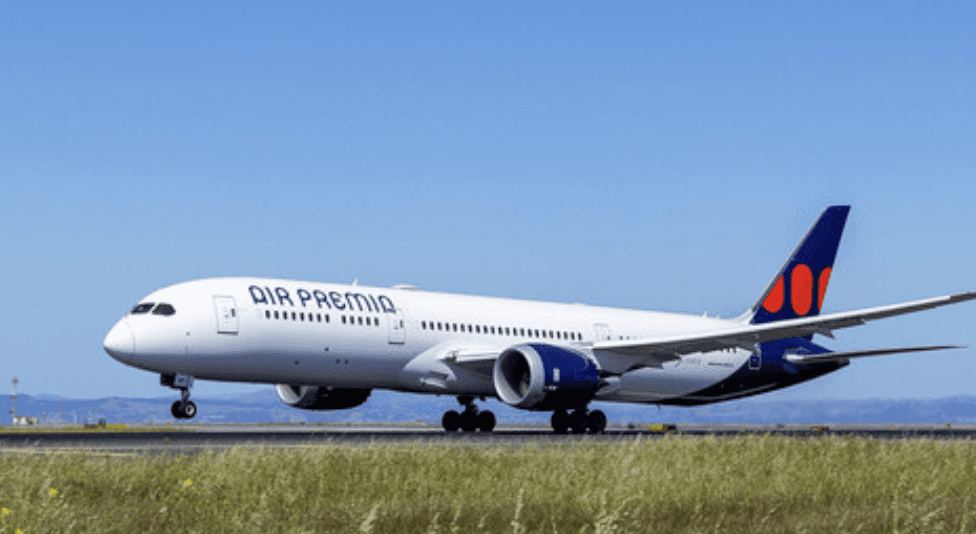
DELHI, India, 10 February 2026: IndiGo, India’s low-cost airline, has announced adjustments and schedule revisions that suspend its services to Copenhagen in Denmark and reduce frequencies on its Delhi-Manchester (UK) route.

In a media statement released last week, the airline said its long-haul operations using its Boeing 787-9 fleet had faced external operational disruptions, citing continuously changing airspace constraints due to geopolitical factors and airport congestion in both India and Europe. 

Photo credit: IndiGo.

“These factors significantly increased flight and block times, causing strain on the airline’s 787-9 schedule served by six of the widebody aircraft.”

IndiGo says it has decided to implement measures to restore operational reliability, including on-time performance, for its widebody operations and has announced schedule network changes effective this month.

• Starting 17 February 2026, IndiGo will suspend its operations to and from Copenhagen in Denmark until further notice.

• Since 7 February 2026, IndiGo has reduced its Delhi – Manchester services from five flights per week to four flights per week, and will be further reduced to three flights per week starting 19 February 2026.

When considering the airline’s services from Mumbai to Manchester, total connectivity to and from the northern UK city and the two Indian gateway cities will be reduced from nine weekly to seven weekly.  (Three flights weekly from Delhi and four from Mumbai).

This scale adjustment was initially planned for the 2026 summer schedule; however, the changes are being implemented earlier to ensure reliability for the rest of IndiGo’s long-haul operations.

To ensure optimal recovery time availability across operating patterns, the days of operation will also be adjusted as follows.

Schedule of Flights between Mumbai/ Delhi and Manchester post the network adjustments, effective 19 February 2026

• Since 9 February 2026, IndiGo’s Delhi – London Heathrow services will be adjusted from five weekly to four weekly flights, for the current winter schedule ending 31 March 2026.

As part of IndiGo’s ongoing internationalisation journey, the airline launched a widebody project in March 2025 by entering into a wet-lease agreement for six Boeing 787-9 aircraft from Norse Atlantic Airways. 

This project was established as an interim solution for global expansion and as a precursor to IndiGo’s A350-900 widebody inductions in early 2028, to gradually upgrade the airline’s flight capabilities for future expansion.

(Source: IndiGo)

Sarawak spotlights VMY 2026 campaign at OTM India

MUMBAI, INDIA, 9 February 2026: Sarawak Tourism Board (STB) participated in the Outbound Travel Mart (OTM) 2026, at Mumbai’s Jio World Convention Centre last week, aligning with Malaysia’s national ambition to welcome 43 million international visitors under the VMY2026 campaign objectives.

India has been identified as a priority growth market, targeting 2 million arrivals, and Sarawak is positioning itself to contribute meaningfully to this national objective by pursuing sustained, quality growth from the Indian market.

Courtesy visit by The Honourable Dato Sri Haji Abdul Karim Rahman Hamzah, Minister for Tourism, Creative Industry and Performing Arts Sarawak to the Consulate General Malaysia Mumbai Office to meet with Consul General Mr. Ahmad Zuwairi Yusoff.

The Sarawak delegation was led by Dato Sri Haji Abdul Karim Rahman Hamzah, Minister of Tourism, Creative Industry & Performing Arts Sarawak (MTCP); Datuk Sebastian Ting, Deputy Minister of Tourism, Creative Industry & Performing Arts Sarawak (MTCP); Dato Dennis Ngau, Chairman of Sarawak Tourism Board; and Dr Sharzede Datu Haji Salleh Askor, Chief Executive Officer of Sarawak Tourism Board. 

Their presence underscored Sarawak’s commitment to strengthening high-levelengagement with India’s travel trade and reinforcing long-term market confidence. Highlighting the significance of Sarawak’s participation, Dato Sri Abdul Karim delivered a keynote address as a panel speaker at OTM 2026, underscoring Sarawak’s leadership and readiness to respond to evolving outbound travel demand from India.

In addition, Dr Sharzede participated as a featured panellist at the OTM Forum session, “Beyond the Usual: Mapping Where Indian Travellers Will Go Next,” sharing insights on Sarawak’s destination readiness and product development strategies for the next wave of Indian travellers.

At OTM 2026, Sarawak positioned itself as a distinctive, experience-led destination, highlighting its core tourism pillars: Culture, Adventure, Nature, Food, and Festivals (CANFF).

YB Dato Sri Haji Abdul Karim Rahman Hamzah delivered a keynote intervention as a panel speaker during the OTM 2026 Inaugural Session, reflecting Sarawak’s leadership role and readiness to respond to evolving outbound travel demand from India.

Emphasis was placed on immersive, nature-led, and heritage-rich experiences that resonate strongly with the Indian market, including iconic UNESCO World Heritage-listed attractions such as Mulu National Park and Niah National Park.

Before the official opening of OTM 2026, the Sarawak delegation, led by the Minister and MTCP entourage, conducted high-level visits to strengthen diplomatic and academic ties, including a courtesy call on the Consul General of Malaysia in Mumbai, Ahmad Zuwairi Yusoff.

This was followed by an academic partnership mission to Somaiya Vidyavihar University, in collaboration with UCSI University Sarawak Campus, to promote education tourism, a key niche segment in the Indian market. This collaboration aimed to establish academic benchmarks in hospitality, tourism, and culinary arts through faculty and student exchanges and joint research.

OTM 2026 served as a valuable platform to enhance Sarawak’s visibility in India, strengthen trade relationships and reinforce its positioning as Malaysia’s nature-led gateway to Borneo. These strategic engagements are expected to support the development of tailored itineraries, expand market access and drive sustained destination awareness across India as Malaysia prepares to welcome the world in 2026.

For more information on Sarawak tourism, visit: Sarawak Tourism Board

(Source: Your Stories — Sarawak Tourism Board)

Sabah showcases cycling holidays

MUMBAI, INDIA, 9 February 2026: Sabah Tourism Board strengthened its engagement with the Indian market at the Outbound Travel Mart (OTM) 2026 last week, presenting a range of destination offerings, including the launch of its brand new Sabah North Borneo Cycling Paradise.

The cycling initiative was launched after the official opening of the Tourism Malaysia Pavilion at the Jio World Convention Centre on Thursday providing a platform to showcase niche and experiential travel products to the Indian market.

Consul General of Malaysia in Mumbai, Ahmad Zuwairi Yusoff (centre); Tourism Malaysia chairman, Datuk Manoharan Periasamy (2nd right); and STB deputy chief executive officer (product and research), Humphrey Ginibun (right), during the launching of Sabah North Borneo Cycling Paradise. Also pictured are Tourism Malaysia Asia-Africa senior director, Nuwal Fadhilah Ku Azmi (2nd left) and Tourism Malaysia-Mumbai director, Noriah Jaafar (left).

Present at the launch were the Consul General of Malaysia in Mumbai, Ahmad Zuwairi Yusoff; Tourism Malaysia chairman, Datuk Manoharan Periasamy; Tourism Malaysia Asia-Africa senior director, Nuwal Fadhilah Ku Azmi; Tourism Malaysia-Mumbai director, Noriah Jaafar; and STB deputy chief executive officer (product and research), Humphrey Ginibun.

The Sabah North Borneo Cycling Paradise previewed exciting cycling holiday routes at the OTM travel show, featuring a mix of coastal roads, highland scenery, rural towns, and local cultural experiences.

Sabah Tourism participated in OTM 2026 from 5 to 7 February, supporting broader tourism initiatives under Visit Malaysia 2026 and creating early momentum for Visit Sabah 2027 as the state continues to strengthen its international visibility.

At the Tourism Malaysia Pavilion, STB featured six Sabah-based tour operators and a resort partner at its booth, providing opportunities for networking, business discussions, and the showcasing of experiences ranging from adventure and nature tours to resort stays.

The participating companies were Borneo Trails Tours and Travel Sdn Bhd, Borneo Nature Tours, Borneo Sandakan Tours, Funholiday Tours and Travel Sdn Bhd, WB Tours and Travels Sdn Bhd, and Shangri-La Rasa Ria Resort.

Sabah continues to attract global travellers with its beaches, islands, resorts, diving opportunities, wildlife, and rich indigenous cultures.

The state had also gained recognition as a wedding destination for Indian couples before the pandemic.

Last year, arrivals from India grew by 21.1%, from 9,316 to 11,282, reflecting the market’s steady recovery and highlighting its importance to Sabah’s long-term tourism growth.

In terms of connectivity, Sabah is accessible from India via Singapore with 18 weekly flights to Kota Kinabalu, via Brunei with 9 weekly flights, or via Kuala Lumpur with 189 weekly connecting flights to Kota Kinabalu, 61 weekly flights to Tawau, and 34 weekly connecting flights to Sandakan.

Website: www.sabahtourism.com

(Source: Your Stories — Sabah Tourism Board)

Air India Group displays cabin upgrades

GURUGRAM, India, 9 February 2026: Air India Group showcased the seats on Air India’s newly inducted Boeing 787-9 aircraft and Air India Express focused on its in-flight dining brand, Gourmair, during the Outbound Travel Mart (OTM) 2026 that concluded on 7 February at Jio World Convention Centre, Mumbai.

Air India focused on its elevated Business Class and Premium Economy seats on its new Boeing 787-9 aircraft, which are also available on Air India’s Airbus A350 widebody and narrowbody aircraft operating on domestic and short-haul international routes. 

Photo credit: Air India Group. Premium Economy cabin in Air India’s B787-9.

OTM 2026 also marked  Air India Express first appearance at the show, with the airline highlighting its rapidly expanding network of 45 domestic and 17 international destinations across South Asia, Southeast Asia, and the Gulf Region. The presence highlights the airline’s growing connectivity, its newly inducted Boeing 737-8 line-fit aircraft featuring an enhanced cabin experience, and its new Gourmair hot meal offerings, delivered through interactive, engaging experiences for visitors.

The new Boeing 787-9 cabins on display at OTM 2026 will soon become the standard across the airline’s entire Boeing 787 fleet. In line with this, 26 of Air India’s legacy Boeing 787-8 aircraft are progressively undergoing retrofits with the same new cabin interiors and entertainment systems. By the end of this year, nearly 60% of its widebody fleet will have the new look interiors.

(Source: Air India Group)

HKIA’s first premium dual-city terminal opens in Macao

HONG KONG, 9 February 2026: Macao’s first high-end dual-city terminal, jointly set up by Hong Kong International Airport (HKIA) and Zhuhai Airport, opened last week to strengthen further the multi-modal connectivity in the Greater Bay Area (GBA).

The “MGM Hong Kong International Airport City Terminal” represents further integration of cross-boundary aviation services and intermodal transportation serving Guangdong, Hong Kong, and Macao. 

Photo credit: AAHK. Airport Authority Hong Kong CEO Vivian Cheung: 
“The new premium city terminal will help expand our high-end customer base and enhance connectivity to Macao.”

Located in Cotai, the new city terminal operates daily from 0900 to 1830, providing self-service check-in, flight information, and various transport services connecting to HKIA and Zhuhai Airport.

From the city terminal, travellers can reach HKIA via the Hong Kong-Zhuhai-Macao Bridge in about 90 minutes or Zhuhai Airport in 60 minutes, providing greater convenience and a more seamless experience for travellers from Macao and surrounding regions.

 Airport Authority Hong Kong Chief Executive Officer Vivian Cheung said: “HKIA has been extending the intermodal service network for years, to cover major cities on the western part of the GBA and now further to the Macao market. 

“Since the opening of the Hong Kong-Zhuhai-Macao Bridge, the number of Macao travellers flying to and from HKIA has been on the rise. This new premium city terminal will help expand our high-end customer base and further enhance our connectivity with Macao. We will continue to develop our intermodal services, aiming to increase the number of city terminals to 50 by 2027 and attract more GBA travellers to use HKIA.”

Eligible travellers who transfer via intermodal services at HKIA can also apply for a refund of the Air Passenger Departure Tax.

Photo credit: AAHK.MGM Hong Kong International Airport City Terminal.

(Source: AAHK)

Cathay achieves record SAF commitment

HONG KONG, 9 February 2026: Cathay achieved another milestone year for its Corporate Sustainable Aviation Fuel (SAF) Programme in 2025, as more corporate and cargo customers join forces to decarbonise business travel and air cargo shipments. 

Building on the strong momentum since its launch in 2022, the programme saw another year of record growth, with SAF commitments more than doubling from 2024.

Photo credit: Cathay Group.

This growth was enabled by 17 global partners, whose commitment and leadership have helped keep the programme positioned as one of the leading initiatives of its kind globally. 

Together, the corporate partners have committed to using approximately 17,400 tonnes of SAF, an increase of nearly 180% from 2024. This is equivalent to a reduction of roughly 54,600 tonnes of carbon dioxide equivalent (CO2e) emissions on a lifecycle basis — equal to the emissions of about 61,800 economy class round-trip flights between Hong Kong and London.

Cathay welcomed Microsoft as a new partner to the programme in 2025, collaborating to address emissions from both air cargo and business travel. 

Kuehne + Nagel, a Diamond partner of the programme since 2024, remained the largest cargo contributor in 2025, while its partnership with DHL Express also enabled the first SAF uplift on flights operated by Air Hong Kong, a wholly owned subsidiary of the Cathay Group.

Several Diamond programme partners, including EQT, have entered into multi-year SAF commitments with Cathay, demonstrating a long-term commitment to scaling SAF and credibly reducing their climate impact from business travel and air freight. DSV and Ernst & Young are also among the programme’s 2025 Diamond partners, contributing towards the adoption of SAF.

Growing commitments from partners in the Corporate SAF Programme enable Cathay to purchase additional SAF beyond mandatory requirements and its own voluntary usage, directly supporting the scaling of SAF. This expanded SAF usage is enabled by partnerships with leading suppliers worldwide, who work together to increase the availability of SAF certified to internationally recognised sustainability standards across Cathay’s global network. Key supplier partnerships in 2025 included China Aviation Oil Europe, Itochu, Neste, Shell Aviation, Sinopec, and SK Energy, each contributing to the continued expansion of Cathay’s SAF usage.

Cathay Group Chief Executive Officer Ronald Lam said: “Cathay has set ambitious sustainability goals, but like every airline, we cannot achieve them on our own. The growing collaboration between our corporate customers and SAF suppliers through the Corporate SAF Programme is a powerful example of how collaboration with like-minded, ambitious partners can help scale SAF adoption. We are incredibly grateful for the ongoing trust and long-term commitments shown by our partners.

“While the growth we saw in 2025 is encouraging, it is only one step in a much longer journey to decarbonisation. Supportive policies and well-designed market incentives will be essential if our industry is to scale SAF at the pace required to stay on track for its 2050 net-zero ambition.”

Beyond its Corporate SAF Programme, Cathay is helping to scale SAF supply through strategic investments and partnerships, including two joint investment initiatives announced in 2025 that focus on accelerating SAF production capacity and development of next-generation SAF technologies in Asia and beyond. These efforts complement Cathay’s ongoing partnership with stakeholders across the value chain to advance SAF adoption across Cathay’s global network.

(Source: Cathay Group)

Tripseed attains People and Planet certification

CHIANG MAI, Thailand, 9 February 2026: Tripseed, a majority-woman-owned and locally owned travel company based in Thailand, has achieved People and Planet First Verified Social Enterprise status. 

The independent verification confirms that the company exists to solve social and environmental problems and has governance and ownership structures in place to protect this purpose over the long term.

Photo credit: Tripseed. Tripseed reinvests a minimum of 50% of profits into social justice and environmental initiatives.

The People and Planet First verification, valid as of 1 January 2026, recognises enterprises that prioritise purpose over private profit, operate with a self-sustaining revenue model, reinvest the majority of surplus into their mission, and embed social and environmental responsibility within their legal and governance structures.

Unlike traditional sustainability certifications that focus primarily on operational practices or environmental metrics, People and Planet First assesses how a business is designed and governed. It verifies that responsibility is structurally embedded in ownership, decision-making, and the use of profits, rather than relying solely on policies or voluntary commitments, recognising enterprises that are regenerative and distributive by design.

For travel agents and tour operators, this provides independent assurance that Tripseed’s responsible tourism claims are not marketing-led, but legally and operationally protected, reducing reputational risk and strengthening confidence in long-term partnerships.

“We have always believed that certifications should be transformative, not decorative,” said  Tripseed Chief Growth Officer Ewan Cluckie. “This verification confirms what we have built: a business where commitment to equality, fair economic contribution, ethical governance, and environmental protection is not just policy, but structurally protected.”

Tripseed’s governing articles require the company to reinvest at least 50% of profits in social justice and environmental protection initiatives. 

The company is also a signatory to the UN Women’s Empowerment Principles and a member of the Social Enterprise Thailand Association, reinforcing its long-term commitment to responsible business practices within the Thai economy.

The verification follows Tripseed’s public decision to step away from traditional certification frameworks, as the company sought verification models with a stronger emphasis on legal structure, tax responsibility, and balanced attention to social sustainability, governance, and environmental impact. 

Tripseed’s Economic Distribution Disclosure Initiative, an industry first, provides transparency on how tourism revenue flows within destinations and was recognised as a finalist in the Social Entrepreneurship in Tourism Awards 2024.

People and Planet First is stewarded by an international coalition of social enterprise networks, including the Social Enterprise World Forum, and was developed to provide a globally inclusive and credible verification framework for enterprises that are regenerative and distributive by design.

Tripseed delivers immersive B2B travel experiences across Thailand, working closely with overseas tour operators and travel advisors. Its services include supply chain monitoring to support responsible tourism practices, support for locally owned enterprises, strict payment protections for tour guides and freelance workers, and comprehensive accessibility services. In 2024, the company won the Gold Award for Making Travel Inclusive at the International Centre for Responsible Tourism SEA Awards for its accessibility initiatives, including Thailand’s first wheelchair-friendly tuk-tuk tours.

About Tripseed
Tripseed is a People and Planet First Verified Social Enterprise and travel company headquartered in Chiang Mai, Thailand. Majority women-owned and locally owned, the company partners with international tour operators and travel advisors to deliver ethical travel experiences rooted in authentic local connections. Learn more at tripseed.com 

About People and Planet First
People and Planet First is a global verification framework for enterprises that address social or environmental challenges. It verifies that organisations prioritise purpose over private profit, operate with a self-sustaining revenue model, reinvest the majority of surplus into their mission, and have governance structures that protect their purpose over time. Learn more at peopleandplanetfirst.org

How expensive is healthcare in Asia?

BANGKOK, 9 February 2026: Healthcare in Asia is often seen as either expensive and world-class or cheap and basic. Southeast Asia tells a different story. 

Across the region, routine private healthcare costs vary widely, offering travellers and long-stay visitors a clear choice between premium certainty and practical affordability.

This comparison focuses on nine ASEAN countries where private healthcare pricing is most relevant to international travellers.

As global healthcare costs continue to rise, access to affordable and reliable medical care has become an increasingly important factor in travel decisions. For retirees, digital nomads, long-stay visitors, and medical tourists, healthcare is no longer merely a matter of safety. It is part of the destination value proposition.

Rather than comparing complex surgical procedures, this analysis examines routine private healthcare services. Health check-ups, blood tests, dental treatment and basic diagnostic imaging are the services most travellers actually use and typically pay for themselves.

Routine care, emergencies and medical tourism

It is helpful to separate routine healthcare from emergency treatment and planned medical travel. Most travellers use insurance for emergencies, whereas routine care, such as check-ups, blood tests, imaging, and dental treatment, is usually paid for directly. Medical tourism is distinct, involving travel for a specific, preplanned procedure rather than incidental care.

A clear cost spectrum across Southeast Asia

At the top of the cost scale sits Singapore. It delivers exceptional clinical standards, advanced diagnostics and patient choice, but at the highest prices in Southeast Asia. For travellers, Singapore represents premium certainty rather than affordability.

Malaysia and Thailand occupy the middle ground. Both offer modern hospitals, internationally trained clinicians and strong outcomes at significantly lower prices. Thailand, in particular, has built a global reputation as a medical tourism hub, combining competitive pricing with packaged preventive healthcare and hospitality-level service.

The Philippines falls into the mid-cost range. While pricing is not excessive by regional standards, limited insurance coverage means out-of-pocket spending can be relatively high. Indonesia offers moderate pricing overall, with access and quality concentrated in major urban centres.

At the lower end of the scale are Vietnam, Cambodia, Laos and Myanmar. These destinations provide very affordable routine healthcare, particularly for diagnostics and dental care. However, lower prices often reflect more limited infrastructure and specialist capacity, meaning patients may travel regionally for complex treatment.

Indicative cost positioning for routine private healthcare

Healthcare and travel are now linked

Healthcare cost alone does not define value. Accessibility, infrastructure, insurance coverage and clinical depth all shape real-world experience. However, Southeast Asia offers something few regions can match: a graduated healthcare landscape that allows travellers to align medical care with budget, lifestyle and expectations.

For medical tourists, this means clarity and choice.

For retirees and long-stay visitors, affordability and proximity are paramount.

For destinations, healthcare is increasingly a competitive advantage rather than a supporting service.

As travel becomes more purpose-driven, healthcare is no longer on the margins of tourism planning. It is central to how people choose where to live, travel and return.

Editor’s Note
This comparison focuses on routine private healthcare costs typically paid out of pocket by travellers and long-stay visitors. Emergency care is usually covered by insurance, while medical tourism involves planned treatment arranged directly with providers rather than through conventional travel insurance. 

About the Author
Andrew J Wood is a British-born travel writer, tourism consultant and former hotelier who has lived in Thailand for more than three decades. A former director of Skål International and past president of Skål International Asia, Thailand, and Bangkok, he writes regularly on tourism trends, including medical tourism, destination strategy, and high-value travel across the Asia-Pacific region.

Singapore’s tourism receipts make steady gains

SINGAPORE, 9 February 2026: Singapore’s tourism sector showed steady growth in 2025, with tourism receipts (TR) reaching SGD23.9 billion in the first three quarters, a 6.5% increase over 2024 and the highest for this period.

“The strong tourism receipts performance in 2025 puts us on a steady trajectory towards achieving our Tourism 2040 ambitions (1),” said Singapore Tourism Board Chief Executive Melissa Ow. “We are attracting visitors who value the distinctive experiences that Singapore offers.

Photo and charts credit: Singapore Tourism Board.

To maintain this growth momentum and reinforce our destination appeal and global hub status, we will continue to develop a strong pipeline of differentiated products, events, and experiences.”

International visitor arrivals to Singapore in 2025 reached 16.9 million, up 2.3% from 2024, with Mainland China (3.1 million), Indonesia (2.4 million), Malaysia (1.3 million), Australia (1.3 million), and India (1.2 million) the top five markets.

Tourism performance highlights

Tourism receipts performance from January to September 2025 puts full-year performance on track to exceed STB’s projections of S$29.0 to SGD30.5 billion for 2025 (2).

Tourism receipts growth was driven mainly by sightseeing, entertainment & gaming, and food & beverage (F&B), each up 15%. Mainland China, Indonesia, and Australia were the top TR-generating markets, contributing SGD3.68 billion, SGD2.09 billion and SGD1.54 billion, respectively (3).

As the top TR-contributing market, Mainland China grew 3% year over year, with F&B consumption leading growth at 19%.

Tourism 2040 | Singapore Tourism Board

2 STB’s projections for 2025 were for international visitor arrivals to reach between 17.0 and 18.5 million, bringing in approximately SGD29.0 to SGD30.5 billion in tourism receipts. The full-year 2025 TR figure will be available in 2Q 2026.

3 excluding Sightseeing, Entertainment & Gaming. In line with previous practices, STB excludes Sightseeing, Entertainment & Gaming in the country analysis due to commercial sensitivities.

The top markets for international visitor arrivals (IVA) were Mainland China (3.1 million), Indonesia (2.4 million), Malaysia (1.3 million), Australia (1.3 million) and India (1.2 million), with Australia (+8%) contributing a record number of international visitors. 

IVA in some markets declined year over year, including Vietnam (344,000 vs 393,000 in 2024), likely due to greater price sensitivity to travel. Similarly, IVA from the Philippines decreased to 726,000 from 779,000 in 2024, following the previous year’s spike driven by large-scale entertainment events in Singapore. 

Overall, the total IVA remained healthy, with notable growth recorded in Japan (+10%), Malaysia (+8%), Germany (+5%), and the US (+5%), reflecting a good mix of short-, mid- and long-haul markets.

The hotel industry maintained stable performance in 2025, with Average Occupancy Rate (AOR) increasing year-on-year to 81.9% from 81.4% in 2024. Average Room Rate (ARR) was SGD273.56 (-1%) and Revenue per Available Room (RevPAR) was SGD224.04 (-0.4%).

Hotel capacity expanded with 644 new hotel keys added to Singapore’s accommodation landscape.

The cruise industry also demonstrated strong momentum with 375 ship calls (+10%) and over 2.0 million passenger throughput (+9%), cementing Singapore’s position as the region’s leading cruise hub in 2025.

New experiences boost visitor spending

The strong tourism spending can be attributed to the new and refreshed experiences

across multiple industries, including attractions, cruises, events, and MICE.

Attractions

Several major attractions opened in 2025, enhancing Singapore’s destination appeal.

These included Rainforest Wild, Singapore’s fifth wildlife park and Asia’s first adventure-based zoological park, and Curiosity Cove, Singapore’s largest indoor playscape with over 30 experiential features, both at Mandai Wildlife Reserve. 

Other notable additions were Jurassic World: The Experience at Gardens by the Bay’s Cloud Forest and Singapore Oceanarium at Resorts World Sentosa.

Rejuvenation efforts enhanced existing attractions, such as the Chinatown Heritage Centre, which reopened with refreshed exhibits and character-led tours, and SuperPark’s expansion, which added climbing walls, trampoline arenas, and a games arena. Singapore Flyer refreshed its Time Capsule with a pre-flight experience featuring 10 interactive themed zones showcasing Singapore’s 700-year transformation.

(Source: STB)