HONG KONG, 18 February 2026: Hong Kong International Airport will open new passenger departure facilities at Terminal 2 on 27 May 2026.
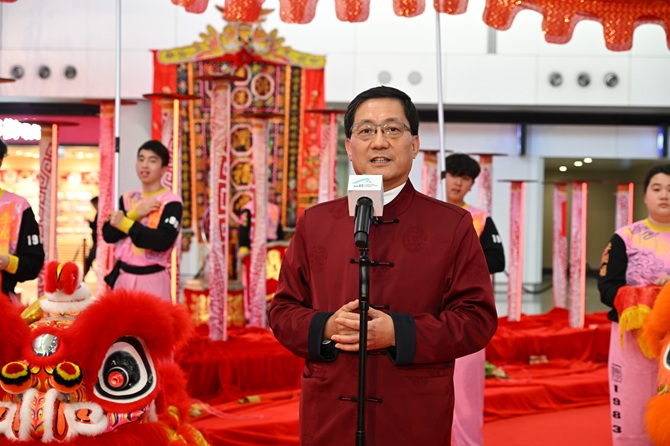
The announcement was made by Airport Authority Hong Kong (AAHK) Chairman Fred Lam and Secretary for Transport and Logistics Mable Chan during the Chinese New Year celebrations at HKIA on Monday.
Photo credit: AAHK. Airport Authority Hong Kong (AAHK) chairman, Fred Lam.
The passenger facilities of the expanded T2 are commissioned in phases to mirror passenger traffic demand trends. Launching the T2 departure facilities in May will enable HKIA to meet the anticipated surge in passengers during the summer peak season, providing a new and more convenient travel experience.
Seamlessly connected to the Airport Express platform and Terminal 1, the expanded T2 will offer next-generation smart check-in facilities. T2 is designed to be a trendy space for leisure travellers, served by approximately 15 airlines that primarily operate short-haul and regional routes. The airlines will move to T2 in phases.
AAHK has been working closely with relevant government departments, airlines, passenger handling agents and other stakeholders to prepare for the commissioning of T2’s departure facilities, with a robust, comprehensive programme of familiarisation activities, training sessions, drills, and exercises already underway.
The Coach Hall at T2 commenced operations on 23 September 2025 as the first phase launch of the new terminal. The Coach Hall provides 41 parking bays for tour buses, cross-boundary coaches, limousines, crew and resident coaches, as well as ticketing counters for cross-boundary transport connecting with more than 110 destinations in the Greater Bay Area.
SINGAPORE, 18 February 2026: SAS is expanding its intercontinental offering for the winter timetable 2026/27 with three new long-haul routes from Copenhagen to Dubai, Phuket, and Krabi.
The additions strengthen the airline’s winter portfolio, responding to growing demand for travel to the Middle East and Asia while further reinforcing Copenhagen’s role as a global hub for Scandinavia and Northern Europe.
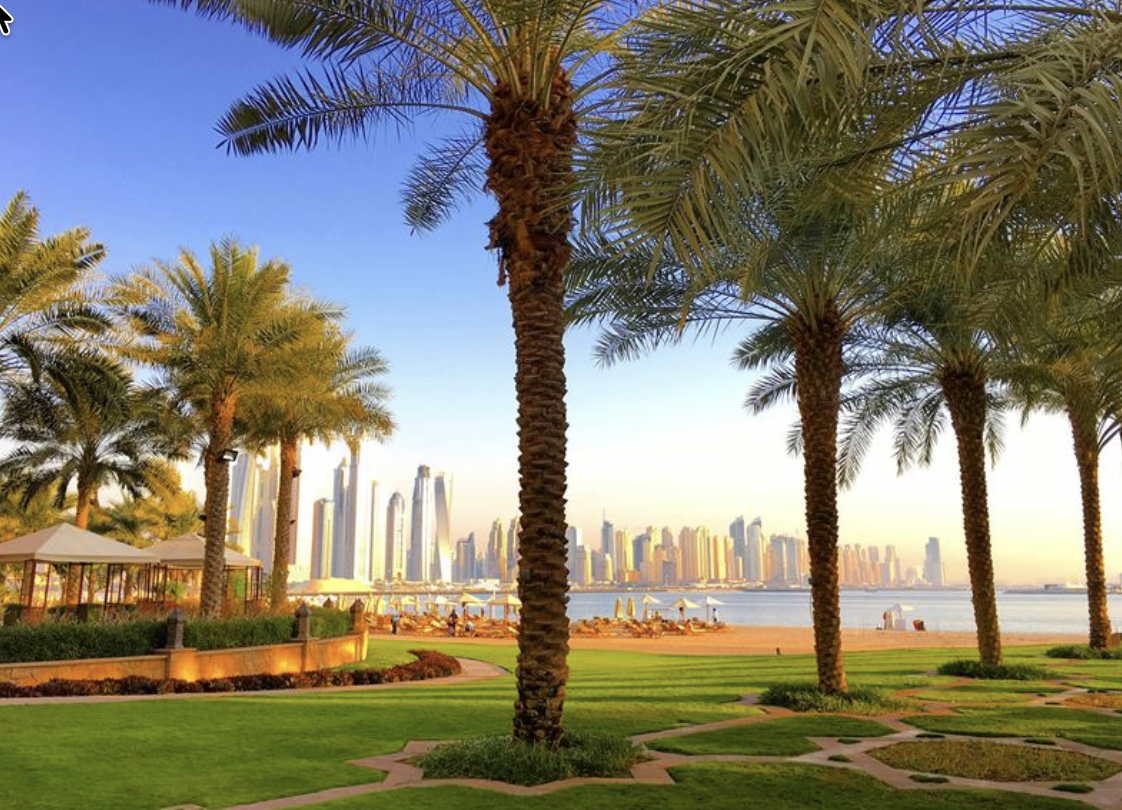
Photo credit: SAS. Routes to Dubai, UAE, and Thailand are ready to launch during the winter timetable — Dubai’s skyline.
The return to Dubai — the airline’s first operation to the UAE since 2011 — marks a significant milestone in the airline’s long-haul development.
Dubai is one of the world’s most dynamic cities and a prominent international centre for business, tourism, and innovation. Its world-class resorts, cultural scene, and year-round warm climate make it a compelling destination for both leisure and business travellers.
Thailand also receives a major boost, with more than 75% additional capacity compared with last winter. With the introduction of Phuket and Krabi, SAS becomes the only airline offering scheduled, nonstop commercial services from Scandinavia to three destinations in Thailand: Bangkok, Phuket, and Krabi.
The routes have been carefully scheduled to offer convenient timings to and from Dubai and maximise connecting opportunities from Europe to Phuket and Krabi.
“Dubai represents an important market for SAS, and at the same time, we are proud to introduce Phuket and Krabi to our long-haul network,” says SAS Executive Vice President and Chief Commercial Officer Paul Verhagen. “Re-establishing our presence in Dubai allows us to offer our customers direct access to one of the world’s most exciting cities, while the addition of Phuket and Krabi provides nonstop connections to Thailand’s most sought-after holiday destinations.
“Together, these routes strengthen Copenhagen as a global hub for Scandinavia and Northern Europe and expand the choices available to our customers for both business and leisure travel.”
A350 operations increase
The airline will deploy A350 aircraft to increase capacity on key routes across Asia, the Middle East, and North America. The winter expansion is supported by the addition of two new Airbus A350 aircraft, enabling a 34% increase in A350 operations across the network. This added capacity enables SAS to scale its long-haul presence significantly.
Capacity will increase across key destinations, with 70% more seats to Boston, 20% more to San Francisco, and 10% more to Chicago.
In Asia, SAS will further strengthen its long-haul presence through coordinated increases in frequency and seat capacity, including more than 50% growth to Seoul (ICN), 40% to Tokyo Haneda (HND), and 15% o Bangkok (BKK), alongside the new nonstop connections to Phuket and Krabi.
BANGKOK, 17 February 2026: Minor Hotels has announced the signing of a management agreement with MK Group for two new additions to its portfolio on Europe’s Adriatic coast.
Since 12 February 2026, Minor Hotels has managed the two properties that are scheduled to reopen for the 2026 season in late March.
Palace Hotel Portoroz.
Following extensive refurbishment programmes, the resorts will relaunch in Q1 2027 under the group’s luxury Anantara and Minor Reserve Collection flags.
The hotels add two new countries to Minor Hotels’ global portfolio, marking the group’s debut in Croatia and Slovenia.
Debuting in the Slovenian resort town of Portorož, the 184-key Hotel Palace Portorož offers beach access and a dedicated events area, delivering a balanced experience for both leisure and business guests. Following the refurbishment, the property will relaunch in Q1 2027 as Hotel Palace Portoroz, Minor Reserve Collection Slovenia.
Located less than a 30-minute drive from Portorož, Adriatic Istria Resort will mark Minor Hotels’ entry into Croatia. Set in Savudrija on the Istrian peninsula, the 186‑key property features three restaurants and four bars, as well as a dedicated MICE area, supporting growing demand for corporate retreats and events.
The resort is also home to the premier golf course of the Adriatic, with the picturesque 18-hole, par 72 Golf Adriatic PGA National Croatia course running from the hotel alongside the coastline.
The property will undergo an extensive refurbishment and will relaunch as Anantara Adriatic Istria Resort in early 2027.
The two hotels are owned by MK Group, a company that has held a leading position in the Adriatic region’s economy for more than four decades, with businesses across tourism, real estate, renewable energy, agriculture, and the food industry. MK Group operates in Serbia, Croatia, Slovenia, and Montenegro.
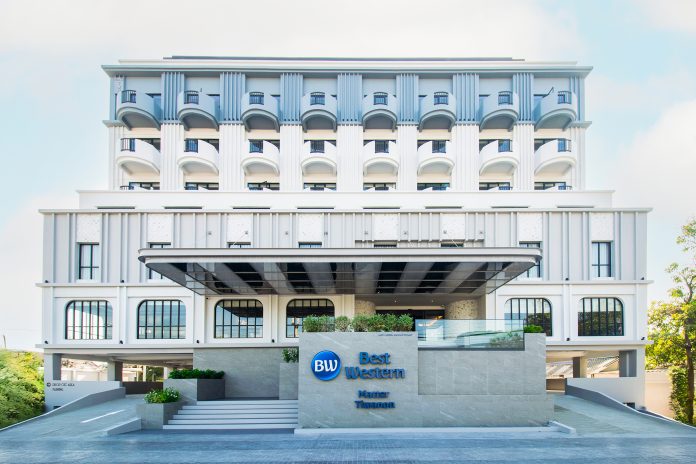
BANGKOK, 17 February 2026: BWH Hotels, a leading global hospitality enterprise comprising WorldHotels, Best Western Hotels & Resorts and SureStay Hotels, has reinforced its commitment to providing world-class hospitality across Bangkok’s dynamic and diverse districts with the opening of Best Western Matter Tiwanon Hotel.
Set in Nonthaburi, just north of the Thai capital, the hotel offers easy access to key attractions and transport links. It is also conveniently located near IMPACT Arena & Convention Centre, the Chaeng Wattana Government Complex, World Medical Hospital, Central Plaza Chaeng Wattana retail mall, and Ko Kret, the heritage-rich island famed for its traditional pottery. This contemporary hotel is perfectly positioned for every traveller. Downtown Bangkok is easily accessible via the MRT Pink Line and elevated expressways, and Don Mueang International Airport is only a short drive away.
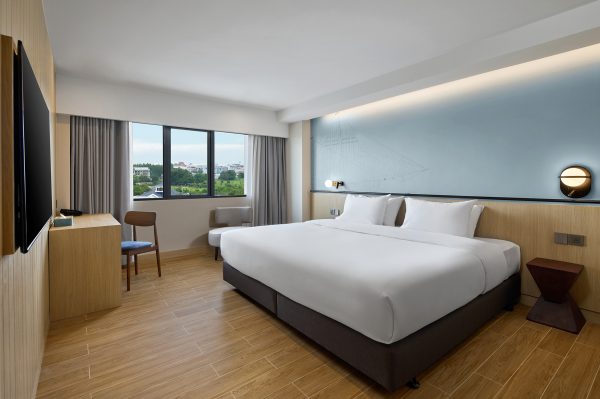
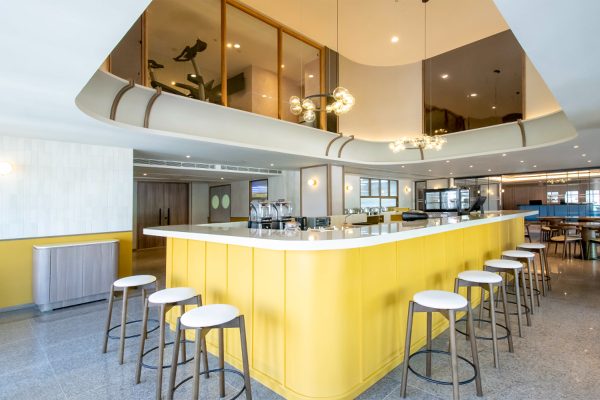
Blending the renowned international standards of Best Western with local design elements, 68 rooms and suites at Best Western Matter Tiwanon Hotel offer guests a relaxing stay in modern, well-appointed rooms, where guests can dine at the hotel’s restaurant, which specializes in authentic Thai and international cuisines, grab light bites and cool refreshments in the lobby café, and stay in shape at the well-equipped fitness center. A choice of versatile meeting rooms offers an ideal venue for intimate events, from training sessions to strategy meetings.
Members of Best Western Rewards, the award-winning loyalty programme that’s free to join, can enjoy exclusive benefits and points that never expire. These points can be redeemed for exciting rewards such as free room nights, airline miles, and gift cards.
“Nonthaburi is one of Bangkok’s most vibrant neighbouring provinces, yet it is often overlooked by travellers to the Thai capital. Whether guests plan to watch international performances at IMPACT Arena, attend major global conferences, shop, or explore Thailand’s rich cultural heritage at Ko Kret, this area offers truly rewarding experiences. By bringing our world-renowned hospitality standards to this compelling destination, we aim to help even more people explore the many wonders of Bangkok,” said BWH Hotels Vice President – APAC Olivier Berrivin.
HONG KONG, 17 February, 2026: China’s outbound travel market is projected to exceed 225 million trips in 2026, surpassing pre-pandemic levels and moving beyond recovery into a structurally different phase of growth.
According to “Powering 2026 Affluent China Outbound Travel: What Comes Next for Brands,” jointly developed by EternityX and MoonFox, more than 90% of affluent Chinese consumers plan to travel overseas this year.
Powering 2026: An Outlook of China’s Affluent Outbound Travellers.
Between January and August 2025, Mainland Chinese travellers recorded 220 million cross-border trips, up 15.4% year on year, while outbound air passenger volume rose more than 20%. Visa-free access now spans 158 countries, accelerating long-haul intent and reducing friction.
The data points to a deeper transformation. China’s outbound market is not merely returning. It is upgrading in duration, segmentation, and revenue density.
From volume recovery to value capture
Safety and infrastructure are now baseline expectations rather than differentiators. Nearly half of affluent travellers cite safety as a decisive factor in destination choice, while price sensitivity has declined among higher income tiers.
Holiday peaks are expected to intensify in 2026, yet the more significant shift lies in spending structure. High-net-worth individuals now spend more than 16 days on long-haul trips, with per-capita budgets frequently exceeding CNY100,000. Mid-haul demand is broadening into the high-income segment, while short-haul continues to anchor overall volume.
China’s outbound market comprises three structurally distinct affluent tiers, each defined by distinct travel patterns, booking cycles, spending priorities, and media ecosystems. For destinations and global brands, this segmentation determines channel allocation, pricing strategy, and margin resilience.
Media behaviour signals market maturity
Middle-income travellers are platform-driven. Social media shapes discovery, and OTAs dominate conversion within compressed booking windows.
High-income travellers operate across layered validation systems, combining social inspiration with OTA and brand verification. Planning cycles are longer, particularly for mid-haul travel.
High-net-worth individuals follow a clear trust hierarchy. Official sources, expert commentary, and curated networks outweigh mass influencers—direct communication and premium service assurance drive conversion.
China’s outbound traveller no longer moves through a single marketing funnel. It moves through three distinct influence ecosystems.
EternityX CEO and founder Charlene Ree comments: “China’s outbound recovery is no longer cyclical. It is structural. When a market surpasses 225 million outbound trips and more than 90% of affluent consumers are planning overseas travel, the conversation shifts from volume recovery to value capture.”
Ree adds: “High Net Worth travellers staying beyond 16 days and deploying six-figure budgets are not incremental demand. They are reshaping revenue density for destinations and premium brands. This is a capital allocation question. Growth will not come from scaling reach. It will come from precision. Brands that pivot from broad acquisition to segmented, trust-led engagement will capture disproportionate share of wallet in the next cycle”.
China’s outbound market has matured into a tiered revenue ecosystem. The brands that succeed will treat segmentation not as a marketing tactic, but as a strategic growth framework.
About EternityX EternityX Marketing Technology equips brands and businesses to master the Chinese audience through the power of three—PilotX, NaviX, and MediaX. These cutting-edge, AI–driven solutions provide data–driven insights and precise targeting that help brands connect with profitable audiences in key markets and beyond, powering cross–border marketing campaigns for over 500 brands.
SHANGHAI, 17 February 2026: Georgia has been appointed the Official Partner Destination of ITB China 2026, which will convene from 26 to 28 May 2026 in Shanghai.
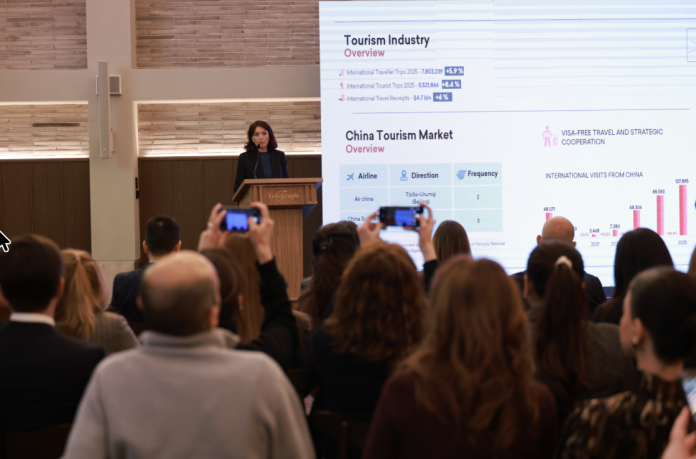
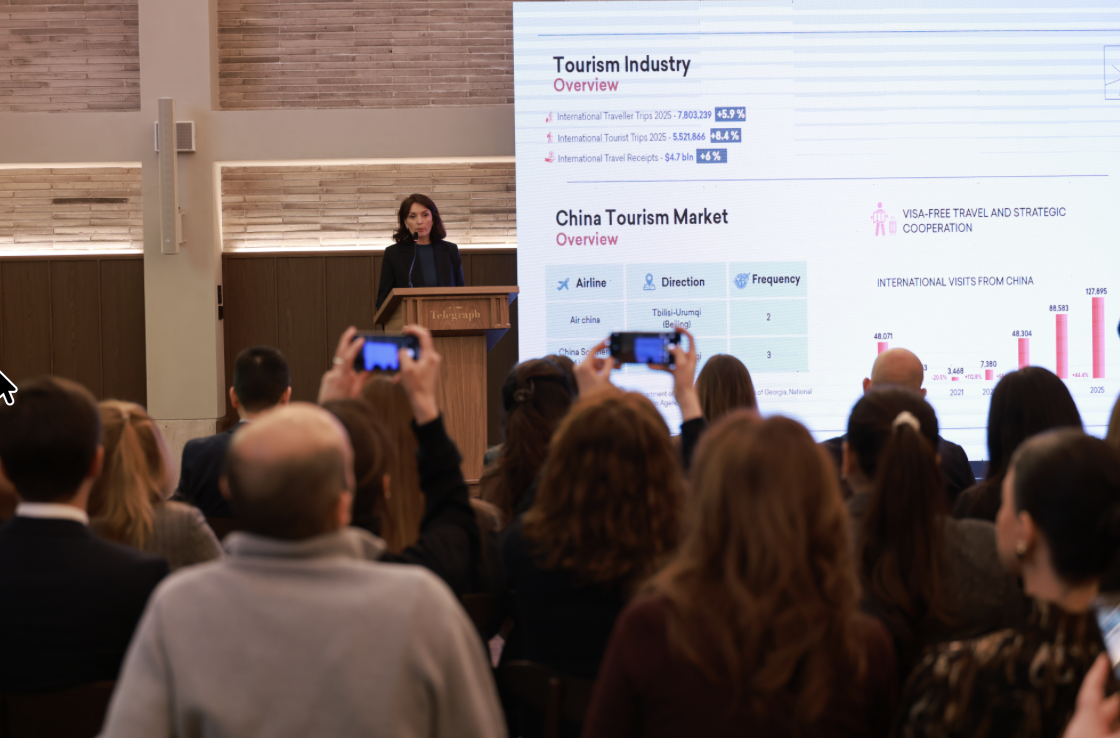
At a signing ceremony and press conference held in Tbilisi last week, the announcement highlights Georgia’s continued commitment to the Chinese outbound travel market and the further strengthening of tourism cooperation between Georgia and China.
Photo credit: ITB China. Georgian National Tourism Administration head, Maia Omiadze.
ITB China will work closely with the Georgian National Tourism Administration (GNTA) on destination promotion, industry exchange, and business matchmaking.
The official signing ceremony and press conference were jointly attended by the Georgian National Tourism Administration (GNTA) and the ITB China organiser, Messe Berlin (China). The event brought together 35 local tourism organisations and companies, including hotel groups, destination management companies (DMCs), travel agencies, and OTA platforms.
Georgia’s Minister of Economy and Sustainable Development, Mariam Kvrivishvili, commented: “Becoming the Partner Destination of ITB China 2026 is a significant milestone for Georgia’s tourism development.
This partnership reflects Georgia’s strategic commitment to strengthening tourism cooperation with China, expanding business opportunities for our tourism industry, and further positioning Georgia as a diverse, high-quality, and welcoming destination for Chinese travellers.”
Since the introduction of the mutual visa-free travel policy between China and Georgia, awareness of Georgia among Chinese travellers has continued to rise, firmly placing the destination in the outbound travel consideration set. In parallel, discussions and destination-related content about Georgia on Chinese social media and travel platforms have gained momentum, further strengthening market recognition.
China’s outbound travel to Georgia has grown strongly in recent years. In 2024, Georgia welcomed 88,583 visitors from China, marking an 83.4% year-on-year increase. This momentum continued in 2025, with arrivals rising to 127,895, up 44,4% year-on-year, positioning China among Georgia’s fastest-growing international source markets.
About ITB China ITB China 2026 will take place from 26 to 28 May in the Shanghai World Expo Exhibition & Convention Centre.
SHANGHAI, 17 February 2026: With the implementation of 144-hour visa-free transit across multiple cities in China, international visitors now enjoy significantly greater convenience, and it is driving interest in medical tourism in Shanghai.
Recently, an intriguing trend has emerged. Foreign nationals arriving in Shanghai for business or tourism are now incorporating “health management” or “convenient medical access” into their packed itineraries, blurring the lines between “leisure travel to China” and “medical travel in China”.
Photo credit: Parkway Shanghai Hospital.
Parkway MediCentre Xintiandi, located in the heart of downtown Shanghai, and Parkway Shanghai Hospital, situated near the Hongqiao transportation hub, are increasingly favoured by international patients for their high-quality, internationally aligned healthcare services, strategic locations, and seamless communication.
Having been rooted in Shanghai for over two decades, Parkway has witnessed and contributed to the “golden era” of the city’s — and the nation’s — opening-up. To date, Parkway has served nearly 500,000 patients in 77 countries and regions. It has been designated an official medical examination provider by several embassies, including those of the UK, Canada, and New Zealand.
As one of the first international high-quality healthcare providers to enter China, Parkway continues to optimise its service network in Shanghai. Through a three-tiered service system—integrating a comprehensive hospital, medical centres, and community clinics across Huangpu, Changning, Minhang, and Pudong—Parkway ensures citywide coverage and efficient linkage to the Yangtze River Delta healthcare ecosystem, continuously enhancing the accessibility and coordination of regional medical services.
As a comprehensive medical institution, Parkway Shanghai Hospital derives its core strength from a highly experienced medical team, complemented by its proximity to Hongqiao International Airport. The hospital offers multidisciplinary outpatient services staffed by full-time seasoned physicians. Also, it leverages an extensive network of high-quality medical resources, including collaborations with nearly 300 clinically experienced experts from Shanghai’s Class A Tertiary hospitals.
MOSCOW, 17 February 2026: Starting on 7 March, Aeroflot will increase flights from Moscow to Nha Trang, Vietnam, from seven to nine per week.
Two flights per day from Moscow (VKO) will operate on Wednesdays and Saturdays, with return flights from Nha Trang on Thursdays and Sundays. On other days of the week, a single daily flight will serve the route.
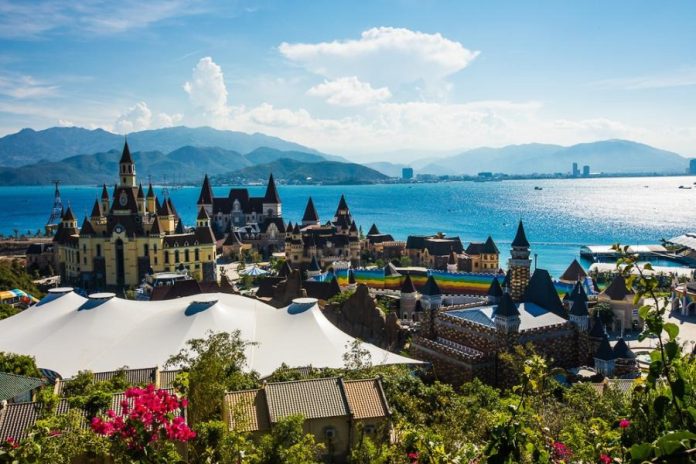
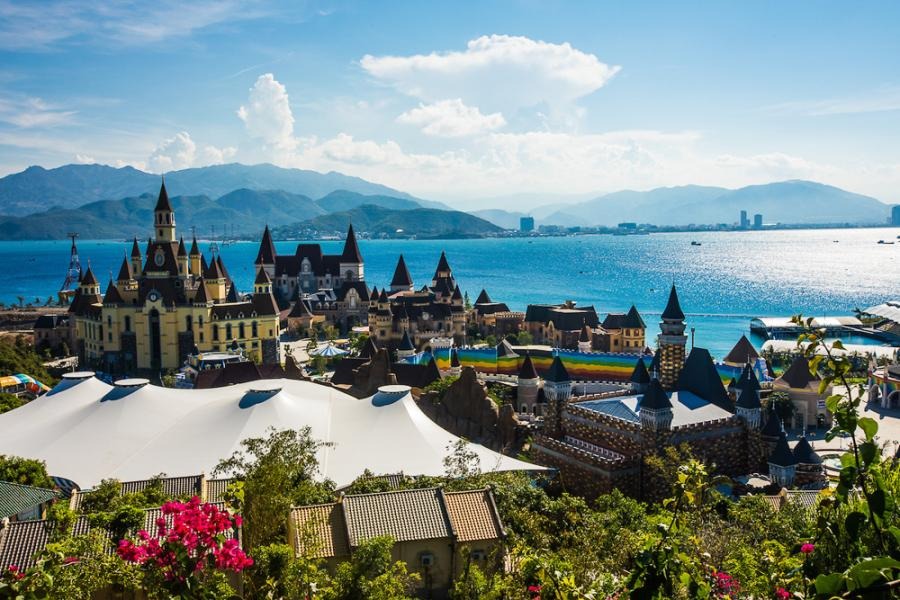
Photo credit: VNAT. Nha Trang.
A 316-seat Airbus A350 aircraft in a three-class layout — Economy, Comfort, and Business — will serve the route. Flight time is 10 hours and 45 minutes.
Under the current schedule, Aeroflot operates flights to Nha Trang from Moscow, Yekaterinburg, Irkutsk, Novosibirsk, and Vladivostok. The airline opened direct flights to the popular Vietnamese resort for the first time in its history in March 2025.
The high season in Nha Trang lasts from February to August.
Sales are through Aeroflot’s website only, as most Western booking channels block the airline and flag searches with a warning: “destination restricted.”
In 2025, Aeroflot carried 29.5 million passengers (55.3 million if other Aeroflot Group airlines are included).
SINGAPORE, 17 February 2026: Astana will resume direct flights from Almaty to Baku this March, increasing the number of flights to Azerbaijan’s capital to four weekly by May 2026.
From 15 March 2026, flights on the Almaty-Baku-Almaty route will operate twice weekly, on Thursdays and Sundays.
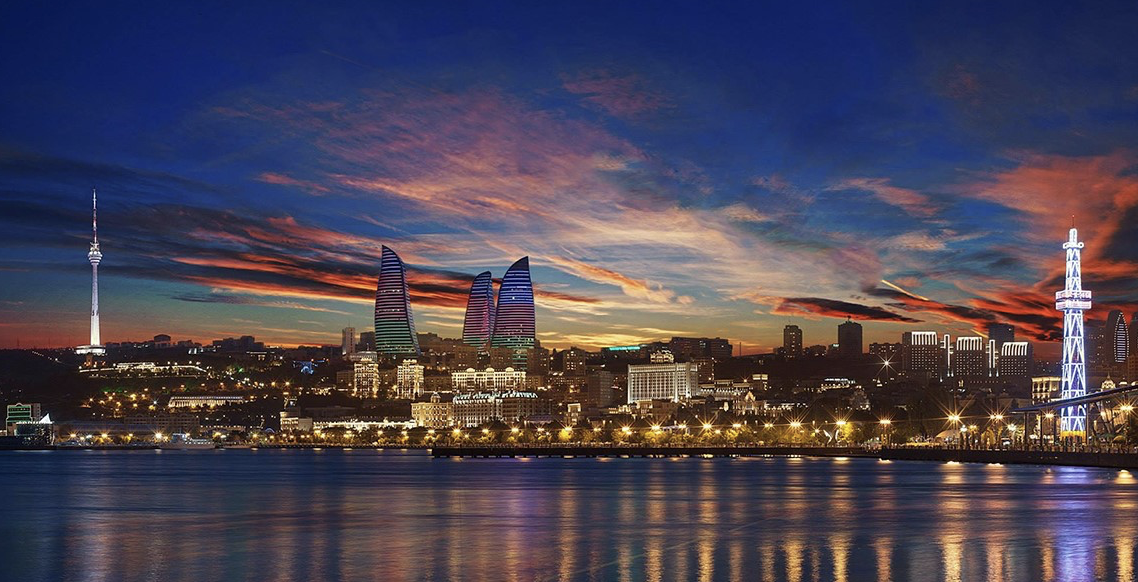
Photo credit: Air Astana.
From April, the frequency will increase to three weekly, and from May to four weekly: on Mondays, Thursdays, Fridays and Sundays. The new schedule offers daytime departures and arrivals, making travel planning more convenient.
The airline is also increasing flights on the Atyrau-Baku-Atyrau route to three weekly flights from 18 March. Initially, flights will operate on Mondays, Wednesdays, and Saturdays, and from April on Tuesdays, Thursdays, and Saturdays.
The flight time is three hours and 35 minutes from Almaty and one hour and 25 minutes from Atyrau. The cost of economy-class round-trip tickets, including fees/taxes, starts at USD 320 for flights from Almaty and USD 198 for flights from Atyrau. Tickets are now available for booking on the official website, via the Air Astana mobile app, and through accredited travel agencies.
BANGKOK, 13 February 2026: By 2023, Thai Airways International (THAI) had achieved something few legacy flag carriers manage after bankruptcy: a credible, sustained return to profitability underpinned by structural reform rather than short-term demand spikes.*
Following court-supervised rehabilitation beginning in 2021, the airline emerged leaner, more focused and operationally coherent, benefiting from Thailand’s tourism recovery while avoiding many of the excesses that previously undermined its balance sheet.
Photo credit: THAI
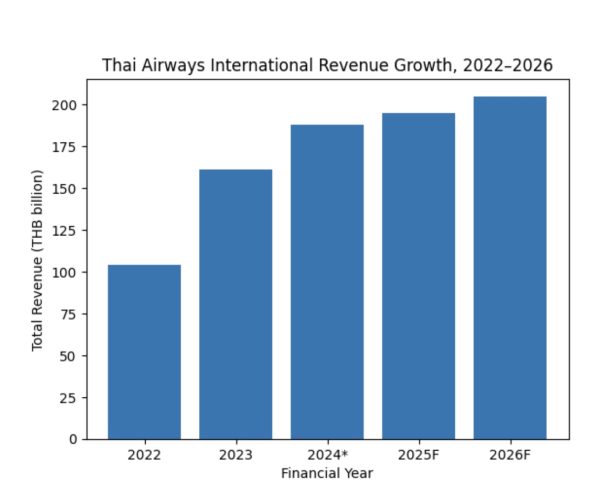
Between 2022 and 2024, Thai Airways transformed its financial trajectory. Revenue rose sharply from approximately THB 104 billion in 2022 to around THB 161 billion in 2023, before reaching an estimated THB 188 billion in 2024, a figure adjusted to exclude one-off rehabilitation accounting items. Analyst consensus forecasts point to continued, if more moderate, growth to roughly THB 195 billion in 2025 and THB 205 billion in 2026, reflecting capacity discipline and yield management rather than aggressive expansion.
Figure 1: Thai Airways International revenue growth, 2022–2026. 2024 adjusted for one-off rehabilitation accounting items; 2025–2026 based on analyst consensus forecasts.
This rebound was enabled by decisive financial restructuring. At the start of rehabilitation, THAI faced debt exceeding US$11 billion, accumulated over years of weak governance, political interference and inefficient fleet planning. Debt haircuts, equity conversions and creditor negotiations dramatically reduced financial pressure, while tighter capital controls curtailed loss-making behaviour. Unlike earlier turnaround attempts, this process was externally enforced, limiting the scope for reversal.
Operational reform proved equally critical. Thai Airways exited marginal routes, particularly in secondary European and South Asian markets, and redeployed capacity to high-yield sectors including Japan, Australia and core European gateways. The integration of Thai Smile into the mainline operation simplified branding, eliminated duplication and improved aircraft utilisation across short- and medium-haul services.
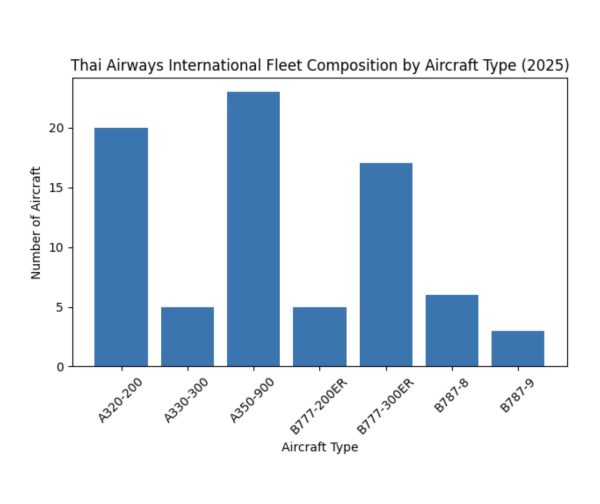
Fleet restructuring has been central to the airline’s improved cost base. By 2025, THAI presented a streamlined wide-body-centric fleet dominated by Airbus A350-900s and Boeing 777-300ERs for long-haul services, complemented by Boeing 787s for thinner intercontinental routes and Airbus A320s on regional sectors. Importantly, the airline has retired older, maintenance-intensive aircraft types, significantly reducing engineering complexity and spare-parts inventories.
Fleet streamlined to six aircraft types
• Airbus A320-200 — 20
• Airbus A330-300 — 5
• Airbus A350-900 — 23
• Boeing 777-200ER — 5
• Boeing 777-300ER — 17
• Boeing 787-8 — 6
• Boeing 787-9 — 3
Figure 2: Thai Airways International fleet composition by aircraft type, 2025. Figures reflect active in-service aircraft following post-rehabilitation fleet rationalisation.
The average fleet age has fallen to the low-teens, a notable improvement from pre-rehabilitation levels. Newer aircraft not only reduce fuel burn and maintenance costs but also support a more consistent onboard product. Cabin refurbishment, harmonised seating and refreshed soft product standards have helped reposition Thai Airways as a competitive full-service carrier rather than a legacy brand trading on nostalgia.
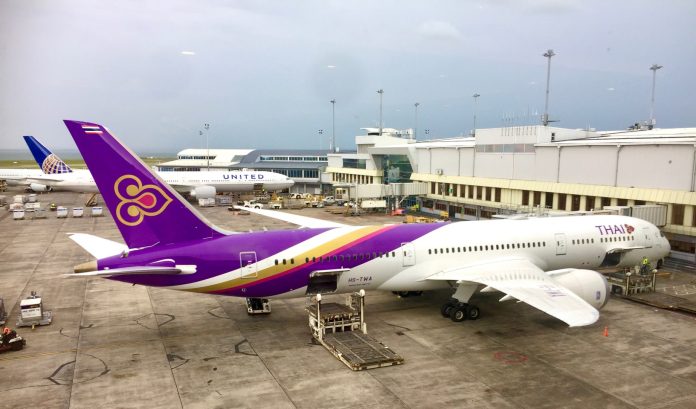
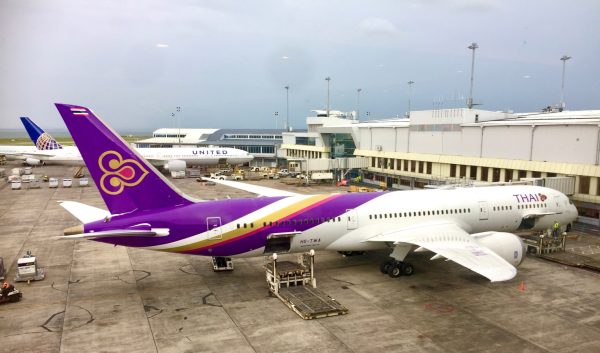
Photo: Auckland, NZ, March 2018/credit ajw/
Aircraft Overview: HS-TWA
Registration: HS-TWA
Aircraft Type: Boeing 787-9 Dreamliner (a long-haul wide-body airliner)
Operator: Thai Airways International
Nickname/Name:Phatthana Nikhom
Manufacturer Serial Number (MSN): 38777 / Line #602
First flight: 1 September, 2017
Delivered to Thai Airways: 14-15 September, 2017
Human capital reform has been more sensitive but no less important. Staff numbers were reduced substantially during the rehabilitation period, while new training regimes were introduced for cabin crew and frontline staff. The airline has also addressed age-profile imbalances and refreshed uniforms and grooming standards, aligning presentation with contemporary Asian and Middle Eastern competitors without abandoning Thai cultural identity.
From a service perspective, in-flight catering remains an area of debate. While Thai Airways continues to emphasise Thai flavours and hospitality, some critics argue that consistency still lags behind that of top-tier Asian rivals. Aviation and travel reviewers have offered mixed assessments, praising presentation and cultural authenticity while noting variability across routes and cabins. Management has acknowledged the issue and signalled further supplier rationalisation and menu standardisation.
Pricing dynamics also reflect the airline’s new discipline. Business-class fares, particularly on Europe–Bangkok routes, have risen materially since 2022, driven by constrained capacity, strong premium demand and limited competition. While this has raised concerns among some corporate travellers, yields have improved markedly, supporting profitability. Looking ahead, analysts expect premium fares to remain firm through 2026, especially as wide-body capacity across Asia remains structurally tight.
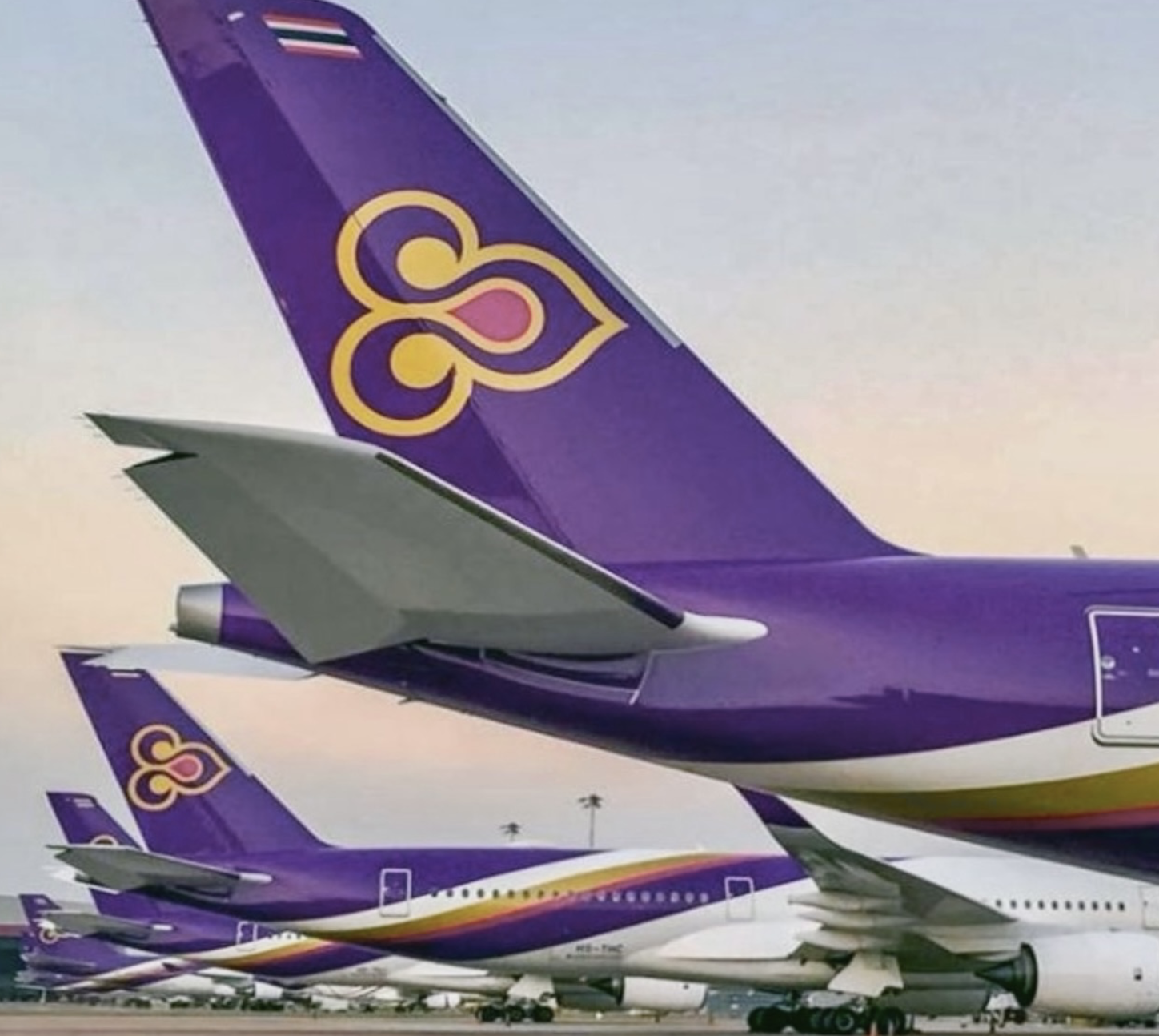
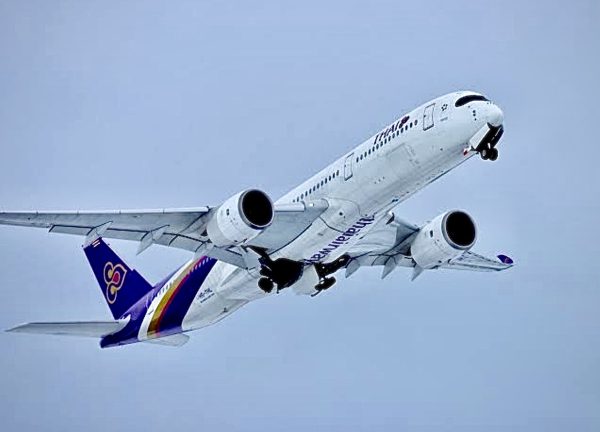
Up, Up and Away! (Thai Airways International Airbus A350).
Competition, Thai Airways now operates in a transformed regional landscape. Singapore Airlines remains the benchmark for premium service, while Middle Eastern carriers dominate ultra-long-haul connectivity. Regionally, EVA Air, ANA and JAL exert pressure on North Asian routes, while low-cost carriers constrain pricing on short-haul sectors. THAI’s response has been to focus on network relevance rather than scale, leveraging Bangkok’s hub position and alliance connectivity.
Airport infrastructure has also played a role. Airports of Thailand (AOT) has benefited directly from the national carrier’s recovery through higher passenger volumes and improved slot utilisation at Suvarnabhumi. At the same time, congestion and capacity constraints underscore the need for continued airport investment to sustain aviation-led growth in Thailand.
A brief SWOT assessment illustrates Thai Airways’ current position. Strengths include a revitalised balance sheet, modernised fleet and strong home-market demand. Weaknesses persist in brand consistency and premium service delivery. Opportunities lie in sustained tourism growth, premium leisure travel and strategic partnerships. Threats include fuel volatility, geopolitical shocks and intensifying regional competition.
By 2026, Thai Airways will no longer be a turnaround story but a cautiously credible airline. The challenge ahead is not survival, but execution: maintaining cost discipline, investing selectively in product quality and resisting the temptation to expand for prestige rather than profit. For Thailand, the re-emergence of a financially viable flag carrier represents both an economic asset and a symbolic restoration of confidence in national aviation.