

Wednesday, October 28, 2026
Home Blog Page 12

Visa study spotlights stablecoins

SINGAPORE, 7 October 2026: Visa, a world leader in digital payments, today released new survey findings on stablecoin awareness and consumer sentiment in Asia Pacific. 

The research reveals growing interest in practical uses such as everyday spending, travel, and cross-border money movement, while limited understanding and trust concerns remain barriers to wider use.

As stablecoins move beyond their crypto-native roots, consumers are beginning to view them less as a crypto-trading instrument and more as a potential tool for everyday spending, travel and cross-border transfers. 

Yet misconceptions remain widespread, with close to half believing stablecoins can only be used to buy or sell other cryptocurrencies. Turning this interest into everyday utility will depend on making stablecoins easier to understand and use through trusted, familiar and regulated payment experiences.

“We’re seeing a meaningful shift in how consumers across Asia Pacific think about stablecoins,” said Visa Head of Digital Currencies, Asia Pacific Nischint Sanghavi. “Consumers are beginning to see how stablecoins could support the ways they already spend and move money, particularly through online purchases, travel and cross-border transfers. The opportunity now is to turn that interest into trusted and familiar payment experiences that work at scale.”

Rising interest in stablecoin use

Across Asia Pacific, 46% of consumers say they are likely to use stablecoins within the next five years, compared with 16% who have used them in the past 12 months. Interest extends to everyday online purchases, travel spending and overseas shopping, pointing to potential use beyond investment or crypto trading. Cross-border money movement is another area of potential, with 49% believing stablecoins could become a common way to move money across borders within five years.

This points to possible relevance for remittances, international transfers and other payment needs. Yet understanding has not caught up with these emerging use cases: 49% of consumers who are aware of stablecoins still believe they can only be used to buy and sell other cryptocurrencies.

Market-level findings show where stablecoin awareness and intent are strongest across Asia Pacific. Hong Kong (84%), India (80%) and Thailand (77%) recorded the highest awareness, while Vietnam (67%) and India (67%) showed the strongest intent to use stablecoins within the next five years. These findings highlight the importance of making stablecoins available through secure payment experiences consumers already recognise and trust. Visa is already working with banks, regulated financial institutions and payment partners to connect stablecoin capabilities with familiar ways to pay and move money.

Trust and understanding remain barriers

Stablecoins have entered mainstream awareness across Asia Pacific, with 66% of consumers aware of them. Yet only 6% accurately understand how stablecoins work, while misconceptions remain, with 41% believing stablecoins always increase in value.

Trust is also holding consumers back. Among those aware of stablecoins but who have never used them, 38% cite concerns about fraud or scams, while 36% point to a lack of understanding. Consumers show the strongest preference for regulated institutions, with government or central bank-linked entities (27%) and banks or regulated financial institutions (26%) ranking as the most trusted providers.

Visa is working with banks, regulated financial institutions, and payment partners to bring greater security, compliance, and usability to stablecoin-enabled experiences, including through the Visa Stablecoin Platform, which helps clients mint, move, and manage stablecoins.

About Visa Consumer 360 study
Visa commissioned the Consumer 360 study in 2026, with fieldwork conducted between June and July 2026. The study surveyed 14,250 consumers aged 18 to 65 across 14 Asia Pacific markets — Mainland China, Taiwan, Hong Kong, Japan, Korea, Singapore, Malaysia, Thailand, Indonesia, the Philippines, Vietnam, India, Australia and New Zealand.

(Source: Visa)

Bhutan Soul Travel relaunches

PAR0, Bhutan, 7 October 2026: Bhutan Soul Travel, a Bhutan-based travel company founded by Bhutan Spirit Sanctuary founder Louk Lennaerts, relaunches with Bhutan À La Carte travel experiences.

It’s a notable return to market for BST, resuming operations after a pre-pandemic pause under a founder with deep, long-standing relationships in Bhutan.

Photo credit: Bhutan Soul Travel

Designed for discerning travellers seeking a more personal and meaningful experience of Bhutan, Bhutan À La Carte moves beyond traditional packaged itineraries to create individually tailored journeys shaped around each traveller’s interests, pace and priorities.

“Bhutan is not a destination that should be experienced from a checklist,” says Bhutan Soul Travel founderLouk Lennaerts. “Bhutan À La Carte is about creating journeys that reflect the individual traveller, allowing them to discover Bhutan in their own way, at their own pace, while experiencing the culture, nature and people that make this kingdom so extraordinary.”

Bhutan remains one of the world’s most distinctive travel destinations, where dramatic Himalayan landscapes, ancient Buddhist traditions, richly preserved culture and a strong commitment to environmental sustainability come together.

The country’s philosophy of High Value, Low Volume tourism emphasises meaningful, responsible travel rather than mass tourism. This approach has helped protect Bhutan’s natural environment, cultural heritage and unique identity while creating opportunities for travellers to experience a destination that remains remarkably authentic.

Bhutan À La Carte offers the opportunity to go beyond the traditional highlights. A journey might combine the country’s best-known cultural landmarks with time in lesser-visited valleys, village experiences, Himalayan hikes, wellness and mindfulness, gastronomy, textiles, architecture or encounters with local communities.

While Bhutan Spirit Sanctuary (BSS) and Bhutan Soul Travel (BST) are separate business units, they share a common connection through their founder, Louk Lennaerts, whose long-standing involvement in Bhutan has provided a deep understanding of the destination and its people.

Bhutan À La Carte is designed for travellers who want more than a conventional holiday: those seeking authentic experiences, thoughtful pacing, and the freedom to shape their own Bhutan story.

Whether the inspiration is spirituality, nature, adventure, culture, food, photography, architecture, wellness or simply the desire to disconnect from the everyday, Bhutan À La Carte will create an itinerary around the traveller rather than asking the traveller to fit into a fixed programme.

About Bhutan Soul Travel
Bhutan Soul Travel (BST) is a Bhutan-based travel company founded by Louk Lennaerts, founder of Bhutan Spirit Sanctuary. Established before the pandemic, BST is now resuming operations with Bhutan À La Carte, offering personalised travel journeys designed to connect visitors with Bhutan’s culture, landscapes, traditions, and people.

IndiGo increases fuel surcharges

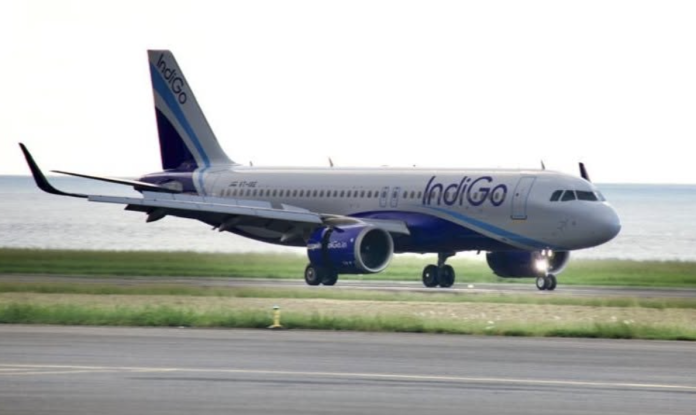
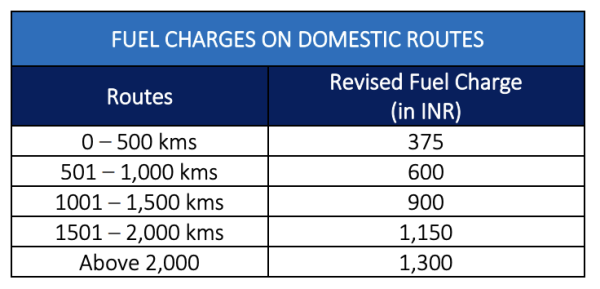
NEW DELHI, 7 October 2026: Rising ATF (Aviation Turbine Fuel) costs have forced IndiGo to recalibrate fuel charges across its domestic and international routes, the airline reported this week.

The revised charges apply to all new bookings made after 0001 on 6 October 2026. 

Photo credit: IndiGo.

In a press statement, the airline said ATF prices have remained volatile in recent months, especially following geopolitical issues in the Middle East. 

The continued rise in fuel prices, with the latest month-on-month increase exceeding 14%, has pushed ATF costs to some of the highest levels in the last decade. 

Because Aviation Turbine Fuel makes up a significant share of an airline’s operating costs, this rise is expected to affect IndiGo’s cost structure and network economics. 

In view of the situation, IndiGo said it has “recalibrated its fuel charges across its domestic and international flights. The following charges will be included in all new bookings on IndiGo flights. IndiGo will continue to monitor the situation and make relevant adjustments as and when appropriate.”

(Source: IndiGo)

Air India Express boosts winter schedule flights

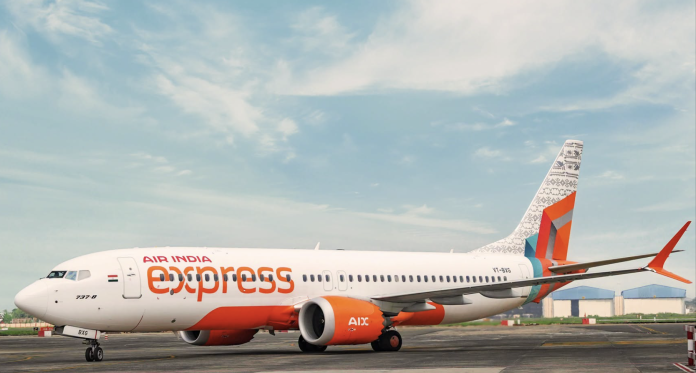
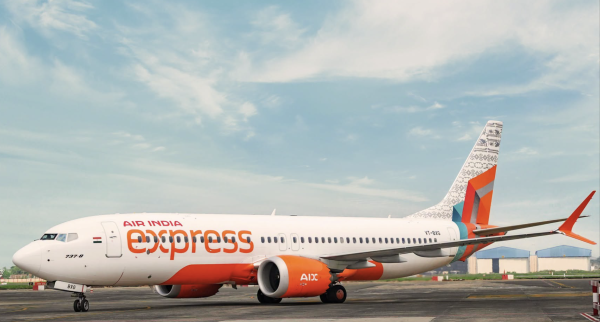
NEW DELHI, 7 October 2026: Air India Express has confirmed its Winter Schedule 2026, making it the largest winter network changes on record while strengthening connectivity across India and to key international destinations. 

Effective 25 October 2026, the schedule will roll out in phases, taking the airline to around 585 daily flights, including approximately 435 domestic and up to 150 international departures. 

Photo credit: Air India Express.

The expanded schedule reinforces the airline’s growing presence across its key hubs, supported by an expanding fleet of over 105 aircraft and enhanced capacity across both domestic and international markets. Designed to offer guests greater choice and convenience, the network expansion reflects Air India Express’ continued focus on creating meaningful connections between people, places, and cultures.

Commenting on the winter schedule 2026, Air India Express Chair Nipun Aggarwal said: “As a leading value carrier, Air India Express is focused on making travel more accessible, convenient, and comfortable by strengthening connectivity across metros, emerging cities, and underserved markets. Even as the industry navigates elevated fuel costs and broader operating challenges, we remain committed to disciplined, sustainable growth and delivering meaningful value to our guests through a relevant network and the warmth of Indian hospitality.”

This winter, the airline will launch more than 40 new routes across domestic and international markets, significantly improving its network and travel flexibility. Air India Express operations are set to increase from about 3,150 weekly flights in the Summer 2026 schedule to nearly 4,100 weekly flights in the Winter 2026 Schedule, while one-stop connectivity will expand from about 1,330 weekly connections to nearly 1,600, enabling more seamless travel across the airline’s expansive network. Highlights of the new routes being introduced under the Winter Schedule 2026 include:

International routes

  • • Abu Dhabi – Goa (Mopa): 3x Weekly
  • • Amritsar – Abu Dhabi: 3x Weekly
  • • Bahrain – Thiruvananthapuram: 2x Weekly
  • • Bangkok – Indore: 4x Weekly
  • • Bangkok – Kochi: 4x Weekly
  • • Bangkok – Visakhapatnam: 2x Weekly
  • • Bengaluru – Kathmandu: 7x Weekly
  • • Bhopal – Sharjah: 3x Weekly
  • • Chandigarh – Sharjah: 4x Weekly
  • • Chennai – Singapore: 14x Weekly
  • • Delhi – Riyadh: 4x Weekly
  • • Dubai – Goa (Dabolim): 7x Weekly
  • • Kochi – Kuwait: 3x Weekly
  • • Lucknow – Ras Al Khaimah: 4x Weekly
  • • Lucknow – Riyadh: 3x Weekly
  • • Mangaluru – Kuwait: 3x Weekly
  • • Mangaluru – Ras Al Khaimah: 2x Weekly
  • • Mumbai – Kuwait: 3x Weekly
  • • Phuket – Hyderabad: 4x Weekly
  • • Riyadh – Thiruvananthapuram: 3x Weekly
  • • Sharjah – Surat: 3x Weekly

Domestic routes

  • • Ahmedabad – Delhi: 7x Weekly
  • • Bengaluru – Coimbatore: 14x Weekly
  • • Bengaluru – Goa (Mopa): 7x Weekly
  • • Bengaluru – Jodhpur: 7x Weekly
  • • Bengaluru – Madurai: 7x Weekly
  • • Bhubaneswar – Sri Vijaya Puram (Port Blair): 4x Weekly
  • • Bhopal – Navi Mumbai: 3x Weekly
  • • Delhi – Jaipur: 5x Weekly
  • • Delhi – Sri Vijaya Puram (Port Blair): 7x Weekly
  • • Delhi – Udaipur: 7x Weekly
  • • Hyderabad – Mangaluru: 3x Weekly
  • • Hyderabad – Pune: 7x Weekly
  • • Indore – Navi Mumbai: 4x Weekly
  • • Kolkata – Pune: 2x Weekly
  • • Mumbai – Nagpur: 7x Weekly

(Source: Air India Express)

AirAsia returns to two Indian cities

KUALA LUMPUR, 6 October 2026: To mark the resumption of its Ahmedabad and Amritsar routes, AirAsia will offer special fares to the two Indian cities, with limited-time, all-in one-way fares from just MYR669 for bookings made 5 to 11 October 2026.

Photo credit: AirAsia.

Travel validity

Ahmedabad: 25 October 2026 to 31 August 2027;

Amritsar: 2 December 2026 to 31 August 2027;

Frequency: Four weekly services for both Ahmedabad and Amritsar.

Rediscover India 

With the return of AirAsia’s Ahmedabad and Amritsar services, AirAsia guests can once again enjoy direct connectivity from Kuala Lumpur to two of India’s distinctive destinations, giving travellers more options to explore the country. 

Flight schedules

KUL-AMD

AK91 departs Kuala Lumpur (KUL) at 1920 and arrives in Ahmedabad (AMD) at 2255. (Monday, Wednesday, Friday and Sunday). 180-seat A320. Flight time: five hours and 35 minutes.
AK90 departs Ahmedabad (AMD) at 2320 and arrives in Kuala Lumpur (KUL) at 0725 plus a day.

KUL-ATQ

AK94 departs Kuala Lumpur (KUL) at 1745 and arrives in Amritsar (ATQ) at 2130. (Monday, Wednesday, Friday and Saturday). 236-seat A321. Flight time: six hours and 15 minutes.
AK93 departs Amritsar (ATQ) at 2230 and arrives in Kuala Lumpur at 0650 plus a day.

(Source: AirAsia)

MH partners with bank and tech giants

KUALA LUMPUR, 6 October 2026: Malaysia Airlines, PT Bank Central Asia Tbk (BCA), and Novus Technologies Pte Ltd (Novus) have signed a Memorandum of Understanding (MoU), marking a significant step towards strengthening Malaysia-Indonesia connectivity and exploring new opportunities across travel, commerce, financial services and digital innovation.

Malaysia Aviation Group (MAG) Chief Executive Officer of Airline Business Bryan Foong said: “Indonesia remains one of our most important international markets, underpinned by strong travel demand, vibrant business links and deep people-to-people connections between our two nations.

Photo credit: Malaysia Airlines.

Through this partnership with BCA and Novus, we are bringing together aviation, banking and technology to create a more seamless and rewarding ecosystem for travellers and businesses. By integrating travel, payments, loyalty and digital capabilities, we aim to unlock new opportunities, strengthen connectivity and support the continued growth of the Malaysia-Indonesia corridor.”

The partnership builds on Malaysia Airlines’ strong presence and growing momentum in Indonesia, one of the airline’s key international markets. Last September, Indonesia’s Directorate General of Civil Aviation (DGCA) recognised Malaysia Airlines as the Most On-Time International Airline 2026. The recognition reflects the airline’s continued commitment to operational excellence, with the Jakarta (CGK) to Kuala Lumpur (KUL) route achieving a year-to-date on-time performance of 92.19% through August 2026 and demonstrating consistent improvement throughout the year.

(Source: Malaysia Airlines)

Six destinations to sip coffee

SINGAPORE, 6 October 2026: Coffee is becoming more than a morning ritual — for many travellers, it’s a way to understand a place, from the beans grown on nearby hills to the cafés where locals meet, work and linger over a slow pour.

The rise of independent roasters, speciality coffee and social-media discovery has made café culture a reason to travel in its own right. Travellers are looking beyond famous coffee capitals for places where local produce, creative cafés and everyday neighbourhood life come together. 

Digital travel platform Agoda highlights six destinations across Asia where a good cup comes with a strong sense of place.

Da Lat, Vietnam

Known for its cool climate and surrounding coffee farms, Da Lat is a natural choice for travellers who like their coffee with mountain air. Independent cafés occupy wooden houses, gardens and converted villas, while the city’s coffee culture offers plenty of opportunities to try Vietnamese specialities, including egg coffee. The rich, velvety drink pairs strong coffee with a sweet, whipped egg topping, making it a distinctive local ritual to seek out.

Ipoh, Malaysia

Ipoh’s old town is made for café-hopping, with restored shophouses serving coffee alongside white coffee, pastries and local favourites. Between cups, visitors can explore cave temples and heritage streets. The city’s food-focused atmosphere makes it an appealing base for travellers seeking a slower, more flavorful Malaysian escape.

Jeju, South Korea

Jeju’s dramatic coastline, volcanic landscape and creative café culture make it a natural destination for travellers who like scenery with their coffee. Independent cafés range from sleek seaside spaces to atmospheric spots surrounded by citrus orchards, while local ingredients often bring a distinctly Jeju flavour to the menu.

Bali, Indonesia

Bali’s coffee story begins in the highlands, where travellers can visit coffee farms, see how beans are processed and take part in tastings featuring distinctive local flavours from coconut to avocado. Around Ubud and the island’s greener interiors, cafés turn those beans into carefully prepared cups, often served in peaceful garden settings.

Hualien, Taiwan

Hualien pairs Pacific scenery with a growing independent café scene, from relaxed neighbourhood spaces to cafés that showcase Taiwanese beans and creative brewing. The city is also a gateway to Taroko and the island’s eastern landscapes. Around the Mid-Autumn Festival, cafés and markets take on a festive atmosphere, offering a warm pause between coastal adventures.

Chiang Rai, Thailand

Chiang Rai brings together coffee farms, contemporary cafés and northern Thai traditions. Travellers can visit plantations in the surrounding highlands, learn about local cultivation and taste freshly prepared brews before returning to town for coffee in spaces shaped by local art and design.

“Coffee gives travellers an easy way into a destination,” said Agoda Senior Vice President Supply Andrew Smith. “It can lead you from a beautifully restored shophouse to a hillside farm, or from a quiet morning café to a whole community of makers. Agoda is helping travellers discover stays and destinations where café culture is part of the experience, not simply a stop between attractions.”

(Source: Agoda)

CEB resumes SIN and DMK flights from Iloilo

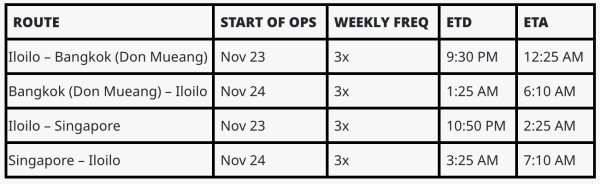
MANILA, 6 October 2026: Cebu Pacific will resume direct flights from Iloilo to Bangkok (DMK) and Singapore on 23 November, further strengthening international connectivity from its Iloilo hub.

CEB will operate three weekly flights from Iloilo to Bangkok (DMK) and Singapore — every Monday, Wednesday, and Friday —effective 23 November.

Photo credit: CEB.

Return flights from Bangkok (DMK) and Singapore to Iloilo will operate three times weekly on Tuesdays, Thursdays, and Saturdays, effective 24 November.

Both services to DMK and SIN will use an 180-seat A320 with a flight time of three hours and 55 minutes to Bangkok and three hours and 40 minutes to Singapore.

In Bangkok, travellers can explore the city’s famous temples, bustling night markets, and sample a variety of Thai dishes. Singapore, meanwhile, offers a mix of attractions, diverse food experiences, and shopping destinations.

CEB operates in 35 Philippine and 26 international destinations spread across Asia, Australia, and the Middle East.

Flight schedules — Bangkok, Singapore

(Source: CEB)

Asia Pacific airlines August traffic results

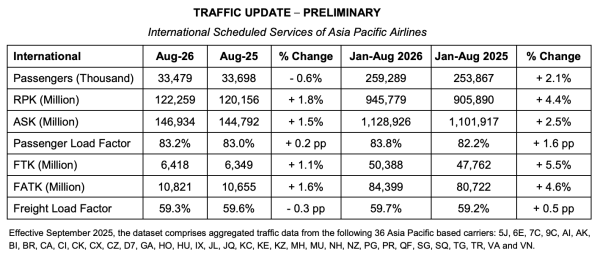
KUALA LUMPUR, 6 October 2026: International passenger traffic remained soft as some airlines further rationalised capacity due to elevated jet fuel prices and airspace restrictions linked to the Middle East conflict, according to preliminary August 2026 traffic figures released last week by the Association of Asia Pacific Airlines. 

Higher airfares also weighed on regional demand, while long-haul traffic remained relatively resilient, including on Asia–Europe routes.

Overall, Asia Pacific airlines carried 33.5 million international passengers in August, down 0.6% from a year earlier. Passenger demand, measured in revenue passenger kilometres (RPK), rose by 1.8% year-on-year. Capacity, measured in available seat kilometres, increased by 1.5%, lifting the average international passenger load factor by 0.2 percentage points to 83.2%.

Meanwhile, air cargo markets continued to benefit from rising export activity and brisk demand for AI-related goods. However, e-commerce shipments to Europe weakened after charges were introduced on small parcels. International air cargo demand, measured in freight tonne kilometres (FTK), grew 1.1% year-on-year, while offered freight capacity expanded 1.6%. As a result, the average international freight load factor fell by 0.3 percentage points to 59.3% for the month.

Commenting on the results, AAPA Director General Wong Hong said: “Traffic growth has moderated in recent months, but the picture remains broadly positive. Asia Pacific airlines carried 259.3 million international passengers in the first eight months of the year, up 2.1% from the same period last year. International air cargo demand rose by a strong 5.5% over the same period.”

Wong Hong added: “Despite the year-to-date growth in traffic, the operating environment remains challenging. Elevated jet fuel prices, airspace restrictions and weaker Asian currencies are raising costs, while higher fares weigh on price-sensitive travellers. These factors continue to affect profitability, with outcomes varying across individual airlines.”

Looking ahead, he noted: “Regional economic growth and trade activity should continue to support demand for air travel and cargo, although growth is likely to remain uneven across markets. Geopolitical developments and changes in trade policies add some uncertainty to the outlook for the remainder of the year.”

(Source: AAPA)

FCM expands management team in Japan

TOKYO, 6 October 2026: FCM Travel Asia is expanding its management team in Japan, led by the appointment of Benjamin Beh as General Manager of FCM Travel Japan.

With more than 20 years of corporate travel experience across both the travel management company and corporate buyer sides of the business, Beh brings a broad industry perspective shaped by his experience at BCD Travel and Abbott as well as several years working in Japan.

Photo credit: FCM Travel. Benjamin Beh, General Manager, FCM Travel Japan.

As General Manager, he will lead FCM’s business in the market, focusing on strengthening customer relationships and driving growth in Japan.  

“Japan is a market built on trusted relationships, and that will remain central to how we grow. At the same time, businesses are expecting more from their travel partners. They want a partner that understands their objectives, anticipates their needs and delivers greater value from their travel programmes,” said Beh.  

“Our priority is to combine that local understanding with FCM’s global reach, technology and expertise to deliver a better experience for businesses and their travellers, whether their travel takes them across Japan or around the world.” 

FCM also named Aki Yonezu Head of Account Management and Meetings & Events, having progressed through several roles at Flight Centre Travel Group (FCTG) over the past seven years.

Norimasa Arase will serve as Sales & Marketing Manager. He brings 20 years of experience across corporate sales, marketing and business strategy in the Japanese travel industry. Together, they bring deep local expertise to FCM Travel Japan’s management team across corporate travel and business events.  

Joe Nakazawa also joins FCTG in Japan as Director of Supplier Relations and Strategic Partnerships. In this role, he will deepen relationships with airlines, hotels and partners across Japan’s travel ecosystem to grow FCM’s footprint in the market. Having held senior positions at the International Air Transport Association (IATA), Tourism Australia and Japan Travel Bureau, Joe brings extensive industry knowledge and relationships built over a career spanning aviation, tourism and corporate travel.   

FCM Travel Asia Managing Director, Vicki Parris, commented: “Japan is an important market for FCM, and the management team we now have in place reflects our ambitions for the business. With this team in place, we have the right mix of experience and relationships to grow our business in Japan and support our customers as their needs evolve.  

“For our customers, that means having experienced people on the ground who understand their business, travellers and the way business is done in Japan, backed by the scale of FCM’s global network and technology. This puts us in a stronger position to respond to their needs and deliver a consistently high level of service as we continue to grow.” 

(Source: FCM Travel).