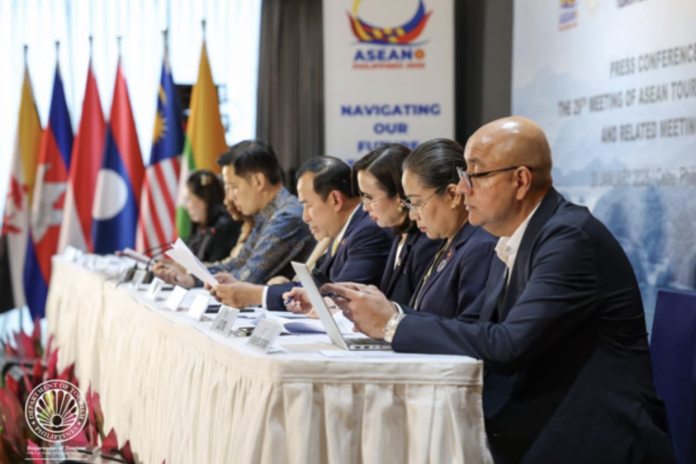
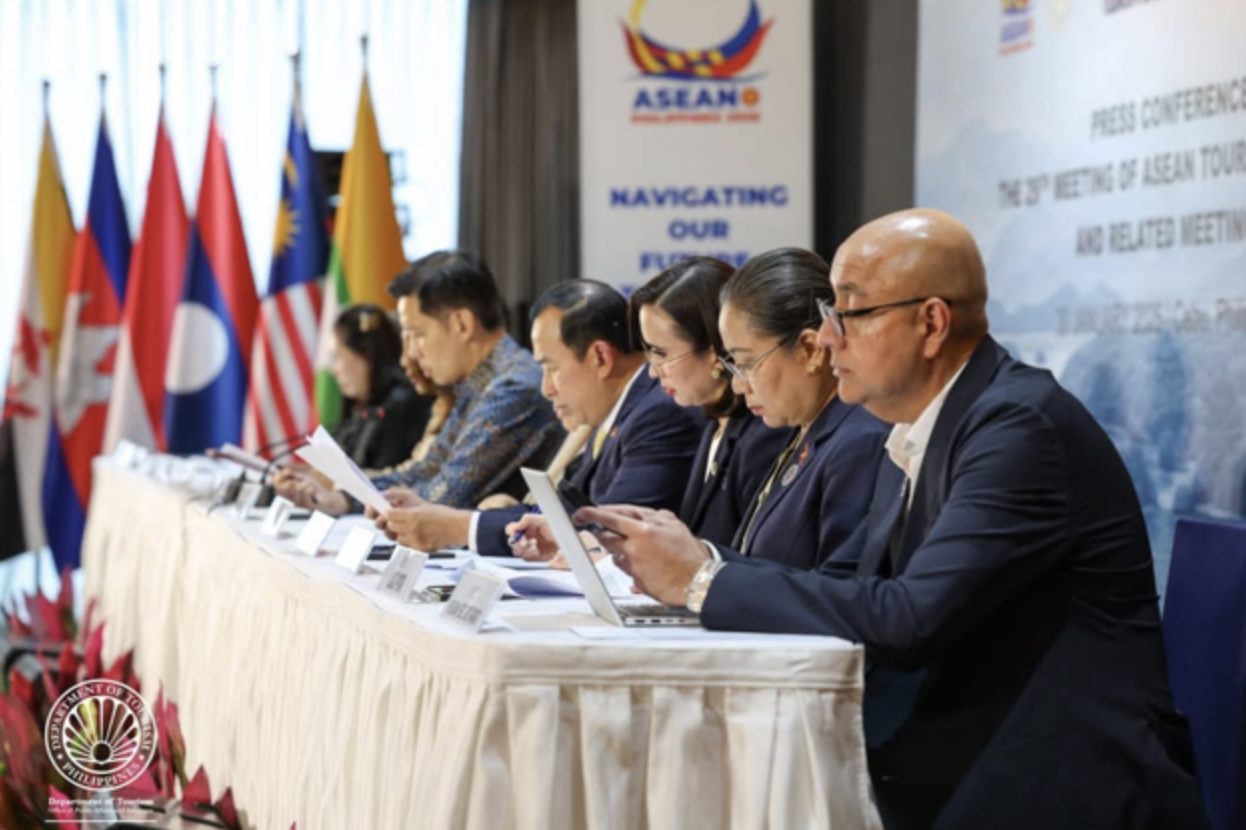
MANILA, 2 February 2026: ASEAN Tourism Ministers on Friday reaffirmed their commitment to advancing quality, sustainable, and resilient tourism across Southeast Asia through the Joint Media Statement of the 29th Meeting of the ASEAN Tourism Ministers.
The Philippines Department of Tourism Secretary Christina Garcia Frasco, ASEAN 2026 Chair, delivered the statement at a press conference during the ASEAN Tourism Forum 2026 in Cebu, Philippines.
Photo credit: DOT. Ministers cited improved connectivity and a diversified range of tourism products, which boosted visitor arrivals.
The statement noted the continued recovery of ASEAN’s tourism sector, with preliminary data showing approximately 144 million international visitor arrivals in 2025. Ministers cited improved connectivity, diversified tourism products, and coordinated marketing efforts as key drivers of the sustained upward trend.
Ministers also acknowledged the conclusion of the ASEAN Tourism Strategic Plan 2016–2025, highlighting its role in strengthening tourism standards, advancing professional mobility through the Mutual Recognition Arrangement on Tourism Professionals, and reinforcing joint regional promotion, positioning ASEAN as a single destination.
Looking ahead, the meeting underscored the implementation of the ASEAN Tourism Sectoral Plan 2026–2030 and the ASEAN Tourism Marketing Strategy 2026–2030, which aim to enhance ASEAN’s global visibility through data-driven, digitally enabled campaigns. Ministers emphasised deeper collaboration with the private sector, online platforms, and subregional groupings, as well as the development of cruise tourism and multi-destination itineraries across the region.
According to the statement, the meeting also highlighted efforts to strengthen tourism standards, invest in infrastructure at secondary and tertiary destinations, and build a skilled, future-ready workforce. Ministers likewise welcomed the Philippines’ proposal to develop an ASEAN Sustainable and Resilient Tourism Outlook as a Priority Economic Deliverable under its 2026 ASEAN Chairmanship.
ASEAN Tourism Ministers expressed appreciation to the Philippines for hosting the meeting and agreed that the 30th Meeting of the ASEAN Tourism Ministers will be held in Singapore in January 2027.
In addition to the Joint Media Statement of the 29th Meeting of ASEAN Tourism Ministers, three other joint media statements were adopted covering the outcomes of the 25th Meeting of ASEAN, China, Japan, and the Republic of Korea Tourism Ministers; the 13th Meeting of ASEAN Plus India Tourism Ministers; and the 5th Meeting of ASEAN Plus Russian Federation Tourism Ministers.
BANGKOK, 2 February 2023: The narrative has changed. From what I have seen over many years, people no longer come to Thailand simply because it is affordable.
Today, people come because Thailand offers depth of experience, consistency, and a genuine sense of welcome that is difficult to replicate elsewhere.
Thailand works well for first-time visitors, but it works even better for those who return again and again. That balance is one of its greatest strengths.
Thailand is easy to enjoy
One of the most common comments I hear from visitors is how quickly they feel comfortable.
• International airports are modern and well-connected
• Transport is affordable and easy to understand
• Hotels and attractions are professionally run
• English is widely spoken in tourism areas
• Visitors settle in quickly and feel at ease
This ease reduces friction and anxiety. When people relax early in a trip, they enjoy more, explore more, and are far more likely to return. Thailand’s strength today lies in experiences rather than landmarks.
Experiences, not just destinations
Visitors are drawn to:
• Food, from street stalls to fine dining
• Wellness, including spas, retreats, yoga and traditional therapies
• Culture, temples, festivals and everyday local life
• Nature, beaches, islands, mountains and national parks
• Learning experiences such as cooking, crafts and meditation
These experiences create emotional connections. They are what people remember long after the journey ends.
One country, many journeys
Thailand’s variety remains one of its most powerful advantages.
In a single visit, travellers can:
• Spend time in a modern global city
• Relax on beaches or islands
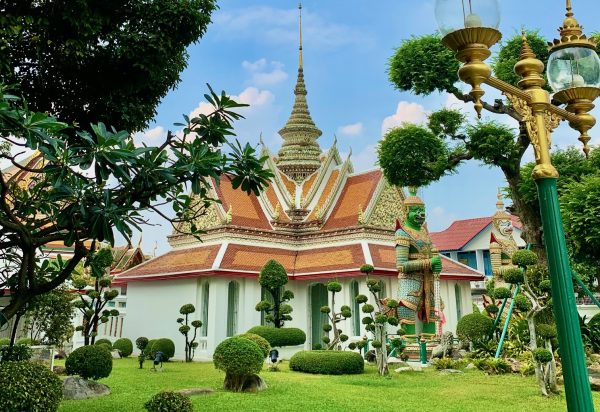
• Explore historic towns and temples
• Visit rural communities and lesser-known destinations
• Combine luxury with simplicity
This flexibility makes Thailand suitable for short breaks, extended stays, and repeat visits over the long term.
Thailand’s timeless charm, rooted in tradition and radiant with life.
First-time visitors feel reassured
For many travellers, Thailand feels like a natural introduction to Asia.
• Tourism standards are high and predictable
• Food and accommodation meet global expectations
• Visitors feel supported rather than overwhelmed
• Thailand has decades of experience welcoming international guests
This reassurance builds confidence and encourages visitors to explore more deeply.
Repeat visitors are highly valued
Empirical evidence consistently indicates that repeat visitors represent Thailand’s most valuable segment of travellers and therefore warrant targeted nurturing and engagement strategies. Established tourism economics reinforces the principle that retaining existing visitors is significantly more cost-effective than acquiring new ones. Moreover, studies of destination loyalty demonstrate that repeat visitors typically exhibit longer stays and higher per-capita expenditure, thereby yielding disproportionate economic benefits for the destination.
Repeat visitors tend to:
• Spend more per visit and stay around longer
• Travel beyond the main gateways
• Build relationships with hotels and local businesses
• Recommend Thailand to friends, family and colleagues
Destinations and hotels understand this value and often go out of their way to welcome returning guests.
Service that feels personal
Thai hospitality stands out because it feels human.
• Returning guests are recognised
• Preferences are remembered
• Service feels warm rather than mechanical
• Visitors feel welcomed, not processed
This emotional connection remains one of Thailand’s most substantial competitive advantages.
Value today means quality
Thailand still offers good value, but value today is about what visitors receive, not how little they pay.
Visitors consistently recognise:
• High standards of accommodation
• Excellent food across all price points
• Genuine, thoughtful service
• Experiences that feel generous
This is why Thailand continues to compete vigorously, even as global travel costs rise.
Thailand by Region: 2026 Outlook — Demand Anchors, Festivals, Promotions & MICE
Bangkok and Central Thailand
Bangkok continues to anchor Thailand’s tourism and business ecosystem in 2026, blending global connectivity, signature festivals and major cultural programming with a robust MICE calendar.
• Songkran in April remains a cornerstone demand driver, combining traditional celebrations with modern music events such as the S20 Songkran Music Festival, which brings EDM stages and branded parties into the heart of the city’s festival calendar.
• The city’s MICE agenda continues to attract global institutional and industry gatherings, reinforcing longer stays and higher-value segments. These include major conferences and exhibitions at key venues such as IMPACT and QSNCC, sustaining demand outside traditional tourism peaks.
• Bangkok’s live music calendar for 2026 includes major stadium and arena shows from international artists — for example, SEVENTEEN touring in March, and ONE OK ROCK performing at IMPACT Arena in February — which help extend shoulder-season demand and attract younger inbound segments.
Southern Thailand
Southern beach and island destinations are leveraging a diverse calendar of experiencesto deepen lengths of stay and appeal to repeat visitors:
• Songkran festivities in Phuket, Krabi and Koh Samui remain key season openers for international and regional tourists, blending cultural festivities with beach culture and music programming.
• Regional festivals — including annual arts and lifestyle events — support the transition toward higher-value travel, combined with wellness, culinary and eco-experiential promotions led by local partners and TAT marketing campaigns.
• While the South hosts more targeted incentives and corporate travel weeks throughout the year, its strategic emphasis in 2026 is on premium leisure positioning and dispersal beyond major hubs.
Northern Thailand
The North’s calendar is shaped by cultural and creative experiences that align with slower-paced, high-engagement travel:
• Pii Mai Muang (Northern Songkran) in Chiang Mai remains one of the region’s strongest experiential draws, distinct from central celebrations and rich in heritage interpretation.
• Complementary cultural and arts festivals continue throughout the year, reinforcing the region’s appeal as a heritage-led and wellness-oriented destination within broader TAT regional promotions.
Eastern Thailand
Eastern Thailand is increasingly a hybrid leisure–business gateway — supporting unusual synergies between festival culture and business demand:
• The region is set to host one of the most significant global music events in Thailand’s history: Tomorrowland Thailand 2026, scheduled for 11–13 December in Wisdom Valley, Chonburi (Pattaya). This will be the first full-scale Asian edition of the iconic electronic music festival, with multiple stages and an expected strong international audience.
• Pattaya and neighbouring areas also sustain Songkran celebrations and lifestyle festivals that extend domestic and regional tourism beyond the traditional peak.
• In parallel, the Eastern Economic Corridor (EEC) supports a steady series of business exhibitions, trade delegations and incentive travel that strengthen year-round demand and cross-border corporate visitation.
Additional Calendar Highlights That Cut Across Regions (2026)
• Miss Grand Thailand 2026 (March) provides an elevated cultural spectacle with broad media reach, supporting destination branding and regional travel before Songkran peaks.
• Live music and cultural showcases throughout the year — from multi-genre festivals to smaller club and venue tours — contribute to an expanded entertainment ecosystemthat supports longer stays and diversified demand.
Outlook for 2026
It’s my firm belief that Thailand’s future is not about chasing volume. It is about protecting quality, nurturing repeat visitors and using strengths intelligently.
Thailand continues to attract visitors because it offers confidence, warmth and variety. That combination remains highly relevant as global travel patterns evolve.
About the author Andrew J Wood is a British-born travel writer, tourism consultant and former hotelier who has lived in Thailand for more than three decades. A former Director of Skål International and past president of Skål International Asia, Thailand and Bangkok, he writes regularly on tourism trends, destination strategy and high-value travel across the Asia-Pacific region.
BANGKOK, 2 February 2026: Thai Airways International will resume flights on the Bangkok-Amsterdam route on 1 July, and media speculation suggests it may also resume services to Auckland, New Zealand, starting late October.
Reintroducing Amsterdam to the TG network is seen as a signal that the airline is healthy enough to resume flights to European Tier 1 cities that were suspended when it filed for bankruptcy. Auckland could return either in late 2026 or 2027.
Photo credit: THAI. Airbus A350-900.
The resumption of the Amsterdam air link is reflected in the summer-season timetable posted in January, which confirms the deployment of an A350-900 with 327 seats for a daily service between Bangkok’s Suvarnabhumi Airport and Schiphol Airport in Amsterdam.
First reported by Aeroroutes, the last time the airline operated a service between Bangkok and Amsterdam via Zurich, Switzerland, was 28 years ago. THAI withdrew from the route due to heavy losses and stiff competition, preferring to concentrate on flights to the gateway cities of Frankfurt and Munich in Germany, which generated higher yields and load factors. The airline is once again going down the same path, gambling on a financial outcome that is not guaranteed, as competition is even more challenging now than in the late 1990s.
Flight schedule
TG936 departs Bangkok (BKK) at 0430 and arrives in Amsterdam (AMS) at 1115. TG937 departs Amsterdam (AMS) at 1400 and arrives in Bangkok (BKK) at 0620, plus a day.
Despite Aeroroutes’ heads-up about the new service, THAI has not flagged the upcoming service on its corporate affairs social channels. Bookings and ticket sales have not been activated by the airline. However, a search of popular booking sites suggests sales on the Amsterdam route could be activated on 13 February.
Competition on the direct route from Bangkok to Amsterdam is intense. Eva Air operates the route three times weekly with a Boeing 777-300ER seating 333 passengers, and KLM operates 11 weekly flights with a Boeing 777-200ER seating 320 passengers. The average round-trip fare on the route is USD1160.
BANGKOK, 30 January 2026: The Taiwan Tourism Administration (TTA) reinforced tourism cooperation between Thailand and Taiwan, hosting a B2B Taiwan Tourism Workshop in the Thai capital for 150 travel trade participants.
The workshop is part of Taiwan’s comprehensive tourism promotion strategy for 2026, showcasing major travel highlights, including the Taiwan Lantern Festival, nighttime tourism experiences, and a wide range of themed travel products.
Cindy Chen, Director of the Taiwan Tourism Administration, Bangkok Office.
These initiatives reinforce Taiwan’s positioning as a year-round destination offering diverse experiences from day to night, while also introducing promotional campaigns and travel incentives to encourage more Thai travellers to visit Taiwan.
In 2026, Taiwan continues to promote its destination brand under the global theme “Taiwan – Waves of Wonder,” highlighting the island’s blend of natural landscapes, urban culture, and dynamic nighttime experiences. The campaign emphasises Taiwan’s appeal as a destination where visitors can enjoy rich and varied experiences throughout the day and into the night.
Event participants also enjoyed a contemporary cultural performance by Diabolo Walker, and a specially curated dinner featuring Michelin-selected Taiwanese cuisine, offering an authentic taste of Taiwan in Bangkok. The workshop facilitated more than 4,000 business meetings, underscoring the strong interest from both markets and laying a solid foundation for continued cooperation between Thailand and Taiwan’s tourism industries.
Taiwan Tourism Administration Bangkok Office director Cindy Chen said: “The B2B Taiwan Tourism Workshop included participation from more than 23 tourism organisations based in Taiwan, including government agencies, tourism associations, travel companies, hotels, and Taiwan’s major airlines.
“With over 150 Thai travel operators participating and more than 4,000 business meetings conducted, the event marks an important step in strengthening long-term cooperation between the tourism industries of Taiwan and Thailand,” said Chen
Taiwan remains a popular destination for Thai travellers, supported by increased flight connectivity, competitive travel costs, and the extension of visa-free entry for Thai nationals until the end of July 2026.
The workshop is expected to generate more than NTD70 million in tourism-related economic value.
SINGAPORE, 30 January 2026: South Africa’s Minister of Tourism Patricia de Lille will undertake a high‑level mission to Southeast Asia, visiting Singapore, Malaysia and Indonesia from 2 to 6 February 2026, as the country deepens engagement with the region to advance tourism growth, expand air connectivity and promote investment opportunities.
Southeast Asia has emerged as one of South Africa’s fastest‑growing outbound travel source markets, with Indonesia, Malaysia and Singapore all showing strong outbound travel growth. Looking forward to 2030, the minister forecast compound annual growth rates of around 8% across most travel segments.
The region is also among the fastest‑growing air access markets to South Africa, with seat capacity from Asia and Australasia increasing by 37.6% year‑on‑year, signalling growing airline confidence and recovery momentum.
Singapore offers 12 flights weekly on the route to Johannesburg, operated with 259-seat A350-900s. The round-trip economy fare on the route averages USD1670. There are no direct flights from Jakarta or Kuala Lumpur to Johannesburg.
The Minister’s outreach will focus on translating this growth potential into sustained arrivals, deeper partnerships and long‑term economic value for South Africa. The visit will commence on 2 Singapore, followed by engagements in Malaysia from 4 February, before concluding the mission in Indonesia on 6 February.
Strengthening air connectivity
A key priority of the visit is to unlock growth through stronger air links and aviation partnerships, recognising air access as a critical enabler of tourism growth.
In Singapore, Minister de Lille will hold high‑level engagements with Singapore Airlines and Changi Airport Group to discuss route development, expanding flight frequencies, potential incentive mechanisms and opportunities to strengthen South Africa’s position as a gateway to Africa for Southeast Asian travellers.
Singapore offers 12 flights weekly on the route to Johannesburg, operated with 259-seat A350-900s. The round-trip economy fare on the route averages USD1670. There are no direct flights from Jakarta or Kuala Lumpur to Johannesburg.
In Indonesia, the Minister will engage with multiple international and regional carriers at the ASTINDO Travel Fair in Jakarta, including Singapore Airlines, Garuda Indonesia, AirAsia, Lion Air Group, and the newly established Indonesia Airlines, as well as other carriers operating in the market.
These engagements aim to support connectivity, codeshare opportunities, and joint efforts to stimulate demand across Southeast Asia.
Shaping tourism
The visit will also reinforce South Africa’s strategy of aligning its tourism offering with the preferences of Southeast Asian travellers, while recognising the region’s diversity.
In Indonesia and Malaysia, engagements will place strong emphasis on Halal‑friendly tourism offerings, luxury travel experiences and tailored long‑haul products, particularly in destinations such as Cape Town, Durban and South Africa’s renowned natural attractions.
In Singapore, a high‑value and mature market, the focus will be on business travel, MICE, repeat visitation, and premium leisure, reflecting Singapore’s role as a strategic gateway to Southeast Asia.
Minister de Lille said: “My first official visit to Southeast Asia as Minister of Tourism comes at a time when the region is showing strong growth potential for South Africa. We are here to work closely with our partners to expand air access, align our tourism offerings with market demand, and unlock new opportunities that will foster bilateral trade growth. We are confident that this visit will deliver meaningful outcomes that strengthen our partnerships with the region over the long term.”
Ministerial meetings and trade engagement
During the visit, Minister de Lille will undertake a series of bilateral meetings with counterparts and key stakeholders, including:
A bilateral meeting with Singapore’s Minister of State for the Ministry of Trade & Industry, and the Ministry of National Development, Alvin Tan.
Engagements with the Singapore Tourism Board to exchange insights on destination marketing, events‑led tourism growth and digital platforms.
A bilateral meeting with Malaysia’s Minister of Tourism, Arts and Culture, Dato Sri Tiong King Sing.
A bilateral meeting with Indonesia’s Minister of Tourism, Widiyanti Putri Wardhana, including the signing of a tourism cooperation MOU to strengthen collaboration between the two countries.
Minister de Lille will also host industry meetings in Singapore, Malaysia and Indonesia, bringing together hotel groups, financial institutions, property developers and investment companies. Discussions will focus on collaboration opportunities across hospitality, eco‑tourism, nature‑based developments and supporting infrastructure.
TOKYO, Japan, 30 January 2026: Emirates has announced the expansion of its signature Chauffeur-Drive service in Japan, extending the premium ground experience to customers travelling from Narita International Airport from 1 February 2026 and Kansai International Airport from 1 March 2026.
These destinations are added to the existing Chauffeur-Drive service available at Haneda Airport, reinforcing Emirates’ position as the only international airline offering this premium chauffeur-driven service in Japan.
Available to First Class and Business Class customers travelling on eligible Emirates-operated flights, the Chauffeur-Drive service offers a seamless, door-to-door travel experience, providing complimentary private transfers between the airport and a customer’s home, hotel or office.
Emirates’ world-class ground service for premium travellers at Tokyo Narita is rounded out with access to the airline’s lounge in Terminal 2.
Service coverage and key details
Chauffeur-Drive service coverage includes up to 100 driven kilometres per journey, calculated based on the shortest distance between the airport and the customer’s designated pick-up or drop-off location.
Service to Narita International Airport covers the Tokyo 23 wards and most parts of Tokyo, Chiba, Saitama and Kanagawa prefectures.
Service to Kansai International Airport covers Osaka City and most parts of Osaka, Nara, Kyoto and Hyogo prefectures.
Excess mileage beyond the 100-kilometre allowance will be charged at JPY 500 per additional kilometre, with applicable tax/VAT added.
Any excess mileage charges are to be settled directly with the driver, payable in cash (Japanese Yen only) or by credit card.
Customers can arrange their Chauffeur-Drive service in advance through Manage Your Booking on emirates.com, or via the Emirates contact centre 03-6743-4567.
The expansion of Chauffeur-Drive further complements Emirates’ growing presence in Japan, where the airline operates flights to Haneda Airport, Narita International Airport and Kansai International Airport.
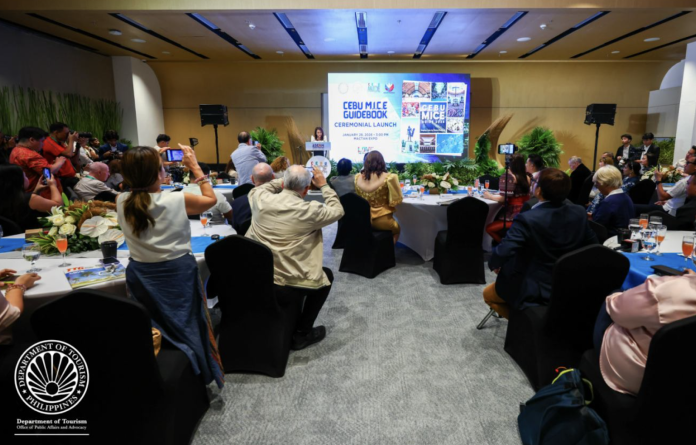
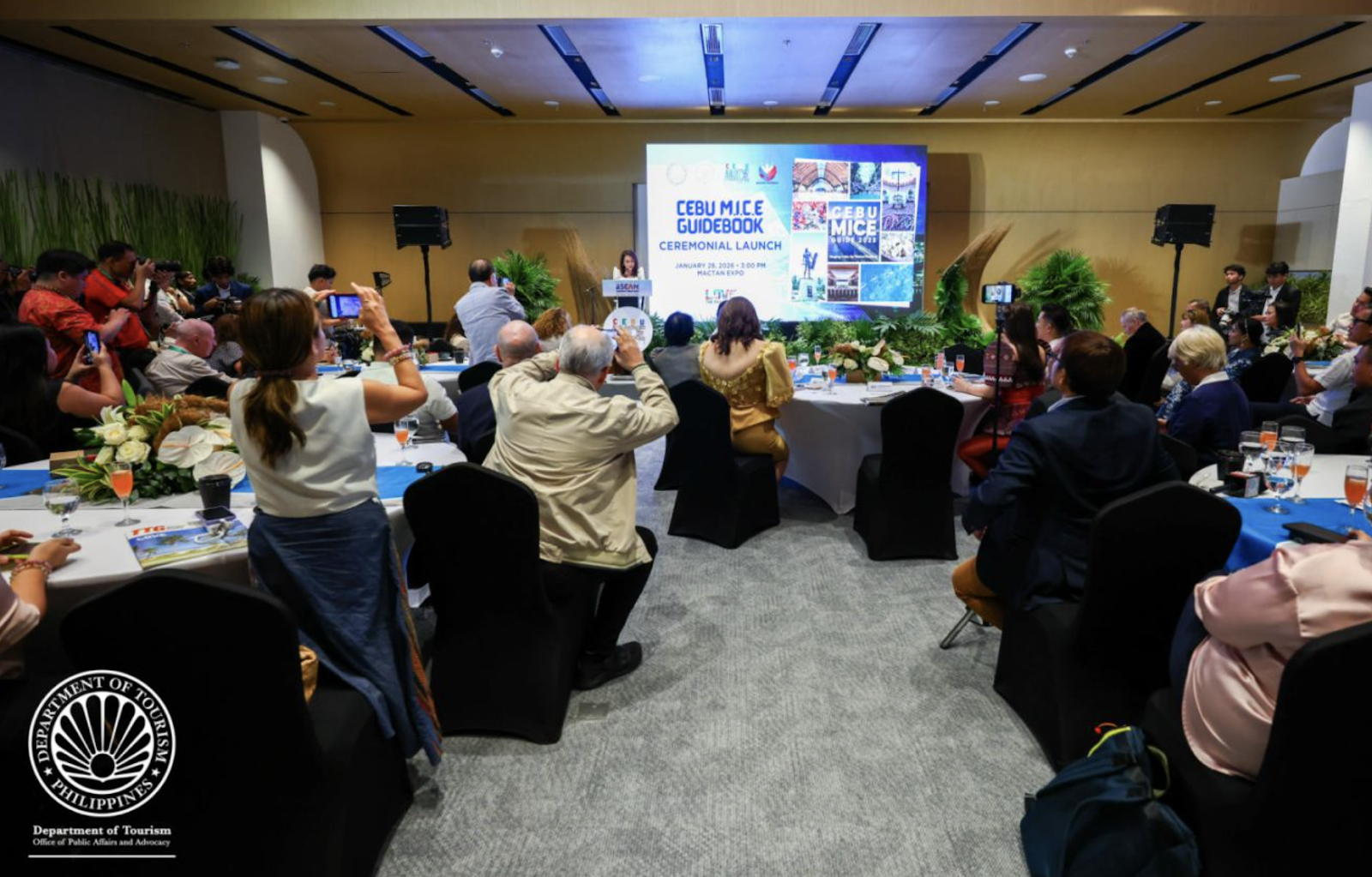
LAPU-LAPU CITY, Cebu, 30 January 2026: Targeting more international events, the Department of Tourism (DOT) and the Cebu MICE Alliance launched Cebu’s first-ever MICE guidebook on the sidelines of ASEAN Tourism Forum TRAVEX earlier this week.
The annual regional trade show convened from 28 to 30 January in the host destination Cebu, the Philippines, attracting 271 international travel buyers, 124 Philippine travel content providers, and 222 registered seller exhibitors from the remaining 10 ASEAN member nations — Brunei, Cambodia, Indonesia, Laos, Malaysia, Myanmar, Singapore, Thailand, Timor Leste and Vietnam.
Photo credit: DOT. Cebu presents Cebu’s business events guide.
In a move to boost Cebu’s Meetings, Incentives, Conventions, and Exhibitions (MICE) sector, leading players launched the inaugural edition of the Cebu MICE Guidebook to participants at the trade show, which ends today, Friday, 30 January.
DOT Secretary Christina Garcia Frasco, Tourism Promotions Board (TPB) Chief Operating Officer Marga Nograles, and Cebu MICE Alliance President Cleofe Albiso led the unveiling of the Cebu MICE Guide 2025 at the recently opened Mactan Expo, the main venue for the TRAVEX and ATF 2026 sessions.
Developed by the Cebu MICE Alliance and printed by the DOT, the guidebook contains key information on the island province’s venues, accommodations, destination experiences, service providers, and support infrastructure, serving as a practical resource and pitch for event planners and organisers worldwide.
In 2024, the said regional alliance of line agencies and tourism-allied industries noted that MICE tourism in Cebu is rapidly growing and “is poised to make a significant economic impact, contributing an estimated PHP1 billion to Cebu’s economy by 2029.”
Tourism Secretary Frasco lauded the Cebu MICE alliance for developing the guidebook, emphasising that the initiative not only promotes the province as a premier destination for international engagements but also empowers communities and local stakeholders.
“Cebu’s strength as a MICE destination lies in the depth and balance of what it offers. An award-winning international airport and broad air connectivity support venues and world-class hotels, as well as convention and exhibition facilities, including this venue. Beyond the meeting room, Cebu offers beaches and island diversity, world-class diving, living culture, vibrant festivals, and a tradition of warm Filipino hospitality that consistently distinguishes the Cebu experience,” said Secretary Frasco.
MICE tourism has proven to be an income-generating opportunity for the Philippines. Data from the International Congress and Convention Association (ICCA) showed that foreign delegates spend an average of over PHR32,086 per day, which is nearly five times the amount spent by a typical leisure tourist.
SINGAPORE, 30 January 2026: New data reveals a projected business events spend of over USD250 million this year as The Meetings Show Asia Pacific prepares for its third edition, to be held in Singapore from 14 to 15 April 2026.
Over half (52%) of event planners in the Asia Pacific (APAC) expect to produce more meetings in 2026. 41% anticipate producing the same performance as last year. Only 5% predict a drop in production compared to 9% a year ago.
Photo credit: Northstar Meetings Group.
The new data comes from a survey of 167 planners in the APAC region by Cvent and Northstar Meetings Group, organiser of The Meetings Show Asia Pacific.
However, despite the anticipated uplift in volume, only one quarter (28%) of planners expect to see an increase in attendees. This compares to 45% last year.
MCI Middle East Regional Director – Business Development, Alexander John, will attend The Meetings Show Asia Pacific 2026 in Singapore as a hosted buyer.
He explains what’s driving this growth: “There’s a measurable shift in economic momentum and demand coming from APAC. The region is now large enough — and increasingly integrated sufficiently — to generate more of its growth internally, even while remaining deeply connected to global markets. For example, East Asia and the Pacific alone have a population of 2.39 billion and a GDP of USD32 trillion (2024), creating a scale of domestic and regional demand that can support organic growth.
“That scale is reinforced by deeper intra-regional trade. UN ESCAP notes that in 2024, intra-Asia-Pacific trade accounted for 53% of the region’s exports and 56% of its imports, meaning more than half of goods trade is now anchored within the region itself (not primarily dependent on Western markets).
“APAC’s combination of massive market size, rising intra-regional trade intensity, and still-strong growth expectations helps it absorb shocks better than smaller, less-integrated regions – while not making it immune to global downturns, tariffs, or financial tightening.”
Northstar Travel Group Asia Events Director Nelson Khoosaid: “With overwhelming market interest in The Meetings Show Asia Pacific, buyer applications reveal strong sentiments that APAC continues to demonstrate strength and resilience in MICE activities. Collectively, buyers project an annual meeting spend of over USD250 million, with strong demand for Singapore, Thailand, Malaysia, and Vietnam.”
The research also shows significantly higher optimism among planners in APAC than last year and than their counterparts in EMEA and North America.
70% of APAC planners are more optimistic than 44% in EMEA and 32% in North America.
Last year, these stats were 63% (APAC) and 47% in EMEA and North America.
Only 20% of APAC planners are less optimistic, compared to 26% in EMEA and 32% in North America.
“The region has not only recovered from the pandemic but is now experiencing a strong and sustained phase of growth,” adds Alexander John in explanation of this burst of optimism.
“With relative stability, expanding trade relations, and a more predictable geopolitical climate compared to many other parts of the world, economic activity continues to strengthen. This combination of increasing commercial momentum, minimal geopolitical disruption, and steady health and political environments has created an ideal landscape for continued growth and enhanced economic output.”
Launched in 2024, The Meetings Show Asia Pacific co-locates with Business Travel Show Asia Pacific. It will take place from 14 to 15 April at Marina Bay Sands, Singapore and is free to attend for meetings and events professionals.
The event also offers a hosted-buyer programme for decision-makers in Asia. Registration is open now at www.themeetingsshow-apac.com.
MELBOURNE, 30 January 2026: Crystal, a cruise line under Abercrombie & Kent Travel Group, is entering 2026 with strong commercial momentum as it marks the next chapter in the brand’s revival.
Confidence in its long-term future is underscored by the announcement of Crystal Grace, the brand’s first new ocean ship in 25 years, scheduled for delivery in May 2028.
Photo credit: A&K. Crystal Serenity and Crystal Symphony.
The 650-guest, all-suite vessel will represent a natural evolution of Crystal’s design and service philosophy, with generous public spaces, world-class dining and one of the highest crew-to-guest ratios in the segment. Crystal Grace’s 2028 inaugural season is set to go on sale in April 2026.
Following its acquisition by A&K Travel Group in 2022, Crystal has undergone a transformation. The brand’s two ships, Crystal Serenity and Crystal Symphony, returned to service in 2023 after extensive multi-million-dollar refurbishments, re-emerging with larger, refined suites, enhanced public spaces and a renewed focus on space, service and sophisticated elegance.
2025 marked Crystal’s second full year of operations, representing an important period of stabilisation and growth. During the year, the brand achieved net positive profitability, a foundation that continues to translate into strong demand.
Looking ahead, the 2026 Asia season is nearing capacity, with Alaska also filling up fast, while the Mediterranean and Northern Europe continue to perform exceptionally well. Select sailings remain available, particularly on summer and autumn voyages, including in The Americas and Caribbean and Europe and the Mediterranean.
Crystal’s pioneering partnership with sister brand Abercrombie & Kent was brought to life through the ‘By Abercrombie & Kent’ programme. Throughout 2025, Crystal significantly expanded this portfolio of A&K-curated journeys, integrating shore experiences, overland adventures and pre- and post-cruise extensions directly into its itineraries.
Additionally, the brands announced a transformative new chapter for A&K’s Expedition Cruises division through a strategic partnership with Crystal, which will deliver A&K’s cultural voyages aboard Crystal’s fleet. The initial August 2026 sailing sold out within weeks, and 10 more voyages are scheduled for 2027.
BANGKOK, 30 January, 2026: Japan is rarely associated with uncertainty. For decades, it has represented stability, efficiency, and quiet confidence, traits that have underpinned its economy and its enduring appeal as a travel destination.
Yet as 2026 gets underway, attention has shifted from cherry blossoms and Shinkansen timetables to a less comfortable topic, Japan’s government bond market. Rising yields, a volatile yen, and investor unease are raising questions not only for financiers but for tourism across Asia, particularly the long-standing travel relationship between Japan and Thailand.
The market story, in plain English
Japan’s recent market turbulence stems from a gradual but significant shift in monetary conditions. After decades of ultra-low interest rates and heavy central bank intervention, government bond yields have begun to rise. This reflects concerns about public debt sustainability, inflation pressures, and the future direction of policy.
For travellers, the most visible effect is currency volatility A softer yen makes Japan more affordable for inbound visitors, from accommodation and dining to transport and shopping At the same time, it can make overseas travel more expensive for Japanese residents, subtly influencing outbound travel decisions As Mark Carney might say, ‘this is not a crisis, but it is a recalibration’.
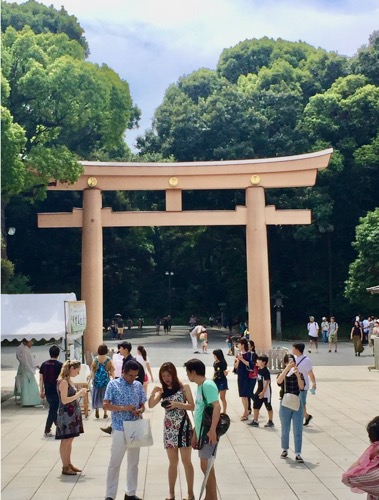
Iconic sustainability is a cornerstone of tourism in Japan
What does this mean for tourism in Japan
Tourism and confidence are quietly linked. When domestic confidence weakens, Japanese travellers tend to become more selective rather than retreat altogether. Trips may be shorter, closer to home, or more value-focused.
Inbound tourism, however, often benefits. A weaker yen reinforces Japan’s appeal as a safe, clean, culturally rich destination offering excellent value. For Asian travellers in particular, Japan remains easy to access, well organised, and endlessly rewarding, even in times of economic uncertainty.
The Thailand connection
For Thailand, Japan’s financial adjustment matters most for outbound travel. A volatile or weak yen can dampen outbound travel from Japan, particularly in long-haul leisure and premium segments. Historically, Japanese visitors to Thailand have been high-value travellers, known for repeat visits and longer stays; therefore, any softening is closely monitored.
That said, experience suggests moderation rather than collapse. Japanese travellers adapt. When value, reliability, and emotional connection align, travel continues. Thailand continues to offer all three.
The global backdrop, the US and confidence
Japan’s domestic challenges are unfolding amid broader global uncertainty, particularly regarding the US Under the catastrophic influence of Trump, markets are again facing unpredictability, from tariff rhetoric and trade tensions to strained alliances What is striking this time is the growing crisis of confidence among Trump’s supporters, which increases the risk of erratic policy signals and sudden reversals The probable abandonment of his much-touted “beautiful ballroom”, stalled by court action over funding, alongside his conspicuous absence of support at Davos – respected World Leaders using the forum to consolidate their collective dislike of the man and rising discontent among his own base, points to a rapid erosion of confidence that may well thankfully mark the beginning of the end for Trump.
For Japan, deeply integrated into global trade and financial systems, this matters. Trade disruptions and capital-flow volatility can amplify bond-market stress and currency swings. In such environments, investor caution rises, and consumer confidence softens, with knock-on effects for discretionary spending, including travel.
Tourism in an age of uncertainty
When global confidence weakens, tourism patterns tend to shift rather than disappear. Business travel and long-haul discretionary trips are often the first to feel pressure. Leisure travel adapts, favouring destinations perceived as safe, efficient, welcoming, and politically neutral.
Japan fits this profile well for inbound tourism. Thailand does too. In an unsettled world, reassurance becomes a competitive advantage.
A personal reflection
Japan remains one of my favourite countries to visit. Food culture, environmental awareness, safety, and quiet sustainability are embedded in everyday life. Even when markets wobble, those fundamentals do not change.
For Asian travellers, particularly those from Thailand, practicality matters. Flights to Japan are frequent, schedules are reliable, and accommodation options are broad. Availability has rarely been a problem. That ease removes friction, and friction is often the silent killer of travel demand. The same can be said of Thailand.
The bottom line
Japan’s bond market volatility signals a transition, not a decline. Tourism will feel the effects at the margins, particularly in outbound travel. Still, core drivers remain intact. For Thailand, the implications are manageable and may even present an opportunity.
In a world marked by financial recalibration and geopolitical noise, destinations that offer stability, value, and genuine welcome tend to perform best. Japan remains compelling. Thailand remains well-positioned. Markets may fluctuate, but the desire to travel endures.
About the author Andrew J Wood is a British-born travel writer, former hotelier, and tourism consultant who has lived in Thailand since 1991 With more than four decades of experience in international hospitality and tourism, he is a former Director of Skål International and a past President of Skål International Asia, Thailand, and Bangkok Andrew writes extensively on tourism trends, sustainability, aviation, and destination strategy across the Asia-Pacific region, contributing to travel and hospitality publications worldwide His work reflects a long-standing commitment to responsible tourism, cross-cultural understanding, and the evolving role of travel in a changing global economy.