Saturday, August 15, 2026
Home Blog Page 110

Gloria Guevara rejoins WTTC

SINGAPORE, 3 February 2026: The World Travel & Tourism Council (WTTC) has confirmed the appointment of Gloria Guevara as President & CEO. 

She returns to the role she held successfully from 2017 to 2021 as the council plans to relocate its head office from London to Madrid. 

Photo credit: WTTC. Gloria Guevara.

Gloria Guevara has more than three decades of experience at the highest levels of government and across the public and private sectors, bringing strategic vision and collaborative leadership to WTTC.

Her appointment as CEO signals a renewed focus on strengthening WTTC’s global relevance, enhancing member services, and driving advocacy for the Travel & Tourism industry worldwide. WTTC’s members have a global footprint across all key parts of the sector, from hotels to aviation to cruise lines, healthcare and technology.

Guevara said: “I am honoured to return to WTTC after the most successful year in the sector’s history. My priority will be to help unlock potential, investment, growth, and jobs in the sector; rebuild a stronger, globally representative WTTC; deepen engagement with members; and ensure WTTC continues to deliver world-class research, advocacy, and other services to the Travel & Tourism industry. Supported by our valued members.”

(Source: WTTC)

Cathay: Green and white tradition lives on

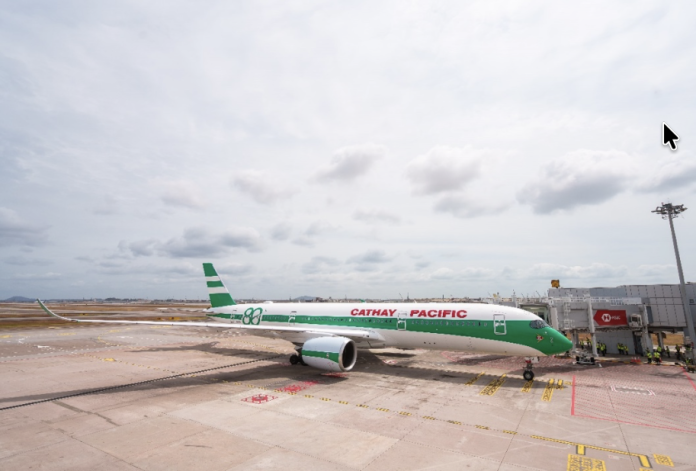
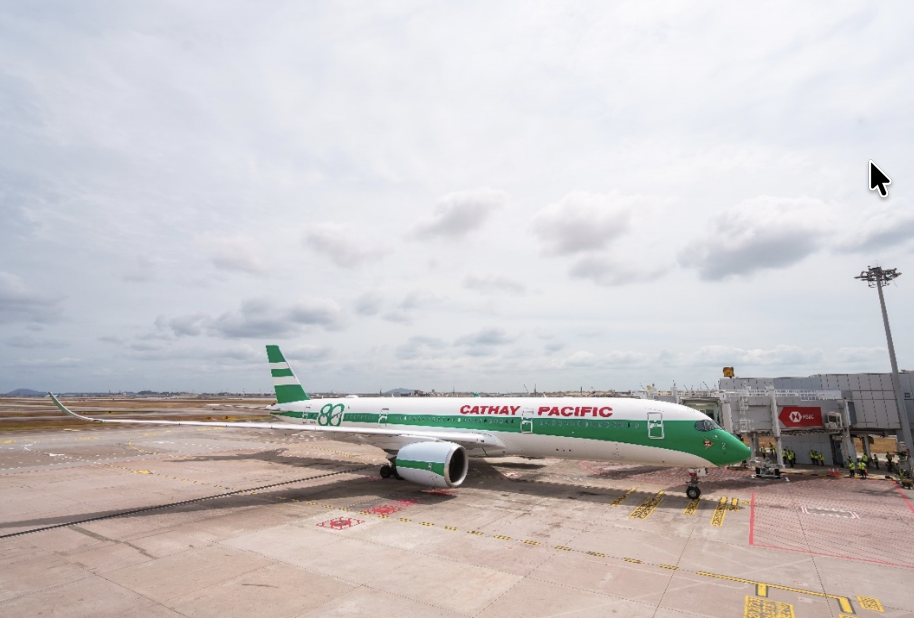
SINGAPORE, 3 February 2026: Cathay’s Airbus A350 passenger aircraft, adorned with its classic ‘lettuce leaf sandwich’ livery, touched down at Singapore Changi Airport for the first time last Friday, marking a special moment in the airline’s “80 Years Together” anniversary celebrations. 

Paying homage to the much-loved green-and-white striped design, the iconic livery honours Cathay’s early years and the legacy it has built over eight decades. The debut in Singapore marked another milestone in showcasing Cathay’s heritage in one of its most important Southeast Asian markets.

Photo credit: Cathay. A tribute to Cathay’s earlier years, the classic ‘lettuce leaf sandwich’ livery touched down in Singapore Changi Airport for the first time last week.

“Singapore has been part of Cathay’s journey from the very beginning, starting with our first scheduled flight in 1946, and it continues to be one of our most important markets in Southeast Asia,” said Cathay Regional General Manager for Southeast Asia and Oceania, Frosti Lau. 

He continued, “The special livery honours Cathay’s legacy while symbolising our continued progress to connecting the world via our Hong Kong hub. It bridges where we’ve been and where we’re headed and is a tribute to everyone who has been part of this 80-year journey—our people, our customers, our partners, and the communities we serve worldwide.”

The occasion also highlights Cathay’s longstanding relationship with Singapore, which has played an important role in the airline’s network and regional presence and seen many firsts over the decades. When Changi International Airport first opened in 1981, Cathay’s CX712 was the first commercially scheduled flight to depart. In 2015, the airline was named one of 12 pioneer airlines that contributed to the growth and development of Singapore’s air hub. 

Cathay Pacific again made history as the launch airline at Singapore Changi Airport’s Terminal 4, pioneering a suite of self-service options to support more personalised service through technology.

During the event, the special-livery aircraft arrived at Singapore Changi Airport’s Terminal 4 for a VIP welcome reception. It will continue to operate on international routes throughout 2026, extending the visibility of Cathay’s “80 Years Together” anniversary celebrations to customers and communities worldwide.

As the brand embarks on its “80 Years Together” anniversary celebrations, Cathay will continue to roll out a range of events, experiences, and initiatives throughout 2026, celebrating the people, partnerships, and journeys that have shaped its story. 

Snapshots from Singapore

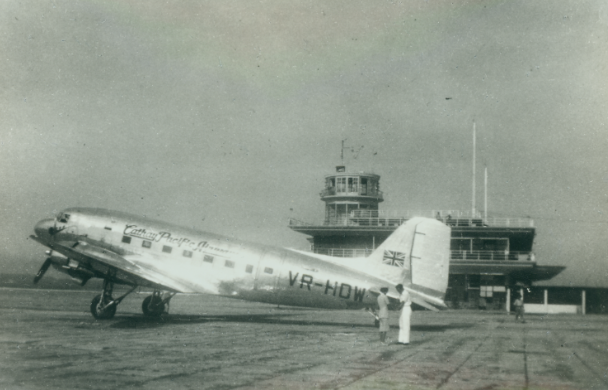
A DC-3 at Kallang Airport, where Cathay Pacific first operated flights to Singapore. This was later replaced by the DC-4 in 1949. Photo from 1948. (Photo: Swire Archives)
The Airbus A350 passenger aircraft, adorned with Cathay’s special retro livery, took off from Singapore Changi Airport on 27 January 2026. The aircraft will continue to operate on international routes through 2026. (Photo: Cathay)

(Source: Cathay)

Takeaways in Trip.com Group’s Lunar New Year Forecast

SINGAPORE, 3 February 2026: As Lunar New Year 2026 approaches, travel bookings are accelerating across Trip.com Group’s platforms, according to its latest data.

Trip.com Group reports bookings have climbed by double digits compared with the Lunar New Year period last year, as travellers lean into longer holidays and more ambitious festive travel.

The latest data on searches and booking trends also show that long-haul travel, packaged routes, and premium options are redefining this year’s Lunar New Year journeys as extended public holidays across Asia-Pacific markets are reshaping Lunar New Year travel behaviour, enabling longer stays and more layered itineraries.

In China, one of the largest source markets for travellers, the 2026 Lunar New Year holiday spans nine days and can extend to 15 days if employees take five days of annual leave. In Vietnam, combining public holidays with weekends allows travellers up to nine days off. Similar dynamics are seen in South Korea, Singapore, Malaysia and the Philippines, where taking two to three days of leave can extend breaks to nine days.

Premium travel gains ground

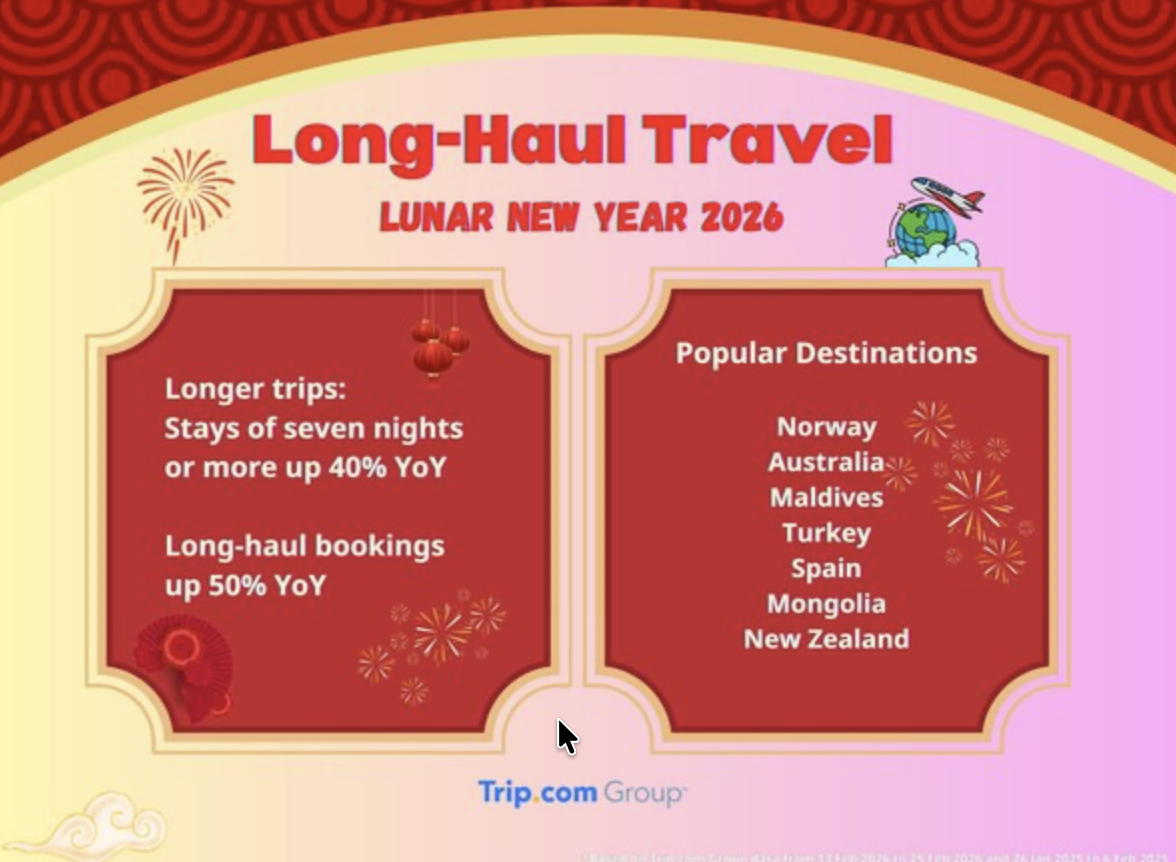
Trip.com Group data show that cross-border bookings with stays of seven nights or more have risen nearly 40% year over year. Long-haul bookings have surged by over 50% during the same period. Together, these trends indicate that travellers are taking longer trips and venturing further afield during the festive period.

Europe and Oceania are emerging as top long-haul picks for Asian travellers seeking to escape during the Lunar New Year. Norway records the fastest growth among Singaporean travellers, with bookings soaring more than 200% year-on-year, driven by experiences such as the Northern Lights, fjords, and scenic rail routes. 

The Maldives, Turkey, Spain, and Mongolia are also seeing rapid growth across markets. Australia attracts the most travellers from China, with year-on-year growth over 100%, and popular sights include the Great Barrier Reef, the Sydney Opera House, and the Outback’s landscapes. New Zealand is also seeing strong global interest, with year-on-year growth of nearly 50%.

Long-haul travel

Longer holidays are also boosting interest in package tour products. Among Trip.com’s package tour options, popular ones include an eight-day Turkey journey covering Istanbul, Cappadocia, Konya, and Ephesus. In the United States, a five-day Los Angeles–Las Vegas–Grand Canyon tour illustrates the appeal of mult

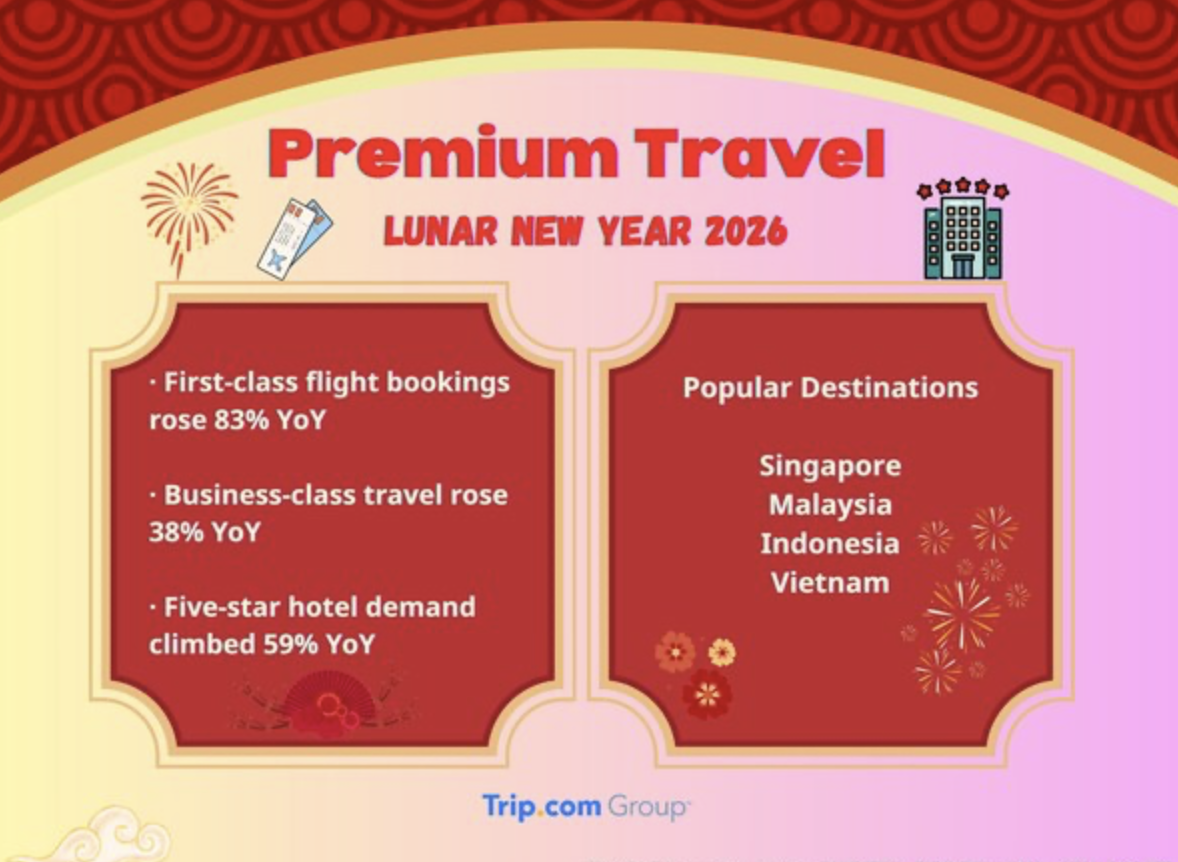
As travel patterns evolve across destinations, preferences for comfort and quality are shifting. Besides travelling longer, people are also travelling better — more are favouring premium travel options.

First-class flight bookings have risen 83% year-on-year, while business-class travel has risen 38%. This trend is further reflected in the accommodation sector, where demand for five-star hotels has increased by 59%.

In Singapore, Malaysia, Indonesia, and Vietnam, five-star hotels account for more than half of all stays booked. Including four-star hotels, upper-tier properties represent around three-quarters of accommodation booked across these Southeast Asian markets.

Asia’s urban hubs anchor regional travel

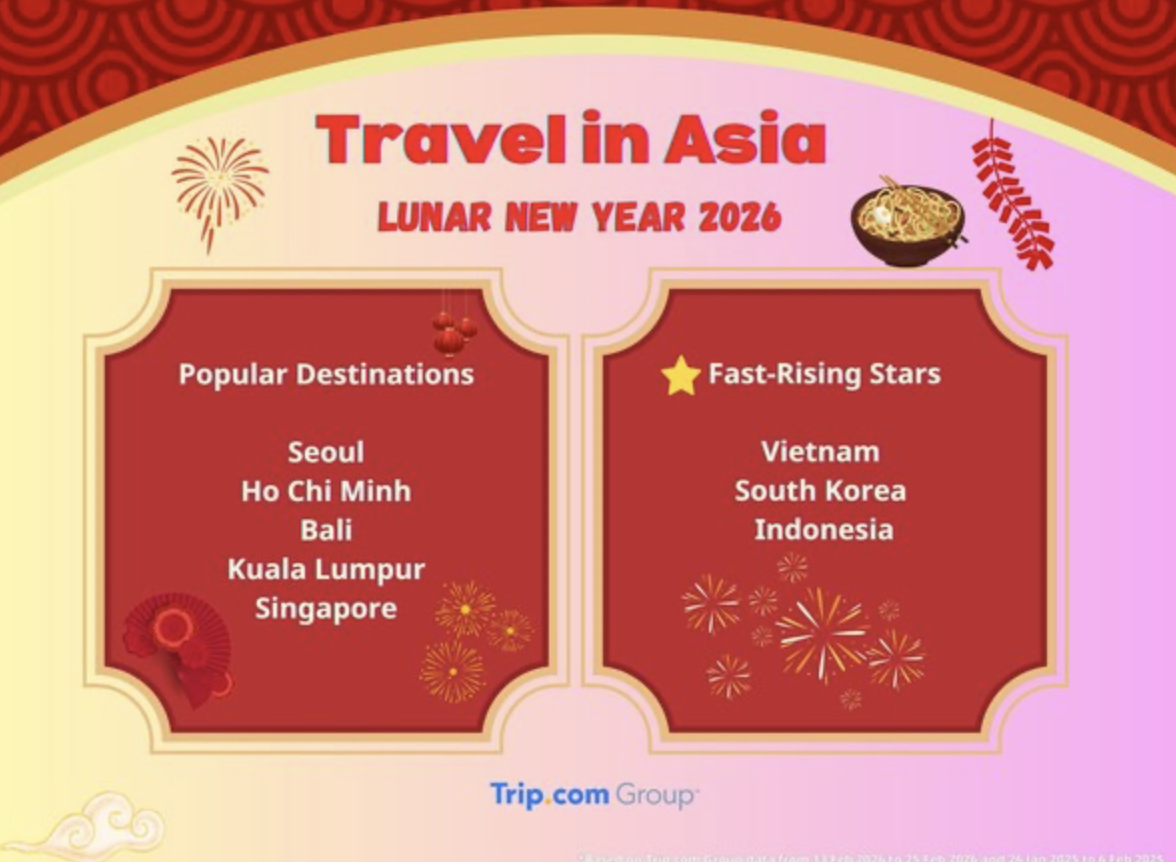
During Lunar New Year, East Asia and Southeast Asia accounted for the largest share of bookings. In terms of year-on-year growth, Vietnam, South Korea, and Indonesia rank among the fastest-growing markets.

Several major Asian cities are standing out for robust booking growth. Seoul, Ho Chi Minh City, and Bali have each recorded year-on-year booking growth exceeding 70%. In Seoul, winter attractions and shopping districts such as Myeongdong and Dongdaemun are key draws. Cultural landmarks, including Gyeongbokgung Palace, and popular day trips to Nami Island further enhance the city’s appeal.

Ho Chi Minh City is gaining traction, renowned for the Notre-Dame Cathedral Basilica of Saigon and the vibrant Ben Thanh Market. Bali’s tropical atmosphere is a magnet for Lunar New Year travel, attracting travellers seeking beach escapes, wellness experiences, and resort‑style stays.

Kuala Lumpur has recorded double-digit booking growth, fueled by Lunar New Year events across Chinatown and major malls, as well as visits to Batu Caves. Meanwhile, Singapore packaged tours on Trip.com perform strongly, driven by family-oriented attractions such as Universal Studios Singapore and Gardens by the Bay.

Inbound travel to China is on a steady rise

China remains a top destination for Lunar New Year travellers. In addition to strong travel demand from Asian markets, China is also seeing robust growth from European and Oceania markets. In particular, bookings from the UK and New Zealand have each increased by more than 150% year on year.

Major gateway cities, including Shanghai, Beijing, and Guangzhou, account for the largest share of inbound visitors. To ease travel during the festive period, starting on 10 February, Trip.com will introduce an “Explore Beijing” Starter Pack at Beijing Daxing International Airport for three months. This provides arriving international passengers with a complimentary pre-loaded public transport card, along with flight and attraction vouchers.

Notably, Xiamen and Shenzhen saw strong inbound growth, with bookings up 60% and 90%. In Shenzhen, Trip.com has also introduced “Shenzhen Express” — a complimentary half-day city tour for international transit passengers — offering visitors a smooth and immersive experience during short layovers. Trip.com’s package tours to destinations such as Chengdu, Jiuzhaigou, Huanglong and the Sanxingdui Museum are also drawing inbound travellers.

Overall, Lunar New Year 2026 travel is marked by longer trips, premium choices, and growing interest in multi-city and packaged itineraries across Asia and beyond.

(Source: Trip.com Group)

Qatar Football Festival: 26 to 31 March

DOHA, Qatar, 3 February 2026: Qatar Airways Holidays has launched fan travel packages for football supporters around the world to experience a spectacular week of elite international football in Doha during Qatar Football Festival 2026, headlined by the ‘Finalissima’ – a clash of football titans. 

The CONMEBOL Copa America 2024 and FIFA World Cup 2022TM champions, Argentina, will face UEFA EURO 2024TM champions, Spain, on 27 March 2026 at the iconic Lusail Stadium.

Photo credit: Qatar Airways.

The historic encounter will see two continental champions meet on the same pitch where Argentina famously lifted the FIFA World CupTM trophy in 2022. As the Official Airline Partner of the Finalissima 2026, Qatar Airways promises football fans an unmissable journey to one of the world’s most celebrated stadiums for a thrilling experience.

As part of the football festival that will take place this March, Doha is set to host a series of international matches featuring some of world football’s most storied nations, including Asian Champions – Qatar, Argentina, Spain, Egypt, Serbia and Saudi Arabia, transforming the city into a global football hub just months before the FIFA World Cup 2026TM, for which Qatar Airways is the Official Airline Partner.

Qatar Airways Holidays, the leisure division of Qatar Airways Group, is offering an opportunity to experience the Qatar Football Festival, with guaranteed Category 1 or 2 match tickets, across three package types. The Finalissima Package features the highly sought-after Argentina vs Spain match, while other packages include additional matches along with Finalissima tickets. 

Enthusiasts can choose their preferred matches, bundled with return flights and hotel accommodation in Doha.

(Source: Qatar Airways)

Thomas Cook India expands forex in Bengaluru

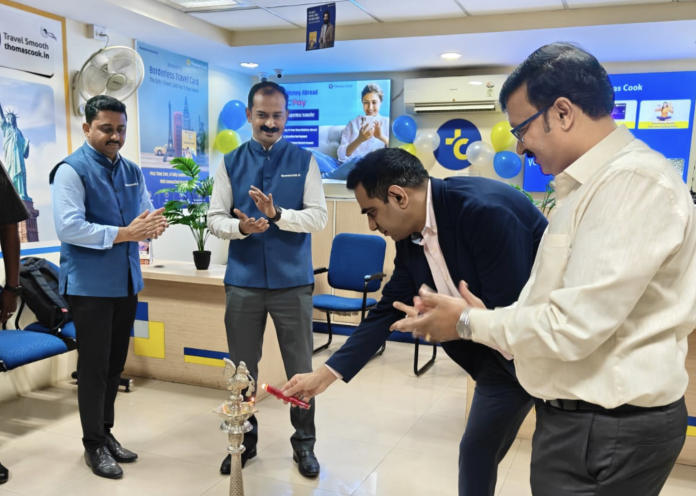
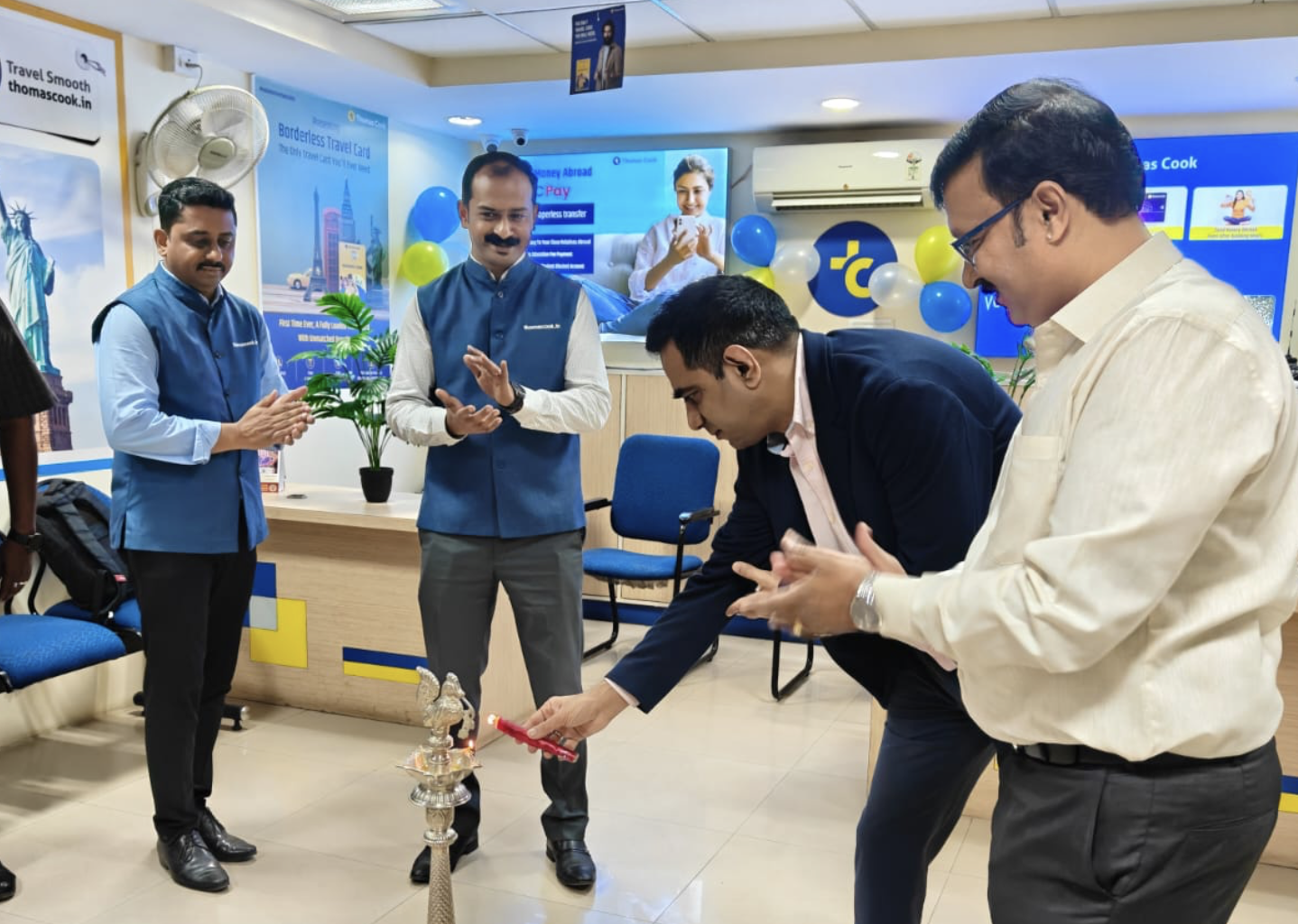
MUMBAI, 2 February 2026: Thomas Cook (India) Limited, India’s leading omnichannel foreign exchange services company, has expanded its network in Bengaluru by introducing foreign exchange services at its outlet in JP Nagar (Jayaprakash Nagar). 

This strategic addition strengthens the company’s footprint in a high-growth source market, taking its forex network to 11 outlets in Bengaluru and 13 across Karnataka.

Photo credit: Thomas Cook India. Thomas Cook (India) expands foreign exchange services in Bengaluru by opening a new branch.

JP Nagar, an upmarket residential and commercial hub, serves an affluent mix of residents, tourists, business travellers and students. Its proximity to major IT hubs such as Kalyani Magnum Techpark and Electronic City further drives demand for foreign exchange and outward remittance services.

To mark the launch, customers can avail special offers, including a free international SIM card and a ₹500 Uber voucher on Thomas Cook Forex prepaid card purchases. Students can also benefit from zero remittance charges on tuition fees and living expense remittances. 

Product-service portfolio

Currency: 26 global destination currencies

Overseas Remittances – Thomas Cook Forex’s Send Money Abroad covering over 120 countries

Prepaid Travel Cards in partnership with Mastercard and Visa:

Holidays: Borderless Travel – prepaid multi-currency card with 12 global currencies

Business Travel: EnterpriseFx card – India’s first Eco-Friendly Forex prepaid card

Overseas Education: Study Buddy card

Thomas Cook One Currency Card: India’s first prepaid card with zero cross-currency conversion fees

Digital Services – Easy ways to Book for the evolving on-the-move consumer

TC Pay (Forex App); Online Forex; Forex on WhatsApp (24×7 forex services, from live rate to end-to-end transactions); V-KYC

Overseas Education Forex for Bengaluru’s strong student segment: transfer of university/tuition fees, living expenses, discounted air fares, excess baggage, insurance and foreign exchange products like the Study Buddy Card

(Source: Thomas Cook India)

Centara Maldives fights climate change

BANGKOK, Thailand, 2 February 2026: Centara Hotels & Resorts, Thailand’s leading hotel operator, is playing a leading role in the critical fight against climate change in the Maldives, by adopting a raft of sustainable actions and initiatives at The Atollia by Centara Hotels & Resorts, its spectacular multi-island, dual-resort destination in the Indian Ocean.

Spanning two idyllic islands connected by a bridge and surrounded by powder-soft white sands and dazzling turquoise lagoons, The Atollia by Centara Hotels & Resorts is a genuine paradise on Earth. Its two resorts, the vibrant, family-friendly Centara Mirage Lagoon Maldives and the stylish and elegant Centara Grand Lagoon Maldives, have delighted thousands of discerning guests since opening in November 2024 and April 2025, respectively. They have also integrated sustainability into every aspect of their operations.

Now, Centara can proudly reveal a series of key achievements at The Atollia, which have had a positive impact on the pristine environment, delicate ecosystems, and the broader Maldivian community.

Harnessing the power of the Maldivian sun

The warm, tropical sun plays a vital role in attracting travellers to the Maldives and is now also helping to power the guest experience at The Atollia. Solar energy — generated by photovoltaic panels installed on the roofs of all suites, villas, and back-of-house buildings — has harvested 2,323,125 kWh of energy so far this year, saving 645,318 litres of diesel and reducing the destination’s CO2 emissions by 1.96 kilotons. Reducing waste and conserving water
Resource management is a significant issue in island destinations. At Centara Grand Lagoon Maldives, Atollia has recycled 5,116kg of glass and 3,687kg of plastic; at Centara Mirage Lagoon Maldives, 9,880 kilograms of glass and 3,258kg of plastic. This means that these two forward-thinking properties have now stopped almost 22 tonnes of glass and plastic from entering landfill – or worse, the ocean.
In terms of water conservation, both resorts at The Atollia have adopted a wastewater recycling system that treats wastewater from across the resort and reuses it for irrigation. Year-to-date, 15,933 m³ of treated sewage has been recycled across the two resorts, helping preserve the world’s most precious natural resource: water.

Welcoming families and guests alike, Centara Mirage Lagoon Maldives is redefining its sustainability story.

Helping local ecosystems to thrive

Centara Grand Lagoon Maldives and Centara Mirage Lagoon Maldives understand the importance of preserving their natural environments and helping local wildlife to thrive. These two resorts conduct regular beach and lagoon cleaning activities, and 350 coral fragments have been attached to the reef at Centara Mirage Lagoon Maldives, helping attract marine life and support biodiversity. On land, Centara Grand Lagoon Maldives has planted 380 native trees, while Centara Mirage Lagoon Maldives recently celebrated its first anniversary by planting 145 fan palms, boosting local bird and insect life.

A company-wide blueprint for a brighter future

These milestones at The Atollia form part of Centara’s global Environmental, Social and Governance (ESG) strategy, which has been committed to operating responsibly since 2009. Significant achievements include obtaining Global Sustainable Tourism Council (GSTC) certification for all 42 Centara properties worldwide, including Centara Grand Lagoon Maldives and Centara Mirage Lagoon Maldives. Having reduced its greenhouse gas emissions by 35%, water consumption by 30%, and waste sent to landfill by 24.5% since 2019, the company is well on track to reach its long-term goal of net-zero emissions by 2050.

“Climate change is one of the most critical issues facing the planet today – and nowhere is it more urgent than in the Maldives, where the low-lying atolls will be the first places on Earth to be impacted by rising sea levels. At Centara, we are working hard to prevent this, and have embedded ESG into every aspect of our operations – including at The Atollia,” said Thirayuth Chirathivat, CEO of Centara Hotels & Resorts. “We strive to have a meaningful, lasting impact in all our destinations, to ensure that our conscientious guests can enjoy these idyllic islands – and local communities can enjoy the benefits of tourism – for many years and decades to come.”

For more information about Centara’s ESG initiatives, visit www.centarahotelsresorts.com/sustainability.

(Source: Your Stories — Centara Hotels & Resorts)

Sarawak embarks on the promotional trail

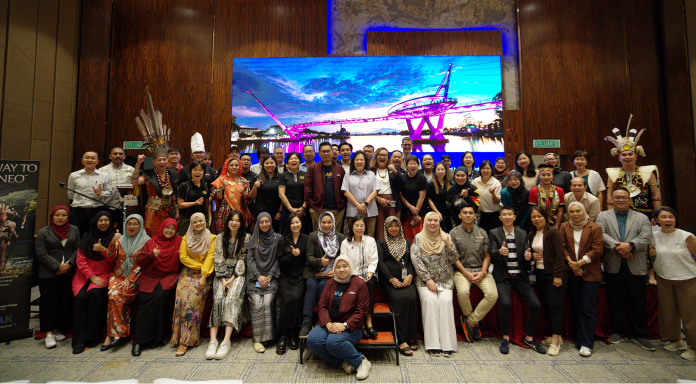
KUALA LUMPUR, 2 February 2026: As Visit Malaysia Year 2026 (VM2026) promotions get underway, Sarawak has stepped up its domestic market engagement by taking its “Sarawak: Gateway to Borneo” Business Networking Sessions directly to key Peninsular Malaysia’s tourism-generating markets. 

The mission engaged with more than 160 travel agents and tour operators across Johor, Kuala Lumpur, and Langkawi, as well as over 15 Sarawak tourism partners.

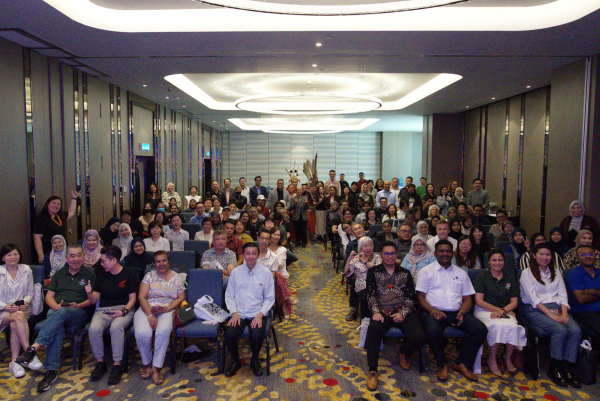
The Sarawak Tourism Board (STB) successfully convened a major gathering of travel trade partners during its “Sarawak: Gateway to Borneo” networking session in Kuala Lumpur.

As Malaysia targets 43 million visitor arrivals for Visit Malaysia Year 2026, Sarawak views the domestic market as a critical pillar of growth supporting the national tourism agenda. The turnout and engagement across the three states reflect growing trade confidence and position West Malaysian agents as Sarawak’s extended sales partners, ready to bring more Malaysians to experience Sarawak as the Gateway to Borneo.

Speaking at the session, STB’s Director of Marketing (ASEAN & Domestic), Gustino Basuan, said: “Today is about connection, connecting people, products and possibilities as we move

forward in Visit Malaysia Year 2026. More importantly, this session allows us to come together, exchange ideas, and explore practical and meaningful ways to strengthen domestic travel to Sarawak further.”

Anchored in the theme “Sarawak: Gateway to Borneo,” the sessions highlighted Sarawak’s diverse tourism offerings across the CANFF pillars: Culture, Adventure, Nature, Food, and Festivals. 

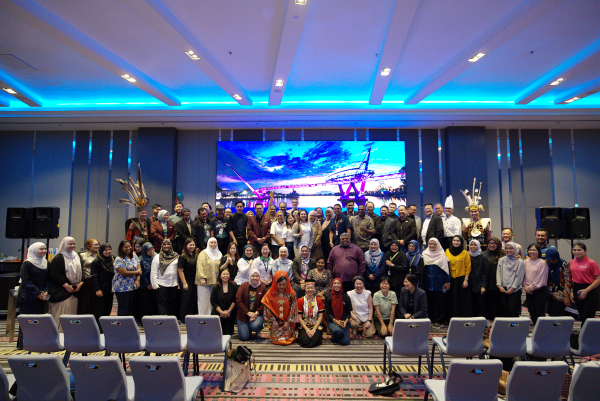
The “Sarawak: Gateway to Borneo” roadshow concluded its Peninsular engagement in Langkawi, meeting with an enthusiastic response from the island’s tourism professionals.

Sarawak tourism partners showcased market-ready products and curated packages tailored specifically for the 2026 domestic travel market, spanning accommodation, attractions, and tours.

Connectivity and future readiness were key discussion points throughout the sessions. Updates on AirBorneo underscored improved domestic and intra-Borneo access. At the same time, Sarawak’s UNESCO-recognised sites and leadership in sustainability, including the adoption of hydrogen and electric public transport systems, reinforced its appeal to travellers seeking meaningful and responsible travel experiences.

To support conversion from engagement to activation, the Strategic Partnership Collaboration Fund (SPCF) was also highlighted, offering marketing support and collaborative opportunities for joint promotions and campaigns with travel trade partners.

The multi-location B2B sessions were designed to strengthen trade connections between East.

Malaysia and the Peninsula, positioning Sarawak as a ready, accessible, and compelling destination for domestic travellers. Through structured one-to-one meetings, destination updates, and product showcases, Sarawak suppliers connected directly with West Malaysian agents to drive package development and sales ahead of VM2026.

With this successful engagement across key Peninsular markets, Sarawak has not only strengthened its trade partnerships but also set a solid foundation for domestic travel growth in 2026. The B2B sessions demonstrate the state’s commitment to collaboration, innovation, and experience-driven tourism, ensuring that West Malaysian agents are fully equipped to showcase Sarawak as the Gateway to Borneo. 

For more information on Sarawak tourism, visit: Sarawak Tourism Board

(Source: Your Stories — Sarawak Tourism Board)

Sabah hits 3.79 million tourist arrivals

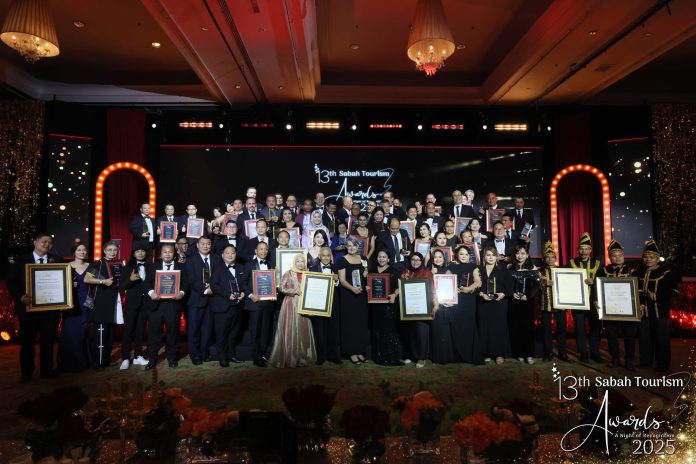
KOTA KINABALU, 2 February 2026: Sabah welcomed 3,793,709 visitor arrivals in 2025, generating MYR8.74 billion in tourism receipts, the Malaysian state reported this week.

State Tourism, Culture, and Environment Minister Datuk Jafry Ariffin emphasised that while celebrating this achievement, Sabah remains committed to prioritising quality tourism alongside growth in visitor numbers.

Recipients of Sabah Tourism Awards 2026 posing for a group photo.

“Surpassing the 3.5 million visitor target last year is a substantial achievement, and we are now aiming for 4 million arrivals in 2026.

“While numbers are significant, our primary focus remains on delivering excellent hospitality and authentic experiences that showcase Sabah’s unique qualities.

“By focusing on quality tourism, we hope to welcome even more visitors this year and in the coming years, supporting Visit Malaysia 2026 and getting Sabah ready for Visit Sabah 2027,” he said at the Sabah Tourism Awards 2026 held on Friday, 30 January.

Organised by the Sabah Tourism Board, the Sabah Tourism Awards honour individuals and organisations whose resilience, innovation and collaboration continue to drive Sabah’s tourism industry forward.

Last year, domestic visitors accounted for 2,295,000 arrivals, driven by increased travel during Hari Raya Aidilfitri, the state election, and school holidays. This represents 84%  of pre-pandemic levels.

International arrivals totalled 1,498,709, a 2% increase above pre-pandemic levels, despite international flight capacity not yet being fully restored. Key global markets showing growth included China (657,528 arrivals), Japan (16,980), Taiwan (34,342), the UK and Ireland (34,704), Singapore (38,638), and Australia (22,571).

Air connectivity

As of January 2026, Sabah is connected to 15 international destinations, with 157 weekly flights and 28,966 seats available from Singapore, Brunei (Bandar Seri Begawan), Taiwan (Taipei), China (Hong Kong, Guangzhou, Shenzhen, Shanghai, Beijing, Hangzhou, Fuzhou), South Korea (Seoul, Busan), the Philippines (Manila), Indonesia (Jakarta), and Vietnam (Ho Chi Minh).

Domestically, Sabah is connected to 13 destinations, namely Kuala Lumpur, Subang, Johor Bahru, Penang, Kota Bharu, Labuan, Kuching, Miri, Sibu, Bintulu, Mulu, Limbang, and Lawas.

Cruise tourism also recorded growth, with 23 cruise ships bringing 24,634 passengers, of which 19 ships docked at Kota Kinabalu Port and four at Sandakan Port.

(Source: Sabah Tourism Board)

Air Astana starts Shanghai flights

SINGAPORE, 2 February 2026: Air Astana will launch services between Almaty and Shanghai at the end of March 2026, which marks a further expansion of the airline’s China network that currently includes flights to Beijing, Guangzhou, Sanya and Ürümqi.

Air Astana first launched service from Kazakhstan to China more than 20 years ago.

Photo credit: Air Astana.

Departures from Almaty are scheduled for Tuesdays, Thursdays, and Sundays, with departures at 1910 and arrivals in Shanghai at 0425 the next day. 

The return flight will operate on Mondays, Wednesdays and Fridays, departing from Shanghai at 0540 and arriving in Almaty at 1015. All times local.  

Flights will be operated by the latest generation 175-seat Airbus A321LR aircraft, with a flight time from Almaty to Shanghai of six hours and 15 minutes.

The cost of a round-trip ticket from Almaty to Shanghai, including fees/taxes, starts from USD560 in economy class and USD1,835 in business class.

(Source: Air Astana)

IATA: 2025 delivers record passenger demand

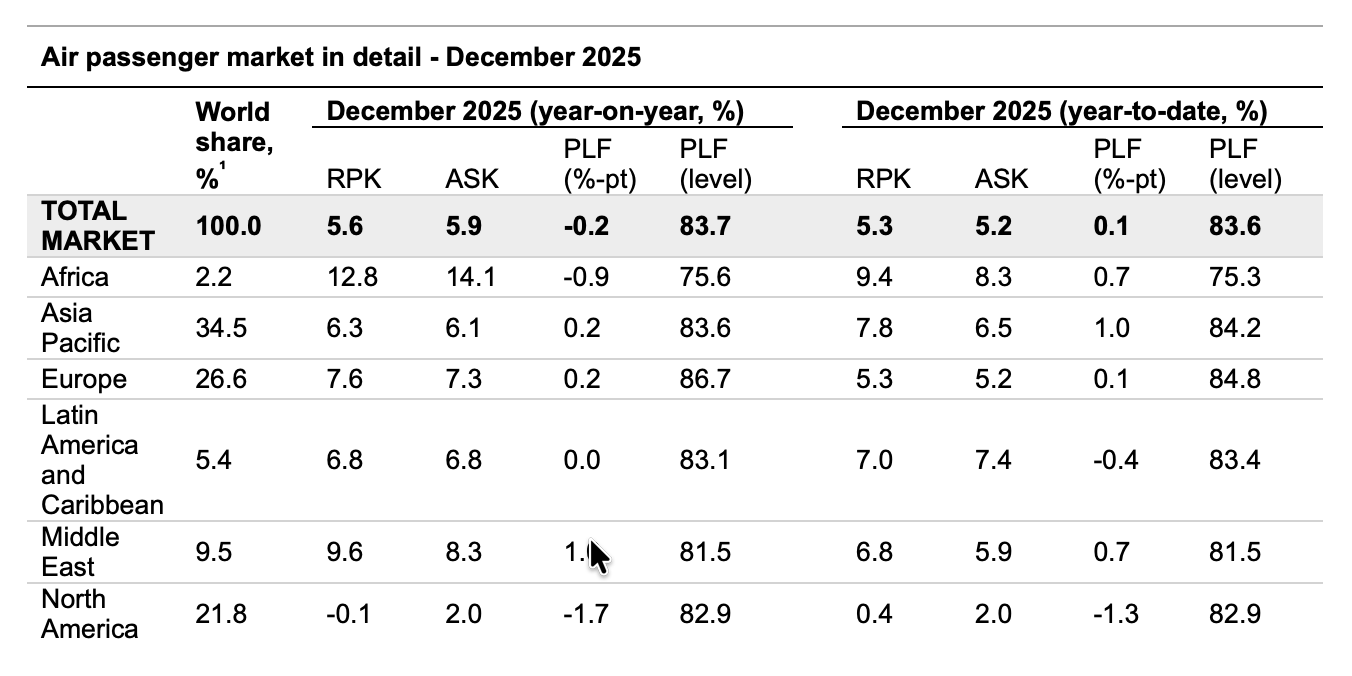
SINGAPORE 2 February 2026: The International Air Transport Association (IATA) released the 2025 full-year and December 2025 passenger market performance, showing record-high demand.

Total full-year demand in 2025 (measured in revenue passenger kilometres or RPKs) rose 5.3% compared to 2024. Total capacity, measured in available seat kilometres (ASK), was up 5.2% in 2025. The overall passenger load factor (PLF) reached 83.6%, up 0.1 ppt and a record for full-year traffic.

International full-year demand in 2025 increased 7.1% compared to 2024, and capacity rose 6.8%. The full-year international load factor was 83.5%, up 0.2 ppt from 2024. This was also a record high for international PLF.

Domestic full-year demand for 2025 rose 2.4% compared to the prior year, while capacity expanded by 2.5%. The full-year load factor averaged 83.7%, down 0.1 ppt from 2024.

December 2025 was a strong finish to the year, with overall demand rising 5.6% year-on-year, capacity up 5.9%, and a load factor of 83.7%.

“2025 saw demand for air travel grow by 5.3%, with international demand growing by 7.1% and domestic by 2.4%. This returns industry growth to align with historical growth patterns after the robust post-COVID rebound. The substantial and sustained increase in demand puts two key challenges into sharp focus: decarbonisation and supply chain management.

The first, decarbonisation, will protect future long-term growth. Governments whose economies grow because of aviation and whose citizens thirst for connectivity need to provide a supportive fiscal policy framework to rapidly accelerate progress, particularly in the energy sector, to expand Sustainable Aviation Fuel (SAF) production.

The second, supply chain challenges, was the biggest headache for airlines in 2025. People clearly wanted to travel more, but airlines were continually frustrated by unreliable delivery schedules for new aircraft and engines, maintenance capacity constraints, and resulting cost increases estimated at more than USD11 billion. Airlines scrambled to accommodate the demand by keeping aircraft in service longer and filling more seats on every flight. With load factors just shy of 84%, it’s clear that these measures were an effective band-aid, but we need a real solution. It’s vital that 2025 proves to be the nadir of the supply chain crisis, and 2026 marks a rebound. Every new aircraft means a quieter, cleaner fleet, with more capacity and flight options than at any previous point in history, which is what airlines and their customers want to see,” said IATA’s Director General Willie Walsh.

Regional Breakdown – International Passenger Markets 

Full-year international traffic rose by 7.1% compared to 2024, while capacity rose 6.8%. For December, global demand grew by 7.7%, capacity increased 7.9%, and the load factor declined by 0.1 ppt (compared to December 2024) to 83.9%.

Asia-Pacific airlines posted a 10.9% rise in full-year international 2025 traffic compared to 2024. Capacity rose 10.2%, and the load factor rose 0.5 ppt to 84.4%. The region finished 2025 with the fastest growth rate and highest load factor of any region. December 2025 traffic rose 7.5% compared to December 2024.

European carriers’ full-year traffic climbed 6.0% versus 2024. Capacity increased 5.9%, and load factor rose 0.1 ppt to 84.1%. For December, demand climbed 8.4% compared to the same month in 2024.

Middle Eastern carriers saw a 6.7% increase in traffic in 2025 compared to 2024. Capacity increased 5.8%, and load factor climbed 0.7 ppt to 81.6%. December demand rose 9.5% compared to the same month in 2024.

North American airlines reported a 2.1% year-over-year increase in traffic in 2025 compared to 2024. Capacity increased 2.4%, and load factor fell -0.2 ppt to 83.9%. Both traffic and capacity growth were the slowest in 2025 among all regions. December 2025 traffic rose 3.5% compared to the year-ago period.

Latin American airlines posted an 8.6% year-over-year increase in traffic in 2025 compared with full-year 2024. Annual capacity climbed 10.2% and load factor declined -1.2 ppt to 83.6% (the sharpest load factor fall of any region). December demand rose 8.2% compared to December 2024.

African airlines’ annual traffic rose 7.8% in 2025 versus the prior year. Full year 2025 capacity was up 6.5%, and load factor climbed 0.9 ppt to 74.9%. This was the lowest load factor among regions, but it was a record high for Africa and the most significant increase in load factor of any region. December 2025 traffic for African airlines rose 10.3% over December 2024.
IATA report 2025 and December.

(Source: IATA)