SINGAPORE, 13 November 2025: Australia’s international visitor arrivals in September exceeded the pre-COVID-19 September 2019 benchmark for the first time.
Quoting Australian Bureau of Statistics (ABS) data, Tourism Australia called it “a long-awaited milestone” for the country’s international arrivals data.
Photo credit: Tourism Australia.
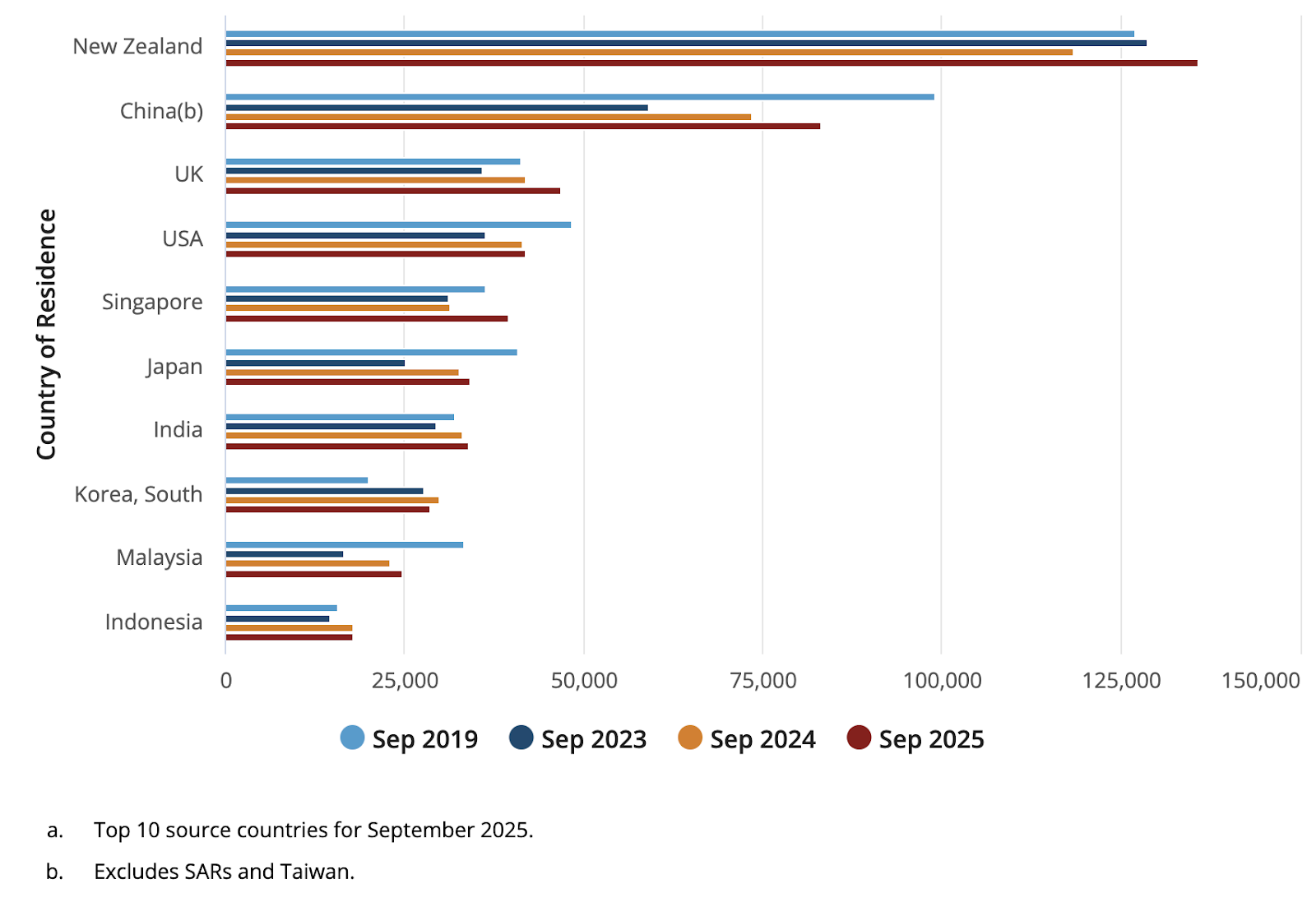
TA also noted that it “was positive news” when compared to September 2024, with arrivals up 10.4% year-on-year. New Zealand was once again the leading source market with more than 135,000 Kiwis visiting Australia in September, followed by China with 83,000 and the UK with almost 47,000.
“Overall, the numbers for September are very encouraging as we approach the Summer period, which is traditionally the peak time for so much of our tourism industry around the country”, Tourism Australia concluded.
Key September statistics from ABS
Short-term visitor arrivals: 696,500 – an increase of 10.4% on one year earlier.
Short-term resident returns: 1,050,090 – an increase of 2.9% on one year earlier.
Total arrivals: 1,830,370 – an increase of 5.6% on one year earlier.
Total departures: 1,921,380 – an increase of 6.9% on one year earlier.
Short-term visitor arrivals, Australia – top 10 source countries (a)
The statistics represent the number of international border crossings rather than the number of people. (ABS)
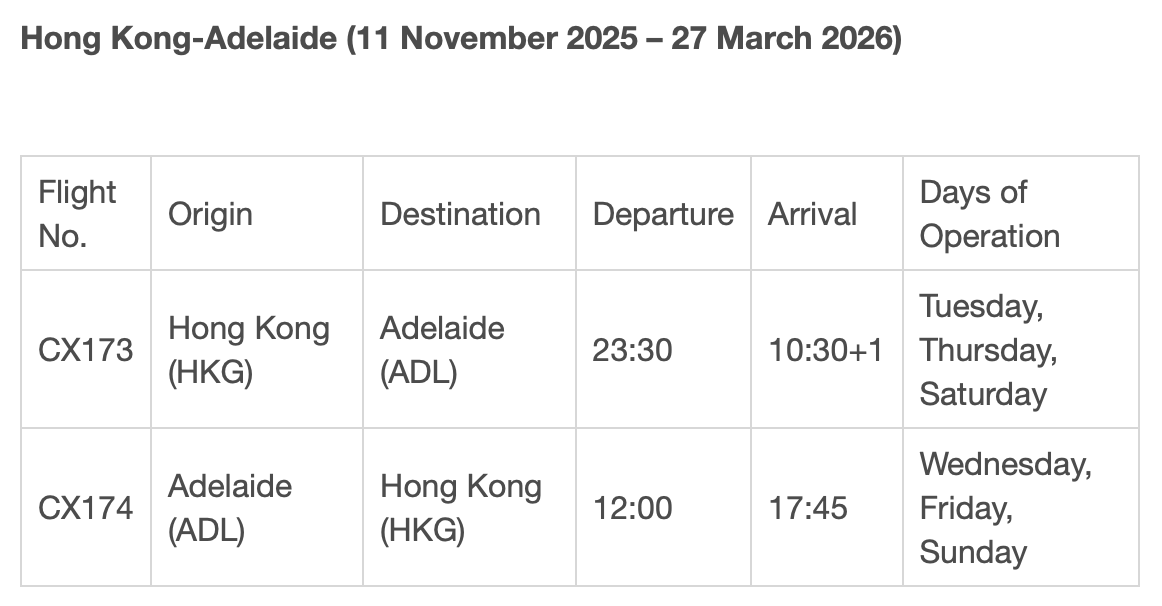
HONG KONG, 13 November 2025: Cathay Pacific returns to Adelaide, Australia, with the launch of a three-weekly seasonal service connecting Hong Kong with the South Australian capital.
The first flight departed from Hong Kong International Airport just before midnight on Tuesday, 11 November and arrived in Adelaide on the following morning.
Photo credit: Cathay Group.
Cathay Pacific’s new service reestablishes a vital direct connection between these two cities, fostering enhanced travel, trade, and cultural exchange between Asia and Australia.
Cathay Chief Customer and Commercial Officer Lavinia Lau commented: “We are delighted to return to Adelaide, a city we have a long history with, having first launched flights in 1992.
“Adelaide is a dynamic city on the South Australia coast that offers visitors incredible culinary delights, world-renowned wines, stunning natural attractions, and much more. We look forward to welcoming customers onboard to experience our signature Cathay Pacific service, whether they are flying to this dynamic city, our home hub, or beyond.”
Cathay Pacific deploys its A350-900 aircraft on the route, configured with 28 fully flat beds in business class, 28 spacious seats in premium economy, and 244 in economy class. Total: 280 seats. Flight time: Eight hours and 30 minutes.
Wi-Fi connectivity is advancing across Cathay Pacific’s entire fleet. The service is currently complimentary for business class customers and Cathay Diamond members. It will soon be available to Cathay Gold members starting 15 November, as well as to Cathay members travelling in premium economy by the end of this year.
Cathay Pacific now flies to six destinations in Australia: Adelaide, Brisbane, Cairns, Melbourne, Perth, and Sydney. Together with its flights to Auckland and Christchurch in New Zealand, the airline operates nearly 100 return flights per week to Oceania during the winter season.
PORTO, Portugal, 12 November 2025: Sarawak’s largest-ever delegation took centre stage at the 64th ICCA (International Congress and Convention Association) Congress 2025, reinforcing Sarawak’s position as a global force in legacy-driven business events.
Led by The Honourable Dato Sri Abdul Karim Rahman Hamzah, Minister for Tourism, Creative Industry and Performing Arts Sarawak, the delegation emphasised Sarawak’s hallmark whole-of-government and whole-of-industry approach to elevating the business events industry as a driver of sustainable economic and social progress.
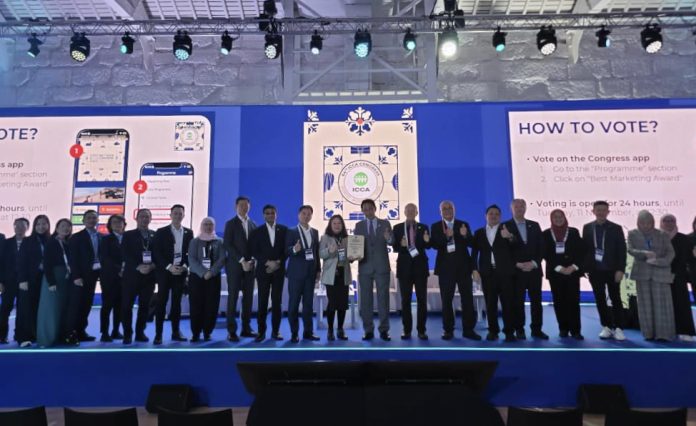
BESarawak receives an ICCA Award of Appreciation for Sarawak’s contributions to the growing APAC industry.
Championing Legacy at a Global Stage
The 64th ICCA Congress, themed “Uniting the Global Business Events Community,” spotlighted collaboration as the driving force behind innovation, resilience, and positive change shaping the industry today.
A key highlight of Sarawak’s participation was the “Dialogue between Ministers and Industry Leaders: How to Really Work Together”, represented by The Honourable Dato Sri Abdul Karim Rahman Hamzah, who made history by being the first minister from Asia to address an ICCA session on government collaboration.
During the session, the Minister discussed how the Sarawak government is utilising business events through a robust partnership among various ministries.
“Long-term thinking is essential to strengthen confidence and align industry needs with national priorities,” said The Honourable Minister Dato Sri Abdul Karim Rahman Hamzah. “We will be signing MoUs with 12 Sarawak ministries in December to reflect the government’s commitment to business events and strengthen the collaboration between the government and the industry. This will be the biggest government-industry partnership in Malaysia’s business events industry.”
Meanwhile, Datu Hii Chang Kee and Amelia Roziman also made an appearance as speakers at ICCA’s Asia Pacific Chapter meeting. When asked about Sarawak’s flawless 100% bid win since 2021, Datu Hii attributed it to the government’s support.
“Besides investing in high-impact and high-value topics, our success stems from the government’s strong commitment to collaboration,” Datu Hii said. “Every bid is backed by a unified effort across ministries, agencies, and industry partners, all aligned under Sarawak’s legacy-driven vision to create long-term benefits for communities, not just host events.”
Sarawak Minister speaks at 64th ICCA Congress on government-industry collaboration.
At the same event, BESarawak received the ICCA Award of Appreciation for Sarawak’s contribution to the strong development of APAC’s industry.
“We are truly honoured to be recognised as a regional leader in transformative business events. These platforms have transformed Sarawak from a passive participant in the global market to an active innovator of the future. We are turning local assets of knowledge, culture, and industries into global advantages,” said Roziman, who received it on behalf.
Speaking as the CEO of ICCA, Dr Senthil Gopinath applauds Sarawak’s approach as a living example of how government leadership and industry collaboration can drive transformative growth.
“The collaboration between the Sarawak Government and our industry partners through the convention bureau demonstrates how a shared vision can create measurable outcomes and meaningful impact. ICCA is proud to recognise Sarawak as it continues to grow as a capital of business events.”
The Sarawak delegation to Porto comprised representatives from the Ministry of Tourism, Creative Industry and Performing Arts (MTCP) Sarawak, Business Events Sarawak (BESarawak), Sarawak Tourism Board (STB), Sarawak Arts Council, Sarawak Museum Department, Sarawak Craft Council, the Honourable Mayor Adam Yii (Chairman, Miri Business Events Committee), and Dr Renco Yong (Chairman, Sibu Business Events Committee).
TAIPEI, Taiwan, 12 November 2025: Sarawak Tourism Board (STB) returned to the Taipei International Travel Fair (ITF) 2025 to promote Sarawak as the Gateway to Borneo, showcasing the state’s distinct appeal through its five tourism pillars — Culture, Adventure, Nature, Food, and Festivals (CANFF) — as part of Malaysia’s preparations for Visit Malaysia Year 2026 (VMY2026).
Held at Nangang Exhibition Hall 1, ITF Taipei continues to serve as a key platform for STB to strengthen Sarawak’s visibility in the Taiwan market and build meaningful connections with both trade and consumers in the region. The participation also aligns with Malaysia’s nationwide efforts to build momentum toward VMY 2026, with Sarawak taking a proactive role in driving regional awareness through authentic and sustainable tourism storytelling.
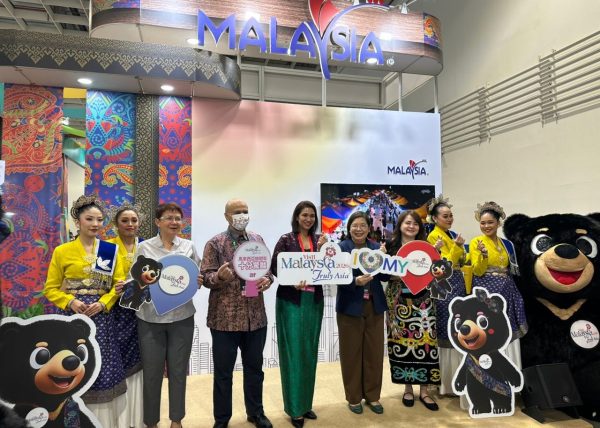
From third left: Representative of Sabah Tourism Board, Mr. Hafiz Hazin (Director of Tourism Malaysia Taipei), Ms. Aznifah Ghani (President of the Malaysia Friendship and Trade Centre Taipei), and representatives of Selangor Tourism Board and Sarawak Tourism Board during the launching ceremony of the Malaysia Pavilion at ITF 2025.
Visitors were introduced to Sarawak’s diverse offerings that embody its core CANFF pillars — from its living cultures and Indigenous heritage to its lush rainforests, adventurous landscapes, vibrant festivals, and creative gastronomy. Each element reflected Sarawak’s positioning as a destination of More to Discover, where culture and nature coexist in balance and harmony.
“Taiwan remains one of Sarawak’s important markets in North Asia, and ITF Taipei provides an invaluable platform to connect with our partners and travellers,” said Puan Sharzede Datu Haji Salleh Askor, Chief Executive Officer of Sarawak Tourism Board. “As Malaysia moves towards Visit Malaysia Year 2026, Sarawak is proud to showcase what makes our state special — our people, our culture, our natural beauty, and our commitment to responsible tourism.”
Happy consumers purchasing Sarawak travel packages at the Sarawak Pavilion at ITF 2025.
STB’s participation was supported by Taiwan-based travel partners, including ComeBest Tour Co Ltd, China Dragon Travel Service Co Ltd, Happy Go Travel Co Ltd, and Nami International Travel Agency Co Ltd (Lamingo Tour), which promoted a curated Sarawak tour package highlighting heritage, community-based, and nature-led experiences. These collaborations reinforce STB’s long-term strategy of working with regional agents to position Sarawak as a key destination in Borneo for experiential and meaningful travel.
The participation at ITF 2025 complements STB’s broader marketing initiatives in Taiwan, including the Business Networking Seminar with Royal Brunei Airlines Taiwan held earlier this year in Taipei and Hualien. Through such continuous engagements, STB deepens industry collaboration, strengthens Sarawak’s market presence, and advances Malaysia’s tourism goals, leading into Visit Malaysia Year 2026.
By aligning market outreach, storytelling, and sustainability under the CANFF pillars, Sarawak continues to inspire travellers from Taiwan and beyond to discover the heart of Borneo — a land of culture, adventure, nature, food, and festivals, where there is always more to discover.
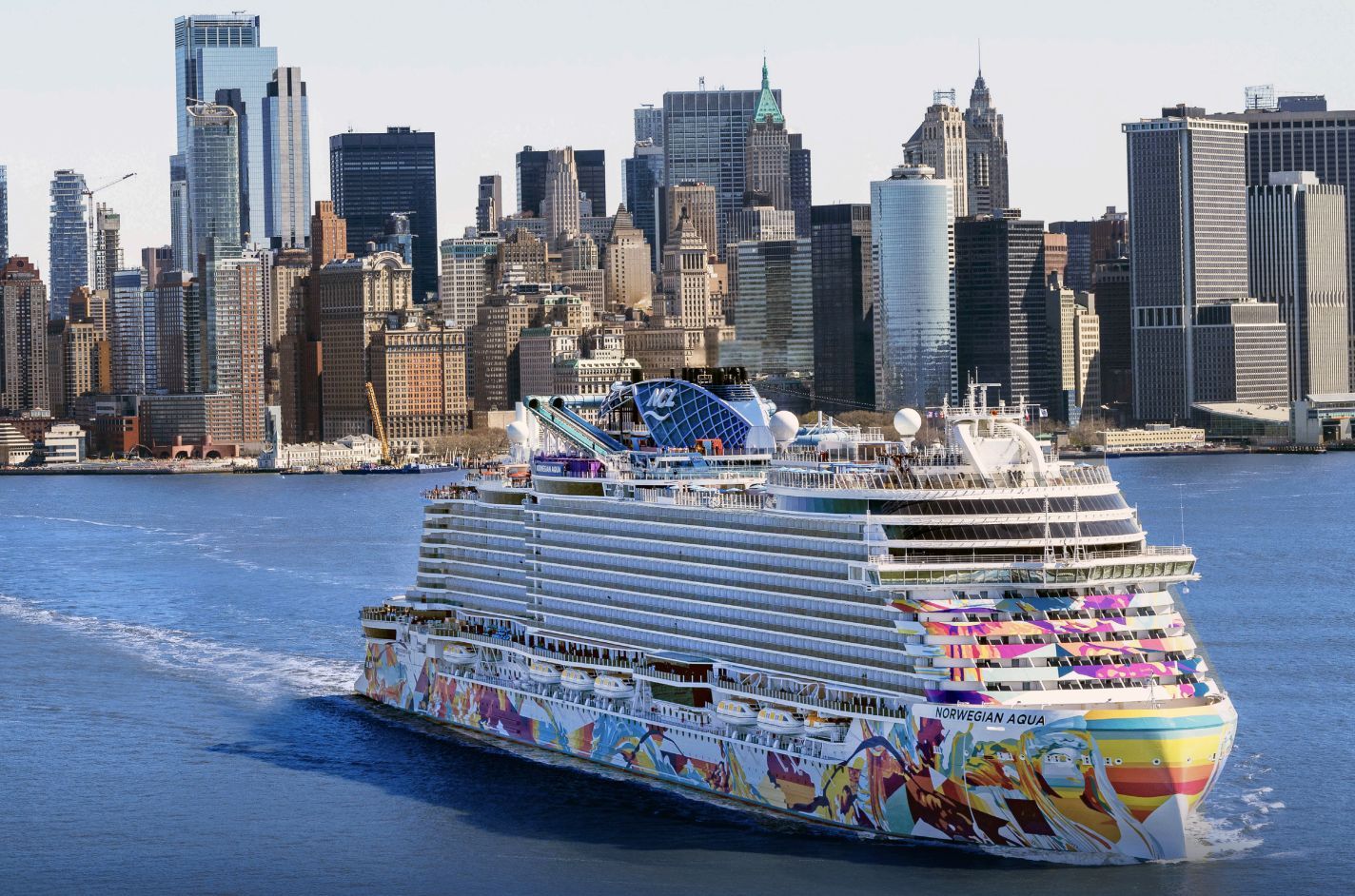
MIAMI, 12 November 2025: Norwegian Cruise Line Holdings Ltd, a leading cruise company operating Norwegian Cruise Line, Oceania Cruises, and Regent Seven Seas Cruises, confirmed this week a newbuild order with Fincantieri to construct a third vessel in the Prestige-Class series for its ultra-luxury brand, Regent Seven Seas Cruises.
The ship is scheduled for delivery in 2033, marking the continued expansion of the company’s growth strategy in the luxury segment.
Photo credit: Norwegian Cruise Line Holdings Ltd
Following the debut of the highly anticipated Seven Seas Prestige in 2026 and a second Prestige Class ship in 2030, the third vessel will build upon the hallmark design and elevated guest experience that have defined the brand’s legacy in all-inclusive, unrivalled cruising.
“This newbuild order continues our measured, strategic expansion within the luxury space, providing guests with yet another way to experience the unrivalled aboard The World’s Most Luxurious Fleet,” said Norwegian Cruise Line Holdings Ltd Chief Luxury Officer Jason Montague.
“It reflects our confidence in the growing demand for Regent’s best-in-class offering and reaffirms our long-standing partnership with Fincantieri, one rooted in craftsmanship and shared pursuit of perfection.”
Regent’s Prestige-Class ships begin a new legacy in ultra-luxury travel, marking Regent’s first new ship class in 10 years, following the success of the line’s Explorer-Class vessels.
Seven Seas Prestige
Seven Seas Prestige will be 40% larger than previous Regent ships, yet it will accommodate only 10% more guests, delivering more space at sea. At 77,000 tons and carrying just 822 guests with 630 dedicated crew members, the ship offers one of the highest space-to-guest and crew-to-guest ratios in the cruise industry.
All-balcony suites usher in a new era of ultra-luxury accommodation, featuring 12 distinctive categories, including four all-new suite types. These include the largest all-inclusive, ultra-luxury cruise ship suite in history: the Skyview Regent Suite, as well as the two-level Skyview and Grand Loft Suites.
Seven Seas Prestige will offer a curated culinary journey across 11 dining experiences, with a brand-new dining venue to be revealed at a later date.
About Norwegian Cruise Line Holdings Norwegian Cruise Line Holdings Ltd operates Norwegian Cruise Line, Oceania Cruises and Regent Seven Seas Cruises. With a combined fleet of 34 ships and more than 71,000 berths, NCLH offers itineraries to approximately 700 destinations worldwide. NCLH expects to add 14 additional ships across its three brands by 2036, which will increase its fleet’s berth capacity by over 39,200.
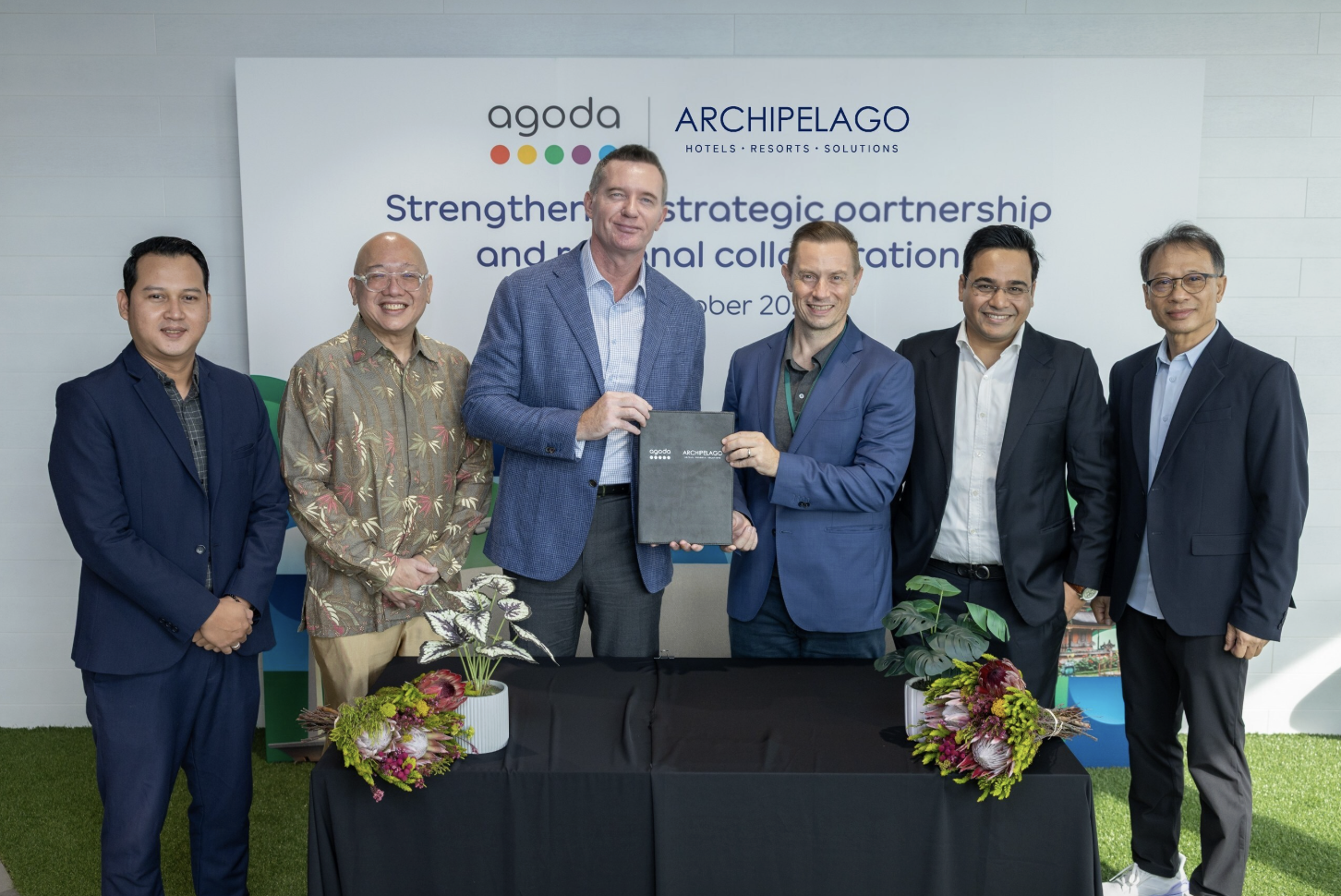
SINGAPORE, 12 November 2025: Digital travel platform Agoda has established a partnership with Archipelago International, Southeast Asia’s largest privately owned hotel management company, to broaden traveller choice and strengthen both brands’ regional presence.
Through this collaboration, 193 of Archipelago International’s properties, including urban business hotels, leisure resorts, and boutique experiences, are now available on the Agoda platform via the newly launched Archipelago Flagship Store.
From left to right: Mudy Idris, Director of Sales, Archipelago International; Chris Legaspi, Chief Commercial Officer, Archipelago International; John Flood, Chief Executive Officer, Archipelago International; Andrew Smith, Senior Vice President, Supply Agoda; Krishna Rathi, Associate Vice President, Supply, Agoda; and Gede Gunawan, Country Director, Indonesia, Agoda.
This dedicated brand hub will make it easier for travellers to discover and book Indonesian hotels such as ASTON Anyer Beach Hotel, Harper Malioboro, Royal Kamuela Ubud, and The Alana Hotel and Conference.
Indonesia has been growing in popularity, climbing the ranks to become the third most searched market on Agoda in 2025. With Agoda data showing a 21% year-on-year increase in searches for travel to Indonesia, this partnership aims to capture the demand from both domestic and international travellers.
This rising interest is driven by travellers from South Korea (1) with a 36% growth in searches, followed by Malaysia (2), Singapore (3), Australia (4), and Japan (5). While Bali, Jakarta, and Batam Island remain among the most sought-after destinations, emerging hotspots like Labuan Bajo and Medan are rapidly gaining traction, recording year-on-year increases of 66% and 47% in searches, respectively, on Agoda.
“Indonesia remains an important focus for Agoda’s growth, and this partnership with Archipelago International aligns with that direction. The launch of the Archipelago Flagship Store leverages our technology and scale to better connect our large Asian customer base with their portfolio of trusted properties. We value this collaboration as it reinforces our local offerings and supports our collective success in this dynamic market,” said Agoda Senior Vice President of Supply, Andrew Smith.
Unlike standard listings, Archipelago’s Flagship Store will act as a dedicated hub, showcasing its diverse range of properties to a growing pool of travellers from top origin markets and beyond, aligning with Indonesia’s increasing prominence as one of Agoda’s top-searched destinations. The collaboration leverages Agoda’s multichannel marketing solution to enhance visibility and engagement for the group’s portfolio.
“Agoda’s Flagship Store provides an innovative platform to share our brand story and engage travellers more meaningfully, while leveraging Agoda’s scale and marketing expertise to drive growth and revenue,” said Archipelago International Chief Commercial Officer Chris Legaspi.
It marks the first collaboration between Agoda and Archipelago International, uniting Agoda’s data-driven marketing and distribution capabilities with Archipelago’s strong regional brand presence. The partnership aims to accelerate demand generation, improve conversion across multiple source markets, and empower partners with more effective ways to engage travellers and boost revenue performance.
HONG KONG, 12 November 2025: Klook Technology Limited, a pan-regional experiences platform in the Asia-Pacific, filed a registration statement on Form F-1 with the US Securities and Exchange Commission on Tuesday, relating to the proposed initial public offering of American Depositary Shares (“ADSs”) representing the company’s ordinary shares.
The company has applied to list the ADSs on the New York Stock Exchange under the ticker symbol “KLK”.
Goldman Sachs (Asia) LLC, JP Morgan Securities LLC and Morgan Stanley & Co LLC will act as underwriters of the IPO. The number of ADSs to be offered and the price range for the proposed offering have not yet been determined.
The proposed offering will be made only through a prospectus. Copies of the preliminary prospectus relating to the proposed offering will be available when available via the three underwriters.
The registration statement on Form F-1 relating to these securities has been filed with the US Securities and Exchange Commission but has not yet become effective. These securities may not be sold, nor may offers to buy be accepted, before the time the registration statement becomes effective.
About Klook Klook is a leading pan-regional experiences platform in the Asia Pacific, purpose-built to digitalise experiences and make them accessible to every traveller. Its mission is to build the digital infrastructure for the global experience economy — empowering merchants to share their passions and travellers to discover each destination through a mobile-first, curated platform featuring diverse experiences across international destinations.
SINGAPORE, 11 November 2025: Finnair will schedule a record 25 weekly flights to Thailand during the winter timetable, November 2026 to March 2027, up from 21 flights during the current winter season.
The airline says it will schedule 18 weekly flights from its home base of Helshinki to Bangkok, four more flights than the 14 direct services operating on the direct route during the winter 2025 timetable.
Krabi is back on the Finnair map for winter 2026. Fly twice a week to the southern Thailand beach destination. Photo credit: Finnair Facebook page: Finnair.
Finnair will also resume direct flights to Krabi in southern Thailand during the winter of 2026, offering two weekly flights from Helsinki to Krabi on Mondays and Thursdays. Direct flights to Krabi were last operated in the winter season of 2021.
“Krabi offers an alternative for Phuket for those looking for a quieter beach holiday,” said Finnair’s Vice President of Network Management, Perttu Jolma.
In addition to Bangkok and Krabi, Finnair will schedule five weekly direct services from Helsinki to Phuket in the winter timetable 2026/2027, giving the airline a planned 25 flights weekly on routes to three Thailand destinations — Bangkok, Krabi and Phuket.
However, during the 2025 winter season, the airline will operate the Helsinki-Phuket route daily, starting on 27 November and continuing through to 31 March 2026, using an A350-900 aircraft with 300 seats. Flight time is 12 hours and 35 minutes.
(Winter season 2026 will run from 21 October 2026 to 27 March 2027.)
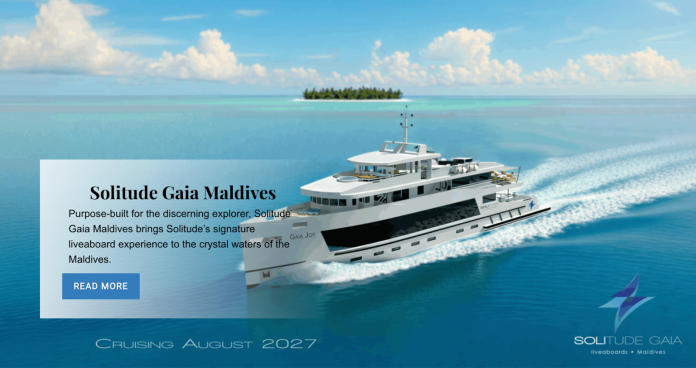
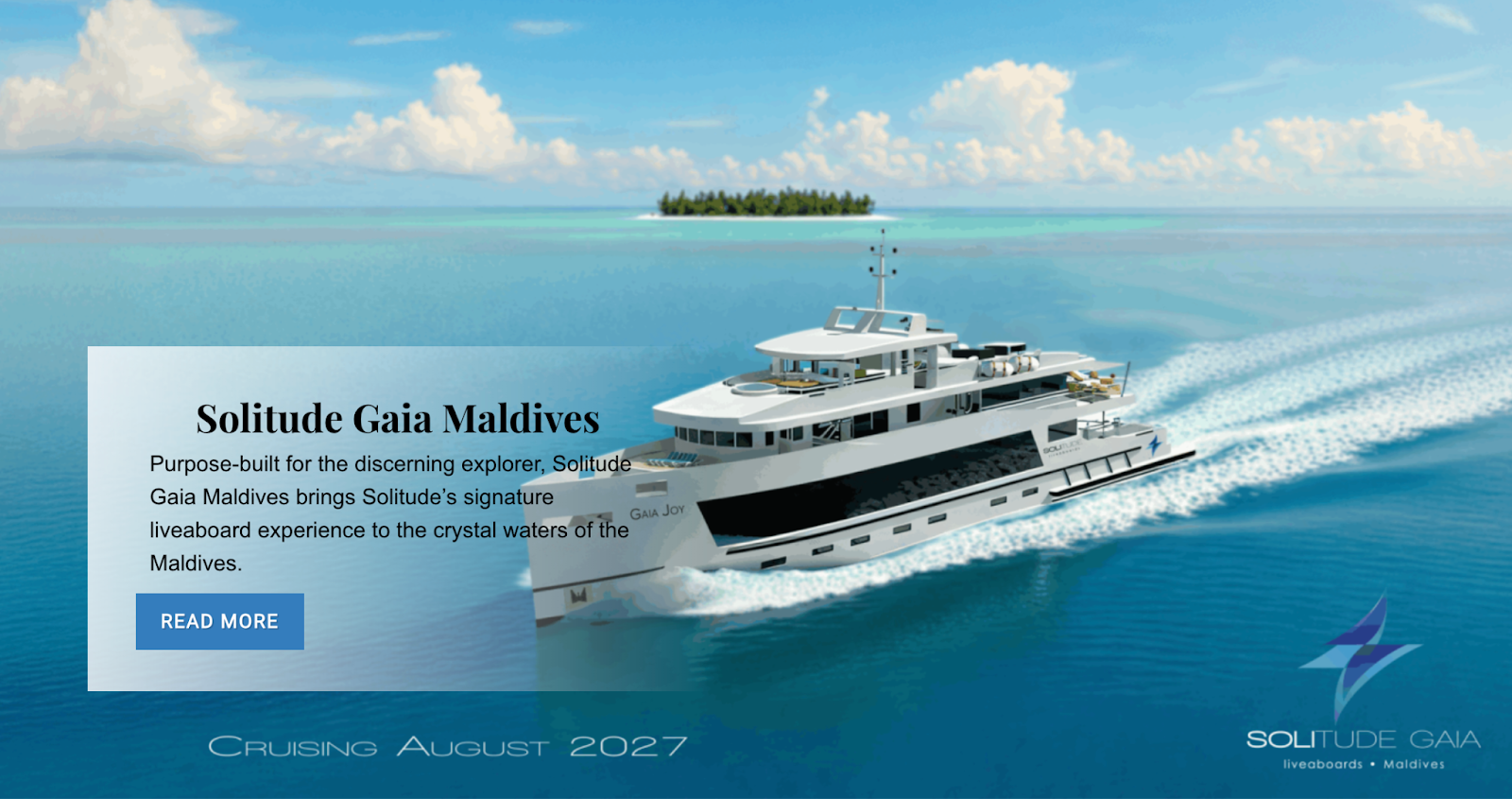
SINGAPORE, 12 November 2025: Solitude World is expanding its operations to the Maldives with the launch of a new liveaboard vessel, with cruises set to commence in August 2027.
This milestone marks a significant new chapter in the company’s global growth strategy, bringing its signature blend of comfort, personalised service and diving excellence to one of the world’s most celebrated underwater destinations.
Photo credit: Solitude World. New venture in the Maldives.
Building on its successful ventures in the Philippines, Indonesia and Palau, Solitude World is extending its reach to the Maldives’ pristine atolls and abundant marine life.
“Our expansion into the Maldives represents a natural evolution for Solitude World,” said Founder and Executive Director Kit Chung. “We’ve spent years honing our approach in the Coral Triangle, and now we’re ready to bring that same commitment to excellence and strategic growth to new waters. This move reflects our vision of becoming the go-to brand for divers who demand the very best in both underwater experiences and surface-side comfort.”
Founder and Executive Director Kit Chung.
The new liveaboard, Gaia Joy, will operate under Solitude World management as Solitude Gaia Maldives, joining the company’s growing fleet, which includes the popular Solitude Gaia in Palau.
Tresya, owner of both vessels, expressed enthusiasm about the brand’s expansion: “Entering the Maldives diving market is an exciting milestone for our portfolio. Through our experience as a shipbuilder, we’ve worked to collaboratively design this new boat to meet operational and safety demands while enhancing the guest experience.”
The launch underscores Solitude World’s ongoing commitment to evolve beyond traditional dive travel, integrating hospitality, adventure and purpose into every guest experience. Solitude Gaia Maldives will feature carefully curated itineraries designed to explore the Maldives’ amazing atolls, from thrilling channel dives to encounters with manta rays, sharks and vibrant coral ecosystems.
Cruise schedules will be released by the end of this year, with cruises commencing from August 2027.
About Solitude World Solitude World specialises in liveaboard and resort experiences across the world’s most spectacular diving destinations, including the Philippines, Indonesia, Palau and now, the Maldives.
SINGAPORE, 12 November 2025: Hilton has announced the appointment of Tal Shefer as senior vice president of Brand Management, Asia Pacific.
The appointment underscores Hilton’s ongoing commitment to strengthening its brand presence across the Asia Pacific.
Hilton’s senior vice president of Brand Management, Asia Pacific, Tal Shefer.
Shefer oversees Hilton’s brand strategy in the Asia Pacific region, driving growth across the company’s portfolio of brands.
This includes Hilton’s latest push in the luxury and lifestyle segment, where it plans to expand its current portfolio of over 160 trading properties by 50%, to more than 250 in the coming years.
Shefer’s career exemplifies Hilton’s culture of growth and opportunity. He has advanced through a series of leadership roles across Europe, the Middle East and Africa (EMEA), bringing over two decades of experience and expertise in hotel management and brand operations to his new role.
Most recently, he served as vice president, Brand Operations, EMEA, where he oversaw all managed and franchised hotel openings and transitions, playing a pivotal role in shaping the region’s focused service strategy across multiple brands and markets.