SINGAPORE, 15 September 2026: Anushik Avetyan has been appointed Chairperson of the Tourism Committee of the Ministry of Economy of the Republic of Armenia, effective from 2 September.
Avetyan brings experience in public policy, international economic cooperation, investment attraction and management, strategic advocacy and partnership. Most recently, she served as Deputy Minister of Economy, where she worked on Armenia’s international economic cooperation agenda.
Photo credit: Armenia Tourism Committee. Anushik Avetyan, chairperson of the Tourism Committee.
She coordinated and advanced Armenia–EU economic cooperation, oversaw policy development in the knowledge-based economy and intellectual property rights, and led the development and implementation of investment programs.
Previously, Avetyan served as Executive Director of the American Chamber of Commerce in Armenia, where she worked closely with government, international organisations, and the private sector, while leading the organisation’s advocacy, communications, and partnership activities.
She has also held positions at the Asian Development Bank, the Government of Armenia and the Eurasia Partnership Foundation.
Commenting on her appointment, Avetyan said: “I am honoured to lead the Tourism Committee at an important stage in the development of Armenia’s tourism sector. I firmly believe that Armenia has all the potential to become a leading international tourism destination — a country of diverse experiences, where history and culture, nature and adventure, gastronomy and wellness come together throughout the year.
“Our ambition is not only to attract more visitors to Armenia, but to offer experiences that are truly memorable and inspire people to return again and again. We will focus on strengthening Armenia’s international positioning and brand, expanding cooperation with global partners, empowering the tourism industry and creating the conditions for sustainable, inclusive and long-term growth.”
(Source: Ministry of Economy of the Republic of Armenia)
SINGAPORE, 15 September 2026: Explora Journeys introduces two new Journey Collections for the traditional Northern Winter 2027-2028 season, offering South America aboard EXPLORA I and the Mediterranean and Atlantic Islands aboard EXPLORA V.
These new Journey Collections join the previously announced programme, complementing EXPLORA II and EXPLORA IV in the Caribbean and EXPLORA III in Asia.
Photo credit: Explora.
EXPLORA I
From December 2027 to March 2028, EXPLORA I takes full advantage of the Southern Hemisphere summer, charting a course through the contrasting landscapes and natural wonders of Brazil, Uruguay, Argentina, the Falkland Islands and Chile.
Guests will experience tropical shores, golden coastlines and festive celebrations, including Christmas at sea and New Year’s Eve on the Brazilian seafront.
Five overnight stays in ports such as Buenos Aires, Puerto Madryn and Rio de Janeiro promise lingering evenings, complemented by eight late departures in coastal cities ranging from Balneário Camboriú and Port Stanley to Rio and Maceiจฎ. Unveiling 20 maiden destinations along the way, including 12 in Brazil, the ship will move from lively cultural hubs into the raw, untamed majesty of the far south.
Sweeping towards Patagonia, the itinerary connects Montevideo and the wildlife-rich waters of the Beagle Channel with Puerto Williams, Punta Arenas and the legendary shores of Cape Horn. The route passes glaciers, fjords and isolated archipelagos, delivering pristine wilderness alongside refined oceanfront living.
EXPLORA V
From December 2027 to April 2028, EXPLORA’s inaugural season begins by exploring the Western and Central Mediterranean and North Africa. In January, the ship sails into the Atlantic before returning to the Mediterranean in March.
HANGZHOU, China, 15 September 2026: Fliggy, a leading online travel services platform and a wholly owned subsidiary of Alibaba Group and Eastar Jet, a South Korean budget airline, signed a partnership agreement in Hangzhou on 10 September.
The two companies will explore new “Flight+” bundle products and service scenarios built on Fliggy’s agentic AI travel assistant and Alibaba’s Qwen models.
From left: Eastar Jet Chairman and CEO Cho Jung-seok and Fliggy Vice President and General Manager of Transportation Li Chen.
Eastar Jet plans to launch dedicated ticketing initiatives and policies for Fliggy users, drawing on Fliggy’s livestreaming, key opinion leader (KOL), and wider digital marketing resources to build its brand presence in China and improve conversion efficiency.
Eastar Jet flies routes across East Asia, Southeast Asia, and Central Asia, with China among its most densely served markets. It currently operates round-trip flights between cities in South Korea and Shanghai, Yanji, Zhangjiajie, Yantai and Zhengzhou in the Chinese mainland, as well as the Hong Kong SAR, Macau SAR, and Taiwan markets.
China and South Korea now rank among each other’s top outbound travel destinations. Fliggy data shows bookings for South Korea travel products by Chinese travellers grew more than 40% year over year (YoY) during the recent summer, while flight bookings by Korean travellers to China rose by nearly 100% YoY over the same period.
Eastar Jet Chairman and CEO Cho Jung-seok said: “We look forward to expanding our reach among Chinese travellers through our partnership with Fliggy, one of China’s leading online travel platforms, and unlocking new demand for travel to South Korea. Looking ahead, we will continue to deepen our collaboration with partners across China, encouraging more travellers to explore South Korea while strengthening tourism exchanges between the two countries and supporting the growth of tourism economies.”
Fliggy Vice President and General Manager of Transportation Li Chen added: “We are pleased to deepen our cooperation with Eastar Jet, which further strengthens the quality of Fliggy’s flight supply across East Asia and Southeast Asia. Together, we will be better positioned to serve cross-border travel between China and South Korea, as well as global travellers visiting the region, and to give our users a more convenient and higher-quality booking and travel experience.”
Fliggy’s flight booking services are now integrated with more than 10 search, e-commerce and e-wallet platforms, including Google Flights, AliExpress, Lazada, Alipay HK, Mpay, GCash, Touch&Go, DANA, TrueMoney and Hipay, making it easier for overseas users to book and manage travel.
About Fliggy Fliggy is a wholly owned subsidiary of Alibaba Group (NYSE: BABA and HKEX: 9988 (HKD Counter) and 89988 (RMB Counter)) and is one of the leading online travel platforms in China.
About Eastar Jet Founded in 2007 and headquartered in Seoul, Eastar Jet is a budget airline based at Gimpo International Airport, with additional bases in Gunsan and Cheongju. Since its maiden flight from Gimpo to Jeju on 7 January 2009, it has grown to provide short- and long-haul services, primarily to leisure destinations across Korea and the wider region.
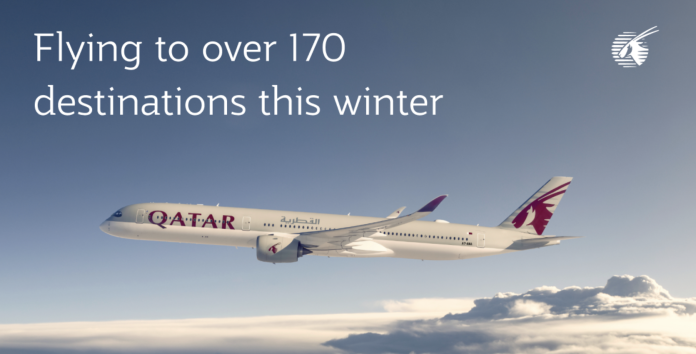
DOHA, Qatar, 15 September 2026: Qatar Airways will expand its global network to more than 170 destinations during the 2026-2027 winter season, reflecting the airline’s network growth and reinforcing its position as a leader in global connectivity.
The winter schedule will see Qatar Airways operate more than 186 weekly flights across Africa, Asia Pacific, Europe, the Americas, and the Middle East, giving passengers greater choice and seamless experiences through its hub at Hamad International Airport.
Photo credit: Qatar Airways.
The 2026-2027 winter schedule reflects strong demand across Qatar Airways’ network across six continents and includes resumed services and frequency increases in key global markets.
Expanding connectivity across Africa
In Africa, Qatar Airways is increasing connectivity to the world’s most sought-after destinations. Daily flights to Zanzibar (ZNZ), Tanzania, resume from 25 October 2026, further reinforcing the airline’s commitment to support tourism and trade across the continent.
Complementing this growth, the airline will also expand services to Seychelles (SEZ) from four to seven weekly flights from 1 March 2027, providing global travellers greater access to destinations renowned for their beaches, culture, and hospitality.
South Africa will begin benefiting from additional Qatar Airways flights to Johannesburg (JNB) starting 2 December 2026, with 18 weekly flights, up from 14, giving travellers more flexibility for business and leisure travel.
Strengthening the Americas network
In North America, Qatar Airways will increase services to Montréal (YUL), Canada from five to seven weekly flights from 25 October 2026, representing a 40% boost in seat capacity. The enhanced schedule caters to increasing travel demand to Canada from the Indian Subcontinent and the Middle East.
Significant growth across Asia Pacific
Asia Pacific remains a key region in Qatar Airways’ network, with multiple frequency increases and route resumptions planned throughout the winter season, notably for travellers from Europe.
On 25 October 2026, Qatar Airways service to Phuket (HKT), Thailand, will increase from 14 to 21 weekly flights, and flights to Malé (MLE), the Maldives, will increase from 12 to 21 weekly flights, offering more choice for adventure seekers worldwide.
Flights to Ho Chi Minh City (SGN), Vietnam, will increase from seven to 11 weekly services from 7 November 2026, supported by the reintroduction of direct four weekly flights between Doha and Ho Chi Minh City. The existing Doha-Ho Chi Minh City-Phnom Penh operation will continue, providing customers with greater flexibility while increasing overall capacity to Vietnam and beyond.
This winter season, travellers to and from Kuala Lumpur (KUL) will also have greater choice when selecting from Qatar Airways’ 18 weekly flights, starting 25 October 2026. The service will be complemented by oneworld partner Malaysia Airlines’ 14 weekly flights between Kuala Lumpur and Doha.
Starting 9 December 2026, Qatar Airways will resume daily flights to Canberra (CBR) via Melbourne (MEL), Australia. The resumption reconnects Australia’s capital to Qatar Airways’ global network and provides additional connectivity to Africa, Asia, Europe, and the Middle East.
Furthermore, the airline is expanding frequencies to Melbourne from seven to 14 weekly flights from 9 December 2026. In partnership with Qatar Airways, Virgin Australia will also expand flights from Sydney, Brisbane, and Perth to Doha from December 2026.
Sydney will increase from seven to 14 weekly flights (total 21 weekly with Qatar Airways), Brisbane will restart with three weekly flights (total 10 weekly with Qatar Airways), and Perth will restart with four weekly flights (total 11 weekly with Qatar Airways).
Enhanced European connectivity
In Europe, Qatar Airways will continue strengthening its presence to key gateway cities.
Flights to London Heathrow (LHR) will increase from 49 to 56 weekly services from 25 October 2026, adding 11 per cent capacity. London-Doha connectivity is further supported by Qatar Airways’ codeshare partner, British Airways’ daily flight between the two capitals.
In Germany, services to Frankfurt (FRA) will increase from 18 to 21 weekly flights from 7 December 2026, enhancing capacity by 7%.
Continued expansion across the Middle East
Qatar Airways is expanding its services across the Middle East, with daily flights up 10 per cent during the winter season and four route resumptions announced in the Kingdom of Saudi Arabia.
Beginning with Qassim (ELQ) on 25 October 2026, Qatar Airways will also resume services to Taif (TIF) on 31 October 2026, Yanbu (YNB) on 2 January 2027, and Tabuk (TUU) on 3 January 2027, boosting access across the Kingdom.
Each destination will be served twice weekly, boosting Qatar Airways’ operations in Saudi Arabia to more than 155 weekly flights, an increase of more than 10 per cent over the summer schedule. The expansion will grow Qatar Airways’ Saudi network to 12 destinations, reflecting the airline’s long-term commitment to the Kingdom and its role in supporting regional connectivity and economic growth.
SHENZHEN, China, 14 September 2026: MGM Shenzhen Prince Bay, a waterfront destination in Shekou, Nanshan, opened on 10 September.
Flagged as a maritime gateway of the Guangdong–Hong Kong–Macao Greater Bay Area (GBA) and connected via the Shekou Cruise Home Port, the hotel establishes a 60-minute connectivity circle that seamlessly links the GBA’s major cities, while providing efficient access to global resources and the region’s stunning bay scenery.
Representatives pose for a group photo during the grand opening of MGM Shenzhen Prince Bay with traditional lion dance performers.
The hotel is part of the precinct featuring K11 ECOAST and Sea World Culture and Arts Centre, offering an integrated destination that combines art spaces, world-class gastronomy, and immersive experiences. This milestone opening further strengthens MGM Hospitality Group’s presence across the Greater Bay Area.
MGM China Holdings Limited Chairperson and Executive Director Pansy Ho remarked: “This hotel has never been merely a place to stay — it is a stage where MGM’s century-old hospitality meets the dynamic spirit of Prince Bay, creating a unique urban harbour living experience for our guests.”
The hotel features 298 ocean-view guest rooms and suites, ranging from 50 to 364 sqm. The room categories include 270-degree panoramic sea-view rooms, terrace suites, sky suites, and a presidential suite.
WUXI, China, 14 September 2026: Hilton confirms the opening of Xi Zhe Wuxi, Curio Collection by Hilton, marking Curio Collection by Hilton’s first property in Jiangsu Province.
Comprising a historic residence alongside a newly constructed building, the hotel’s design creates an urban retreat that blends historical heritage with contemporary comfort.
Photo credit: Hilton. Xi Zhe Wuxi Curio Collection by Hilton.
Located in Wuxi Centre 66, the hotel was developed by Hang Lung Properties and is managed by Hilton.
The story of Xi Zhe Wuxi, Curio Collection by Hilton begins with a notable residence at No. 118 Dongdajie Street. Built in 1933 by Wuxi entrepreneur Zhang Xiaocheng and his sister Zhang
Chuquan, the residence has been reimagined nearly a century later alongside a newly constructed building to form today’s hotel, blending Wuxi’s heritage with contemporary design.
“Today’s travellers are seeking stays that feel personal, authentic and deeply connected to their destination. Hilton’s lifestyle brands are designed to meet these evolving expectations, offering differentiated experiences that give guests the freedom to express themselves, discover local culture and connect in meaningful ways,” said Hilton Senior Director, Lifestyle & Collection Brands, Asia Pacific, Alexander Shockley.
Located in the heart of Wuxi and surrounded by historic residences of notable figures, the hotel features 105 guest rooms and suites across the historic residence and contemporary building.
To date, Hilton has introduced five lifestyle brands in China, including Canopy by Hilton, Curio Collection by Hilton, Tapestry Collection by Hilton, Motto by Hilton and Tempo by Hilton, which was newly introduced in July this year.
Since opening its first Asia Pacific property in Sanya, China, in 2017, the brand has expanded to destinations including Xiamen, Guangzhou, Hangzhou, Qingdao and Luoyang, becoming one of Hilton’s fastest-growing lifestyle brands in China.
SINGAPORE, 14 September 2026: EgyptAir, Changi Airport Group and Sydney Airport have announced plans for a new service connecting Cairo, Singapore and Sydney from early 2027.
The proposed service, which is subject to regulatory approvals, will be the first direct link to North Africa for both Singapore and Australia, marking a significant step forward in strengthening connectivity across the regions.
Photo credit: EgyptAir.
Changi Airport said in a press statement that “demand for travel to and from Egypt was robust and growing, with the country recorded as the largest unserved market in Africa for both Singapore and Australia by point-to-point traffic in 2025.”
The new route will connect three distinctive global cities. Cairo offers access to Egypt’s rich cultural heritage, including the Pyramids of Giza, the Grand Egyptian Museum and cruises down the Nile River, as well as leisure destinations such as Hurghada, Sharm El-Sheikh and Al-Alamain.
Singapore presents a unique blend of urban life and nature, from the iconic Marina Bay skyline to the award-winning Gardens by the Bay.
Meanwhile, Sydney combines iconic landmarks such as the Sydney Opera House and Sydney Harbour Bridge with a vibrant business and cultural scene.
Changi Airport Group, Executive Vice President, Air Hub and Cargo Development, Lim Ching Kiat said: “We are delighted that EgyptAir is planning to connect Cairo, Singapore and Sydney with this new service. Through Changi’s extensive regional network, travellers from Egypt and Australia will gain seamless access to destinations across Southeast Asia and the wider Asia-Pacific.
“At the same time, Changi’s passengers from Singapore and the region will get to enjoy convenient access to Cairo and onward connections across Africa and beyond. We look forward to welcoming EGYPTAIR to Changi and supporting the successful launch of the service.”
SINGAPORE, 14 September 2026: Trip.Gourmet, Trip.com Group’s dedicated food and dining brand, marked its 10th anniversary with the global launch of the 2027 Fine Dining List, held in partnership with Resorts World Sentosa (RWS) in Singapore.
The event brought together restaurant partners, culinary experts and media from around the world to celebrate a decade of connecting travellers with the flavours that define the world’s great destinations.
Trip.com Group Vice President and CEO of Trip.Gourmet Sunny Sun.
The 2027 Fine Dining List now spans six continents, 105 cities and 40 countries and regions, recognising 744 restaurants across three tiers – Black Diamond, the highest distinction (60), Diamond (160) and Platinum (524) – with 34 new destinations added this year across Europe, North America, Oceania, Asia, South America and Africa. Since its debut ten years ago, the list has grown from a single-market ranking into a global culinary index spanning 66 countries and regions and 462 destinations, guiding travellers toward restaurants worth building a trip around.
“Today’s travellers are no longer just enjoying food at their destination – increasingly, a single meal is shaping where they choose to go, and when,” said Trip.com Group Vice President and CEO of Trip.Gourmet Sunny Sun. “As cross-border travel becomes more frequent, our goal for the next chapter of Trip.Gourmet is simple: to help every traveller discover restaurants worth the trip, understand why they matter, and book with confidence.”
This year’s list reflects the breadth of global fine dining, with restaurants recognised across 40 countries and regions. Asia-Pacific anchors the list by volume, with 478 restaurants — nearly two-thirds of the global total — spread across 51 cities and 32 Black Diamond honours, led by culinary hubs including Tokyo, Shanghai and Beijing.
Europe offers the broadest geographic reach of any continent, with restaurants recognised across 20 countries and regions and 35 cities, and 23 Black Diamond honours, anchored by Paris and London. The Americas contribute 63 restaurants across 14 cities, led by New York. Meanwhile, the list’s newest frontier — spanning South Asia, the Middle East and Africa — adds 17 restaurants across 5 cities, including Dubai and Cape Town.
As host city for this year’s global launch, Singapore is recognised with 27 restaurants on the 2027 Fine Dining List, spanning all three tiers: Three Black Diamond, eight Diamond and 16 Platinum. Singapore’s Black Diamond restaurants — Odette, Les Amis and Restaurant Labyrinth — represent some of the highest culinary honours awarded anywhere in the world this year. In contrast, Diamond-tier restaurants such as Zén, JAAN by Kirk Westaway and Summer Pavilion reflect the city-state’s continued rise as one of the world’s most dynamic dining destinations.
The full 2027 global restaurant rankings can be viewed on the Trip.com app.
MUSCAT, 14 September 2026: SalamAir, Oman’s low-cost carrier, has announced the opening of ticket sales for its new service to Copenhagen, Denmark, via Baghdad in Iraq, with the first flight scheduled for 14 November 2026.
Operating under fifth-freedom traffic rights on the Baghdad–Copenhagen sector, the service will connect Muscat and Copenhagen with a scheduled stop in Baghdad, creating a new travel link between Oman, Iraq and Denmark.
Photo credit: SalamAir.
Travellers from Muscat can continue to Copenhagen via Baghdad, while passengers in Iraq can book flights directly between Baghdad and the Danish capital.
With one-way Lite fares starting from OMR130.99 between Muscat and Copenhagen via Baghdad, and from OMR99.99 between Baghdad and Copenhagen, the service will expand affordable travel options, strengthen international connectivity, and support demand for leisure, business, and visiting friends and relatives. It will also create new opportunities for tourism, trade, and cultural exchange between the Middle East and Northern Europe.
Adding Copenhagen marks another step in SalamAir’s European expansion. By extending its Baghdad service to Denmark, SalamAir will connect underserved markets, stimulate new passenger demand, and give travellers from Copenhagen and the wider Northern European region greater access to Oman and selected onward destinations across its network.
Commenting on the announcement, SalamAir Chief Commercial OfficerSteven Allen said: “Copenhagen is the ninth new destination added to SalamAir’s network for 2026, reflecting the pace of our expansion and our focus on developing commercially promising markets. Operating twice weekly, the service creates an important new connection between Oman, Iraq and Northern Europe, serving demand between Baghdad and Copenhagen while offering travellers more affordable options to and from Oman. It will also generate new passenger flows across our network and create further opportunities for tourism, trade and business exchange, in line with the objectives of Oman Vision 2040.”
Tickets are available through SalamAir’s website, mobile application, call centre and authorised travel agents.
JAKARTA, 14 September 2026: BBN Airlines Indonesia has joined the International Air Transport Association (IATA), becoming part of a global association representing more than 370 airlines across over 120 countries.
Together, IATA members account for approximately 85% of global air traffic.
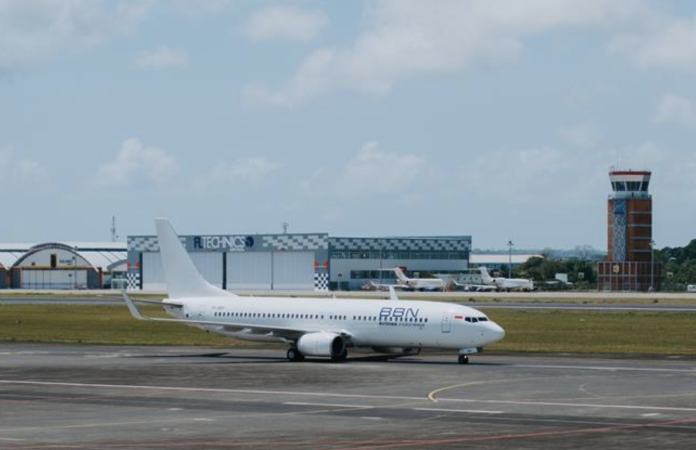
Photo credit: BBN Airlines Indonesia.
Established in Jakarta in 2022, BBN Airlines Indonesia is a non-scheduled airline specialising in wet-lease and charter services for airlines and other aviation customers across Indonesia and the broader Asia-Pacific region.
IATA membership is open to airlines operating scheduled and non-scheduled services that maintain an IATA Operational Safety Audit (IOSA) registration, which BBN Airlines Indonesia obtained in 2025.
The milestone comes as BBN Airlines Indonesia continues to grow its wet-lease and charter operations. The airline currently operates two Boeing 737-800 aircraft, registered as PK-BBF and PK-BBG. It also plans to add an Airbus A320 to its fleet, with commercial services expected to begin in December 2026.
BBN Airlines Indonesia Chief Executive Officer Werry Orbani.
“We are proud to become part of the IATA network,” said BBN Airlines Indonesia Chief Executive Officer Werry Orbani. “This membership represents an important step in our development as we continue expanding our wet-lease and charter operations. It strengthens our connection with the international aviation community. It allows us to contribute to industry discussions while continuing to provide reliable capacity solutions to our partners across Indonesia and the wider Asia-Pacific region.”
As an IATA member, BBN Airlines Indonesia will be able to participate more closely in industry discussions, advisory groups and initiatives covering areas such as safety, operational efficiency and regulatory development. The membership will also strengthen the airline’s connections with aviation stakeholders internationally.
BBN Airlines Indonesia is part of Avia Solutions Group, the world’s largest ACMI provider. The group operates a fleet of 136 aircraft across six continents and is supported by more than 11,000 aviation professionals across its 250+ subsidiaries.
Its portfolio also includes MRO, pilot and crew training, ground handling, and other aviation services worldwide.
About BBN Airlines Indonesia BBN Airlines Indonesia is a subsidiary of Avia Solutions Group, the world’s largest ACMI (aircraft, crew, maintenance, and insurance) provider, operating a fleet of 107 passenger and cargo aircraft worldwide.