

Wednesday, May 20, 2026
Home Blog Page 20

Batik Air expands China and Australia services

KUALA LUMPUR, 16 April  2026: Batik Air is strengthening its international network by introducing new direct services to two key global markets: China and Australia.

The Kuala Lumpur–Shanghai service commences on 23 June 2026, with daily departures and a flight time of five hours and 40 minutes. 

Photo credit: Batik Air.

It marks a significant milestone in Batik Air’s network expansion into China, complementing its existing services to Changsha, Chengdu, Guangzhou, Kunming, Xiamen, and Zhengzhou. A Boeing 737 MAX 8 with 180 seats will serve the new route to Shanghai, further reinforcing connectivity between Kuala Lumpur and one of the Asia-Pacific region’s key economic and tourism centres.

Flight schedule

OD680 departs Kuala Lumpur (KUL) at 1700 and arrives in Shanghai (PVG) at 2255 (daily).
OD681 departs Shanghai (PVG) at 2325 and arrives in Kuala Lumpur (KUL) at 0515 (daily).

Shanghai is a global metropolis where heritage meets innovation, defined by the historic The Bund and the futuristic skyline of Pudong, alongside vibrant districts like the Former French Concession and Nanjing Road that highlight the city’s cultural depth and dynamic lifestyle. As a leading hub for commerce, culture, and leisure, Shanghai continues to attract both business and leisure travellers with its distinctive blend of tradition and modernity. All-in-one-way fares start from MYR399 for economy class and MYR1,679 for business class.

In parallel with its expansion into China, Batik Air will introduce a direct Kuala Lumpur–Sydney service commencing 1 July 2026, operated by Airbus A330 aircraft configured with business and economy cabins. The airline currently serves Australia through Brisbane, Melbourne, Perth, and Sydney via Denpasar, as well as 14 weekly direct flights between Kuala Lumpur and Perth. The new non-stop Sydney service will operate daily with a flight time of eight hours and 5 minutes.

Photo credit: Batik Air.

Flight schedule

OD171 departs Kuala Lumpur (KUL) at 2340 and arrives in Sydney (SYD) at 0945.
OD172 departs Sydney (SYD) at 1115 and arrives in Kuala Lumpur (KUL) at 1830.

Previously, the flight to Sydney made a transit stop in Bali, Denpasar (DPS). 

Sydney, Australia’s largest city and a leading international gateway, combines natural attractions with urban appeal. Iconic landmarks such as the Sydney Opera House and Sydney Harbour Bridge, along with destinations like Darling Harbour and Bondi Beach, contribute to its global recognition. As a key commercial and financial centre and primary entry point into Australia, Sydney plays a vital role in regional and long-haul travel networks. All-in-one-way fares starting from MYR749 for economy class and MYR4,069 for business class

The new routes to Shanghai and Sydney come amid continued momentum in Malaysia’s travel sector, with both China and Australia remaining key contributors to inbound and outbound traffic. In 2025, Malaysia recorded approximately 4.7 million visitors from China and over half a million visitors from Australia (source: Malaysia Tourism Statistics). 

Improved connectivity and ongoing travel facilitation, including visa-free access for Malaysian travellers to China for short stays, continue to support increased mobility and accessibility between the two countries. Australia similarly maintains strong bilateral travel flows, driven by tourism, business, and Visiting Friends and Relatives (VFR) segments.

Batik Air Chief Executive Officer Datuk Chandran Rama Muthy said the introduction of both routes reflects the airline’s continued commitment to building a resilient, demand-driven network while maintaining a measured outlook amid an evolving global environment.

“Batik Air continues to align its network with sustained market demand, and the addition of Shanghai and Sydney strengthens two of our most important international corridors,” he said. “These routes support tourism and business travel while enhancing overall connectivity between Malaysia and key global markets.”

(Source: Batik Air)
Sabah bookings surge at MATTA Fair

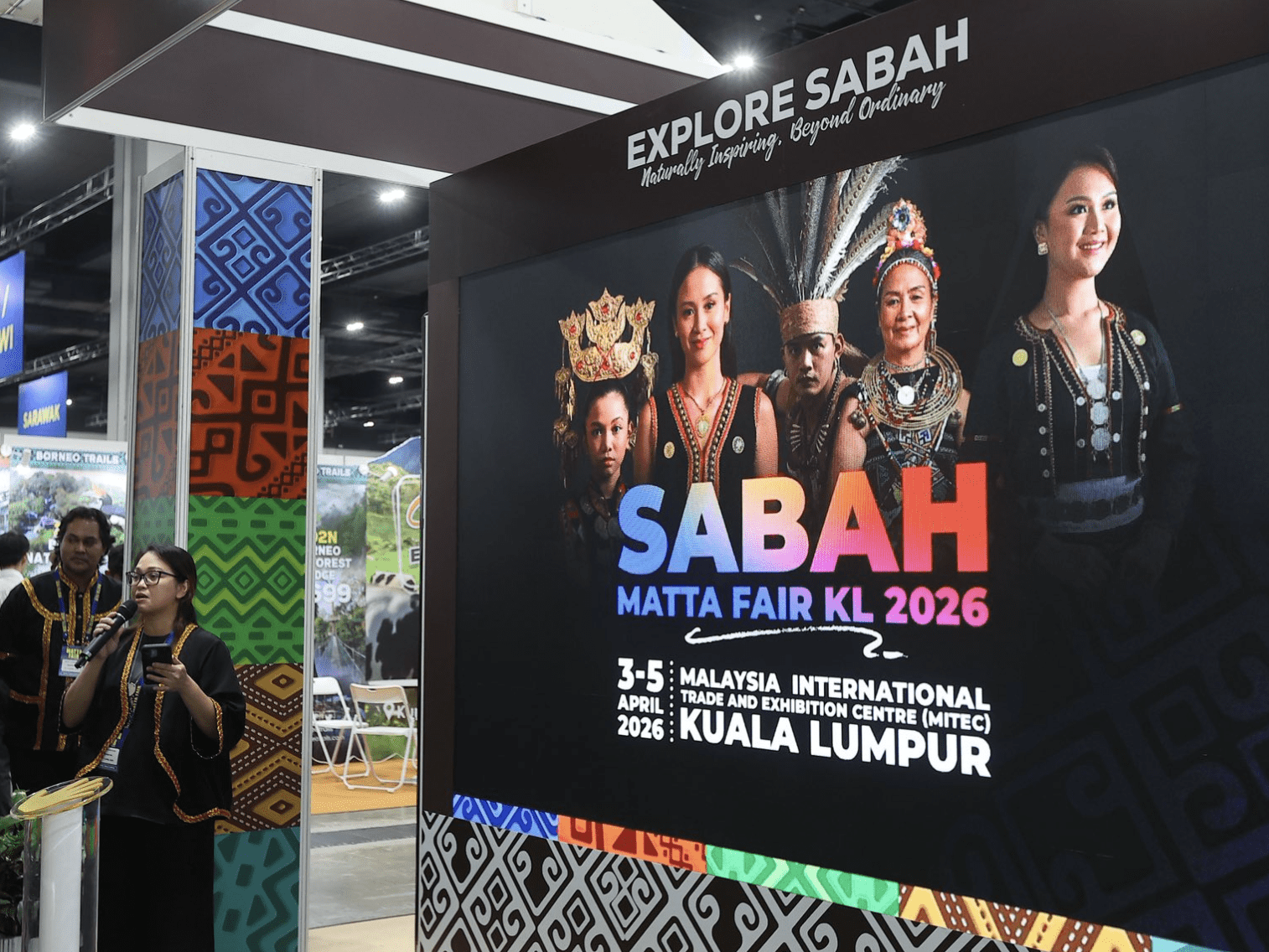
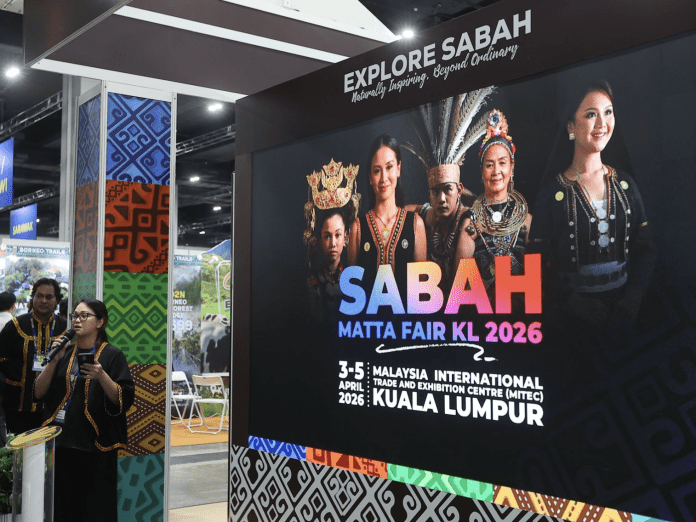
KOTA KINABALU, 16 April 2026: Sabah recorded a strong sales performance at the recent MATTA Fair Kuala Lumpur, generating MYR5,098,153.74 turnover at the three-day consumer travel fair.

Sales gained momentum throughout the fair, with Sabah-based sellers recording MYR812,156.32 on the opening day, 3 April, rising to MYR1,425,231.32 on the second day, and peaking at MYR2,860,766.10 on the final day of the show.

Photo credit: Sabah Tourism Board. Holiday bookings surge at Sabah’s MATTA Fair pavilion and booths.

Minister of Tourism, Culture and Environment Datuk Jafry Ariffin described the strong sales performance as encouraging and said Sabah’s continued participation in major travel fairs will help drive bookings and visitor arrivals to the state.

Compared with the MYR4.5 million recorded at the April 2025 MATTA Fair last year, with 43 agents participating, Jafry said this year’s performance demonstrates the resilience of Sabah’s domestic tourism market even as the industry prepares to navigate evolving travel trends and incoming challenges.

At the April edition of the MATTA Fair, 37 Sabah-based tour and travel agencies were present at 100 booths, offering a wide range of travel packages showcasing the state’s diverse tourism offerings, including culture, adventure, and nature.

STB also introduced and reinforced Explore Sabah destination branding while highlighting the Kaamatan Festival as a key cultural attraction, inviting visitors to experience the month-long harvest celebration across the state in May.

(Source: Sabah Tourism Board)

Mandarin Oriental lands in Chiang Rai

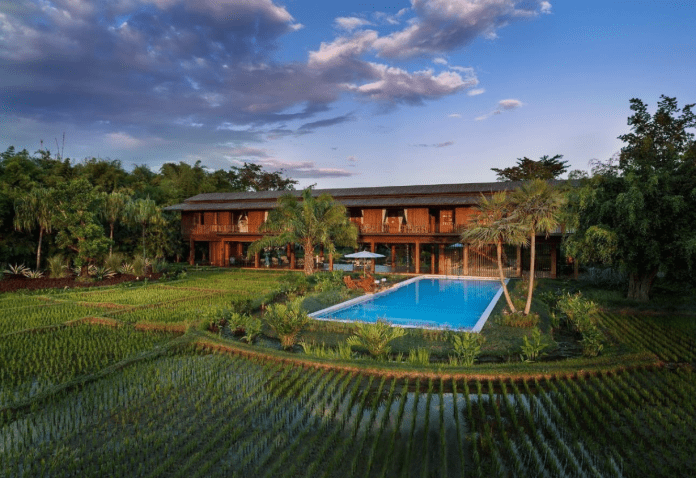
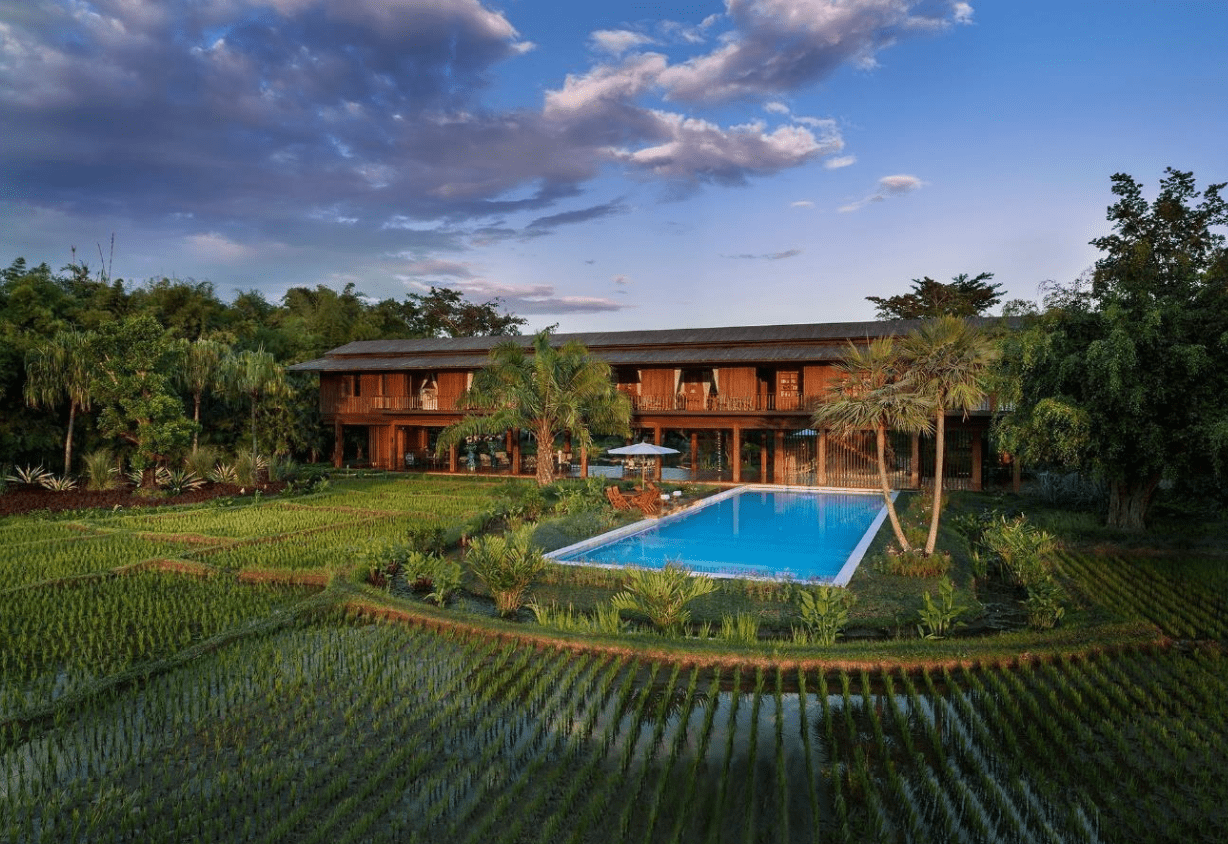
CHIANG RAI, 16 April 2026: Tatvani, an exclusive retreat in Chiang Rai, North Thailand, has been selected to join the Mandarin Oriental Exceptional Homes collection, a portfolio of the world’s most remarkable private villas and estates.

The partnership brings Tatvani into the global network of private vacation homes represented by Mandarin Oriental, among the world’s most esteemed luxury hospitality brands.

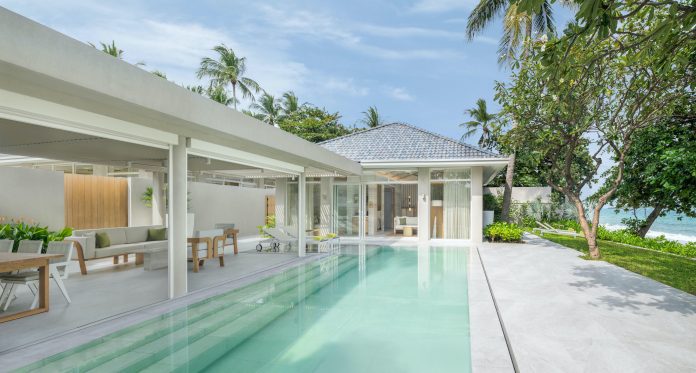
Photo credit: Tatvani.

Formerly operating under the Pa Sak Tong flag, the project was officially rebranded Tatvani at a public launch on 1 May 2025. Now, almost a year later, the project officially joins Mandarin Oriental’s Exceptional Homes portfolio. Pa Sak Tong remains the name for the primary signature villa, while the entire 29-acre property is marketed and managed as Tatvani.

Set in 29 acres of landscaped grounds in the hills surrounding Chiang Rai in northern Thailand, Tatvani is booked exclusively by one group at a time, ensuring complete privacy and highly personalised experiences.

The estate comprises six private villas with nine guest rooms that accommodate up to 18 adults (plus children under 12), supported by a team of more than 30 staff, including chefs, therapists, hosts, and drivers.

Guests at Tatvani enjoy an all-inclusive experience that combines luxury hospitality with cultural immersion. Facilities include a 30-metre heated outdoor swimming pool, Tatvani Spa, gym, private walking trails, rice-field pavilions, wild-swimming koi ponds, and immersions ranging from local trekking and culinary programmes to exploring the Golden Triangle and visiting the estate’s elephant sanctuary.

“We are delighted to expand our curated collection of Mandarin Oriental Exceptional Homes in Thailand, welcoming Tatvani, an extraordinary retreat in Chiang Rai,” said Mandarin Oriental Exceptional Homes Head Philip Leighton. “Their unwavering commitment to precision and an intuitive approach to the guest experience resonates strongly with our core principles, further reinforcing the exceptional standards synonymous with Mandarin Oriental.”

The Mandarin Oriental Exceptional Homes collection represents private vacation homes that reflect the culture and character of their destinations while offering the comfort, privacy, and service of the legendary hospitality brand. The portfolio consists of 38 Exceptional Homes across 14 desirable destinations.

(Source: Mandarin Oriental)

EU border system fully operational

SINGAPORE, 16 April 2026: The EU’s new border management system has been fully operational since 10 April at all external border crossing points of the EU, except for Cyprus and Ireland. 

The Entry/Exit System is an automated IT system for registering non-EU nationals travelling for short stays —  up to 90 days in a 180-day period. It replaces the old way of manually stamping passports.

Photo credit: EU Directorate-General of Communications.

Under the new system, when a non-EU national arrives at a border crossing point in the Schengen Area for the first time, the following information is registered in the system:

  • Passport details;
  • biometric data;
  • entry and exit records.

For each subsequent entry and exit, only a quick verification will be needed, making the process faster.

The EU media statement claimed the new system modernises border controls in the EU by:

  • Speeding up border checks, so travellers spend less time waiting
  • helping border control staff work more efficiently;
  • improving security by giving border and law enforcement authorities access to important traveller information;
  • helping prevent irregular migration.

The new digital border system has been progressively rolled out across the EU since October 2025 and was declared fully operational as of 10 April 2026 across 29 European countries.

It replaces physical passport stamps with biometric registration (facial images and fingerprints) for non-EU nationals. While the system is designed to modernise travel, its full rollout has brought both significant benefits and immediate logistical hurdles.

Pros: Smart border benefits

  • Enhanced security: The system makes it much harder to use forged documents or stolen identities. During the phased rollout, it has already identified hundreds of individuals posing security risks and thousands of people attempting entry with fraudulent papers.
  • Elimination of passport stamps: No more running out of passport pages because of ink stamps. Everything is recorded digitally, which is much cleaner and more reliable.
  • Precise overstay tracking: The EES automatically calculates the 90/180-day rule. This removes the guesswork for travellers and ensures the rules are applied consistently across all Schengen borders.
  • Long-term efficiency: Once your biometric data is in the system (valid for three years), subsequent entries are expected to be faster through automated kiosks, potentially reducing the need for lengthy interviews with border officers.
  • Self-service options: Many airports have introduced kiosks and mobile apps (such as the “Travel to Europe” app) that allow you to pre-register your data, theoretically streamlining the arrival process.

Cons: The teething problems

  • Initial border delays: Since 10 April, several major hubs have reported significant queues — some reaching up to three hours. The first-time registration, which requires capturing fingerprints and a photo, takes considerably longer than a simple stamp.
  • Technical integration issues: The system’s launch was delayed several times due to IT challenges. Even now, some carriers and border points have called for “emergency flexibility” to handle technical glitches and high passenger volumes.
  • Inconsistency between countries: While the system is “fully operational,” the use of support tools such as the mobile app varies. For example, some countries allow pre-registration via app, while others still require everything to be done at a physical kiosk or booth.
  • Strict enforcement: Because the digital record is flawless, there is no “margin for error” on overstays. Travellers who might have previously escaped notice for staying 91 days will now be flagged automatically, which can lead to immediate entry refusals or future bans.
  • Privacy concerns: The collection and storage of biometric data for three years remains a point of contention for privacy advocates, though the EU maintains the data is handled under strict security protocols.
FeatureProsCons
Data EntryFast digital scanning (eventually).Slow first-time biometric enrollment.
SecurityStops identity fraud and “lost” records.Major concerns regarding data privacy.
ComplianceAccurate 90-day stay calculation.Zero leniency for minor stay errors.
InfrastructureModern self-service kiosks.High risk of long queues at peak times.

(Source: EU Directorate-General for Communication plus additional reporting)

DOT welcomes new Tourism Secretary

MANILA, 16 April 2026: The Philippines Department of Tourism (DOT) has confirmed the appointment of Maria Bernardita Angara-Mathay as Secretary of Tourism following a 10 April order from the Presidential Communications Office of President Ferdinand R. Marcos Jr.

In a Facebook message, the Department of Tourism stated: “The entire department stands united in working closely with her, alongside stakeholders across government, industry, local communities, and the private sector, to advance a more connected, competitive, sustainable, and resilient Philippine tourism industry.”

Photo credit: Office of the President. (Right) Maria Bernardita Angara-Mathay, Secretary of Tourism, was sworn in by President Ferdinand R. Marcos Jr during her oath-taking ceremony.

She succeeds Christina Garcia-Frasco, who moved to a new role as presidential adviser for sustainable and resilient communities in mid-March.

The selection of Angara-Mathay signals a shift toward treating tourism as a primary economic engine rather than just a cultural showcase. 

Angara-Mathay is a veteran trade diplomat with decades of experience in the Foreign Trade Service Corps.

She most recently served as the Commercial Counsellor and Special Trade Representative at the Philippine Trade and Investment Centre in Tokyo, Japan.

During her time in Tokyo, she was credited with securing approximately PHP 56.35 billion in Japanese investment for the Philippines. She also has extensive experience representing the Philippines at international summits on sectors such as electronics, sustainable textiles, and MSME (micro, small, and medium enterprise) development.

The Presidential Communications Office (PCO) highlighted that her appointment would drive tourism investment by using her diplomatic expertise to attract foreign capital for Philippine tourism infrastructure.

(Source: Presidential Communications Office (PCO)

Langkawi’s image shines in Johor and Singapore

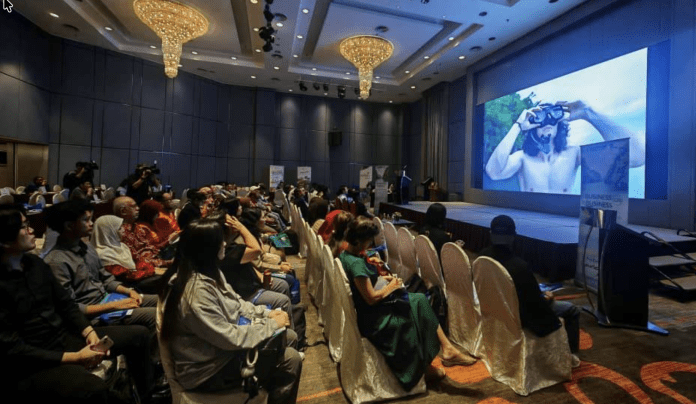
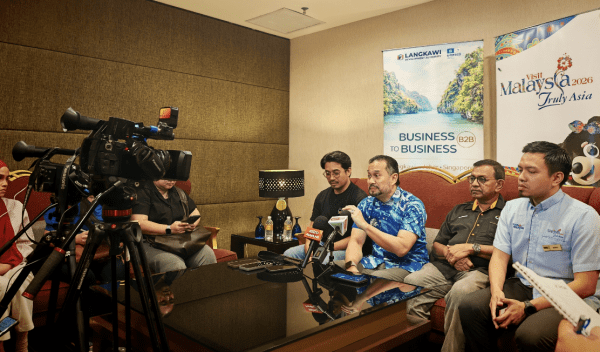
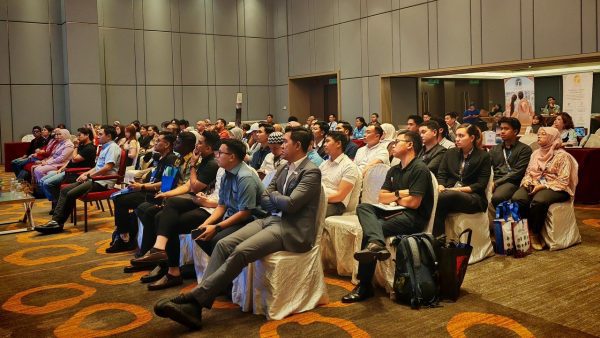
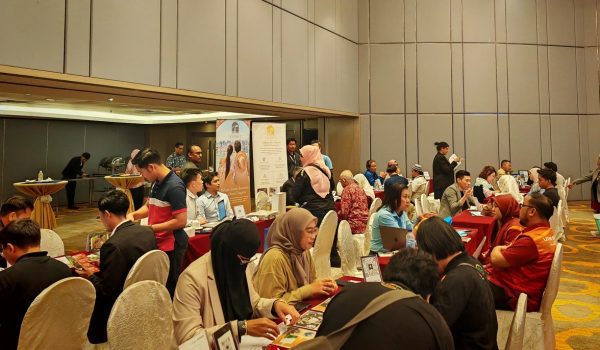
JOHOR BAHRU, Malaysia, 10 April 2026: The Langkawi Development Authority (LADA) strengthened its regional growth strategy on Thursday through a high-impact Business-to-Business (B2B) engagement session at the Grand Paragon Hotel, Johor Bahru. 

By bringing together Langkawi’s tourism innovators and key hosted buyers, this initiative serves as a cornerstone of LADA’s mission to elevate the island’s visibility in short-haul markets while fostering the professional collaborations necessary for sustainable tourism growth.

The importance of this engagement is underscored by the deep-rooted travel links between Langkawi and its southern neighbours, which remain vital drivers of the island’s economy. These markets continue to demonstrate remarkable resilience; as of Q3 2025, Langkawi recorded 52,867 visitors from Johor and 48,119 from Singapore. To capitalise on this momentum, the B2B programme serves as a dedicated growth engine, enabling industry players to move beyond general promotion and identify strategic partners to actively expand Langkawi’s marketing reach.

By facilitating these direct, face-to-face engagements, LADA creates a productive environment for business negotiations and the development of joint travel packages. This collaborative approach allows service providers to align their offerings with precision, responding to the evolving demands of modern travellers with greater agility.

As these partnerships solidify, they unlock access to higher-value segments, including the MICE (Meetings, Incentives, Conferences and Exhibitions) sector, premium family travel and niche special-interest groups.

Building on these professional synergies, the resulting cross-border packages further enhance Langkawi’s regional appeal by offering travellers more structured, seamless and value-driven experiences. Such curated offerings provide the commercial depth required to encourage longer stays and drive repeat visitation, which is essential for a sustainable tourism ecosystem. These efforts are aligned with the national agenda, directly supporting the Visit Malaysia 2026 campaign while reinforcing the “Naturally Langkawi” brand on the global stage.

The success of this strategy is further supported by direct connectivity between Langkawi, Johor and Singapore, which remains a key driver of visitor arrivals. When paired with focused promotional efforts, this accessibility ensures Langkawi maintains a strong competitive position within the regional landscape. Collectively, these initiatives represent a significant step towards achieving Langkawi’s target of 3.65 million tourist arrivals by 2026.

For more information on Langkawi’s tourism attractions, visit: Naturally Langkawi

About Naturally Langkawi
Naturally, Langkawi is a story 550 million years in the making. Blessed with a nature that is beautifully unique, wonderfully rare, and vastly accessible, Langkawi envelopes the 99 islands and the people who live there, creating a culture rich with stories as unique as the archipelago itself. A land steeped in captivating legends, myths and folklore as interesting as the people who tell them. It is a place full of diverse, incredible experiences where moments naturally become memories.

(Source: Your Stories — LADA)

Celebrate Songkran with a festive feast and Thai tipples

Samui Island, 10 April 2026: For Songkran 2026, Centara Reserve Samui presents a two-day programme shaped around how the Thai New Year is truly meant to be enjoyed; beginning with morning rituals, moving into festive gatherings, and concluding over shared food and live music to set the scene for an unforgettable evening experience.

From 12 to 13 April, guests will feel at the centre of the festivities through traditional ceremonies, live performances, expertly curated Thai cuisine, and cocktails crafted from local Thai spirits.

Sunday 12 April: Songkran Beachfront Brunch

Salt Society Beach Bar & Kitchen hosts a Songkran brunch accompanied by a drum parade moving through the resort before live DJ and band performances lead into water celebrations along the shoreline.

The “Vitamin A” brunch option includes soft drinks and is priced at THB 2,088++ per person (with a 50% discount for children ages 4 to 11). The “Vitamin B” brunch package at THB 3,588++ includes soft drinks, wine, beer and cocktails, while “Vitamin SEA” priced at THB4,188++ also adds sparkling Prosecco. The cocktail selection focuses on Thailand’s craft distillation: cocktails are prepared with Chalong, Dandy, Saneha, and Lanna spirits, and are inspired by Thai ingredients and flavours.

Monday 13 April: Ceremony and Evening Feast

The morning begins with monks leading the Rod Nam Dum Hua blessing ceremony, where guests offer water as a gesture of respect and receive blessings for the year ahead. A traditional procession follows, easing into Songkran water celebrations across the property.

In the evening, Act 5 – The Grill presents a Songkran buffet dinner from 1830 to 2230, featuring Thai live music, dances, and a fire show.

The menu highlights celebratory Thai dishes prepared across live stations and buffet counters, including:

  • Pad Thai Goong Sod – Wok-fried rice noodles with prawns cooked to order;
  • Gai Gab Moo Yang – Charcoal-grilled pork neck and marinated chicken;
  • Hor Mok Pla – Steamed fish custard in a banana leaf;
  • Gaeng Massaman Gai – Slow-stewed chicken Massaman curry;
  • Nuea Pad Nam Man Hoi – Wok-fried Wagyu beef with oyster sauce;
  • Yum Thai and Khao Phad Puu – Tossed spicy Thai salads and crab meat fried rice;
  • Traditional desserts complete the meal, including Look Chup – moulded mung bean sweets and Khao Niew Mamuang – fresh mango with sweet sticky rice, prepared live.

Dinner is priced at THB1,900++, including a welcome drink, with optional beverage packages available.

An outdoor cocktail bar continues the celebration into the evening, offering locally inspired drinks and a guest mixologist’s four-cocktail tasting flight, with this special drinks package – inspired by Thai spirits and flavours priced at THB999++.

Stay Experiences

Guests staying during the period can pair the celebrations with the resort’s signature stays: The Reserve Journey, The Suite Reserve Experience and The Villa Reserve Experience, which remain bookable throughout the special holiday period.

Songkran at Centara Reserve Samui centres on the festival’s essentials: paying respects in the morning, gathering together in the afternoon, and sharing vibrant celebrations in the evening, all experienced through Thai cooking, music, and spirits throughout the festival.

Reservations:

To reserve your dining experience, please email [email protected] or call +66 (0) 77 230 550.

Discover room offers at: https://www.centarareserve.com/samui

(Source: Your Stories — Centara Hotels & Resorts)

Air India revises fuel surcharges

DELHI, 10 April 2026: Air India group has announced further revisions to its fuel surcharge structure across domestic and international routes, effective on 8 April.

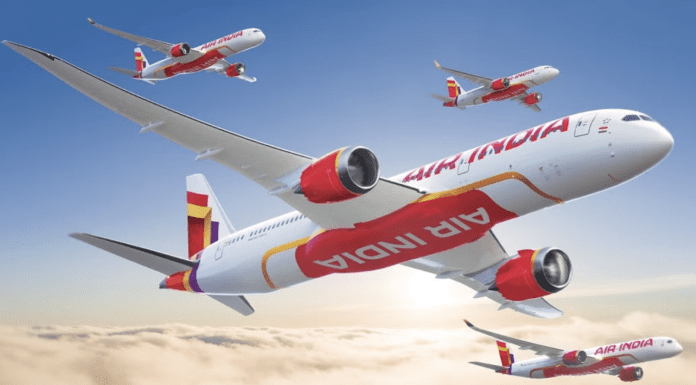
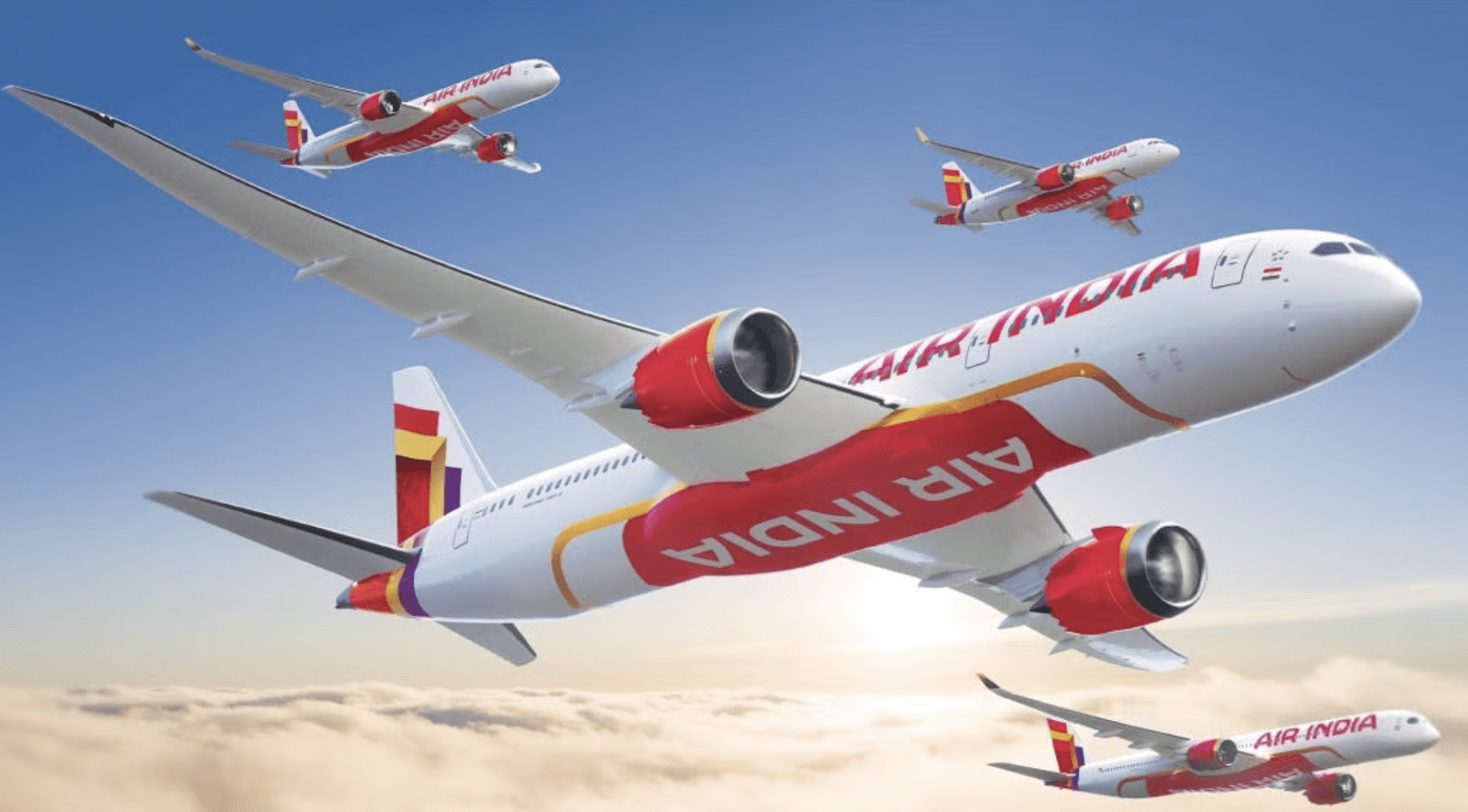
Photo credit: Air India.

Fuel surcharge on domestic India routes

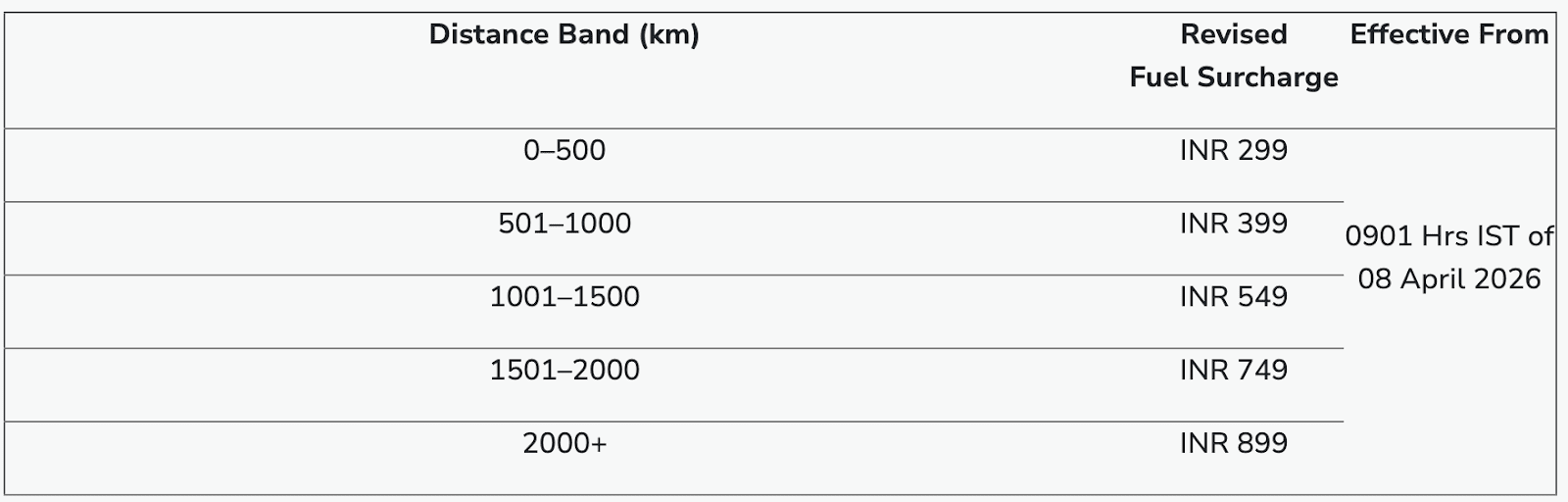
Following the Ministry of Petroleum & Natural Gas’ and Ministry of Civil Aviation’s decision to cap domestic Aviation Turbine Fuel (ATF) price hike at 25%, Air India group is reflecting this calibrated approach, transitioning from a flat domestic surcharge to a distance‑based grid as follows on Air India and Air India Express. 

FUEL SURCHARGE PER PASSENGER, PER SECTOR

Fuel Surcharge on International Routes

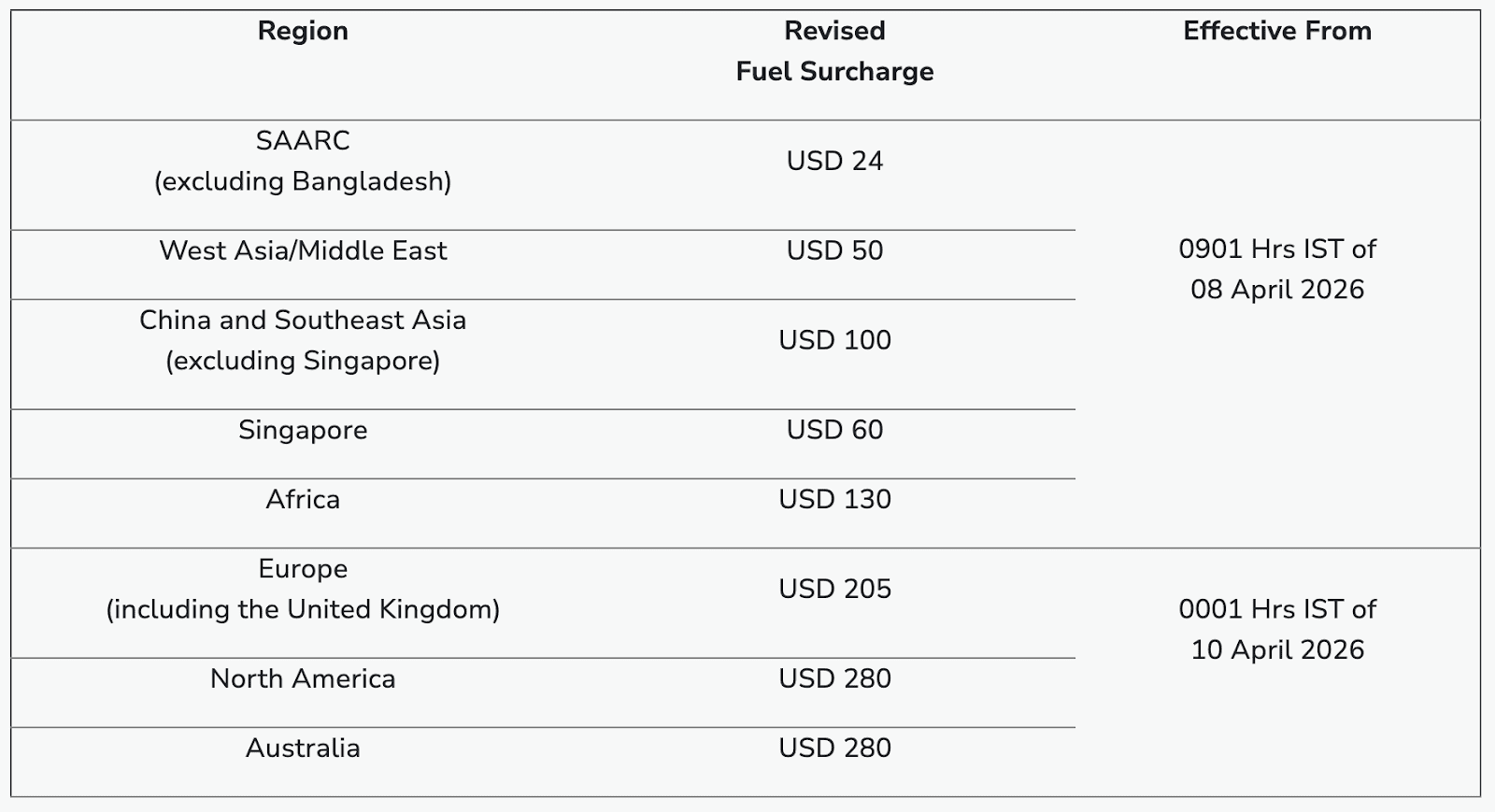
At the same time, in the absence of any such mitigations on international ATF prices, the Air India group will be implementing more significant changes to fuel surcharges as follows.

According to the latest data published by the International Air Transport Association (IATA), the global average jet fuel price rose to USD 195.19 per barrel for the week ending 27 March 2026, up from USD 99.40 at the end of February, representing a nearly 100% increase. ATF, produced by refining crude oil, has seen simultaneous increases in both its crude oil component as well as the refinery margin, known as ‘crack spread’, with the latter having nearly tripled within three weeks. It increased from USD 27.83 per barrel for the week ending 27 February to USD 81.44 for the week ending 27 March. This steep rise compounds the impact of rising crude oil prices, creating one of the most challenging fuel cost environments that airlines globally have faced in recent years.

The fuel surcharges on international routes do not compensate for the exponential increase in jet fuel prices. Air India continues to absorb a significant portion of this increased cost.

FUEL SURCHARGE PER PASSENGER, PER SECTOR – BY REGION

Revisions to fuel surcharge on flights to and from Bangladesh and Far East destinations, namely Japan, Hong Kong, and South Korea, will be advised in due course, subject to the requisite regulatory approvals. 

Tickets issued before the above times will not incur the new surcharge unless customers request date or itinerary changes that require a fare recalculation.

The airline says it will review its surcharges periodically and make any necessary adjustments.

(Source: Air India)

AirAsia wins Influential Brand award

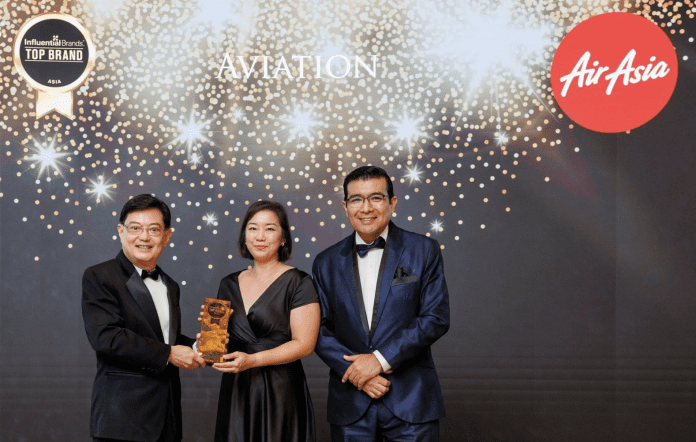
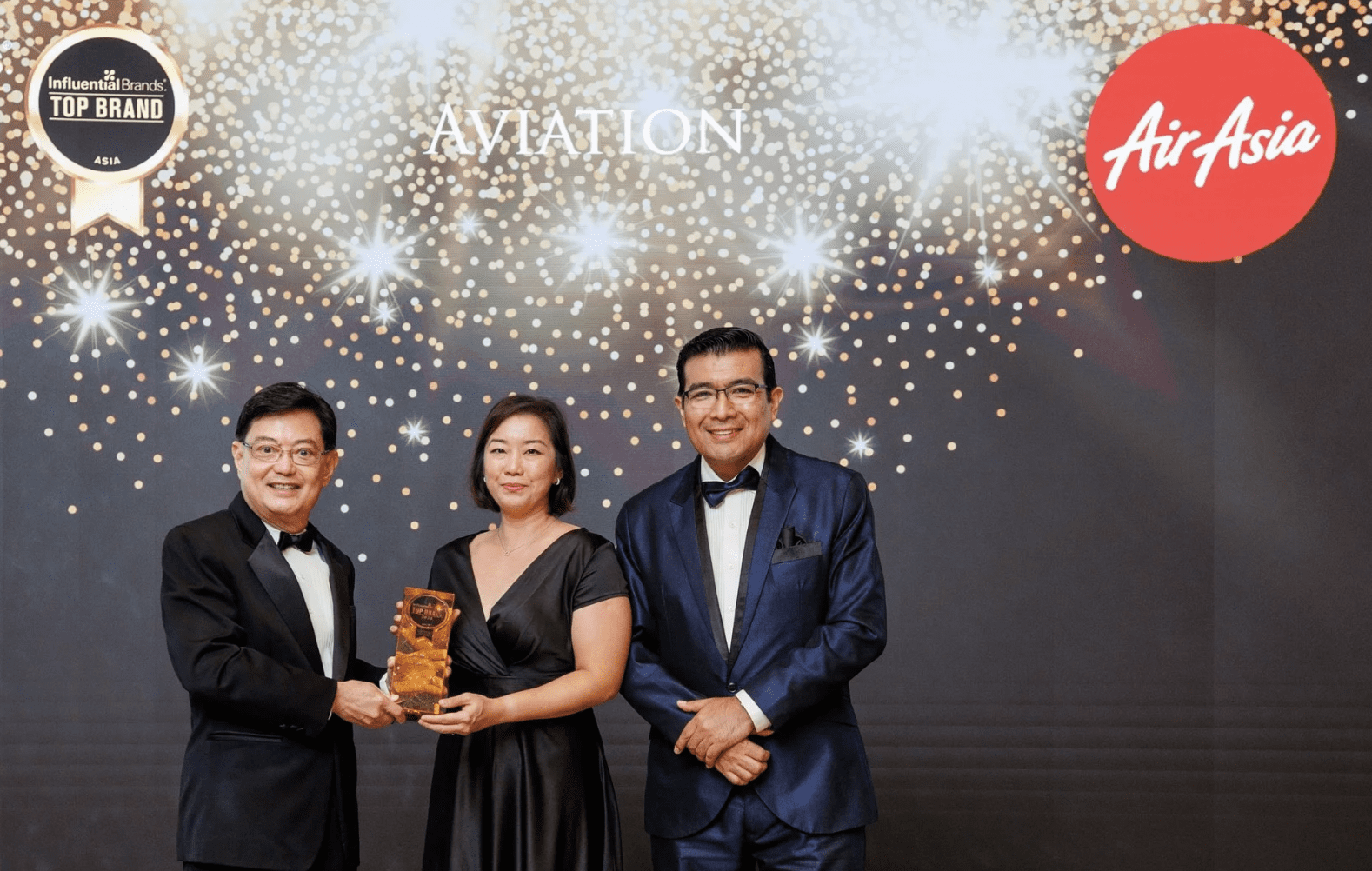
SINGAPORE, 10 April 2026: AirAsia was once again named the Top Influential Brand in the Airline category at the 2026 Asia CEO Summit & Awards Ceremony organised by Influential Brands 

Marking the airline’s second consecutive win in the category, the award continues to recognise AirAsia’s position as the largest foreign low-cost carrier by market share in Singapore. It reflects its continued commitment to delivering affordable, accessible and high-quality travel experiences for guests across the region.

Photo credit: AirAsia. (Middle): Shahidah Musa, Senior Manager, Marketing of AirAsia in Singapore, accepted the Top Influential Brand award in the Airline category last night at the 2026 Asia CEO Summit & Awards Ceremony.

The Top Influential Brand award, presented annually by Influential Brands during the Asia CEO Summit & Awards Ceremony, honours companies that have significantly shaped consumer preferences and industry benchmarks. The award recognises brands that demonstrate strong brand equity, innovation and sustained customer engagement across a range of sectors.

(Source: AirAsia)

United sets new fare structure

SINGAPORE, 10 April 2026: United has introduced a new tiered fare structure, giving customers more options across all ticket types.

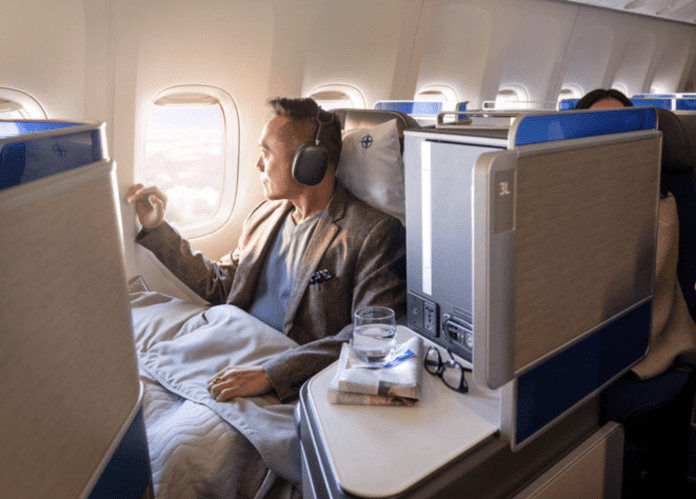
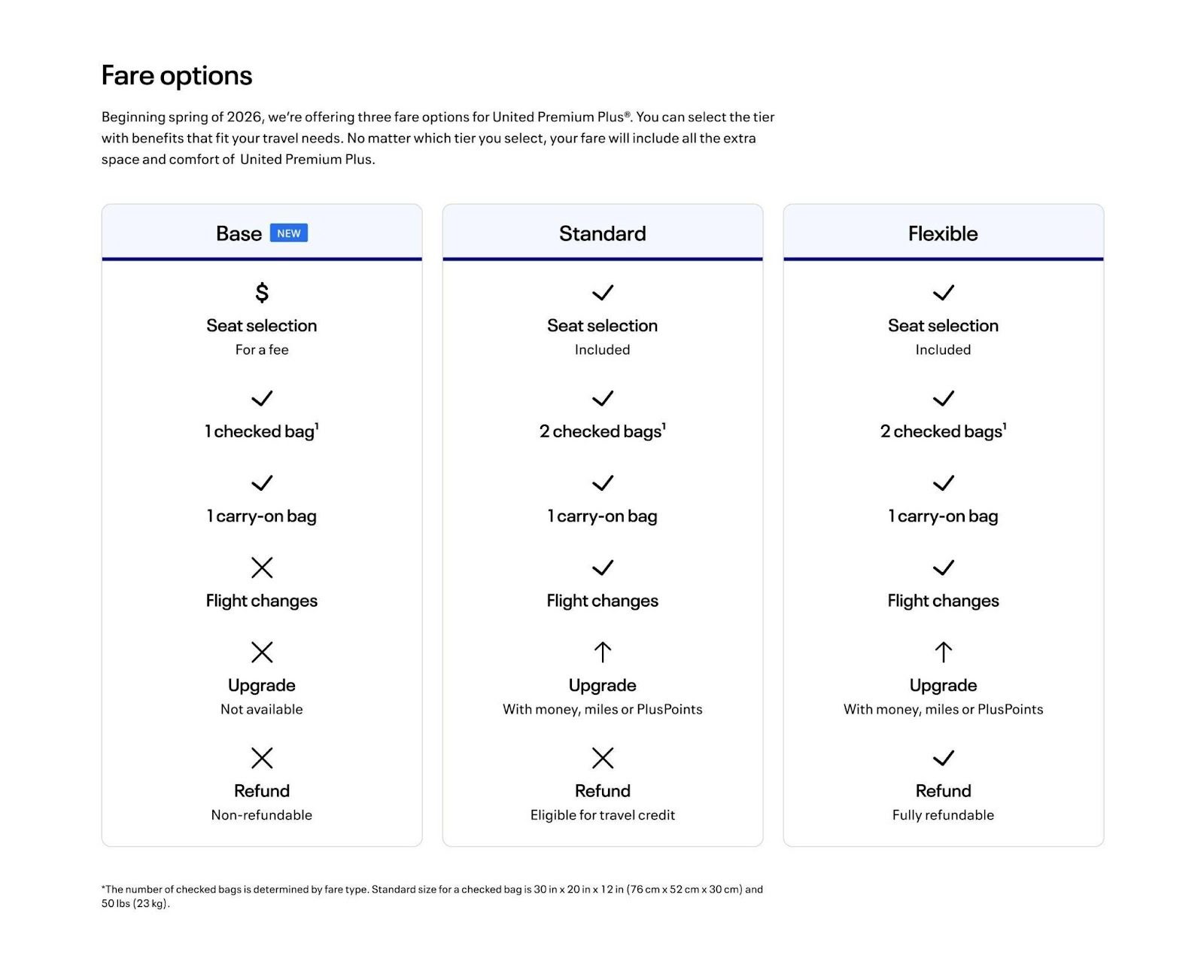
The airline will offer three premium cabin fare options for long-haul international flights, transcontinental US flights, and select flights to Hawaii. They are base (new offer) standard and flexible, in the premium cabin, which will join the airline’s existing standard and flexible fares tiers in the economy cabin.

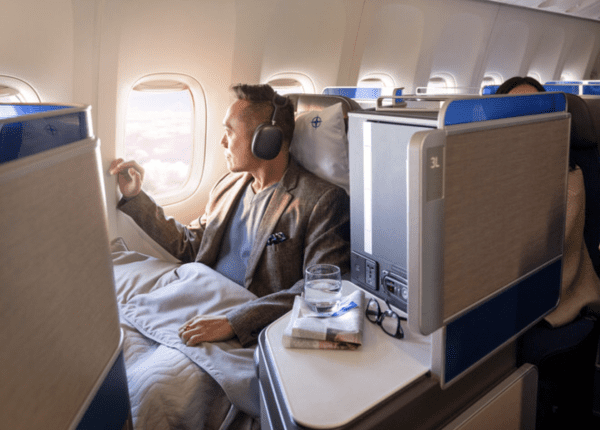
Photo credit: United.

The front cabin will also be branded United Polaris on select transcontinental US and select longer Hawaii flights. Customers who buy the standard or flexible fares in United Polaris on these flights will have access to the United Polaris lounge. Customers who purchase the base United Polaris option will still have access to the United Club.

United has also redesigned the shopping pages on its website and mobile app to accommodate this change and launch the new categories in select markets during April. It will expand the fares to additional long-haul international, transcontinental US and longer Hawaii flights later this year.

“These new tiered options give customers more choice and make it easier to find a fare that includes the benefits they want most – whether that’s a great value, added perks, or maximum flexibility,” said United’s Chief Commercial Officer Andrew Nocella. 

For domestic and short-haul international flights, and for travel in United economy cabins on long-haul international flights, there’s no change to what’s included in the basic, standard, and flexible categories. They will simply be displayed on United’s shopping pages in a new, clearer way.

In premium cabins on long-haul international and transcontinental US flights and flights between the airline’s hubs in Newark, Washington D.C. and Chicago and Hawaii, the base category offers customers the lowest price point, the standard category offers perks like free seat selection, additional checked bags and the ability to make changes, and tickets in the flexible category are fully refundable and offer all the benefits included in standard tickets. 

(Source: United Airlines)