BANGKOK, 17 September 2026: Minor Hotels has announced the signing of Anantara Jadcherla Hyderabad Resort, a 37-acre waterfront development in southern India’s Telangana state.
Scheduled to open in 2029, the resort is Ashya Group’s first hospitality project.
Anantara Jadcherla Hyderabad Resort Signing Ceremony (Left to Right): Seshidhar Mukkasa, Principal Consultant, Maven Hospitality Consultants; Shashider Reddy Munugala, Founder & CEO, ASHYA Group; Sonu Sood, Actor; William E Heinecke, Chairman & Founder, Minor International; Omar Romero, Chief Development and Luxury Officer, Minor Hotels
Located outside of Hyderabad, the resort site sits a 60-minute drive from Hyderabad’s Rajiv Gandhi International Airport (approximately 71 km) and a one-and-a-half-hour drive from the Hyderabad city centre (approximately 90 km), placing it within easy reach of one of India’s fastest-growing metropolitan markets while remaining immersed in an undisturbed, nature-led setting.
Anantara Jadcherla Hyderabad Resort will comprise 185 keys, with rooms starting at 48 sqm, and will include 47 pool villas ranging from 90 to 280 sqm. An additional 50 branded residences will be developed adjacent to the resort, extending Anantara’s luxury hospitality to owners seeking a permanent address on the reservoir.
The resort will feature dining options, including an all-day dining venue, two speciality restaurants, and a wellness café, plus a lobby lounge and poolside bar.
Leisure facilities will include an Anantara Spa, a fitness centre, an outdoor pool, and a kids’ club. The resort will also cater to destination events and meetings with its ballroom, multiple breakout rooms and an event lawn for outdoor functions.
Minor International Chairman & Founder William E Heinecke noted: “Anantara Jadcherla Hyderabad Resort reflects what the Anantara brand does best — it brings guests closer to the authentic character of a destination. The project’s waterfront setting and distinctive design vision allow us to build that immersion properly. Partnering with Ashya Group on this project marks a significant step in strengthening our presence across Southern India.”
Anantara Jadcherla Hyderabad Resort is the latest addition to Minor Hotels’ expanding presence in India. The group introduced the Anantara Hotels & Resorts brand to the country in 2025 with the opening of the Anantara Jewel Bagh Jaipur Hotel. Anantara Jadcherla Hyderabad Resort joins a growing pipeline of projects in India as Minor Hotels works towards its target of 50 properties within the next decade, including Anantara Zanti Coorg Resort and Anantara Kolkata Hotel, announced in April 2026 and Avani+ Sunray Beach Visakhapatnam Resort in 2025.
HONG KONG, 16 September 2026: Airports Council International Asia-Pacific & Middle East secured regional support for action on airport and airspace capacity, modernising airport slot policies and strengthening climate resilience at the 61st ICAO Conference of Directors General of Civil Aviation (DGCA) for the Asia and Pacific Regions, held in Kuala Lumpur from 7 to 11 September 2026.
ACI APAC & MID presented three discussion papers to the conference. Its joint paper with the Civil Air Navigation Services Organisation (CANSO) assessed airport and airspace capacity. Other recommendations called for modernising airport slot policies and highlighted practical programmes and tools to help airports strengthen climate resilience and advance towards Net Zero.
Photo credit: ACI. Delegates attending the 61st ICAO DGCA.
Key outcomes
Airport and Airspace Capacity: The DGCA Conference supported the partnership between ACI APAC & MID and CANSO, which aims to assess airport and ATM capacities in the region and whether these capacities will meet future traffic growth. This initiative highlights the need to expand, optimise, and improve airport and air traffic management (ATM) capacity in tandem. This collaboration is strategically important as the Asia-Pacific and Middle East regions prepare for significant growth in air travel.
Airport Slot Policy: ACI APAC & MID highlighted the importance of maintaining the fundamental principles of the airport slot allocation framework while improving its efficiency and effectiveness. The conference encouraged States to continue stakeholder discussions to improve slot allocation efficiency.
Climate Action: States and Administrations are encouraged to recommend that their airports participate in the ACI APAC & MID Net Zero Roadmap and use the complimentary Climate Risk Maturity Check Tool and Climate Risk Assessment Tool to strengthen preparedness and long-term resilience. This paper received support from various States, particularly the Pacific Island States.
Commenting on the outcomes, ACI APAC & MID Director General Stefano Baronci said: “Asia-Pacific and the Middle East continue to be the world’s fastest-growing aviation markets. Meeting this growth will require close cooperation between governments, regulators and industry to ensure that airport infrastructure, airspace capacity and policy frameworks evolve in step with demand. As a voice of airports, we are pleased to bring the airport perspective to these discussions and support practical policies that enhance capacity, operational efficiency and airport climate action across the sector.”
Additionally, through Information Papers, ACI APAC & MID highlighted key challenges and priorities for the region’s airports:
Airport Security and Facilitation: Addressed the operational challenges facing airport security amid rapid traffic growth and the need to ensure that security and facilitation measures keep pace with rising passenger demand.
The State of the Asia-Pacific Airport Industry: Examined the region’s airport industry, highlighting traffic growth, financial pressures and the need for continued infrastructure investment to meet future demand.
SINGAPORE, 17 September 2026: Air Astana will resume scheduled services to Dubai from Almaty starting 1 October 2026 and from Astana starting 2 October 2026.
Photo credit: Air Astana
Flights will gradually increase in October.
Almaty–Dubai–Almaty: starting with four flights per week and increasing to 12 flights per week by the end of the month.
Astana–Dubai–Astana: starting with three flights per week and increasing to 10 flights per week by the end of the month.
Air Astana continues to monitor developments in the region closely and may adjust the flight schedule depending on the situation in the Middle East.
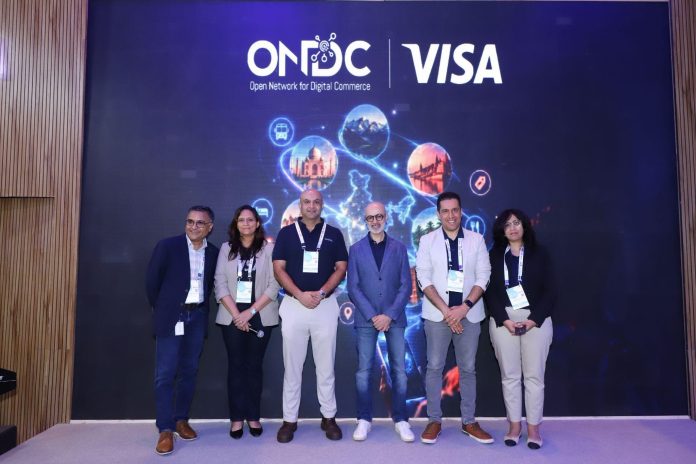
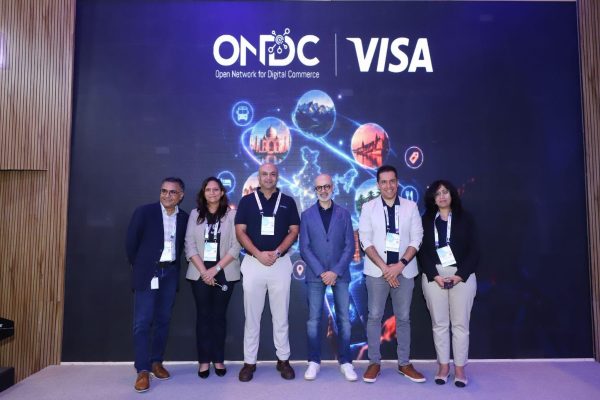
MUMBAI, 17 September 2026: At the Global Fintech Festival 2026, Visa and the Open Network for Digital Commerce (ONDC) announced their intent to explore collaboration to enhance tourism discovery and digital commerce experiences in India.
The proposed collaboration seeks to bring together Visa’s expertise in trusted digital commerce and intelligent discovery experiences with ONDC’s open network infrastructure, with the shared objective of simplifying how travellers discover experiences, itineraries and tourism offerings across the country. The exploration aims to make tourism discovery more seamless and accessible while helping travellers connect with destinations, experiences, and local businesses across India.
Photo credit: Visa.
Speaking at the Global Fintech Festival 2026, Visa Group Country Manager, India & South Asia, Suresh Sethi said: “India has taken a very futuristic approach in terms of how we can digitally connect people, and that is on open networks. When a global Indian is travelling out, or when somebody is coming from overseas, you are really looking for places where you can discover the experiences you can get in India.
“We also see many agents being used to curate and create journeys, helping people discover experiences. India has its own homegrown digital public infrastructure, creating opportunities for digital commerce, and we realise tourism can be a key asset where ONDC can serve as the country’s digital infrastructure for tourism.
“Everything related to tourism, whether discovering experiences, cities or travel itineraries, as well as small and medium businesses in the ecosystem, can potentially be housed in one place. ONDC brings the trust of a homegrown India digital public infrastructure, while Visa brings trusted discovery experiences. Together, the two can create a superlative experience for anyone considering India as a destination. We are delighted to be exploring this opportunity with ONDC.”
As part of this exploration, Visa and ONDC will evaluate opportunities to leverage open network principles, trusted commerce and digital innovation to create richer tourism discovery experiences and support India’s ambition of becoming an even more accessible and attractive destination for travellers. The collaboration will also explore ways to support tourism participation across destinations, regions and local economies through an open and trusted digital ecosystem.
MELBOURNE, 17 September 2026: Japan is on the cusp of a major milestone, with Australian visitor numbers reaching 990,950 in the year to July 2026, just shy of the 1 million mark.
The result comes as Australians took a record 12.76 million overseas trips over the same period, new Australian Travel Industry Association (ATIA) Travel Trends data shows.
Outbound travel grew 3.5% for the year, while international visitor arrivals reached 9.07 million, up 6.9%. Vietnam was the fastest-growing destination overall, Indonesia remains the most popular, and New Zealand remains Australia’s largest visitor market.
The findings come from the ATIA September 2026 Travel Trends Report, based on ABS and Department of Infrastructure data analysed by ATIA.
Reporting periods: overseas arrivals and departures to July 2026; international airline market share to May 2026; domestic airline capacity for June 2026.
Japan nears a new high
Japan is on track to become the next market to cross the 1 million mark, following in New Zealand’s footsteps. Australian visitor numbers there climbed 8.5% to July, edging closer to the milestone with each new month of data.
Vietnam and China power an outbound boom
Vietnam was the fastest-growing destination for Australian travellers this year, up 15.9% to 577,880 visitors. China wasn’t far behind: outbound travel there rose 13.4% to 749,130, while Chinese visitor numbers to Australia jumped 17.6% to 1,131,650, the strongest inbound growth of any market.
Indonesia and New Zealand hold their place as favourites
Indonesia remains the destination Australians visit most, with 1.79 million trips through July. New Zealand remains Australia’s largest visitor market, with 1.43 million arrivals over the same period, as Hong Kong (up 9.2%) also climbed the inbound rankings.
More Australians flying than ever
Airlines flew fuller planes than ever on Australia’s busiest domestic corridors, with load factors climbing on nine of the ten busiest routes. Melbourne-Sydney and Adelaide-Melbourne led the way, both up six percentage points to 85% full.
Qantas and Jetstar now carry one in three international passengers travelling to and from Australia, up from a combined 30.6% a year earlier. At the same time, Malaysia Airlines was the biggest mover, climbing from 2.4% to 3.9% market share.
Commenting on the performance, ATIA CEO Dean Long said: “Japan is knocking on the door of one million Australian visitors a year, and that’s a huge milestone for what has become one of our most popular destinations. We wouldn’t be surprised to see it cross the line in our next report.
“Vietnam and China are where the growth is right now, and we expect airlines to keep adding capacity to the region to keep pace with that demand.
“Indonesia and New Zealand remain the two markets our members know best, and it’s fantastic to see them holding firm as the growth story in Asia keeps building around them. Our accredited agents and tour operators are working hard every day to keep that momentum going in both directions.”
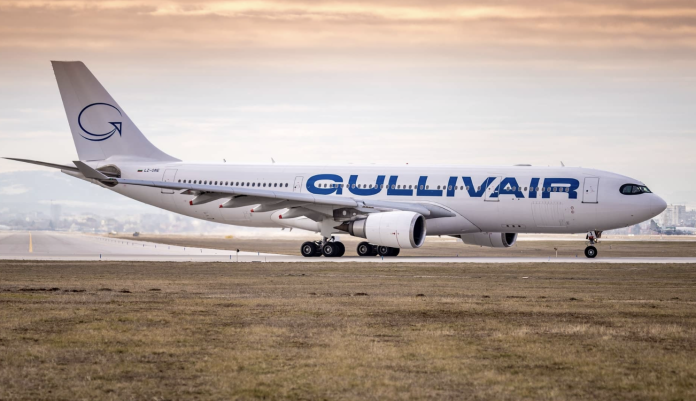
BANGKOK, 17 September 2026: Bulgarian airline GullivAir will launch flights connecting Bangkok and Phuket with Sofia starting 5 November 2026.
Weekly direct flights to Bangkok from the airline’s home base in Sofia (SOF) are scheduled to operate from 5 November 2026 until 26 March 2027, while Sofia-Phuket flights are scheduled until 21 March 2027, using an Airbus A330-200 wide-body aircraft with 326 seats.
Photo credit: GullivAir. Airbus A330-200.
GullivAir will operate direct services from Sofia to Phuket every Thursday, while Bangkok will be served twice weekly, with departures from Sofia on Thursdays and Saturdays. Return flights from Phuket will operate every Sunday, while Bangkok-Sofia services will depart on Fridays and Sundays. All departure and arrival times are local.
The new services will allow travellers from Thailand to reach Bulgaria directly, without changing aircraft at another international hub before arriving in Sofia. At the same time, the flights will provide passengers travelling from Bulgaria with direct access to two of Thailand’s most popular destinations.
Flight schedule Sofia-Bangkok
G2501 departs Sofia (SOF) at 1945 and arrives in Bangkok (BKK) at 1555 G2502 departs Bangkok (BKK) at 1210 and arrives in Sofia (SOF) at 2300
G2501 departs Sofia (SOF) Thursday at 1620 and arrives in Bangkok (BKK) at 0855 the next day G2502 departs Bangkok (BKK) Sunday at 1855 and arrives in Sofia (SOF) at 0500 the next day
Flight schedule Sofia-Phuket
G2701 departs Sofia (SOF) Thursday at 1620 and arrives in Phuket (HKT) at 0600 the next day G2702 departs Phuket (HKT) Sunday at 2305 and arrives in Sofia (SOF) at 0500 the next day
For travellers from Thailand, the new winter timetable also opens direct access to a lesser-known European destination offering winter and ski resorts, natural mineral-water SPA experiences, historic cities, and cultural heritage.
A new direct gateway from Thailand to Bulgaria
The new routes provide travellers from Thailand with direct access to Sofia, Bulgaria’s capital and largest city.
For passengers travelling from Bangkok and Phuket, this creates a new alternative to itineraries that traditionally require a transfer through another major aviation hub before reaching Bulgaria.
The routes are also expected to support tourism, business travel and stronger cultural and economic links between Thailand and Bulgaria.
Discover a different side of Europe
Once passengers arrive in Sofia, the new services open the door to a European destination offering a wide variety of experiences within relatively short distances.
Bulgaria combines historic cities, snow-covered mountains, ski resorts, natural mineral springs, traditional cuisine, wine, cultural heritage and contemporary urban life.
From November to March, Bulgaria becomes a winter destination with snow, mountains and established ski resorts. Among the best-known are Bansko, Borovets and Pamporovo.
Travellers can ski or snowboard, enjoy mountain scenery and winter resorts, or experience snow and the atmosphere of a European winter holiday.
Bansko combines skiing with a traditional old town, while Borovets, located in the Rila Mountains, is within easy reach of Sofia.
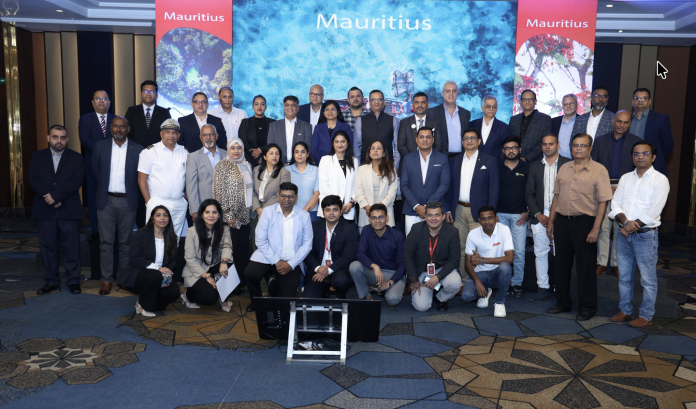
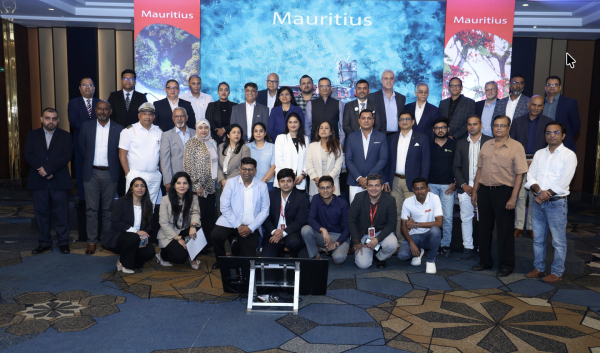
NEW DELHI, India, 17 September 2026: Mauritius Tourism Promotion Authority has deepened its engagement with India through a four-city initiative across Pune, Chennai, Kolkata and Hyderabad.
It marks the third marketing operation in the country since January 2026 — reaffirming the country’s importance as a key tourism market and strengthening the longstanding cultural and people-to-people ties between Mauritius and India.
Photo credit: MTPA. Promotions in four Indian cities — Pune, Chennai, Kolkata and Hyderabad.
From January to July 2026, Mauritius welcomed 51,005 Indian visitors, up 14.5% year on year. The rise reflects the destination’s continued popularity among Indian travellers and growing interest across a wider range of travel segments.
The four cities were selected for their growing outbound travel potential and role as regional travel hubs. The initiative brought together 20+ tourism partners from Mauritius, including hotels, DMCs and airlines, for direct interactions with travel professionals across the markets.
The engagements highlighted Mauritius beyond its established appeal for beach holidays, honeymoons and weddings, showcasing opportunities across leisure, family travel, luxury, MICE, wellness, golf, gastronomy and adventure. Travel advisors also gained insights into evolving traveller preferences and the destination’s diverse accommodation and experience offerings, helping them develop more varied Mauritius itineraries for their clients.
Held ahead of the upcoming travel season, the initiative also allowed the trade to familiarise themselves with the latest destination offerings and plan programmes well in advance.
For Indian travellers, Mauritius combines its beaches with a rich cultural heritage, nature, adventure, gastronomy, wellness and wildlife. Experiences such as Grand Bassin, Aapravasi Ghat, Chamarel, Black River Gorges, Le Morne Brabant and Casela offer opportunities to discover the island beyond its coastline.
The destination also benefits from visa-free access, a multicultural and multilingual population, widely available Indian culinary options, established hospitality infrastructure and direct air connectivity from key Indian cities, further supporting its appeal to the Indian market.
Commenting on the Indian outbound travel market, Mauritius Tourism Promotion Authority Director – India, Benoit Harter, said: “India is much more than an important tourism market for Mauritius; it is a market with which we share deep cultural and historical connections. By engaging with the market ahead of the travel season, we wanted to give our partners the time and confidence to plan and promote Mauritius more effectively.”
MTPA will continue to build on its India strategy through trade partnerships, familiarisation trips for travel agents, media initiatives, and targeted activity across major cities and emerging travel markets, focusing on presenting Mauritius as a diverse, accessible, year-round destination for Indian travellers.
Connectivity between India and Mauritius is supported by three carriers — Air Mauritius, IndiGo, and Air India — making Mauritius accessible from cities across India to the Sir Seewoosagur Ramgoolam International Airport, the island’s gateway.
Indian passport holders benefit from visa-free entry, with the visa issued free of charge on arrival at the airport, removing the need for any pre-travel paperwork. The island’s multicultural, multilingual character further eases travel: English, French, Creole, Hindi, and Bhojpuri are widely spoken, and Indian cuisine, festivals, and places of worship are part of everyday life—giving Indian visitors a sense of familiarity from the moment they arrive.
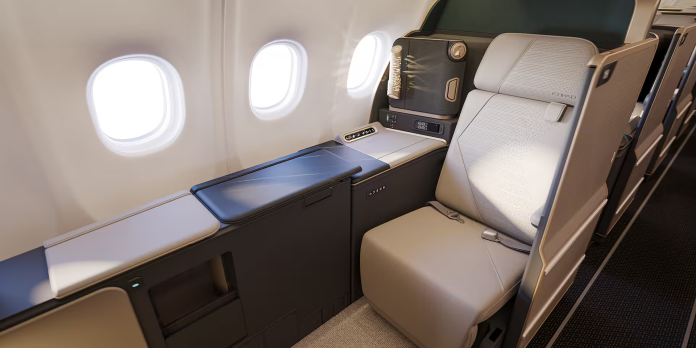
ABU DHABI, UAE, 16 September 2026: Etihad Airways launched its Beyond Borders product and experience at the Arabian Travel Market, 14 to 17 September, featuring Etihad’s new Airbus A330 cabin with all-new First, Business and Economy interiors.
Alongside the A330, Etihad showcased how the Beyond Borders look and feel will extend to the A321LR across First, Business and Economy, creating greater consistency across the Etihad journey.
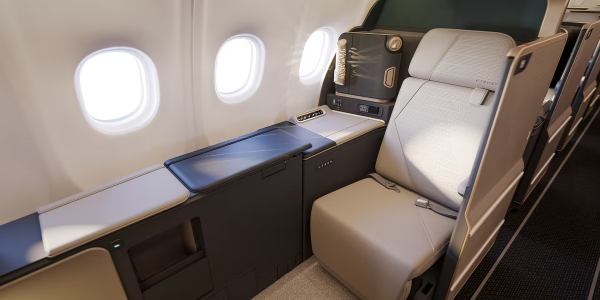
Photo credit: Etihad: New business cabins on its A330neo.
The A321LR has already demonstrated Etihad’s ambition to push beyond traditional expectations, bringing First suites and fully lie-flat Business seats to a single-aisle aircraft. The product has exceeded expectations, with guests actively choosing services operated by the A321LR.
The Beyond Borders product and experience will bring greater consistency across the Etihad journey. Cabins, lounges and ground services, dining, amenities, wellbeing and connectivity will increasingly form part of one connected proposition for guests. Etihad is also doubling down on First, bringing its distinctive First experience to more aircraft, more routes and more guests.
Etihad is investing USD20 billion in new aircraft and customer experience to support its continued growth, including a USD1 billion fleet retrofit programme.
The new A330 experience
Etihad’s new Airbus A330 will enter service from September 2027, with 15 A330s joining the fleet over five years. The aircraft will support the airline’s continued growth across regional and medium-haul markets, offering a three-cabin experience designed for routes where demand for premium travel, flexibility and capacity continue to grow.
At the front of the aircraft, four First suites create an intimate cabin. Each suite features a closing door for added privacy, together with space for a companion to dine or socialise during the flight.
Each First suite will feature a 32-inch screen, wireless charging, dedicated compartments and personal stowage, alongside a personal powder station stocked with premium amenities for guests to use during their journey and take with them after the flight.
The First experience brings together personalisation, Etihad hospitality, dining and an elevated end-to-end journey, creating a distinctive First experience for the A330.
The Business cabin features 24 fully lie-flat seats, all forward-facing with direct aisle access and sliding doors for added privacy. Each seat includes a 17.3-inch screen, wireless and wired charging, a large table and dedicated personal stowage.
Economy features 252 seats in a bright, calm cabin environment, with Etihad’s bespoke fixed-wing headrest embossed with the airline’s logo, 13.3-inch 4K touchscreens, and convenient personal charging. A dedicated Extra Legroom section includes 32 seats with four inches of extra pitch for added comfort.
The A330 will play an important role in Etihad’s regional and medium-haul network, bringing greater flexibility to high-demand routes across Europe, Asia and the Middle East. Its three-cabin configuration brings the full Etihad premium experience, including First, to these important markets.
SINGAPORE, 16 September 2026: Railbookers Group, an independent rail holiday operator, is making rail holidays across Europe, North America and beyond easier for Singapore travellers to book by packaging trains, hotels, sightseeing and transfers into a single arrangement.
The company opened its Singapore hub in October 2025, its sixth source market alongside Australia, Canada, New Zealand, the UK and the US. It now offers more than 5,200 rail journeys worldwide.SINGAPORE, 16 September 2026: Railbookers Group, an independent rail holiday operator, is making rail holidays across Europe, North America and beyond easier for Singapore travellers to book, packaging the train, hotels, sightseeing and transfers into a single arrangement.
Photo credit: Railbookers. Bernina Express.
The company opened its Singapore hub in October 2025, its sixth source market alongside Australia, Canada, New Zealand, the UK and the US. It now offers more than 5,200 rail journeys worldwide.
New Asian itineraries, beginning with Vietnam, will also join the range over the coming year.
Each itinerary can be booked as soon as the next day or up to two years ahead, and because trains run on any day the service operates, there are no fixed departure dates to work around. Travellers set their own timing instead of working around a group’s and move between destinations without the hassle of air travel.
The approach is built around the part travellers find hardest to do themselves. Ticketing systems, booking windows, seat reservation rules and overnight service conditions differ between countries and between operators, and a single mistake can unpick a whole trip. A 24-hour global hotline covers travellers and agents when services are disrupted. Last year the group re-accommodated more than 3,500 travellers affected by delays, strikes and track works.
“Rail is growing exponentially, and it is in the middle of a genuine renaissance,” said Railbookers Group President and CEO Frank Marini.
“Our job is to keep giving travellers more. More destinations, more routes, and more ways to build a holiday around the journey itself. Growing what we offer in Asia is part of that, and there is a great deal more to come.”
Where Singaporeans are going
Europe accounts for the large majority of bookings from this region, with the strongest itineraries running through Switzerland, Italy and the Alps, along with the Berlin to Prague to Vienna to Budapest corridor.
Demand for luxury rail from Asia has grown considerably since the pandemic, driven by the history, glamour, and exclusivity of classic trains. One in four searches from the region is focused on premium and luxury rail. Beyond the once-in-a-lifetime marquee luxury trips, scenic and premium services such as the Glacier Express and Bernina Express panoramic trains through the Swiss Alps are among the perennial top sellers.
Bookings from Southeast Asia are led by small parties, typically families of two to four travelling together, alongside a meaningful share of solo travellers. Travellers here book in shorter windows than Western markets, typically three to six months out, making Railbookers’ flexibility and ability to make any travel date a benefit.
“Europe is where most of this region’s rail bookings go, and that is not changing soon,” said Railbookers Group Vice President for Asia Nick Lim. “However, a European rail holiday could be the big trip of the year, and what we are building within Asia is for the rest of the calendar. Trains are second nature to many of the people here. Less familiar is the train as the holiday itself, with the route, the hotels, and the stops all built around it. Closer to home, over a long weekend or a week, that is a far easier first step to take.”
Singapore, Thailand, Malaysia and the Philippines are currently generating business for the group. North Asia and Greater China are earmarked for development in the first half of 2027.
Railbookers Group operates through its brands, Railbookers and Amtrak Vacations, which work with national rail operators including Deutsche Bahn, Swiss Federal Railways, Trenitalia and Via Rail, as well as leading luxury rail brands.
New Asian itineraries, beginning with Vietnam, will also join the range over the coming year.
Each itinerary can be booked as soon as the next day or up to two years ahead, and because trains run on any day the service operates, there are no fixed departure dates to work around. Travellers set their own timing instead of working around a group’s and move between destinations without the hassle of air travel.
The approach is built around the part travellers find hardest to do themselves. Ticketing systems, booking windows, seat reservation rules and overnight service conditions differ between countries and between operators, and a single mistake can unpick a whole trip. A 24-hour global hotline covers travellers and agents when services are disrupted. Last year the group re-accommodated more than 3,500 travellers affected by delays, strikes and track works.
“Rail is growing exponentially, and it is in the middle of a genuine renaissance,” said Railbookers Group President and CEO Frank Marini. “Our job is to keep giving travellers more. More destinations, more routes, and more ways to build a holiday around the journey itself. Growing what we offer in Asia is part of that, and there is a great deal more to come.”
Where Singaporeans are going
Europe accounts for the large majority of bookings from this region, with the strongest itineraries running through Switzerland, Italy and the Alps, along with the Berlin to Prague to Vienna to Budapest corridor.
Demand for luxury rail from Asia has grown considerably since the pandemic, driven by the history, glamour, and exclusivity of classic trains. One in four searches from the region is focused on premium and luxury rail. Beyond the once-in-a-lifetime marquee luxury trips, scenic and premium services such as the Glacier Express and Bernina Express panoramic trains through the Swiss Alps are among the perennial top sellers.
Bookings from Southeast Asia are led by small parties, typically families of two to four travelling together, alongside a meaningful share of solo travellers. Travellers here book in shorter windows than Western markets, typically three to six months out, making Railbookers’ flexibility and ability to make any travel date work to the travellers’ benefit.
“Europe is where most of this region’s rail bookings go, and that is not changing soon,” said Railbookers Group Vice President for Asia Nick Lim. “However, a European rail holiday could be the big trip of the year, and what we are building within Asia is for the rest of the calendar. Trains are second nature to many of the people here. Less familiar is the train as the holiday itself, with the route, the hotels, and the stops all built around it. Closer to home, over a long weekend or a week, that is a far easier first step to take.”
Singapore, Thailand, Malaysia and the Philippines are currently generating business for the group. North Asia and Greater China are earmarked for development in the first half of 2027.
Railbookers Group operates through its brands, Railbookers and Amtrak Vacations, which work with national rail operators including Deutsche Bahn, Swiss Federal Railways, Trenitalia and Via Rail, as well as leading luxury rail brands.
SINGAPORE, 16 September 2026: Fliggy, a leading online travel platform and wholly owned subsidiary of Alibaba Group, has released its 2026 Mid-Autumn Festival and National Day Holiday Travel Forecast.
The findings point to strong long-haul demand and growing interest during the combined holiday period, which spans 13 days from 25 September to 7 October and is popularly tagged as Golden Week.
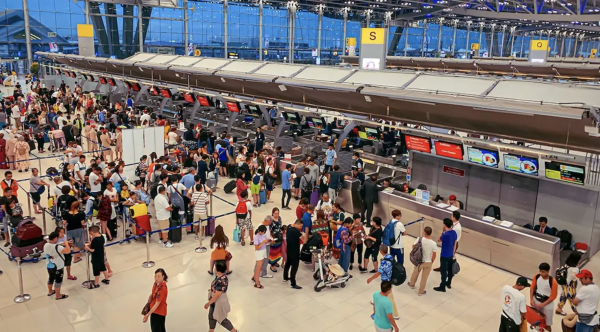
Photo credit: TAT. Golden Week forecast looks positive.
Long-haul travel leads demand
Long-distance domestic destinations lead holiday demand. Chengdu, Urumqi, Kunming and Sanya rank among Fliggy’s most-booked destinations. Xinjiang, Xizang, Qinghai and Northeast China dominate the list of fastest-growing destinations.
Long-haul international destinations including Australia, New Zealand and Italy are proving as popular as established short-haul favourites such as South Korea and Thailand. Slovenia, Romania and Madagascar also stand out as fast-growing emerging destinations.
Experience-led travel gains momentum
Bookings for autumn foliage products in destinations such as Ejina and Yichun have more than doubled year-on-year (YoY), highlighting demand for limited-time natural attractions.
Travellers are also seeking bucket-list experiences. Whale-watching bookings have surged more than 200% YoY, while skydiving bookings are up nearly 80% and glacier-hiking bookings more than 50%.
Wildlife and nature experiences are gaining ground. Bookings for sightseeing flights over Australia’s Heart Reef have more than doubled YoY, while little penguin viewing and koala encounter bookings have risen 160% and 120%, respectively.
Concerts and sporting events also drive holiday travel. During the pre-holiday booking peak, searches for “concert” on Fliggy surged 8.8 times YoY.
Hassle-free options gain popularity
Domestic chauffeured-car bookings have increased by more than 40% YoY as travellers seek flexible itineraries and self-paced holidays.
Cruise bookings have risen nearly 70% YoY, supported by demand for convenient, all-in-one holiday packages.
Meanwhile, the Tourism Authority of Thailand forecasts strong tourist arrivals from China during the so-called Golden Week holiday running from 25 September to 7 October.
TAT expects about 250,000 Chinese tourists to visit Thailand during the extended Golden Week travel period, with tourism revenue projected at around THB11.5 billion. The projections represent year-on-year increases of 24% in arrivals and 37% in revenue during the 13 days spanning the Mid-Autumn Festival and China’s National Day holiday.
October bookings to Thailand are up 16%, and flight searches from China are rising 24%. Demand is coming from major cities including Shanghai, Guangzhou, Chengdu, Hangzhou, and Chongqing, while direct flights connect Chinese travellers with Bangkok, Chiang Mai, Phuket, and Udon Thani.
The extended holiday is expected to support longer stays, higher spending, and travel to a wider range of Thai destinations. With projected revenue growing faster than arrivals, TAT sees an opportunity to attract higher-value travellers while encouraging visitors to explore beyond established tourism centres.