

BANGKOK, 9 February 2026: Healthcare in Asia is often seen as either expensive and world-class or cheap and basic. Southeast Asia tells a different story.
Across the region, routine private healthcare costs vary widely, offering travellers and long-stay visitors a clear choice between premium certainty and practical affordability.
This comparison focuses on nine ASEAN countries where private healthcare pricing is most relevant to international travellers.
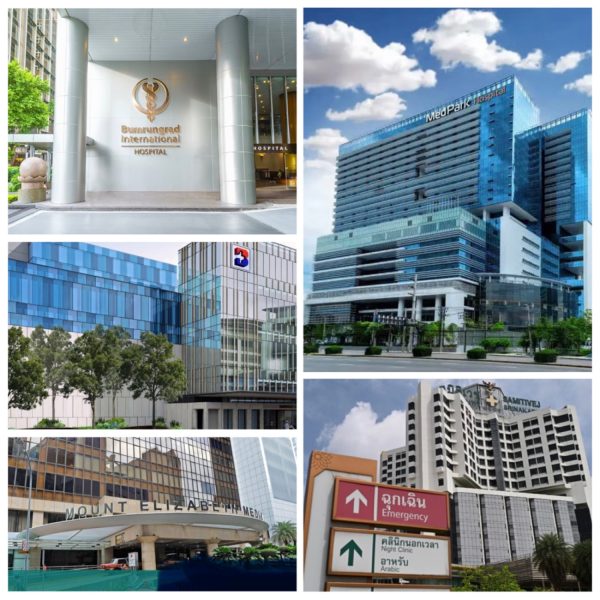
As global healthcare costs continue to rise, access to affordable and reliable medical care has become an increasingly important factor in travel decisions. For retirees, digital nomads, long-stay visitors, and medical tourists, healthcare is no longer merely a matter of safety. It is part of the destination value proposition.
Rather than comparing complex surgical procedures, this analysis examines routine private healthcare services. Health check-ups, blood tests, dental treatment and basic diagnostic imaging are the services most travellers actually use and typically pay for themselves.
Routine care, emergencies and medical tourism
It is helpful to separate routine healthcare from emergency treatment and planned medical travel. Most travellers use insurance for emergencies, whereas routine care, such as check-ups, blood tests, imaging, and dental treatment, is usually paid for directly. Medical tourism is distinct, involving travel for a specific, preplanned procedure rather than incidental care.
A clear cost spectrum across Southeast Asia
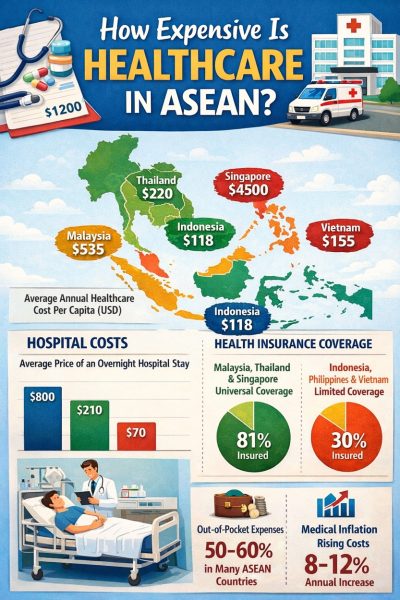
At the top of the cost scale sits Singapore. It delivers exceptional clinical standards, advanced diagnostics and patient choice, but at the highest prices in Southeast Asia. For travellers, Singapore represents premium certainty rather than affordability.
Malaysia and Thailand occupy the middle ground. Both offer modern hospitals, internationally trained clinicians and strong outcomes at significantly lower prices. Thailand, in particular, has built a global reputation as a medical tourism hub, combining competitive pricing with packaged preventive healthcare and hospitality-level service.
The Philippines falls into the mid-cost range. While pricing is not excessive by regional standards, limited insurance coverage means out-of-pocket spending can be relatively high. Indonesia offers moderate pricing overall, with access and quality concentrated in major urban centres.
At the lower end of the scale are Vietnam, Cambodia, Laos and Myanmar. These destinations provide very affordable routine healthcare, particularly for diagnostics and dental care. However, lower prices often reflect more limited infrastructure and specialist capacity, meaning patients may travel regionally for complex treatment.
Indicative cost positioning for routine private healthcare

Healthcare and travel are now linked
Healthcare cost alone does not define value. Accessibility, infrastructure, insurance coverage and clinical depth all shape real-world experience. However, Southeast Asia offers something few regions can match: a graduated healthcare landscape that allows travellers to align medical care with budget, lifestyle and expectations.
For medical tourists, this means clarity and choice.
For retirees and long-stay visitors, affordability and proximity are paramount.
For destinations, healthcare is increasingly a competitive advantage rather than a supporting service.
As travel becomes more purpose-driven, healthcare is no longer on the margins of tourism planning. It is central to how people choose where to live, travel and return.
Editor’s Note
This comparison focuses on routine private healthcare costs typically paid out of pocket by travellers and long-stay visitors. Emergency care is usually covered by insurance, while medical tourism involves planned treatment arranged directly with providers rather than through conventional travel insurance.
About the Author
Andrew J Wood is a British-born travel writer, tourism consultant and former hotelier who has lived in Thailand for more than three decades. A former director of Skål International and past president of Skål International Asia, Thailand, and Bangkok, he writes regularly on tourism trends, including medical tourism, destination strategy, and high-value travel across the Asia-Pacific region.