

BANGKOK, 25 February 2026: Thailand’s hotel industry has expanded almost continuously for close to five decades since the Visit Thailand* boom in the 80’s. The latest Asia Pacific construction pipeline data confirms that this trend remains firmly in place.
Across the region (excluding China), hotel development reached a record 2,323 projects with 433,241 rooms by the end of Q4 2025. Within this total, Thailand recorded 167 active projects comprising 43,067 rooms, reinforcing its position as one of Asia’s most competitive hotel markets.
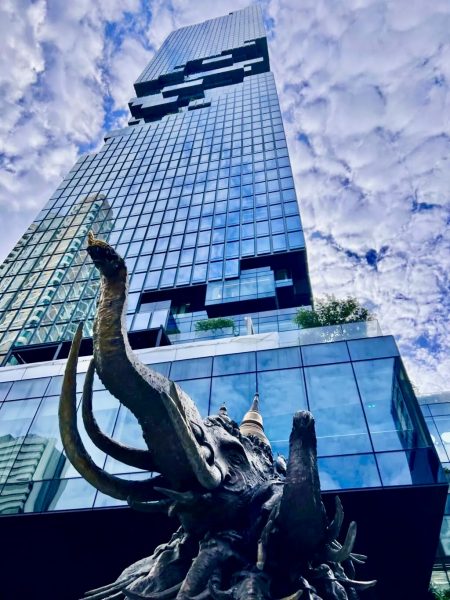
At the city level, Bangkok leads the region with 68 projects and 16,641 rooms in the pipeline, followed by Phuket with 41 projects and 9,583 rooms. These are not emerging destinations — they are already dense, highly competitive markets where new supply adds pressure incrementally rather than dramatically.
What the numbers are telling operators
On their own, these figures reflect confidence. Taken together, they signal constraint.
Each year, new hotels open in markets where demand is growing but not accelerating as quickly as supply. Even when international arrivals recover, additional room stock spreads demand more thinly across competing properties.
Industry performance data from sources such as STR, alongside regional construction pipeline research, consistently shows that in mature urban and resort markets, supply growth is now outpacing demand growth in many non-peak periods.
The practical consequences are familiar to operators:
• Occupancy becomes harder to defend outside high season
• Average daily rate growth slows as pricing power weakens
• Distribution and marketing costs rise as competition intensifies
In simple terms, more rooms are competing for broadly similar demand, particularly in the mid-scale, upscale, and upper-midscale segments, where differentiation is limited.
Oversupply: Not everywhere, but increasingly visible
This does not imply imminent distress. It does, however, point to structural oversupply in certain locations and segments.
When supply growth consistently outpaces demand growth, hotels often maintain occupancy through discounting, value-adds, or higher commission rates. Over time, this erodes rate integrity and compresses margins, extending recovery cycles after softer trading periods.
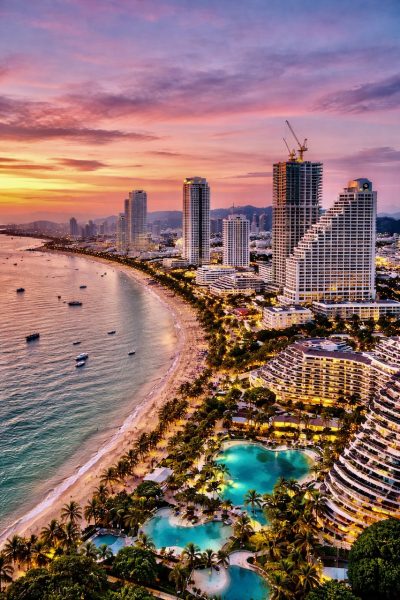
Pattaya’s hotel room inventory is growing steadily, with hundreds to thousands of rooms expected to be added through 2027, including notable branded developments and large mixed-use tourism projects. This highlights that, like Bangkok and Phuket, Pattaya is experiencing material new supply, contributing to the broader competitive dynamics in Thailand’s hotel market.
Longer-range industry projections estimate that Pattaya’s hotel rooms might grow at an average annual rate of 2.2%, with over 5,700 new hotel rooms anticipated by the end of 27/28, including several sizeable new luxury projects.
• Major developments in the pipeline include the Aquatique Pattaya project by Asset World Corp (AWC), which is investing THB 100 billion in a landmark mixed-use destination on Central Pattaya’s Beach Road, near the Hard Rock Hotel. The project is anchored by the debut of Ritz-Carlton Pattaya, alongside a JW Marriott (398 rooms), Pattaya Marriott Marquis (900 rooms), and an Autograph Collection hotel (306 rooms), adding significant high-end supply to an already competitive market.
As supply continues to expand, performance will be shaped less by headline arrival numbers and more by how effectively hotels compete within an increasingly crowded field. The era when rising tourism lifted all boats has passed. What lies ahead rewards precision, discipline and clear differentiation — not scale alone.
The positive case for expansion
There is also a clear upside to continued development.
New hotel supply brings modern, internationally branded inventory, strengthening Thailand’s global competitiveness. It expands capacity for major events, conventions and incentive travel, and supports growth in luxury and upper-upscale segments aimed at higher-spending travellers.
In 2025 alone, the Asia Pacific added 334 new hotels and 50,002 rooms, with a further 338 hotels (67,317 rooms) expected in 2026 and 349 hotels (64,491 rooms) projected for 2027/8. Thailand is well-positioned to capture a meaningful share of this higher-quality inventory, particularly if air connectivity improves and long-haul demand continues to recover.
For strong operators, a more competitive market can also be cleansing — rewarding hotels with clear positioning, loyal customer bases and disciplined revenue strategies.
What lies ahead
Thailand’s hotel market is not shrinking — it is tightening.
After nearly five decades of sustained expansion, success will depend less on overall tourism growth and more on how intelligently individual hotels respond to rising competition. Location alone is no longer enough. Strategy, execution and differentiation now define performance.
Growth continues — but it increasingly rewards those who manage it well.
About the author
Andrew J Wood is a long-time hospitality industry observer, writer and consultant with more than 37 years of experience living and working in Thailand. He has closely followed the evolution of the country’s hotel, tourism and investment landscape across multiple cycles of growth, oversupply, recovery and structural change.
A former hotel executive and advisor to hospitality owners and operators, he writes regularly on hotel development trends, market performance, tourism economics and competitive strategy in the Asia Pacific. His commentary draws on practical operating experience as well as long-term analysis of supply, demand and investor behaviour in mature and emerging markets.
Based in Thailand, Andrew J Wood is a frequent contributor to regional business and travel publications and is widely recognised for his clear, data-driven insights into the forces shaping Asia’s hotel industry.
* Thailand’s first major “Visit Thailand” type national tourism promotion campaign dates back to 1987, when the Tourism Authority of Thailand (the national tourism office) declared that year “Visit Thailand Year” to mark the 60th birthday of the late His Majesty King Bhumibol Adulyadej the Great and launched a widespread international campaign to encourage travel to the kingdom. That initiative is widely regarded as the first concerted, formal tourism-promotion effort that set the tone for decades for destination marketing.