SOUTHAMPTON, England, 9 July 2025: Cunard has reported a significant uplift in demand following the launch of its 2027 programme, with a 55% increase in nights booked during the first seven days compared to the equivalent period for the 2026 launch.
Cunard’s latest programme includes 195 new itineraries between April 2027 and January 2028
Photo credit: Cunard. Queen Mary 2.
Both the UK and North American markets contributed significantly to this success, with bookings up almost 50% in the UK and more than 100% in North America.
Queen Mary 2’s Transatlantic Crossings continue to perform strongly. This iconic route remains one of Cunard’s most popular and continues to attract strong interest from guests around the world.
Summer 2027 programme
Cunard’s latest programme boasts 195 new itineraries across its fleet, visiting 115 destinations in 32 countries between April 2027 and January 2028. The new itineraries include 93 UNESCO World Heritage sites and come with 18 overnight port calls and 33 late-evening departures.
The programme offers more variety and choice than ever before, with three of Cunard’s Queens offering round-trip voyages from the UK for the first time since 2018 — increasing the capacity of Southampton departures by 54% year on year.
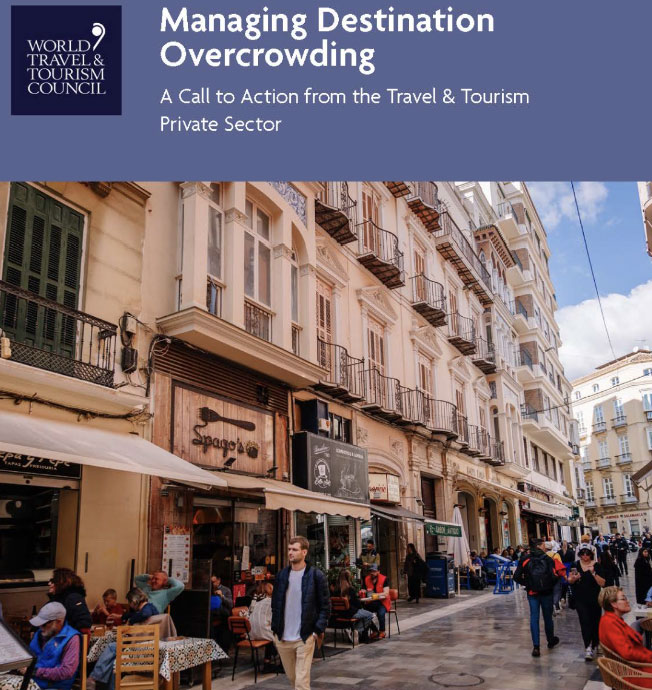
SINGAPORE, 9 July 2025: As the travel and tourism sector enters the height of the northern hemisphere summer season, the World Travel & Tourism Council (WTTC) launches a new report calling for a more balanced approach to managing tourism in popular destinations.
While overcrowding is often viewed as a tourism problem, many of the real pressures stem from deeper issues, such as underinvestment in infrastructure, poor planning, and fragmented decision-making. These challenges affect both residents and visitors and need joined-up solutions.
Travel and tourism support one in every 10 jobs and nearly 10% of global GDP and could reach one in three new jobs over the next decade. When managed well, it also fosters cultural exchange, global understanding, and environmental protection. But without thoughtful planning, the benefits it brings could be at risk.
WTTC’s paper, Managing Destination Overcrowding: A Call to Action, explains that there’s no simple fix to the problem and urges governments, local leaders, and businesses to work together to support both communities and visitors.
Annually, governments around the world collect more than USD3.3 trillion from travel and tourism businesses, equivalent to 9.6% of global tax revenues. The international tourism body urges governments to reinvest this sum in vital infrastructure and solutions to relieve pressures on already very popular destinations.
The report examines some of the root causes of overcrowding in a select number of increasingly popular destinations across Europe. It provides practical solutions that can be tailored to local needs, from using better data and planning tools to involving residents in decisions.
A practical plan of action
The paper outlines six simple steps that destinations can take to manage tourism more effectively.
Get organised – Bring the right stakeholders together via empowered task forces.
Make a plan – Define a shared vision and destination strategy.
Gather the evidence – A lack of data is exacerbating issues in several destinations. It is therefore crucial to conduct evidence-based diagnoses and responses tailored to the unique challenges faced by each destination.
Stay vigilant – Monitor conditions and take action promptly.
Invest wisely – Reinvest in infrastructure and resilience, being transparent about where money is spent.
Empower residents – Ensure residents have a say and understand the benefits of travel and tourism in their communities.
Why it matters
A growing number of destinations have introduced tourism taxes in response to pressure, but WTTC warns that these measures don’t always solve the real problems and can put jobs, income, and services at risk.
The report finds that if 11 major European cities capped visitor numbers, it could result in USD245 billion in lost GDP and nearly 3 million jobs over three years.
WTTC President & CEO Julia Simpson said: “Travel & Tourism brings huge benefits, including jobs, investment and deeper cultural understanding. But growth needs to be managed carefully.
“We’re encouraging all decision-makers to think ahead, work together, and focus on long-term benefits for residents and visitors alike. This isn’t about stopping tourism, it’s about making it work for everyone.”
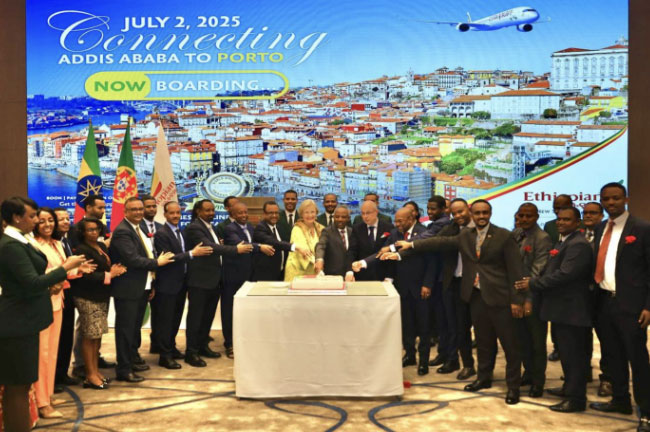
SINGAPORE, 9 July 2025: Ethiopian Airlines has launched a new service connecting Addis Ababa, Ethiopia, with Porto, Portugal, by extending its four-weekly flights beyond Madrid to Portugal’s second-largest city.
This new route marks a significant milestone in Ethiopian Airlines’ ever-expanding global network, strengthening socio-economic ties between Ethiopia and Portugal.
The service operates four times a week, departing Addis Ababa at 2310 on Monday, Wednesday, Friday and Sunday. The 315-seat Boeing 787-9 Dreamliner, flight ET740, makes a transit stop in Madrid, Spain, landing at 0555 and departing for Porto, Portugal at 0655.
The return flight ET741 departs Porto at 1955 and makes a transit stop in Madrid at 2210 before taking off for Addis Ababa at 2310.
Porto is Portugal’s second-largest city and a major cultural and economic centre. Its historic centre is designated as a UNESCO World Heritage Site, making it an attractive destination for both leisure and business travellers.
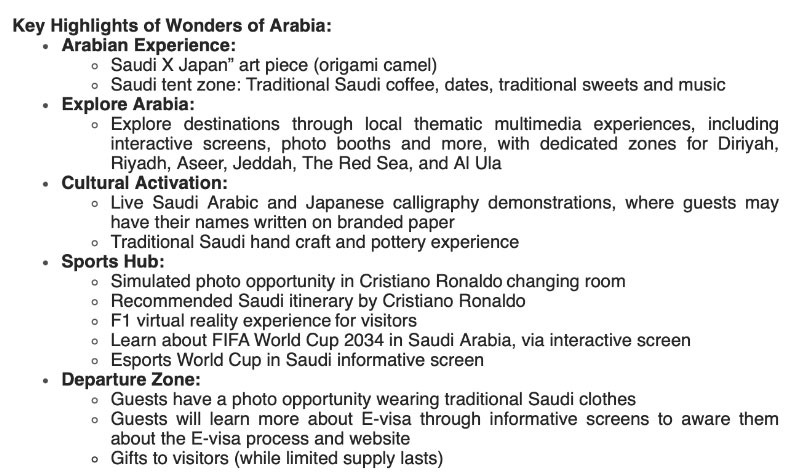
SINGAPORE, 9 July 2025: To celebrate the 70th anniversary of diplomatic relations between Japan and Saudi Arabia, ‘Saudi, Welcome to Arabia’ debuts with iconic Japanese character Doraemon for the launch of “Wonders of Arabia.”
The cultural experience event is designed to engage and inspire audiences across the Asia Pacific region. It will be held at Expo 2025 Osaka, Kansai, just a 10-minute walk from the Saudi Pavilion at the EXPO Exhibition Centre.
Photo credit: Saudi Tourism Authority.
“Wonders of Arabia” is open to all visitors from Thursday, 10 July to Wednesday, 16 July, between 1000 and 2000 daily. No admission fee.
Having welcomed more than 1 million visitors to the hugely popular Saudi Arabia Pavilion at Expo 2025 Osaka by the end of June 2025, the Kingdom’s Pavilion is now inviting Expo guests to experience its heritage and cultural exchange through this limited one-week event.
“Wonders of Arabia” invites visitors to immerse themselves in the rich cultural heritage and modern wonders of Saudi Arabia. It will offer diverse experiences of Saudi hospitality, art, tradition, and language as visitors journey to the Heart of Arabia at Expo 2025 Osaka.
In addition, the Saudi Tourism Authority has partnered with Doraemon to offer an exclusive, limited-edition giveaway tote. The first 250 visitors who answer all quiz questions correctly each day will win a tote bag.
About Wonders of Arabia
Date: Thursday, 10 July to Wednesday, 16 July 2025. Time: Open daily 1000-2030 (Last entry 2000). Location: Expo Exhibition Centre at Expo 2025 Osaka, Kansai. Admission: Free for World Expo ticketholders
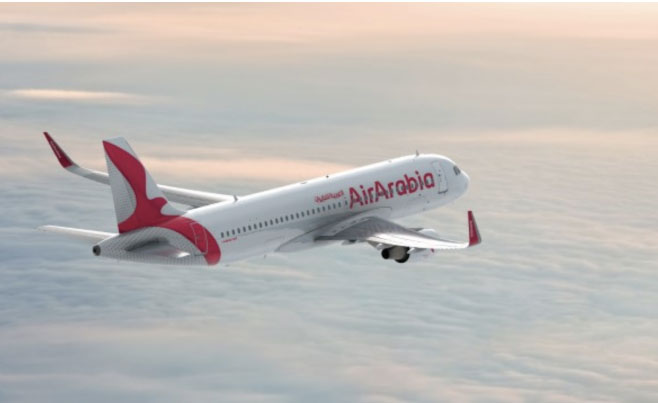
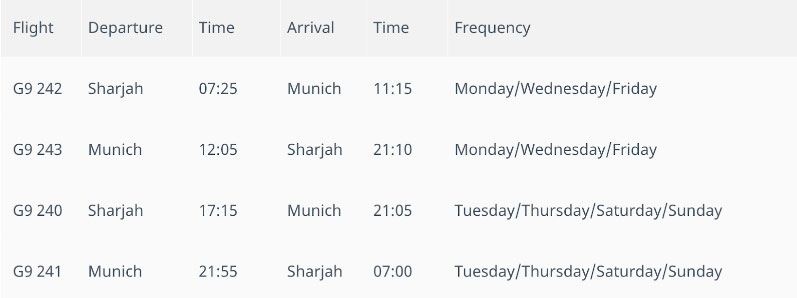
MUNICH, 9 July 2025: Air Arabia, a low-cost airline in the Middle East, has announced the launch of a new direct route between Sharjah and Munich, scheduled to commence on 15 December 2025.
The route will be served daily with an Airbus A320neo, offering travellers convenient and affordable travel options between the UAE and one of Europe’s leading economic and cultural hubs.
Photo credit: Munich Airport.
Sharjah is located approximately a 30-minute drive from Dubai and is considered the cultural capital of the UAE. Air Arabia also offers connections to many other destinations in the Middle East and Asia.
Munich Airport’s Senior Vice President of Aviation, Oliver Dersch, said: “We are delighted that Air Arabia will enable us to expand travel options for our passengers and further strengthen our role in traffic to and from the Gulf states.”
Munich will be the first destination in Germany to which Air Arabia will offer scheduled flights from Sharjah.
Schedule to Munich, effective 15 December 2025
Air Arabia Group Chief Executive Officer Adel Al Ali, commented in a press statement: “The launch of our new non-stop service to Munich marks another important step in expanding our European network from the UAE to key global destinations. Munich stands as one of Germany’s leading economic and cultural centres, offering strong appeal for both business and leisure travellers. This new route reflects our continued commitment to delivering affordable, value-driven travel options while advancing our long-term growth strategy. We look forward to welcoming our passengers onboard and offering them a seamless and comfortable travel experience”.
Bookings are open for the new direct route on the Air Arabia’s website, via its call centre, or through travel agencies.
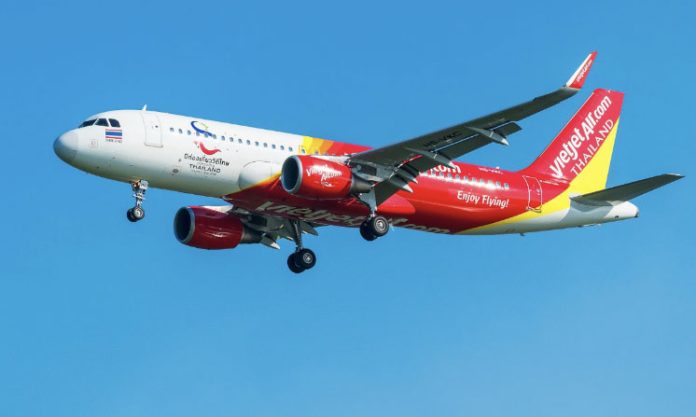
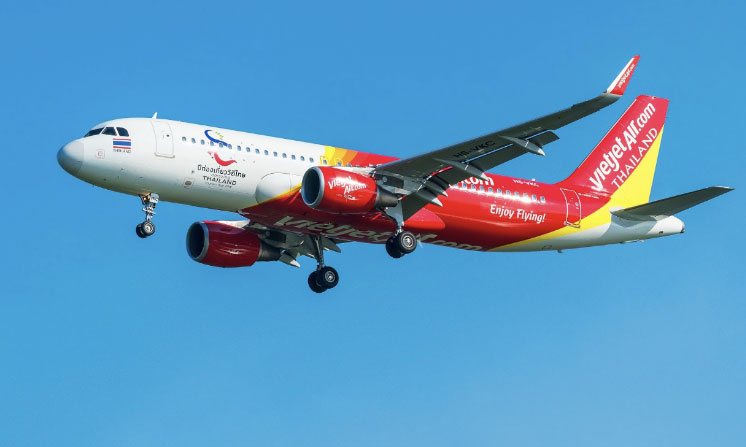
BANGKOK, 9 July 2025: Vietjet Thailand announces the launch of its first-ever direct flight connecting Phuket and Mumbai, with four flights weekly, starting 14 August.
The new route marks a significant milestone in the airline’s expansion, reinforcing its commitment to enhancing regional connectivity.
Photo credit: Vietjet Thailand.
Flights opened for bookings from 7 to 12 July 2025, with the airline offering its trademark zero fare before taxes and fees are added. The travel period for the zero fare deal runs from 14 August 2025 to 28 March 2026.
During the summer schedule, from 14 August to 25 October 2025, flights will operate every Tuesday, Thursday, Saturday, and Sunday.
Flight VZ762 departs Phuket at 2210 and arrives in Mumbai at 0105 the following day. The return flight VZ763 departs Mumbai at 0205 and lands in Phuket at 0820 (all local times).
“This new Phuket–Mumbai service represents a strong step forward in connecting Thailand with India, a country rich in culture and economic opportunity. We are excited to expand our operations into South Asia by offering greater connectivity and more flight choices,” said Vietjet Thailand Chief Executive Officer Woranate Laprabang.
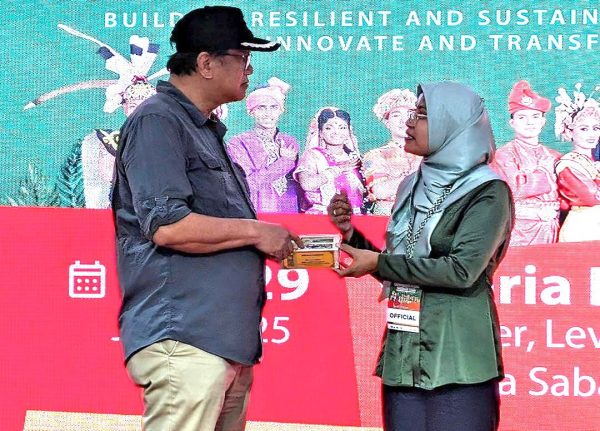
KOTA KINABALU: Assistant Minister of Tourism, Culture, and Environment Datuk Joniston Bangkuai has suggested the United Nations Development Programme (UNDP) consider involving more global partners in next year’s Community-Based Tourism Conference and Expo in Sabah.
He said the participation of the United Nations World Tourism Organisation (UNWTO) and the United Nations Educational, Scientific and Cultural Organisation (UNESCO) would further strengthen efforts to promote rural and community-based tourism in Sabah.
“With the participation of UNWTO and UNESCO, we can gain valuable global perspectives, build stronger networks, and bring greater recognition to our communities,” he said.
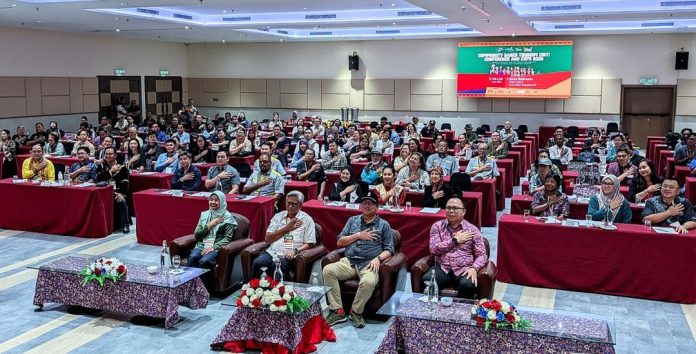
Joniston, who is also the chairman of the Sabah Tourism Board, made the suggestion during the closing ceremony of the Community-Based Tourism Conference and Expo at Suria Sabah Mall, held last week.
The suggestion aligns with the Sabah Tourism Board’s call during the UNWTO Affiliate Members Plenary Session in Samarkand, Uzbekistan, in 2023, emphasising the need to advance rural and community tourism.
Joniston added that UNESCO’s participation would bring added value, as Sabah holds the prestigious Triple Crown UNESCO recognition.
Organised by the Sabah Tourism Board, this year’s event featured an international conference for the first time, co-organised with UNDP and joined by speakers from Thailand, Indonesia, and Taiwan.
“The conference has raised the bar with the inclusion of international participation, which provided a valuable platform for knowledge sharing, learning, and collaboration that directly benefits our rural communities,” he said.
Joniston stressed that the success of Sabah’s community-based tourism is made possible through the active involvement of rural communities.
He also expressed hope that Sabah would soon be able to support and bring its community-based tourism operators and entrepreneurs to international expos to showcase their offerings and expand their reach.
“We are still learning and growing, but the key is to continue supporting each other and scale up what we have started because the future of tourism lies in empowering the very communities it touches,” Joniston said.
Present for the closing event were Sabah Tourism Board chief executive officer Julinus Jeffery Jimit; UNDP (Malaysia, Singapore and Brunei Darussalam) Programme Analyst, Inclusive and Sustainable Economic Management, Norhafiza Shafie; and Champion of the Tourism Productivity Nexus at the Malaysia Productivity Corporation under the Ministry of International Trade and Investment, Rohizam Md Yusoff.
DUBAI, UAE, 8 July 2025: The Emirates Group’s efforts to align with this year’s UN call to end plastic pollution were on display at its ‘Tomorrow Takes Flight’ event.
The exhibition echoed the international organisation’s mission to reduce single-use plastic products, spotlighting Emirates’ and dnata’s efforts and approach to ‘Consuming Responsibly’ through sourcing, reusing, repurposing, and reducing plastic and other materials.
This year’s exhibition showcased initiatives that are driving impact across the organisation, including projects at both Emirates and dnata being implemented with like-minded partners and across departments and businesses like engineering, catering, cargo, airport operations, travel, service delivery, and others.
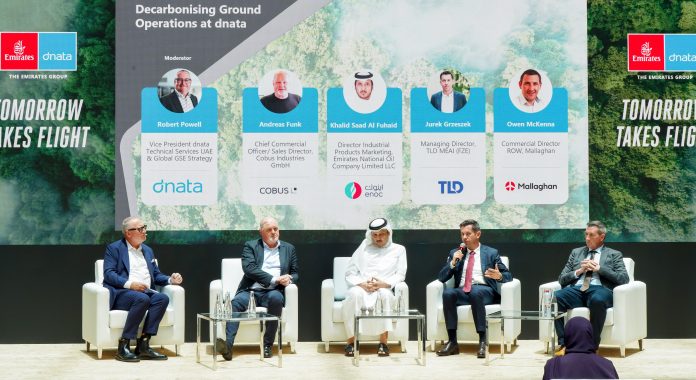
On the conference stage, employees heard about the work Emirates, dnata, and partners are doing to advance sustainable practices, with panellists from Emirates Engineering, Flight Operations, Service Delivery, Emirates SkyCargo and dnata Technical Services in addition to a powerful lineup of industry partners like the University of Cambridge, the UAE GCAA, Airbus, Boeing, ENOC, Cobus Industries GmbH, TLD, Mallaghan, GE Aerospace, Rolls-Royce and Dubai Airports contributing to discussions.
Speaking at ‘Tomorrow Takes Flight’, Adel Al Redha, Emirates’ Deputy President & Chief Operations Officer, said: “The event celebrates our sustainability journey while educating and inspiring our people through the showcased initiatives and meaningful discussions on sustainable practices. Environmental responsibility is essential to achieving our objectives as an airline and as an industry, and it supports the UAE’s Net Zero 2050 Strategy.
With governments and communities demanding meaningful action, collective responsibility across the entire ecosystem is vital. Emirates is making progress with emissions reduction projects across our operations, and we’re actively pursuing programmes that conserve resources through recycling and responsible sourcing. Collaboration with industry partners will be crucial in the years ahead to enhance the recyclability of materials across the supply chain.
We’re also encouraging our teams to build on the success of existing initiatives and push boundaries to develop new approaches that address the full spectrum of operational waste, and today is a great example of these drives. From cabin materials and catering to ground operations and maintenance, every touchpoint presents an opportunity to minimise environmental impact.”
Steve Allen, dnata’s CEO, added: “Sustainability is a fundamental part of how we operate as a global business. It shapes the decisions we make, the investments we prioritise, and the standards we set for ourselves and our partners.
“We are driving progress through action: investing in renewable energy infrastructure at our facilities, accelerating the shift to electric ground support equipment, and collaborating with alternative fuel suppliers to lower emissions. At the same time, we’re tackling food waste, promoting responsible consumption, and expanding recycling programmes as part of a broader shift toward circular resource management.
“These initiatives are united by a clear ambition: to grow responsibly while delivering meaningful, lasting impact. This commitment is reflected in our team’s innovative, creative solutions and community partnerships, extending our efforts well beyond our core operations.
“It was a pleasure to highlight dnata’s initiatives to colleagues and partners through this unique event – a great opportunity to celebrate progress, share ideas, and strengthen the sense of purpose behind our sustainability journey.”
Sustainability initiatives on show
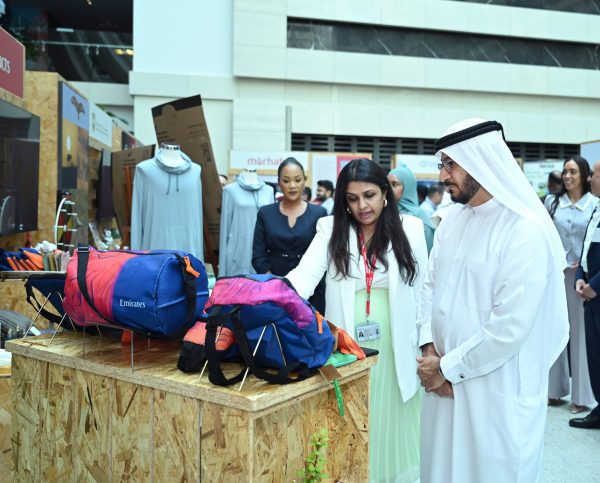
The next chapter of ‘Aircrafted by Emirates’, which includes transforming retired aircraft parts into functionally aesthetic items with a focus on metal and different composite materials.
Service Delivery teams presented onboard products using alternative or recycled materials.
Plastic cleanup efforts at the Dubai Desert Conservation Reserve
An Emirates Flight Catering biodigester interactive display.
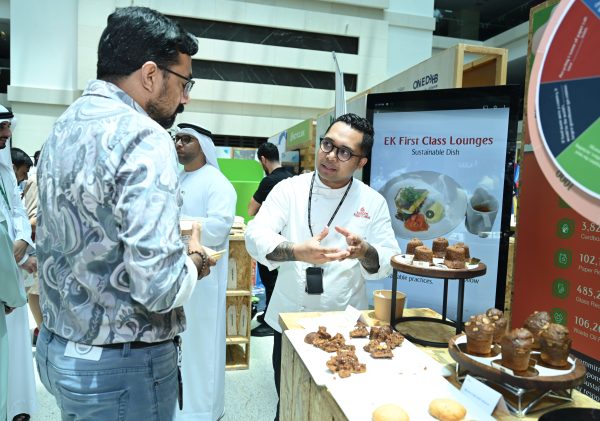
Sustainable food samples provided by MMI, Emirates Leisure Retail, dnata Catering & Retail and Emirates Flight Catering
dnata showcased its global sustainability efforts through a diverse range of initiatives across its international businesses at the event. The Catering team highlighted the use of plant-based packaging and a commitment to minimising waste by making the most of every ingredient in their kitchens.
dnata Cargo demonstrated its comprehensive recycling programmes, while marhaba presented lounge initiatives focused on reducing food waste. The event also featured sustainability projects from dnata Travel, including the deployment of a river interceptor in Sri Lanka to prevent ocean pollution and the distribution of reusable items to employees, reinforcing the company’s commitment to responsible consumption.
Partners like Ecyclex and Reloop demonstrated how different waste streams are recycled, including e-waste, in collaboration with Emirates Group IT, and dedicated a part of their display for employees to drop recyclables; Falcon Aircraft Recycling showcased products made of recycled aircraft parts and Dubai Can illustrate the progress of its Dubai Reef project, the world’s largest single purpose-built reef development. The United Nations Global Compact (UNGC) outlined global sustainability principles, SDG’s and this year’s UN theme to #beatplasticpollution. Dubai Airports showcased how they are tackling airport-specific waste through innovation and collaboration, driving meaningful reductions across the airport community.
Employees also participated in quizzes and games, booth challenges, and other interactive activities to win prizes. Participants were also encouraged to contribute to the event’s ‘Bottle Wall’ before the event. Collected bottles were upcycled into custom plant pots for staff to take home as part of the Tomorrow Takes Flight challenge.
KUCHING, 8 July 2025: BESarawak has announced key leadership appointments effective 1 July 2025. These appointments are part of a strategic restructuring to bolster organisational growth and advance its Post Covid-19 Development Strategy (PCDS) 2030 goals.
Jason Tan Chin Foo has been promoted to Deputy Chief Executive Officer (CEO).
𝗝𝗮𝘀𝗼𝗻 𝗧𝗮𝗻 𝗖𝗵𝗶𝗻 𝗙𝗼𝗼 Deputy Chief Executive Officer𝗝𝗼𝗮𝗰𝗵𝗶𝗺 𝗦𝗼𝗼𝗻 General Manager – Capacity and Digitalisation𝗔𝗻𝗲𝗱𝗶𝗮 𝗞𝗮𝗵𝗮𝗿 General Manager – Business Development and Services
He previously served as General Manager of Business Development and Marketing and has been with BESarawak since 2012.
Anedia Kahar has been promoted to General Manager of Business Development and Services.
She is a pioneer team member, having joined BESarawak in 2006, and was formerly Deputy General Manager for Business Development and Research.
Joachim Soon has joined BESarawak as General Manager for Capacity and Digitalisation. He brings a strong background in training, communications, and digital engagement and will focus on talent development and digital innovation.
These changes aim to bring in fresh perspectives, enhance the business events ecosystem in Sarawak, and strengthen the organisation’s focus on its Legacy Impact Master Action Plan.
SINGAPORE, 8 July 2025: The International Air Transport Association (IATA) has expressed “deep disappointment at the recommendation of the Global Solidarity Levies Task Force (GSLTF)” that would target air transportation to generate EUR78 billion through a premium flyer levy.
GSLTF aims to“improve domestic revenue mobilisation in developing countries and support international solidarity (in particular with regards to climate change mitigation and adaptation, pandemics and other development challenges.
IATA says the initial assessment of the GSLTF’s proposals reveals severe deficiencies, including the fact that a competitive airline Industry does not generate excessive profits.
Light on meaningful details
“The GSLTF announcement, while lacking any meaningful detail, quotes a CE Delft estimation that a premium flyer levy could generate EUR 78 billion (over USD90 billion) per year. That is approximately three times the airline industry’s global estimated profit of USD32.4 billion in 2024,” said IATA Director General Willie Walsh.
“Airlines’ structurally thin net profit margin (estimated at an average of 3.4% industrywide for 2024 and approximately half the global average for all industries) must also be considered in any policy deliberation.
“The airline industry is an economic catalyst, not a cash cow. Yet governments casually suggest a tax on flyers that is three times the airline industry’s annual profit without considering the real-world side effects for an industry that is a lifeline for remote communities, invigorates tourism markets and links local products to global markets. Moreover, while the modalities for the GSLTF proposal are not specified, history shows us that these taxes go to the general exchequer, with little, if any, of the revenues generated going to climate change adaptation.”
IATA lists its objections
The Airline Industry Has a Multi-Trillion Dollar Commitment to Sustainability: Airlines have committed to achieving net-zero carbon emissions by 2050 — an effort that is expected to cost USD4.7 trillion over the period 2024-2050.
This will ensure that aviation can deliver its direct contribution of 3.9% of global GDP and 86.5 million jobs globally while addressing its estimated 2.5% share of global carbon emissions. Increasing aviation taxes on airlines as proposed will limit the industry’s ability to invest in solutions that deliver long-term emissions reductions.
A Specialised Climate Financing Mechanism for Aviation Already Exists: The GSLTF’s proposal disregards the role of the Carbon Offsetting and Reduction Scheme for International Aviation (CORSIA), which was agreed upon through the International Civil Aviation Organization and is the world’s first globally agreed mechanism to manage carbon emissions from an industrial sector — in this case international aviation.
Failure to Assess Rising Costs is an Inescapable Consequence of the Proposed Levy: In addition, the GSLTF has not released any assessment of the impact that such a levy would have on the economies of the very states to which it aims to funnel the funds, or the broader impact it will have on all travellers. It has also not detailed how such funds would be used.
“To be clear, airlines are not evading doing their part to mitigate the impacts of climate change. The industry is doing everything possible to achieve net-zero carbon emissions through Sustainable Aviation Fuels (SAF), more efficient operations, and improved technology. The last thing these efforts need is a USD90 billion gut punch of a tax. With respect to air transportation, the aims of the GSLTF could best be realised by supporting investments in SAF production so airlines can deliver prosperity by connecting people and businesses to global opportunities,” Walsh concluded.