


BANGKOK, 14 September 2026: Thailand’s proposed Thai Travel Plus, or Thai Tiew Thai Plus, scheme has an admirable objective: to encourage domestic tourism and spread tourism spending more widely across the country. (For the latest update on the campaign’s schedule, see POSTSCRIPT below, dated 18 September 2026).
Tourism and Sports Minister Surasak Pancharoenworakul says the proposal is expected to go before Cabinet on 22 September, with a government budget of around THB3.5 billion.

Under the latest proposal, the scheme will subsidise up to one million hotel room nights, with each eligible Thai traveller able to receive support for up to five nights. Accommodation support would be capped at THB2,000 per night, alongside digital vouchers intended to encourage spending at restaurants, attractions and other tourism businesses.
Is November to February the best time for this promotion?
These are traditionally Thailand’s strongest tourism months, when hotels in popular destinations charge high-season rates and expect strong occupancy.
There is another curiosity. The proposed programme runs from 1 November 2026 to 28 February 2027, yet subsidies would reportedly be suspended from 15 December to 15 January, covering the Christmas and New Year peak.
That removes roughly one quarter of the four-month promotional period. Poor marketing, in my mind.
The reasoning is understandable. Why subsidise rooms when demand is already at its strongest? But that raises the broader question of whether government money would be more effective in stimulating travel during genuinely softer periods.
Hotel participation is another challenge. Properties expecting high occupancies at normal high-season rates may have little incentive to allocate rooms to subsidised domestic business.
Affordability matters too. A subsidy of up to Baht 2,000 sounds attractive, but against high-season room rates, the remaining cost may still be more than some of the Thai travellers the programme is intended to encourage want to pay.
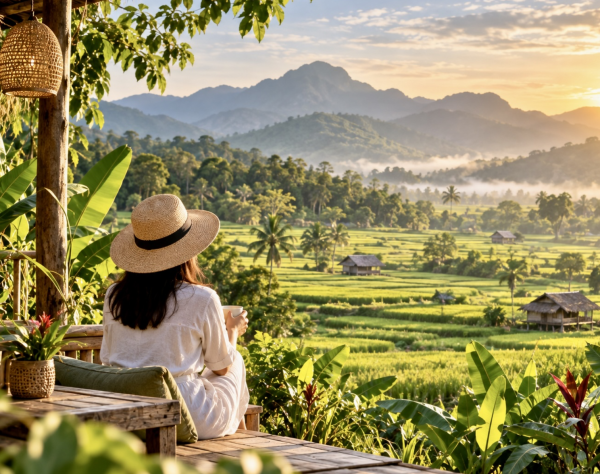
Secondary destinations could gain incremental business; restaurants and attractions would benefit from additional spending, while hotels could use the scheme to fill softer midweek inventory.
That may be where the greatest opportunity lies.
The real measure of success should not simply be whether the one million subsidised room nights are used, but how much genuinely additional tourism they create.
If taxpayers subsidise holidays that would have happened anyway, the return is questionable. If the scheme generates new trips, fills otherwise empty rooms and directs travellers towards secondary destinations, it could be money well spent.
The concept has merit. The question remains: is high season really the right season to make it work?

About the author
Andrew J Wood is a British-born travel writer and former hotelier who has lived in Thailand since 1991. A graduate of Napier University, Edinburgh, he has more than four decades of international hospitality and tourism experience. He chairs the JFCCT Tourism Committee for 2026–2028 and has held senior leadership roles with Skål International and in Thailand and Asia.
POSTSCRIPT
BANGKOK, 18 September 2026: Since this article was written, the government has indicated that the proposed Thai Travel Plus domestic tourism stimulus will be postponed from October 2026 to April 2027.
Interestingly, the reasoning goes directly to the question raised in the original TTRW report: Is the high season really the right time to subsidise domestic travel?
The Thai government now appears to have concluded that introducing the programme during a period when hotels and tourism businesses already enjoy stronger demand would have limited additional impact.
Andrew Wood




Domestic travelers are less concerned about the season, I think — and they often go to places like Phetchabun, Beung Kan, etc over places like Phuket and Pattaya.
Hi Rusty
That’s a fair point. I focused too much on the high season in places such as Phuket and Pattaya. Thai travellers may be more flexible about when they travel, and destinations such as Phetchabun and Bueng Kan could benefit even during that period. The question for Thai Travel Plus is whether the subsidy encourages extra trips to those places and fills rooms that would otherwise be empty. If it does, the timing could make more sense than I suggested. Thanks for raising it.
Regards from Bangkok
Andrew
Cont…./
I still believe Rusty that even in the secondary/tertiary destinations that demand and price would be higher Nov-Feb but low season would generate a higher return for the govt’s money in that it would generate more incremental ‘new’ business/demand.
AJW
Gary, Thks for commenting – I think that’s a fair point. Any scheme like this needs to be applied consistently and transparently, and kept as simple as possible for both visitors and operators.
That said, I’m inclined to give the initiative a positive welcome. If the government can encourage visitors to stay longer, travel more widely and spend more across Thailand, that should be good for tourism and the wider economy. The key, as you rightly say, will be in the implementation. Keep it simple, keep it fair, and don’t let bureaucracy get in the way of what is essentially a good idea.
Cheers
Andrew
So long as it is administered fairly and equitably across the board! Otherwise it will just become another form of despicable two tier pricing and a cause of resentment and dissatisfaction! Do not drown it with bureaucracy!