


BANGKOK, 27 August 2026: Thailand has unveiled its tourism strategy for 2027 under the ambitious banner of “The Year of Transformation”.
Those of us who have worked in Thai tourism for many years have heard plenty of strategies, slogans and campaigns. So rather than repeating the official language, a simpler question to ask is: “What will actually be different for the visitor?”
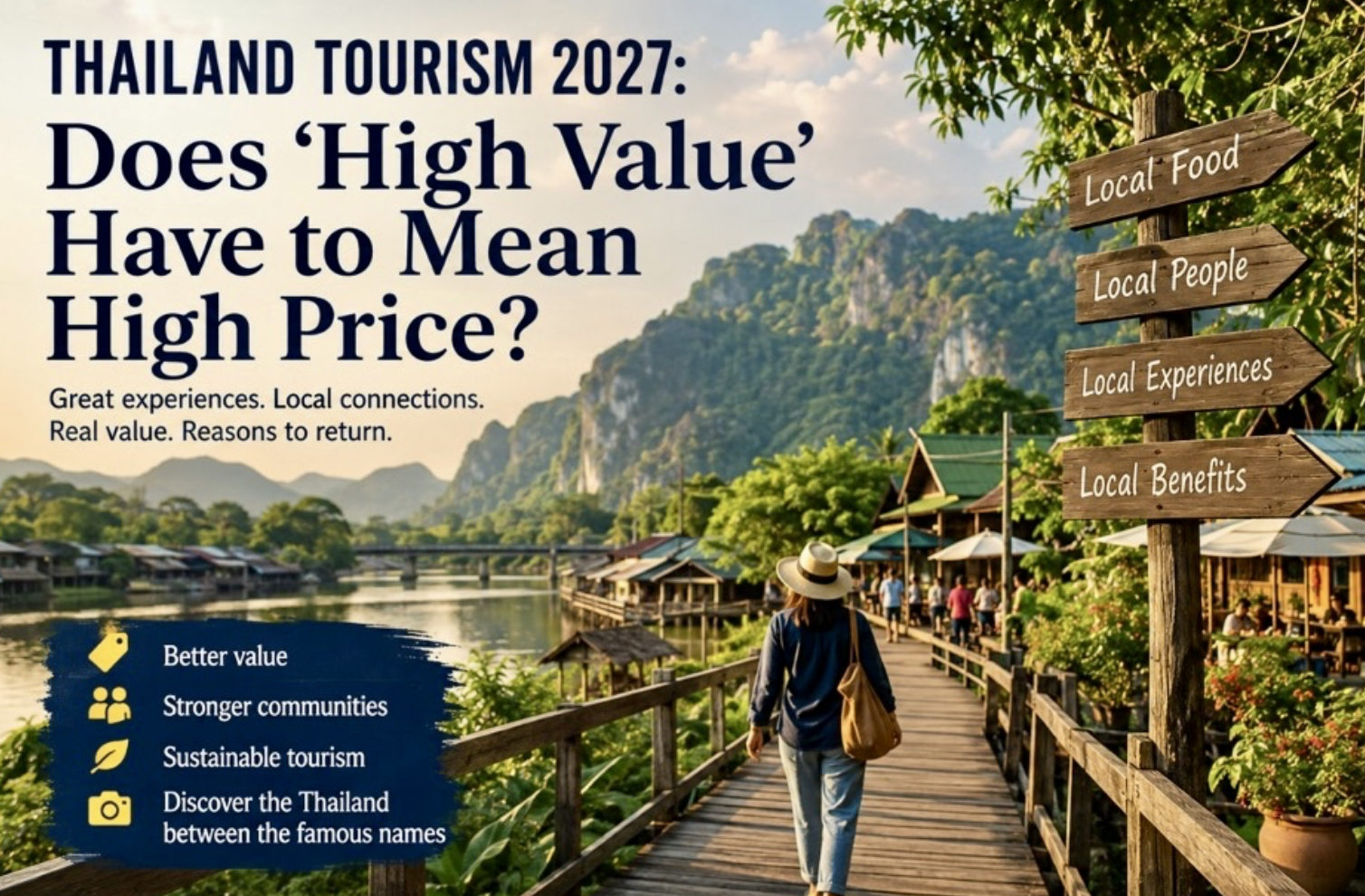
TAT wants tourism revenue to grow by at least 5% and aims for a 60:40 distribution between major and emerging destinations. It also talks repeatedly about attracting “high-value” travellers.
I understand the reasoning. Hotels naturally want higher room rates and greater revenue. Destinations want visitors who spend more. But there is another side to this equation: High-value tourism does not necessarily mean high-priced tourism.
Going local
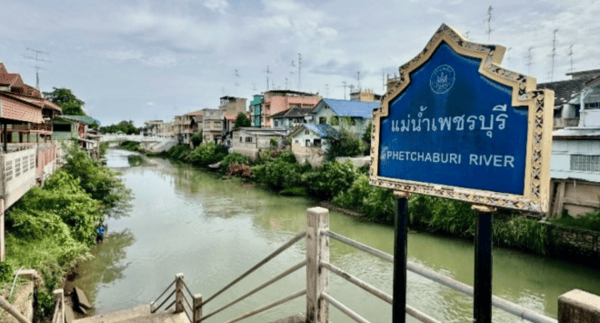
Only a few days ago, I took a short road trip with friends through Phetchaburi province, visiting Kaeng Krachan and Phetchaburi town. Along the way, we stayed in local homestays, explored markets and attractions, enjoyed fantastic local food and, most importantly, met some wonderful local people.
What struck me was not luxury in the conventional sense. It was the richness and authenticity of the experience.
Money was spent locally, and visitors interacted directly with communities. Importantly, it represented excellent value for money.
For repeat visitors to Thailand, this matters enormously. Experienced travellers are not necessarily searching for a more expensive hotel or holiday. Often they are searching for something new to discover.
A local market, family-run restaurant, homestay or village festival can provide exactly that.
Perhaps we should therefore redefine “high value”:
LOCAL EXPERIENCE↓
AUTHENTIC CONNECTION↓
LOCAL SPENDING↓
MEMORABLE VISIT↓
REASON TO RETURN
That, to me, is high-value tourism too.
A visitor can spend THB100 on a memorable local meal and THB10,000 on a hotel room during the same journey. Both contribute to Thailand’s tourism economy.
The appeal of no-fly tourism
Another opportunity we sometimes overlook is that you don’t necessarily need to fly anywhere to have a great holiday.
International airfares can represent a substantial part of a holiday budget. For Thai travellers, expatriates and long-stay residents who call Thailand home, domestic travel offers an attractive alternative.
The airlines may not thank me for saying it, but no-fly tourism is actually rather appealing.
Remove an expensive international airfare, and suddenly there is more money for accommodation, restaurants, local guides, markets and attractions. Much of that spending remains within Thailand and local communities.
A rewarding break does not always require an airport or immigration queue. Sometimes it simply means getting into a car or boarding a train.
Many repeat visitors already know Bangkok, Phuket, Pattaya, Chiang Mai and Samui. The opportunity now is to discover the Thailand between the famous names.
Less jargon, more delivery
TAT talks about reshaping markets, new growth engines and meaningful destinations. Travellers ask much simpler questions:
Why should I go? What will I experience? Is it worth the money? Will I feel welcome?
My sister has an even simpler test for judging a good holiday. She asks just one question:
“Would you go back?”
If the answer is an immediate yes, the destination has probably got most things right. If the answer is “maybe” or “I’m not sure”, that return visit may never happen.
I think that is as good a measure of tourism success as any.
After more than three decades working and writing in Thailand’s hospitality and tourism industry, I have come to believe that attracting someone once is only part of the job. Giving them a reason to return is much more valuable.
Perhaps Thailand’s greatest opportunity in 2027 is therefore not simply persuading every tourist to spend more. It is creating experiences that make them say:
“Yes, I would go back.”
And sometimes the experiences that bring us back are not the most expensive ones. They are simply the ones we remember.

About the author
Andrew J Wood is a Bangkok-based travel writer and former hotelier with more than three decades of experience in Thailand’s tourism and hospitality industry. A graduate of Napier University, Edinburgh, he has held senior hotel positions in Thailand and internationally.
A long-standing member of Skål International, he is a former Director of Skål International, Past President of Skål International Asia, Thailand and Bangkok. Currently, he serves as Vice President of Skål International Bangkok. He writes regularly on tourism, hospitality, aviation and travel trends across Thailand and Asia.