

Wednesday, August 12, 2026
Home Blog Page 166

Thailand’s gold–baht conundrum

BANGKOK, 9 October 2025: Thailand’s economy in 2025 tells a complicated story. Gold exports have soared nearly 70% in the first seven months of the year, helping push the baht to its strongest level in five years. 

At the same time, tourists, who bring billions in invisible export earnings, are finding the country less affordable. This is the gold–baht conundrum: success in gold and finance weakens competitiveness in tourism.

Photo credits: AJW. Thailand’s 2025 paradox — searching for balance

Gold inflows lift the baht

Global investors are rushing to safe-haven assets, and Thai traders are riding the wave. In the first seven months of 2025, gold exports exceeded THB254 billion (approximately USD8 billion). As dollars flowed in, the baht strengthened by over 8% against the US dollar, dropping from around THB34 per dollar to as low as 31.70.

Other currencies tell the same story. Against the pound, one sterling (UKP1) now buys about THB43 to 44, making a British couple’s holiday in Phuket more expensive than a year earlier. The euro and yuan have also slipped, and Indian travellers in particular feel the squeeze.

It is worth noting, however, that Thailand is not a significant gold mining country. Most of the bullion comes from abroad, often imported from Switzerland, Hong Kong, or Singapore, before being refined and re-exported through Bangkok’s huge jewellery and bullion markets. Thailand is essentially a global hub, not a gold producer.

Why gold alone doesn’t drive the baht – but gold is the spark

Economists stress that correlation does not mean simple cause and effect. In 2025, gold exports jumped nearly 70%, while the baht appreciated by more than 8% against the US dollar. One study reported a correlation of 0.88 — with a value of 1.0 indicating perfect correlation. In plain terms, when gold moves up, the baht almost always follows. Yet, because the link is not one-to-one, other forces are clearly at work, including returning tourists and speculative investors, as well as China’s slowdown and global trade tensions. Gold is the spark, but not the whole fire.

A strong baht brings mixed results

For gold traders and financial markets, this is a triumph. For tourists and the businesses that depend on them, it feels like a squeeze. A London family booking two weeks in Phuket suddenly finds meals and hotels pricier, not because local rates have changed, but because the pound now buys fewer baht.

The result is Thailand’s loss, as holidaymakers look to cheaper alternatives in Vietnam, Cambodia, or Indonesia.

Economists call it Dutch Disease

There is a well-known name for this kind of imbalance. Economists call it Dutch Disease, a term coined in 1977 when the Netherlands discovered natural gas in the North Sea. The gas boom sent the Dutch guilder soaring, but Dutch manufacturers became less competitive abroad.

Thailand’s conundrum looks strikingly similar. The gold boom lifts the baht, but the stronger currency makes tourism less affordable and factory exports less competitive. Car production has already slipped this year, a sign of how quickly rising currencies can hurt other industries. The rise of imported EVs is also a factor. 

The gold-baht paradox lies in the contradiction between a strong baht and tourism that requires competitive exchange rates.

Tourism is an export?

Tourism is often referred to as an invisible export because no container ships leave port, yet billions of dollars flow in. In Thailand, it accounts for a significant share of GDP (20%) and supports millions of livelihoods.

The challenge is that tourism is highly price sensitive. Families on tight budgets notice quickly when the baht strengthens. Indian travellers may choose Kuala Lumpur over Bangkok. Even if total arrivals rise, spending per head can fall. For tuk-tuk drivers, street food vendors, and family-run hotels, the difference is immediate.

Who gains, who loses

The winners are easy to see. Gold traders and refineries are enjoying record business. Financial markets applaud a baht that signals strength and stability. The government welcomes healthier reserves and revenues.

The losers are just as visible. Tourists feel squeezed, local businesses see thinner margins, and communities already struggling with crowded beaches or waste disposal find the rewards smaller when visitor spending power shrinks.

Avoiding the conundrum

The solution is not to restrict gold flows or artificially weaken the baht. Instead, Thailand must adapt by making its tourism less vulnerable to price shifts.

This means targeting travellers who are less price sensitive and more experience-driven. Wellness and medical tourism, gastronomy, cultural immersion, and high-end journeys, such as the new Blue Jasmine luxury train to Chiang Mai, are all ways to broaden appeal.

Thailand can also improve its infrastructure, manage visas effectively, and invest in sustainability to enhance its value. If these steps are taken, the country can soften the conundrum and prove that gold and beaches do not have to be in conflict.

Conclusion

The gold–baht conundrum illustrates how prosperity comes with hidden costs. Gold exports and safe-haven flows have lifted the baht, but more substantial currency risks could undercut tourism and manufacturing. 

Other factors, including speculative inflows and the Chinese slowdown, as well as concerns about tariffs and global instability, also play a role. Handled poorly, the winners in trade will be outweighed by the losers in tourism. Handled wisely, Thailand can balance its visible and invisible exports, turning this conundrum into an opportunity for growth.

About the Author
Andrew J. Wood is a former hotel general manager with over 35 years of experience in the hospitality and tourism industries. Born in Yorkshire, England, he has lived in Thailand since 1991. A long-time resident of Bangkok, Andrew is the Past President of Skal International Asia, Skal International Thailand, and has twice served as President of Skal Bangkok. He is a regular guest lecturer at universities and a writer contributing to regional publications.


Radisson expands presence in Bali

SINGAPORE, 9 October 2025: Radisson Hotel Group has announced a key milestone in its expansion in Indonesia with the signing of Atiara Ubud Bali, A Radisson Collection Resort. It marks the debut of the group’s luxury lifestyle brand, Radisson Collection, in Indonesia. 

Photo credit: Radisson Hotel Group. Rendering of Atiara Ubud Bali, A Radisson Collection Resort.

Located in the lush jungle landscapes of Ubud, Bali, Atiara Ubud Bali, A Radisson Collection Resort is set to open in 2027, featuring 52 rooms, including six dedicated wellness suites with outdoor terraces, private yoga decks, and Jacuzzis. A 530 sqm Presidential Suite, complete with expansive terraces and a private pool, adds an exclusive touch. 

Designed for wellness-focused travellers and international visitors seeking tranquillity, the resort is a 90-minute commute from Bali’s Ngurah Rai International Airport and a 30-minute transfer to the island’s most iconic attractions. 

Indonesia is a priority growth market for Radisson Hotel Group within the Asia-Pacific region. It currently operates three hotels in the country, with four more under development. Strategic expansion is focused on the nation’s key destinations, including Jakarta and Bali, with multiple new projects in the pipeline.  

The group has also confirmed Radisson Nusantara in Indonesia’s new capital city, where construction is set to begin in late 2025. 

Looking ahead, Radisson Hotel Group aims to add 20 more hotels in Indonesia by 2030, further strengthening its presence in both established gateways and emerging destinations. 

(Source: Radisson Hotel Group)

Air India Express expands Delhi hub flights

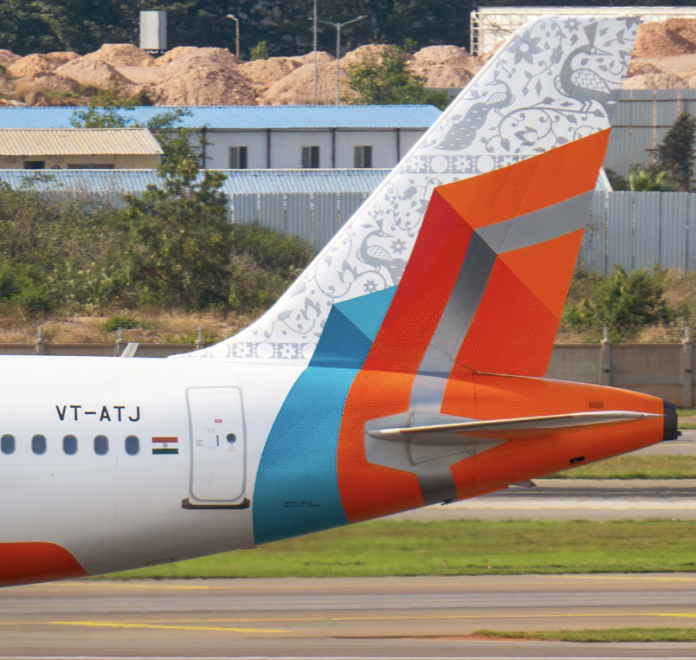
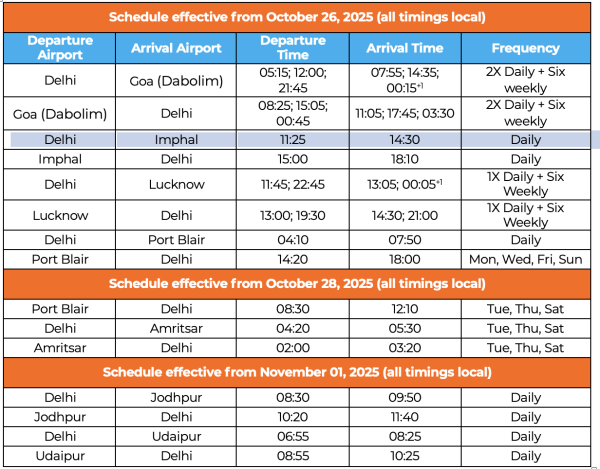
DELHI, 9 October 2025: Air India Express has announced the launch of multiple new direct flights from its Delhi hub starting 26 October 2025.

The airline will operate direct services from Delhi to Goa (Dabolim), Imphal, Lucknow, and Port Blair (Sri Vijaya Puram), followed by Amritsar on 28 October 2025, and the introduction of new routes to Jodhpur and Udaipur from 1 November 2025. 

Photo credit: Air India Express.

The new flights will improve access to the capital from culturally and economically significant cities across the country. Bookings are now open on the airline’s website, mobile app, and other primary booking channels.

The new flights are part of the airline’s focus on enhancing direct connectivity from major metropolitan cities to other cities in South Asia, the Middle East and Southeast Asia. 

By linking historical cities, tourism and heritage hotspots, and fast-growing regional centres with Delhi, the airline is furthering its vision of building a truly inclusive and accessible travel network.

This announcement follows the airline’s recent expansion, which has introduced new destinations and domestic and international routes, particularly from its largest hubs, Bengaluru and Delhi. 

With a fleet of 115 aircraft and over 500 daily flights connecting 43 domestic and 17 international destinations, Air India Express continues to strengthen its role as a vital connector of India’s cultural and economic landscape.

From Delhi: Air India Express operates over 400 weekly flights from Delhi (IGI) connecting directly to 24 domestic destinations including Amritsar, Ayodhya, Bagdogra, Bengaluru, Bhubaneswar, Goa, Guwahati, Imphal, Indore, Jaipur, Jammu, Jodhpur, Lucknow, Mangaluru, Mumbai, North Goa, Patna, Pune, Ranchi, Srinagar, Sri Vijaya Puram, Surat, Udaipur, and Varanasi and two international destinations: Muscat, and Sharjah. 

Air India Express also operates over 60 flights from Hindon, Delhi NCR (Ghaziabad) to nine domestic destinations, including Bengaluru, Bhubaneswar, Chennai, Goa, Jaipur, Kolkata, Mumbai, Patna, and Varanasi. From 26 October 2025, all Air India Express domestic flights will operate from T1, while all international flights will continue to operate from T3. 

(Source: Air India Express)

Agoda payout to travel creators

SINGAPORE, 9 October 2025: Digital travel platform Agoda has launched the Agoda Ambassador programme, a new initiative designed to strengthen commercial ties with travel creators on social media. 

The initiative will see Agoda working directly with travel creators to inspire their audiences to book travel through the platform.

Agoda Ambassador programme

Under the programme, participating travel creators will be given unique promo codes to share with their followers. 

For every booking made using these codes, a commission will be awarded. Agoda will also offer sponsored stays and activities valued at up to USD225 per month, enabling them to showcase firsthand experiences of Agoda’s partner hotels and destinations of their choice. 

The programme also aims to enhance exposure for creators by featuring them in Agoda campaigns, thereby expanding their reach.

Agoda Chief Marketing Officer Matteo Frigerio shared: “Travel creators play an increasingly important role in how travellers discover and choose their next trip. By giving them the tools to share authentic experiences and rewarding them for the bookings they generate, we’re building a partnership model that benefits travel creators, travellers and our hotel partners alike.”

Rewards range from earning profits and receiving exclusive Agoda swag packs to winning special trophies and accumulating travel credits of up to USD1,000. Creators can explore and sign up on the Agoda Ambassador page via Agoda.com/agoda-ambassador

(Source: Agoda)

PIA resumes flights to the UK

SINGAPORE, 9 October 2025: Pakistan International Airlines has confirmed it will resume flights to the UK after a five-year pause due to safety restrictions imposed by the UK government.

Arab News reported that the decision to resume flights between the Pakistan capital, Islamabad and Manchester, UK, “came hours after the UK Civil Aviation Authority issued a Foreign Aircraft Operating Permit to PIA and cleared the final administrative hurdle for the carrier to resume flights to Britain.” 

Pakistan International Airlines Facebook page promotion.

The airline’s Facebook page confirms that it will deploy a Boeing 777-200ER with 321 seats on the service to Manchester, UK, which resumes on 25 October. The airline plans to fly the route twice weekly on Tuesday and Saturday. Bookings are already open on the PIA website. The airline quotes a return fare of USD836.76.

It’s Facebook post announced: “The wait is over! Pakistan International Airlines proudly reconnects Islamabad and Manchester, bringing hearts, homes, and horizons closer once again.”

Flight schedule

PK701 departs Islamabad (ISB) at 1220 and arrives in Manchester (MAN) at 1600
PK702 departs Manchester (MAN) at 1800 and arrives in Islamabad (ISB) at 0650, plus a day.
(online schedules data)

Britain lifted restrictions on Pakistani carriers in July 2025, nearly half a decade since grounding them following a 2020 PIA Airbus A320 crash in Karachi that killed 97 people. The disaster was followed by claims of irregularities in pilot licensing, which led to bans in the US, the UK, and the European Union, Arab News reported.

After resuming flight operations to Manchester, the airline intends to add flights to Birmingham and London in the near future.

Malaysia and Myanmar activate visa-free stays

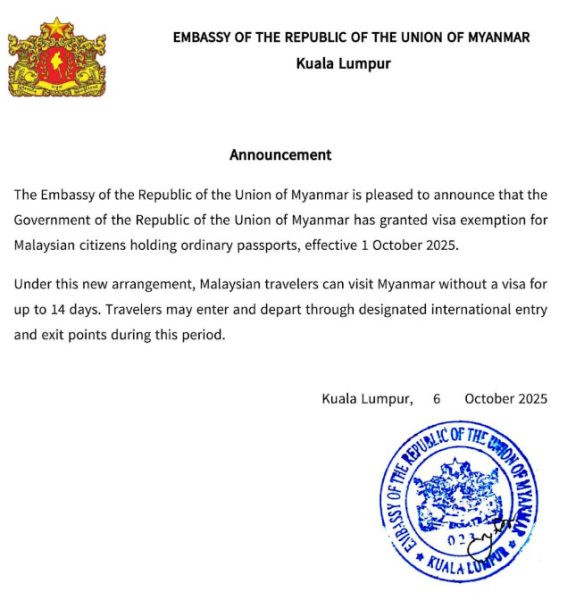
BANGKOK, 9 October 2025: Myanmar’s junta confirmed in an announcement on 6 October that Malaysian citizens have been eligible to enter the country visa-free for a stay of 14 days since 1 October.

Malaysia announced that it would allow Myanmar citizens to visit Malaysia for a visa-free stay on 1 October, while the public announcement by the Myanmar junta took a few more days to reach the public domain.

For Malaysian Citizens, Myanmar has granted visa exemption for Malaysian passport holders for up to 14 days for short-term social visits. Travellers must enter and depart through designated international entry and exit points.

For Myanmar Citizens visiting Malaysia, Myanmar passport holders are exempt from visa requirements for short-term social visits to Malaysia for up to 14 days.

Important Note: The Malaysian Embassy in Yangon emphasised that the visa exemption does not guarantee entry into Malaysia, as admission is still subject to the approval of the immigration officer at the designated entry and exit points.

The 14-day visa-free entry for Malaysian citizens to Myanmar aligns with the standard visa-free period for all ASEAN nations. It is intended to have a positive impact on Myanmar’s tourism sector, thanks to the simplified travel process.

Removing the visa requirement eliminates the need for Malaysian travellers to go through the application process (which previously involved a visa or an e-Visa). This makes spontaneous, short-term travel much easier and more appealing.

Encouraging Short-Stay Tourism: The 14-day limit is ideal for a typical vacation or a short break. It encourages Malaysians to visit Myanmar for brief cultural and sightseeing trips without the commitment of a lengthy visa process.

While the policy is a positive step, its ultimate impact will be viewed within the context of Myanmar’s current tourism environment.

Political and Security Concerns: The tourism sector in Myanmar has been significantly affected by ongoing political instability and civil unrest since 2021. For the visa-free policy to have a significant impact, travellers’ safety and security concerns need to be addressed.

Myanmar already offers visa-free entry for up to 14 days to citizens of ASEAN countries (Brunei, Cambodia, Indonesia, Laos, the Philippines, and Thailand), with ASEAN member countries Singapore and Vietnam receiving a 30-day exemption. The extension of this policy to Malaysian citizens rounds off the visa-free offering to all ASEAN bloc nations.

Targeted Entry Points: To qualify for visa-free entry to Myanmar, Malaysian travellers must enter and exit through specific international airports such as Yangon, Mandalay, or Nay Pyi Taw.

Tourism in Myanmar came to a halt after the 2021 military coup, and the 2025 earthquake further reduced tourist arrivals to a fraction of the 2019 levels.

In the past, Myanmar focused its visa-free and visa-on-arrival expansions on major tourism markets outside of ASEAN, such as China and India, to boost its tourism sector. The focus on markets with high-volume tourism potential may have taken precedence over completing the final ASEAN member arrangement.

Myanmar’s embassy announcement

EVA Air launches Taipei-Dallas flights

SINGAPORE, 8 October 2025: EVA Air celebrated the launch of its new Taipei – Dallas Fort Worth route with a special inaugural ceremony held at Dallas-Fort Worth International Airport. 

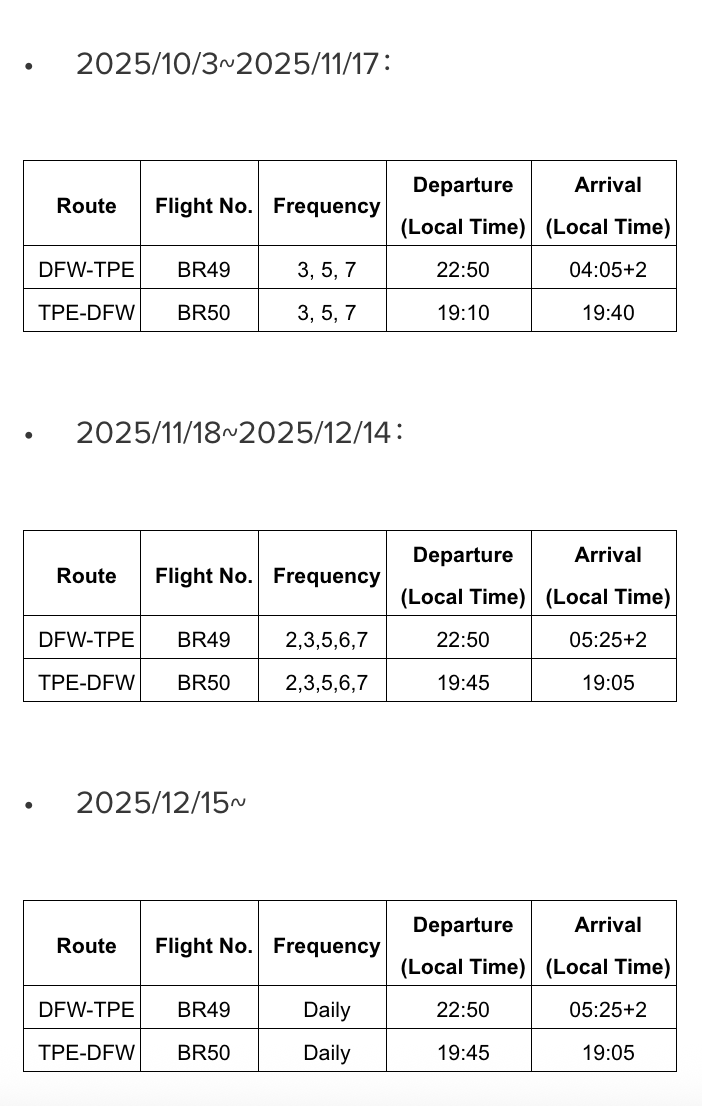
“EVA Air’s new route builds on nearly 30 years of partnership with Dallas-Fort Worth, which began with our cargo operations,” said EVA Air President Clay Sun during the ceremony. “Our new route will begin with three weekly flights, increase to five in mid-November, and reach daily frequencies by year-end.”

EVA Air President, Clay Sun, celebrates the Dallas-Fort Worth to Taipei inaugural flight with guests. From left to right: Fort Worth Mayor Pro Tem Carlos Flores. Taipei Economic and Cultural Representative Office in the US, Ambassador Alexander Tah-Ray YUI, EVA AIR President Clay Sun, Dallas Fort Worth International Airport Executive Vice President, Chief Revenue Officer Ken Buchanan, Dallas Fort Worth International Airport Vice President of Airline Relations, Milton De La Paz.

When that happens, EVA Air will serve nine passenger gateways with 94 weekly flights between Taiwan and North America — more than any other Taiwanese carrier. Passengers arriving in Taipei on a morning BR49 flight from the US, as well as other North American flights, can effortlessly connect to more than 450 weekly EVA Air flights throughout Asia without undergoing additional security screening.”

The DFW-TPE route is served by Boeing 787-9 Dreamliner aircraft, featuring EVA Air’s latest fourth-generation Premium Economy Class, making its US debut. 

Dallas is one of Texas’s fastest-growing cities. In recent years, the growth of the Asian American community and the relocation of primary US corporate headquarters have fueled strong economic and population growth, positioning Dallas as a rising global hub for technology and manufacturing. 

Many Taiwanese electronics companies have also established facilities and investments in the region. With the launch of the new DFW–TPE route, EVA Air aims to provide an exceptional travel experience for both business and leisure travellers connecting Dallas-Fort Worth to Asia.

EVA Air DFW-TPE flight schedule

C9 Hotelworks insights on Phuket real estate

PHUKET, 8 October 2025: C9 Hotelworks will lead the Phuket Real Estate Forum 2025 scheduled on 20 November to explore “inside the rise” of the holiday island’s recent real estate developments.

Hosted by C9 Hotelworks in collaboration with Delivering Asia, ThirdHome, and FazWaz/Dot Property Group, the 90-minute session will take place on Thursday, 20 November 2025, at the SAii Laguna Phuket, Similan Ballroom. 

CP Hotelworks founder and managing director Bill Barnett describes Phuket as one of Asia’s most dynamic resort destinations.

“Phuket is undergoing a remarkable transformation — shifting from a purely tourism-driven economy to a thriving world community. What was once a market led by individual investors and lifestyle buyers is now attracting growing attention from institutional investors, establishing Phuket as not only a real estate hotspot but also a driving force in the broader Thai economy.”

Centara: ‘Furry Friends Welcome’ Campaign

BANGKOK, 8 October 2025: Centara Hotels & Resorts, a leading hotel operator headquartered in Thailand, has partnered with Royal Canin Club to launch the “Furry Friends Welcome” campaign, offering pet owners an elevated travel experience at nine stunning properties across Thailand.

Centara The 1 members who book from today to 20 December 2025 for stays between 15 October and 20 December 2025 will enjoy an increased member discount of 20%, along with a complimentary Royal Canin pet minibar featuring specially selected premium treats for their four-legged companions.

The offer provides access to pet-friendly facilities and services designed to ensure both pets and their owners enjoy a comfortable and relaxing experience in some of Thailand’s most sought-after destinations, including Hua Hin, Pattaya, Trat, Koh Chang, Udon Thani, Ubon Ratchathani, Korat, and Ayutthaya.

Whether guests seek a romantic beach retreat, a family adventure, or cultural discovery, Centara’s pet-friendly collection offers the perfect backdrop for creating unforgettable memories with their furry friends. Non-members can sign up for CentaraThe1 for free to take advantage of this offer at www.centarathe1.com.

To learn more about the Furry Friends Welcome campaign or to make a booking, visit https://www.centarahotelsresorts.com/pet-staycation.

Thai cooking: Spice, Smiles and Sticky Rice

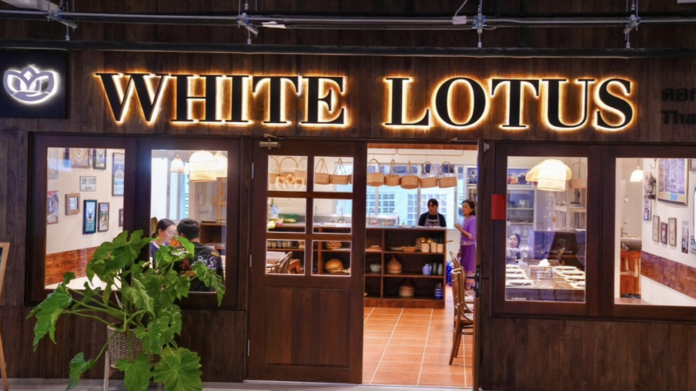
BANGKOK, 8 October 2025: Bangkok’s street food is world-renowned, but for travellers eager to delve deeper into the art of Thai cooking, the White Lotus Thai Cooking School offers an immersive half-day journey into Thailand’s culinary heart. 

Located in the capital’s ‘Old Town’, near the Chao Phraya River, the school provides a distinctive experience that combines a lively market tour, a hands-on cooking class, and cultural traditions in one unforgettable experience.

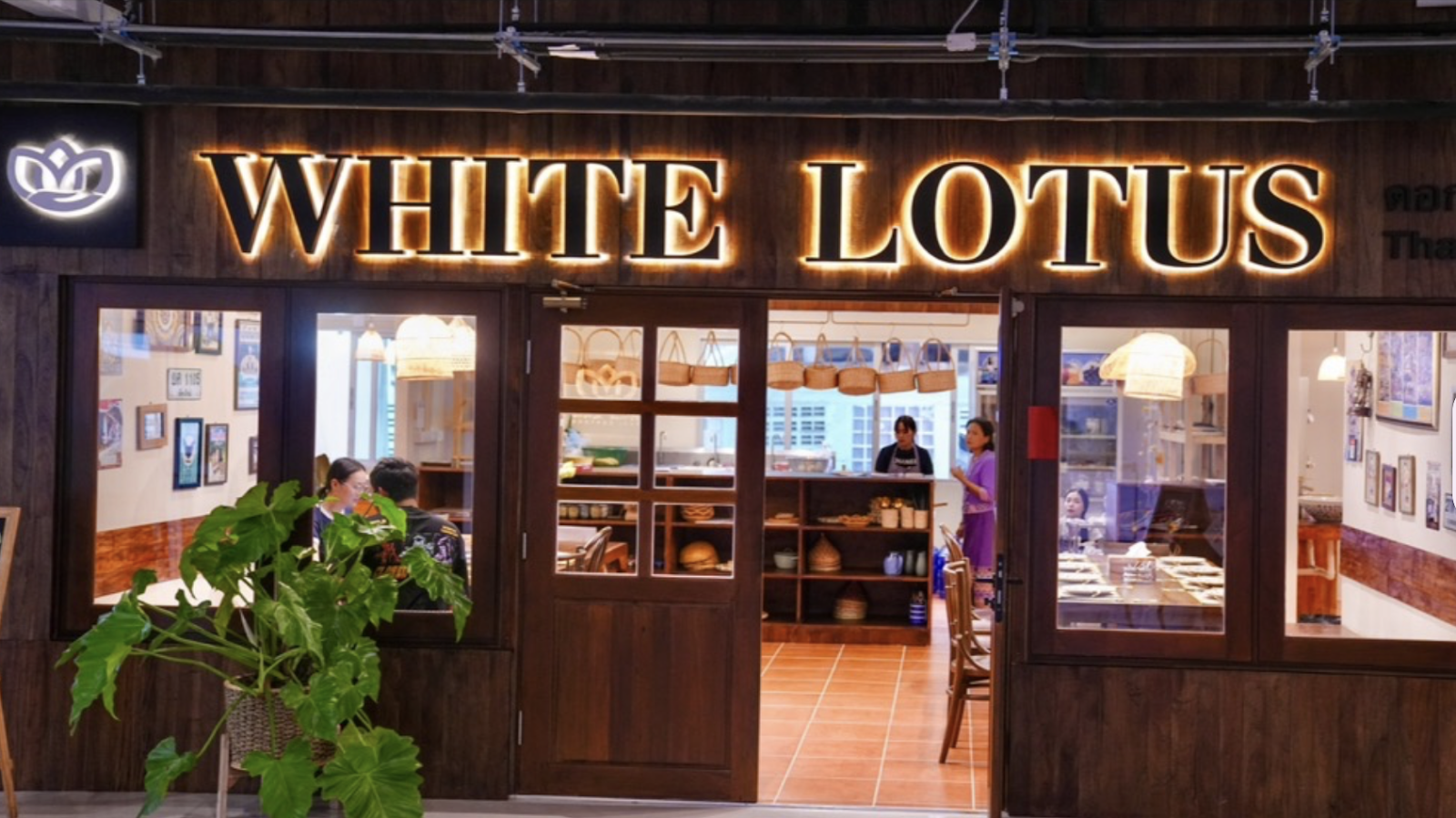
Photo credits: Andrew J Woods. White Lotus Thai Cooking School in Bangkok’s historic district.

“White Lotus has been my passion and dream. I simply love Thailand, and I wanted to offer tourists visiting Bangkok the chance to experience a traditional Thai cooking class, an activity that brings people happiness. I’ve lived here for eight years, and my company is run with a Thai business partner. Our instructors and colleagues are also Thai,” says Krysia, the school’s founder, originally from China but now proudly calling Thailand home.

Market first, kitchen later

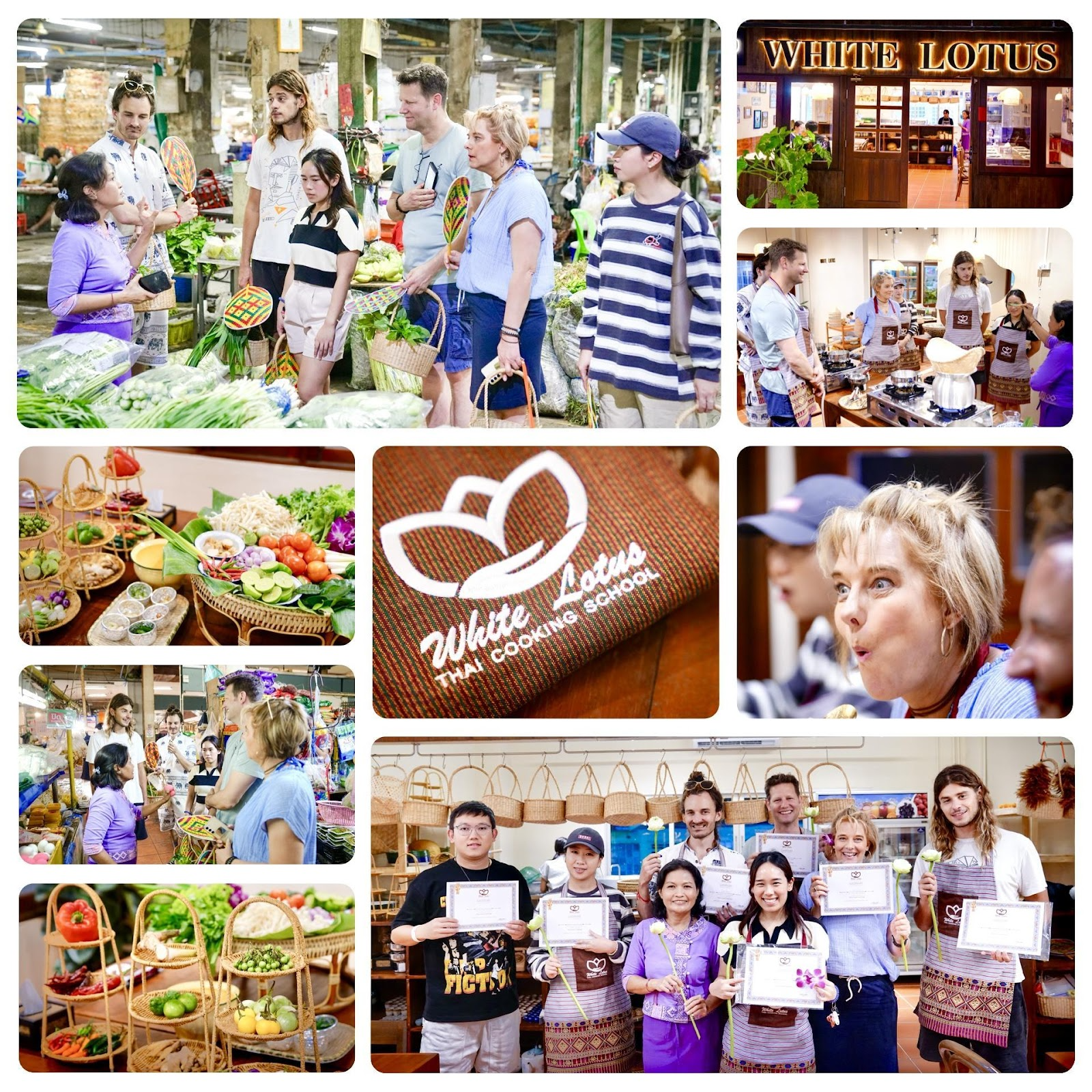
The adventure begins at Pak Khlong Talat, Bangkok’s century-old flower and produce market. Students follow their teacher through colourful stalls filled with jasmine blossoms, fiery chilis, and kaffir lime leaves while learning how to select the freshest ingredients. The hustle and bustle of the market becomes part of the lesson, turning shopping into a lively introduction to Thai culture.

Cooking with Pat

Shop, chop, cook, taste, smile – and graduate with your White Lotus certificate.

Back at the school’s welcoming teaching kitchen, classes are led by Pat Rodtim, a dynamic instructor whose cooking is often described as tasting “just like a mother’s kitchen.” Students prepare four classic dishes — Tom Yum Goong, Pad Thai, Som Tam, and Mango Sticky Rice — as well as coconut cream and curry paste. Each step is explained clearly in English, ensuring international guests feel confident, engaged, and able to replicate the dishes at home.

More than food

Alongside cooking, guests enjoy a flower-arranging workshop where they craft jasmine garlands or traditional Krathong baskets. Every class includes a herbal welcome drink, an apron, fresh ingredients, a recipe book, a certificate, a souvenir, and of course, the meal itself.

Practical details

Duration: 3.5 hours, halal-friendly.

Language: All classes taught in English.

Sessions: Morning (0830 to 1200) and Afternoon (1330 to 1700).

Capacity: 20 guests per session.

Location: 390/18 Ban Mo, Wang Burapha Phirom, Phra Nakhon, Bangkok 10200.

Price: THB1,200 per person on the official website; THB1,100 via Klook, GetYourGuide, and Viator (inclusive of market tour, class, flower craft, meal, souvenir, and certificate).

Getting There: MRT Sanam Chai (Exit 5), Chao Phraya Express (Memorial Bridge Pier), or 20 to 30 minutes by taxi/tuk tuk from Sukhumvit or Silom.

How to book

Website: https://lotusthai3.com

Google Maps: Search White Lotus Thai Cooking Class

Also available on: Klook, GetYourGuide, Viator, Tripadvisor (Airbnb and KKday coming soon)

A Taste of Thailand to take home

From the bustle of the market to the sizzle of the wok, White Lotus Thai Cooking School is more than a cooking class — it is a cultural immersion, a joyful memory, and a flavour of Thailand to take home.

About the author
Andrew J Wood is a Bangkok-based writer and former hotelier who has lived in Thailand for over three decades. He writes about travel, gastronomy, and culture across Asia. He is a former Director of Skål International, as well as Past President of Skål International Asia, Skål International Thailand, and twice Past President of Skål International Bangkok.