


BANGKOK, 6 March 2026: The immediate concern is not panic, but price. If oil remains below USD115 a barrel, the impact on Thailand and its regional neighbours should be manageable.
If it moves decisively above that level and stays there, the economic consequences will become harder to contain.
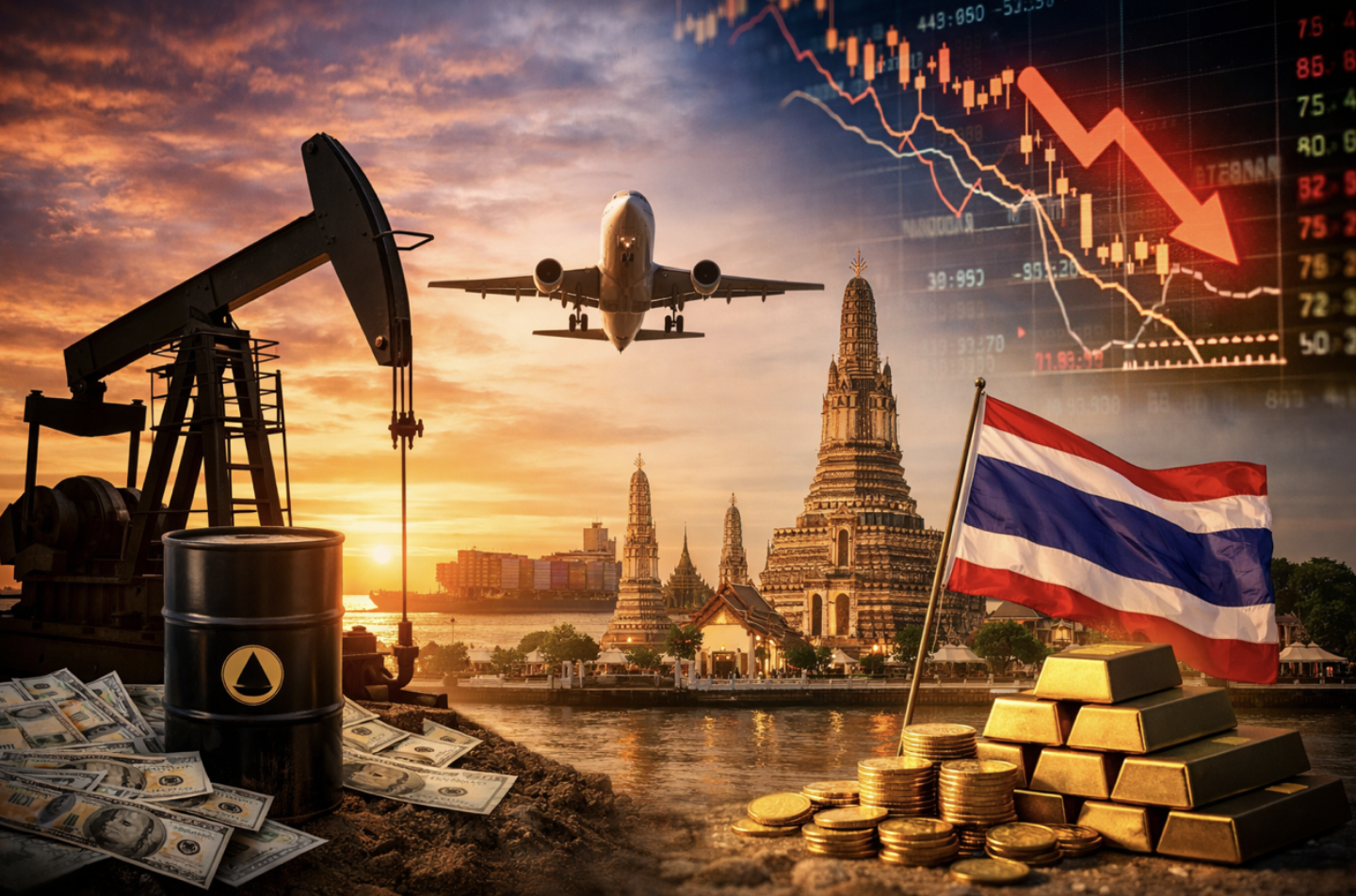
BANGKOK, 6 March 2026: Thailand is particularly exposed as a net importer of energy. Higher oil prices quickly filter through transport costs, food prices, aviation fuel, and household expenses. The result is pressure on inflation, margins and consumer confidence at a time when economic recovery remains uneven.
This is not a Thailand-only issue. Across Southeast Asia, higher energy costs affect logistics, airlines and manufacturing. In Northeast Asia, Japan and South Korea face similar challenges due to their reliance on imported fuel.
Australia and New Zealand, while resource-rich in parts, are highly sensitive to fuel costs in aviation, given the long distances involved in regional and long-haul travel.
Stock markets across the Asia-Pacific region have already become volatile. Energy stocks have strengthened, while airlines, transport and tourism-related shares have come under pressure. Investors are increasingly defensive, watching central banks closely as energy-driven inflation risks complicate interest rate policy.
Travel is where the impact becomes most visible. Short-haul and intra-Asia routes are likely to prove more resilient, supported by strong regional demand and competitive carriers. Long-haul travel between Asia, Oceania, Europe, the Americas and Canada is more vulnerable, as fuel costs make thin-margin routes harder to sustain without higher fares.
Thailand’s tourism sector is better positioned than in previous crises, with diversified source markets and strong regional traffic. However, prolonged high oil prices would eventually push up airfares, dampen discretionary travel, and slow momentum into 2026.
Gold prices have risen as investors seek safe havens amid uncertainty. While this reflects heightened risk awareness, sustainability depends on how long tensions persist. If oil prices stabilise and supply fears ease, gold’s rally may lose momentum. If instability deepens, further gains are possible. For now, Thailand’s response remains pragmatic and calm.
Key points shaping the outlook
• Oil prices are the critical variable, with USD115 a barrel seen as a key threshold
• Inflation risks rise quickly when fuel costs remain elevated
• Intra-Asia travel is more resilient than long-haul aviation
• Airlines face margin pressure if fuel costs stay high
• Equity markets remain volatile, favouring defensive sectors
• Gold reflects uncertainty, not necessarily long-term conviction
The hope across the region is that current energy shocks prove temporary. Thailand, like its neighbours, has lived through similar cycles before. If prices stabilise and shipping routes remain open, the economic impact should be containable. If not, the effects will be felt not only in markets and balance sheets, but in everyday travel, costs, and confidence.
About the author
Andrew J Wood is a respected travel, tourism and hospitality commentator with over three decades of experience in the Asia Pacific. Based in Thailand, he has worked across hotel operations, airline strategy and destination marketing, and is a regular contributor on regional tourism, aviation and economic trends.