

BANGKOK, 30 September 2026: Jungfrau Railways continues to develop its destinations while preserving the natural environment, respecting local communities and embracing technology to enhance the visitor experience.
While reaffirming its long-standing commitment to sustainable tourism development, the famous mountain railway plans to enhance restaurants, hotels and visitor attractions further while maintaining a strong focus on environmental conservation and community participation.
The company is also advancing its digital transformation, including using Artificial Intelligence to provide personalised travel guidance, to gradually move towards a fully online travel experience.
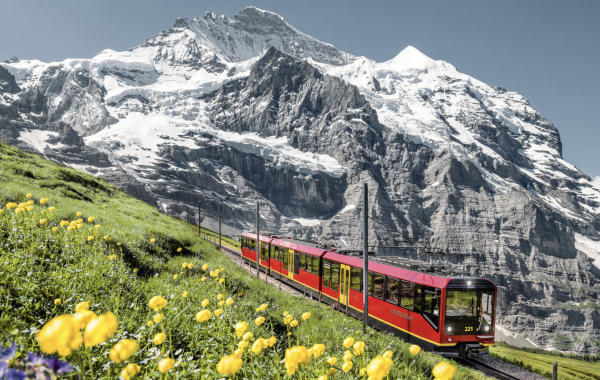
Jungfrau Railways CEO Oliver Hummel explains that for more than 100 years, Jungfrau Railways has been recognised as a symbol of Switzerland’s pioneering spirit and innovation. In 1912, the railway reached Jungfraujoch — Top of Europe for the first time, taking passengers to the highest railway station in Europe at an altitude of 3,454 metres above sea level. The spectacular railway journey passes through tunnels beneath the Eiger and Mönch mountains, while passengers can also experience breathtaking high-alpine scenery through the panoramic windows at Eigergletscher station.
“During the pioneering era, visitors began their journey to Jungfrau from Interlaken, connecting from boats to Switzerland’s main railway network. At the time, different routes to Jungfrau were operated separately. Jungfrau Railways later integrated the routes and continued developing connections between destinations to make travel more convenient for visitors,” said Hummel.
One of the latest developments is the Eiger Express, part of the innovative V-Cableway system. Introduced during the COVID-19 pandemic, the Eiger Express significantly reduced travel time to Jungfraujoch, taking just 15 minutes from Grindelwald Terminal to Eigergletscher.
Community participation is an important part of Jungfrau Railways’ development approach. The company operates across nine municipalities in two cantons, and it conducts public consultation before undertaking new development projects.
“Our responsibility covers nine municipalities across two cantons. Therefore, every development project must involve the local community through public consultation. If the community does not agree, we will not proceed with further development,” Hummel explained.
Among the projects currently being planned is relocating the access point to Grindelwald First closer to Grindelwald railway station, creating a more convenient connection for visitors. The project is being planned in cooperation with neighbouring communities, aiming to preserve the area’s beauty and character.
Personalised travel with AI
In 2025, approximately 80,000 Thai visitors travelled to Jungfrau. As travel patterns continue to evolve, Jungfrau Railways is developing an increasingly digital travel experience, from booking across multiple platforms to using AI to help visitors plan their journeys.
interested in hiking and mountain activities can discover areas around Eigergletscher and Kleine Scheidegg – Top of Hiking.
Future developments
A new restaurant with 400 seats is also planned at Eigergletscher, at the end of the Eiger Express route, giving visitors more dining options while helping reduce congestion at restaurants on Jungfraujoch. In addition, a hotel development featuring approximately 200 rooms and 400 beds is planned in Interlaken Ost for 2028.
“We are trying to develop the area further, but always on the basis that development must not harm what already exists. This is not simply because the area is part of a World Heritage Site. From the first day we encountered this ‘little lady’ – Jungfrau – many years have passed, yet she remains much the same. Although climate change has caused the ice to recede by around one centimetre each year, we remain committed to protecting the surrounding areas of Jungfrau and Grindelwald so that their natural beauty can endure,” Hummel said.
Grindelwald: A gateway to Jungfraujoch
Grindelwald is a mountain village in Switzerland located at the foot of the Eiger in the Jungfrau region. Its appeal lies in the combination of dramatic mountain scenery, mountain tourism accessible by railway and cableway, and a village shaped by agriculture and warm hospitality. It is one of 23 municipalities within the UNESCO Swiss Alps Jungfrau-Aletsch World Heritage area and serves as a gateway to Jungfraujoch – Top of Europe.
Activities change with the seasons. Spring offers village walks and easy trails across the green meadows, with snow still visible on the mountain peaks. Summer brings hiking, trail running and mountain biking, while autumn remains ideal for hiking. During winter, skiing and snowboarding are the main activities, complemented by snow-covered mountain walks for travellers seeking a more adventurous experience.
About Jungfrau Railways
Jungfrau Railways is one of Switzerland’s iconic mountain railway operators, connecting visitors with the spectacular alpine landscapes of the Jungfrau region and Jungfraujoch – Top of Europe.
(Source: Jungfrau Railways)