

BANGKOK, 16 September 2026: Competition to become Southeast Asia’s preferred tourism and aviation gateway is intensifying, with Malaysia Aviation Group (MAG) strengthening partnerships across ASEAN as it seeks to position Kuala Lumpur as a major gateway to Asia and beyond.
MAG, the parent company of Malaysia Airlines and Firefly, has expanded strategic alliances with leading travel industry organisations in Malaysia, Singapore, Indonesia, Thailand and the Philippines.
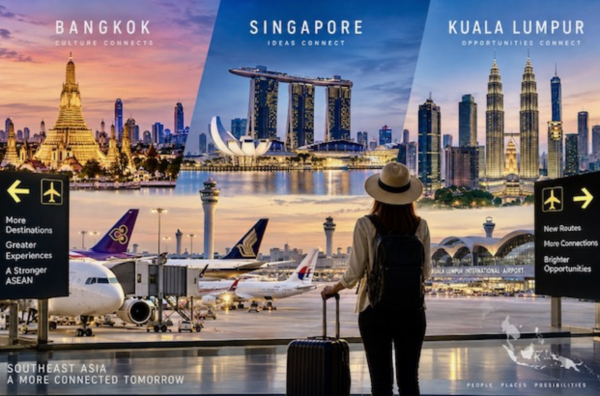
The initiative combines airline connectivity with travel-trade distribution, joint marketing, consumer promotions and destination development, giving Malaysia a coordinated platform to attract both visitors and connecting passengers through Kuala Lumpur.
In Malaysia, MAG has renewed its partnership with the Malaysian Association of Tour and Travel Agents (MATTA) for another three years, continuing as Official Airline Partner and Premier Sponsor of MATTA Fair.
In Singapore, it has partnered with the National Association of Travel Agents Singapore (NATAS), while in Indonesia, an agreement with ASTINDO will support airline and destination promotions.
Thailand is also firmly in the strategy. MAG will work with the Thai Travel Agents Association through the Thai International Travel Fair. Meanwhile in the Philippines, its partnership with Travel Innovators will use the Travel Madness Expo to develop leisure, corporate and MICE business.
The timing is significant. Malaysia is currently promoting Visit Malaysia 2026, while Malaysia Airlines continues to strengthen Kuala Lumpur’s regional and international connectivity.
The airline will resume Kuala Lumpur–Busan services in December and increase frequencies to Brisbane, Surabaya, and Fukuoka.
For Thailand, this deserves attention.
Bangkok has long enjoyed one of Southeast Asia’s strongest natural advantages as an aviation and tourism hub. Its geographical position, enormous hotel inventory, extensive airline network and popularity as a destination in its own right make it an obvious gateway for travellers exploring the region.
But neighbouring countries increasingly recognise that aviation connectivity cannot be considered separately from tourism strategy.
Kuala Lumpur is combining airlines, travel agents, destination marketing and government tourism ambitions. Singapore, meanwhile, remains one of Asia’s most efficient aviation hubs and continues to invest heavily in the passenger experience.
The question, therefore, is not simply which airport handles the most passengers. It is which destination can persuade travellers to arrive, connect, stop over, stay longer and spend more.
For Thailand, maintaining Bangkok’s gateway position will require more than additional airline seats. Airport efficiency, immigration, transit convenience, regional connectivity, visa-free entry, destination marketing and the quality of the visitor experience all form part of the equation.
Southeast Asia’s tourism gateway battle is becoming increasingly competitive. Bangkok possesses formidable advantages, but Kuala Lumpur is making it clear that it wants a much larger share of the traffic.

About the Author
Andrew J Wood is a British-born travel writer and former hotelier who has lived in Thailand since 1991. A graduate of Napier University, Edinburgh, he has more than four decades of experience in international hospitality and tourism. He chairs the JFCCT Tourism Committee for 2026–2028 and has held senior leadership roles with Skål International in Thailand and Asia.