

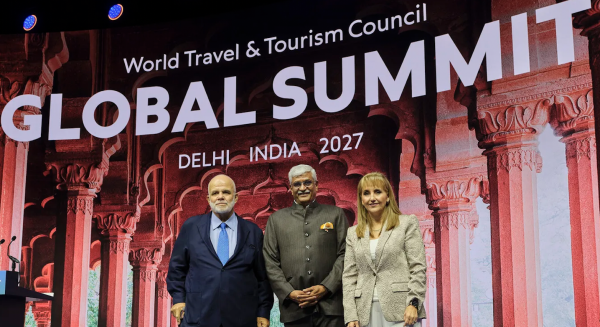
BANGKOK, 15 October 2026: India’s selection to host the WTTC Global Summit in Delhi in 2027 is about considerably more than another major tourism conference.
Chosen from 21 competing destinations, India is demonstrating something increasingly evident across business, technology and international affairs: it is ready and willing to step onto the global podium.
And India has every reason to be proud of what it has achieved.
With a population approaching 1.5 billion, an economy estimated by the IMF at around USD4.15 trillion in 2026, and projected real GDP growth of 6.5% this year, its scale is extraordinary.
Tourism provides another measure of that growing economic power. Indians made 32.83 million overseas departures in 2025, up 6.3% year-on-year. WTTC estimates that Travel & Tourism contributed USD263.6 billion to India’s economy in 2025 and supported 46.2 million jobs. It forecasts India rising from the world’s tenth-largest Travel & Tourism economy to fourth by 2036.
Indian arrivals reached 1.96 million in 2019. After the pandemic interruption, they recovered to 1.63 million in 2023, passed two million in 2024 and reached 2.49 million in 2025, generating approximately THB93.86 billion.
Thailand has a front-row seat to this transformation
India is now firmly one of Thailand’s most important tourism source markets. It supports demand across airlines, airports, hotels, restaurants, attractions, retail, transport and destination services. More importantly, the opportunity is not simply to attract more Indian visitors, but to increase the value generated by each visit.
Then there are weddings
Thailand has become a major international destination for Indian celebrations, hosting more than 400 Indian weddings annually in recent years. The wider Indian wedding and honeymoon market has been valued at more than USD130 billion.
These are high-value, multi-day events involving hotels, restaurants, transport, entertainment and often hundreds of guests. I recall hosting several at The Pattaya Exhibition And Convention Hall (PEACH), Royal Cliff in Pattaya.
Each wedding can become a temporary economic ecosystem involving resorts, caterers, florists, decorators, photographers, performers, production companies and local suppliers. Guests often extend their stay, spreading spending well beyond the wedding venue.
My own relationship with India goes back many years, particularly through my work with Skål Asia and Skål Thailand. Those responsibilities put me in regular contact with Indian tourism leaders and colleagues and let me experience firsthand the extraordinary depth of the country’s travel and hospitality community.
I was also privileged to speak at a TAFI event, the Travel Agents Federation of India. I remember being particularly impressed by the event’s professionalism and the remarkable camaraderie and support within the Indian travel community.
That sense of community was equally evident at Skål gatherings in India. The quality of the hotels and organisation impressed me, but what stayed with me most was the warmth, confidence and sheer energy of the people involved.
India today has enormous pride in what it has achieved. Cities such as Hyderabad also illustrate another dimension of modern India. A new generation of highly educated young professionals working in technology, IT, digital services and international business is helping connect India ever more closely to the global economy. India has become a powerhouse in information technology while producing business and professional talent increasingly visible on the international stage.
That growing influence is also reflected in the number of Indians and people of Indian origin holding senior positions across multinational corporations, technology companies, international institutions, and global professional organisations. India is increasingly not simply represented at the table. Its people are helping to lead the discussion.
Tourism reflects that same transformation
Last week, at the Skål World Congress in South Africa, NSN Mohan of India was elected World President of Skål International, becoming the first Indian to hold the organisation’s highest office in its 92-year history. His election is another milestone for India and reflects the country’s growing influence and leadership in the global travel and tourism community.
Therefore, bringing WTTC’s world summit to Delhi feels entirely appropriate. India is no longer simply a huge emerging market whose potential lies somewhere in the future.
India: The future is here
For Thailand, there is an important lesson. China will remain fundamental to our tourism industry, but India represents an enormous second Asian engine of growth. Its expanding middle class, improving air connectivity, appetite for international travel and demand for weddings, family holidays, MICE, wellness and premium experiences create opportunities that Thailand is exceptionally well positioned to capture.
Having watched India’s tourism community develop over many years, I would never underestimate its ambition, professionalism or determination.
For Thailand, ASEAN and the wider international tourism industry, the message is straightforward:
India is a force to work with, not simply a sales opportunity; an outbound travel market to tap.
About the Author
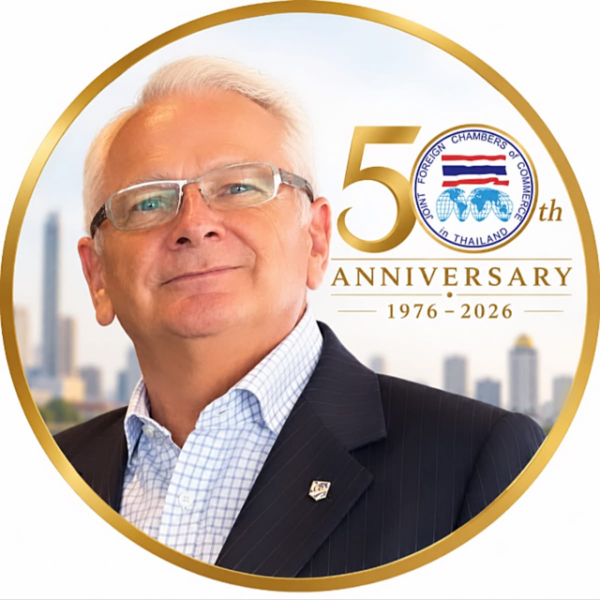
Andrew J Wood is a British-born travel writer, tourism commentator and former hotelier based in Thailand since 1991. A graduate of Napier University, Edinburgh, he has more than four decades of hospitality and tourism experience in Asia and Europe, including senior appointments with Shangri-La, Minor International, Landmark Lancaster Hotel Group, Chaophya Park and Royal Cliff Hotels Group.
A Skål member since 1992, Andrew is a former Director and also President of Skål Asia and Skål Thailand, and has twice served as President of Skål International Bangkok. He is an active member of SATCC and affiliated associations and chambers. He writes on tourism, aviation, hospitality and sustainable destination development. The views expressed in his articles are his own.